
Our readers keep the lights on and my morning glass full of iced black tea. As an Amazon Associate, I earn from qualifying purchases.
Specs are compiled from manufacturer listings and verified buyer reviews and can change over time — please confirm the key details on the product page before buying.
When you shop for anti-EMF gear, the first thing to know is that not all shielding works the same — some fabrics block a phone call completely, while others only soften the signal a little. Your real choice is if you want to silence a device entirely or just lower your everyday exposure, and that decision points you to the right product.
I’m Min — the founder and writer behind Gadgets Feed. This guide is built by comparing the manufacturers’ published specifications and the patterns across verified customer reviews, so you get each pick’s real strengths and trade-offs instead of marketing spin.
You can find practical, honest picks for anti emf protection that match how you actually live, from phone pouches to headwear to rolls of fabric.
Our Picks at a Glance


How To Choose The Best Anti EMF Protection
Before you buy anything, decide what you are actually trying to achieve. A phone pouch that kills the signal is perfect for a nightstand, but it is useless if you still need to take calls — in that case you want a material that lowers exposure without fully blocking. Fabric rolls give you total freedom to sew custom covers, while wearable pieces like beanies and hoods protect you on the go.
Know the difference between blocking and reducing
Some products are built to completely isolate a device in a Faraday cage, which stops calls, texts, and WiFi at the same time. Others are designed to reduce the radiation you absorb while letting your phone keep working. Read the product’s own claims carefully: a pouch that says “up to 99% reduction” is not the same as one that “completely blocks” the signal.
Check the size and the material honestly
For fabric rolls, the length and width determine how many projects you can finish — a 78″ x 43″ piece covers one curtain or a couple of bags, while a 6-yard roll gives you room for bigger builds. Material matters too: copper-nickel blends are the standard for conductive grids, and the weave density affects how well they actually perform. If a listing only promises “high efficiency” without a number, treat it with healthy skepticism.
Quick Comparison
| Model | Best For | Form | Size | Shielding | Amazon |
|---|---|---|---|---|---|
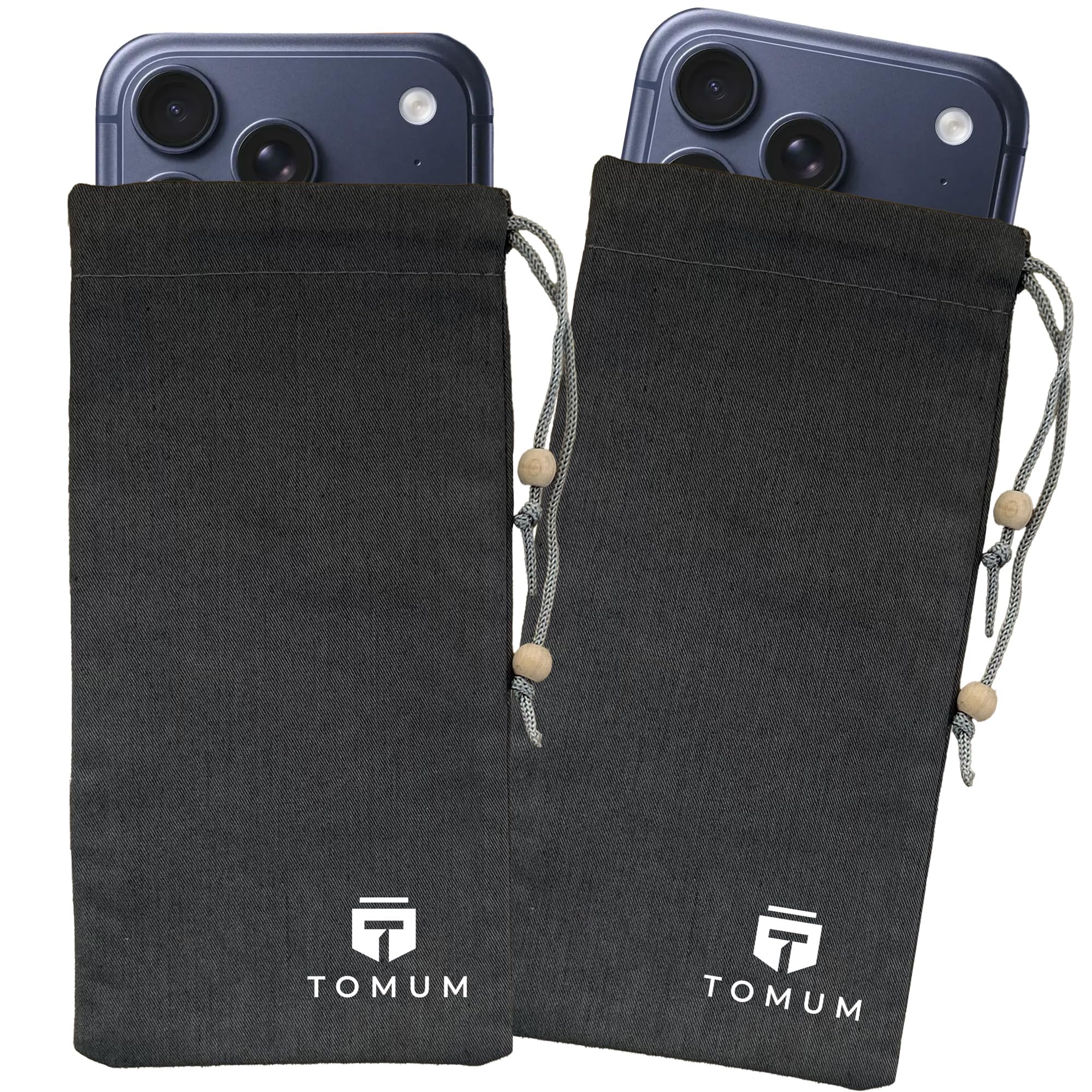
| TOMUM EMF Shield Sleeve★ Best Overall | Phone silencing at night | Pouch (2 Pack) | 8″ x 4″ | Up to 99% reduction | Amazon |
| Vehipa Faraday FabricMost Versatile | DIY custom covers | Fabric roll | 98.4″ x 43.3″ | Blocks WiFi/RF | Amazon |
| Amradield Pure Copper FabricTop Performer | Grounding and smart meters | Fabric roll | 78″ x 43″ | 85 dB (30MHz-18GHz) | Amazon |
| Faraday Copper Fabric (Silver) | Curtains and tents | Fabric roll | 78″ x 43″ | 85 dB (30MHz-40GHz) | Amazon |
| BSTFLEX Faraday Fabric | Quick DIY projects | Fabric roll | 98″ x 43.3″ | 99% blocking efficiency | Amazon |
| Nasafes Conductive Fabric | Room and router covers | Fabric sheet | 36.2″ x 42.4″ | Blocks WiFi/RF | Amazon |
| ZTTXL Faraday Fabric Kit | Large sewing projects | Fabric roll + kit | 43″ x 236″ | Blocks signals | Amazon |
| Radia Smart EMF Beanie | Head protection on the go | Wearable | One size | Up to 99% (~50dB) | Amazon |
| Radia Smart EMF Hood | Head and neck coverage | Wearable | One size | 99.9% (~50dB) | Amazon |
In‑Depth Reviews
1. TOMUM EMF Shield Sleeve for Cell Phone
Our pick — over 4★ from 500+ verified ratings; the strongest balance of quality and price.
The nightstand essential that silences your phone so you can actually sleep.
This pouch is the easiest way to drop your phone into a quiet zone before bed. The interior is built with a high-purity silver composition that claims to cut EMF exposure by up to 99%, and the drawstring closure keeps your device snugly wrapped. It measures 8″ x 4″, so it swallows big flagships like the Apple iPhone 17 Pro Max and Samsung Galaxy S25 series without a fight.
What wins people over is the build quality — owners consistently praise how sturdy and well-made it feels, and the soft fabric slides a phone in smoothly. Buyers report the signal blocking is real: “once the phone is inside, the signal is completely blocked,” as one owner put it, and another confirmed “it blocks everything.” The honest catch is that signal blocking draws mixed feedback — some users still receive calls and texts while the phone is inside, so full silence is not guaranteed for every carrier.
This is a two-pack, so you can keep one pouch by the bed and one in your bag. It is a simple, functional tool for anyone who wants to lower exposure without giving up their phone during the day.
Shield your phone
- Quality construction with a soft, durable fabric
- Easy to test — phone signal drops when inside
- Fits large phones comfortably
Sleeve only fit
- Full signal block is not guaranteed for all carriers
- Not a hard case, so physical drop protection is minimal
pocket protection: you want a no-fuss way to silence your phone at night or during meetings, and you like having a spare.
bulky cases: you expect every single carrier signal to vanish — results vary by network.
2. Vehipa Faraday Fabric Military Grade Nickel Copper
A generous roll of nickel-copper fabric that turns any DIY idea into a signal-proof project.
This is the biggest fabric roll on the list at 98.4″ x 43.3″, giving you about 26% more length than the 78″ Amradield roll — enough to line a bag, sew a curtain, or wrap a laptop. The copper and nickel weave is designed to block WiFi, cell, Bluetooth, and RFID signals, and owners mention it “knocked the readings down 80+ percent” in their own tests.
The material earns the most praise — owners call it thin, lightweight, and well-made, with many using it as a blanket or sewing it into clothing. The versatility is the real draw: you can cut and sew it into any shape, from car-key pouches to computer covers. But there are honest trade-offs. Customers note the fabric frays easily at the edges, and the loose metal threads can be tough on sewing tools, so handling it carefully matters.
For anyone who wants one roll that can serve a dozen different shielding projects, this is the value pick that keeps on giving.
Military-grade weave: the material quality and value for money stand out — owners love that one roll covers so many uses.
Stiff fabric feel: expect fraying at the cut edges, and treat the metal threads gently when sewing.
3. Amradield Pure Copper Fabric Blocking RFID/RF
The grounding specialist with hard numbers: 85 dB of attenuation from 30MHz to 18GHz.
If you want to measure your protection, this golden copper fabric gives you real specs to trust — a surface resistance below 0.03 ohms and an average attenuation of 85 dB across the 30MHz to 18GHz range. That translates to serious blocking of cell, Bluetooth, WiFi, and GPS signals, and owners have used it as a wall-mounted shield against smart meters.
One striking real-world report: “Wall-mounted against 5 smart meters; EMF/RF readings dropped from red to nominal,” along with the owner noting their ear ringing stopped. The grounding ability is what buyers praise most — several use it as a grounding strip or pillowcase material, and one owner confirms it “still works after 2 years.” It is also machine-washable, which is rare for this category.
The texture gets mixed feedback — it is soft for some but crinkly and not pleasant to touch for others, and the protection claims are mixed among owners. It is a conductive fabric first, so think of it as a tool for DIY grounding and shielding rather than a finished product.
DIY shielding: anyone needing verifiable attenuation numbers and a fabric that can pull double duty for grounding.
ready-made use: those who want a soft, ready-to-wear shield — this is a raw material that needs DIY effort.
4. Faraday Copper Fabric EMI RFID Shielding (Silver)
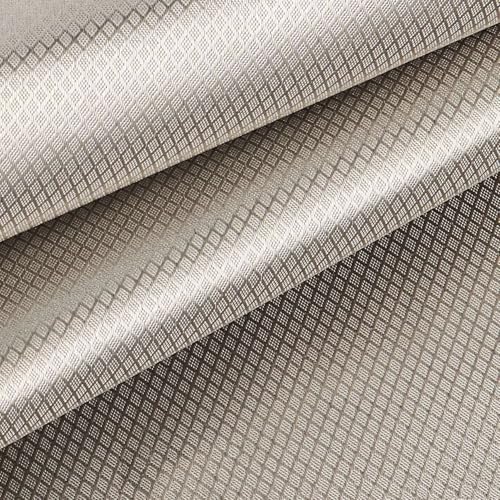
A silver diamond-weave roll that blocks WiFi when you wrap it tight and connect the ends.
This fabric matches the Amradield copper fabric’s 85 dB attenuation but extends the range up to 40GHz, which covers nearly any consumer wireless signal you will encounter. The diamond-pattern weave creates a conductive grid that owners say blocks RF “when ends are connected in a loop” — a critical detail, because a loose wrap only partially blocks.
Owners praise the fabric quality, and one confirmed “the WiFi signal was blocked when I wrapped my phone in the material.” The most creative use? Someone stitched a custom wallet from it. The honest caveat is that the fabric is thin — multiple layers are often needed for meaningful reduction, and the thickness is the most-discussed negative. If you plan to shield a crib or a room from a nearby tower, expect to fold it over several times.
At just 7.04 ounces, this roll is light enough for regular sewing projects, and it is easy to cut. Just remember that a true Faraday cage needs a complete conductive loop for full effect.
Silver-coated shield: the fabric quality and the ability to block RF when properly connected win the day.
Pricey per yard: thin material means you will want multiple layers for serious shielding.
5. BSTFLEX Faraday Fabric Military Grade
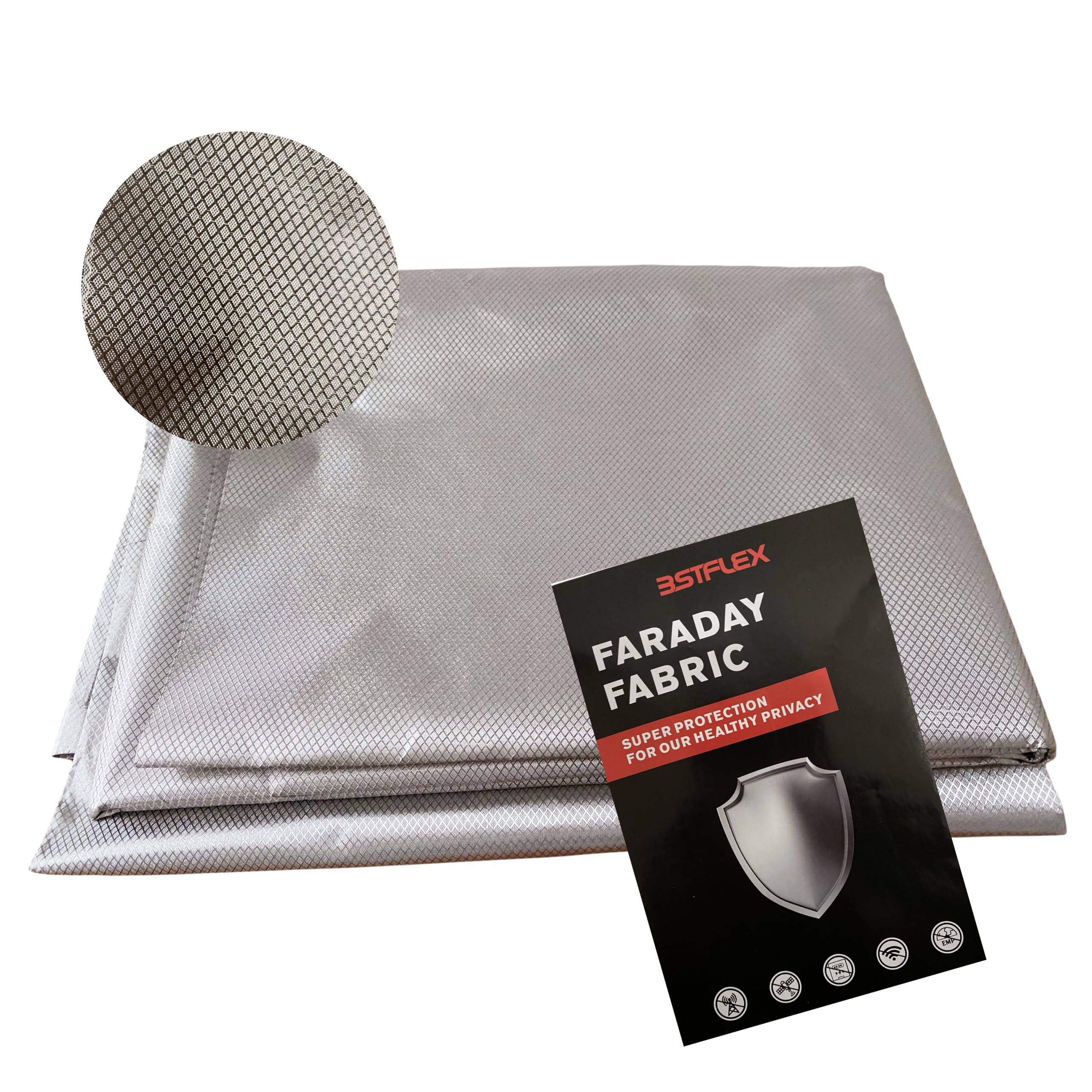
A wrinkle-free silver roll that shuts down a laptop instantly when wrapped properly.
This 98″ x 43.3″ roll claims a 99% blocking efficiency, and the reviews back it up with dramatic stories. Reviewers point out wrapping a laptop that “immediately shutdown,” and another sewed a car-fob pouch that stopped the open up signal completely. The fabric is marketed as wrinkle-free, which makes it easier to cut and sew than some alternatives.
The key lesson owners emphasize: you need 3+ wraps to reliably block signals. A single or double layer is not enough, which is consistent with how Faraday cages work — the more complete the conductive enclosure, the better the isolation. The fabric is hand-wash only, and the maker warns against machine washing and prolonged sun exposure to protect its blocking ability.
For quick DIY projects like car-key pouches, passport covers, or a laptop sleeve, this is a solid budget-friendly choice. Just plan for multiple layers in your build.
large projects: you want an affordable roll for hands-on projects and you understand the 3-wrap rule.
small patches: you expect a single layer to do the job — it will not.
6. Nasafes Conductive Faraday Fabric

Aerospace-grade material that is thinner than paper yet tear-resistant as tarpaulin.
This 36.2″ x 42.4″ sheet is built from 20% copper/nickel and 80% polyester, the same kind of conductive fabric used to shield aircraft cabins. Owners have used it to block a neighbor’s WiFi, send a cell call straight to voicemail when placed over the phone, and even cover a router to kill the internet entirely. It is washable at temperatures under 30 degrees, which adds convenience.
The most practical use reported is grounding — one owner cut the sheet into 8 pieces, and the resistance dropped from over 2000 kOhms to 300 kOhms, giving them a comfortable grounding mat for sleep. The honest reality is that effectiveness gets mixed reviews: some owners say it works only when grounded and covering a large area, while a frustrated few report it “does nothing.” The manufacturer claims 55-75 dB shielding, which requires proper grounding to achieve.
This is a tool for the tinkerer. If you are willing to ground it and experiment, it can transform your sleeping space or shield a router.
Conductive surface: the radiation protection and the versatility for EMP and grounding projects.
Handling delicate: results vary widely — grounding and full coverage are essential, and some buyers saw no effect.
7. ZTTXL Faraday Fabric 43″ W x 236″ L

A full 6-yard roll with 40 Velcro pads and a DIY manual for serious sewing projects.
This is the biggest buy on the list: 43″ wide by 236″ long (a full 6 yards) of copper-nickel fabric, plus 40 pieces of Velcro, a tape measure, and a home DIY guide. Owners have used it to line a tote for generator storage, and the phone calls inside were blocked completely. The included Velcro lets you build bags with a mouth that opens and closes on demand.
Quality and value are the standout positives — owners describe the material as sturdy and fully conductive, and one notes “the fabric was easy to work with.” The kit approach saves you from buying Velcro and tools separately. The honest caveat is that functionality gets mixed reviews: while many report effective blocking, some owners say it does not work at all for their use. The threads are not as closely packed as some would like, which may explain the weaker results.
If you have a big project in mind — custom covers for generators, radios, or large bags — this roll gives you the material and the hardware to finish it.
bulk coverage: you are sewing multiple or large covers and want the Velcro and guide included.
quick fixes: you only need a small piece — the 6-yard length is more than most buyers will use.
8. Radia Smart EMF Protection Slouch Beanie

A comfortable cotton beanie with a silver lining that blocks RF while you sleep.
For wearable protection, this slouch beanie pairs a soft outer layer of 95% natural spinning fiber with 5% spandex against an inner silver radiation shielding fabric. It claims consistent shielding effectiveness up to 99% (~50dB), tested by accredited labs in 2017 and 2021. The one-size design fits most adults, and the shielding fabric covers from edge to edge.
EMF blocking is what owners praise most — they report peaceful sleep with no head noise, and verified RF blocking at cell phone frequencies with a meter. One owner confirmed “it works” and was happy with the result, while another found it comfortable under CPAP straps. The honest trade-off is the fit: it runs large for some, and one owner noted the hat stretches over time and no longer fits snugly. Style opinions are split, so do not expect a fashion statement.
If you feel overstimulated by wireless radiation at night, this beanie is the simplest way to add a layer of shielding to your sleep routine.
Wearable defense
- Blocks RF from cell phones and WiFi
- Soft, comfortable, lightweight fabric
- Helps owners sleep peacefully
Warmth tradeoff
- Fit runs large and can stretch over time
- Style is not for everyone
9. Radia Smart EMF Protection Hood

The hood that covers your head and neck, dropping phone signal bars to zero when worn.
This hood takes wearable shielding a step further than the beanie by covering both your head and your neck and thyroid area. It claims a 99.9% shielding effectiveness (~50dB) from an accredited lab, and the outer layer is 80% cotton with 20% polyester for comfort. The shielding fabric runs edge to edge so there is no unprotected gap on the crown of your head.
Shoppers say dramatic results: a smartphone signal test showed bars dropping to 0 inside the hood and restoring when removed, and wireless headphones losing connection immediately when the hood was worn. One owner credits it with eliminating daily headaches from a new 5G tower. The quality is the most-praised aspect, along with better sleep quality. The honest downsides: some find it too hot to wear, the fit is too small for others, and the neck overlap lacks buttons or snaps, making it awkward to put on and take off.
If you want maximum head and neck coverage for sleep or for working near a router, this hood delivers more shielding area than any beanie.
full shielding: you want head and thyroid coverage and value lab-tested 99.9% claims.
light tasks: you sleep hot or dislike fiddly hoods — the fit and heat are the recurring complaints.
Understanding the Specs
Attenuation (dB)
This is the number that tells you how much signal is actually stopped. A rating of 85 dB means the material reduces signal strength by a factor of over 300,000 — that is serious blocking. Lower numbers like 50 dB still block a lot but leave more room for weak signals to sneak through. When you see “99% reduction,” that roughly corresponds to a 20 dB rating, which is enough to make a phone unusable inside a pouch but not total isolation.
Faraday Cage vs. Shielding
A true Faraday cage needs a complete conductive loop — every side sealed with no gaps — to fully block signals. A loose wrap or a single layer of fabric only reduces exposure, not eliminates it. This is why owners consistently report that wrapping a phone tightly or layering fabric 3+ times works far better than a single casual wrap. If a product claims to block signals, check whether the design actually encloses the device completely.
FAQ
How do I test if my EMF protection actually works?
Why does my phone still get calls inside a Faraday pouch?
Is there a difference between blocking EMF and blocking RF?
Can I wash Faraday fabric without ruining it?
How many layers of fabric do I need to block a signal?
What is the best use for anti-EMF fabric rolls?
Is a beanie or hood effective for EMF protection?
What does “military grade” really mean for Faraday fabric?
Can Faraday fabric protect against smart meter radiation?
Final Thoughts: The Verdict
For most people, the anti emf protection winner is the TOMUM EMF Shield Sleeve because it is the simplest way to silence your phone with a quality-built, silver-lined pouch that earns high marks from the crowd. If you want to block signals for a whole room or build custom covers, grab the Vehipa Faraday Fabric for its generous 98.4″ x 43.3″ roll at a budget-friendly price. And for head and neck protection you can wear anywhere, the Radia Smart EMF Hood delivers 99.9% shielding effectiveness that owners verify with real signal tests.
How We Picked
We do not accept paid placement. Every pick is matched to a real buyer and a real use-case; we do not hands-on test units.
Sources & Methodology
Specifications: manufacturer listings and product documentation. Review insights: verified customer reviews, as of August 2026. Pricing: not shown on this page (it changes often); check the current price via the retailer link.
As an Amazon Associate, Gadgets Feed earns from qualifying purchases. This does not affect which products we feature.