
Our readers keep the lights on and my morning glass full of iced black tea. As an Amazon Associate, I earn from qualifying purchases.
Specs are compiled from manufacturer listings and verified buyer reviews and can change over time — please confirm the key details on the product page before buying.
Choosing a 3-season sleeping bag is really about balancing three things: how cold you’ll actually sleep in, how much weight you want on your back, and how much room you need to toss and turn. The right pick keeps you warm on a 32-degree night without turning your backpack into a boulder. This guide focuses on bags rated for spring, summer, and fall use—typically comfortable anywhere from the mid-30s to the 50s—so you know exactly what to expect before you zip up.
I’m Min — the founder and writer behind Gadgets Feed. This guide is built by comparing the manufacturers’ published specifications and the patterns across verified customer reviews, so you get each pick’s real strengths and trade-offs instead of marketing spin.
Sleeping warm is a system, and the first step is picking the right 3 season sleeping bag for your body, your trips, and your budget.
Our Picks at a Glance


How To Choose The Best 3 Season Sleeping Bag
Before you buy, understand that a bag’s temperature rating is a survival limit, not a comfort guarantee. Most people sleep cold, so a bag rated for 20°F is often a comfortable 30°F bag for the average sleeper. Think about your own sleeping habits and the coldest night you realistically expect.
Down vs. Synthetic Insulation
Down is lighter, compresses smaller, and lasts longer, but it loses nearly all its warmth when wet. Synthetic fills keep insulating even when damp, dry faster, and cost less, but they’re bulkier and heavier for the same warmth. If you backpack in dry climates, down wins. If you camp in humid or rainy places, synthetic is the safer bet.
Mummy vs. Rectangular Shape
A mummy bag hugs your body to trap heat efficiently, making it the standard for backpacking. The trade-off is less room to move. Rectangular bags feel like a blanket at home and give you space to spread out, but that extra air needs more heat to stay warm. Some double bags split into two singles for flexibility.
Quick Comparison
| Model | Best For | Temperature Rating | Insulation | Weight | Amazon |
|---|---|---|---|---|---|
| Teton LEEF★ Best Overall | Backpackers wanting value | 20°F / 30°F Options | Micro Fiber | 3.5 lbs | Amazon |
| Bessport MummyWide Fit Pick | Tall campers | 15-45°F | Synthetic Fibre | 3.6 lbs | Amazon |
| Amazon Basics DoubleVersatile Value | Couples car camping | 40°F | Polyester Hollow Fiber | 6.5 lbs | Amazon |
| Coleman Brazos | Budget tent camping | 30°F | Cotton | 5.2 lbs | Amazon |
| OneTigris Bushcrafter | Side sleepers, wide fit | 46.4-59°F | Polycotton | — | Amazon |
| Naturehike CW295 | Ultralight backpacking | 42-52°F | 650FP RDS Down | 1.3 lbs | Amazon |
| 1TG Tactical Mummy | 3-season hunters | 25-36°F | 7D Hollow Fiber | 3.88 lbs | Amazon |
| Kelty Cosmic 20 | Warmth in a mummy | 20°F | 550FP DriDown | 3 lbs | Amazon |
| Kelty Galactic 30 | Roomy down comfort | 30°F | 550FP RDS Down | 2 lbs 14 oz | Amazon |
In‑Depth Reviews
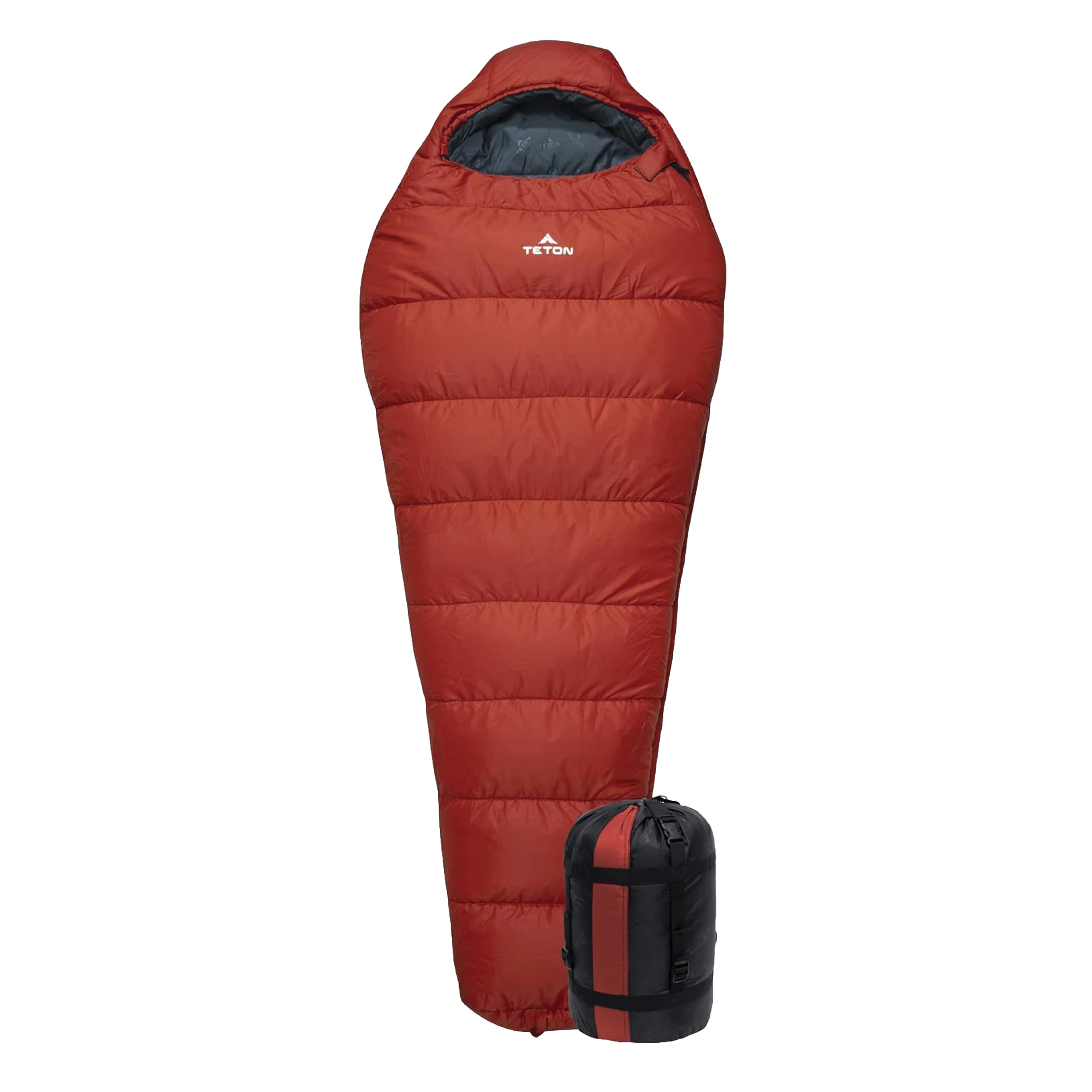
1. Teton LEEF Lightweight Mummy Sleeping Bag
Our pick — over 4.5★ from 550+ verified ratings; the strongest balance of quality and price.
The crowd-pleasing mummy that balances weight, warmth, and a fair price.
You stay warm without shivering, even when the mercury drops — buyers report it keeps them comfortable down to 10°F, and one 6-foot, 260-pound sleeper stayed dry and warm in heavy condensation wearing just underwear in 30-40°F weather. The 3.5-pound build hits a balance for backpacking, and the compression sack shrinks it , which makes a real difference when you’re packing a hiking pack.
The fit is where opinions split. A 5’6″ owner found it cramped, while a 6’5″ camper with size 14 feet had plenty of room in the foot box. If you’re on the taller or broader side, this roomier mummy design should treat you well. The zipper glides smoothly and the velcro hood lock keeps the heat sealed around your face.
The trade-off is the compression sack — nearly every owner mentions it takes real effort to repack the bag to its small size, so budget a few minutes at camp. It’s also not machine washable, which disappointed some who wanted an easy clean-up after muddy trips. The polyester ripstop shell has held up through 60-70 nights of use, resisting the compression lumpiness that plagues cheaper bags.
What Wins People Over
- Genuinely warm in sub-freezing temps
- Packs down small with included compression sack
- Baggy mummy cut fits larger frames
What To Know
- Compression sack is tough to repack
- Hand wash only
Reach for this if: you want a proven, warm backpacking bag that won’t bust your budget and fits a range of body sizes.
Look elsewhere if: you’re tiny and prefer a snug, efficient mummy — this is cut roomier than most.
2. Bessport 15-45°F Extreme Mummy Sleeping Bag
A generously wide mummy that swallows 6’6″ frame and shrugs off rain.
If you’ve ever felt trapped in a standard mummy bag, this one’s for you. It’s built to fit adults up to 6’6″ with shoulder, hip, and foot girths of 63″, 50.3″, and 33″ respectively, giving you room to shift position without losing warmth. On a night that dropped to 35°F with rain, the 210T ripstop polyester shell kept the owner “warm and dry” even as condensation built inside the tent.
The synthetic fibre fill makes it a smart choice for wet climates — the shell is water-repellent and dries fast, and one owner called it the best bag they’d owned in seven years for damp conditions. It kept them “toasty at 15°F” and still packed small enough to fit a 65L pack. Weighing 3.6 lbs, it’s heavier than down but offers similar function at a much friendlier price.
The stuff sack is loose and non-compressing, so you won’t shrink it down as much as the more expensive picks. A bright orange color option shows up well at night when you’re walking back from the fire. One owner noted the square foot box differs from the narrow shape in the photos, but it didn’t hurt their comfort in a hammock in 35-40°F wet weather.
The Verdict: the widest cut here and a reliable performer in rain, making it the go-to for bigger campers in damp climates.
3. Amazon Basics Double Sleeping Bag
One bag that becomes two, giving couples a flexible, budget-friendly sleep system.
Couples who car camp will love this one — the 87 x 59-inch double bag splits down the middle into two single bags, so you can zip together for shared warmth or separate for your own space. Owners with larger bodies found it “very comfortable and warm” at 25-30°F when layered with blankets. The 40°F rating with hollow fiber insulation delivers decent heat without excessive weight.
What wins people over is the combination of space and value. It fits sleepers up to 6’3″ and doubles as a budget-friendly way to outfit two people at once. The brushed tricot liner feels soft against the skin, and the polyester shell has held up well in testing.
The honest catch is the zipper — some owners hit snags, and the double design means more zipper to manage. It’s also bulky when packed, so this is strictly a car-camping bag, not a backpacking one.
Best if: you’re a couple who camps from the car and wants one bag for two, or two budget bags for the kids. Think twice if you need something that compresses small.
4. Coleman Brazos 30°F Sleeping Bag

A soft, sturdy rectangle that’s a dead-simple choice for tent campers.
For the camper who drives to a site and sets up a tent, this bag is a reliable workhorse. It’s rated to keep you warm down to 30°F, and owners confirmed it handled a 34°F night “very warm, comfortable, durable” without issue. The Thermolock draft tube along the zipper stops body heat from leaking out through the zipper track — a small detail that makes a big difference on cold nights.
What wins people over is the build quality. It’s sturdy and the no-snag zipper slides smoothly in both directions, a feature that also lets you zip two bags together for double the room. At 5.2 lbs, it’s heavy for backpacking, but that weight translates to a fluffy, comfortable feel that owners love for tent camping.
The recurring gripe is the packing — it rolls up large and takes real effort to get it back into the stuff sack, so it’s not a bag you’ll want to repack every morning on a road trip.
Grab it for: the campsite, the cabin, or the guest room. Skip it for backpacking where every pound counts.
5. OneTigris Bushcrafter’s Mummy Sleeping Bag

The anti-claustrophobia mummy, built wide for side sleepers and tossers.
If you’re a side sleeper who tosses and turns, this is the mummy bag that won’t make you feel trapped. It’s a true 3-season design rated for 46.4~59°F (8~15°C), and owners who were hesitant about mummy bags found it “nice and spacious especially around the shoulder and face opening.” The 6.8ft by 2.7ft footprint provides extra-wide sleep space that fits both kids and adults.
The build uses a 300T pongee outer shell with a 190T pongee lining and 7oz polycotton filling, giving it excellent splash resistance and a soft, slippery interior that feels smooth against the skin. It’s machine washable on a delicate cycle and dries quickly. The quality YKK zippers feature an anti-snag design, and the cord-stopped hood seals in warmth.
At 6′ and 245 lbs, one owner found it roomy and functional, noting the large hood can accommodate a pillow. A smaller 5’6″ camper called it “ultra-light” and found it ran hot at 33°F despite being rated for 43°F. The trade-off is the zipper — it can snag occasionally, and the material is on the thinner side.
Perfect for: spring and fall campers who hate tight mummy bags. Not the warmest option here for deep-cold nights.
6. Naturehike CW295 Down Sleeping Bag

The featherweight down bag that disappears inside your pack.
At just 1.3 lbs, this is the bag that disappears into your pack — about the same weight as a bottle of water. The 650 fill power down (with RDS certification, meaning it’s responsibly sourced) compresses down to a 4.7″ x 10.2″ stuff size, small enough that you can grab it from your backpack one-handed. It’s rated for 42-52°F comfort, making it a true warm-weather 3-season bag.
Owners consistently praise the warmth-to-weight ratio, with one noting it kept them “warm near freezing” when combined with clothing layers. The individual down channel design keeps the insulation from shifting around, so you stay warm in every direction. The 20D400T nylon fabric is wear-resistant and water-repellent, and the YKK two-way zipper works smoothly and lets you zip two bags together for a couple’s setup.
The honest limitation is the warmth — this is a summer-to-mild-spring bag, not one for freezing nights. Owners mention it works “as a travel comforter for chilly hotel rooms” or a warm quilt at 65°F. One owner noted a single stitch came loose, though the durability otherwise held up.
The Upside
- Unbeatable 1.3 lb weight
- Packs to water-bottle size
- High-quality 650FP RDS down
The Trade-Off
- Only rated to 42°F comfort
- Down loses warmth when wet
Pick this if: every ounce matters and you camp in mild, dry weather. Choose synthetic if you expect damp conditions.
7. 1TG Tactical Mummy Sleeping Bag
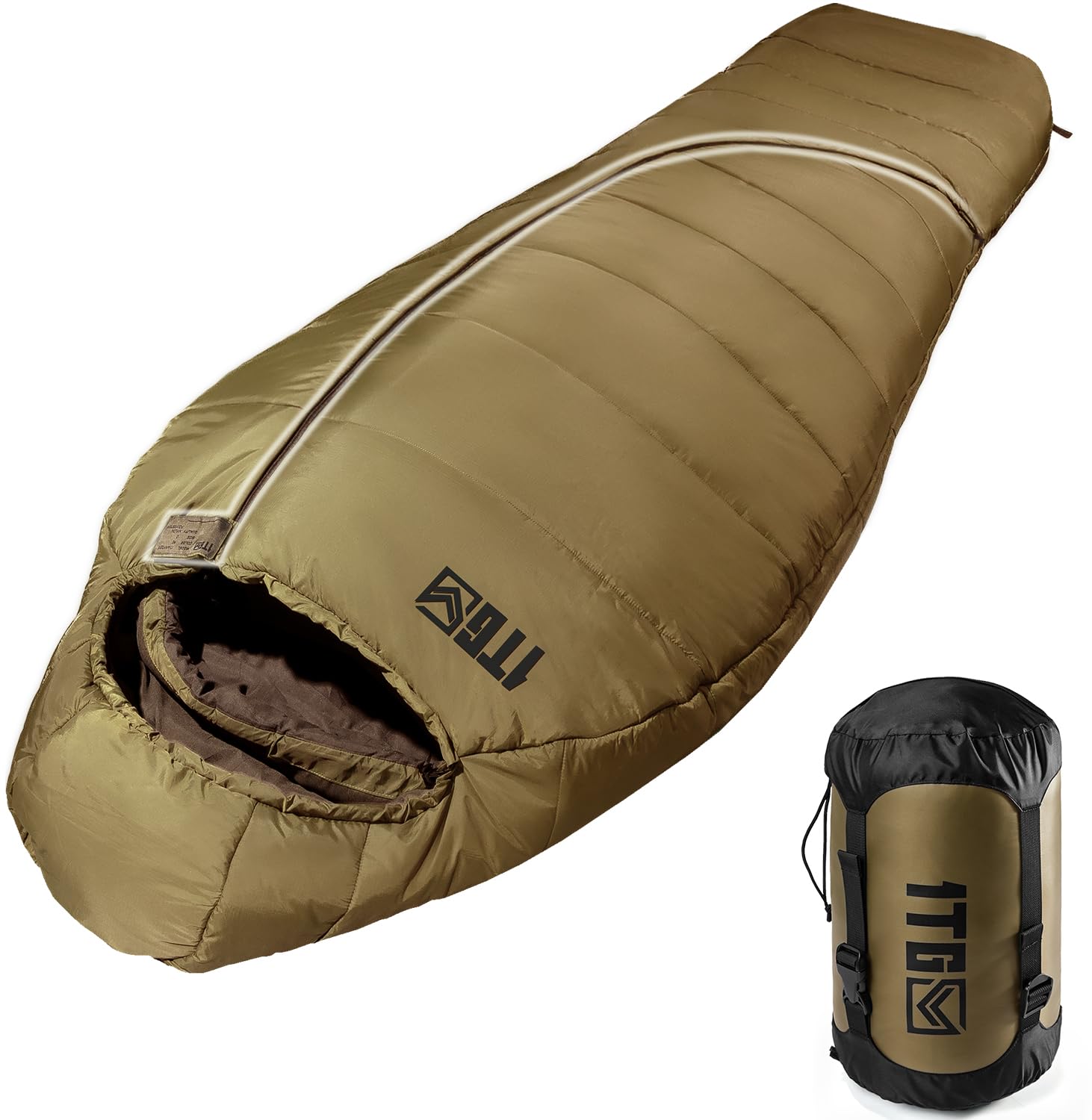
A warm, rugged mummy with a unique diagonal zipper and a phone pocket.
Rated for 25°F to 36°F, this bag uses 250g/㎡ 7D hollow-fiber insulation to hold body heat on chilly autumn nights without the bulk of a winter bag. The 40D nylon shell is water-resistant against dew and light rain, and the 190T polyester lining feels soft against your skin. It’s machine washable, so post-trip cleanup is quick.
The standout feature is the diagonal zipper design. Unlike standard side zippers that snag in the dark, this layout allows for smoother operation and easier arm movement when you’re getting in and out. There’s an integrated tech pocket to keep your phone or power bank warm and accessible through the night. Customers note the foot area is a box shape, so you don’t feel cramped.
At 3.88 lbs, it’s not an ultralight, but it compresses down to 13 inches with the included heavy-duty compression sack, fitting easily in a backpack’s bottom compartment. The fit skews toward shorter campers — one owner described it as “for short guys” — so taller sleepers should check the 6-foot maximum.
Ideal for: hunting and bug-out bags where durability and warmth matter more than ounces. Verify the fit if you’re over 5’10”.
8. Kelty Cosmic 20 Down Mummy Bag

The 20°F down bag that punches well above its price.
When the forecast calls for freezing nights, this is the bag you want. Rated at 20°F, it’s the warmest pick on this list, and a parent reported their daughter “kept her warm in 16° weather” on a spring backpacking trip. The 550-fill Kelty DriDown insulation is treated to resist moisture, so it holds its loft better than untreated down in damp conditions. It weighs just 3 lbs and compresses down impressively for backpacking.
The trapezoidal baffle construction helps retain heat more efficiently than standard designs, and the dual locking zippers with an anti-snag draft tube let you unzip from the bottom to vent heat if you run warm. There’s a zippered internal stash pocket for your phone or headlamp. The recycled shell and liner fabrics with PFAS-free DWR finish means it’s a more sustainable choice.
Down is the trade-off — it must be kept dry and hand-washed, so this isn’t the bag for wet, humid climates. Some buyers found it heavier than expected, though at 3 lbs, it’s still light for the warmth it delivers.
The Score: the best warmth-per-pound here, with a trusted brand name. If you camp dry and cold, this is your bag.
9. Kelty Galactic 30 Down Sleeping Bag
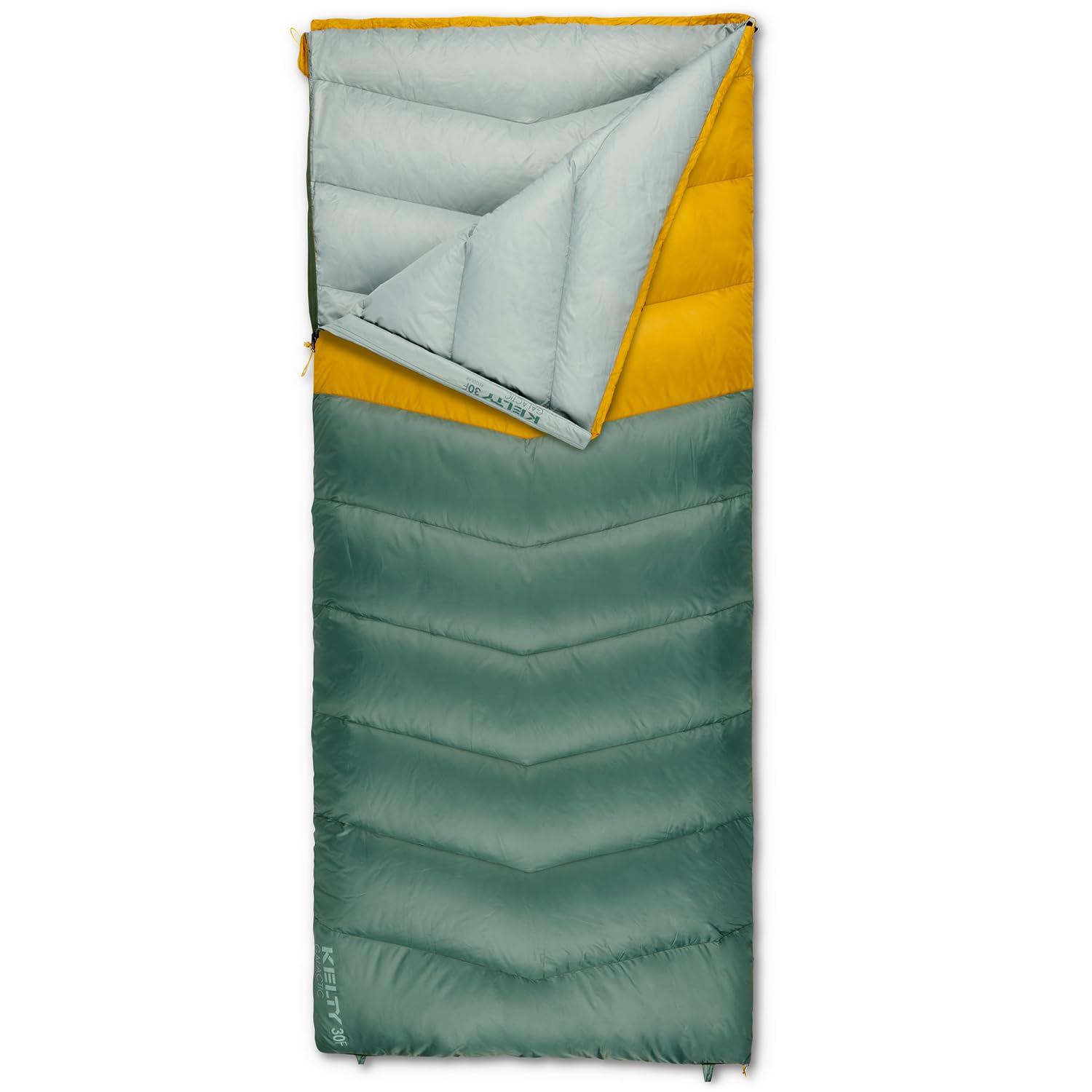
A buttery-soft down bag that fits like a blanket, not a cocoon.
If you want the warmth and packability of down without feeling constricted, this is the pick. The 550-fill RDS-certified, traceable down is “impressively compressible” and light, while the buttery-soft taffeta lining feels luxurious against your skin. Owners love it for sleeping on beds during road trips and for summer camping, finding it “roomier than a mummy bag” with a comfortable, temp-regulating feel.
The 30°F rating means it’s best for spring through fall, and it shines in 40-45°F conditions. Two 2-way zippers let you vent heat from the foot, and you can zip two Galactic bags together into a 2-person setup for couples. A cinch cord at the midsection gives you a snug, custom fit. At 2 lbs 14 oz with a 15×8-inch stuffed size, it’s genuinely backpackable.
The honest caveat is the warmth rating — it’s not a cold-weather bag. One owner found the 30°F rating comfortable to about 50°F, so treat the rating as a survival limit, not a comfort guarantee. The zipper can occasionally stick, though it freed without damage.
Best for: 3-season campers who want down’s comfort and packability in a roomy cut, and couples who want to zip together.
Understanding the Specs
Temperature Ratings
A bag’s temperature rating is the limit at which it keeps you alive, not necessarily comfortable. Most sleepers run cold, so a 30°F-rated bag often feels right in the 40s. Look for a “comfort” rating as your guide for a good night’s sleep.
Fill Power
Fill power measures how many cubic inches one ounce of down occupies — higher numbers mean more loft and warmth per ounce. A 650 fill bag is a solid balance of warmth and cost; 550 fill is heavier for the same warmth but cheaper.
Insulation Type
Down offers the best warmth-to-weight ratio and packs smallest, but loses insulation when wet. Synthetic fills like hollow fiber and micro fiber keep working when damp, dry faster, and cost less, but weigh more for the same warmth.
Bag Shape
Mummy bags trap heat most efficiently by hugging your body, making them best for backpacking. Rectangular bags give you room to spread out but require more heat to stay warm. Some double bags split into two singles for flexibility.
FAQ
What temperature rating do I need for a 3-season sleeping bag?
Will a mummy bag fit my height?
How do I pack a sleeping bag back into its stuff sack?
Can I machine wash my sleeping bag?
Is down or synthetic insulation better?
Can I zip two sleeping bags together?
What’s the difference between comfort and extreme ratings?
How heavy should a 3-season bag be for backpacking?
Final Thoughts: The Verdict
Across the board, the 3 season sleeping bag winner is the Teton LEEF because it pairs real sub-freezing warmth with a 3.5-pound weight and a compression sack that compresses it down small. If you want the lightest option that still packs responsibly sourced 650-fill down, grab the Naturehike CW295 at 1.3 lbs. And for cold-weather backpackers who prioritize warmth above all, the Kelty Cosmic 20 is the one to reach for.
How We Picked
We do not accept paid placement. Every pick is matched to a real buyer and a real use-case; we do not hands-on test units.
Sources & Methodology
Specifications: manufacturer listings and product documentation. Review insights: verified customer reviews, as of August 2026. Pricing: not shown on this page (it changes often); check the current price via the retailer link.
As an Amazon Associate, Gadgets Feed earns from qualifying purchases. This does not affect which products we feature.