
Our readers keep the lights on and my morning glass full of iced black tea. As an Amazon Associate, I earn from qualifying purchases.
Specs are compiled from manufacturer listings and verified buyer reviews and can change over time — please confirm the key details on the product page before buying.
The real question with acid free card stock isn’t if it’s archival — it’s whether the pack you grab will survive a Cricut blade, fold without cracking, and hold ink without bleed. For crafters, that 80 lb (216 gsm) weight has become the unspoken gold standard because it’s heavy enough for cards yet thin enough to cut cleanly.
I’m Min — the founder and writer behind Gadgets Feed. This guide is built by comparing the manufacturers’ published specifications and the patterns across verified customer reviews, so you get each pick’s real strengths and trade-offs instead of marketing spin.
Whether you’re die-cutting, printing invitations, or scrapbooking, the best acid free card stock picks below balance weight, texture, and cut quality for real projects.
Our Picks at a Glance


How To Choose The Best Acid Free Card Stock
Before you click buy, you need to know that “cardstock” covers a massive range — from flimsy 65 lb sheets that barely stand up to 130 lb behemoths that can jam your printer. Match the weight and finish to your project type—greeting cards need 80 lb, while certificates print best on smooth 65 lb.
Weight is the first decision
Weight is measured in pounds (lb) or grams per square meter (gsm). The most versatile choice for crafters is 80 lb cover (216 gsm) — heavy enough for a sturdy card base, but thin enough to feed through most printers and cut machines. For die-cutting and Cricut work, 65 lb can feel too flimsy, while 110 lb and above gives a premium, thick feel but risks printer jams.
Acid-free vs. lignin-free
Acid-free means the paper won’t yellow or degrade over time, which is the whole point for scrapbooks and keepsakes. Many quality sheets are also lignin-free, protecting your photos from staining. For keepsakes meant to last decades, choose sheets carrying both acid-free and lignin-free labels.
Brightness and finish
Brightness ratings (like 94 or 98) tell you how white the paper is — a higher number means a crisper, whiter sheet. Finish matters too: a smooth finish is best for printing and stamping, while a textured or linen finish adds elegance to invitations but can cause inkjet smudging if you’re not careful.
Quick Comparison
| Model | Best For | Weight | Sheet Count | Size | Amazon |
|---|---|---|---|---|---|
| American Crafts Neutrals★ Best Overall | Die-cutting & textured cards | 80 lb (216 gsm) | 60 | 12×12 | Amazon |
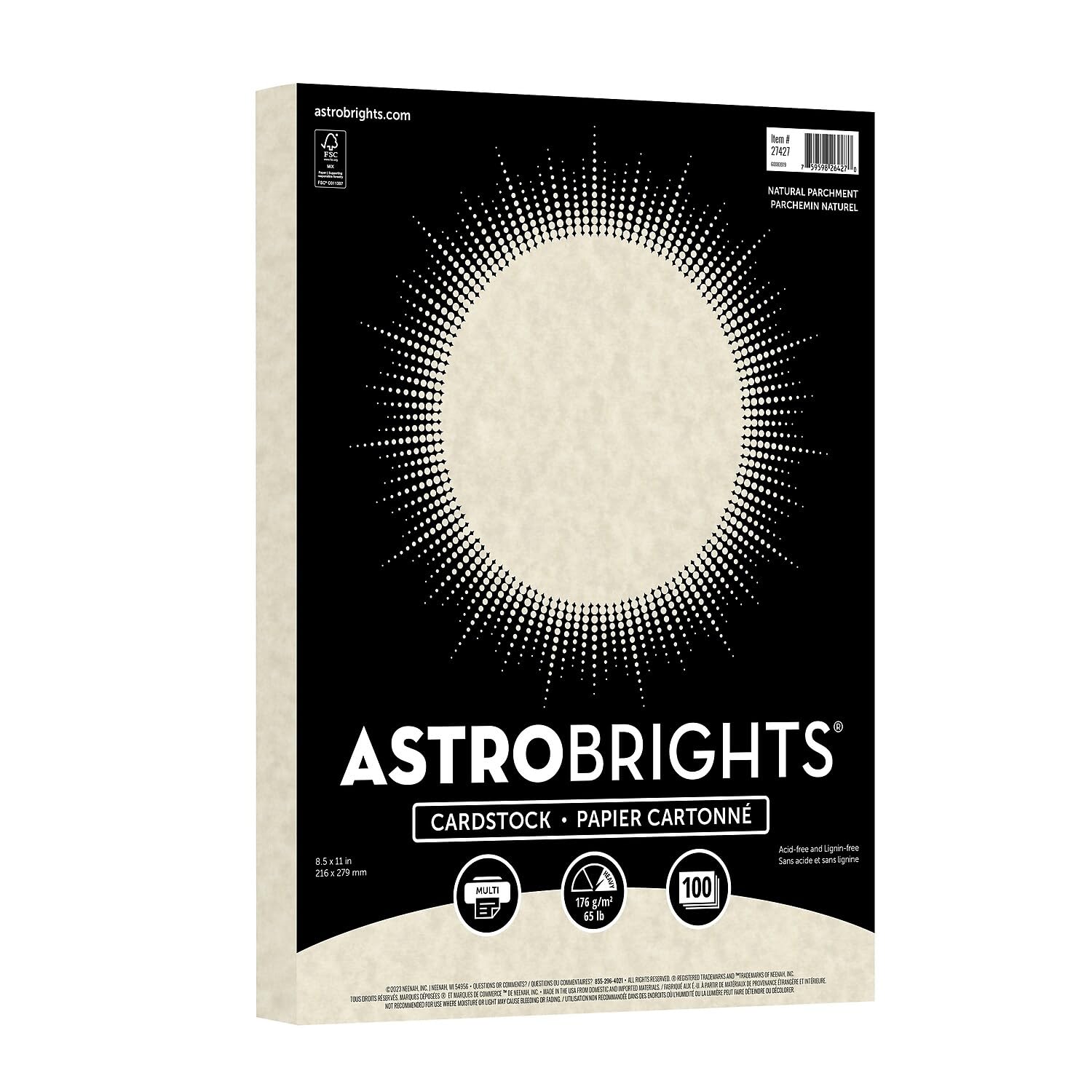
| Astrobrights ParchmentBest Value | Inkjet printing & certificates | 65 lb (176 gsm) | 100 | 8.5×11 | Amazon |
| Hamilco WhiteScrapbook Star | Scrapbooking & photo albums | 80 lb (216 gsm) | 25 | 12×12 | Amazon |
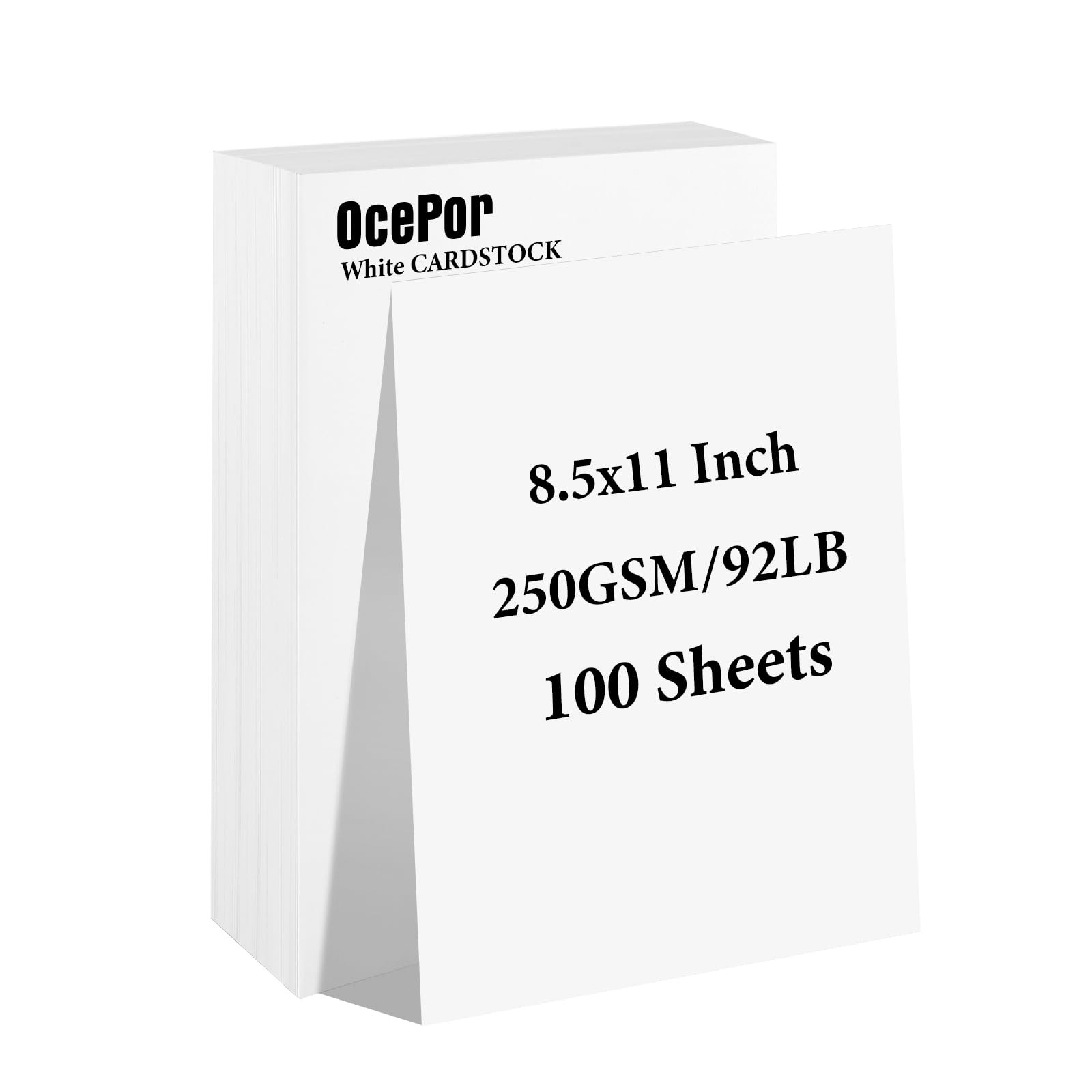
| OcePor White | Thick card bases & mini albums | 92 lb (250 gsm) | 100 | 8.5×11 | Amazon |
| Norstrom Dumati Index | Watercolor & marker art | 130 lb (17pt) | 100 | 5×8 | Amazon |
| Clear Path Paper White | Photo album backing | 65 lb | 25 | 12×12 | Amazon |
| Neenah Mediumweight | Bulk printing & journaling | 90 lb (163 gsm) | 365 | 8.5×11 | Amazon |
| Hamilco Linen Textured | Elegant invitations & resumes | 80 lb (216 gsm) | 50 | 8.5×11 | Amazon |
In-Depth Reviews
1. American Crafts 12×12 Textured Paper Pack
Our pick — over 4.5★ from 950+ verified ratings; the strongest balance of quality and price.
The 80 lb workhorse that folds without cracking and feeds a Cricut like a dream
If your projects live and die by the die-cut machine, this is the pack that earns its keep. You get two looks in one sheet: a textured side and a smoother reverse, both at 80 lb (216 gsm). Buyers report it “will not crack when folding for cards, crafts,” so your folds stay clean and your card looks handmade, not slapped together.
Owners consistently praise the rich colors and sturdy feel., with owners praising the rich colors and the sturdy feel that survives Cricut Maker cuts without fraying. At 2.6 pounds for 60 sheets of 12×12, it’s a heavy, substantial stack — more than double the weight of the Hamilco 25-pack, which tells you these sheets have real body.
It’s solid core, meaning the color runs through the entire sheet, so cut edges won’t show a white line — a subtle detail that keeps your projects looking professional even on the edges. The 20 unique colors in the Neutrals set cover everything from warm creams to deep browns.
Why crafters love it
- Folds cleanly without cracking, even on tight card folds
- Textured one side, smooth the other — two surfaces in one sheet
- Solid core color means no white edges when you cut
Who should pass
- 12×12 won’t fit standard letter-size printers
- Neutrals palette lacks bright primaries if you need vivid pops
Reach for this if: you die-cut with a Cricut or Silhouette and want a sturdy, textured sheet that folds without cracking.
Look elsewhere if: you need plain letter-size stock for a home printer — the 12×12 format won’t feed through.
2. Astrobrights Specialty Parchment Cardstock
The printer-friendly parchment that turns certificates into keepsakes
This one is for anyone who prints more than they cut. The natural ivory parchment look gives documents an instant vintage, formal feel, and owners mention it “feeds through my HP inkjet printer smoothly, no problems” — which is the single most useful thing a printer paper can do. At 65 lb (176 gsm), it’s the lightest pick here, but that’s a feature if your printer chokes on heavier stock.
With 100 sheets in an 8.5×11 letter size, this is the highest sheet count at its tier — compare that to the Hamilco 25-pack and you’re getting four times the paper for the same kind of money. It’s fully dyed through, so cutting and folding won’t reveal a white core, and it’s both lignin and acid-free for long-lasting results.
The appearance is the second most-praised trait after quality, with owners using it for awards, certificates, and card-making. It absorbs ink well without smudging, and the weight is described as hard yet flexible — sturdy enough to feel premium, flexible enough to fold cleanly.
Perfect for printing: the smooth surface takes inkjet and laser ink evenly, so your text stays crisp and the vintage ivory tone improve everything from certificates to wedding programs.
Grab it if: you print certificates, invitations, or documents and want a parchment look that feeds through any home printer without jams.
Think twice if: you need heavy 80 lb stock for die-cutting — 65 lb feels light in a Cricut.
3. Hamilco White Scrapbook Cardstock
A bright, smooth 80 lb sheet that cuts clean and stays true white
Scrapbookers are picky about white — it needs to be bright enough to make photos pop but not so stark it looks clinical. At 98 brightness, this 12×12 white cardstock hits that mark. Customers note it “cuts easy works great in my crafts” and call it the “best white I’ve found yet.” The smooth finish on both sides accepts ink and adhesive evenly, which matters when you’re layering and mounting.
Your sheets arrive flat and unbent, thanks to shrink-wrapping with rigid cardboard backing — a complaint that plagues cheaper packs. At 80 lb cover (216 gsm) and just 1.2 pounds for 25 sheets, they’re dense and flat. Made in the USA from acid-free paper, they give you archival-quality results for photo albums and memory books.
The crisp white takes printed patterned paper beautifully, and the smooth surface cuts cleanly by hand or with die-cutting machines like Cricut and Silhouette. Owners note it slides nicely into memory book plastic sleeves, making it a no-fuss choice for preserving photos.
The flat white winner: this is the sheet to grab when you want true bright white that won’t yellow in a scrapbook, with a smooth surface that layers and mounts easily.
Choose this for: scrapbook layouts, photo mounting, and any project where you need a clean bright white that won’t fight your adhesive.
skip it if: you need texture — this is smooth on both sides, so there’s no tactile interest.
4. OcePor Heavyweight Cardstock
A 250 gsm sheet that handles 3D embossing without a single crack
Most cardstock tops out at 80 lb, but this one pushes to 92 lb (250 gsm) — and that extra heft is exactly what embossing folders demand. Crafters who run it through 3D embossing report “no cracking,” even at that thickness, which is the kind of durability that separates a good sheet from a great one. It’s double-sided and acid-free, with a fine, smooth surface.
At 100 sheets for a letter-size 8.5×11 format, you’re getting serious volume at this weight — most other packs at this thickness stop at 25 or 50 sheets. The thickness is the second-most praised trait after quality, with owners using it for mini albums, folios, and card bases. One card maker switched to it as their go-to because the weight is ideal for special designs.
The recurring note in the reviews is versatility: it prints on inkjet and laser, cuts and punches cleanly, and takes watercolor without buckling. That said, the white color gets mixed feedback — some find it sharp and bright, others say it’s not white enough — so if pure white matters, double-check.
Built for heavy projects
- 250 gsm holds up to 3D embossing with zero cracking
- 100 sheets at this thickness is exceptional value
- Smooth surface takes inkjet, laser, and watercolor
The honest trade-off
- White tone reads slightly off-pure to some eyes
- Thick enough that budget printers may struggle
Best for: embossing, mini albums, and folios where you need a genuinely thick sheet that won’t crack under pressure.
Not for: anyone who needs pure bright white — the color is the one mixed note in an otherwise stellar pack.
5. Norstrom Dumati Super Thick Index Cards

A 130 lb surface that stops marker bleed cold, for artists and note-takers alike
This is the outlier pick, and it earns its spot through sheer thickness. At 130 lb (17pt, or 0.017 inches), these 5×8 cards are nearly twice as thick as standard cardstock. That density makes them a favorite among watercolorists and marker artists — acrylic paint pens and alcohol markers don’t bleed through, so you get a finished piece, not a ruined desk. The uncoated smooth surface absorbs gel pen ink, watercolor, and highlighters without feathering.
Owners overwhelmingly praise the thick, bleed-proof surface., with owners using them for everything from a full memoir draft to route-planning for truck drivers. They’re archival quality, acid-free, elemental chlorine free, and FSC certified, so your art stays stable over years. The 98 bright white surface is neutral and scanner-friendly, making these a writer’s best friend for drafting.
Because they’re USPS-approved for postcards, you can mail them directly. The 100-count pack is substantial, and the thickness means they arrive flat and stay flat — no curl, no flimsy sag. These 130 lb cards end marker bleed-through that plagues standard index cards.
The bleed-proof canvas: this is the pick for anyone working with wet media — markers, watercolor, and paint pens sit on the surface instead of soaking through.
Reach for it if: you use markers, watercolor, or paint pens and need a thick surface that won’t bleed or buckle.
Look elsewhere if: you need standard letter-size sheets — the 5×8 index format is a specialty shape, not a full page.
6. Clear Path Paper Solid Core White

The 12×12 sheet that’s honestly thinner than you expect — and that’s fine
Here’s a cardstock that does its best work when you’re not asking it to be a heavyweight. At 65 lb, this Clear Path Paper solid core sheet is lighter than typical cardstock. Reviews are upfront: it’s “not as thin as printer paper” but “not sturdy enough to stand alone” for a card base. It shines as photo album backing, picture frame mats, and any project needing a clean white 12×12 surface that folds and cuts easily.
It’s solid core, meaning the white runs through the entire sheet with no off-color center, and it’s lignin and acid-free for archival safety. Owners praise the clean white surface for photo backing., with owners using it to back wedding photos and album pages, happy with the weight for that purpose. It cuts and folds cleanly, and it’s compatible with most plotter cutting machines.
Every pack includes a free color swatch card for more accurate on-screen color matching — a nice touch if you’re coordinating with other papers. If you’re a card maker expecting a thick, sturdy base, this will disappoint; but if you need a flat, smooth backing layer, it’s exactly right.
Honest about its weight: the reviews consistently note 65 lb feels light for card bases — treat it as a backing paper, not a card front.
Use it for: photo album backing, frame mats, and craft projects where a lighter, easy-to-fold sheet is exactly what you need.
pass on it if: you’re making greeting card bases that need to stand up — this won’t.
7. Neenah Mediumweight Cardstock

A full ream of 365 sheets that takes ink well and keeps your printer happy
When you need cardstock by the ream, not the pack, this Neenah is the volume play. At 90 lb (163 gsm) index weight, it’s actually slightly lighter than 80 lb cover — a nuance that matters — and that lighter feel is what makes it feed through a printer reliably session after session. Owners print journal pages on it and report “my Epson-ET4760 prints really good with it,” a real-world compatibility win.
At 365 sheets in the standard 8.5×11 letter size, this is the runaway volume winner — more than three times the sheets of the Astrobrights 100-count. The 94 brightness is standard for general use, giving a clean white that works for documents, flyers, and drawing. It’s acid-free and lignin-free, so it won’t yellow or disintegrate over time.
The one honest note from owners: at this weight, it’s “thinner than colored cardstock” and can be “too sheer for card interiors with stamped sentiments.” If you’re making card fronts, you’ll want the 110 lb version. But for tags, pockets, and small journals, this is the right middle ground — it takes ink well and the quality is consistent enough that owners reorder repeatedly.
The volume king
- 365 sheets is a true ream — months of projects in one box
- Inkjet and laser compatible, takes ink cleanly
- Acid and lignin-free for archival safety
Know the weight
- 90 lb index runs thinner than 80 lb cover — check before you buy
- Too sheer for card interiors with stamped sentiments
Grab it if: you print in volume — journals, flyers, and documents — and want a reliable, printer-friendly sheet at a ream-sized quantity.
Pass if: you need sturdy card fronts; this reads lighter than the 80 lb cover sheets elsewhere in this guide.
8. Hamilco Natural Linen Textured Cardstock

A woven linen finish on both sides that adds instant class to printed pieces
For resumes, wedding invitations, and stationery, texture is the whole point — and this Hamilco delivers it on both sides. The woven linen feel is the second-most-praised trait after paper quality, with owners describing it as “lovely” and noting it “adds a touch of class to printed documents.” At 80 lb cover (216 gsm), it has a substantial, premium weight that reads as formal.
This is specifically an inkjet paper — the textured surface works best with inkjet technology, and the maker recommends against laser printers, so check your setup before buying. The natural color is described as less bright than “bright white” but whiter than true natural, a middle ground that flatters printed text and elegant designs. It ships in a sturdy corrugated box, and reviewers point out arriving with no damaged paper.
The one recurring note is that the thickness can jam some printers — one owner found it “too thick for printer” and pivoted to using it for notes. If your printer handles heavy cardstock, it prints cleanly with a crisp edge; if not, be prepared to feed manually. For anyone who wants their printed pieces to feel like they cost twice as much, this is the pick.
The texture upgrade: the linen finish on both sides makes everything it touches look upscale — just confirm your printer can handle 80 lb stock.
Reach for it if: you’re printing resumes, invitations, or formal stationery and want a tactile, woven finish that stands out.
it’s not for you if: you run a laser printer — this paper is built for inkjet only.
Understanding the Specs
Weight (lb / gsm)
Cardstock weight is measured in pounds (lb) or grams per square meter (gsm). For crafters, 80 lb cover (216 gsm) is the balance — heavy enough for sturdy cards, thin enough to feed through printers and cut machines. Thicker 92 lb and 130 lb sheets resist bleeding and bucking but can jam printers. Lighter 65 lb sheets fold easily but may feel flimsy for card bases. Always check whether the weight is “cover” or “index” — they’re not the same physical thickness.
Brightness rating
Brightness is a number (usually 94, 97, or 98) that tells you how white the paper is. A higher number means a crisper, brighter white with less yellow or gray tone. For scrapbooking and photo mounting, 98 brightness makes colors pop; for general printing, 94 is perfectly fine. If the paper’s whiteness matters for your project, this number is the quickest way to compare packs without opening them.
Acid-free vs. lignin-free
Acid-free paper is made without acid, so it resists yellowing and degradation over many years — essential for scrapbooks and keepsakes. Lignin is a natural substance in wood pulp that can cause paper to yellow and damage photos; lignin-free means it’s been removed. For archival projects, pick sheets that carry both acid-free and lignin-free labels.
Finish and texture
Smooth cardstock is best for printing, stamping, and layering — ink sits evenly and adhesive bonds cleanly. Textured stock (linen, parchment) adds an elegant, upscale feel to invitations and resumes but can smudge with inkjet ink if you’re not careful. Solid core means the color runs through the entire sheet, so cut edges show the same color rather than a white line — a key detail for die-cutting.
FAQ
What does acid free card stock actually mean for my projects?
Is 80 lb cardstock the right weight for most craft projects?
Will 92 lb or 130 lb cardstock jam my home printer?
What’s the difference between 12×12 and 8.5×11 cardstock?
Is textured cardstock safe for inkjet printers?
How many sheets of cardstock do I actually need to buy?
What does “solid core” mean in cardstock?
Can I use cardstock for both printing and die-cutting?
Why does my white cardstock sometimes look yellow or dull?
Final Thoughts: The Verdict
For most crafters, the acid free card stock winner is the American Crafts Neutrals pack because it combines the ideal 80 lb weight with a textured surface, solid core color, and the folding durability that die-cutters need. If you print more than you cut, the Astrobrights Parchment gives you 100 printer-friendly sheets at a budget-friendly price. And for scrapbookers who want a true bright white, the Hamilco White is the one to reach for. Every pick here is acid-free — the real choice is matching weight and finish to your specific project.
How We Picked
We do not accept paid placement. Every pick is matched to a real buyer and a real use-case; we do not hands-on test units.
Sources & Methodology
Specifications: manufacturer listings and product documentation. Review insights: verified customer reviews, as of August 2026. Pricing: not shown on this page (it changes often); check the current price via the retailer link.
As an Amazon Associate, Gadgets Feed earns from qualifying purchases. This does not affect which products we feature.