
Our readers keep the lights on and my morning glass full of iced black tea. As an Amazon Associate, I earn from qualifying purchases.
Specs are compiled from manufacturer listings and verified buyer reviews and can change over time — please confirm the key details on the product page before buying.
If you need a 6.0 cubic feet refrigerator, you likely have a tight spot — a dorm corner, a small apartment kitchen, or an RV galley — and you want cold storage that fits without dominating the room. The real challenge isn’t finding a fridge; it’s getting one that arrives undamaged, cools to your set temperature, and stays quiet enough not to annoy you. Here are three very different solutions to that problem, from a budget-friendly double-door unit to a premium three-way RV model.
I’m Min — the founder and writer behind Gadgets Feed. This guide is built by comparing the manufacturers’ published specifications and the patterns across verified customer reviews, so you get each pick’s real strengths and trade-offs instead of marketing spin.
Because “6.0 cubic feet” is a flexible target, this list includes the closest same-type sizes that serve the same purpose, so you can see the full range of what works. 6.0 cubic feet refrigerator shopping means weighing capacity, cooling method, and delivery condition against your actual space.
Quick Picks
- BANGSON 7.1 Cu.Ft Refrigerator — Top Performer
- RecPro RV Refrigerator 6.3 Cubic Feet Gas — Off-Grid Pick
- WANAI Double Door Small Refrigerator — Budget Champion
How To Choose The Best 6.0 Cubic Feet Refrigerator
The number on the box — 5.0, 6.3, or 7.1 cubic feet — tells you the total volume, but it hides how that space is divided. A fridge with a big freezer leaves less room for fresh groceries, so match the split to what you actually store.
Compressor vs. Absorption Cooling
Most home fridges use a compressor, which cools quickly and runs on standard household power. RV fridges often use gas-absorption technology instead, which lets them run on propane when you’re off-grid — a feature you simply won’t find on a standard apartment unit.
Check the Noise and Clearance Claims
Look for a decibel rating if you’re placing the fridge near a bedroom or living area. Also confirm how much space the maker recommends around the unit — some designs need several inches of clearance to cool properly, which changes where you can put it.
Quick Comparison
In‑Depth Reviews
1. BANGSON 7.1 Cu.Ft Refrigerator with Bottom Freezer
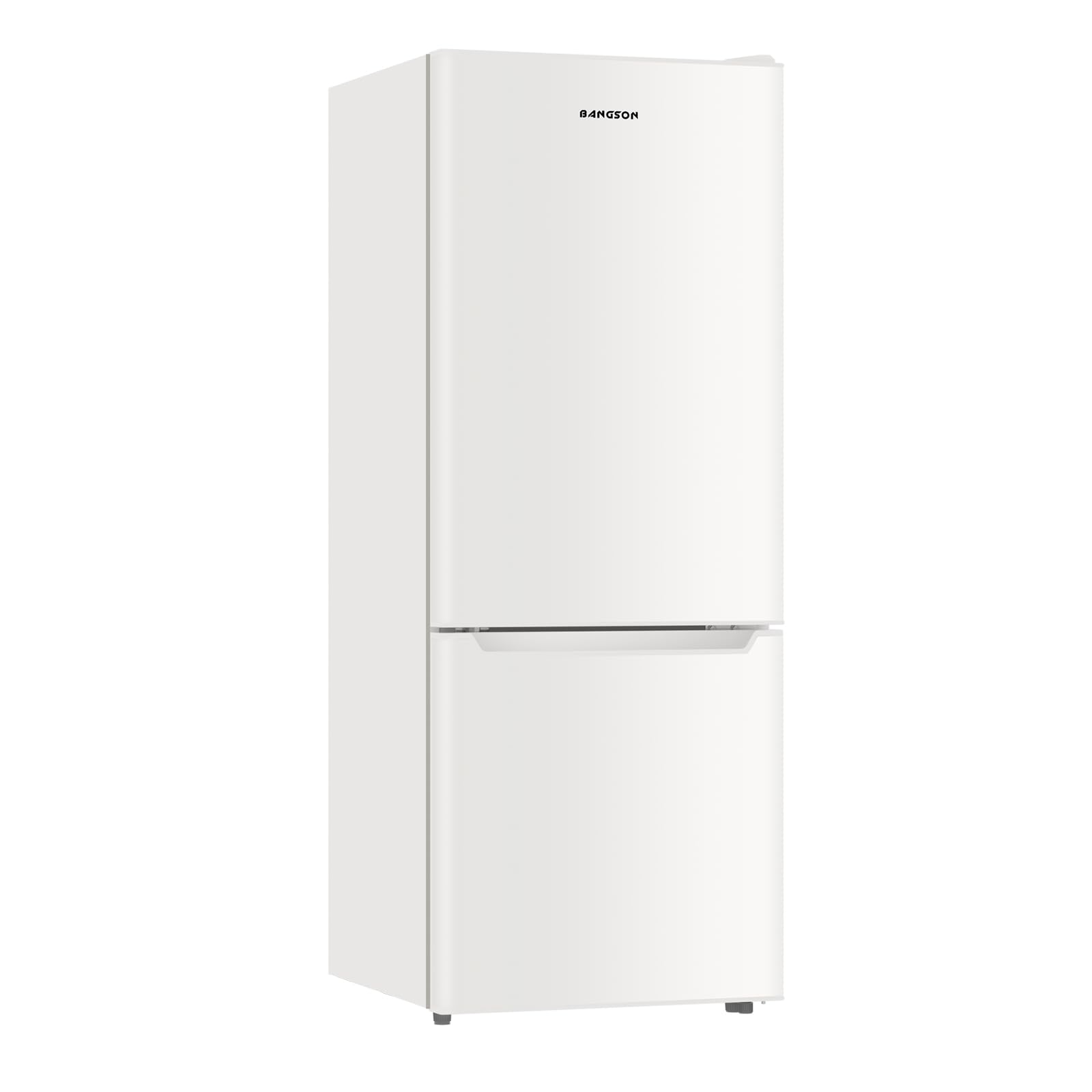
The apartment fridge that wins people over with quiet cooling and a freezer you don’t have to bend for.
If you’re cramped for floor space but tired of bending down to reach the freezer, this BANGSON unit solves both at once. It holds 7.1 cubic feet total — 5.45 Cu.Ft for fresh food and 1.65 Cu.Ft for the bottom freezer — inside a footprint of just 21.3″ W x 20.7″ D x 56″H. That bottom-freezer layout is the thing buyers praise most, because it puts everyday items at eye level while keeping frozen goods low.
Noise is a genuine strong suit here. It runs at an average of 39 dB during normal use, which means it won’t interrupt conversation or sleep in a studio apartment. You get five temperature settings ranging from 1 (warmest) to 5 (coldest), with 3 listed as the optimal setting; the freezer spans -5.6°F to 15.1°F and the refrigerator section 32°F to 50°F. Unlike the smaller WANAI unit that buyers felt didn’t get cold enough, this one cools quickly and holds its temperature, per the majority of feedback.
There’s a real catch you need to budget for: physical space around the unit. Buyers report this fridge needs 8 inches of clearance to cool properly, which is far more than most mini fridges require and could rule out a tight alcove. Delivery condition is the other watchpoint — several units arrived with dents and dings, though the brand’s customer service quickly corrected the problem and sent replacements. The reversible doors, automatic night light, and included ice tray, defrost tool, and egg shelf round out a package that feels more premium than its price tier suggests.
What wins people over
- Bottom freezer means no bending for frozen food
- Quiet 39 dB operation suits bedrooms and studios
- Adjustable glass shelves and crisper drawer for flexible storage
- Customer service responds quickly to damage claims
What to plan for
- Needs 8 inches of clearance around it to cool properly
- Some units ship with cosmetic dents
- Door reversal instructions are not included
Reach for this if: you want the most usable layout for a small apartment and value quiet operation over absolute minimum footprint.
Look elsewhere if: your install spot can’t spare 8 inches of clearance, since that rule is non-negotiable for proper cooling.
2. RecPro RV Refrigerator 6.3 Cubic Feet Gas and Electric

The RV fridge that drops into a Dometic opening and runs on propane when the campsite has no hookups.
This RecPro is built for a completely different life than the other two picks — it’s a true RV refrigerator that runs on 110V-120V, 12V, or propane gas, thanks to gas-absorption technology. If you boondock or dry-camp without shore power, that propane option is the entire point; no standard compressor fridge here can match it. The 6.3 cubic feet of capacity and 180 liters of fresh-food space fit what the review pages sum up as the perfect fit into the space of an old Dometic fridge opening.
Installation is where this unit earns its reputation — owners mention it’s easy to hook up and slides right into the existing opening, sometimes even fitting through a TV door. The glossy black finish and reversible door orientation (with a hardware kit available from RecPro) add flexibility. One pro installer noted the setup needs two 12V connections with 10AWG wire to the battery, plus aligned propane and 110V lines, so this is a job for someone comfortable with RV systems.
The honest trade-off here is reliability — it’s the most-discussed aspect by far, and it splits opinion. Many owners say it works great with no issues at all, but a professional RV appliance installer reported one unit didn’t work right off the bat and described the return process as expensive. There’s also a planning rule: the maker says to turn the fridge on and let it chill for 12 hours before loading food, which requires patience on setup day. Instructions are another recurring gripe — buyers consistently say they could be clearer, especially on the hinge pages.
The strengths
- Runs on propane, 12V, or 110V for true off-grid flexibility
- Drops into a standard Dometic RV opening with easy hookup
- Reversible door and 3 door shelves for flexible access
- 12-hour pre-chill guidance for optimal cooling
The honest caveats
- Reliability gets mixed feedback — most work, some fail early
- Poor operating instructions, especially for hinges
- Return shipping can be costly if a unit arrives faulty
Best for the right owner: an experienced RV owner or a professional installer who can handle the wiring and propane connections confidently.
Think twice if: you’re not comfortable with 12V and propane hookups — this is not a plug-and-play appliance.
3. WANAI Double Door Small Refrigerator with Freezer, 5.0 Cu.Ft

The budget double-door that splits 5.0 cubic feet into a top freezer and bottom fridge for tight spaces.
For the shopper who just needs cold storage on a budget, this WANAI splits its 5.0 cubic feet into a 1.8 Cu.Ft freezer on top and a 3.2 Cu.Ft refrigerator below, accessed through two separate doors. That layout is the classic compact-fridge design — frozen food up high, fresh groceries down low — and the rotary compressor cools quickly and evenly. It’s the smallest of the three picks here, with a 42% capacity gap versus the BANGSON’s 7.1 cubic feet, so it suits a dorm, office, or small apartment where every inch counts.
The seven-level adjustable thermostat lets you rotate the knob to approximate temperatures from -0.4 °F to 50 °F, and a built-in LED light helps you see what’s inside. Removable shelves, a crisper drawer, bottom leveling legs for uneven floors, and two wheels for moving make it genuinely flexible. It even carries a 4 Star BEE energy rating. One important setup rule: the machine must sit upright for at least 24 hours before you plug it in, so plan your delivery day accordingly.
The honest reality is that this is a value-tier unit with value-tier risks. Customers note the fit is good for the space, but some note it “doesn’t get as cold as I would like” — the most common functional gripe. Delivery condition is the bigger pattern, with multiple owners receiving dents, scratches, or a misaligned freezer door; customer service resolved some cases same-day, but one buyer waited two weeks with no reply after being promised a partial refund. If you keep expectations realistic for the price, the cooling and layout deliver; if you need guaranteed pristine arrival, this is where you accept some risk.
Value read: You get a functional double-door fridge with a 1.8 Cu.Ft freezer and adjustable thermostat at a budget price — the trade-off is delivery quality control that varies.
Bottom line: Works as described for most, but inspect the box the moment it arrives and file any damage claim immediately.
Grab it for: a dorm room, office break area, or rental where budget is the priority and you can tolerate some cosmetic risk.
Step up if: you need guaranteed deep chilling or pristine delivery — the BANGSON costs more but scores higher on both counts.
Understanding the Specs
Total Capacity vs. Usable Split
The headline cubic feet number is the whole box, but the real story is how it divides. A 5.0 cu ft unit with a 1.8 cu ft freezer leaves 3.2 cu ft for fresh food, while a 7.1 cu ft unit with a 1.65 cu ft freezer gives you 5.45 cu ft of fresh space — nearly double for groceries. Match the split to what you store most.
Compressor vs. Absorption Cooling
Compressor fridges (like the BANGSON and WANAI) plug into a wall and cool quickly, but they need standard AC power. Absorption fridges (like the RecPro) can run on propane or 12V, making them essential for RVs and off-grid use — at a higher price and slower initial cool-down.
FAQ
How much clearance does a 6.0 cubic feet refrigerator need?
Can an RV refrigerator run on regular home power?
How long should I wait before plugging in a new fridge?
What’s the difference between a bottom freezer and a top freezer?
Why does my small fridge not get cold enough?
Is a propane RV fridge worth the higher price?
Can I reverse the door swing on these refrigerators?
How noisy are these fridges?
Final Thoughts: The Verdict
Across the board, the 6.0 cubic feet refrigerator winner is the BANGSON 7.1 Cu.Ft because it combines the most usable fresh-food space with genuinely quiet 39 dB operation and a bottom freezer layout. If you need propane and 12V flexibility for RV life, grab the RecPro 6.3 Cu.Ft. And for a tight budget in a dorm or office, the WANAI 5.0 Cu.Ft delivers functional cooling — just inspect it carefully on delivery day.
How We Picked
We do not accept paid placement. Every pick is matched to a real buyer and a real use-case; we do not hands-on test units.
Sources & Methodology
Specifications: manufacturer listings and product documentation. Review insights: verified customer reviews, as of August 2026. Pricing: not shown on this page (it changes often); check the current price via the retailer link.
As an Amazon Associate, Gadgets Feed earns from qualifying purchases. This does not affect which products we feature.