
Our readers keep the lights on and my morning glass full of iced black tea. As an Amazon Associate, I earn from qualifying purchases.
Specs are compiled from manufacturer listings and verified buyer reviews and can change over time — please confirm the key details on the product page before buying.
Getting a garden to explode with color isn’t about watering more — it’s about giving plants the right food at the right moment. A bloom booster is a fertilizer with a high phosphorus content, the nutrient that fuels flower and fruit development rather than just leafy growth. Choosing the wrong one means lush green vines with zero blooms, which is frustrating after a season of care.
I’m Min — the founder and writer behind Gadgets Feed. This guide is built by comparing the manufacturers’ published specifications and the patterns across verified customer reviews, so you get each pick’s real strengths and trade-offs instead of marketing spin.
Whether you grow houseplants, vegetables, or a backyard flower bed, the right bloom booster can turn a stubborn plant into a showpiece, and this guide breaks down nine proven formulas to match your setup.
Our Picks at a Glance


How To Choose The Best Bloom Booster
Every fertilizer label shows three numbers, like 10-54-10. These are the N-P-K ratio: nitrogen (N) for leaves, phosphorus (P) for flowers and roots, and potassium (K) for overall health. A bloom booster is defined by a middle number that’s much higher than the first, because phosphorus is what triggers flowering.
Match the Form to Your Routine
Water-soluble powders mix into a watering can for fast uptake and precise feeding, ideal for potted plants and hydroponics. Granules get sprinkled on the soil and break down slowly, which suits outdoor beds and gardeners who want a set-and-forget approach. Liquid concentrates are ready to dilute and pour, perfect for weekly feeding rituals.
Consider the Source: Synthetic vs Organic
Your choice here depends on speed versus soil health. Synthetic boosters are mined or manufactured salts that feed the plant directly and work quickly, so you see fast results. Organic options rely on natural ingredients and biological additives like microbes and mycorrhizae (beneficial fungi that help roots absorb nutrients), which build soil health over time. Pick synthetic for immediate flowering, organic for long-term improvement.
Quick Comparison
| Model | Best For | N-P-K Ratio | Form | Weight | Amazon |
|---|---|---|---|---|---|
| Carl Pool BR-61★ Best Overall | Potted flowers & summer color | 9-58-8 | Powder | 3 lbs | Amazon |
| Schultz Bloom PlusBest Value | Houseplants & winter blooms | 10-54-10 | Powder | 1.5 lbs | Amazon |
| Triple Super PhosphatePure Phosphorus | Fruit, vegetables & orchids | 0-46-0 | Granules | 5 lbs | Amazon |
| Miracle-Gro Organics Blooms | Organic potted flowers | 5-7-10 | Granules | 2.5 lbs | Amazon |
| FoxFarm Open Sesame | Early flowering stage | 5-45-19 | Powder | 6 oz | Amazon |
| Miracle-Gro LiquaFeed | Quick liquid feeding | 1-0-1 | Liquid | 16 fl oz | Amazon |
| Alaska Morbloom | Large gardens & shrubs | 0-10-10 | Liquid | 1 Gallon | Amazon |
| Espoma Triple Phosphate | Root growth & quick feeding | 0-45-0 | Granules | 6.5 lbs | Amazon |
| GreenGro Pride Lands | Organic soil & terpene rich blooms | 2-5.5-5.5 | Powder | 5 lbs | Amazon |
In‑Depth Reviews
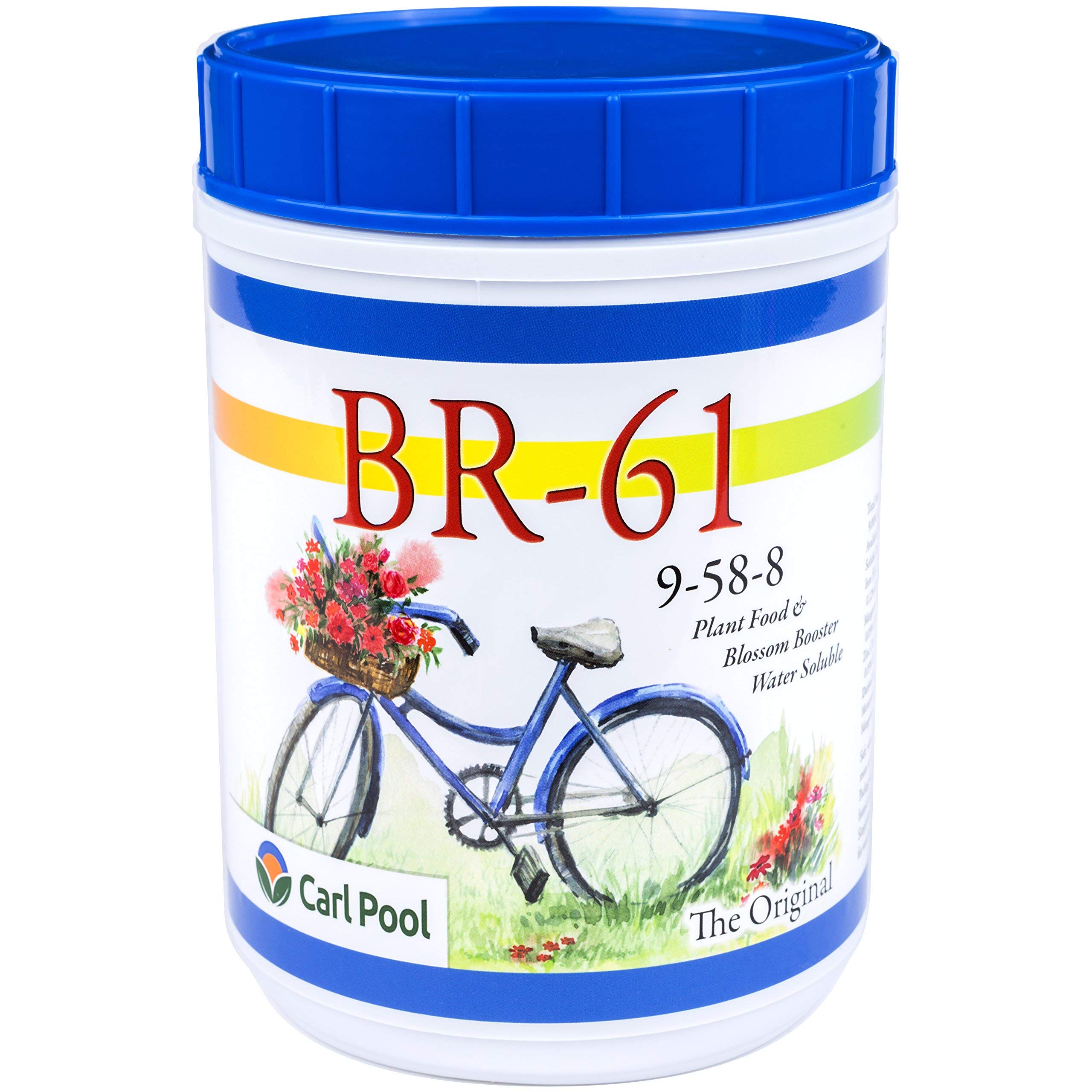
1. Carl Pool BR-61 Plant Food 9-58-8
Our pick — over 4.5★ from 900+ verified ratings; the strongest balance of quality and price.
The crowd-favorite powder that keeps potted flowers blooming from first frost to last.
This booster earns the top spot because its 9-58-8 ratio is almost pure phosphorus — the nutrient that tells a plant “time to flower.” You mix it at 1 tablespoon per gallon of water, and the 3-pound container translates to 48 ounces of concentrated feed, so a single bag stretches across an entire season of weekly waterings. That means you get more blooms per dollar than with liquid options.
What wins people over is the sheer consistency of results. The dominant theme in owner feedback is quality, with blooming a close second — gardeners report flowers that stay colorful all summer long, and one particularly enthusiastic grower notes their plants have grown 6-8 inches after feeding. The consensus is that it’s the best flower booster on the market for potted plants, with neighbors reportedly baffled at how the blooms stay so vibrant.
It’s a simple one-ingredient approach: mix, pour, watch. There’s no measuring fuss beyond the single tablespoon, and the powder dissolves cleanly. The catch is that this is purely a flowering formula, so you’ll want a balanced fertilizer for the vegetative growth phase — it’s a finisher, not an all-in-one.
Why It Wins
- Extreme 9-58-8 ratio delivers heavy phosphorus for abundant blooms
- Easy 1-tablespoon-per-gallon mixing routine
- 48-ounce size lasts multiple seasons of feeding
What To Know
- Not a complete fertilizer; pairs with a balanced feed for growth
- Powder form requires mixing before each use
Reach for it if: you want the most reliable path to nonstop flowers on potted plants all summer.
Look elsewhere if: you need a single fertilizer to handle both leafy growth and blooming.
2. Schultz Bloom Plus 10-54-10
The budget-friendly powder that keeps Christmas cactuses and houseplants blooming through winter.
For the price, this 1.5-pound powder delivers a serious punch of phosphorus at 10-54-10, and the reviews back it up — effectiveness is the most-cited reason gardeners reach for it again and again. The concentrated formula also includes vital micronutrients, meaning your plants get more than just the three big numbers.
The standout scenario here is indoor flowering. Buyers report Christmas cactuses that “LOVE IT” and houseplants that bloom spectacularly even in the middle of winter, when most plants naturally slow down. The same formula works for vegetables too, with reports of bigger and better yields, though the label specifically calls out that it’s not meant for bushes, trees, or cactuses.
There’s a notable warning buried in the reviews: stick to the Schultz brand, because pink-box imitators apparently don’t perform the same. That’s proof of how well this specific formulation works. The trade-off is the smaller 1.5-pound size compared to bulk options, so heavy gardeners will reorder more often.
What Shines
- Powerful 10-54-10 ratio for indoor and outdoor blooms
- Includes micronutrients for overall plant health
- Proven performer for winter-blooming houseplants
Keep In Mind
- Smaller 1.5-pound bag means more frequent reorders
- Not formulated for bushes, trees, or cactuses
The pick if: you want an affordable, effective booster for houseplants and winter color.
Pass if: you need to feed shrubs or a large outdoor garden.
3. Triple Super Phosphate 0-46-0
A straight-phosphorus granule that makes orchids bloom twice as fast in a resealable pouch.
This is the specialist’s choice. With a 0-46-0 ratio, it’s nothing but phosphorus — no nitrogen, no potassium — which makes it perfect for targeting blooms without encouraging unwanted leafy growth. The 80-ounce heavy-duty resealable pouch is a standout feature, since it holds a full 5 pounds of granules that stay fresh between uses.
The reviews tell a story of rapid, visible results. Tomatoes and peppers love it, but the headline claim is orchids that “bloom twice as fast” with beautiful flowers. Gardeners also use it around fruit trees and report healthier trees with larger fruit. Effectiveness and quality top the praise, with many calling it the best phosphate value per dollar.
This product offers 67% more volume than the 48-ounce Carl Pool bag, making it a smarter buy if you’re feeding a large area. The granules sprinkle easily and work into the soil, though the pure-phosphorus approach means you’ll need to supply nitrogen and potassium separately if your soil lacks them.
The Specialist’s Edge: pure phosphorus in a 0-46-0 ratio delivers targeted flowering power for orchids, tomatoes, and fruit trees.
The Trade-Off: it’s a single-nutrient tool, so pair it with a balanced fertilizer for full plant health.
4. Miracle-Gro Performance Organics Blooms
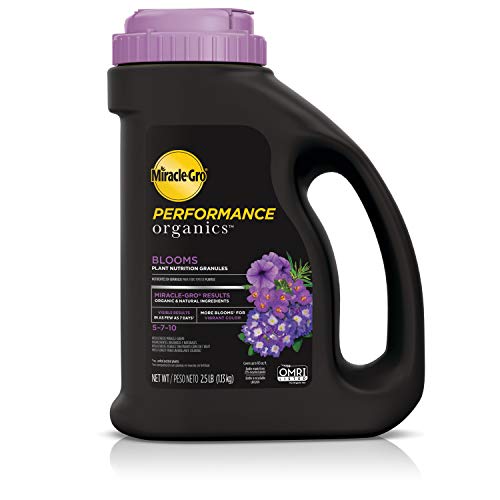
The OMRI-listed granule that nudges stubborn plants like Mandevilla into spectacular bloom.
Going organic doesn’t mean giving up Miracle-Gro’s proven results. This 2.5-pound bag uses natural and organic ingredients with a 5-7-10 ratio, and it’s OMRI listed, meaning it’s certified for use in organic gardening. The granules are simple: sprinkle on the soil, water in, and reapply every 4-6 weeks — a low-maintenance feeding rhythm.
The defining feedback is speed. Owners mention the fertilizer works “within just a week or two” and produces “ginormous blooms,” with one gardener noting their butterfly bush erupted with large flowers. It’s also the go-to for plants that “refuse to bloom,” like a slow-starting Mandevilla that finally popped. The 2.5-pound bag covers up to 165 square feet, which is plenty for a substantial container garden.
The honest caveat involves packaging, not performance — a few buyers found the inner paper lid loose or the container not completely full on arrival. The product itself drew consistent praise for effectiveness and ease of use, and there’s a clear favorite application: outdoor plants in pots, where the Black Eyed Susan reportedly “loves it.”
The Strengths
- OMRI-listed organic ingredients for clean gardening
- Visible bloom results within 1-2 weeks
- Covers up to 165 sq. ft. per bag
The Drawbacks
- Packaging can arrive with a loose inner seal
- 4-6 week schedule requires patience
Best for: organic gardeners with potted outdoor flowers who want reliable, fast results.
Think twice if: you dislike granular fertilizers and prefer mixing liquid feeds.
5. FoxFarm Open Sesame 5-45-19
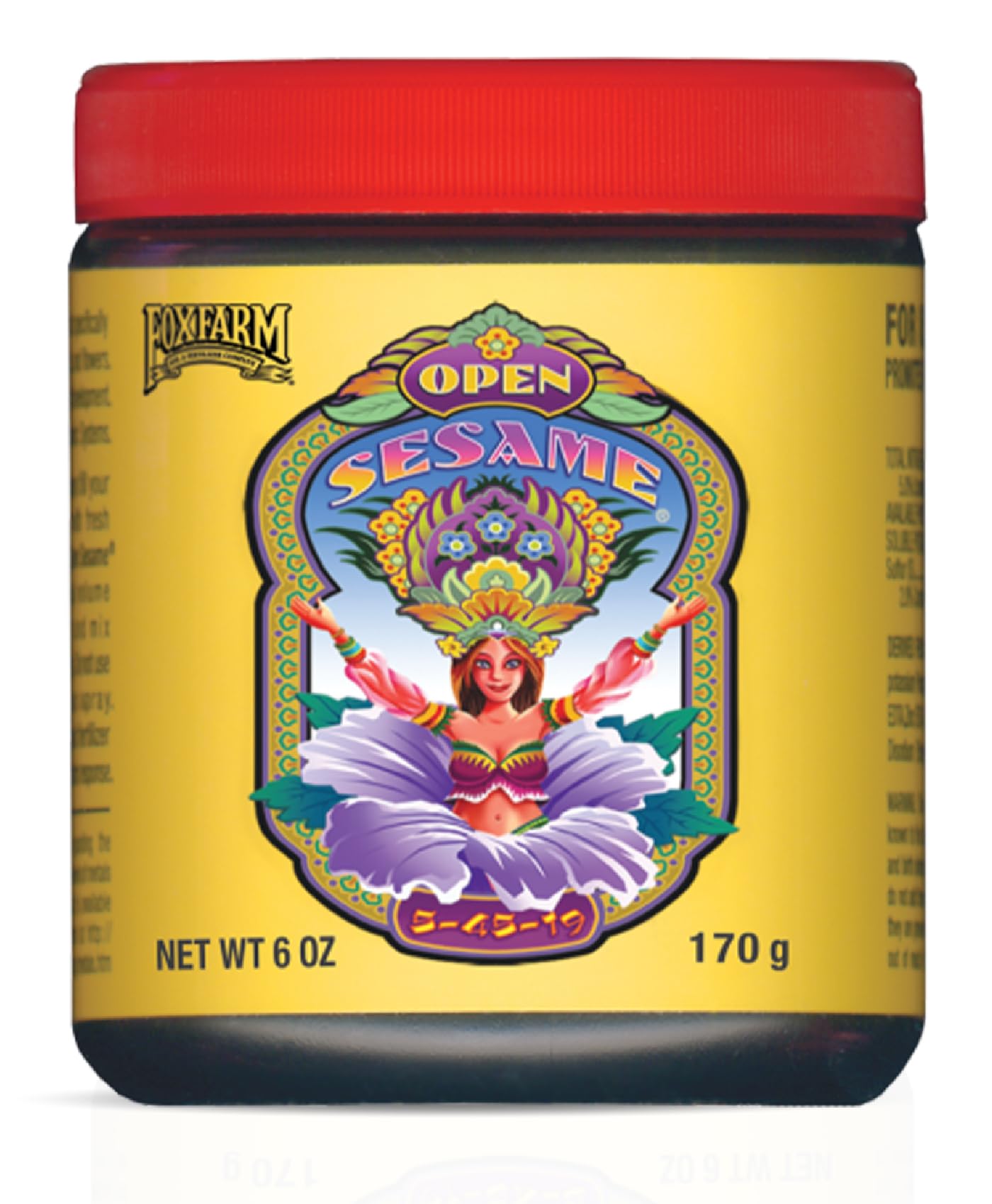
A high-phosphorus powder that makes initial budsites grow larger for heavier final harvests.
FoxFarm’s Open Sesame is engineered for a specific moment in a plant’s life: the transition from vegetative growth into early flowering. The 5-45-19 formula is heavy on phosphorus and potassium to support bud development, and the 6-ounce jar is water-soluble, so it dissolves instantly without clumps or residue for a clean feed.
This is the pick for hydroponic and container growers who want precision. It works across all setups — hydroponics, containers, or traditional soil — and the feeding schedule is straightforward: start around week 5 or 6 of the growth cycle and feed every other watering. Customers note measurable results quickly, with one noting larger initial bud formation within a day and many praising its effect on tomato crops.
There’s an important truth in the reviews: this product does not force plants into flower, contrary to some seller claims. Instead, it makes the early budsites larger, which sets up bigger finished buds. That distinction matters — it’s a supporting nutrient, not a flowering trigger. Buyers also flagged the seal as a mixed point, so check the jar on arrival.
What It Does Well
- 5-45-19 ratio targets early bud development perfectly
- Dissolves completely with no clumps or residue
- Works in hydroponics, containers, and soil
Be Aware
- Will not force flowering; supports larger buds instead
- Jar seal can occasionally be loose
Reach for it: during the specific transition into flowering to boost bud size from the start.
Skip it: if you want an all-purpose booster for the entire season.
6. Miracle-Gro LiquaFeed Bloom Booster

The liquid refill that makes feeding as easy as squeezing a bottle into your watering can.
If you want the simplest possible feeding routine, this liquid concentrate delivers. The 16-fluid-ounce bottle is a refill for the Miracle-Gro LiquaFeed system, and the 2-pack gives you double the feeding power. Owners describe a simple to use method: two squirts into a pint bottle, or two big squirts into a quart, and you can use it as often as daily — no measuring spoons needed.
Results are consistently strong. Quality is the most-praised aspect, with blooming close behind, backed by stories of flowers that “bloom like never before” all summer. The formula is specifically designed for flowers, reviving struggling outdoor plants and keeping container gardens show-ready.
An interesting note from the feedback: this fertilizer is described as safe for bees, birds, and hornets, which matters if you’re pollinator-conscious. The value assessment is slightly mixed — some find it worth every drop, while others consider it overpriced. Given how little you use per feeding, the cost-per-bloom is reasonable if you have a large collection.
The Convenience King: liquid concentrate makes daily feeding easy with just a couple of squirts per bottle.
The Balance: some gardeners find the per-ounce cost higher than powders, but the ease offsets it.
7. Alaska Morbloom 0-10-10
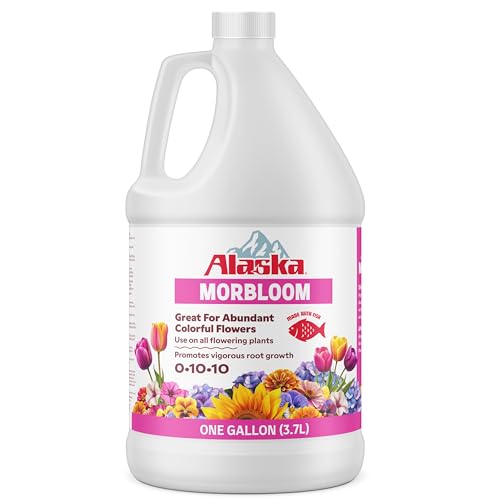
A full gallon of fish-based liquid that goes a long way for shrubs, tomatoes, and whole gardens.
This is the volume play. The 1-gallon jug (128 fluid ounces) of 0-10-10 concentrate is made with fish, and because you dilute it with water as directed, it stretches across an entire large garden. The zero-nitrogen ratio means it won’t push leafy growth — it’s all about encouraging budding, blooming, and vigorous root development.
Gardeners report great results on flowering shrubs and tomatoes that bear fruit more readily. A common rotation is alternating this with a fish-based nitrogen fertilizer week by week, which keeps plants both green and blooming. Effectiveness is the most-cited aspect, with value for money a close second since the concentrate “goes a long way.”
The honest caveat is shipping, not the product. Being a liquid, some jugs arrive with a cracked lid or leak despite the seal, and delivery delays have been noted. The manufacturer uses a seal plus plastic bag for protection, but it’s worth checking your package immediately. The aromatic fish smell is also something to expect — it’s nature’s perfume for your garden.
Why It’s Great
- Huge 128-ounce gallon is exceptional value for large gardens
- 0-10-10 ratio promotes blooms and roots without excess leaves
- Fish-based formula encourages vigorous flowering
Watch Out
- Liquid jugs can leak or arrive with cracked lids
- Fish smell is strong and aromatic
The pick for: whole-garden feeding where a gallon of concentrate beats many small bags.
Not for: anyone who dislikes fish-based smells or wants a quick-dissolving powder.
8. Espoma Triple Phosphate 0-45-0

A no-mix granular phosphate that boosts root growth and makes stubborn bushes finally bloom.
Espoma’s take on phosphate is all about purity: 100% Triple Phosphate with no fillers or sludges, in a 0-45-0 ratio. The 6.5-pound bag is the largest granular option here, and because it’s ready to use with zero mixing, you just sprinkle it on the soil and water for best results. It feeds plants quickly, making it a strong choice for newly planted flowers.
The reviews highlight two main wins: root growth and blooming. One gardener noted it helped their carrots develop better roots, while another reports oleanders blooming successfully. The most enthusiastic feedback is about flowering bushes that “don’t bloom” — sprinkled around the drip line, they reportedly burst into color. It’s the “magical” fix for non-blooming plants.
There’s a genuine value angle here. Owners mention it’s cheaper than tractor supply without leaving the house, and the 6.5-pound size means fewer reorders. The occasional bag arrives with a split seam, which is a shipping hazard with granules, but the product itself draws consistent praise for effectiveness and quality.
The Highlights
- 100% Triple Phosphate with zero fillers
- No mixing required — sprinkle and water
- Large 6.5-pound bag for extended use
The Caveats
- Bags can arrive with a split seam
- Slow granular action vs liquid feeds
Choose this: for root development and coaxing reluctant flowering bushes into bloom with minimal effort.
Choose another: if you need fast results for container plants or hydroponics.
9. GreenGro Pride Lands Bloom 2-5.5-5.5

The premium organic top dress packed with microbes and biochar for dense flowers and rich terpenes.
This is the connoisseur’s bloom booster. The 2-5.5-5.5 formulation is a high-phosphorus, high-potassium organic blend that goes beyond simple NPK by including beneficial microbes, biochar, and mycorrhizae — the biological ingredients most competing dry amendments leave out entirely. The 5-pound bag is CDFA-approved and free of synthetic chemicals and fillers.
Reviews confirm the promise of bigger flower structure, denser buds, and heavier harvests. Users report healthier-looking plants with bountiful blooms, noting that the microbes actively break down nutrients in the soil. It’s described as a complete bloom base, so you can top dress once per week and water in without separate P/K booster bottles or pH adjustments — a truly streamlined organic routine.
Long-term growers call it a “standout,” noting noticeably better color and flower counts on hanging plants. The 2-5.5-5.5 profile also drives fruit set in tomatoes, peppers, squash, and berries, making it versatile beyond ornamentals. The premium price reflects the biological complexity, and the powder form means a little goes a long way when applied as a top dress every 7-14 days — so a small bag lasts months.
The Premium Edge
- Includes microbes, biochar, and mycorrhizae for soil health
- CDFA-approved organic with no synthetics
- Works as a complete bloom base without extra bottles
The Cost
- Higher price point reflects premium biological ingredients
- Powder requires top-dressing routine for best results
Worth it for: serious organic growers who want soil biology and dense, terpene-rich blooms in one bag.
Overkill for: casual gardeners who just want a simple liquid feed for a few pots.
Understanding the Specs
N-P-K Ratio
The three numbers on any fertilizer label stand for nitrogen, phosphorus, and potassium. Nitrogen drives leafy green growth, phosphorus fuels flowers, fruits, and roots, and potassium supports overall plant health and disease resistance. For a bloom booster, the middle number should be the highest — look for ratios like 0-46-0 or 10-54-10 where phosphorus dominates.
Form: Powder, Granules, or Liquid
Water-soluble powders dissolve into a watering can for fast root uptake, ideal for potted plants and precise feeding. Granules sit on the soil and break down slowly, perfect for outdoor beds and low-maintenance routines. Liquid concentrates are ready to dilute and pour, giving you the fastest absorption and easiest daily feeding.
FAQ
What does the N-P-K ratio mean for blooming plants?
How often should I apply a bloom booster?
Can I use a bloom booster on vegetables and fruit?
Is a higher phosphorus number always better?
What’s the difference between organic and synthetic bloom boosters?
Do I need a separate fertilizer for leafy growth?
Will a bloom booster work on houseplants like Christmas cactuses?
How do I apply granular vs liquid bloom boosters?
Final Thoughts: The Verdict
For most gardeners, the best bloom booster is the Carl Pool BR-61 because its 9-58-8 ratio and easy 1-tablespoon-per-gallon mixing make it the most reliable path to nonstop flowers, backed by the strongest overall owner enthusiasm. If you want organic soil biology and dense blooms, the GreenGro Pride Lands is the premium choice with its microbes and biochar. And for pure phosphorus at a great volume, the Triple Super Phosphate offers 67% more than the Carl Pool bag for feeding larger gardens and fruit trees.
How We Picked
We do not accept paid placement. Every pick is matched to a real buyer and a real use-case; we do not hands-on test units.
Sources & Methodology
Specifications: manufacturer listings and product documentation. Review insights: verified customer reviews, as of August 2026. Pricing: not shown on this page (it changes often); check the current price via the retailer link.
As an Amazon Associate, Gadgets Feed earns from qualifying purchases. This does not affect which products we feature.