
Our readers keep the lights on and my morning glass full of iced black tea. As an Amazon Associate, I earn from qualifying purchases.
Specs are compiled from manufacturer listings and verified buyer reviews and can change over time — please confirm the key details on the product page before buying.
Peroneal tendonitis turns every step into a gamble — that sharp, burning ache on the outside of your ankle that flares the moment you push off. The right brace locks the side-to-side roll that re-injures the tendon, letting you walk, run, or stand a full shift pain-free. This guide sorts through the top ankle supports across every price tier, explaining exactly which type of stabilization you need and why a compression sleeve is rarely enough on its own.
I’m Min — the founder and writer behind Gadgets Feed. This guide is built by comparing the manufacturers’ published specifications and the patterns across verified customer reviews, so you get each pick’s real strengths and trade-offs instead of marketing spin.
You will find the best brace for peroneal tendonitis here, with side stabilizers, figure-8 straps, and arch support explained in plain terms for your daily use.
Our Picks at a Glance

How To Choose The Best Brace For Peroneal Tendonitis
Peroneal tendonitis is an overuse injury on the outside of the ankle, where the peroneal tendons run behind the bony bump and down to the arch. The brace you pick has one main job: stop the ankle from rolling outward (inversion), because that rolling motion is what keeps irritating the tendon. A plain compression sleeve squeezes but rarely stops the roll, so most effective options add rigid elements or straps.
Match the support level to your day
If you are mid-flare and need to protect the tendon around the clock, look for a brace with firm side stabilizers — either removable plastic splints or a rigid stirrup shell. For lighter everyday wear at work or a grocery run, a lace-up with a figure-8 strap often gives enough control while staying comfortable for hours. Many braces here feature removable stabilizers, letting one product shift between heavy protection and lighter support.
Fit matters more than you think
An ankle brace that shifts inside your shoe is useless, and one that cuts circulation is worse. Check whether the brace is sized by shoe size or by foot measurement, and pay attention to the “height” of the brace — some tuck neatly into sneakers while others are too bulky for boots. If you have swelling, look for adjustable straps rather than a fixed sleeve, so you can loosen or tighten through the day.
Quick Comparison
| Model | Best For | Stabilizer Type | Closure System | Foot Compatibility | Amazon |
|---|---|---|---|---|---|
| DonJoy Stabilizing PRO★ Best Overall | Daily stability | Removable articulated stays | Circumferential strap | Right or left | Amazon |
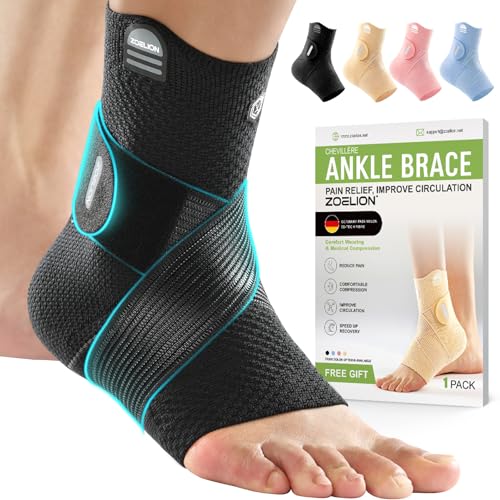
| ZOELION Compression BraceBest Value | Mild pain relief | Removable fishnet strap | Slip-on sleeve | Right or left | Amazon |
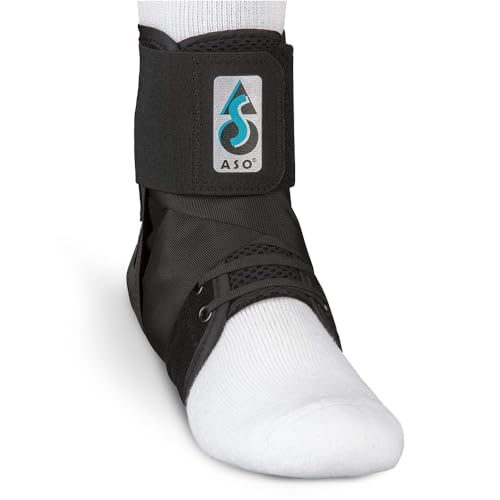
| Med Spec ASO Speed LacerTop Performer | Sports & training | Figure-8 stabilizing straps | Speed lace + hook/loop | Bilateral | Amazon |
| Fitomo Ankle Brace | Sprain recovery | Removable side splints | Figure-8 strap + quick lace | Right or left | Amazon |
| AGPTEK Ankle Brace | 360° support | Removable dual stabilizers | Quick lace + hook/loop | Right or left | Amazon |
| Aircast Air-Stirrup | Acute injury | Semi-rigid shells with aircells | Hook & loop | Right or left | Amazon |
| ACE Side Stabilizers | Mid-level support | Reinforced side stabilizers | Adjustable strap | Right or left | Amazon |
| Velpeau Stirrup Brace | Reversible fit | Bi-injection plastic splints | Buckle straps | Left or right (reversible) | Amazon |
| BioSkin TriLok | Arch + ankle combo | Figure-8 stabilizer + arch-lift strap | 4-strap figure-3 wrap | Bilateral | Amazon |
In‑Depth Reviews
1. DonJoy Stabilizing PRO Ankle Brace
Our pick — 4.5★ from 450+ verified ratings; the strongest balance of quality and price.
The 800D ballistic nylon workhorse that keeps a torn peroneal longus tendon stable for over a year.
The DonJoy is the brace that owners wear when they need the ankle to simply not roll — full stop. Its defining spec is the pair of removable, articulated medial/lateral stays, which enhance proprioception (your body’s sense of where the ankle is in space) while locking out the inversion motion that aggravates the tendon. Weighing just 5.6 ounces, it is light enough that it slides into a tennis shoe without a fight, and the full circumferential elastic strap adds tibia/fibula compression on top of the stays.
What wins people over is the support: it is the most-praised feature by far, and the protection holds up even when the foot is under real load. Buyers report it “stabilizes torn peroneal longus tendon; durable over 1 year,” which tells you the construction is built for the long haul. The trade-off is comfort — a few owners find the heel binding and figure-8 strap can cause pain, and one noted it shredded sneaker lining over time. It is also bulkier than a sleeve, so it is really a sneaker-and-lace-up brace, not a wear-with-boots one.
The strap system takes a beat to dial in, and some owners re-adjust it daily. But for chronic fallers and athletes who need dependable lateral protection, the stability this brace delivers is the reason it earns the top spot — the occasional discomfort is the honest price of that security.
What locks you in
- Removable articulated stays for adjustable rigidity
- Only 5.6 oz, fits comfortably inside most shoes
- Circumferential strap adds tibia/fibula compression
Where it pinches
- Heel binding and figure-8 strap can cause foot pain
- Bulky enough that boots are a no-go
- Straps need re-tightening through the day
Your daily anchor: reach for this when you need dependable lateral control for long days on your feet or active training.
Think twice if: you have a tender arch or need something slim enough for dress shoes or boots — this one is sneakers-only territory.
2. ZOELION Ankle Brace Compression Support
A feather-slim sleeper that beat five other braces in a side-by-side sprain shootout.
If your peroneal tendonitis is mild and you want a brace you can forget you’re wearing, the ZOELION is the sleeper hit of this list. Its 3D-knit construction uses a German-imported PA66 high-elastic fabric (a tough, stretchy nylon-based material) to deliver graduated compression across three zones: a Comfort Zone cradling your instep, a Pressure Zone hugging your arch and heel, and pressure-free edges that stop digging in. The removable X-shaped fishnet strap adds targeted arch and Achilles support without forcing you to size up your shoes.
The pain relief is the standout: it is the top-praised aspect, and owners mention it works well for Achilles tendonitis and minor lateral sprains. One buyer who ordered six different ankle braces for a minor lateral sprain called this one the best — comfortable, low-profile, and it stays put with just the right amount of support. It holds its shape after washing, which is a genuine durability win for a knit sleeve.
The catch is that a compression sleeve, even a smartly zoned one, does not offer the rigid lateral stop of a splinted brace. One owner found it too thick inside work boots, cutting off circulation, and another hit a sizing snag despite the chart. For daily walking, running-shoe wear, or lighter activity, though, this is the value pick that quietly outperforms its price tier.
The low-profile choice: this is for the person who wants meaningful compression and arch support in a slim, shoe-friendly package without bulky splints.
Where it falls short: if the tendon is badly inflamed and rolls are frequent, you will likely want a stiffer stabilizer — this is support, not a rigid lock.
3. Med Spec ASO Speed Lacer Ankle Stabilizer
The speed-lace stabilizer that tightens evenly in seconds and locks the heel against rolling.
The ASO Speed Lacer is the brace athletes reach for when practice is starting and there is no time to fuss with traditional laces. Its signature is the quick-pull hook-and-loop closure that tightens evenly in seconds, giving repeatable compression without re-tying mid-game. The figure-8 stabilizing straps integrate with that closure to secure the heel and resist inversion and eversion — the exact motions that stress the peroneal tendon — while the low-profile shape slides into most athletic footwear.
The support is the most-praised aspect here, and it is backed by a bilateral build that works on either foot and stands up to basketball, volleyball, soccer, football, pickleball, tennis, running, and gym training. The speed lace is the second thing owners rave about; the quick on/off design and the genius Velcro lacing technique save real time for parents and players alike. A podiatrist recommended it for post-fracture wear, underscoring its stability.
The honest downside is fit — it is the one mixed aspect, with some owners finding the sizing runs a touch tricky. It is also not fully rigid, so if you need hard immobilization this is not that. But for a brace that balances stability, comfort, and all-day wear through drills and long shifts, the ASO is a proven performer that keeps the ankle from rolling.
The fast setup
- Speed-lace closure tightens evenly in seconds
- Figure-8 straps secure the heel and resist rolling
- Low-profile shape fits most athletic shoes
The honest limits
- Sizing draws mixed feedback — check the chart carefully
- Not a rigid immobilizer for severe injuries
For the active crowd: grab this if you train, play sports, or stand long shifts and need dependable lateral support that goes on fast.
Look elsewhere if: you want a fully rigid shell for an acute, severe injury — this is a stabilizer, not a cast.
4. Fitomo Ankle Brace with Removable Side Splints
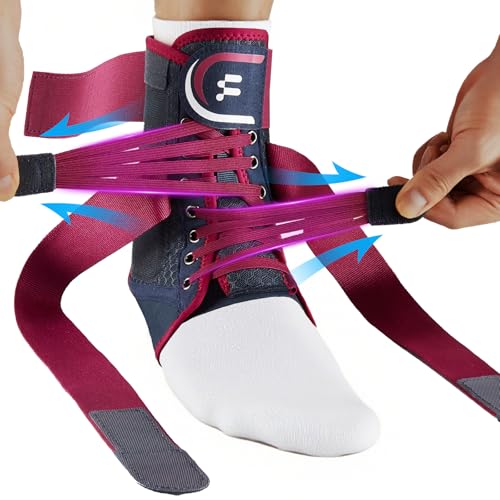
A Triple-Lock design that replaced a boot and stays put without constant readjusting.
The Fitomo earns its spot with a simple promise: support that does not slip, so you are not re-tightening every hour. Its Triple-Lock system combines top strap compression, dual removable side stabilizers, and cross straps to support sprained ankles, reduce swelling, and help prevent ankle rolling during movement. The figure-8 strap lets you fine-tune compression for different activities, and when you want a more flexible feel for daily wear, the side stabilizers come out.
What wins owners over is the ease of use — it is the top-praised aspect — and the fact that it stays secure during basketball, workouts, or long hours without slipping or shifting. One owner replaced a boot with this doctor-approved brace, and another swapped out an Aircast boot for it. The velcro laces hold up well, and the lightweight, breathable design fits comfortably inside most shoes.
Customers note the material feels less sturdy than a heavier brace, with a few flagging durability concerns after repeated use, and it is not meant for immobilization. There is also a small learning curve: some found the straps bunch unless adjusted with care. For daily sprain recovery and sports stability, though, the Fitomo delivers a lot of comfort for the money.
The stay-put option: choose this if you are tired of braces that shift around and want removable splints for flexible daily wear.
The compromise: the lighter build means it cannot lock the ankle down for severe injuries, and the material may not endure years of heavy use.
5. AGPTEK Ankle Brace with Lace-Up Stabilizer
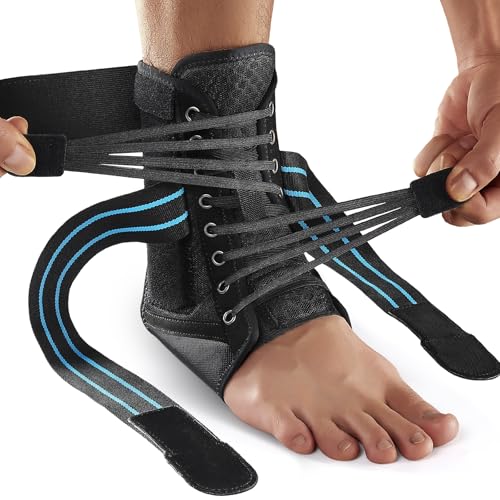
A slimmer lace-up crossover that fits shoes easily and outshines an orthopedic brace.
The AGPTEK is the brace for the person who wants 360° support without the bulk. Its triple-support system pairs reinforced dual side stabilizers with X-cross compression straps and top wrapping, delivering targeted compression to relieve pain, reduce swelling, and accelerate recovery from sprains, tendonitis, and post-surgery. The removable lateral splints let you keep them in for rigid protection during rehab or take them out for flexible mobility during sports.
The stand-out detail is the 1-second fastening quick-lace system with dual-direction hook-and-loop fasteners — no more tangled laces or time-consuming adjustments, and the elastic laces adapt to swollen or normal feet. One owner found it more supportive and comfortable than the surgeon-provided orthopedic brace, and another praised it post-foot-surgery, noting the Medium fit a Women’s 10W. The open-heel design enhances natural movement and prevents irritation.
The honest trade-off is stiffness — a few owners wished the side supports were stiffer for more lateral rigidity. It is also a lighter-weight brace, so it is not for severe immobilization. But if you want a comfortable, breathable stabilizer that transitions from daily wear to high-intensity sports, the AGPTEK is a strong, well-priced middle ground.
The quick-fit appeal
- 1-second quick-lace fastening, no tangled laces
- Removable dual side stabilizers for adjustable rigidity
- Open-heel, breathable design fits shoes easily
The stiffness gap
- Side supports could be firmer for heavy lateral stress
- Not built for full immobilization after severe injury
For quick transitions: pick this if you switch between recovery and sport and want a fast, breathable stabilizer that slips into your shoes.
Not for maximum rigidity: if you need a hard shell to resist aggressive rolling, the removable splints here are lighter than a full stirrup brace.
6. Aircast Air-Stirrup Ankle Support Brace

The air-filled stirrup that resists inversion more than taping while letting you flex normally.
When the peroneal tendon is acutely inflamed or you are coming off a grade II sprain, the Aircast Air-Stirrup is the classic clinical answer. Its defining feature is the Duplex aircell technology — semi-rigid shells lined with air cells that enhance circulation and reduce swelling while the contoured shells conform closely to the ankle for minimal bulk in your shoe. It is anatomically designed for acute ankle injury, post-operative use, chronic instability, and ankle sprains grade I, II, and III.
The effectiveness is the top-praised aspect, with owners reporting it eliminates pain during hiking and provides the support a physical therapist would recommend for an old injury. The aircell system is a genuine differentiator here: it resists inversion more than taping, yet normal flexion is virtually unrestricted, so you can walk fairly naturally while the ankle is protected. It fits most shoes, including boots and dress shoes, which is rare for a brace this supportive.
The trade-off is comfort and durability — both get mixed feedback. Some owners find the plastic presses painfully on the ankle sides depending on strap positioning, and there are reports of straps breaking after a few uses. One owner described it as both loved and hated, noting the position shifts and needs frequent readjustment. For acute protection, though, the Air-Stirrup is a proven, effective choice.
The clinical choice: this is for acute injury, post-op recovery, or chronic instability where reducing swelling and resisting inversion is the priority.
The comfort caveat: the plastic shells can press on the ankle bones, and the strap durability is a known weak point — treat the straps gently.
7. ACE Ankle Brace with Side Stabilizers
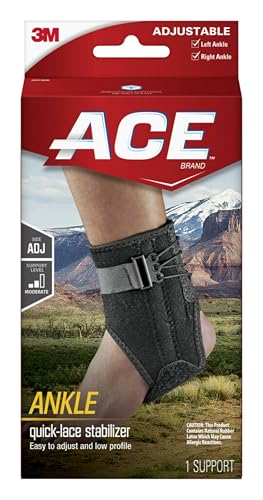
A third-time repeat buy for pickleball players who want moderate support without feeling locked up.
The ACE brand has been a pharmacy-shelf staple for decades, and this version earns its place with reinforced side stabilizers that help limit lateral motion — the key control for peroneal tendonitis. It delivers customizable compression through adjustable features, and the breathable materials let air circulate to help keep skin dry during all-day wear. At a mid-level support rating, it is lighter than a full stirrup but firmer than a bare sleeve.
The support is the most-praised aspect, and the quality follows close behind. A repeat buyer calls it their third one and describes it as an “excellent mid-level support brace” that works well, is easy to use, and fits comfortably even with mild swelling — never feeling too tight. Pickleball players are a vocal fan group, with one saying, “don’t leave home without one” for wobbly ankles, praising the great range of motion and the fact that you do not notice it while wearing it. The thick fabric holds up well.
The honest weak points: comfort and fit are mixed, with some owners finding it uncomfortable on the sole and loose in the ankle area. Sizing draws negative feedback, so measure carefully. But for a reliable, moderately supportive brace that disappears into your shoe during a match, the ACE is a proven repeat purchase.
The sport-friendly support
- Reinforced side stabilizers limit lateral motion
- Thick fabric holds up, comfortable with mild swelling
- Breathable material keeps skin dry all day
The fit frustrations
- Some find it loose in the ankle area
- Sizing is tricky — check the chart and consider sizing down
For moderate support: reach for this if you want dependable lateral control for sports or daily wear without a rigid shell.
skip it if: you need a precise, snug fit around a very narrow or very wide ankle — the fit feedback is genuinely mixed here.
8. Velpeau Ankle Stabilizer Stirrup Brace
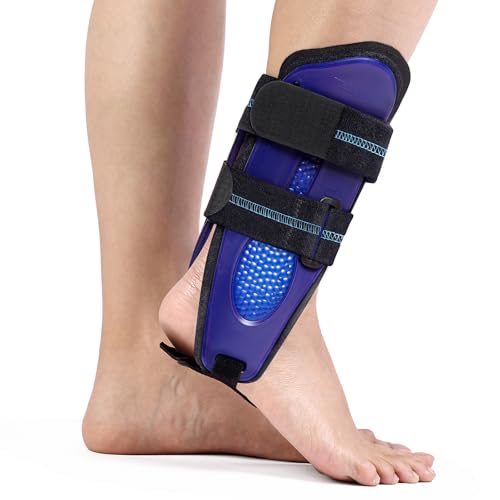
A reversible stirrup with gel-protected splints that fits either foot and even works with Crocs.
The Velpeau suits you if you want one product that works on both feet without ordering two. Its reversible stirrup design fits right or left, with plastic splints made using Bi-Injection technology (a molding process that bonds two materials into one part) — your medial and lateral malleolus (the bony bumps on each ankle side) sit in shell holes protected by gel, so there is no direct contact with the semi-rigid shells. The splint edges are covered with soft gel that will not scratch your skin or damage your shoes. It comes in a Foam Pads version and a Gel Pads version, where the removable gel pad can be frozen as a cold compress or heated as a warm compress.
The ankle support is the most-praised aspect, and reviewers point out it prevents side-to-side motion while allowing a normal stride. One buyer preferred the foam pad version over a doctor’s brace that failed on the second wear, and another confirmed it fits any shoe comfortably without socks. It resists inversion more than taping, yet normal flexion is virtually unrestricted — and it works perfectly with Crocs, which is a niche but real win for home recovery.
The big caveat is fit: it is bulkier than the photos suggest, and one owner warned the shoe barely ties even with narrow ankles. There is also a permanent pin in the top strap that limits calf expansion, so it is not size-inclusive for thicker ankles, and it does not stay in place for everyone. For a reversible, stirrup-style stabilizer, though, it delivers solid lateral control.
The two-foot solution: pick this if you want one reversible brace for both ankles, with gel-protected splints and optional hot/cold therapy pads.
The fit warning: this runs bulky and the calf strap is not adjustable for larger calves — measure before you buy.
9. BioSkin Ankle Brace TriLok

A precision four-strap system that pairs arch support with ankle stability for peroneal tendonitis.
The BioSkin TriLok is the specialist’s pick — a brace built on the idea that your foot and ankle should be supported together, not separately. Its defining feature is the FootLok strap, which lifts and supports your arch while the figure-8 wrap stabilizes your ankle, a combination that separates it from a plain compression sleeve. It is a four-strap system with a specific wrap path, and the maker is honest that most people have it down by the second or third wear, with application videos on the page.
The support is the most-praised aspect by a wide margin, and owners specifically report it works effectively for peroneal tendonitis while helping with healing. One owner with a severe ankle fracture after three surgeries and 19 screws reported pain-free walking and biking within days. It is sized by shoe size rather than circumference, works on either foot, and can be strapped to control rolling inward or outward. At just 6.4 ounces with a 0.45-inch thickness, it is low-profile enough for trainers, flats, boots, and cleats.
The honest downsides are real: the size chart draws complaints for inaccuracy, the Velcro straps can stick together and are hard to apply, and the four-strap learning curve is steep. Comfort is mixed, with one owner noting the splint rubs on bone prominences. But for the person whose peroneal tendonitis comes with a collapsed arch, the TriLok addresses both problems at once — and that combined support is why it justifies its premium price.
The combined approach
- FootLok arch-lift strap plus figure-8 ankle wrap
- Only 6.4 oz, low-profile for boots, cleats, and flats
- Bilateral design controls inward or outward rolling
The learning curve
- Four-strap wrap is complicated until the third wear
- Size chart is unreliable — verify your size carefully
- Velcro straps can stick together during application
For arch-plus-ankle issues: choose this if your peroneal tendonitis coincides with a fallen arch and you are willing to learn a precise wrap for combined support.
The catch: the application is genuinely fiddly and the sizing is inconsistent, so budget time to get the fit right before you rely on it daily.
Understanding the Specs
Side stabilizers & splints
These are the rigid elements — removable plastic stays, semi-rigid shells, or reinforced fabric — that physically block the ankle from rolling outward. This is the single most important feature for peroneal tendonitis, because the tendon sits on the outside of the ankle and gets stretched every time the foot rolls. Some braces let you remove the stabilizers when you want lighter support.
Figure-8 straps & closures
A figure-8 strap wraps around the ankle in a pattern that locks the heel in place while allowing the foot to flex up and down. It provides targeted compression without restricting motion. The closure system matters too — traditional laces give the most precise fit, speed laces tighten in seconds, and hook-and-loop straps are fastest for daily adjustments when swelling changes.
FAQ
What type of brace is best for peroneal tendonitis?
Should I sleep with an ankle brace for peroneal tendonitis?
Can I wear an ankle brace inside my regular shoes?
How long should I wear an ankle brace for peroneal tendonitis?
Is a compression sleeve enough for peroneal tendonitis?
What is the difference between an ankle brace and an ankle splint?
How do I choose the right size for an ankle brace?
Can I play sports while wearing a peroneal tendonitis brace?
How do I clean an ankle brace?
Why does my ankle brace cause pain on the bottom of my foot?
Final Thoughts: The Verdict
If you want one dependable pick, the brace for peroneal tendonitis winner is the DonJoy Stabilizing PRO because it pairs removable articulated stays with proven long-term durability for a torn peroneal longus tendon. If you want fast, sport-ready support, grab the Med Spec ASO Speed Lacer with its speed-lace closure. And for arch-plus-ankle issues, the BioSkin TriLok is the one to reach for — just budget time to master its four-strap wrap.
How We Picked
We do not accept paid placement. Every pick is matched to a real buyer and a real use-case; we do not hands-on test units.
Sources & Methodology
Specifications: manufacturer listings and product documentation. Review insights: verified customer reviews, as of August 2026. Pricing: not shown on this page (it changes often); check the current price via the retailer link.
As an Amazon Associate, Gadgets Feed earns from qualifying purchases. This does not affect which products we feature.