
If you ride a motorcycle, you know the physics problem: every extra pound on your head multiplies into real neck strain on a long day in the saddle. A Carbon Fiber Helmet solves that equation by shedding weight without sacrificing the structural rigidity you need in a crash—the difference between a 3.0-pound shell and a 4.5-pound polycarbonate lid is the difference between arriving fresh and arriving sore.
I’m Rikta — the co-founder and writer behind Gadgets Feed. I’ve spent countless hours combing through lab certifications, shell construction methods, and real-world rider reports to separate marketing hype from actual impact protection. (And Homer 🐱 supervised the weight test by napping directly on the shipping box).
Whether you’re a daily commuter or a weekend canyon carver, the right shell cuts fatigue and keeps you focused on the road. This guide breaks down the nine best options to help you find the carbon fiber helmet that fits your head shape, your riding style, and your budget without compromising safety.
How To Choose The Best Carbon Fiber Helmet
Not all carbon fiber shells are created equal. The weave pattern, resin infusion method, and EPS liner density all influence how the helmet performs in a crash and how it feels on a long ride. Here are the three factors that matter most for riders serious about upgrading from polycarbonate or fiberglass.
Shell Construction and Weight
A true carbon fiber helmet uses a multi-layer weave of carbon filaments bonded with epoxy resin. The best shells use 3K or 9K carbon fiber—higher numbers indicate a tighter weave and generally better strength-to-weight ratios. Weights below 1,400 grams (about 3.1 pounds) for a medium shell are where premium performance lives. Anything above 3.5 pounds defeats the purpose of going carbon in the first place.
Safety Certifications
Every helmet on this list meets or exceeds DOT FMVSS 218 standards. The higher bar is ECE 22.06, a European standard that tests impact absorption at multiple velocities and angles not covered by DOT. If you ride aggressively or track your bike, prioritize an ECE-rated shell. Some premium helmets carry both certifications, giving you the broadest protection profile.
Fit and Compatibility
Carbon fiber shells do not flex like polycarbonate. That means sizing accuracy is critical—a helmet that is even half a size too large will shift at speed, while one that is too tight can cause pressure points within 30 minutes. Look for helmets that offer multiple shell sizes (not just multiple EPS liners inside one shell) and cheek pads in different thicknesses to fine-tune the fit. Also confirm that speaker pockets exist if you plan to install a Bluetooth communicator.
Quick Comparison
On smaller screens, swipe sideways to see the full table.
| Model | Category | Best For | Key Spec | Amazon |
|---|---|---|---|---|
| ScorpionEXO R1 Air | Premium Full-Face | Sport riders wanting adjustable fit | 1,383 g / 3.05 lbs (size M) | Amazon |
| Bell Race Star Flex DLX | Premium Full-Face | Riders wanting photochromic shield | 3K Carbon Shell | Amazon |
| Simpson Mod Bandit | Premium Modular | Street riders wanting flip-front | Carbon Fiber / Poly Alloy Chin | Amazon |
| LS2 Advant X Carbon | Premium Modular | Long-distance touring comfort | 1,470 g / 9K Carbon Shell | Amazon |
| AGV K6 S | Mid-Range Full-Face | Weight-conscious sport-touring | 1,290 g / Carbon-Aramid Shell | Amazon |
| KLIM Krios Pro | Mid-Range ADV | Adventure riders wanting weight savings | Hand-Laid Carbon Shell | Amazon |
| ScorpionEXO Covert FX | Mid-Range Full-Face | Street riders on a budget | 1,348 g / 3K Carbon Shell | Amazon |
| ILM 861C | Budget Full-Face | Dual-visor convenience on a budget | DOT / Dual Visor System | Amazon |
| 1Storm HG335 | Budget Full-Face | Entry-level carbon fiber upgrade | 3.2 lb / FMVSS 218 | Amazon |
In‑Depth Reviews
1. ScorpionEXO R1 Air Carbon Fiber Full Face Helmet
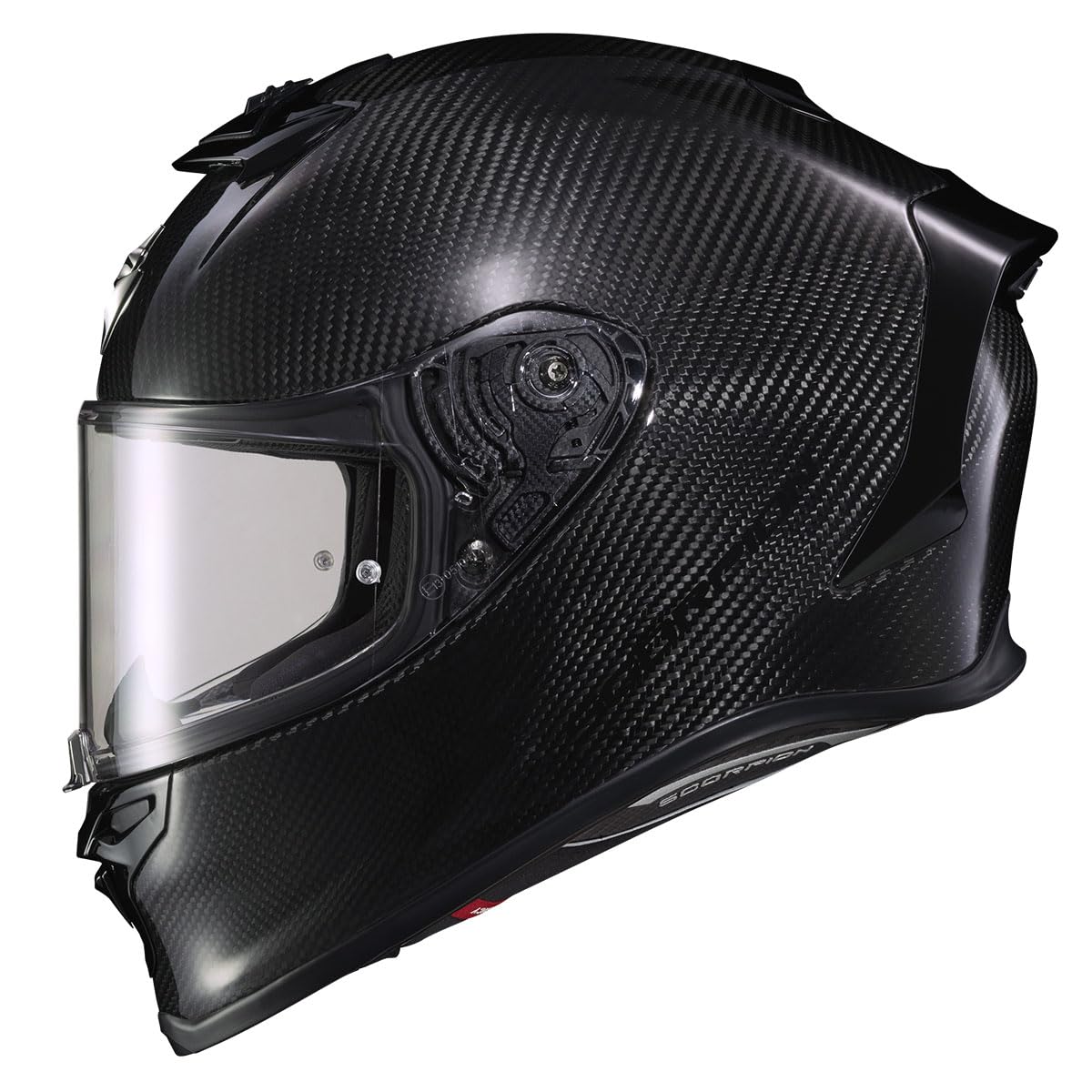
The R1 Air uses a resin-infused TCT-U 3K carbon fiber weave that delivers aircraft-grade impact dispersal while keeping the medium shell at an impressive 1,383 grams—about 3.05 pounds. That puts it in the same weight class as much more expensive race lids, and the CAD-refined aerodynamics reduce lift and turbulence noticeably at highway speeds.
What sets this helmet apart is the Airfit inflation system built into the cheek pads. A small pump integrated into the chin bar lets you customize the fit mid-ride by adding or releasing air pressure, which is a genuine advantage for riders whose head shape shifts between a tight canyon run and a relaxed straight-line cruise. The KwikWick liner pulls moisture away effectively, and the included Pinlock insert and spare Dark Smoke shield add significant value.
The primary trade-off is noise—the R1 Air is slightly louder than the ScorpionEXO Covert FX, especially with the vents open above 60 mph. The sizing chart also runs small for some head shapes; several riders report needing to go one size up from their normal measure. But if you prioritize aerodynamics and adjustability, this is the most track-ready carbon shell in the mid-premium tier.
Why it’s great
- Airfit cheek pad inflation system for on-the-fly fit adjustment
- Excellent aerodynamic stability with minimal buffeting at speed
- Includes clear shield, dark smoke shield, and Pinlock insert
Good to know
- Sizing runs small; measure carefully before ordering
- Wind noise is noticeable above 60 mph with vents open
- Internal stitching near the forehead can cause irritation for some riders
2. Bell Race Star Flex DLX Helmet

The Race Star Flex DLX is the rare helmet that comes with a ProTint Photochromic shield pre-installed, meaning you ride from bright sun into tunnel darkness without changing visors. The 3K carbon fiber shell keeps weight down, and the new triple-density cheek pads with comfort lining make it one of the few helmets that feels broken-in straight out of the box.
Bell added speaker pockets to this model, so mounting a Cardo or Sena communicator no longer requires squeezing the liner. The multi-density EPS liner with Flex impact management absorbs energy at three different rates depending on impact speed, which is the same technology used in Bell’s MotoGP-grade race lids. Ventilation is aggressive—the forehead intake and chin vent move serious air, making this a solid choice for summer riding in 80-90°F temperatures.
The catch is sizing: the Race Star runs notably small. Riders who take a large in other Bell models consistently need an XL in this shell. The photochromic lens transitions well but doesn’t get as dark as a dedicated smoked shield, so riders who ride directly into low-angle sun may still want a spare tinted visor. It’s also slightly louder than the Scorpion R1 Air, though the ventilation trade-off is reasonable.
Why it’s great
- Photochromic shield eliminates the need to carry spare visors
- Triple-density cheek pads deliver immediate comfort
- Excellent ventilation for hot-weather riding
Good to know
- Runs at least one full size small; order up
- Photochromic lens is not as dark as a dedicated smoked visor
- Wind noise is moderate but higher than some competitors
3. Simpson Mod Bandit Modular Motorcycle Helmet
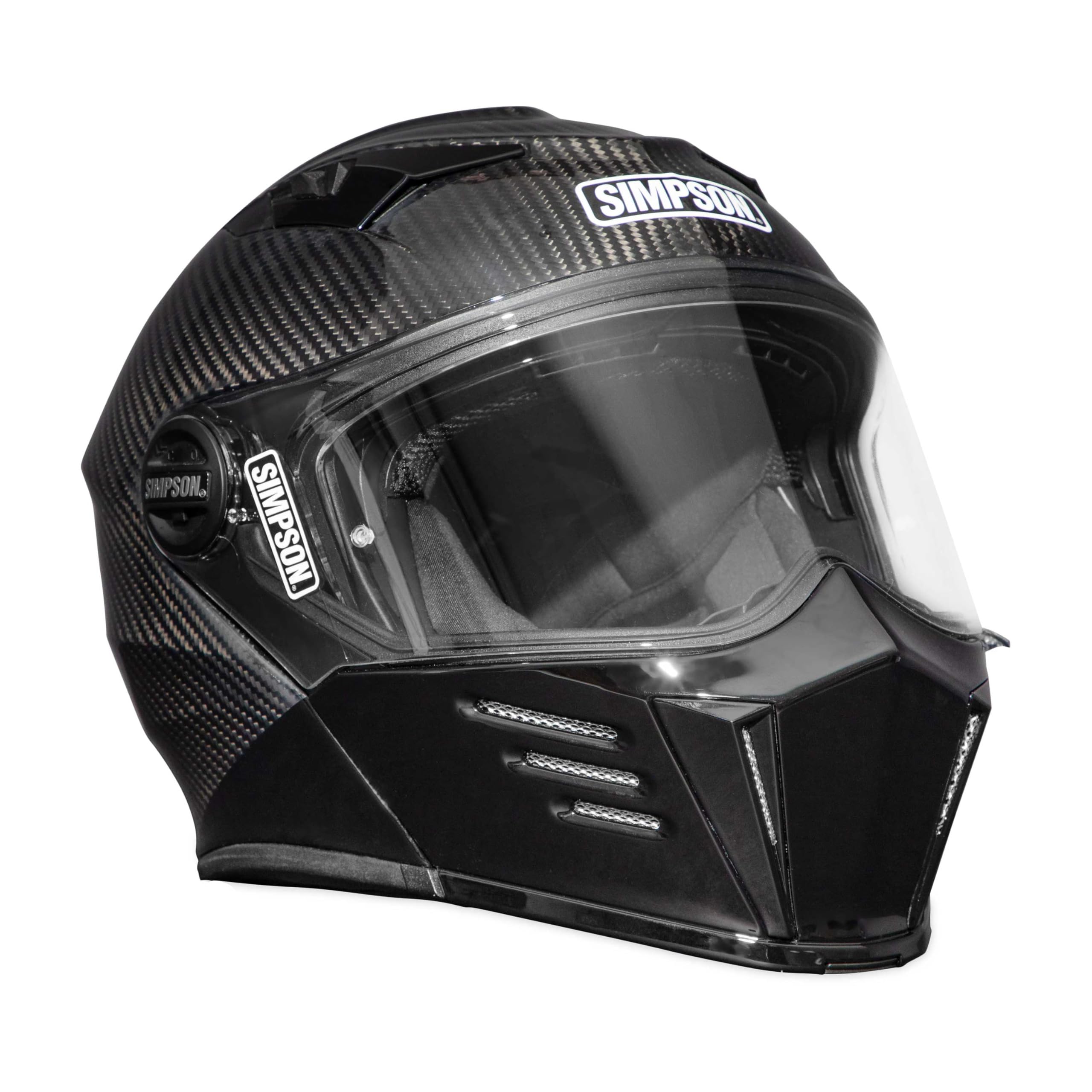
The Mod Bandit is the street-cafe answer to carbon fiber modular helmets. Simpson uses a tri-composite or carbon fiber shell paired with a polycarbonate alloy chin bar, and the one-hand chin bar operation lets you flip the front up at stoplights without taking the helmet off. The chin bar locks securely in the open position, and the metal locking components add durability that some all-plastic modulars lack.
Integrated spoiler channels work with the free-flow exhaust vents to extract hot air, and the multiple adjustable intake vents give you solid control over airflow. Communication system compatibility is built in, and the included clear shield handles daily riding needs. The helmet carries both DOT and ECE certification, which is a strong safety endorsement for a modular design that usually struggles to match full-face rigidity in impact tests.
The biggest complaint from owners is wind noise—above 40 mph you will want ear plugs for anything beyond a short commute. The sizing also runs large, so most riders need to drop one size compared to their usual measurement. Some owners note that the chin bar adds weight compared to a full-face carbon lid, which is inherent to the modular form factor, but the break-in period is relatively short.
Why it’s great
- One-hand chin bar operation with secure locking in open position
- Dual DOT and ECE certification for a modular design
- Aggressive street style that looks natural on naked bikes
Good to know
- Significant wind noise above 40 mph; ear plugs recommended
- Runs at least one size large; measure carefully
- Heavier than a dedicated full-face carbon shell
4. LS2 Advant X Carbon Modular Helmet
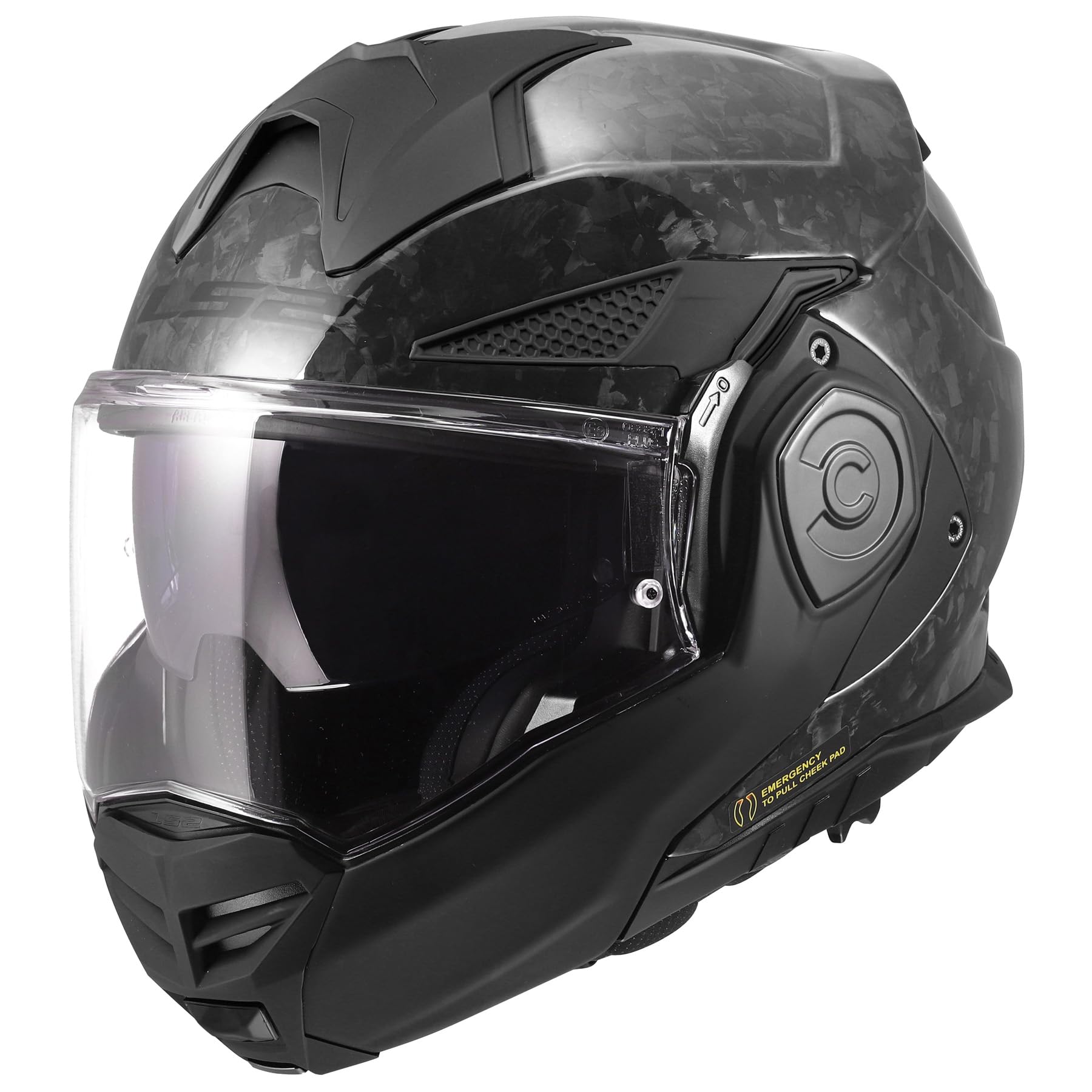
LS2 broke the 1,500-gram barrier for a modular helmet with the Advant X Carbon, using a 9K carbon fiber weave that makes this flip-front lid nearly as light as many full-face competitors. The single-axis pivot allows the chin bar to rotate 180 degrees and rest behind your head, and the ECE P/J certification means you can legally ride with the chin bar either up (open-face mode) or down (full-face mode).
The multi-port ventilation system uses three adjustable intake vents and two rear exhausts to keep the interior temperature manageable even during active riding. The A-Class polycarbonate shield includes a built-in sun visor and comes Pinlock Max ready with the insert included in the box. Riders consistently report that the Advant X is quiet for a modular helmet—the interior noise level is closer to a premium full-face than to most modular shells—and the lightweight reduces neck fatigue significantly on 10-plus-hour days.
The chin strap uses a ratchet buckle system rather than traditional D-rings, which some riders find less secure. The Cardo LS2 4x headset sold separately has known Android Auto connectivity problems, so you are better off mounting your own communicator with a 3M adhesive patch rather than using the branded option. The J-hook speaker pocket design also limits the number of communicators that fit cleanly.
Why it’s great
- Exceptionally lightweight for a modular helmet (1,470 g)
- ECE P/J certified for both open and full-face riding modes
- Very quiet interior with excellent ventilation control
Good to know
- Ratchet buckle system instead of traditional D-rings
- Limited communicator mounting options; 3M adhesive needed
- Branded Cardo headset has Android Auto connectivity issues
5. AGV K6 S Full Face Motorcycle Helmet
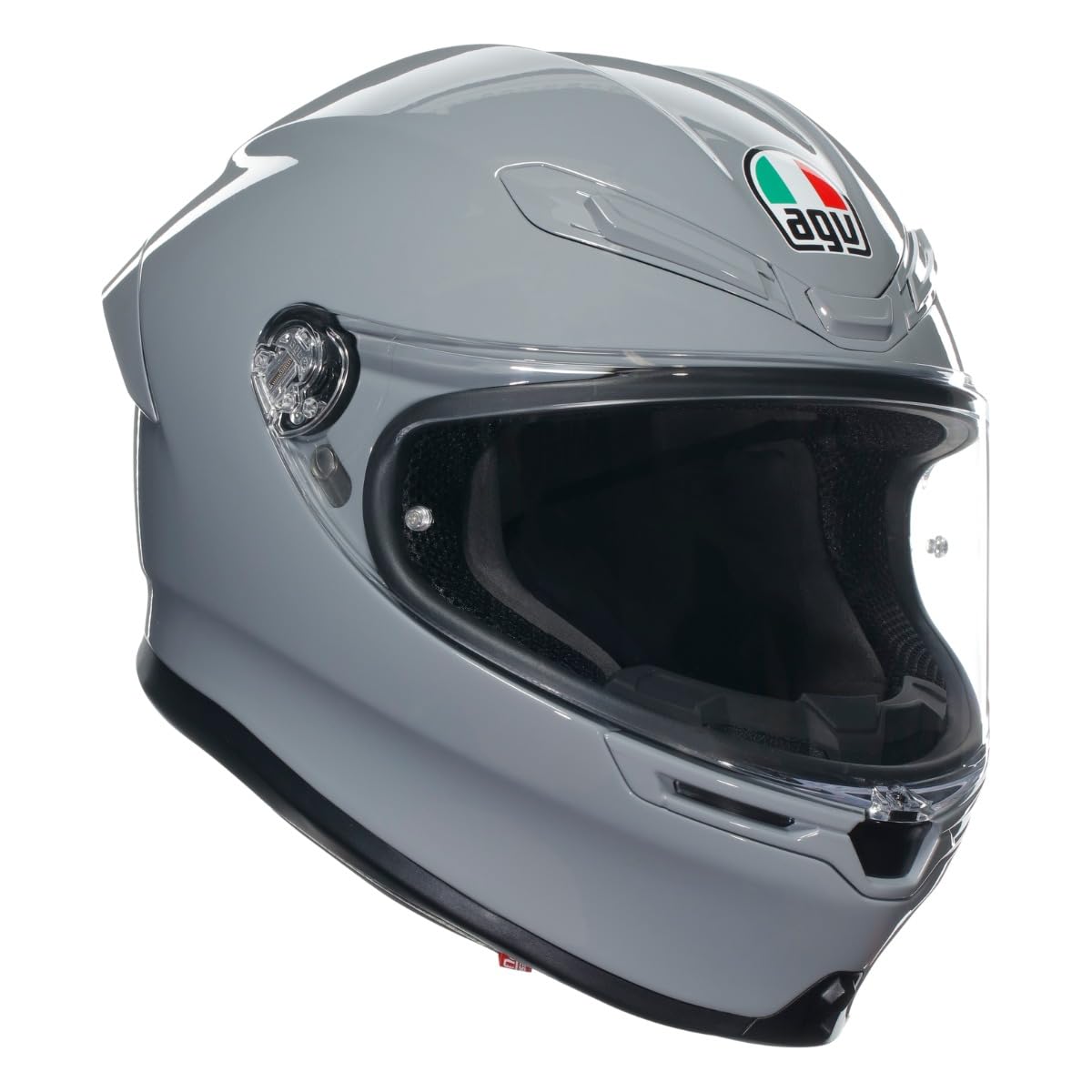
At 1,290 grams—about 2.84 pounds—the AGV K6 S is the lightest full-face road helmet in this lineup. The carbon-aramid fiber composite shell blends the impact absorption of aramid with the stiffness of carbon, and the MotoGP-inspired wind-tunnel shaping gives it a drag coefficient that rivals helmets costing twice as much. The integrated rear spoiler is not just a styling element; it actively stabilizes the shell at triple-digit speeds.
The 190-degree panoramic visor offers one of the widest fields of view available on a road helmet, which makes shoulder checks feel less restricted. The inner lining uses dry-comfort fabric that wicks moisture quickly, and the neck roll is ergonomically contoured to reduce wind buffeting on long highway stretches. Despite the race-derived design, the K6 S fits a Cardo communicator easily without pressure points on the ears.
The noise isolation is good but not exceptional—riders coming from budget helmets will find it quiet, but the Scorpion R1 Air and KLIM Krios Pro both score slightly better in sound deadening. The price also lands it in the premium tier without including a Pinlock insert or spare shield, so you will need to budget for those accessories separately. For riders who prioritize absolute minimum weight above all else, the K6 S is the benchmark.
Why it’s great
- Incredibly lightweight at just 1,290 grams
- MotoGP-derived aerodynamics reduce drag and lift
- Panoramic 190-degree visor improves field of view
Good to know
- Does not include Pinlock insert or spare shield
- Noise isolation is good but not class-leading
- Premium price point for a mid-premium feature set
6. KLIM Krios Pro Adventure Motorcycle Helmet

The Krios Pro is KLIM’s answer to adventure riders who want carbon fiber weight savings without giving up the peak visor and off-road-ready face shape. The hand-laid carbon fiber shell uses optimized resin distribution to keep weight just over three pounds, which is remarkable for a helmet with an adventure touring profile and a large eye port. The Koroyd structures—thin welded tubes that crush homogeneously on impact—add energy absorption without adding bulk.
The FID-LOCK strap closure system is a magnetic quick-release that is significantly easier to use with gloves than traditional D-rings, and the included transition visor is one of the best on the market—it shifts from clear to a medium tint faster than the Bell ProTint system. The visor view area is the largest of any helmet here, giving ADV riders the peripheral awareness needed for technical off-road sections. Multiple owners confirm that the Krios Pro is remarkably quiet for an adventure shell when the visor is down.
The biggest drawback is the lack of speaker pockets—the interior is tight, and mounting a Bluetooth communicator requires careful routing that may compress the ear padding. The peak also generates a harmonic squeak at certain freeway speeds that some owners resolve with a drop of silicone lubricant on the mounting screws. It also carries a premium price that places it firmly in investment territory for serious touring riders.
Why it’s great
- Exceptional Koroyd impact absorption technology
- Fast-transition visor that beats most competitors
- Quietest adventure helmet available for its weight class
Good to know
- No built-in speaker pockets for communicators
- Peak can produce wind squeak without lubrication
- Premium price point for dedicated adventure riders
7. ScorpionEXO Covert FX Carbon Fiber Full Face Helmet
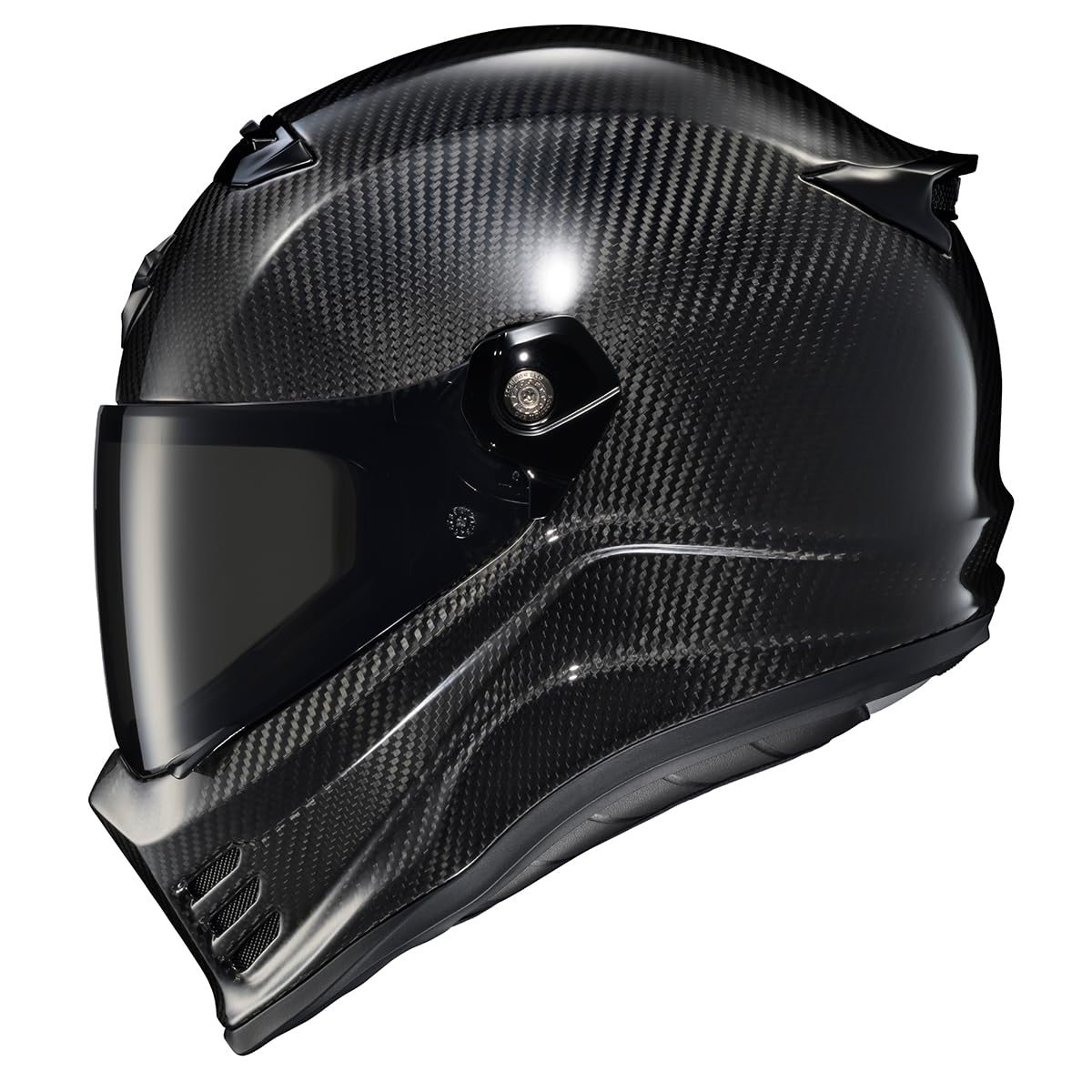
The Covert FX uses the same TCT-U 3K carbon fiber weave as the R1 Air but in a more street-fighter-oriented shell profile that appeals to riders on naked bikes and cafe racers. The weight sits at 1,348 grams—just under three pounds—and the ECE 22.06 certification ensures it meets the current European impact standards that are more rigorous than DOT alone. The included dark smoke Everclear fog-free shield is a nice bonus for riders who ride in variable light.
The aero-tuned ventilation system uses a large top intake with a dual-position mouth vent that routes air to the shield as a defroster or directly to the rider’s face. The KwikWick C liner manages moisture effectively, and the KwikFit cheek pads leave generous space for eyeglass frames—a detail that glasses-wearing riders will appreciate. The speaker pockets measure 50mm, which fits most Cardo and Sena systems without compression.
The field of view is narrower than the AGV K6 S or KLIM Krios Pro, which matters if you prioritize peripheral awareness. The sizing also runs large; riders who normally wear a large should order a medium for a proper snug fit. The helmet also fogs faster than the Simpson Mod Bandit in cold weather, though the included chin curtain helps reduce the effect significantly.
Why it’s great
- ECE 22.06 certified at a mid-range price
- Excellent eyeglass accommodation in cheek pads
- Includes both clear and dark smoke shields
Good to know
- Field of view is narrower than class leaders
- Sizing runs large; order one size down
- Tends to fog in cold weather without the chin curtain
8. ILM 861C Carbon Fiber Full Face Helmet

The ILM 861C brings a dual visor system—outer clear shield with Pinlock EVO pins and a retractable inner sun visor—to a budget-friendly carbon fiber shell. The carbon fiber outer layer is paired with EPS buffer foam that meets DOT FMVSS 218 standards, and the metal quick-release strap adds a level of convenience rarely seen at this price point. The aerodynamic spoiler includes a passive rear vent that helps extract warm air from the interior.
The snake-effect carbon fiber weave has a distinctive look that catches attention at stoplights, and the removable/washable liner lets you keep the interior fresh through a full riding season. Multiple owners report that the helmet saved them in real-world crashes, which is the highest endorsement any helmet can receive. The shell is also Pinlock ready, though the insert is not included, so you will need to purchase one separately for fog-free riding.
Wind noise is the most common complaint—above 50 mph the top vents create noticeable turbulence that makes ear plugs essential. The sizing runs large, and some units arrive with scratched tinted visors that can be difficult to replace because ILM’s replacement parts are not widely stocked. The initial fit is also tight in the cheek area, though the foam does break in after a few hundred miles.
Why it’s great
- Dual visor system with retractable inner sun shield
- Real crash survival testimonials from owners
- Pinlock ready with metal quick-release chin strap
Good to know
- Significant wind noise above 50 mph
- Replacement visors are hard to source
- Some units arrive with scratched tinted shields
9. 1Storm HG335 Genuine Carbon Fiber Full Face Helmet

The 1Storm HG335 is the most affordable way to get a genuine carbon fiber shell on your head. The 3-level top ventilation control and 5-position ventilation channel give you real airflow adjustment that is functional, not just cosmetic.
The heavily cushioned interior is removable and washable, and the glossy UV protective finish resists fading after months of sun exposure. Multiple owners note that the fit runs large compared to brands like Bell and HJC—if you normally wear an XXL, the XL in the 1Storm will likely fit. Riders consistently report the helmet as extremely comfortable with a balaclava, and the lightweight construction makes it easy to wear for full-day rides without neck fatigue.
The face shield seal is the weakest point. Several owners report that the shield does not seat tightly against the gasket, causing it to pop open when the rider turns their head at freeway speeds to check blind spots. The noise level is also higher than any other helmet on this list, and the FMVSS 218 certification is the minimum safety standard without ECE testing. This is a strong entry point into carbon fiber, but the shield mechanism is a real flaw.
Why it’s great
- Lowest price point for a genuine carbon fiber shell
- True 3.2 lb weight reduction over standard helmets
- Comfortable cushioned liner with good ventilation control
Good to know
- Face shield does not seal firmly; can pop open at freeway speed
- FMVSS 218 only—no ECE certification
- Higher wind noise than every other helmet in this guide
FAQ
How much lighter is a carbon fiber helmet than a standard polycarbonate helmet?
Can a carbon fiber helmet be repaired after a crash?
Does a carbon fiber helmet offer better protection than fiberglass or polycarbonate?
Are carbon fiber helmets more likely to crack in cold weather?
Final Thoughts: The Verdict
For most riders, the carbon fiber helmet that earns the top recommendation is the ScorpionEXO R1 Air because it delivers the lowest weight per dollar, includes a Pinlock insert and spare shield, and its Airfit inflation system provides a fit precision that no other helmet in this comparison matches without aftermarket pads. If you want the absolute lightest shell for all-day touring, grab the AGV K6 S at 1,290 grams. And for adventure riders who split time between paved roads and dirt, nothing beats the KLIM Krios Pro with its Koroyd impact structure and wide eye port.