
Pulling up on a rope after your partner takes a whip tests your grip, your stance, and your gear selection all at once. The belay device you clip between your leg loop and your waist determines whether that catch feels like catching a feather or deadlifting a bag of cement. Every climber, from gym rat to alpine veteran, eventually asks the same question: does your current device give you the control you need when the holds blow out and the rope goes tight?
I’m Min — the co-founder and writer behind Gadgets Feed. I spend my weeks buried in spec sheets, cross-referencing UIAA certifications, rope diameter ranges, and friction-groove geometries so you don’t have to guess whether a device will actually hold your partner at the sharp end..
Whether you need a lightweight tube-style model for multi-pitch efficiency or a cam-assisted brake for gym safety, finding the right belay device for climbing is the single most important mechanical decision you make before leaving the ground because your hands, your partner’s life, and your own confidence depend on it.
How To Choose The Best Belay Device For Climbing
Not every belay device fits every rope thickness, climbing style, or belayer experience level. Choosing the wrong one can mean struggling to feed slack on lead or fighting the handle during a lower. Focus on the three pillars below to avoid a costly swap later.
Assisted Braking vs. Passive Tube Design
Passive tube devices like the Black Diamond ATC rely entirely on your hand position and friction grooves to catch a fall. They are lightweight, simple, and ideal for trad or alpine climbing where weight matters. Assisted-braking devices, such as the Petzl Grigri+ or Edelrid Pinch, use an internal cam or roller that pinches the rope automatically during a fall, reducing the physical force needed from the belayer. If you belay a heavier partner or work in a busy gym, assisted braking provides a significant safety margin and less hand fatigue.
Rope Diameter Range
Every belay device specifies a minimum and maximum rope diameter, usually in millimeters. A device rated for 8.5 mm to 10.5 mm single ropes will feel sloppy on a skinny 8.5 mm line and stiff on a thick 10.5 mm gym rope. If you climb with a wide variety of ropes, look for devices that handle both single and half/twin pairs — the Petzl Reverso shines here because it accepts half ropes down to 7.1 mm. For a single dedicated rope, a tighter range gives more predictable catch performance.
Guide Mode for Multi-Pitch Climbing
Guide mode allows you to belay one or two seconds directly from an anchor without a separate tether. This feature is essential for multi-pitch and alpine climbing because it frees your hands to manage gear and communication. Devices like the Edelrid GigaJul and Petzl Reverso have dedicated guide-mode slots that provide assisted or passive braking for the second. If you only climb single-pitch sport or gym routes, guide mode is a nice-to-have that adds weight and cost but not daily value.
Quick Comparison
On smaller screens, swipe sideways to see the full table.
| Model | Category | Best For | Key Spec | Amazon |
|---|---|---|---|---|
| Petzl GRIGRI+ | Assisted Braking | Gym & high-frequency use | Anti-panic handle; 8.5–11 mm | Amazon |
| Edelrid Pinch | Assisted Braking | Sport & multi-pitch lead | No carabiner needed; 234 g | Amazon |
| Mad Rock Safeguard | Assisted Braking | Rescue & saddle hunting | 8.9–11 mm climbing range | Amazon |
| EDELRID GigaJul | Hybrid Assisted | Versatile lead & guide mode | Aluminum/stainless hybrid; 121 g | Amazon |
| BLACK DIAMOND ATC | Passive Tube | Budget-friendly gym & sport | Dual friction modes; 50 g | Amazon |
| Mammut Smart 2.0 | Assisted Tube | Top-rope gym climbing | Brake insert; 80 g; 8.7–10.5 mm | Amazon |
| PETZL Reverso | Passive Multi-Pitch | Alpine & multi-pitch trad | Half rope 7.1 mm; 57 g | Amazon |
In‑Depth Reviews
1. Petzl GRIGRI+ Belay Device

The GRIGRI+ is the most refined version of Petzl’s classic cam-assisted design, adding a lockable selector knob that switches between top-rope and lead modes. In top-rope mode the cam engages more readily for easier slack take-up, while lead mode softens the engagement so you can feed rope smoothly through quickdraws. The anti-panic handle is the standout safety feature — if you instinctively yank the handle during a panicked lower, the mechanism stops descent completely and requires a reset, preventing a common human-error accident.
Rated for single ropes from 8.5 mm to 11 mm, the GRIGRI+ pairs well with standard gym lines and most outdoor sport ropes. The stainless steel wear plate above the friction channel significantly extends the device’s lifespan in high-frequency environments like busy climbing walls or guiding setups. At roughly 200 grams it is noticeably heavier than a tube-style device, but the cam mechanism and ergonomic handle make lowering a 90 kg climber feel effortless and fully modulated.
Experienced users note that the anti-panic feature can trigger accidentally when feeding slack on an unloaded rope, which takes practice to manage. The weight penalty also makes it less appealing for alpine missions where every gram counts. Still, for gym climbers, instructors, and anyone who wants maximum assisted safety margin, the GRIGRI+ remains the benchmark that other assisted devices are measured against.
Why it’s great
- Anti-panic handle prevents runaway lowers
- Dual top-rope and lead mode selector
- Stainless steel wear plate for longevity
Good to know
- Heavier than tube devices by about 140 g
- Anti-panic can engage during slack feed with practice
2. EDELRID Pinch Belay Device

The Edelrid Pinch is a premium assisted-braking device that eliminates the need for a separate belay carabiner by integrating a threaded anchor point directly into the aluminum alloy body. This design reduces setup complexity and places the device closer to your harness, meaning you pull a shorter length of rope when taking in slack — a real efficiency gain during long lead sessions. The brake assist uses a spring-loaded cam that engages on rope tension, providing a smooth catch that users consistently describe as more intuitive than a Grigri’s cam action.
Rated for dynamic single ropes from 8.5 mm to 10.5 mm and static ropes from 10.0 mm to 10.5 mm, the Pinch covers sport climbing, gym training, and rope-access work. The steel and aluminum construction gives it a solid 234-gram weight, which is heavier than most passive tubes but comparable to other assisted devices. The descent lever features an emergency catch that stops the rope if you release the lever abruptly, adding a secondary safety layer.
Some users find the lack of a carabiner restrictive when switching between ropes or when using a bridge harness for advanced techniques. The 10.0 mm minimum on static rope also limits its utility for some rescue scenarios. For sport climbers who want a device that feeds slack as smoothly as a tube but catches like a cam, the Pinch is a strong contender that challenges the Grigri paradigm.
Why it’s great
- No separate carabiner reduces setup clutter
- Feeds slack smoother than most cam devices
- Emergency catch on descent lever
Good to know
- Heavier than standard tube at 234 g
- Not recommended under 10.0 mm static rope
3. Mad Rock Safeguard Belay Device

The Mad Rock Safeguard occupies a unique niche as an assisted-braking device built for both climbing and technical rescue. Its internal cam design provides a positive lock under load while allowing smooth rope pay-out when the cam is released, making it popular among saddle hunters who use it for single-rope technique (SRT) ascent and descent. The device handles climbing ropes from 8.9 mm to 11 mm and rescue/rigging work from 8.1 mm, giving it a wider utility band than many climbing-specific devices.
Crafted from aircraft-grade aluminum with a stainless steel insert at the friction point, the Safeguard weighs only 142 grams — significantly lighter than the Grigri+ and Edelrid Pinch. The compact form factor fits easily in a gear sling or pocket, and the lack of external levers means fewer moving parts that could jam in dirty or icy conditions. Users praise the descent control for being both progressive and reliable, with no sudden lock-ups.
The primary limitation is the 8.9 mm lower limit for climbing ropes, which excludes the thinnest generation of lightweight single ropes. Some belayers also find that feeding slack on lead feels less fluid compared to dedicated sport-climbing assisted devices. For climbers who also need a rope-access or hunting tool, the Safeguard is a versatile two-in-one that justifies its cost through sheer utility.
Why it’s great
- Lightweight 142 g for an assisted device
- Wide range 8.1–11 mm includes rescue ropes
- Compact and simple internal mechanism
Good to know
- Slack feed less smooth for sport climbing
- Not ideal for ropes under 8.9 mm climbing range
4. EDELRID GigaJul Belay Device
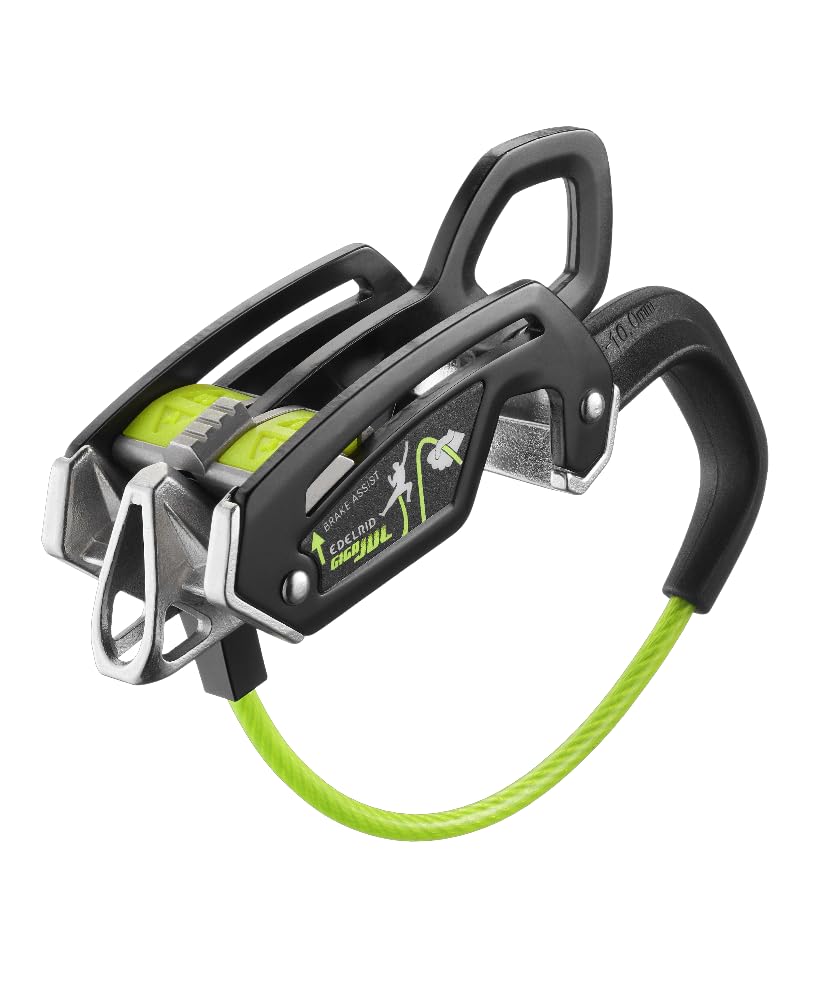
The GigaJul is an intelligent hybrid that uses an aluminum body for low weight and a stainless steel insert at the high-wear areas for durability. It functions as a passive tube in standard mode, then engages assisted braking when you load the device in guide mode — the best of both worlds for climbers who move between single-pitch and multi-pitch terrain. The thumb lever on the front allows you to momentarily open the brake channel for rapid slack pay-out, which experienced users call a “cheat code” for feeding rope.
Rated for single ropes from 8.9 mm to 10.5 mm and half ropes from 7.5 mm to 9.2 mm, the GigaJul covers gym, sport, and trad scenarios in one 121-gram package. The guide mode includes an assisted brake boost that helps catch a falling leader from the anchor, and an additional eyelet lets you unlock the device using a carabiner when managing seconds. The stainless steel abrasion points mean the device holds up well against gritty ropes and repeated lowering.
The assisted braking in guide mode is less aggressive than a dedicated cam device like the Grigri, so it won’t auto-lock as hard on a static rope. The thumb lever also creates a minor learning curve for new users. For the climber who wants one device that transitions from indoor training to alpine ridges without compromise, the GigaJul delivers exceptional value.
Why it’s great
- Hybrid design saves weight while resisting wear
- Thumb lever feeds slack faster than standard tubes
- Assisted brake in guide mode
Good to know
- Assisted brake is less aggressive than cam devices
- Thumb lever requires practice to use smoothly
5. BLACK DIAMOND ATC Belay Rappel Device

The Black Diamond ATC-XP is the standard against which all passive tube devices are judged. Its two friction modes — standard for medium- to thick-diameter ropes and high-friction for skinny ropes or when extra holding force is needed — give the belayer more control during lowering than a basic tube. The hot-forged aluminum body weighs just 50 grams, making it one of the lightest full-feature belay devices available, and the included RockLock screwgate carabiner turns it into a complete belting kit straight out of the box.
Rated for single ropes from 8.9 mm to 10.5 mm, the ATC-XP handles gym lines and outdoor sport ropes with equal composure. The high-friction mode can multiply holding force by up to three times, which is a noticeable advantage when lowering a heavy climber on a thin rope. The carabiner features a keylock nose that prevents snagging when clipping gear, and a three-turn screwgate lock that feels secure and tactile.
Unlike assisted-braking devices, the ATC requires the belayer to maintain a proper brake hand position at all times — there is no backup cam. Some users received a carabiner with a short thread length, though Black Diamond replaced those units quickly. For climbers who value simplicity, weight savings, and a proven design, the ATC-XP package remains the most reliable entry point into climbing belay gear.
Why it’s great
- Ultra-light 50 g for alpine efficiency
- Dual friction modes adapt to rope diameter
- Comes with a quality locking carabiner
Good to know
- No assisted braking — full manual attention required
- Carabiner thread length can be inconsistent
6. Mammut Smart 2.0 Belay Device
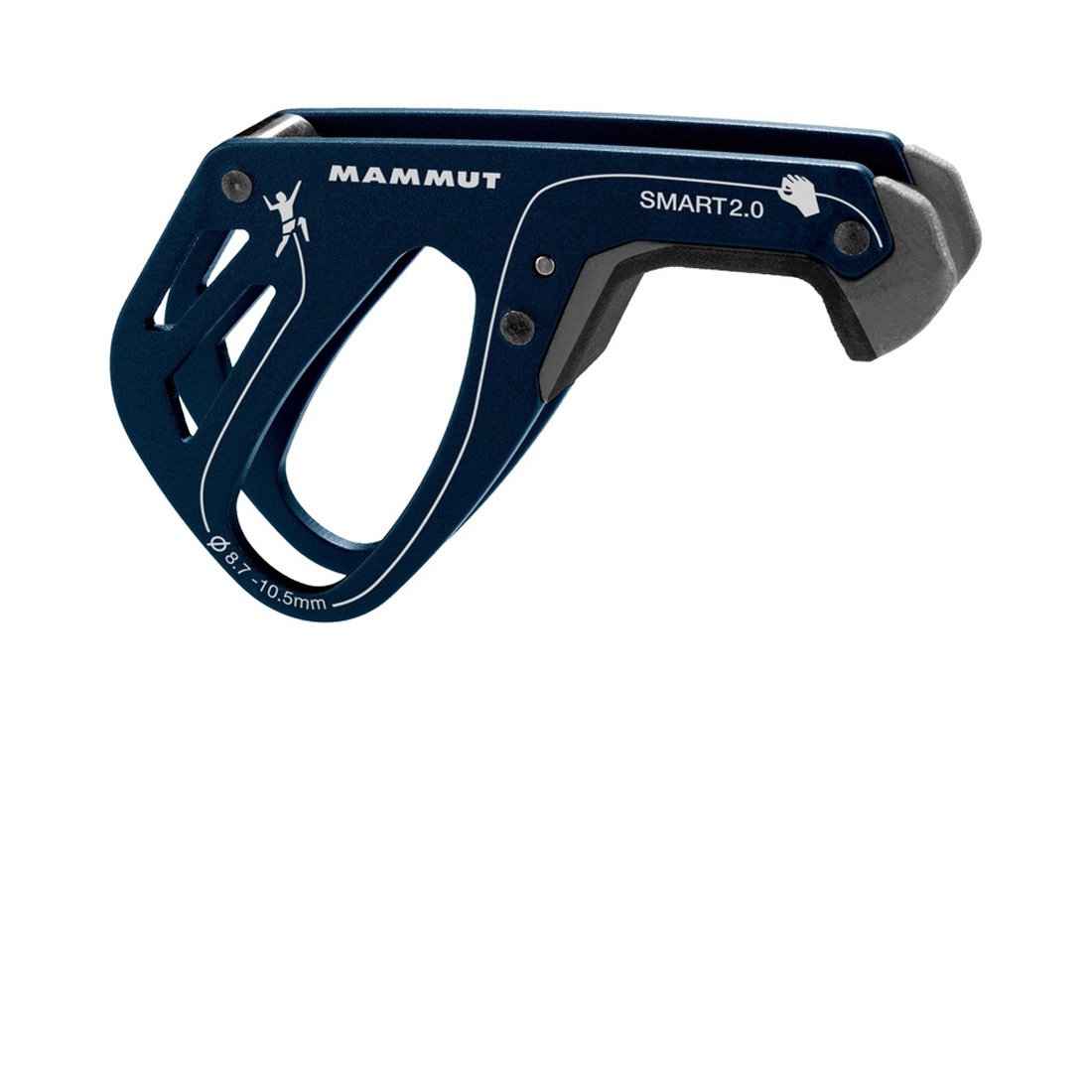
Mammut’s Smart 2.0 operates on the tube principle but adds a high-performance brake insert that interacts with the belay carabiner to provide assisted braking during a fall. In top-rope mode, the device locks the rope effectively with minimal hand strength, making it a favorite among gym climbers who want assisted safety without the weight or complexity of a cam device. The all-aluminum body with plastic inserts keeps the weight at a low 80 grams while maintaining durability.
Rated for rope diameters from 8.7 mm to 10.5 mm, the Smart 2.0 pairs well with standard gym and sport ropes. Mammut recommends using the Mammut Smart HMS carabiner for optimal interaction with the brake insert, but the device functions with most HMS-style lockers. The absence of moving parts or levers simplifies maintenance — rinse off chalk and grit and the device continues working.
The Smart 2.0 shows a clear bias toward top-rope use; many users find feeding slack on lead climbing causes the device to stick or require extra force to release the cam effect. Lowering a climber also demands a slightly different hand technique compared to a classic tube. For dedicated top-rope climbers or gym belayers who rarely lead, the Smart 2.0 is an excellent lightweight assisted option.
Why it’s great
- Lightweight assisted braking at only 80 g
- No moving parts — low maintenance
- Excellent rope lock in top-rope falls
Good to know
- Slack feed on lead can be sticky
- Lowering technique differs from standard tube
7. PETZL Reverso Multi-Purpose Belay/Rappel Device

The Petzl Reverso is the definitive multi-pitch and alpine workhorse. Its asymmetrical V-shaped friction grooves have lateral channels that self-adapt to the rope diameter, providing consistent friction whether you are lowering on a thin half rope or a thick single line. In Reverso mode (guide mode), the device clips directly into the anchor and provides assisted braking for one or two seconds simultaneously, allowing independent rope management at the belay station — a critical feature for efficient multi-pitch transitions.
Rated for single ropes from 8.5 mm to 10.5 mm, half ropes from 7.1 mm to 9.2 mm, and twin ropes from 6.9 mm to 9.2 mm, the Reverso supports virtually any rope configuration a trad or alpine climber might carry. The aluminum body weighs only 57 grams, so it adds negligible weight to a rack. Rounded rope slots reduce wear on both the device and the rope, extending the lifespan of both components.
As a passive tube device, the Reverso offers no assisted braking in standard lead belay mode — you must maintain brake hand discipline at all times. The guide mode auto-block is effective but requires proper orientation and a separate carabiner for the anchor connection. For climbers who prioritize weight and guide-mode functionality on a big route, the Reverso is the gold standard.
Why it’s great
- Extremely lightweight at only 57 g
- Accepts half and twin ropes down to 6.9 mm
- Guide mode belays two seconds independently
Good to know
- No assisted braking in standard mode
- Guide mode setup requires a carabiner
FAQ
Can I use a belay device rated for 8.5 mm rope on a 10.5 mm rope?
Why does the Mammut Smart 2.0 feed slack poorly on lead?
What is guide mode and do I need it?
Final Thoughts: The Verdict
For most users, the winning belay device for climbing is the Black Diamond ATC because it combines proven passive-tube reliability, dual friction modes for varying rope diameters, and a lightweight build that works from the gym to an alpine ridge. If you want cam-assisted braking for added safety in busy gyms or with heavier partners, grab the Petzl GRIGRI+. And for multi-pitch trad or alpine climbing where weight and guide-mode functionality are critical, nothing beats the PETZL Reverso.