
Our readers keep the lights on and my morning glass full of iced black tea. As an Amazon Associate, I earn from qualifying purchases.
Specs are compiled from manufacturer listings and verified buyer reviews and can change over time — please confirm the key details on the product page before buying.
You can skip the drugstore kiosk and print crisp 4×6 photos at home, but only if you match the paper to your printer. Feed glossy inkjet paper into a laser machine and you will get smears; run dye-sub paper (a type that uses heat to transfer dye) through a standard printer and you will get nothing. This guide sorts out which 4×6 photo print paper works with inkjet printers, which ones are built for lasers, and which premium options are worth the extra cost for frame-ready color.
I’m Min — the founder and writer behind Gadgets Feed. This guide is built by comparing the manufacturers’ published specifications and the patterns across verified customer reviews, so you get each pick’s real strengths and trade-offs instead of marketing spin.
You will find everyday glossy prints, professional satin finishes, and laser-compatible paper here, with the top eight choices ranked by real-world results.
Our Picks at a Glance

How To Choose The Best 4×6 Photo Print
The single most important question is what kind of printer you own, because photo paper is not universal. Inkjet printers spray liquid ink onto the sheet, while laser printers fuse dry toner with heat — a glossy inkjet sheet forced through a laser can melt or jam. Check your printer type first, then pick the paper built for it.
Match the finish to the look you want
Glossy gives bright, reflective color that feels like a classic drugstore print — great for everyday snapshots and gifts. Satin and lustre finishes cut the glare and resist fingerprints, which is why portrait photographers and real estate agents lean on them for framed wall displays. Each finish changes how the photo looks under light, so think about where the print will live.
Weigh the thickness before you buy
Paper weight is measured in grams per square meter (gsm) and pounds (lb). Heavier paper like 200gsm or higher feels substantially thicker, resists curling, and prevents prints behind it from showing through. Lighter sheets are cheaper and work fine for test prints, but they can feel flimsy in a frame and often have more curl as they dry.
Quick Comparison
| Model | Best For | Paper Weight | Finish | Sheet Count | Amazon |
|---|---|---|---|---|---|
| Canon PP-301 Glossy★ Best Overall | Inkjet glossy prints | 18 lb | Glossy | 100 | Amazon |
| LIWUTE 4R Laser PaperLaser Choice | Laser printer photos | 26 lb (157gsm) | Glossy | 100 | Amazon |
| KODAK Picture Paper VividThickest Value | Thick, no-show-through | 67 lb (230gsm) | Glossy | 100 | Amazon |
| KODAK Photo Paper Gloss | Instant-dry inkjet | 80 lb (200gsm) | Glossy | 100 | Amazon |
| Pikapoka Variety Pack | Mixed-size budget | 20 lb (200gsm) | Glossy | 120 | Amazon |
| HP Premium Plus Satin | Smudge-free satin | 80 lb | Satin | 100 | Amazon |
| ILFORD Galerie Satin | Professional lustre | 260gsm | Satin | 100 | Amazon |
| ILFORD Galerie Smooth Gloss | True-photo gloss | 310gsm | Glossy | 100 | Amazon |
In-Depth Reviews
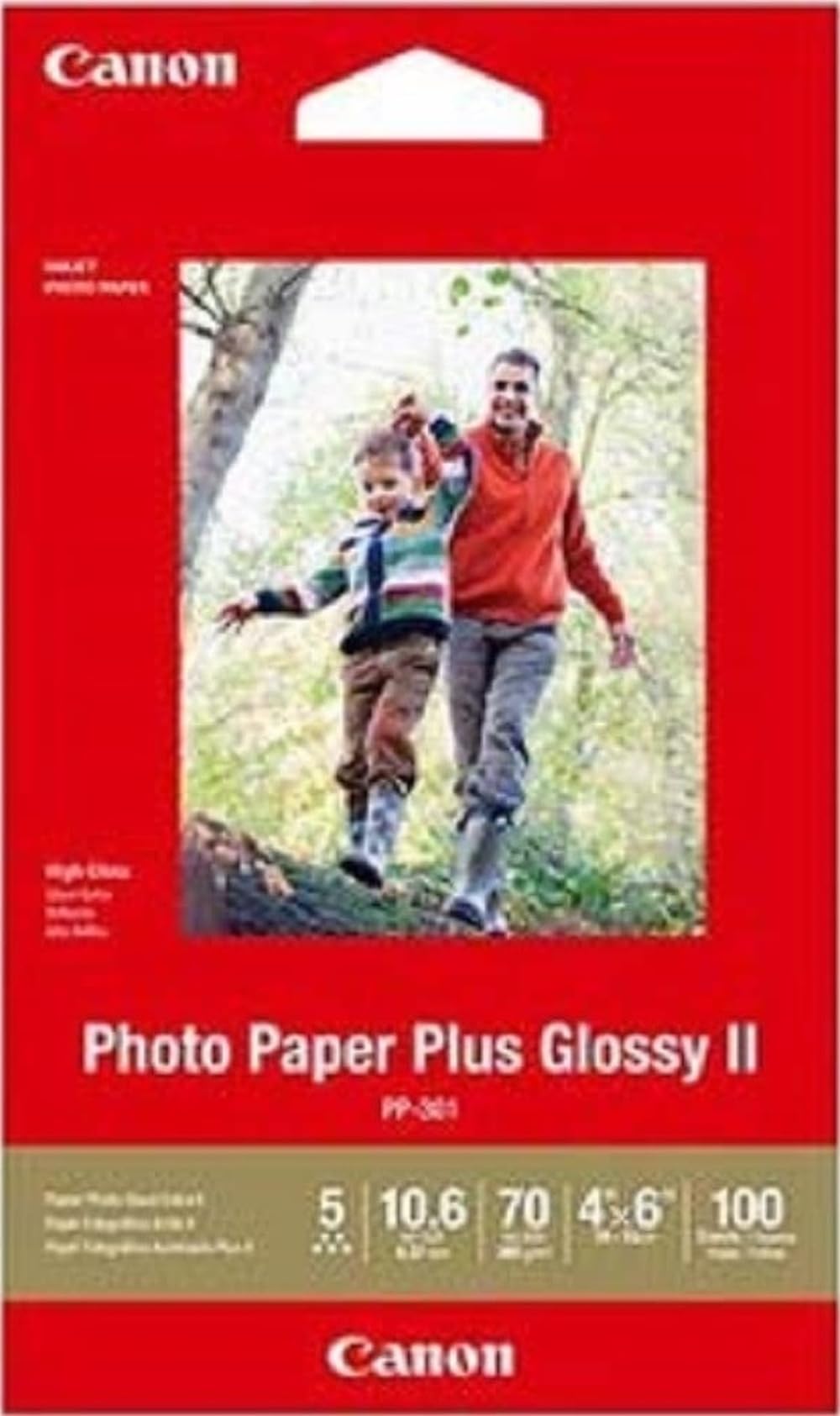
1. Canon Photo Paper Glossy 4 x 6 Inches, PP-301, 100 Sheets
Our pick — over 4.5★ from 12,500+ verified ratings; the strongest balance of quality and price.
The heavy-feeling glossy that turns everyday inkjet prints into true photographs.
Quality wins people over here, with hundreds of owners singling it out. The Canon Glossy Photo Paper Plus II is noticeably heavier than standard glossy paper, and as buyers report, “prints are sharper with great color.” At 18 lb weight, it resists the telltale curl of cheaper sheets while the glossy finish delivers the look and feel of a traditional photograph.
It is not just a Canon-printer paper despite the branding. Printers from Epson work beautifully with it — one owner ran 400 sheets through an Epson ET-4760 on the Glossy setting with fast-drying, no-smudge results, and another praised it on the Epson ET-8550. The sheets arrive flat, without curl, and dries quickly enough to handle ten minutes after printing. For a small business printing consistently, the repeat-buyer loyalty here is telling.
The genuine drawback is cost — it is pricier than generic brands. But for crisp, bright, durable prints that justify the premium, the value conversation changes fast. A 3.7x gap separates the 18 lb Canon from the 67 lb Kodak below, meaning this is a lighter, everyday-weight sheet rather than an archival heavyweight.
Quality-first pick: The glossy finish gives images that rich, traditional-photo look, and the paper’s brightness makes colors pop without fading. It is the crowd favorite for a reason — 4.8 stars across 12,000+ owners puts it firmly ahead of the pack.
Reach for this if: You run a Canon or Epson inkjet and want dependable, sharp, classic-glossy prints for gifts, albums, or client work without fiddling with settings.
Know before buying: The premium over generic paper is real, and at 18 lb it is not the thickest option if you want zero bleed-through when stacking prints.
2. LIWUTE 4×6 inch 4R Glossy Laser Photo Paper – 157gsm, 100 Sheets
The laser-safe glossy that delivers solid prints without the meltdown risk.
If you own a laser printer, this is the pick that makes sense where glossy inkjet paper would fail. At 157gsm with a double-sided high-gloss coating, it is designed specifically for laser machines. Owners mention running roughly 30 sheets through a Brother HL-L9310CDW with no smearing, blotching, or jams — the key concerns that plague glossy paper in a laser’s heat path.
Set expectations correctly: laser technology cannot match inkjet’s glossy depth, and the reviews are honest about this. As one owner put it, “it’s not anywhere near what an inkjet will do so don’t expect picture quality, but for a laser printer it’s the best you’re gonna get.” Another notes it is thinner than inkjet paper, which is necessary for the printer’s bend path, and that it straightens out adequately after printing.
The mixed feedback on print quality and compatibility is worth knowing upfront — this is a niche product for laser owners who want photos, not a universal solution. The glossiness also reads more semi-gloss than true photographic shine, which is a physics limit of toner fusion rather than a defect.
Laser-locked: Double-sided printing works cleanly, and the 92 brightness rating keeps colors vivid. For laser owners this is the honest best-case scenario, but inkjet users should look elsewhere on this list.
Best for: Anyone with a laser printer who refuses to accept blurry or jammed photo attempts and wants a glossy sheet that runs clean.
skip it if: You own an inkjet and expect drugstore-style shine — this paper cannot outperform its printer technology.
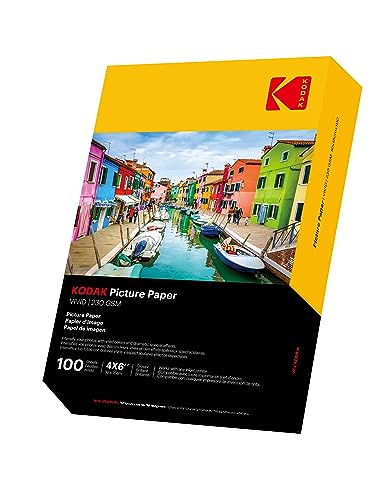
3. KODAK Picture Paper Vivid 4″x6″, 100 count, 66lb-230g/m2
The heavyweight that stacks prints without ghosting through the back.
The defining spec here is thickness — 230gsm at 11.9 mil, the heaviest on this list. Owners note specifically that “anything behind it (like another print) does not show through,” which makes this the pick for albums, stacks, or double-sided projects where bleed matters. The glossy finish gives crisp, clear photos with the Kodak name attached.
This paper is strictly inkjet-compatible, and the listing is emphatic that it will not work with Kodak’s own Dock printers, which use dye-sublimation instead of inkjet. That confusion has tripped up buyers before, so check your machine before ordering. For inkjet owners, though, the “vivid” label earns its keep with true-to-screen colors straight off the press.
Compared to the Canon above (18 lb vs 67 lb), this is a materially heavier sheet that changes how a print feels in the hand — more like a professional lab print than a home-office flimsy. The biodegradable material is a small sustainability bonus, though the sheet count of 100 keeps it competitive on value.
Heft that shows: The “better definition and truer colors” praise that follows Kodak owners here is backed by that 230gsm base. It punches above its price tier for anyone who wants a premium-feeling print without premium-brand cost.
Choose this if: You’re building a photo album or stacking prints and want zero see-through, plus vivid color that beats the drugstore.
Double-check: If you own a Kodak Dock or any dye-sub printer, this will not feed — confirm inkjet before checkout.
4. KODAK Photo Paper Gloss 4 X 6, 100 count, 52lb-200 g/m2

The fast-drying glossy that lets you frame it before the ink settles.
The instant-dry coating locks ink on contact, so prints come out smudge-free and ready to handle immediately. That is a real workflow win for anyone who prints batches and doesn’t want to babysit drying racks. The 200gsm weight at 8.5 mil gives a solid, substantial feel that sits between the everyday Canon and the hefty Kodak Vivid above.
The quality here is what gets the most praise — customers note “very good quality” with nice picture output and strong value for money. It works with any inkjet printer, and the compatibility notes are clear: HP printers handle it well, but again this is not for the Kodak Dock line which uses dye-sublimation technology. That confusion is the recurring gripe from owners who grabbed it for the wrong machine.
At 80 lb versus the Canon’s 18 lb, this is more than four times heavier on paper — a genuinely more substantial stock. It sits at 4.6 stars with a solid review base, making it the middleweight champion for inkjet users who want glossy without paying premium-brand prices.
Fast and clean: The instant-dry coating delivers smudge-free prints with no waiting. The glossy finish keeps colors crisp, and the value is strong for a 100-sheet box.
Go with this if: You print regularly and want a thick, fast-drying glossy that works in any inkjet and won’t smudge when you stack prints.
Watch out for: The Dock-printer incompatibility trips people up constantly — verify your printer type first, and you are set.
5. Pikapoka Glossy Photo Paper 4×6, 5×7, 8.5×11 – 120 Variety Pack

A starter pack that prints display-ready photos without the brand tax.
This variety pack is the entry-level answer for people new to home printing who want to experiment across sizes. You get 120 sheets across 4×6, 5×7, and 8.5×11 — enough to test, fail, and retry without feeling like you wasted money. At 200gsm, it matches the thickness of the Kodak glossy above, so you are not sacrificing heft for the lower price.
The print quality is what earns the most praise here, with owners noting it works well with HP printers and dries almost immediately. One owner printed pictures for wall display using poster command strips, noting that at this price “it’s not a bother to reprint” — the exact mindset this pack is designed for. Another called it a “great starter pack” for learning your printer’s features without burning premium paper.
Compared to the premium picks above, the color depth reads slightly less archival, and the FSC certification is a nice ethical touch. For the budget-conscious who want to print a lot and often, this pack undercuts the per-sheet cost of premium brand paper while delivering surprisingly close results.
Experiment freely: The three-size mix lets you figure out what you actually print most before committing to a single-size box. At this price, mistakes are affordable, and the glossy finish still looks sharp on display.
Pick this up if: You are new to home photo printing, print across multiple sizes, or want a low-stakes paper to learn your printer’s settings.
Accept the trade: The color rendition is good but not archival-grade — for heirloom prints you will want a premium option further down this list.
6. HP Premium Plus Photo Paper, Satin, 4×6 in, 100 sheets (CR666A)

The water-resistant satin that real estate pros rely on for client photos.
The texture is the headline here — a soft-gloss satin finish that sits intentionally between shiny and matte. Owners call it a “huge upgrade from glossy paper,” and the water-resistant, smudge-free coating makes it ideal for prints that will be handled. A realty company uses it specifically to print photos of homes for listings, proof that the durability claim holds under professional conditions.
At 80 lb weight, the stock is heavier and more substantial than the Canon above, and the special coating on the back of each sheet prevents photos from sticking together when stacked. The instant-dry coating works in practice — prints are ready quickly, and the satin surface resists fingerprints. Compatibility is broad across most inkjet printers.
The one trade-off noted in comparisons is color vibrancy — one owner found it slightly less punchy than Canon paper, trading some pop for the refined satin texture. The brightness rating of 80 reflects that more subdued, professional look. For framed wall displays and portrait work, that is often exactly what you want.
What wins people over
- Satin texture that resists glare and fingerprints beautifully
- Water-resistant, instant-dry coating for smudge-free handling
- Back coating prevents stacked prints from sticking together
The honest trade-off
- Color vibrancy is slightly softer than glossy rivals
- Premium-priced versus generic satin alternatives
Grab this for: Framed photos, portfolio work, or any print that will be handled and shown — the satin durability is the whole point.
Think twice if: You want maximum color pop for casual snapshots; a glossy finish serves that better.
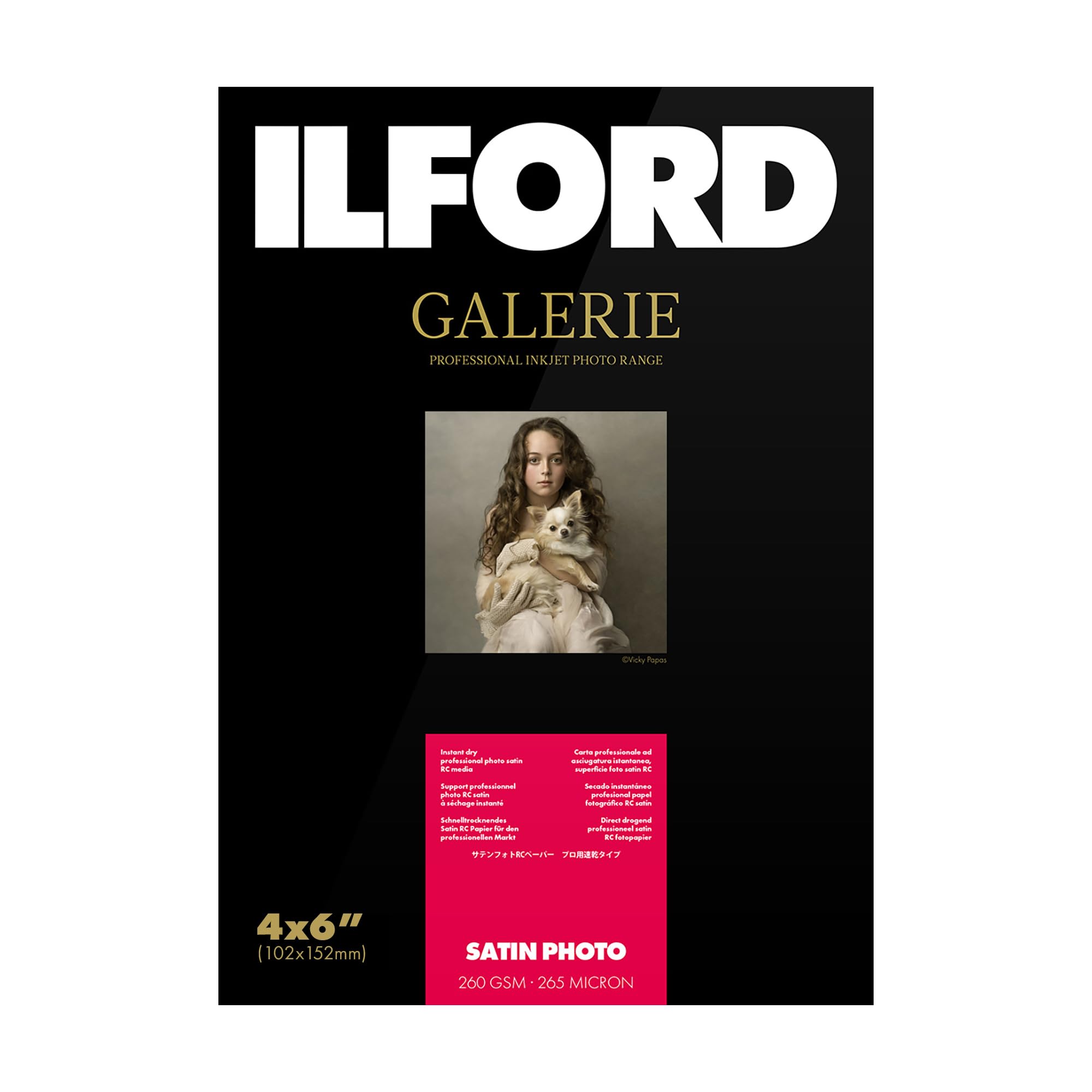
7. ILFORD Galerie 4×6″ Satin Photo, 100 sheets, 10mil / 260gsm
The German-made lustre that wedding and portrait shooters reach for.
This is the paper “the pros use” — and the reviews back that up with a decade of loyalty. The smooth lustre finish (a satin middle-ground) reduces glare while preserving rich color and natural skin tones, which is precisely why the listing calls out lifestyle, wedding, and portrait work. The 260gsm, 10mil resin-coated base arrives perfectly flat and precision-cut to 4×6.
The instant-dry coating stops smearing and curling, letting prints go straight from printer to frame. The back of each sheet is free of watermarks or branding — a detail photographers love because it keeps creative projects clean. Owners praise “sharp details and rich colors” with a “smooth, professional finish” that makes prints stand out.
This beats the Canon on paper heft and the HP on professional pedigree — the heavy weight means zero curl, and the archival materials promise extended longevity. Free ICC printer profiles from ILFORD’s website let color-critical users calibrate for perfect prints across mainstream printer models. It is priced at the premium end, but for display-worthy prints it delivers.
Professional standard: The lustre finish (a subtle sheen between glossy and matte) is the balance, and the archival build means these prints outlast typical home-output. “Drop dead gorgeous photo paper” is how the review pages sum it up.
Choose this if: You print portraits, landscapes, or wedding photos that need natural skin tones and a gallery-ready finish.
Accept the cost: This is premium-priced — for casual snapshots, the money is better spent on the Canon or Kodak options above.
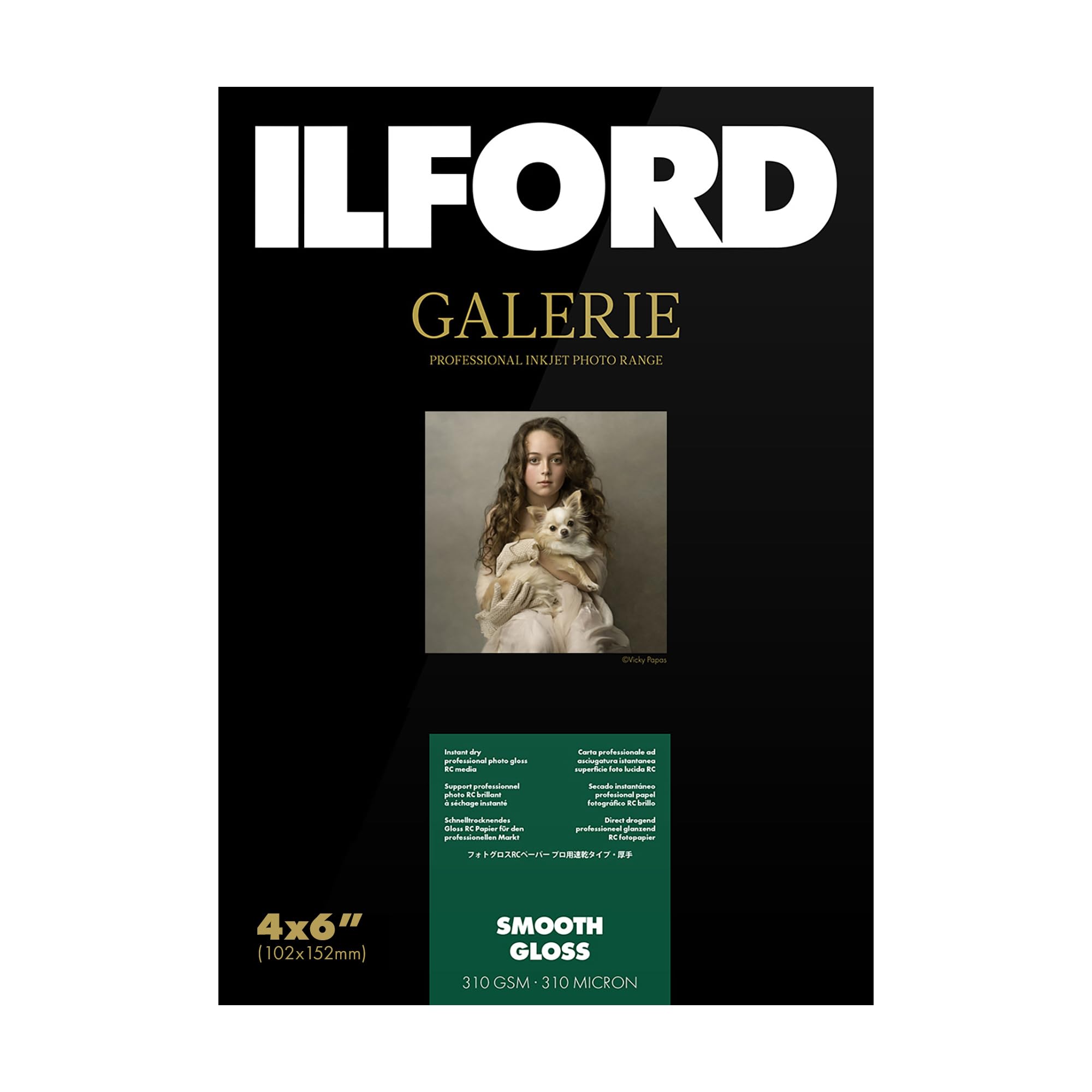
8. Ilford Galerie 4×6″ Smooth Gloss, 100 Sheets, 12mil / 310gsm
The thickest true-gloss on the list, engineered to look like a real lab print.
At 310gsm and 12 mil thick, this is the heaviest and most substantial paper here — a stock so dense it feels like a professional lab print in your hand. The smooth gloss finish delivers what owners describe as prints that “look like true photographs” with rich, accurate color rendition. It is built for both dye and pigment ink printers, handling color and black-and-white equally well.
The quality is what earns the most praise, and the color accuracy gets a special nod — reviewers point out that with the free ICC profiles, “exact colors” come through. One longtime Ilford user who started in the darkroom era calls the detail and color superior to HP and Kodak, noting it “beats Kodak and Bright papers” for home printing. The instant-dry archival coating prevents smearing and extends print longevity.
This is the pick that replaces the drugstore entirely — the “Goodbye Yellowbox” review sums up the experience. The 1.2-pound box weight tells you everything about the density you are getting. It works across consumer inkjets including Canon PIXMA and Epson models, and the German manufacturing shows in the precision cutting.
Why it earns the top tier
- 310gsm stock with a true photographic gloss finish
- Instant-dry archival coating prevents smearing and curling
- Accurate color with free downloadable ICC profiles
What holds it back
- Most expensive per sheet on this list
- Overkill for casual or test printing
Invest in this if: You print heirloom-quality photos, sell your work, or simply want home prints indistinguishable from a professional lab.
Pass if: You’re printing throwaway snapshots — this paper deserves photos worth keeping.
Understanding the Specs
Paper Weight (gsm & lb)
This is the single biggest driver of how a print feels. Weight is listed in grams per square meter (gsm) and pounds (lb) — heavier numbers mean thicker, sturdier paper. A 310gsm sheet like the Ilford Gloss feels like a professional lab print, while an 18 lb sheet like the Canon is lighter and more flexible. Heavier paper resists curling, prevents prints behind it from showing through, and generally commands a higher price.
Inkjet vs Laser Compatibility
Photo paper is not universal. Inkjet printers spray liquid ink that needs a coating to absorb it; laser printers fuse dry toner with heat that can melt glossy inkjet coatings. The LIWUTE paper on this list is built specifically for lasers, while everything else is inkjet-only. Some brand papers even exclude their own dye-sublimation instant printers — the Kodak Dock incompatibility is the classic trap, so always check your printer type before buying.
Finish Types
Glossy gives bright, reflective color that mimics a classic drugstore print. Satin and lustre finishes sit between glossy and matte, cutting glare and resisting fingerprints — the reason portrait photographers and real estate pros prefer them. The finish you choose depends on where the photo lives: glossy for albums and gifts, satin for wall frames and handling, lustre for professional portrait work.
Instant Dry & Archival Quality
Instant-dry paper’s coating locks ink on contact, so prints can be stacked or framed immediately without smearing. Archival quality refers to the paper’s resistance to fading and degradation over years — critical for heirloom prints. The Ilford papers use archival materials with extended longevity claims, while the Kodak Gloss focuses on the faster instant-dry experience for everyday batch printing.
FAQ
Can I use inkjet photo paper in a laser printer?
Will KODAK photo paper work with a Kodak Dock printer?
What is the difference between glossy and satin photo paper?
Does heavier paper really matter for photo quality?
Is premium photo paper worth the extra cost?
Can I print on both sides of photo paper?
What does the paper weight number like 18 lb or 230gsm mean?
Why do my photo prints smudge even after they dry?
How do I choose paper for an Epson printer specifically?
Is there a difference between KODAK Vivid and KODAK Gloss paper?
Final Thoughts: The Verdict
If you want one dependable pick, the best 4×6 photo print paper is the Canon PP-301 Glossy because it combines sharp prints, strong color, and the most solid reputation of any option on this list. If you want an instant-drying sheet that handles fade-free everyday printing, the KODAK Gloss is a smart value pick. And for frame-ready prints that look professionally lab-made, the Ilford Galerie Smooth Gloss is the premium choice — the crowd favorite at 4.8 stars across more than 12,000 owners shows Canon’s consistency is tough to top, but Ilford’s 310gsm density (a measure of paper thickness) is what photographers who demand the best reach for.
How We Picked
We do not accept paid placement. Every pick is matched to a real buyer and a real use-case; we do not hands-on test units.
Sources & Methodology
Specifications: manufacturer listings and product documentation. Review insights: verified customer reviews, as of August 2026. Pricing: not shown on this page (it changes often); check the current price via the retailer link.
As an Amazon Associate, Gadgets Feed earns from qualifying purchases. This does not affect which products we feature.