
A 4-pound hammer sits in a strange middle ground — heavier than a framing hammer but lighter than a full-size sledge. It’s the tool you reach for when a standard claw hammer bounces off a stake and a 10-pound maul is overkill. The problem is that many 4-pound hammers transfer brutal vibration directly into your wrist, ruin their handles after a few missed swings, or simply don’t fit in tight automotive and demolition spaces. Getting this weight right — balanced handle, proper head hardness, shock absorption — separates a tool you keep for decades from one you replace after a single job.
I’m Min — the co-founder and writer behind Gadgets Feed. I’ve spent years analyzing the metallurgy, handle ergonomics, and head geometry that distinguish pro-grade striking tools from the disposable alternatives cluttering hardware aisles.
Whether you are splitting firewood, driving concrete stakes, or breaking up a block wall, the right choice changes how your body feels at the end of the day. This guide ranks the top contenders to help you find the best 4 pound hammer for your specific work and budget.
How To Choose The Best 4 Pound Hammer
A 4-pound hammer is a buy-it-for-life tool if you pick the right one. Three factors separate a frustrating, painful tool from one that feels like an extension of your arm.
Head Hardness and Face Design
The steel head should be heat-treated and induction-hardened to at least 45 HRC on the Rockwell scale — harder faces resist chipping and mushrooming when you strike chisels or hardened stakes. A straight face is best for general striking and demolition, while a wedged or cross-peen face concentrates force for precision splitting or metal shaping.
Handle Material and Shock Control
Fiberglass handles dominate this category for good reason — they are lighter than solid steel and far less prone to cracking than wood. Look for an overstrike protection zone (a thicker rubber collar below the head) that absorbs glancing blows. Some premium models integrate a shock-absorbing core (like IsoCore) that cuts vibration transfer by more than half compared to a basic wood handle.
Grip and Weight Distribution
A textured rubber overlay with a bi-material grip prevents the handle from slipping in wet or sweaty conditions. The overall balance matters: a head-heavy hammer delivers more power per swing but fatigues your forearm faster, while a well-balanced handle lets you swing all day. Hold the hammer near the head for short, controlled strikes, or choke up on the end for full-power demolition swings.
Quick Comparison
On smaller screens, swipe sideways to see the full table.
| Model | Category | Best For | Key Spec | Amazon |
|---|---|---|---|---|
| Fiskars Pro IsoCore | Club Hammer | Demolition & Masonry | IsoCore shock control, 2x less vibration | Amazon |
| Estwing Hard Face Sledge | Sledge Hammer | Rock Splitting & Wedges | 50–55 HRC hardened head | Amazon |
| Hooyman Sledge & Club | Club Hammer | Fencing & Stakes | 45–60 HRC 1045 steel head | Amazon |
| Klein Tools H80694 | Engineering Hammer | Roadside & Rebar Work | Overmolded grip, lanyard hole | Amazon |
| Spec Ops Blacksmith | Blacksmith | Metal Shaping & Demolition | Removable santoprene mallet cap | Amazon |
| Capri Tools Deadblow | Dead Blow | Non-Marring Strikes | Steel shot-filled PU body | Amazon |
| Estwing Sure Strike MRF64E | Engineer’s Hammer | Chisel Work & Stakes | Fully forged alloy steel head | Amazon |
In‑Depth Reviews
1. Fiskars Pro IsoCore 4 lb Club Hammer

The Fiskars Pro IsoCore stands apart from every other 4-pound hammer because of its patented IsoCore shock control system. Independent tests show it transfers less than half the strike vibration of a traditional wood-handled club hammer. This is the hammer you swing for hours on a demolition job and still have functional elbows the next morning. The wedged demolition face concentrates force into a smaller impact zone, delivering more destructive energy per swing against block, brick, or mortar.
The extra-large diameter driving face improves strike accuracy, which matters when you are driving masonry nails or chisels. The textured grip stays secure even when your hands are sweaty or gloved. Users report that the head shows no surface scratches or deformation after extended heavy use, indicating the alloy steel heat treatment holds up well against hardened striking surfaces.
Fiskars backs this hammer with a full lifetime warranty, and the 14-inch length makes it ideal for single-handed precision work while still offering enough handle to generate significant force with two hands. The main consideration is that the wedged face is optimized for demolition — if you primarily need a flat face for driving stakes, one of the straight-face options below may suit you better.
Why it’s great
- IsoCore absorbs up to 2x more shock than wood handles
- Wedged face concentrates force for demolition
- Full lifetime warranty
Good to know
- Wedged face not ideal for flat driving of stakes
- Rust can develop if left in humid environments
2. Estwing 4-Pound Hard Face Sledge Hammer

Estwing built its reputation on striking tools that outlast the competition, and this 4-pound hard face sledge carries that legacy forward. The head is forged from alloy steel and induction-hardened to 50–55 HRC — a noticeably harder face than many budget alternatives. This hardness means the head resists chipping and peening when you drive steel wedges or strike cold chisels. Geologists and prospectors favor this hammer for rock sampling because the face holds its edge through repeated impacts against stone.
The 16-inch handle gives you added reach and swing leverage compared to the 14-inch club hammers. The dual-injection fiberglass handle contains over 70 percent fiberglass content, making it stiffer and more durable than standard fiberglass handles with lower glass fill ratios. The textured rubber overlay provides a two-handed grip position that is comfortable whether you choke up for control or grip the end for power.
Overstrike protection comes from a thicker rubber collar below the head, which shields the handle from glancing blows when striking rebar or wedges. Users report excellent balance that reduces fatigue during extended splitting sessions. The main trade-off is the longer handle — at 16 inches it may not fit in compact toolboxes or tight automotive spaces as easily as shorter options.
Why it’s great
- 50–55 HRC induction-hardened head resists wear
- 16-inch handle provides excellent swing leverage
- High fiberglass content for handle durability
Good to know
- Longer handle less ideal for tight workspace
- Made in India, not US-forged
3. Hooyman Sledge and Club Hammer

The Hooyman 4-pound hammer delivers impressive value with a 1045 high-strength steel head heat-treated to an HRC range of 45–60. This covers the sweet spot for a striking tool — hard enough to resist deformation against most targets but not so brittle that the face chips on hardened steel. The dimensions are notably compact at just 10.5 inches, making this one of the shorter 4-pound options and a favorite for mechanics working in tight engine bays or under vehicles.
The H-Grip handle is a standout feature — the rubber compound turns tacky when wet, providing a secure grip in rainy conditions or when working with sweaty palms. The fiberglass core is epoxy-sealed into the hammer eye, eliminating the wobble and head loosening that plagues cheaper hammers with friction-fit handles. A peg hole at the base of the handle allows for easy storage on a wall pegboard.
User reviews consistently praise the balance and solid build, with several mechanics noting it drives pickle forks and frees stubborn suspension components without the handle feedback causing wrist pain. The limited lifetime warranty adds peace of mind. The only caution from long-term users is that the rubber near the head can wear after heavy missed strikes, though the function remains unaffected.
Why it’s great
- 1045 steel head with 45–60 HRC hardness
- Compact 10.5-inch design fits tight mechanic spaces
- H-Grip stays tacky when wet
Good to know
- Rubber near head shows wear after missed strikes
- Short handle limits full-power two-hand swings
4. Klein Tools H80694 Sledge Hammer

Klein Tools designed this 4-pound engineering hammer for tradesmen who need a heavy hitter that fits in a standard tool bag. The forged alloy steel head handles demanding tasks like bending rebar up to #4 size and 1/2-inch rod. The large smooth faces provide ample contact area for anchoring fixtures and fixtures. The ergonomic grip features an overmolded plastic surface that resists oil and solvent absorption — a critical detail for automotive and roadside use.
The lanyard hole is a practical addition for mechanics who need to secure the hammer on a service truck or tool belt. The overstrike protection zone extends tool life by cushioning the fiberglass handle against missed blows. At 4.65 pounds total weight, this hammer feels slightly heavier in the head than some competitors, which translates to more momentum per swing.
Roadside assistance professionals report using this hammer daily for towing and service calls, with no handle failures after months of heavy use. The textured end of the handle provides a secondary grip surface for close-quarters striking. The only drawback is that the orange color shows grime quickly in dirty work environments, though this is purely cosmetic.
Why it’s great
- Forged alloy steel head bends #4 rebar
- Lanyard hole for tool belt or truck storage
- Overstrike protection extends handle life
Good to know
- Heavier head-to-handle balance than some options
- Orange handle shows dirt quickly
5. Spec Ops Tools Blacksmith Hammer
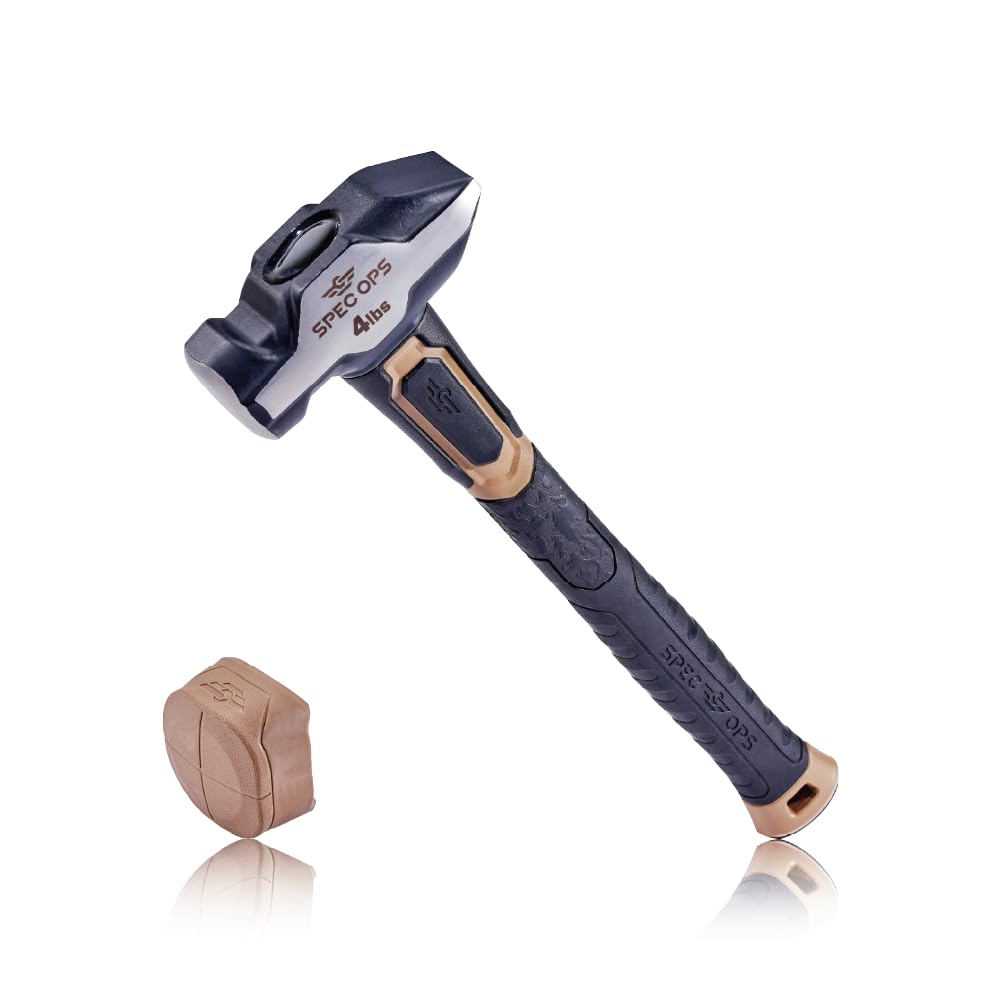
The Spec Ops Blacksmith Hammer is the most versatile design in this category because of its removable santoprene mallet cap. Snap the cap on for non-marring strikes against finished surfaces, soft metals, or delicate assemblies — it effectively replaces a rubber mallet or dead-blow hammer. Remove the cap to expose a high-carbon steel face for standard demolition, chisel driving, or blacksmithing. The tapered cross peen offers a secondary striking geometry for metal shaping and enhanced demolition control.
Spec Ops calls its head geometry “RPG” (Refined Power Geometry), which optimizes the face-to-weight ratio for explosive striking power without adding unnecessary mass. The integrated composite overstrike armor protects the fiberglass handle from damage caused by missed swings, and the company claims it doubles handle durability compared to non-reinforced designs. The textured grip ensures a secure hold even with greasy or gloved hands.
A portion of profits from this hammer goes to veteran and first responder causes. User reviews highlight the thoughtful design — mechanics use it under trucks for driveshaft installation, and demolition workers appreciate that one tool covers both striking and non-marring duties. The main compromise is that the mallet cap, while useful, adds a small amount of frontal length that may feel slightly different in tight spaces versus a bare-faced hammer.
Why it’s great
- Removable santoprene cap replaces rubber mallet
- Tapered cross peen for metal shaping
- Composite overstrike armor protects handle
Good to know
- Mallet cap adds slight length to head
- Design may feel unconventional for purists
6. Capri Tools 10099 Deadblow Hammer

The Capri Tools Deadblow Hammer operates on a completely different principle from the steel-face hammers above. Instead of a rigid head, the polyurethane body is filled with steel shot that transfers the full kinetic energy into the target while absorbing rebound. This means virtually zero bounce-back — the hammer stays on the surface after impact, making it ideal for seating workpieces, driving stubborn bolts, or striking surfaces you don’t want to mar. The advanced PU material will not scratch painted metal, finished wood, or soft alloys.
The handle contains a reinforced steel insert that prevents the hammer from snapping at the neck during heavy impact — a common failure mode in cheaper dead-blow hammers. At 4 pounds, it delivers the same mass as a steel sledge but with a softer contact surface that spreads the force. The round ergonomic grip reduces hand fatigue during repetitive strikes. Ironworkers and machinists report that this hammer drives galvanized bolts through paint in one or two hits where a standard steel hammer would require 20.
The 10-year warranty reflects Capri Tools’ confidence in the build quality. The main limitation is that the polyurethane face, while durable, will eventually wear if used repeatedly against sharp edges or abrasive surfaces like rough concrete. It is also not intended for chisel driving — for that, you still need a traditional steel face hammer. This is a complementary tool, best paired with one of the forged-face options above.
Why it’s great
- Zero rebound — stays on surface after impact
- Non-marring PU body protects finished surfaces
- Reinforced steel insert in handle prevents breakage
Good to know
- Not designed for chisel or wedge driving
- PU face can wear on sharp or abrasive surfaces
7. Estwing Sure Strike MRF64E Engineer’s Hammer

Estwing’s Sure Strike MRF64E is a lightweight entry-point into the 4-pound category that punches above its price tier. The head is fully forged from alloy steel — not cast or stamped — which gives it the structural integrity to handle demolition, fence-post driving, and wedge splitting without cracking. The non-slip cushion grip provides a comfortable hold even during extended use, and the 14-inch fiberglass handle keeps the overall weight manageable at exactly 4 pounds.
This hammer is the top choice of geologists worldwide for a reason: the flat face and balanced swing make rock sampling and splitting efficient without excessive fatigue. The fiberglass handle is lightweight but extremely durable, and customers report using it for years without failure. The yellow and blue color scheme makes it easy to spot in a cluttered toolbox or on a job site.
The trade-offs are predictable at this price level. The overstrike protection is minimal compared to the premium models above, and the grip, while comfortable, does not have the tacky-wet performance of the Hooyman H-Grip. Users who use it for heavy splitting with a wedge may want to upgrade to the harder-faced Estwing Hard Face model for increased head longevity. Still, this is a classic Estwing that will serve a DIY homeowner for decades of moderate use.
Why it’s great
- Fully forged alloy steel head at an entry price
- Trusted by geologists for rock work
- Lightweight 4-pound overall weight
Good to know
- Minimal overstrike protection
- Grip less tacky than premium alternatives
FAQ
Can I use a 4-pound hammer for splitting firewood?
What is the difference between a club hammer and a sledge hammer in the 4-pound range?
Final Thoughts: The Verdict
For most users, the 4 pound hammer winner is the Fiskars Pro IsoCore because its patented IsoCore shock control eliminates the forearm pain that makes other hammers unusable for extended work. If you need a harder face for splitting rock and driving wedges, grab the Estwing Hard Face Sledge. And for automotive enthusiasts who need tight-space capability with the option of a non-marring strike face, nothing beats the Spec Ops Blacksmith Hammer.