
Our readers keep the lights on and my morning glass full of iced black tea. As an Amazon Associate, I earn from qualifying purchases.
Specs are compiled from manufacturer listings and verified buyer reviews and can change over time — please confirm the key details on the product page before buying.
Buying bare copper wire usually means a choice between a thick, stiff grounding run and a thin, bendable crafting spool. Get the gauge wrong and you will fight the wire every step of the way — a heavy 8 AWG that refuses to curve around a corner, or a flimsy 20 gauge that snaps under a clamp. The good news is that the decision gets simple once you match the wire’s thickness (gauge) to the job: grounding needs thick, high-amp capacity, while jewelry and plants want thin, flexible strands.
I’m Min — the founder and writer behind Gadgets Feed. This guide is built by comparing the manufacturers’ published specifications and the patterns across verified customer reviews, so you get each pick’s real strengths and trade-offs instead of marketing spin.
You need a bare copper wire that matches your job: the gauge (thickness) for the current or weight, the length for your run, and the temper (how bendy it is) for your shaping. We have weighed seven top options so you can skip the guesswork.
Our Picks at a Glance

How To Choose The Best Bare Copper Wire
The first question to answer is what the wire will actually do. A heavy 8-gauge solid wire handles grounding an electrical panel, while a thin 20-gauge strand is for crafting and plant support. The physical job defines the thickness you need, so start there and work backward.
Match the Gauge to the Job
Gauge is the wire’s thickness, and the number works backward — a lower number means a thicker wire. The 8-gauge Southwire in this list is a beefy 0.13 inches thick and built for grounding. A 20-gauge wire like the Acuteye is a slim 0.8 millimeters, perfect for bending around jewelry findings or wrapping garden stakes. Thicker wire carries more current and resists breaking; thinner wire bends easily and weighs less.
Consider the Length You Actually Need
Bare copper wire is sold by the foot, and the spools vary wildly. Some come as short as 25 feet for a single grounding run, while others stretch past 100 feet for house-wide projects or generous crafting supply. Measure your project first — a 50-foot length covers a typical pool bond or a medium workshop ground, while 195 feet suits someone making dozens of jewelry pieces.
Understand Temper Before You Bend
Temper describes how soft and bendable the copper is. Soft-drawn wire is ideal for grounding because it hugs surfaces without springing back. Dead-soft wire bends with almost no effort but holds shape poorly, while half-hard wire keeps a curve firmly. Cheap craft wire tends to sit somewhere between soft and half-hard, which suits most jewelry work but surprises buyers expecting dead-soft handling.
Quick Comparison
| Model | Best For | Gauge | Length | Form | Amazon |
|---|---|---|---|---|---|
| Southwire 8 AWG★ Best Overall | Electrical Grounding | 8 | 25 ft | Solid Single-Strand | Amazon |
| Acuteye 20 GaugeCraft Favorite | Crafting & Electroculture | 20 | 330 ft | Solid Single-Strand | Amazon |
| Small Parts F12 | Sculpture & Jewelry | 12 | 50 ft | Solid Single-Strand | Amazon |
| Small Parts F18 | Wire-Wrapped Jewelry | 18 | 195 ft | Solid Single-Strand | Amazon |
| Stock Wire 6 AWG | Heavy-Duty Grounding | 6 | 50 ft | Solid Single-Strand | Amazon |
| wirenco 8 AWG | Long Grounding Runs | 8 | 105 ft | Solid Single-Strand | Amazon |
| ACDC Flat Braid | RF Grounding & Welding | — | 100 ft | 18-Strand Flat Braid | Amazon |
In‑Depth Reviews
1. Southwire 8-Gauge Bare Copper Wire
Our pick — over 4.5★ from 600+ verified ratings; the strongest balance of quality and price.
The electrician-grade grounding wire that DIYers keep coming back to for panel work.
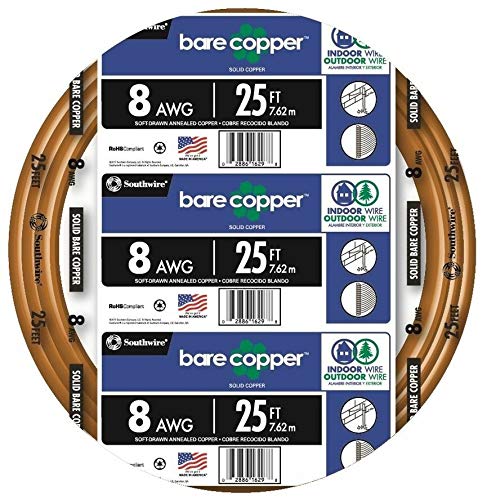
This is the wire buyers reach for when the job is serious electrical work. It is an 8-gauge solid copper conductor, soft-drawn so it bends around corners and hugs surfaces instead of springing back. At 25 feet long, it suits a single residential grounding run before the wire enters the home, or a hook-up jumper on an electrical panel.
Buyers call this the best manufactured wire they have used, with one using it “for grounding a electrical panel.” It also handles pool bonding and pool pump installations without complaint. The catch: a 25-foot spool runs out fast on larger jobs, so measure your run before ordering.
Why It Wins
- Quality leads the reviews — well over thirty owners call out the build as the wire’s best trait
- Value for money runs a close second, praised for beating local hardware store pricing
- Soft-drawn temper makes grounding bends easy and holds them firmly
Know Before You Buy
- 25 feet is short — plan a larger grounding job around a longer spool like the wirenco 105-foot option
- 8-gauge thickness is stiff work for jewelry or fine crafting, so this is strictly a grounding wire
Your move: If you are grounding a panel, bonding a pool, or wiring a workshop, this is the near-universal first choice.
The trade-off: Shorter length means bigger projects will need a second spool or the longer 105 ft wirenco run.
2. Acuteye 99.9% Solid Copper Wire 20 Gauge
A 330-foot spool of bendable 20-gauge copper that stretches from garden stakes to earrings.
This is the one-spool solution for anyone juggling multiple hobbies. The 20-gauge wire measures a thin 0.8 millimeters across, and the 330 feet (100.58 meters) of length means you can trim off exactly what you need for a project and keep the rest coiled for later. The copper is 99.9% pure with no insulation layer and no coating, so it oxidizes and conducts just like bare copper should.
Buyers use it for tree-of-life sculptures, suncatchers, and “grounding my dust collection in my workshop.” At a 16-gauge equivalent, it stays workable, but reviewers are split on softness: it is a bit above dead soft, not truly half-hard, so it bends easily but may not hold a crisp shape like a stiffer wire. For electroculture garden sticks and jewelry, that flexibility is ideal.
What Stands Out
- Quality is the top praise, with owners noting it is sturdy, easy to shape, and survives being stretched without breaking
- Vast 330-foot length beats most craft spools — one roll covers years of small projects
- Uncoated 99.9% pure copper oxidizes beautifully for a vintage look
The Catch
- Softness splits opinion — some find it perfect while others wanted true dead-soft handling
- At 20 gauge it is far too thin for electrical panel grounding or any high-amp job
Best fit: Pick this up for electroculture, jewelry wrapping, or any project needing a long, bendable, uncoated copper run.
Look elsewhere: Thick grounding work needs a heavier 8 or 6 gauge — this one is strictly for fine work.
3. Small Parts F12 Bare Copper Wire
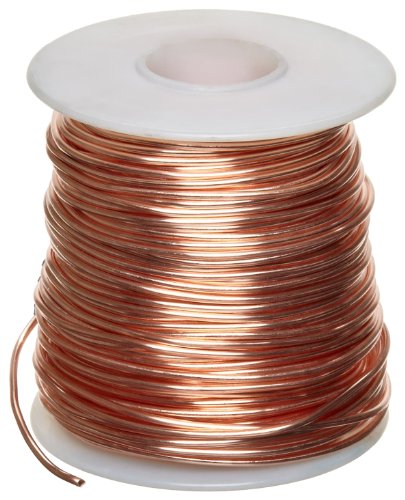
A thick 12-gauge strand with the heft to hold sculptural shapes and resist tool marks.
This wire holds its own weight in art. At 12 gauge with a 0.08-inch diameter, it is 50% thicker than the 18-gauge Small Parts option, so it bends less eagerly but keeps its shape. The 50-foot length covers several sculptures or a grounding run, and the copper is greater than 99% pure.
Reviewers praise it as hand-workable and resistant to tool marks, great for art seen from a distance. One buyer says “Exactly as described Bare 12 gauge copper,” but another notes the temper is closer to half-hard than advertised soft — so it fights back when bent, and you may need to anneal (heat-soften) it to work further. It suits sculpture and jewelry, not delicate wrapping.
Heavy on value: Buyers call it a great deal for the gauge, with more than enough wire for serious art projects at a reasonable spool price.
Fit warning: The advertised soft-temper reads closer to half-hard in practice, so plan for stiffer bending and occasional annealing.
Reach for it: A great fit for sculptors and jewelry makers who want a thick, shape-holding strand that shrugs off tool marks.
skip it if: You are doing fine wire wrapping — drop to the 18-gauge F18 for easier bends.
4. Small Parts F18 Bare Copper Wire
The 195-foot workhorse spool that wire-wrapping jewelry makers treat as their everyday staple.
If you wrap wire professionally or as a serious hobby, this spool vanishes fast. At 18 gauge with a 0.04-inch diameter, it adds structure yet flexes for detailed wrapping, and the 195-foot length is the most generous here — 3.9x longer than the 12-gauge F12. It is greater than 99% pure copper, uninsulated single-strand, and meets QQ-W-343 and ASTM B3 standards for annealed copper.
What wins people over is the bright, glossy finish and how beautifully it patinas. One owner summed it up: “This wire is gorgeous.” Buyers who have used coated craft-store wire for years say this uncoated bare copper is a clear upgrade — it oxidizes evenly and polishes well. The occasional excess shrink wrap on the spool is the only recurring hassle, and even that does not stop owners from leaving full marks.
Why Crafters Love It
- Quality dominates the feedback — over seventy owners call out the build as the top trait
- Value for money follows close behind, with buyers calling it the cheapest quality option around
- Uncoated surface takes patina and oxidation beautifully for that vintage finish
Minor Notes
- Flexibility draws mixed opinions — generally easy to bend, but not dead-soft
- A few spools arrive with extra shrink wrap that needs trimming before use
Grab it: Your best bet if wire-wrapped jewelry is the main project and you want maximum length for the lowest cost per foot.
Think twice: For heavy sculpture that must stand rigid, step up to the thicker 12-gauge F12.
5. Stock Wire 6 AWG Solid Bare Copper

A thick 6-gauge run rated at 600 volts for serious solar and transmission grounding.
This is the heavy artillery of the grounding world. The 6-gauge solid copper is a 2.5x thickness jump from the 20-gauge Acuteye craft wire, and it is rated at a 600-volt maximum for indoor and outdoor use up to 167 degrees F. The 50-foot length suits solar panel grounding, overhead transmission work, or any distribution application where thinner wire would be undersized.
The defining buyer story here is solar panels — one owner switched from a stranded 6-gauge wire that kept breaking strands at the panel connection and found this solid run held up properly. It also earns consistent praise as cheaper than the Big Box store. The honest downside: 6-gauge is brutally stiff, so it demands care when routing around panels and clamps.
Built for amps: The 600-volt rating and single-strand solid core make it a confident choice for high-current grounding runs.
Stiff reality: Thick copper this heavy does not bend eagerly — give yourself extra working room and sturdy clamps.
Choose this: Solar panel arrays, overhead transmission grounding, or any job where the stranded wire keeps failing is the right use.
Skip it: Small home panels or a single ground rod need only the lighter 8-gauge Southwire.
6. wirenco 8 AWG Solid Bare Copper
All the grounding muscle of an 8-gauge solid wire, stretched to 105 feet for bigger layouts.
Where the Southwire 8-gauge stops at 25 feet, this wirenco spool keeps going to 105 feet. It is the same 8-gauge solid single-strand copper, measuring 0.13 inches thick, and rated at a 600-volt maximum for indoor and outdoor use up to 167 degrees F. That extra 80 feet is the difference between a single panel bond and running grounds across a whole solar array or pool setup.
Buyers use it to bond swimming pools and connect aluminum solar panel frames to a copper ground rod, reporting it “worked very well and fit the clamp brackets.” Owners say it is solid, nice wire that is easy to work with. The recurring gripe: the coil is hard to unroll — the stiff 8-gauge memory makes straightening a chore.
Why It Wins
- 105-foot length beats shorter 8-gauge spools for multi-point grounding projects
- Quality feedback is consistent — solid copper that bonds pools and solar frames cleanly
- Same 8-gauge thickness as the 25-foot Southwire, so no compromise on capacity
Know First
- Unrolling the stiff coil takes effort — some buyers find it difficult to straighten
- 8-gauge remains too thick for crafting or fine bending work
Reach for it: Solar frames, pool bonding, or any grounding layout where 25 feet will not reach the ground rod.
Pass it up: A single panel or a short home run wastes the extra length — the 25-foot Southwire is cleaner.
7. AC/DC Wire 1″ Flat Braid Ground Strap

A flexible 1-inch copper braid that bends where solid wire cannot, built for RF and welding grounds.
This is a different animal entirely from the solid rods above. Instead of a single stiff strand, it is a bright copper flat braid, 1 inch wide and 0.045 inches thick, made in the U.S.A. The 18-strand woven construction lets it flex and route around tight spaces where a solid 6-gauge wire would refuse to bend. The 100-foot length gives generous coverage for strap work.
Ham radio operators are the biggest fans — the braid’s greater surface area lowers radio-frequency resistance compared to solid wire, and buyers use it for station grounds and patch bay connections. Welders love it too for clamping awkward pieces without arc spots. As one owner put it, it works for “grounding my ham radios and misc. to Buss bar behind desk.” The catch is price and stiffness of a different kind — it is a premium buy, and the woven copper needs clean terminations.
Where It Shines
- Grounding tops the feedback — effective for radios, welding clamps, and storm protection
- Flexible braid routes around corners and awkward pieces that thwart solid wire
- Made in the U.S.A. with a quality build owners say lasts
Consider This
- Premium pricing — a splurge unless you specifically need RF or clamp-friendly grounding
- Not a substitute for solid 8-gauge on high-amp panel grounding; different tool for a different job
Best for: Radio-frequency grounding, welding ground straps, or any spot where a flexible braid beats a stiff rod.
Not for: Standard residential panel grounding — that is solid-wire territory and the braid would be overkill.
Understanding the Specs
Gauge and Diameter
Gauge is the wire’s thickness, and the number works backward — lower means thicker. The 6-gauge Stock Wire measures a hefty 0.13 inches in the wirenco 8-gauge, while the 20-gauge Acuteye is a slim 0.8 millimeters. Thicker wire carries more current and resists breaking but bends with real effort; thinner wire is flexible but limits you to low-amp work.
Temper and Bendability
Temper describes how the copper was treated during manufacturing. Soft-drawn wire anneals easily and hugs surfaces, ideal for grounding. Dead-soft bends with near-zero effort but holds weak shape, while half-hard keeps a firm curve. Most craft wire lands between soft and half-hard — perfect for jewelry, occasionally surprising if you expected true dead-soft handling.
FAQ
What gauge bare copper wire do I need for grounding an electrical panel?
What is the difference between solid wire and a flat braid ground strap?
How do I pick the right length of bare copper wire?
Why is my bare copper wire not as soft as expected?
Can I use thin 20-gauge wire for electrical grounding?
Is higher gauge or lower gauge thicker wire?
What does annealed copper mean for my project?
Why would I choose a braided strap over solid wire for radio grounding?
Final Thoughts: The Verdict
For the majority of shoppers, the bare copper wire winner is the Southwire 8-Gauge because its soft-drawn solid copper is the trusted default for panel grounding, pool bonding, and workshop wiring — and buyers agree, with 4.8 stars across 600+ owners. If you want a long, bendable spool for jewelry and garden work, grab the Acuteye 20-Gauge. For heavy solar or RF grounding, the Stock Wire 6-Gauge and the ACDC braid are the ones to reach for.
How We Picked
We do not accept paid placement. Every pick is matched to a real buyer and a real use-case; we do not hands-on test units.
Sources & Methodology
Specifications: manufacturer listings and product documentation. Review insights: verified customer reviews, as of August 2026. Pricing: not shown on this page (it changes often); check the current price via the retailer link.
As an Amazon Associate, Gadgets Feed earns from qualifying purchases. This does not affect which products we feature.