
That thud from the upstairs neighbor. The reverb that makes every Zoom call sound hollow. The foot traffic that turns your home theater into a drum. Ceiling soundproofing isn’t about adding more drywall — it’s about choosing the right material for a specific problem: airborne noise (voices, music) or impact noise (footsteps, vibrations). The wrong panel kills your budget and leaves the noise intact.
I’m Rikta — the co-founder and writer behind Gadgets Feed. I’ve spent thousands of hours comparing acoustic spec sheets, analyzing NRC ratings, and reading real owner install diaries across foam, fiberglass, wood slats, and drop-in tiles so you don’t have to guess. (And Homer 🐱 supervised every unboxing from his perch on the ladder, unimpressed by the lack of cardboard boxes big enough to sit in.)
Whether you are treating a recording studio, a noisy apartment living room, or a game room above the garage, this guide breaks down the seven strongest contenders on the market. After researching materials, density, mounting systems, and real-world echo reduction, here is the definitive list of the best ceiling soundproofing panels you can buy right now.
How To Choose The Best Ceiling Soundproofing
Whatever material you pick, know that no single panel turns a ceiling into a vault. The goal is to reduce reverberation and dampen sound transfer using the right density, thickness, and fire safety profile for your room.
Material Type: Foam vs. Fiberglass vs. Wood Composites
Open-cell polyurethane foam is the most common entry-level material — it excels at absorbing mid-to-high frequencies (voices, TV audio) but does almost nothing for low-end bass or heavy impact noise. Fiberglass panels (2 inches dense) handle a wider frequency range and are standard in professional studios, but they demand a sturdy bracket mounting system. Wood slat panels with a felt or polyester fiber backing offer a hybrid approach: decorative surface with real absorption for the midrange, making them ideal for living spaces where acoustics and aesthetics share equal weight.
Thickness and Density: The Measurable Difference
A 2-inch thick panel is a different class of product from a 1-inch or 0.4-inch panel. The extra mass physically traps more air molecules, which directly translates to a higher Noise Reduction Coefficient (NRC). High-density foam (above 1.5 lbs per cubic foot) resists sagging over time and performs closer to fiberglass without the respiratory irritation risk. If your ceiling install is permanent and you want maximum quiet, prioritize panels that list their thickness and density in the spec sheet — skip any listing that hides these numbers.
Mounting Method and Ceiling Compatibility
Your ceiling’s surface dictates which product stays on it. Self-adhesive foam is the easiest install but can peel paint from drywall or fall off textured ceilings within a week — user reviews consistently report this failure. Mechanical mounting (metal brackets screwed into joists or drywall anchors) is the gold standard for permanent installs, especially for heavier fiberglass or wood panels. Drop-in grid ceiling tiles are a separate category: they sit inside an existing T-bar frame and require no permanent modification, ideal for basements and office spaces.
Quick Comparison
On smaller screens, swipe sideways to see the full table.
| Model | Category | Best For | Key Spec | Amazon |
|---|---|---|---|---|
| UMIACOUSTICS 4 PCS Fiberglass w/ Brackets | Fiberglass Panel | Pro-grade sound absorption | 2-inch thick fiberglass core | Amazon |
| Art3d Acoustic Drop Ceiling Tiles | Drop-In Tile | Grid ceiling replacement | PVC with sound-absorbing felt | Amazon |
| NeatiEase Wood Slat Panels | Wood Composite | Decorative noise dampening | MDF + high density polyester fiber | Amazon |
| UMIACOUSTICS 6 Pack Polyester Panels | Polyester Fiber | Office echo reduction | 47.2 x 23.6 inches per panel | Amazon |
| Knightsacoustic 96 Pack Foam Wedges | Foam Wedge | High-frequency flutter control | 96 sq ft coverage (1 inch thick) | Amazon |
| 4 Pack Egg Crate Foam Panels | Egg Crate Foam | Budget vocal booth treatment | 48 x 24 x 2 inches per panel | Amazon |
| ZenSonic Self-Adhesive Hex Panels w/ Lights | Decorative Foam | Nursery/gaming room ambiance | 0.4-inch thin panels with fiber optics | Amazon |
In‑Depth Reviews
1. UMIACOUSTICS 4 PCS Fiberglass Panels w/ Hanging Brackets
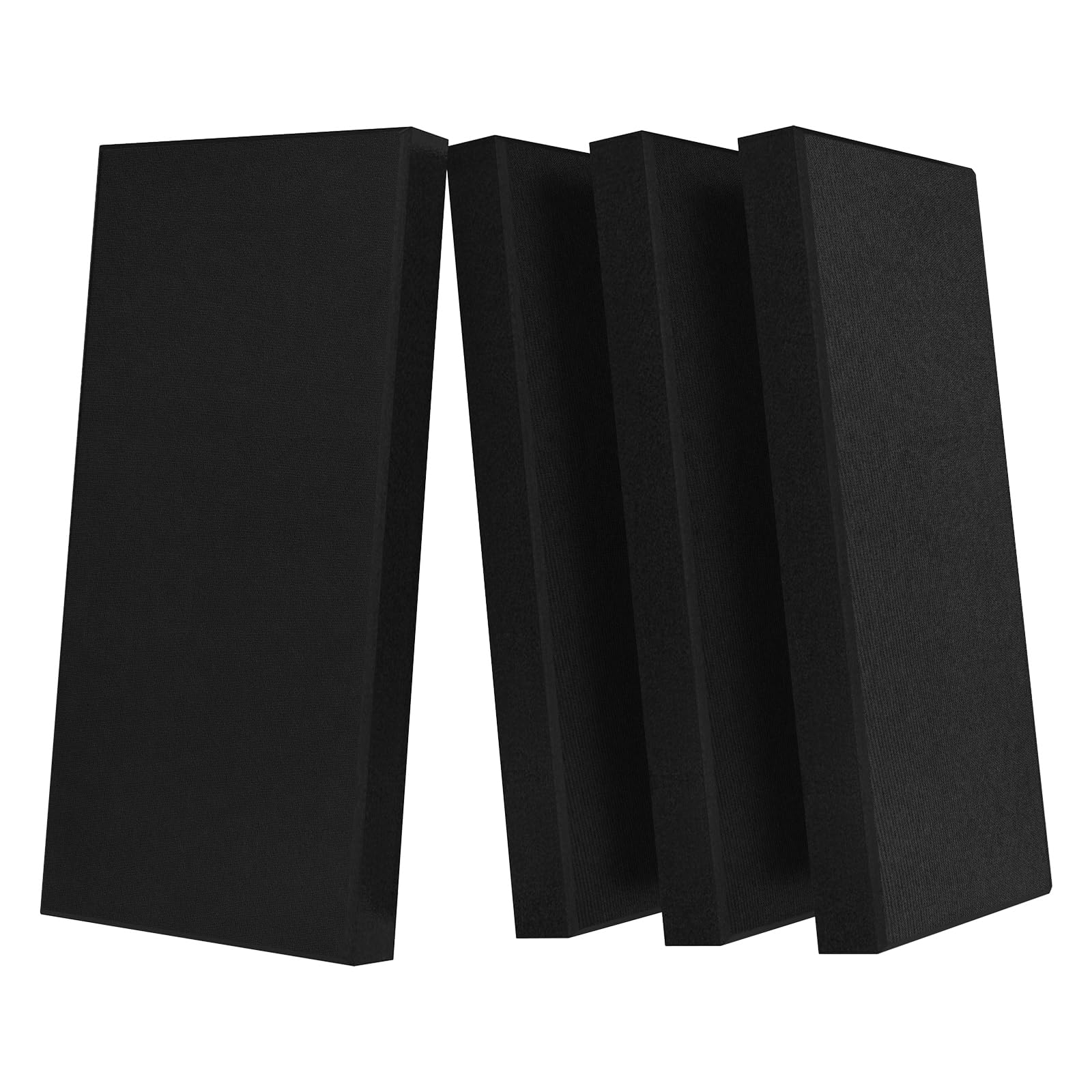
This is the only entry in this list that ships with a metal hanging bracket — not adhesive dots, not a prayer. The bracket mounts directly into drywall joists using included nails and a metal template, which means a 2-inch thick fiberglass core stays locked to the ceiling indefinitely. No peeling, no mid-night crashes. The fiberglass is E0-rated (the highest low-emission standard for indoor air quality) and wrapped in a high-density polyester fabric that mimics a professional studio finish. Users report immediate, noticeable elimination of room echo after installation — the kind of result that foam simply cannot replicate at this absorption depth.
The 2-inch thickness is the key differentiator. Standard polyester fiber panels at 1 inch absorb some midrange frequencies but let bass and low-mid reflections pass through. The extra inch here captures a wider band, making it effective for both vocal flutter and ambient noise from adjacent rooms. The package covers four panels sized for standard 2×4 ceiling bays, and the mounting system allows for easy removal if you need to access wiring above.
Installation requires basic tools — a drill, screwdriver, and a level — and the provided metal template ensures alignment across multiple panels. The only reported issue is that the included drywall anchors are slightly undersized for heavy load, so upgrading to toggle bolts is recommended for peace of mind. For anyone serious about ceiling treatment without hiring a contractor, this is the benchmark.
Why it’s great
- 2-inch thick fiberglass core provides wide-frequency absorption that outperforms foam
- Metal bracket mounting system ensures permanent, peel-free installation on ceilings
- E0 environmental rating means zero off-gassing concerns in enclosed rooms
Good to know
- Drywall anchors included are flimsy; upgrade to toggle bolts for heavy ceiling use
- Template alignment can be slightly off if installing more than one row side by side
2. Art3d Acoustic Drop Ceiling Tiles 10-Pack

If your ceiling already has a T-bar grid system — common in basements, game rooms, and commercial spaces — these PVC panels with an acoustic felt backing are the most efficient upgrade you can make. The perforated top layer works with the felt to absorb sound wave reflections, and the tile itself is fire-resistant, waterproof, and moisture-resistant. Unlike standard mineral fiber ceiling tiles that crumble when you cut them, these are flexible and snap cleanly with a utility knife, making custom cuts around lights and vents trivial.
The 10-pack covers 80 square feet (24×48 inches per tile), and the material is noticeably lighter than mineral fiber — a single person can handle installation without a helper. For walls, the tiles can be screwed directly into wooden studs, but the design is clearly optimized for drop-in grid use. Users who replaced old popcorn ceiling tiles with these report an immediate reduction in room echo and a cleaner, more modern look.
This is not a product for blocking sound transmission through the ceiling — the felt backer is thin relative to dedicated acoustic panels. Its strength is managing reverberation within the room while providing a structural ceiling surface that looks finished. Consider it the best option for a finished basement ceiling where you want better acoustics without losing drop-in access to plumbing or electrical.
Why it’s great
- Sits directly in standard T-bar grid, no structural ceiling modification needed
- Cutting is clean and dust-free compared to brittle mineral fiber tiles
- PVC construction is fire-resistant and will not rot or warp in damp basements
Good to know
- Felt backing is designed for echo reduction, not soundproofing between floors
- Not compatible with glue-up, lay-in grid only or screw into wood frame
3. NeatiEase Wood Slat Wall Panels 4-Pack

These 96-inch long wood slat panels are the rare acoustic product that your guests would never guess is functional. The face is a teak-veneered MDF slat design, and the backing is a dense layer of high-density polyester fiber — the combination absorbs midrange frequencies while the wood surface diffuses remaining reflections. The package includes four panels that cover roughly 33 square feet, and they can be mounted horizontally or vertically depending on ceiling layout. Cutting is straightforward with an oscillating tool for the slats and a box cutter for the felt backing.
The acoustic performance here is real but moderate compared to a dedicated 2-inch fiberglass panel. The 0.4-inch felt backing does not replace thick absorption material for serious studio use, but it significantly tames echo in living rooms, dining spaces, and bedrooms where you want the noise level lower without the room looking like a recording booth. Users installing these on ceiling planes alongside walls report a balanced sound field with noticeably less slap echo during conversation and TV audio.
Mounting requires screws or heavy-duty construction adhesive — the panels weigh under 20 kilograms total across the four pieces, so a single person can manage the install with a step ladder. The teak finish has warm red-orange undertones that look more expensive than the entry-level price suggests. For anyone whose partner vetoed “ugly foam,” these are the argument-ender.
Why it’s great
- Wood slat design blends with decor while providing measurable echo dampening
- Long 96-inch length reduces seams and allows continuous runs across the ceiling
- Cutting is clean with the right tools, and lightweight panels are easy to handle solo
Good to know
- Felt backer is shallow; not effective for low-frequency or heavy impact noise
- Circular saw may chip the laminate surface — use painter’s tape on the cut line
4. UMIACOUSTICS 6 Pack Polyester Fiber Panels

For the price, you get six large panels made from 100% polyester fiber — no foams, no fiberglass dust, just dense acoustic material wrapped in a clean white fabric. Each panel measures 47.2 by 23.6 inches, offering generous coverage at a price that makes it feasible to treat a full ceiling in one order. The material is easy to cut with a utility knife, so fitting around ceiling fixtures or odd dimensions is straightforward. Users report successful mounting with velcro command strips, construction adhesive, or a brad nailer set at low pressure.
Polyester fiber has a slight edge over open-cell foam for consistency: it does not degrade from humidity, it holds its shape after compression during shipping, and it has zero odor compared to fresh polyurethane foam. The absorption profile is strongest in the mid-to-high frequencies, which translates to noticeably clearer phone calls and less room-ring during conversation. It is not designed for blocking sound between floors — think of it as a reverb-killer for your ceiling plane.
Some buyers noted a dusty black felt backing that creates small particles during cutting, so a mask is recommended for install day. The white fabric finish is neutral and will blend into most ceilings. If you need a large-area treatment that does not demand structural mounting, this is the most cost-effective path to a quieter ceiling.
Why it’s great
- Six large panels in one box provide substantial ceiling coverage at a low per-panel cost
- Pure polyester fiber is odorless, humidity-resistant, and easy to cut to size
- Multiple mounting options suit both permanent and renter-friendly setups
Good to know
- Felt backing is dusty when cut — wear a mask and work outdoors
- Not a soundproofing solution; reduces echo only within the treated room
5. Knightsacoustic 96 Pack Foam Wedges
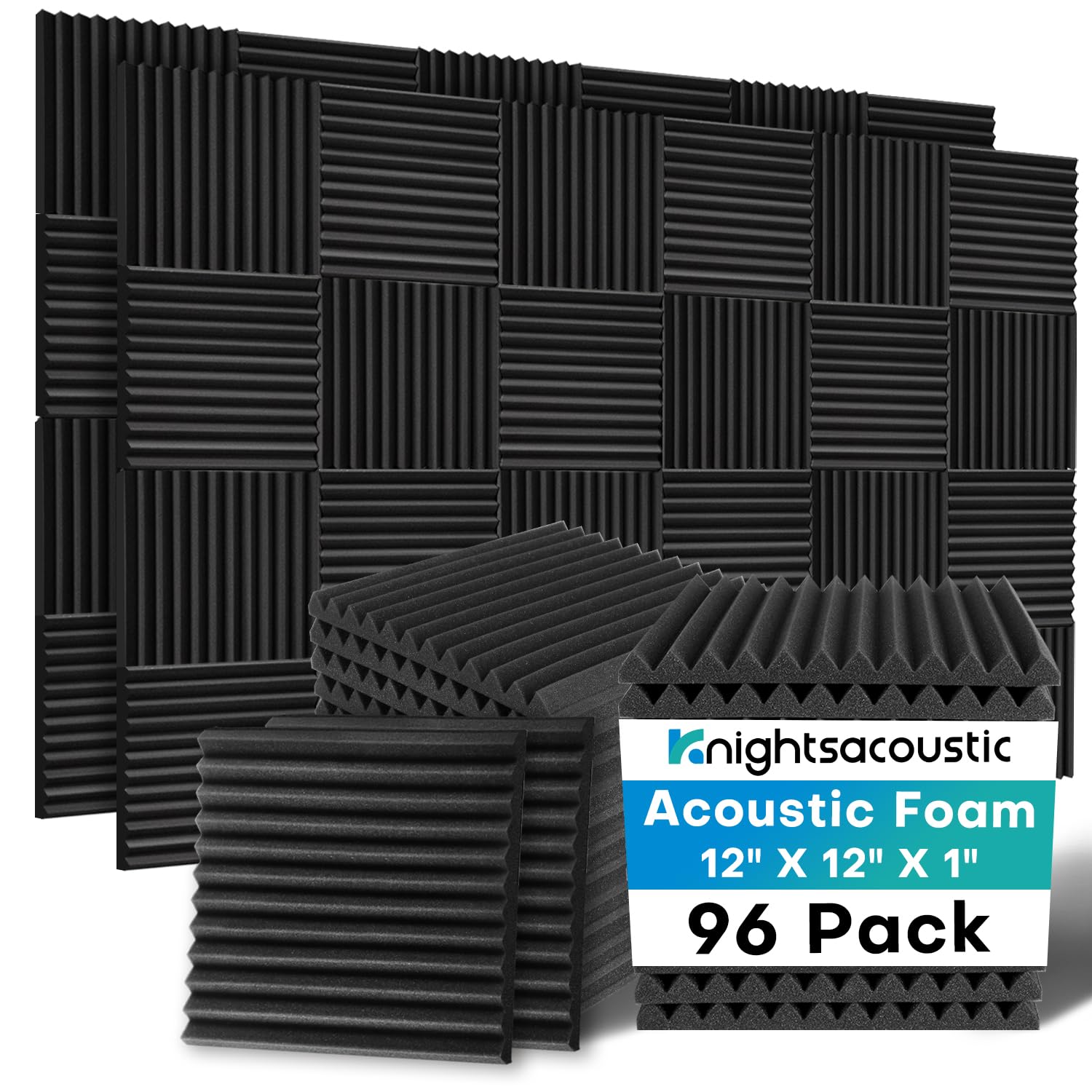
This is the most coverage per dollar in the roundup — 96 individual wedge panels, each 12×12 inches, covering a full 96 square feet. At 1 inch thick, these are purpose-built for managing high-frequency reflections: the wedge shape scatters sound waves and prevents standing wave buildup in rooms used for recording, streaming, or critical listening. The high-density polyurethane foam recovers shape quickly after being vacuum-packed for shipping, though some users recommend a quick water soak and low-heat dry to flatten any persistent curl and remove initial off-gassing odor.
The panels have no adhesive backing, which is actually a feature: you buy the right adhesive dots (the manufacturer recommends B0CFV11LVN), and you control placement spacing. This matters for ceiling installations because foam density and adhesive quality directly determine whether panels stay up. Users who mounted these with supplied adhesive dots reported great hold on clean surfaces, and the 12×12 wedge shape allows tight packing without visible gaps. The foam is flame-retardant treated, meeting basic studio safety standards.
Performance is exactly what 1-inch open-cell foam delivers: excellent at killing flutter echo and room-ring from voices and speakers, invisible to low-frequency rumble. If your goal is to make a home office or podcast booth sound dead — and you do not need to block noise from traveling through the floor joists — this quantity at this price is unmatched. The lack of adhesive in the box means you need a separate purchase for ceiling install, but the flexibility in layout makes it worth the extra step.
Why it’s great
- 96 panels cover almost 100 square feet — enough for an entire room ceiling
- Wedge profile effectively scatters high-frequency reflections and standing waves
- Not pre-adhesive, so you control placement density and spacing
Good to know
- No adhesive backing included — budget for separate adhesive dots or spray
- 1-inch foam does not absorb low-frequency noise or block sound transmission
6. 4 Pack Egg Crate Foam Panels 48x24x2 Inches
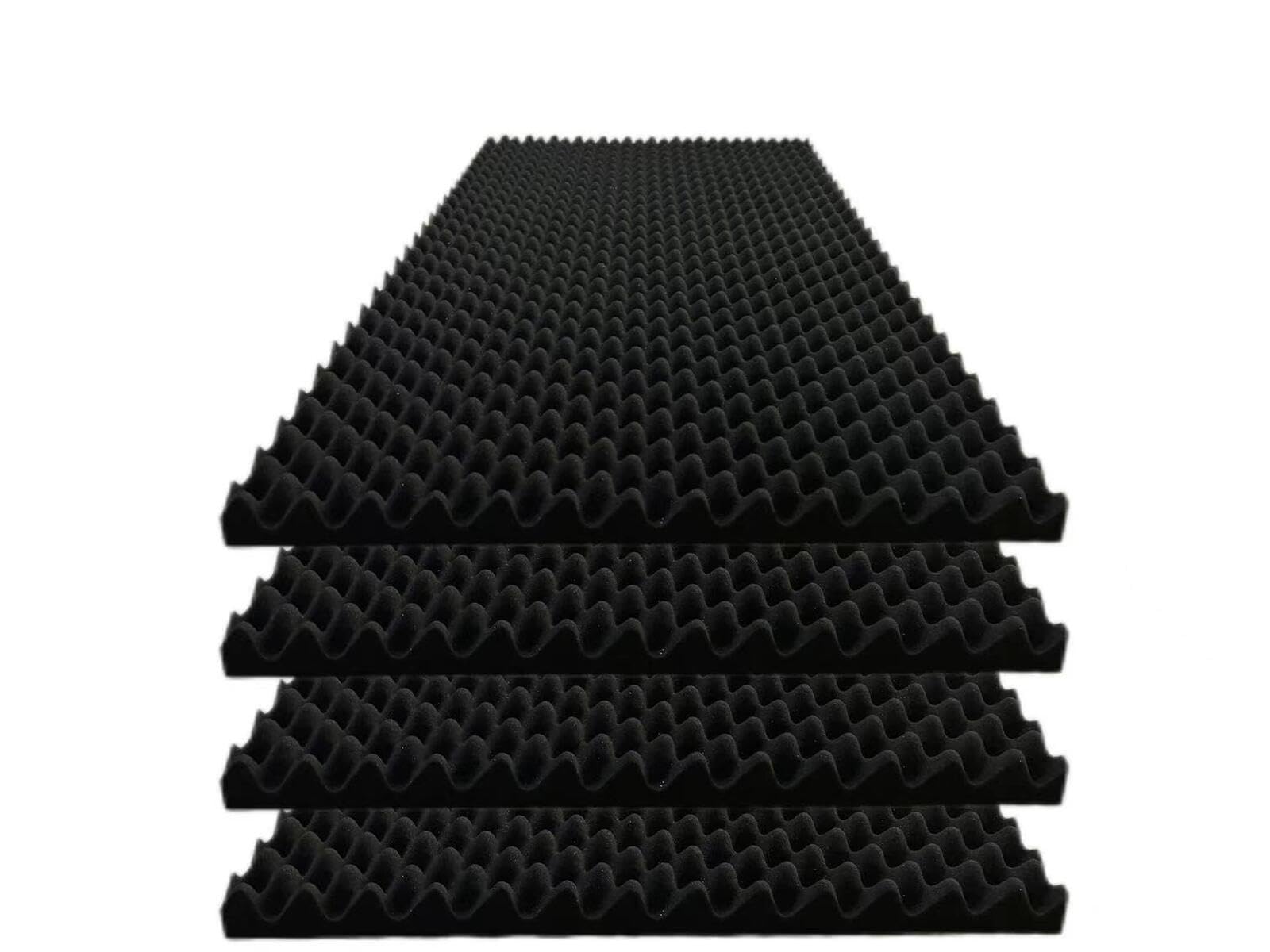
The egg crate profile is a classic acoustic shape for a reason: the peaks and valleys increase the foam’s surface area by roughly 30% compared to a flat panel, trapping more air and dissipating sound energy more efficiently. Each panel here measures 48 x 24 x 2 inches, and the four-pack covers roughly 32 square feet — enough for a vocal booth ceiling, a game room corner, or a focused treatment zone above a desk. The foam is high-density polyurethane with a flame-retardant property, rated as nontoxic and odorless after the initial vacuum-packed release.
Performance-wise, the 2-inch depth is a genuine advantage over thinner foam. The extra profile captures more mid-frequency energy than 1-inch options, making this a reasonable starting point for a home studio or dedicated streaming room. Users have repurposed these panels for everything from microphone isolation boxes to snowmobile hood insulation, which speaks to the foam’s density and structural integrity. The panels ship rolled and compressed; they need a few hours of open air to fully unfurl before mounting.
Installation requires an adhesive — the panels do not come with attachment hardware, so factor in the cost of spray adhesive or double-sided foam tape. The black finish is standard for studio foam and hides dust well over time. At this price bracket, you are trading ease of installation for raw absorption depth. For a DIY ceiling treatment on a tight budget, this gives you the most material thickness per dollar spent.
Why it’s great
- 2-inch egg crate profile provides deeper absorption than flat 1-inch foam panels
- Large per-panel surface area covers ceiling zones efficiently with fewer gaps
- Flame-retardant treated polyurethane meets basic fire safety standards for studios
Good to know
- No mounting hardware included — you need to buy adhesive separately
- Foam ships tightly rolled and requires time to fully expand to shape
7. ZenSonic Self-Adhesive Hexagon Panels with Fiber Optic Lights

This product sits at the intersection of acoustic panel and smart lighting. Each hexagon tile is made of high-density polyester fiber only 0.4 inches thick, with built-in fiber optic strands connected to a single controller that lets you cycle through RGB colors, static white, and fading modes. The 12-pack includes a remote with memory function, and the adhesive squares are pre-applied for peel-and-stick installation. The visual effect is genuinely impressive — the fiber optics create a soft starlight pattern across the ceiling that transforms a kid’s room or gaming den.
Acoustically, the 0.4-inch thickness means this is a reverb dampener, not a sound absorber. It will reduce high-frequency slap echo in small rooms but has no meaningful effect on voices, bass, or impact transfer. Users who bought this for serious soundproofing were disappointed; those who bought it for a stylish accent wall or nursery room lighting were delighted. The disconnect between “soundproofing” in the listing and actual acoustic performance is the biggest caveat — treat this as a decorative panel with slight acoustic dressing.
Installation is the most labor-intensive of any product here. The hexagons are not wired together; each light connects via tiny screw-on wire terminals, requiring patience, electrical tape, and careful routing to hide cables. The adhesive squares are inconsistent — some panels hold well on clean flat walls, others peel within a week unless you replace the squares with 3M command strips. The end result looks great, but the installation process will test your patience. Best for scenery, not silence.
Why it’s great
- Fiber optic starlight effect with full RGB remote control creates unique ceiling ambiance
- Polyester fiber construction is odorless, nontoxic, and flame-retardant safe
- Self-adhesive backing means no separate glue purchase required for smooth walls
Good to know
- 0.4-inch thickness provides negligible actual sound absorption beyond echo reduction
- Light wiring assembly is intricate and time-consuming — plan for hours, not minutes
- Adhesive squares may fail on textured ceilings or painted drywall without reinforcement
FAQ
Will acoustic foam on my ceiling block noise from the floor above?
How many panels do I need for a 10×10 room ceiling?
Can I install acoustic panels on a popcorn or textured ceiling?
What does flame retardant rating mean for ceiling foam?
Final Thoughts: The Verdict
For most users, the best ceiling soundproofing winner is the UMIACOUSTICS 4 PCS Fiberglass Panels because its 2-inch fiberglass core with secure metal brackets delivers the widest frequency absorption and the most professional mounting system. If you want decorative echo dampening that does not look like a studio, grab the NeatiEase Wood Slat Panels. And for a basement drop-ceiling upgrade that improves acoustics without structural work, nothing beats the Art3d Acoustic Ceiling Tiles.