
Our readers keep the lights on and my morning glass full of iced black tea. As an Amazon Associate, I earn from qualifying purchases.
Specs are compiled from manufacturer listings and verified buyer reviews and can change over time — please confirm the key details on the product page before buying.
Stripping paint by hand is a slow, dusty grind. The shortcut is an abrasive blaster, but the real secret is choosing the right grit and material for the surface you are cleaning. A wrong pick can etch soft metal or simply bounce off thick rust, wasting your afternoon. This guide breaks down seven proven media options so you match the abrasive to the job the first time.
I’m Min — the founder and writer behind Gadgets Feed. This guide is built by comparing the manufacturers’ published specifications and the patterns across verified customer reviews, so you get each pick’s real strengths and trade-offs instead of marketing spin.
From aggressive aluminum oxide to gentle walnut shells, these are the top-rated blasting media for removing paint on everything from steel to plastic.
Our Picks at a Glance
How To Choose The Best Blasting Media For Removing Paint
Picking the right abrasive is about matching hardness to the job. Harder media strip rust and scale fast but can chew into soft metals, while softer media clean gently without changing the surface underneath. Think about what you are stripping before you buy a single bag.
Match Hardness to the Surface
Aluminum oxide rates 9 on the Mohs scale, sitting just below diamond. That aggressive edge makes it ideal for steel, stainless, and glass, but it will gouge softer materials like plastic or thin aluminum if you linger. Walnut shells sit far lower at around 4.5 to 5, which is why they handle fiberglass, wood, and soft metals without harm. Glass media sits in between, great for peening aluminum and brass at low pressure.
Choose the Right Grit Number
The grit number tells you the particle size. A lower number like 40-60 is coarser, cutting deeper and faster, while a higher number like 100 is finer, producing a smoother etch. For heavy rust on thick steel, you want coarse. For prepping a surface for a fresh coat of paint, a consistent medium or fine grit gives you a clean anchor profile without deep pitting.
Think About Reuse and Dust
Some media break down quickly, clouding your cabinet and forcing frequent changes. Others, like aluminum oxide, are reusable for many cycles. If you blast often, a longer-lasting abrasive saves you money even if the bag costs a bit more. Dust levels also matter in a closed cabinet, where fine particles can hang in the air and reduce visibility.
Quick Comparison
| Model | Best For | Material | Grit | Weight | Amazon |
|---|---|---|---|---|---|
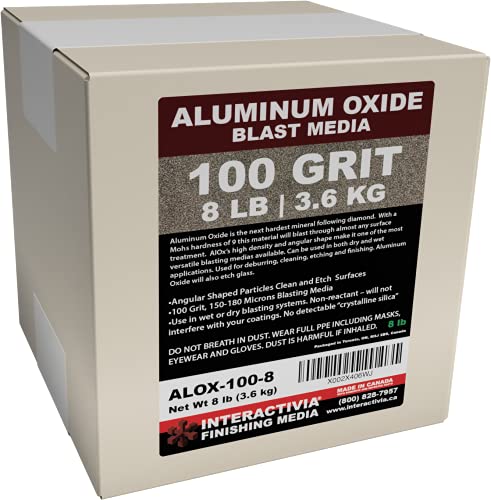
| Interactivia Aluminum Oxide #100★ Best Overall | Aggressive etching on glass and steel | Aluminum Oxide | #100 | 8 lbs | Amazon |
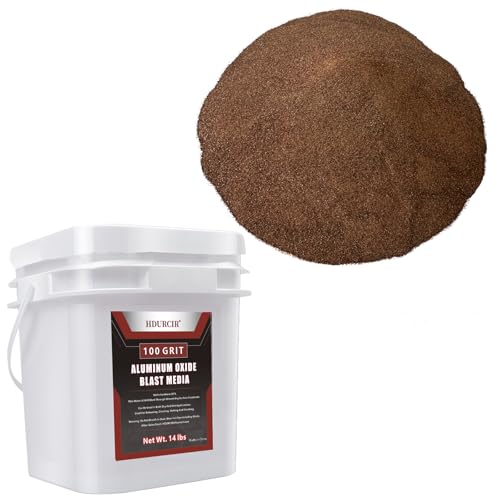
| HDURCIR Aluminum OxideBest Value | Value bulk for cabinets and guns | Aluminum Oxide | 100 | 14 lbs | Amazon |
| GRITSMITH Walnut Shell | Delicate stripping on plastic and wood | Walnut | 40-60 | 5 lbs | Amazon |
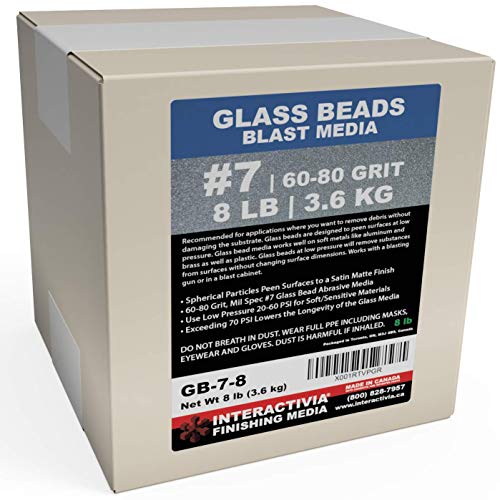
| Interactivia Glass Beads #7 | Peening soft metals without damage | Glass | 60-80 Mesh | 8 lbs | Amazon |
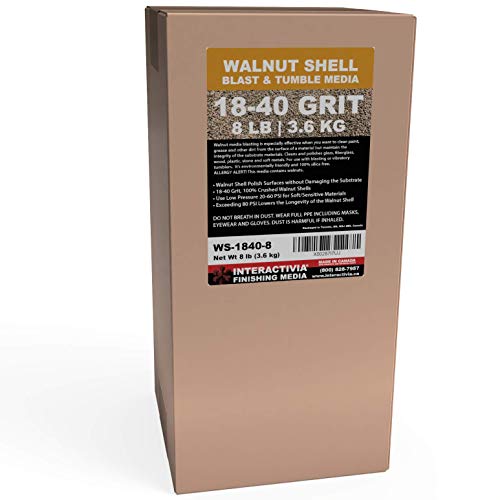
| Interactivia Walnut Shell | Cleaning carbon and grease gently | Walnut Shells | 18-40 | 8 lbs | Amazon |
| TITGGI Aluminum Oxide | Rust removal on metal with less dust | Aluminum Oxide | 80 | 8 lbs | Amazon |
| Interactivia Crushed Glass | Heavy rust on thick steel | Glass | 30-60 (#50) | 19 lbs | Amazon |
In-Depth Reviews
1. Interactivia Aluminum Oxide #100
Our pick — over 4.5★ from 350+ verified ratings; the strongest balance of quality and price.
The hard-charging abrasive that handles glass, steel, and every etch job in between.
This is the one pick that does almost everything without flinching. Aluminum oxide is harder than most other blasting media, so it cleans and etches on all types of surfaces, including glass. The sharp, angular grit stays aggressive and highly reusable, which is why a buyer who has used it for years says you cannot beat the value. It is non-reactant, meaning it will not interfere with your coatings during surface prep.
The medium grit lands at #100, giving you a balanced cut that removes paint and rust while leaving a consistent profile. With a specific gravity of 3.9 and bulk density of 115-125 lbs per cubic foot, it feeds steadily through a blasting gun or cabinet. It is made in Canada and ships with no detectable crystalline silica, a real win for anyone tired of worrying about the dust they breathe.
Against the TITGGI 80-grit below, this #100 grit trades a touch of raw aggression for a smoother finish, which is why it suits prepping surfaces for fresh coatings rather than just demolition. The main hesitation in the reviews is the cost per pound, with some finding cheaper alternatives that are slightly less uniform in particle size under a magnifier.
Why It Wins
- Harder than most media, cutting fast on glass and steel
- Sharp angular grit that stays reusable for multiple sessions
- No detectable crystalline silica in the mix
What To Weigh
- Costs more per pound than some rivals
- Medium grit demands care on very soft surfaces
Reach for this if: you blast regularly across steel, glass, and stainless and want one abrasive that cuts hard and lasts.
Look elsewhere if: you only need a cheap single job and are fine with a less uniform particle size.
2. HDURCIR Aluminum Oxide 14 lbs
A bulk bucket that delivers more grit for your dollar without cutting corners on cut.
This 14-pound bucket is the volume play for anyone who blasts often. Buying the larger packaging is more cost-effective, and the sturdy plastic bucket makes carrying and pouring easier than wrestling a flimsy carton. The 100-grit aluminum oxide rates a hardness of 9 on the Mohs scale, making it ideal for removing mill scale, paint coatings, and prepping stainless steel, aluminum, and even wood.
You can run it wet or dry, which broadens its use across different blasting setups. One owner used it to remove paint from mini bike rims and found it sprayed evenly and finer than expected. Another found it worked well prepping parts for cerakote, trading on the consistent finish this grit delivers. The reusable bucket doubles as storage between jobs, a small touch that matters when the work spans weekends.
It cuts noticeably well for 100 grit and flows better as it breaks in, though long-term durability is still being tested. Unlike the premium Interactivia pick, this one emphasizes sheer quantity per purchase, so it shines when you expect to burn through media on a big project rather than baby a single bag.
Volume king: 14 lbs in a reusable bucket makes this the smart buy for high-volume stripping where cost per pound matters most.
One caution: the fine-to-medium cut means heavy rust on thick steel may need extra passes.
3. GRITSMITH Walnut Shell 40-60 Grit

The soft-touch abrasive that strips paint without harming fiberglass, wood, or plastic.
This 40-60 grit walnut shell media is the answer when aggressive media would damage your workpiece. Sized at 0.25 mm to 0.42 mm, these shells gently strip paint, carbon, and light deposits from fiberglass, wood, soft metals, and plastic without harming the substrate. With a hardness of 4.5 to 5 on the Mohs scale, it is tough on deposits yet gentle on surfaces.
Consistent grit is the thing everyone raves about here, and the quality shows in the results. One buyer who has used walnut media for more than 40 years calls this the best they have found, noting it cleans and polishes fast with no dust or residue. Beyond blasting, it works for vibratory tumbling, deburring fine components, and even creating non-slip textures in paints and epoxies.
The shells are natural, non-toxic, and reusable across multiple cycles. A handful of owners use it for brass case cleaning and report brass coming out shiny and clean. The 5-pound bag is smaller than the Interactivia walnut option at 8 pounds, so think about project size before committing, especially if you are filling a large tumbler.
Substrate saver: the extra-fine cut makes this the go-to for delicate surfaces and precision tumbling where aluminum oxide is overkill.
Plan ahead: at 5 lbs, heavy blasting jobs will need multiple bags.
4. Interactivia Glass Beads #7
The surface-saver that peens soft metals clean without changing their dimensions.
Glass beads are designed for a specific job: removing debris without damaging the surface underneath. At 60-80 mesh, these beads peen surfaces at low pressure, working well on soft metals like aluminum and brass as well as plastic. The round shape means they clean without changing surface dimensions, which matters when you are prepping parts that need to keep their tolerances.
Owners have used this media heavily to blast old crusty automotive parts with no complaints. The beads flow well in a blast cabinet and sift easily for reuse, giving you plenty of uses before draining the media. For aluminum parts specifically, the performance gets consistent praise, with a smooth, clean result that does not gouge the soft metal.
This is a different tool than the sharp-edged crushed glass on this list, which cuts aggressively for rust removal. Glass beads are the polished middle ground, more aggressive than walnut but far gentler than aluminum oxide. The trade-off is that some find cheaper options that perform just as well, so brand loyalty is not the draw here.
What Shines
- Round beads clean soft metals without changing dimensions
- Easy to sift and reuse through many blasting sessions
- Ideal for aluminum, brass, and plastic parts
Keep In Mind
- Not the pick for heavy rust on thick steel
- Cheaper alternatives exist for identical performance
Choose this when: you work on soft metals or plastic and need a clean strip without altering the part.
skip it if: you are tackling rust scale and want maximum cutting power.
5. Interactivia Ground Walnut Shell 18-40 Grit
The gentle cleaner that lifts carbon and grease while leaving delicate surfaces untouched.
This 18-40 grit walnut shell media removes paint, grease, and buildup without damaging or etching delicate surfaces. It is a favorite for blasting cabinets and vibratory tumblers across glass, wood, plastic, stone, and soft metals. The fine-grade particles provide uniform cleaning and polishing results, and the loose bulk density of roughly 40-50 lb per cubic foot keeps it flowing steadily through your equipment.
The standout story here is engine carbon cleaning. An owner used these shells to carbon clean the intake valves on a B7 RS4 and reported they worked fantastically, planning to buy again for the next cleaning. Another found that with a small amount of brass cleaner added, it cleaned lots of brass and did a better job than corn cob media, which many consider the tuning benchmark.
The shells are eco-friendly and silica-free, made from natural walnut shells that are biodegradable. Texture draws the only mixed notes, with some finding it too fine for their needs and one buyer noting it can damage fine coin finishes. If you polish delicate collectibles, test on a scrap piece first. Otherwise this is the dependable, reusable soft-media workhorse.
Engine ready: proven for intake valve carbon cleaning and brass case prep where corn cob falls short.
Watch the texture: too abrasive for fine coin polishing, so test on scrap before finishing valuable pieces.
6. TITGGI Aluminum Oxide 80 Grit

The rust-eating brown fused oxide that preps metal before the first coat goes on.
This 80-grit aluminum oxide is built for the dirty work: rust removal, mill scale removal, and metal surface preparation before painting or refinishing. Brown fused aluminum oxide rates a hardness of 9 on the Mohs scale, just below diamond, so it cleans and etches on all types of surfaces including glass, granite, marble, ceramic, and steel. The cut is fast and effective on moderate rust, as an owner found stripping rims with a cheap handheld blaster.
What wins people over is how it reduces dust during use, a major quality-of-life upgrade inside a sealed cabinet. The abrasive quality gets steady praise, leaving surfaces with a nice matte finish that takes paint well. It can be used wet or dry, and the high-quality white bucket carries easily without the damage or leaks you risk with a carton.
It will not break down as fast as glass blasting media, giving it a longer cycle life than most options. Slightly coarser than the #100 Interactivia pick, this one leans into removal speed over finish smoothing, so it is the better call when you are stripping a rusted part before the finer grit takes over.
Strong Points
- Hardness of 9 cuts fast on rust and mill scale
- Notably less dust than typical media in a cabinet
- Leaves a matte finish ready for coating
Trade-Offs
- Some find the per-pound value mixed
- Coarse 80 grit can be aggressive on thin metal
Grab it for: stripping rusted auto parts and prepping steel where you want speed and a clean anchor profile.
Think twice if: you need a fine etch on delicate surfaces — drop to a higher grit number.
7. Interactivia Crushed Glass 30-60 Grit

The sharp-edged recycler that chews through heavy rust on thick steel.
This crushed glass media brings superior cutting power for removing rust and most coatings. At 30-60 grit, the #50 mesh sizes out to 559 to 254 microns, a coarse cut designed for steel, aluminum, concrete, or wood. An owner used it to strip thick rust scale and corrosion off a car’s subframe and it worked very well, catching the media on plastic sheeting to sift and reuse.
The lower bulk density means you get more product per pound, stretching your supply further than denser abrasives. It is crystalline silica-free and made from recycled glass, making it an environmentally friendly choice that stays inert, non-flammable, and non-corrosive. For a big 19-pound box, the value per pound is tough to beat, especially on heavy farm or automotive restoration work.
Crushed glass is the aggressive counterpart to the round glass beads above. Where beads peen softly, crushed glass bites, so it strips paint noticeably faster. The trade-off is lifespan: it powders and clouds a cabinet faster than aluminum oxide. One owner found coarse grit bounced off rather than cutting into detailed areas, noting that a finer 100 grit worked better for paint removal there.
Jobsite workhorse: 19 lbs of sharp recycled glass at a budget-friendly price point for heavy rust and coatings.
The catch: it breaks down faster than oxide, so budget for more frequent media changes on long projects.
Understanding the Specs
Mohs Hardness Scale
This scale ranks how hard a mineral is, from 1 to 10. Aluminum oxide sits at 9, just below diamond, making it one of the hardest blasting media available and perfect for cutting rust and etching glass. Walnut shells rank much lower at 4.5 to 5, which is exactly why they strip paint from soft surfaces like wood and plastic without gouging them. Match the hardness to your workpiece and you avoid damaging what you are cleaning.
Grit Number and Particle Size
Grit numbers describe the particle size, and lower numbers mean coarser, more aggressive particles. A 30-60 grit crushed glass cuts deep for heavy rust, while a 100 grit aluminum oxide gives a finer, smoother etch. the balance depends on the job: coarse for demolition, fine for surface prep. Walnut shells list both a grit range and a millimeter size, so you can visualize exactly how fine the media is before you buy.
Reusability and Cycle Life
How long a media lasts changes your real cost per job. Aluminum oxide holds its edge through many cycles, so a single bag serves multiple projects, while crushed glass powders faster and clouds a cabinet sooner. Walnut shells sit in between, reusable across several blasting and tumbling sessions. If you blast weekly, spend on a longer-lasting oxide; for a one-off job, cheaper glass or walnut gets the work done.
Silica Content and Safety
Respirable crystalline silica is a real hazard in blasting, so silica-free media is a genuine safety upgrade. The aluminum oxide and walnut options here are silica-free, and the crushed glass is made from recycled glass with no crystalline silica. Always wear proper respiratory protection when blasting, regardless of the media you choose, and let the dust settle before you clear a cabinet.
FAQ
What is the best blasting media for removing paint from steel?
Can I use the same media on aluminum and steel?
What grit size should I use to strip paint from a car?
Is walnut shell media reusable or does it break down?
What is the difference between glass beads and crushed glass?
Can walnut shells remove carbon from engine parts?
How much blasting media do I need for a project?
Is silica-free blasting media safer to use?
Final Thoughts: The Verdict
For most buyers, the blasting media for removing paint winner is the Interactivia #100 Aluminum Oxide because it pairs the hardest everyday abrasive with a medium grit that cuts paint and rust on steel, glass, and stainless while staying reusable. If you want maximum value on a big project, the HDURCIR 14-lb bucket delivers more grit per purchase. And for delicate surfaces where aluminum oxide would gouge, the GRITSMITH walnut shell media is the one to reach for.
How We Picked
We do not accept paid placement. Every pick is matched to a real buyer and a real use-case; we do not hands-on test units.
Sources & Methodology
Specifications: manufacturer listings and product documentation. Review insights: verified customer reviews, as of August 2026. Pricing: not shown on this page (it changes often); check the current price via the retailer link.
As an Amazon Associate, Gadgets Feed earns from qualifying purchases. This does not affect which products we feature.