
Our readers keep the lights on and my morning glass full of iced black tea. As an Amazon Associate, I earn from qualifying purchases.
Specs are compiled from manufacturer listings and verified buyer reviews and can change over time — please confirm the key details on the product page before buying.
A rolled ankle can bench you for weeks, and the right brace is the difference between hobbling and healing. This guide filters out slipping sleeves and bunching straps to find support that stays locked on your foot. You’ll learn which stabilizers suit a sprain, which flex for daily wear, and which premium picks earn their cost.
I’m Min — the founder and writer behind Gadgets Feed. This guide is built by comparing the manufacturers’ published specifications and the patterns across verified customer reviews, so you get each pick’s real strengths and trade-offs instead of marketing spin.
The best ankle brace matches your activity level and injury stage, balancing rigid splints against flexible compression for your daily routine.
Our Picks at a Glance

How To Choose The Right Ankle Brace
The wrong brace style means too little support or a bulky shell that won’t fit your shoe. Start with your injury: a mild twist needs lighter support than a full ligament tear.
Match Support Level to Injury Stage
A simple compression sleeve (a tight, sock-like tube) is best for mild aches, tendonitis, or prevention during light exercise. A lace-up brace with figure-8 straps (straps that cross over the front of the ankle in a pattern that looks like the number 8) gives real stability for sprains. For the most rigid protection, you want removable side stabilizers — firm plastic or metal splints that stop the ankle from rolling side-to-side.
Check the Closure System
Velcro straps adjust fast but can lose grip with repeated use. Lace-up closures with a speed-lace tab deliver the most even, repeatable compression. Some braces combine both, letting you dial in the exact tightness. Consider how often you’ll take it on and off — a basketball player needs a fast system, while someone wearing it all day at work can tolerate a few extra seconds.
Know Your Foot Volume and Shoe Fit
Braces add bulk, so the snuggest fit inside your regular shoe matters. Low-profile designs (thin, contoured shapes that hug the foot) slide into trainers and cleats without forcing you to size up. Wide feet or swollen ankles need a larger size or a more adjustable strap system. Always read the manufacturer’s size chart carefully — many buyers find the wrong size is the #1 reason a brace fails.
Quick Comparison
| Model | Best For | Support Type | Closure | Weight | Amazon |
|---|---|---|---|---|---|
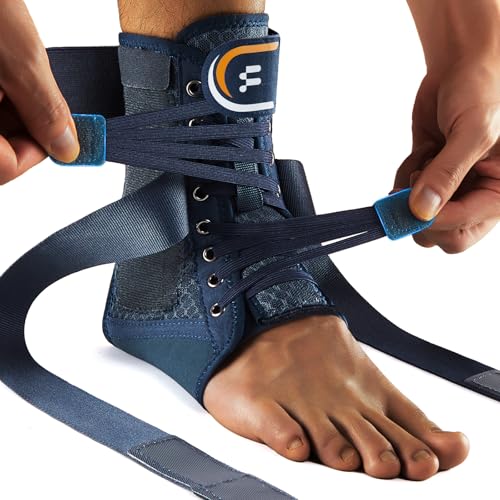
| Fitomo Quick Lace-Up★ Best Overall | Best Overall | Removable side splints + Figure 8 | Hook & Loop | — | Amazon |
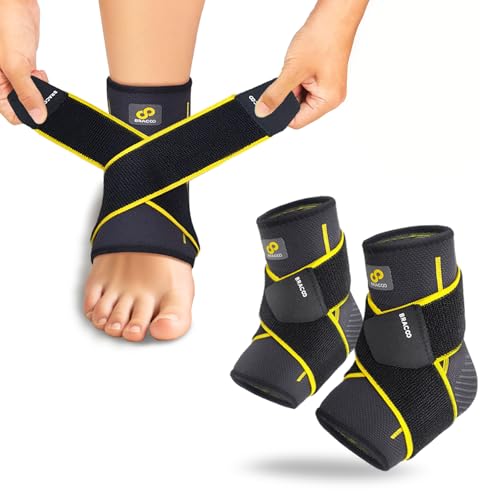
| Bracoo 2 Pack FS60Best Value 2-Pack | Mild support value | Compression sleeve + strap | Hook & Loop, Pull On | 138 g | Amazon |
| McDavid ElasticSimple & Secure | Simple non-neoprene fit | Knitted elastic sleeve | Pull On | 0.06 kg | Amazon |
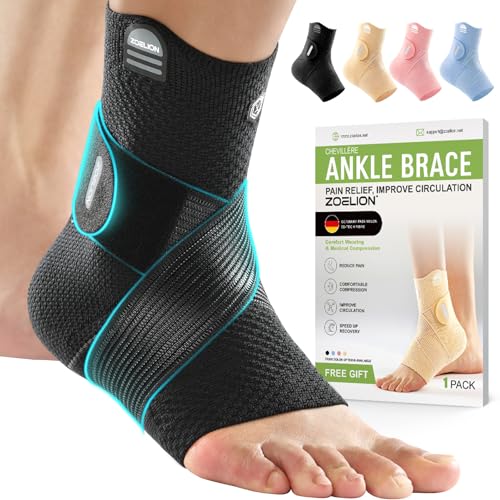
| ZOELION PRO-8006 | Pain relief & Achilles | 3-zone graduated compression + X-strap | Pull On + strap | 0.13 kg | Amazon |
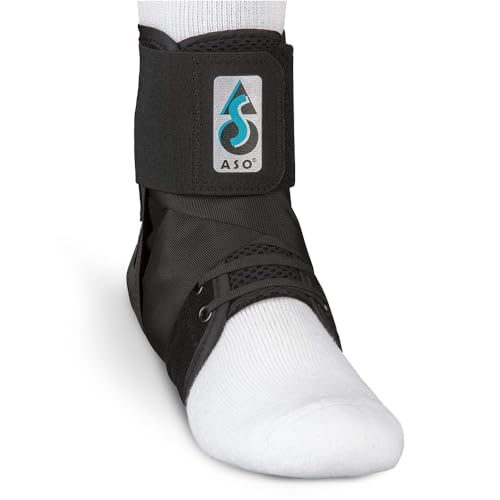
| Med Spec ASO Speed Lacer | Fast lace-up stability | Figure-8 straps + speed lace | Hook & Loop, Lace-Up | 5.6 oz | Amazon |
| Fitomo SAB Speed Laces | Everyday adjustable support | Removable side splints + 3-level straps | Hook & Loop | 0.19 kg | Amazon |
| Cramer Active Ankle T2 | Rigid volleyball/cheer | Rigid U-shaped shell + hinge | Single strap | 4.8 oz | Amazon |
| BioSkin TriLok | Arch + ankle combo | Arch-lift strap + figure-8 wrap | Figure-8 straps | 6.4 oz | Amazon |
| Bauerfeind Sports Support | Premium taping feel | Compression knit + figure-8 strap | Pull On + strap | 5.64 oz | Amazon |
In‑Depth Reviews
1. Fitomo Quick Lace-Up Ankle Brace
Our pick — 4.5★ from 300+ verified ratings; the strongest balance of quality and price.
Triple-lock sprain support that slips on in minutes, not the 5-10 a boot demands.
The Fitomo earns the top spot by giving you three ways to lock the ankle: a top compression strap, dual removable side stabilizers (firm splints that resist rolling), and cross straps in a figure-8 pattern. That triple-lock system is why it has replaced a doctor boot for some buyers — the fast hook-and-loop laces mean you’re supported in minutes instead of wrestling with a rigid boot. It fits inside most athletic shoes and flats, so you stay supported from the court to the kitchen.
What wins people over is the ease of use — the overwhelming majority of owners find the hook-and-loop closure and bungee-style tightening simple, with Velcro that holds up after months of repeated use. The support does real work for sprains and even offers plantar fasciitis relief, with one kitchen worker reporting much less pain after 10-12 hour shifts. At 69% polyester, 17% nylon, and 11% plastic, it’s noticeably lighter than traditional braces, which buyers appreciate.
Most buyers find the size chart accurate, but a few report it runs small, and some note the material feels less sturdy than heavier rivals. The one recurring complaint is minor: the stitches near the ankle can blister you if you wear ankle socks, so mid-calf socks are the fix. This is not a brace for full immobilization, but for active recovery and sports, it’s the most complete package here.
What Owners Rave About
- Triple-lock system prevents the ankle from rolling during movement
- Removable stabilizers let you soften support for daily wear
- Low-profile fit slides into workouts and casual shoes
Know Before You Buy
- Size runs slightly small for some buyers — check the chart
- Stitches can irritate with very low ankle socks
The go-to pick: This is the one to grab for a fresh sprain or active sports recovery where you need real stability without boot-level bulk.
Think twice if: You want a brace for full immobilization — this one supports and stabilizes, it does not lock the joint completely.
2. Bracoo 2 Pack FS60 Compression Sleeve
Two lightweight sleeves with a firm strap for mild sprains and daily wear.
The Bracoo delivers its value in the pair — you get two matching compression sleeves (a tight, elastic tube that hugs the ankle) for the price of many single braces. Each one pairs a slim elastic knit with a durable hook-and-loop strap, creating a multi-zoned compression that guides the ankle without restricting movement. At just 138 g for the set, it’s one of the lightest options, and the reinforced heel cup (a special weave that hugs the heel area) resists wear from friction.
Buyers rely on this for twisted ankles, post-surgery recovery, and general instability — one 71-year-old owner found the pair aided walking after a twist, with the podiatrist recommending three more weeks of wear. The soft, breathable material slides on easily and the Velcro sticks well, fitting into sneakers once you loosen the laces. The slim profile means it works under normal tennis shoes, though tighter footwear can be a squeeze.
Comfort and fit split the room — some call it very comfortable, others find it uncomfortable, and the L/XL runs snug even on a size-11 foot. It’s a mild-support brace, so it won’t hold a heavily sprained ankle the way a lace-up with splints will. If you need light stabilization, recovery compression, or a spare for both ankles, this two-pack is tough to top for the money.
The value read: The Bracoo is the pick for mild sprains, weak ankles, and daily compression where you want two braces for the price of one — just size up if you have wide or swollen feet.
The trade-off: The sleeve offers light support, so a serious sprain will need the firmer lace-up style instead.
3. McDavid Elastic Ankle Brace
A no-fuss pull-on sleeve that stops twisting without a single elaborate strap.
The McDavid is the anti-gadget brace — no straps, no laces, no closures, just a breathable knitted elastic sleeve you pull on and forget. It uses a non-neoprene (a synthetic rubber that can cause skin irritation) construction, making it ideal if you have neoprene allergies. The design keeps your ankle from twisting around or hyper-extending (bending beyond its normal range), which is exactly what a bowler with a sliding-foot ache or a runner with old ankle pain needs.
Owners praise it as simple, not clunky, and it holds up well in the wash — one long-time user has had the same brace for years and bought another for a family member. The compression is firm enough to counter swelling for hours, and the higher calf support is a welcome bonus. It works with work shoes or exercise shoes equally well, and it fits either the left or right foot.
The fit is the catch — it’s a one-piece sleeve, so sizing is critical, and a too-tight heel opening can be painful for some while the ankle portion feels loose for others. It’s a Level 1 primary protection brace, meaning it’s best for mild support and tendonitis or arthritis pain, not a serious sprain. If you want set-and-forget simplicity and your ankle fits the size chart, this is the cleanest option on this list.
Set-and-forget support: The McDavid is for anyone who hates fiddly straps and wants a comfortable, washable sleeve for arthritis, tendonitis, and mild instability.
The sizing risk: Because it’s a pull-on sleeve, an imperfect fit means too tight at the heel or too loose at the ankle — measure carefully.
4. ZOELION PRO-8006 Compression Support
A medical-grade knit that targets Achilles pain with a feather-slim X-strap.
The ZOELION is built for pain relief first, using a German-imported PA66 high-elastic fabric with 3D-tech weaving (a method that knits different zones with different tension) to deliver what the maker calls medical-grade compression. Instead of one uniform squeeze, it divides the foot into three zones: a gentle Comfort Zone cradles your instep, a Pressure Zone hugs your arch and heel, and flexible edges prevent digging in. The result is the most-discussed benefit here — pain relief, especially for Achilles tendonitis, with a strong following of buyers who found it the best of six braces tried for a lateral sprain.
what separates it is the high-tensile fishnet X-strap, a removable, airy strap that adds extra adjustable compression on the arch and Achilles without restricting mobility. It’s feather-slim, so it fits inside your shoes without forcing you to size up, and the air-knit fabric pulls moisture away to stay dry and odor-free. The contoured, non-roll design moves with you, keeping the compression locked in during walking and exercise.
Buyers report it works well with running shoes, and the quality holds up after washing, keeping its shape and support. The limitations are fit-related: it runs thick enough that work boots can cut circulation, and it can bind across the top of the foot for some. It’s a compression sleeve, not a rigid stabilizer, so it suits mild sprains, plantar fasciitis, and Achilles issues more than heavy ligament damage.
The Standout Traits
- 3-zone graduated compression targets arch and heel specifically
- Removable fishnet X-strap adds adjustable Achilles support
- Contoured design stays put and survives washing intact
Watch Out For
- Too thick for tight work boots — can restrict circulation
- Light support level suits mild injuries, not major sprains
Reach for this if: Achilles tendonitis or plantar fasciitis is your main complaint and you want a low-profile sleeve that disappears inside your shoe.
Look elsewhere if: You need rigid side-to-side lockdown for a fresh sprain — this is compression, not a stabilizer.
5. Med Spec ASO Speed Lacer
The lace-up that tightens evenly in seconds with a single quick-pull motion.
The ASO Speed Lacer solves the classic lace-up problem: getting even, repeatable compression without re-tying mid-game. Its speed-lace design pairs a quick-pull hook-and-loop closure with figure-8 stabilizing straps (straps that cross over the front of the ankle) to secure the heel and resist inversion — the ankle rolling inward that causes most sprains. At just 5.6 ounces, it’s a low-profile stabilizer that slides into most athletic footwear while still delivering the locked-in feel of a traditional lace-up.
What wins owners over is the support — it keeps ankle side movement to a minimum, which is exactly what you want after a sprain or for ligament support. The speed-lace system is the second-most praised feature, with oversized finger loops letting you dial tension one-handed, then micro-adjust as swelling changes. It’s a bilateral design (fits either left or right foot) that stands up to basketball, volleyball, soccer, and everyday training, and the breathable tongue keeps it comfortable for all-day wear.
The fit is the main variable — most find it true to size, but a subset find it runs tight, so check the chart before ordering. It’s not fully rigid, so it adds stability and compression without locking the joint, making it great for sprain recovery and preventative taping replacement. For athletes who want lace-up security without the pre-game tying ritual, this is the one.
The athlete’s pick: The ASO is for players who want dependable lace-up stability and hate fussing with laces — the speed closure handles it in seconds.
The caution: The fit runs tight for some, and it’s a stabilizer, not a rigid shell, so it won’t fully immobilize a severe injury.
6. Fitomo SAB Speed Lace Brace

Five Velcro cinch points hold your ankle steady through basketball and daily wear.
The Fitomo SAB takes the idea of adjustability to the extreme, with a three-level strap system and five separate Velcro cinch points — two on the laces, two crossover straps, and one at the top. Those removable side stabilizers (firm plastic splints) provide what buyers call a ridiculously stable base, protecting against ankle rolling without being so stiff that your foot can’t move for walking. It’s a unisex design sold individually, and the upgraded hoop-and-loop fasteners make it quicker to put on than a traditional lace-up.
Support is what owners praise most, with many noting the side splints add just the right amount of extra rigidity. An 11-year-old basketball player with a sprained ankle could self-apply it easily, and post-surgery users call it the best brace for weak ankles. The material is soft, breathable, and comfortable — several buyers found it more comfortable than the doctor’s own version, fitting a size-8 foot in the medium without being bulky.
The trade-offs are the fit and the splints themselves. Fit runs mixed, so the size chart matters, and some buyers find the side splints too flexible, wishing for more rigidity at the ankle. At 0.19 kg, it’s mid-weight, and the strap functionality draws mixed notes. It’s a versatile all-rounder that works for walking, running, volleyball, basketball, and tennis — just not the absolute stiffest option for heavy ligament damage.
Why It Scores
- Five Velcro cinch points for a fully customized fit
- Removable splints give protection without limiting walking
- Soft, breathable material beats the doctor’s brace on comfort
The Gripes
- Side splints feel too flexible for some buyers
- Fit is mixed — the size chart is essential
The all-rounder: This is the pick for versatile, adjustable support across sports and daily life, especially if you want comfort over maximum stiffness.
Not if: You need the most rigid possible lockdown — the splints flex more than a hard-shell brace.
7. Cramer Active Ankle T2
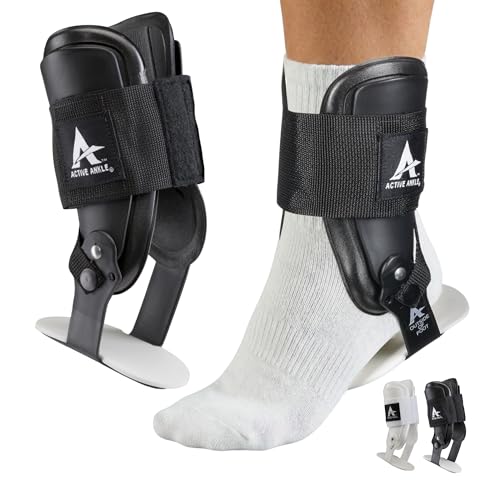
A rigid U-shaped shell that minimizes side-to-side movement for high-impact play.
The Active Ankle T2 is the heavy-duty option for athletes who need maximum lateral stability — think volleyball hitters, cheerleaders, and basketball players landing on a defender’s foot. Its rigid U-shaped shell (a firm plastic cup that wraps around the ankle) minimizes side-to-side movement, while an anatomical bilateral hinge allows natural up-and-down motion so you stay mobile. At just 4.8 ounces with feather-light EVA padding (a soft, moldable foam), it slips into most athletic shoes without the bulk of a full brace.
The build quality is what owners praise most, calling it well-made and worth the money, with excellent lateral stability that has, for some, prevented or reduced a severe sprain. The single-strap system is adjustable for low-top or high-top shoes, and the latex-free, durable polypropylene shell stands up to intense activity. Volleyball players specifically favor the wide Velcro strap of the T2 for its quick, secure hold over lace-up alternatives.
The honest downsides are comfort and durability. Comfort splits the room — some find the foam lining great with crew socks, others find it uncomfortable, and the sticky white bottom plate collects lint and dirt over time. Durability is the bigger variable: some get years of perfect protection, while others report it breaking at the bottom within weeks of use, especially with heavy play. It’s a rigid brace with limits on shoe compatibility, so it needs loose laces and a shoe that can take the volume.
The court pick: The Active Ankle T2 is for serious volleyball and cheerleading athletes who need rigid lateral stability and are willing to manage its quirks.
The variable: Durability and comfort are mixed — some units break quickly, and shoe fit can be a struggle.
8. BioSkin TriLok

Four straps that lift your arch and wrap your ankle together, not separately.
The BioSkin TriLok takes a different approach than every other brace here: it treats the foot and ankle as one connected system. The FootLok strap lifts and supports your arch while the figure-8 wrap stabilizes the ankle, so both work together rather than in isolation. That’s why it’s a favorite for peroneal tendonitis (pain along the tendon on the outside of the lower leg) and collapsed arches — conditions where a compression sleeve alone won’t cut it. The lightweight, breathable, hypoallergenic Nylon/Lycra build fits in trainers, flats, boots, and even cleats.
The support is the thing everyone raves about, with the strap system delivering excellent medial and lateral support that has, for some, eliminated pain and limping within two weeks even after three surgeries. A physical-therapist parent found it easy to self-apply in under a minute and saw swelling reduce within 2-3 hours. It’s a bilateral design that works on either foot and can be strapped to control rolling inward or outward.
The learning curve is real — there are four straps and a specific wrap path, and owners mention it takes two or three wears to master. Comfort and ease of use split the room, with some finding it extremely uncomfortable and complicated, and the Velcro straps can stick together. The size chart also draws sharp criticism — it’s sized by shoe size, and getting it wrong means a brace that cuts circulation or sits loose. It’s the most technically capable but also the most demanding brace here.
The Big Wins
- Arch-lift plus figure-8 wrap supports both foot and ankle together
- Works on either foot, fits in cleats, trainers, and boots
- FSA/HSA eligible for flexible spending accounts
The Catch
- Four-strap wrap path has a steep learning curve
- Size chart is unreliable for some — narrow feet size down
The specialist: Choose the TriLok if your problem is arch-related — peroneal tendonitis, collapsed arch, or combined foot-ankle issues — and you’re willing to learn the wrap.
skip it if: You want a simple pull-on brace; the four-strap system demands patience.
9. Bauerfeind Sports Ankle Support
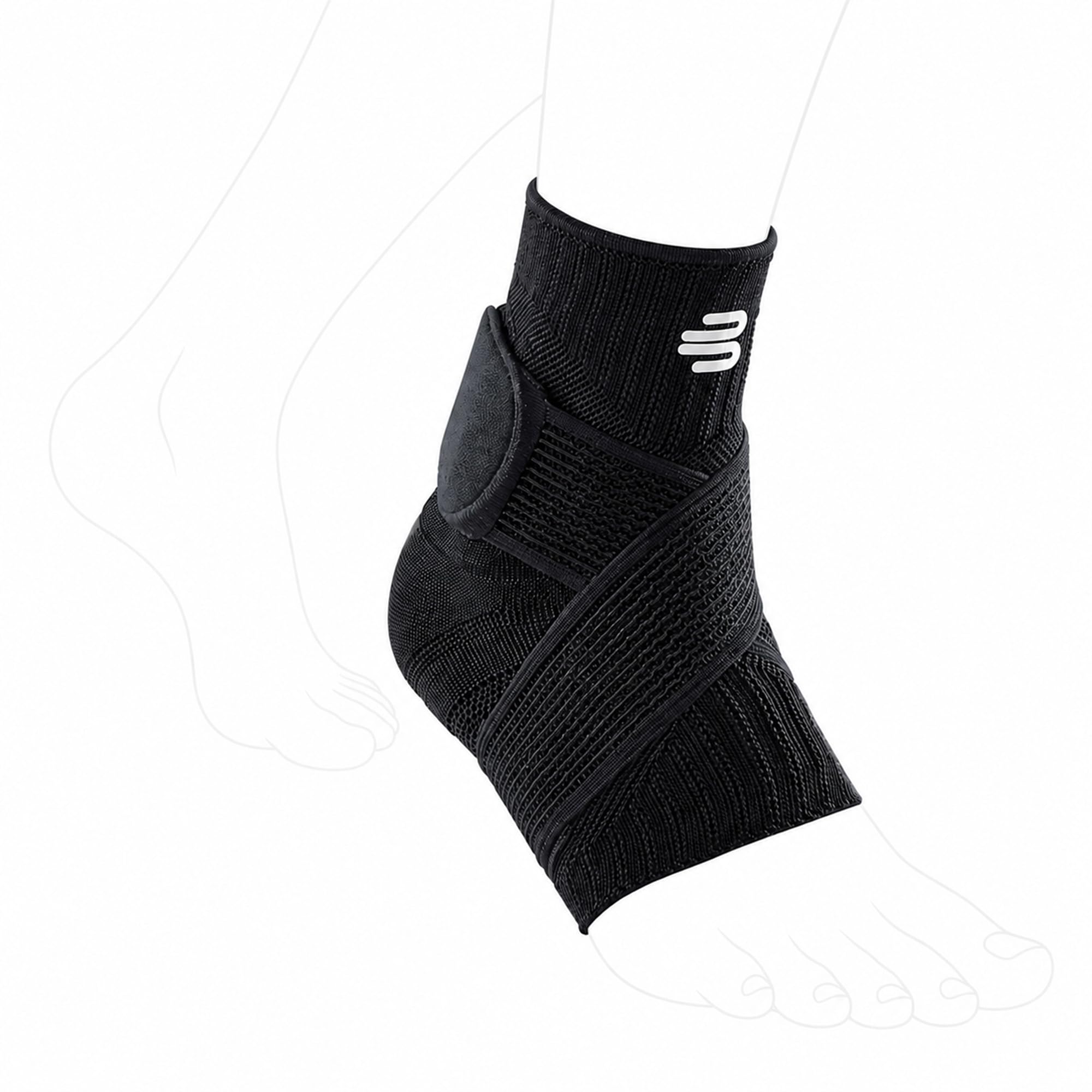
A German-engineered knit with a figure-8 strap that mimics athletic taping.
The Bauerfeind is the closest thing to professional taping you can slip on and off. Its innovative compression knit with an integrated figure-8 taping strap (a strap that crosses over the ankle like athletic tape) supports the joint and provides noticeable relief from ankle pain, stabilizing without changing your natural gait or limiting range of motion. Made in Germany with the lightweight 3D Airknit material, it’s breathable, moisture-wicking, and low-profile enough to fit under socks and cleats for all-day wear.
What owners praise most is the quality and the support — it’s a favorite for soccer players with peroneal tendon injuries, delivering support comparable to taping while staying comfortable under cleats. One runner with a grade 3 sprain (a severe ligament tear) and permanent instability found it provided enough support to run pain-free. The individually adjustable strap is easy to apply, durable, and reusable, working like athletic tape without the waste. It also outperforms neoprene braces for several buyers.
The value is the sticking point. It’s the most expensive brace here, and durability is mixed — one reviewer noted holes developing after a single season, calling it poor durability for the price. Another found it gives less support than taping. It’s best for lighter injuries and active sports where you need taping-like stability with premium comfort, not a rigid shell. If the price is a stretch, the Med Spec ASO delivers similar taping-style support for less.
The premium call: Choose the Bauerfeind for premium taping-like support with a perfect low-profile fit under cleats — ideal for soccer and runners.
The honest limit: The price is high and durability is questioned by some, so weigh the cost against how much you’ll actually wear it.
Understanding the Specs
Figure-8 Straps
A figure-8 strap is a strap that wraps over the front of your ankle in a crossing pattern, mimicking the look of the number 8. This design locks the heel and resists the ankle rolling inward or outward — the movement that causes most sprains. It’s the key feature that separates a true stabilizer from a simple compression sleeve.
Removable Side Stabilizers
These are firm plastic or metal splints (a rigid insert) that sit on the sides of the ankle to stop side-to-side rolling. The “removable” part matters: you can wear them during recovery or sports for maximum rigidity, then take them out for a more flexible feel during daily wear. This lets one brace serve both purposes.
FAQ
What is the difference between a compression sleeve and a lace-up brace?
How do I know if my ankle brace fits correctly?
Can I wear an ankle brace inside my regular shoes?
When should I use removable side stabilizers?
How long does an ankle brace last?
Is a more expensive ankle brace always better?
Can I wear an ankle brace for plantar fasciitis?
What does a figure-8 strap do that a regular strap doesn’t?
Will an ankle brace prevent me from getting sprains?
How should I care for my ankle brace to make it last?
Final Thoughts: The Verdict
For most buyers, the ankle brace winner is the Fitomo Quick Lace-Up because it delivers triple-lock sprain support with removable side stabilizers at a value that beats braces costing far more. If you want arch-specific relief for plantar fasciitis or Achilles issues, grab the ZOELION PRO-8006. And for rigid lateral stability on the volleyball or basketball court, the Cramer Active Ankle T2 is the one to reach for.
How We Picked
We do not accept paid placement. Every pick is matched to a real buyer and a real use-case; we do not hands-on test units.
Sources & Methodology
Specifications: manufacturer listings and product documentation. Review insights: verified customer reviews, as of August 2026. Pricing: not shown on this page (it changes often); check the current price via the retailer link.
As an Amazon Associate, Gadgets Feed earns from qualifying purchases. This does not affect which products we feature.