
Our readers keep the lights on and my morning glass full of iced black tea. As an Amazon Associate, I earn from qualifying purchases.
Specs are compiled from manufacturer listings and verified buyer reviews and can change over time — please confirm the key details on the product page before buying.
Choosing a 4K projector for home theater feels like decoding a secret language — native versus pixel-shifted, lumens versus contrast, laser versus lamp. The real prize is a projector that delivers crisp movies and rich colors in your actual room, not just in a dark showroom. This guide cuts through the jargon to reveal which true 4K models earn their place in a real living room.
I’m Min — the founder and writer behind Gadgets Feed. This guide is built by comparing the manufacturers’ published specifications and the patterns across verified customer reviews, so you get each pick’s real strengths and trade-offs instead of marketing spin.
Whether you are building a dedicated theater or upgrading movie night, finding the right 4k projector for home theater means matching brightness, contrast, and placement to the space you actually have.
Our Picks at a Glance


How To Choose The Best 4K Projector For Home Theater
Before comparing models, assess your room’s light control and viewing habits. A projector that excels in a dark theater may look dull in a bright family room, and the priciest model isn’t always the best fit.
Native 4K vs Pixel Shifting
Some projectors use a chip that displays the full 3840 x 2160 pixels natively, while others use a technique that shifts a smaller chip to simulate 4K detail. Native 4K panels, like Sony’s SXRD, deliver the sharpest possible image with no fuzz, but they cost more. Pixel-shifting models, like Epson’s PRO-UHD, still look excellent and often offer better value, but they can show slight softness on fine text or patterns. If you sit close to a very large screen, native 4K is the difference you will notice most.
Brightness and Contrast for Your Room
Brightness, measured in lumens, decides how well the image holds up with lights on or windows open. A model with 2,000 to 2,600 ISO lumens works beautifully in a dark or dimly lit room, while 3,200 to 4,000 lumens pushes through more ambient light. Contrast ratio, meanwhile, controls how deep the blacks look. A high contrast ratio, such as 1,200,000:1 on the Epson, delivers inky shadows and punchy highlights that make movies feel cinematic.
Placement: Long Throw, Short Throw, and UST
Placement matters as much as the picture. Long-throw models sit on a ceiling or back shelf and need several feet of distance. Short-throw and ultra-short-throw (UST) models sit much closer to the wall — often just inches away — which removes the worry of someone walking through the beam. UST projectors are heavier and pricier, but they are the simplest way to get a huge image in a small room. Measure your room and screen size before choosing a throw distance.
Quick Comparison
| Model | Best For | Brightness | Contrast Ratio | Input Lag | Amazon |
|---|---|---|---|---|---|
| Valerion StreamMaster Plus2★ Best Overall | All-in-one cinema & gaming | 2000 ISO lm | 10,000:1 | 4ms | Amazon |
| Optoma UHD38xGaming Speed King | Competitive gaming | 4000 lm | 1,000,000:1 | 4.2ms | Amazon |
| ViewSonic PX701-4KBest Value | Bright-room value | 3200 lm | 12,000:1 | 4.2ms | Amazon |
| BenQ HT3560 | Cinematic color | 2200 lm | 50,000:1 | — | Amazon |
| XGIMI HORIZON 20 Max | Daylight-ready smart cinema | 5700 ISO lm | 20,000:1 | 1ms | Amazon |
| AWOL Aetherion Pro | Ultra-short-throw immersion | 2600 ISO lm | 6,000:1 native | 1ms | Amazon |
| NexiGo Aurora Pro MKII | Versatile UST with huge contrast | 2400 lm | 30,000:1 | 4.2ms | Amazon |
| Epson LS11000 | Theater purists with 3LCD color | 2500 lm | 1,200,000:1 | — | Amazon |
| Sony VPL-XW5000ES | Native 4K reference quality | 2000 lm | High | <21ms (4K) | Amazon |
In-Depth Reviews
1. Valerion StreamMaster Plus2 4K Laser Projector
Our pick — 4.5★ from 600+ verified ratings; the strongest balance of quality and price.
The all-in-one cinema brain that pairs a laser engine with a full smart-TV suite.
You get a picture that owners rave about for its deep colors, beautiful blacks, and brightness that holds up in moderate light—one buyer reports it shines on a 120-inch indoor screen and a 200-inch outdoor setup. The crowdsourced verdict is clear: this is the projector people struggle to justify spending more on. It combines a 10,000:1 contrast ratio (the difference between the brightest white and darkest black) with 2000 ISO lumens of peak brightness from an RGB triple laser (a light source that uses three separate lasers for red, green, and blue), which means richer color and deeper shadow detail than a single-laser system.
Gamers get a genuine edge here, with a 4ms input lag and a 240Hz refresh rate that keeps fast action feeling instant. The built-in Google TV OS streams Netflix, YouTube, and Disney+ without a separate stick, and AirPlay 2, Miracast, and Chromecast make phone casting painless. It is also the smartest pick for setup — auto focus, auto keystone, auto screen alignment, and obstacle avoidance do the fiddly work for you, while voice control works with Alexa, Google Home, and Apple HomeKit.
The honest trade-off: a few owners found 3D playback choppy on titles like Avatar, and the fan noise, while quieter than many rivals, can fluctuate in quiet scenes. It is not a perfect unit, but the strengths far outnumber the quirks.
Why owners love it
- Picture quality is the top praise — sharp, vibrant, and bright in moderate light
- Runs a full Google TV OS with AirPlay 2, Miracast, and Chromecast
- 4ms input lag and 240Hz refresh for competitive gaming
- IMAX Enhanced mode preserves up to 26% more image content
The catches
- 3D playback can be choppy on some discs
- Fan noise fluctuates and is audible in quiet scenes
- Short throw ratio may require digital zoom at long distances
The verdict: Reach for this if you want one box that handles movies, streaming, and lag-free gaming with minimal setup fuss.
Think twice if: You are a 3D enthusiast — expect choppy playback on some titles.
2. Optoma UHD38x Bright, True 4K UHD Gaming Projector
The brightness monster with the fastest competitive response time in this lineup.
If raw light output is your priority, this is the projector that floods a room — 4000 lumens makes it watchable even with ambient light spilling in, a major step up from the 2000 ISO lumens of the Valerion above. It pairs that punch with a 1,000,000:1 contrast ratio, a 100.0x gap that gives it dramatically deeper blacks than the Valerion’s 10,000:1 on paper. Owners moving from a 2004 720p unit called it a huge upgrade, praising the bright image and easy ceiling mount.
For competitive players, the 4.2ms response time at 1080p with Enhanced Gaming Mode (a setting that reduces input lag), plus a 240Hz refresh rate (how many times the image updates per second), puts it in the same elite latency class as the Valerion’s 4ms — a 5% gap that neither player will feel. The 4-corner adjustment simplifies setup, and a 1.1x zoom gives you some placement flexibility. It is a dedicated gaming and home cinema tool, not a smart hub — there is no built-in OS, so you will bring your own streaming device.
The catch is the one you must weigh honestly: reliability. A vocal minority reported the DMD chip failing with dead pixels multiple times, even after manufacturer repairs, and some felt the company stopped helping. Buyers report it plainly: “great initial 4K picture but severe reliability issues.” Picture quality draws mixed feedback too — some love the 4K detail, others find it washed out.
The honest read: Spectacular brightness and speed for the price, but the reliability complaints are loud enough that a long-term investment buyer should look at the laser options instead. Best suited to a gamer who upgrades frequently and wants the brightest, fastest image for the money.
3. ViewSonic PX701-4K UHD Projector
The crowd-pleasing workhorse that balances brightness, speed, and price for most rooms.
What you actually get at this price is a projector that does almost everything well — 3200 ANSI lumens of brightness, a 12,000:1 contrast ratio, and a 4.2ms input lag at 240Hz that keeps gaming smooth. Owners consistently call it among the most affordable true 4K models, and the biggest praise is value for money, with quality close behind. It projects from 80 to 150 inches, showing a 100-inch image from 10.9 feet, which suits most living rooms.
Setup flexibility is a real strength here: 1.1x optical zoom, H/V keystone, 4-corner adjustment, and auto keystone give you many ways to fix the image without moving the unit. Dual HDMI and a powered USB-A port connect consoles, PCs, and streaming sticks. Some owners mention it is bright enough to watch even with sun on tinted windows.
Picture quality draws the most discussion but opinions split — many call it amazing, while others note the pixel-shifting can leave text slightly fuzzy at 4K and colors a bit washed out. A minority had units with grinding or flickering issues, though replacements worked perfectly. This is a value pick, not a reference-grade image, so treat contrast expectations accordingly.
What it does well
- Excellent brightness visible even with some sunlight
- Auto keystone plus 4-corner and H/V adjustment
- Dual HDMI inputs with powered USB-A
- Lightweight, replaceable lamp that is easy to swap
Where it compromises
- Pixel-shifting can make text look fuzzy at 4K
- SuperEco mode flickers at 240Hz — use Dynamic Eco instead
- Occasional defective units, though replacements shine
Pick this if: You want the best all-around 4K image for the money and value easy setup over absolute color perfection.
Look elsewhere for: Reference-grade contrast and colors — the BenQ or Epson go deeper.
4. BenQ HT3560 True 4K Ultra HD Home Cinema Projector

The color-first choice for film lovers who care more about accurate hues than raw brightness.
Step away from the lumen race and you find the BenQ, which focuses on reproducing colors the way the director intended. Its 95% DCI-P3 coverage with HDR10+ and a 50,000:1 contrast ratio produce rich, lifelike tones — the kind of picture that makes an upgrade from an older 1080p unit feel dramatic. Owners moving from decade-old projectors described it as brighter, more colorful, and stellar on a 110-inch screen.
At 2200 lumens, this is a projector for a controlled-light room, not a sun-drenched living space. It works best when you can dim the lights and let the color do the talking. The 10W built-in speakers give you sound without an external system, and HDMI 2.0b with eARC lets you pass high-quality audio to a soundbar or receiver.
The honest concern here is quality control and noise. One owner reported a rattling sound that persisted even after a repair, and another described a clicking, grinding noise when navigating menus. These are the loudest complaints in the data. It is a fantastic picture when you get a good unit, but the QC track record means you should buy from a source with easy returns.
The trade-off, plainly: Spectacular cinematic color in a dark room, undermined by occasional noise and QC issues. Who it beats: the ViewSonic on color accuracy. Who it does not: the pixel-sharpening Sony or the 3LCD Epson.
5. XGIMI HORIZON 20 Max 4K Projector
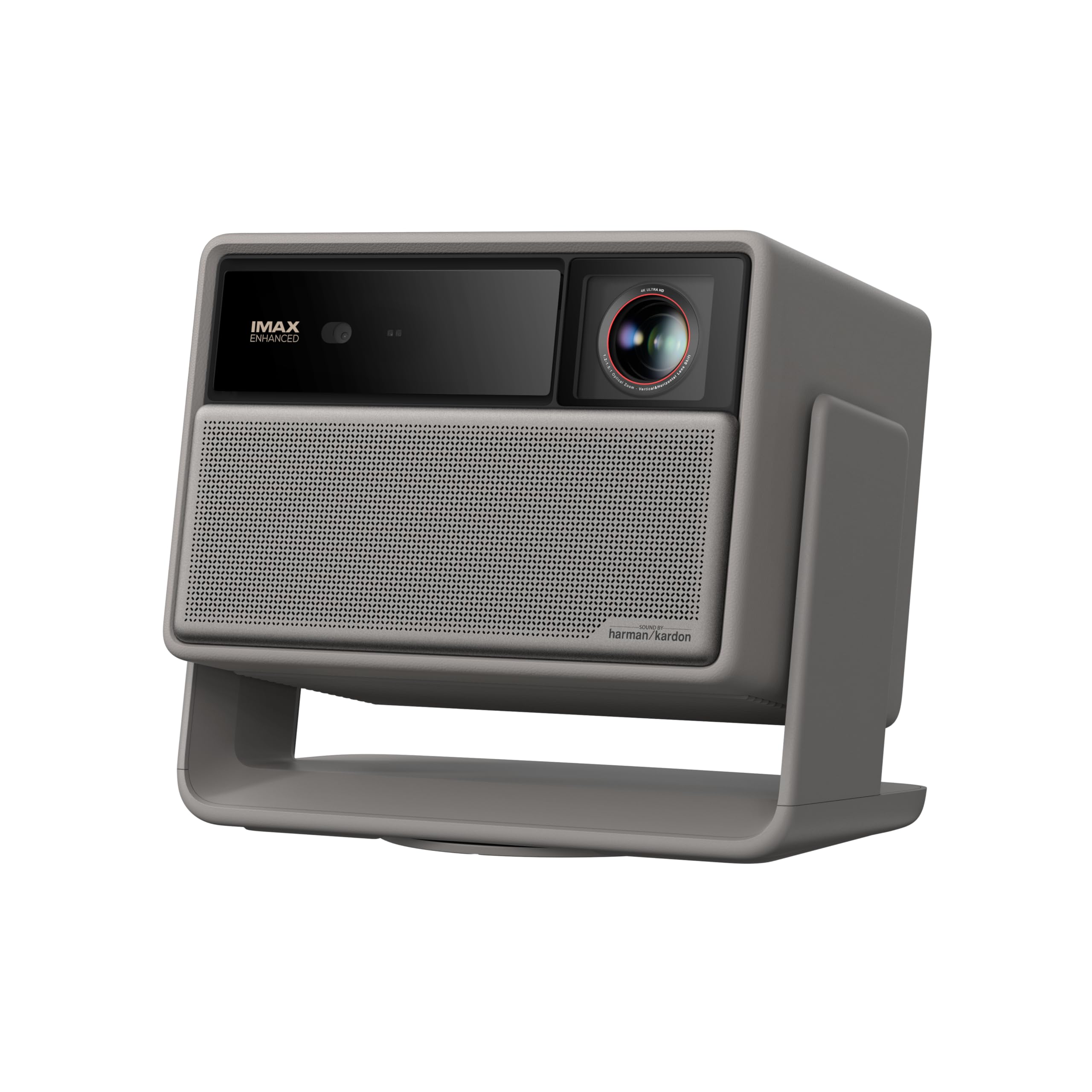
The bright-room bruiser that makes a 144-inch image look like an OLED TV with full lights on.
This is the projector for people who refuse to turn their living room into a cave. With a staggering 5700 ISO lumens of peak brightness from its X-Master RGB triple laser engine, a 20,000:1 contrast ratio, and 110% BT.2020 color coverage (a wide color standard that shows more shades), it delivers a picture that owners describe as looking like a normal OLED TV even with full ambient light. One owner projects a 144-inch diagonal image from 16 feet and calls it brilliant and crisp.
Flexibility is the other headline: optical zoom and lens shift mean you can position it off-center and still get a clean, distortion-free image. Google TV with licensed Netflix is built in, so you skip the external streaming box. For gamers, the 1ms input lag is the lowest in this entire lineup — a full 3.2ms faster than the Optoma’s 4.2ms response, which competitive players will absolutely feel.
The trade-off is sound and speckle. Built-in speakers are praised as among the best you will hear on a projector, though not HiFi, and reviews note sound is only truly audible in quiet rooms. More importantly, some owners noticed laser speckle and rainbow effects on certain screens, which is the classic DLP laser caveat. A 2-year warranty provides some reassurance on the reliability questions some raised.
The standout strengths
- 5700 ISO lumens — watchable with full ambient light
- 1ms input lag, the fastest in the lineup
- Google TV with licensed Netflix built in
- Optical zoom and lens shift for flexible placement
Watch out for
- Laser speckle and rainbow effect on some screens
- Built-in sound is good but not room-filling
- Heavy at 5.4 kg (about 12 lbs)
Reach for this if: You want a bright, smart, gaming-fast projector for a living room you refuse to darken.
skip it if: You are sensitive to rainbow effects — test a DLP laser before you commit.
6. AWOL Aetherion Pro 4K Projector
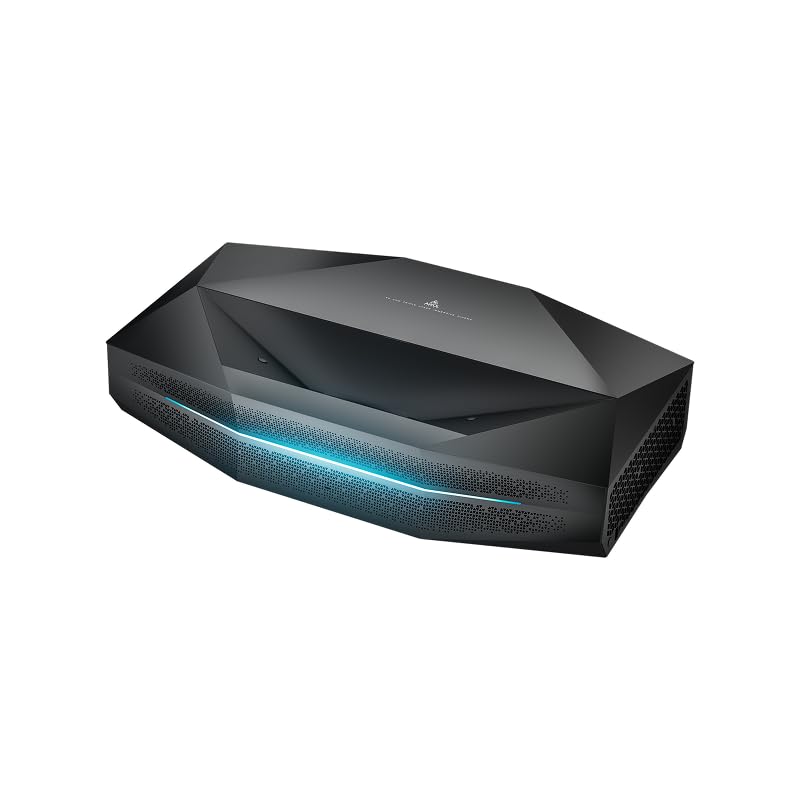
A tabletop UST that turns a wall into a razor-sharp 200-inch theater from just inches away.
If you cannot mount a projector on the ceiling, the AWOL changes the game. As an ultra-short-throw model, it sits on a media console near the wall and still throws a crisp image up to 200 inches — no ceiling mount, no beam across the room. The image quality is the top praise by a wide margin, with owners calling it razor-sharp with vivid colors, astonishing black levels, and silent operation. Its 6-level IRIS and EBL algorithm deliver up to 6,000:1 native contrast, reaching 60,000:1 viewing contrast for deeper shadow detail.
Gamers get a 1ms ultra-low latency with VRR, ALLM, and Dolby Vision Gaming, putting it on par with the XGIMI for responsiveness. The built-in sound is a genuine surprise — owners say it is superb enough to skip a soundbar entirely. Setup is famously easy with intuitive correction, and the built-in Google TV means no extra streaming device. It carries ISF certification and 110% Rec.2020 color gamut for studio-grade accuracy.
The recurring complaint is rainbow effect (RBE) from the laser, which some susceptible viewers find irritating despite the Anti-RBE technology. One owner reported dead pixels within a year, though support replaced the unit quickly. Value for money draws mixed opinions — it is a premium price, but for a no-mount, huge-screen setup, the convenience is tough to top.
The decisive point: The simplest path to a massive, sharp image in a room where ceiling mounting is impossible. The 1ms latency matches the fastest gaming projectors, and the built-in audio is genuinely good. Just be sure you are not rainbow-sensitive.
7. NexiGo Aurora Pro MKII 4K Tri-Color Laser UST Projector

The UST with a Scene Adapt Engine that juggles a 30,000:1 contrast ratio and near-silent fans.
Here is a short-throw projector engineered around contrast. Its Scene Adapt Engine adjusts the laser output in real time based on what is on screen, producing deeper blacks and brighter highlights at a 30,000:1 contrast ratio while cutting energy use by about 70%. That dynamic dimming is what makes dark movie scenes feel properly cinematic rather than washed out. Owners praise the image quality above all, noting it works well even in moderate light and stays crisp.
It is built for both film and gaming: Dolby Vision and HDR10+ handle high-dynamic-range content, and Gaming Mode drops latency to between 4.2ms and 8ms for smooth 4K at 120Hz. The 0.21:1 throw ratio means it needs very little space to create up to a 150-inch image, and the 60W speakers with Dolby Atmos support offer serious built-in sound. With a 30,000-hour laser lifespan, owners calculate that is over 18 years of typical viewing.
The most common praise centers on image quality and overall build, with auto-focus and setup completing in under a minute. The occasional owner notes slightly washed-out colors or a fan that cycles between high and low, but these are minor against the overall satisfaction. It is a strong middle-ground UST with a lighter footprint than the AWOL.
Why it stands out
- 30,000:1 contrast with dynamic laser dimming
- 4.2ms to 8ms latency for 4K 120Hz gaming
- 60W speakers with Dolby Atmos
- 30,000-hour laser lifespan
Minor notes
- Colors can look slightly washed out for some owners
- Fan occasionally cycles between high and low
- Max image is 150 inches, smaller than some UST rivals
Choose this for: A compact UST that balances gaming speed, huge contrast, and built-in audio in one unit.
Pass if: You need a screen larger than 150 inches — look at the AWOL or Valerion instead.
8. Epson Home Cinema LS11000 4K PRO-UHD Laser Projector

The 3LCD purist’s pick that delivers inky blacks and rainbow-free color on huge screens.
This is the projector for the person who has a dedicated dark room and a very large screen — the data shows owners rave about it most when paired with a 150-inch display. Its true 3-chip 3LCD engine displays 100% of the RGB color signal for every frame, which means no rainbow effect and rich, uniform color. The laser array light source drives a dynamic contrast ratio exceeding 1,200,000:1 — the highest in this lineup by a massive margin — for blacks so deep they rival a quality TV.
It handles HDR with full 10-bit processing, accepting 100% of the HDR source information across HDR, HDR10+, and HLG, with real-time curve adjustment across 16 steps. The motorized lens with lens shift, focus, and zoom makes positioning easy from a ceiling mount. At 2500 lumens of both color and white brightness, it holds up in rooms with some ambient light, and a 120Hz refresh rate keeps motion smooth for both films and gaming. The laser is reliable and instant-on with no bulb to replace.
The price is the hurdle, and owners say so plainly — it is a serious investment. Setup also gets mixed feedback, with some finding it straightforward and others wrestling with the process. Physical size is notable; this is not a small unit. For a dedicated theater with a big screen, though, the combination of 3LCD color purity and that enormous contrast ratio is difficult to beat.
The honest call: The best contrast and color purity in this lineup for a light-controlled room, but it demands both the budget and the physical space. It beats the Optoma and ViewSonic on image depth but costs several times more and is far larger.
9. Sony VPL-XW5000ES 4K HDR Laser Home Theater Projector

The native 4K SXRD reference that makes pores on actors’ faces visible from across the room.
This is the purest 4K image you can buy in this lineup, and the numbers explain why. Unlike every other projector here that uses some form of pixel shifting, the Sony uses an all-new native 4K SXRD panel with a full 3,840 x 2,160 pixels — no shifting, no fuzz, just razor-sharp native resolution. Owners describe the detail as breathtaking, with one noting you can see individual pores on actors’ faces. It projects a stunning image even on a 200-inch wall, as one owner discovered with a city-gray painted basement wall.
The 2,000 lumens of brightness are generated by a long-lasting laser source rated for up to 20,000 uninterrupted hours, letting you enjoy clear 4K at optimal brightness for years. Sony’s flagship X1 Ultimate processor handles the image magic, while TRILUMINOS PRO reproduces over a billion colors. Wide Dynamic Range Optics achieve a 95% DCI-P3 wide color gamut at that 2,000-lumen brightness for naturally colorful images even when bright. It is also about 20% smaller and 30% lighter than its predecessor model, blending into a modern room.
The price is the headline, and the quirks are real: a slow startup of about a minute, a yellow tint until it warms up, and a heavy 28-pound body that demands a stable mount and manual lens shift — no keystone correction here. But for image purists, the native 4K sharpness and Sony’s color science are the destination, not a compromise.
The reference strengths
- Native 4K SXRD panel — no pixel shifting, full 3,840 x 2,160 pixels
- 20,000-hour laser light source
- TRILUMINOS PRO with over a billion colors
- 95% DCI-P3 wide color gamut
The real caveats
- Heavy 28 lbs with poor mount balance — needs a sturdy mount
- Slow ~1 minute startup and yellow tint until warm
- Manual lens shift only, no keystone — takes about 30 minutes to align
Buy it for: The sharpest, most detailed native 4K image money can buy in this list, for a dedicated dark theater with a large screen.
Choose something else for: Quick setup, flexible placement, or rooms with significant ambient light — the XGIMI or AWOL serve those better.
Understanding the Specs
Lumens and Brightness
Lumens measure how much light the projector throws, which decides how well the image survives ambient light. A 2,000-lumen model is built for a dark room, while 3,200 to 4,000 lumens pushes through some daylight. Match lumen output to your room’s light control, not to the biggest number you can find. A model rated 5700 ISO lumens, for example, will look great with the lights on, but it costs more than a 2000-lumen unit that is perfect in a blackout theater.
Contrast Ratio and Black Levels
Contrast ratio is the difference between the brightest white and the darkest black a projector can show. A higher ratio, like 1,200,000:1, means deeper, more inky blacks that make dark movie scenes feel rich instead of gray. Contrast matters most in a dark theater where your eyes can perceive subtle shadow details. In a bright room, contrast matters less because ambient light washes out both ends of the range. If you watch mostly at night in a dark room, prioritize contrast over raw brightness.
FAQ
What is the difference between native 4K and pixel-shifted 4K projectors?
How many lumens do I need for a home theater projector?
What is input lag and why does it matter for gaming?
What is the difference between a short-throw and ultra-short-throw projector?
Is a laser projector better than a lamp projector?
Will a 4K projector work well in a bright living room?
What is Dolby Vision and HDR10+ on a projector?
How much space do I need for a 100-inch projector image?
What is the rainbow effect and should I worry about it?
Do I need a special screen for a 4K projector?
Final Thoughts: The Verdict
If you want one dependable pick, the 4k projector for home theater winner is the Valerion StreamMaster Plus2 because it combines a laser image, a full Google TV suite, and 4ms gaming speed in one easy-to-set-up box, backed by the strongest positive owner consensus in this lineup. If you want native 4K reference sharpness for a dedicated dark theater, grab the Sony VPL-XW5000ES. And for a bright living room where you refuse to close the curtains, the XGIMI HORIZON 20 Max is the one to reach for, with 5700 ISO lumens and a 1ms response.
How We Picked
We do not accept paid placement. Every pick is matched to a real buyer and a real use-case; we do not hands-on test units.
Sources & Methodology
Specifications: manufacturer listings and product documentation. Review insights: verified customer reviews, as of August 2026. Pricing: not shown on this page (it changes often); check the current price via the retailer link.
As an Amazon Associate, Gadgets Feed earns from qualifying purchases. This does not affect which products we feature.