
Five-year-olds are at a magical age where curiosity is boundless and the desire to understand “why” is unrelenting. The best toys at this stage don’t just entertain — they build confidence, spark creativity, and turn everyday moments into learning opportunities that stick.
I’m Min — the co-founder and writer behind Gadgets Feed. I spend my days analyzing market trends, studying how design and play patterns interact, and poring over thousands of verified reviews to understand which products genuinely deliver for specific age groups. (And Homer 🐱 personally inspected each box stack for structural integrity).
Whether you’re hunting for a birthday surprise or just refreshing the playroom shelf, finding the right 5 year old toys means balancing engagement with developmentally appropriate challenge — and this guide helps you do exactly that.
How To Choose The Best 5 Year Old Toys
At age five, children shift from parallel play to more structured, rule-based interaction. The best picks support fine motor development, early math or science concepts, and cooperative play without overwhelming short attention spans.
Prioritize Open-Ended Play Value
A toy that can be rebuilt, reconfigured, or explored in multiple ways holds a five-year-old’s interest far longer than a single-purpose item. Building blocks, take-apart vehicles, and science kits with varied experiments offer the strongest replay value for this age band.
Check Piece Size and Complexity
Components should be large enough to avoid choking hazards yet small enough to challenge dexterity. Look for kits marketed for ages 4–8 that include 100+ pieces — that sweet spot allows for creative construction without frustrating assembly steps.
Quick Comparison
On smaller screens, swipe sideways to see the full table.
| Model | Category | Best For | Key Spec | Amazon |
|---|---|---|---|---|
| iPlay, iLearn Rocket | Take-Apart Playset | Imaginative Space Play | Electric drill + lights & sounds | Amazon |
| BMDSAE Digital Microscope | Digital Microscope | Close-up Exploration | 1000X magnification / 2MP camera | Amazon |
| National Geographic Junior Chemistry | Science Kit | Structured STEM Learning | 50 experiments / 20+ lab tools | Amazon |
| LEGO City 4×4 Fire Truck | Building Set | Classic Construction Fun | 3 minifigures + rescue boat | Amazon |
| Qirptey STEM Building Blocks | Building Blocks | Open-Ended Creativity | 125 pieces / storage box | Amazon |
| Clever Fox Play Number Hunter | Board Game | Math Skill Building | Addition & subtraction gameplay | Amazon |
| Doctor Jupiter Girls’ Science Kit | Science Kit | First Lab Experiences | 50+ experiments / 20+ tools | Amazon |
In‑Depth Reviews
1. iPlay, iLearn Rocket Outer Space Playset

This rocket stands out because it merges a take-apart building experience with imaginative role-play — a rare combination that holds attention across multiple play sessions. The battery-powered electric drill lets kids unscrew and reassemble four main modules, including a cockpit with simulated sounds and a turbine engine with spinning blades. At 14.5 inches tall, it commands presence on a play table without being too large for small hands to manipulate.
Parents consistently report that the assembly process is intuitive enough for a three-year-old yet engaging enough for a seven-year-old, which speaks to smart design. The plastic feels high-quality with smooth edges, and the lights and sounds auto-off after a few seconds to preserve battery life. Reviewers mention that the included action figures (two astronauts) encourage dialogue and storytelling beyond simple construction.
While the feature set is limited to four lights, one drill, and a spinning turbine, the open-ended nature of rebuilding and reconfiguring parts keeps it fresh. The white and orange aesthetic mimics real NASA-style rockets, adding authenticity that fuels space-themed curiosity. For a mid-range investment that bridges building skills and dramatic play, this is the strongest all-around pick for this age group.
Why it’s great
- Electric drill adds real mechanical engagement.
- Durable construction survives months of daily play.
- Encourages both fine motor skills and storytelling.
Good to know
- Sound effects are brief with auto-off timer.
- Some families wish for more included pieces.
2. BMDSAE 1000X Handheld Digital Microscope
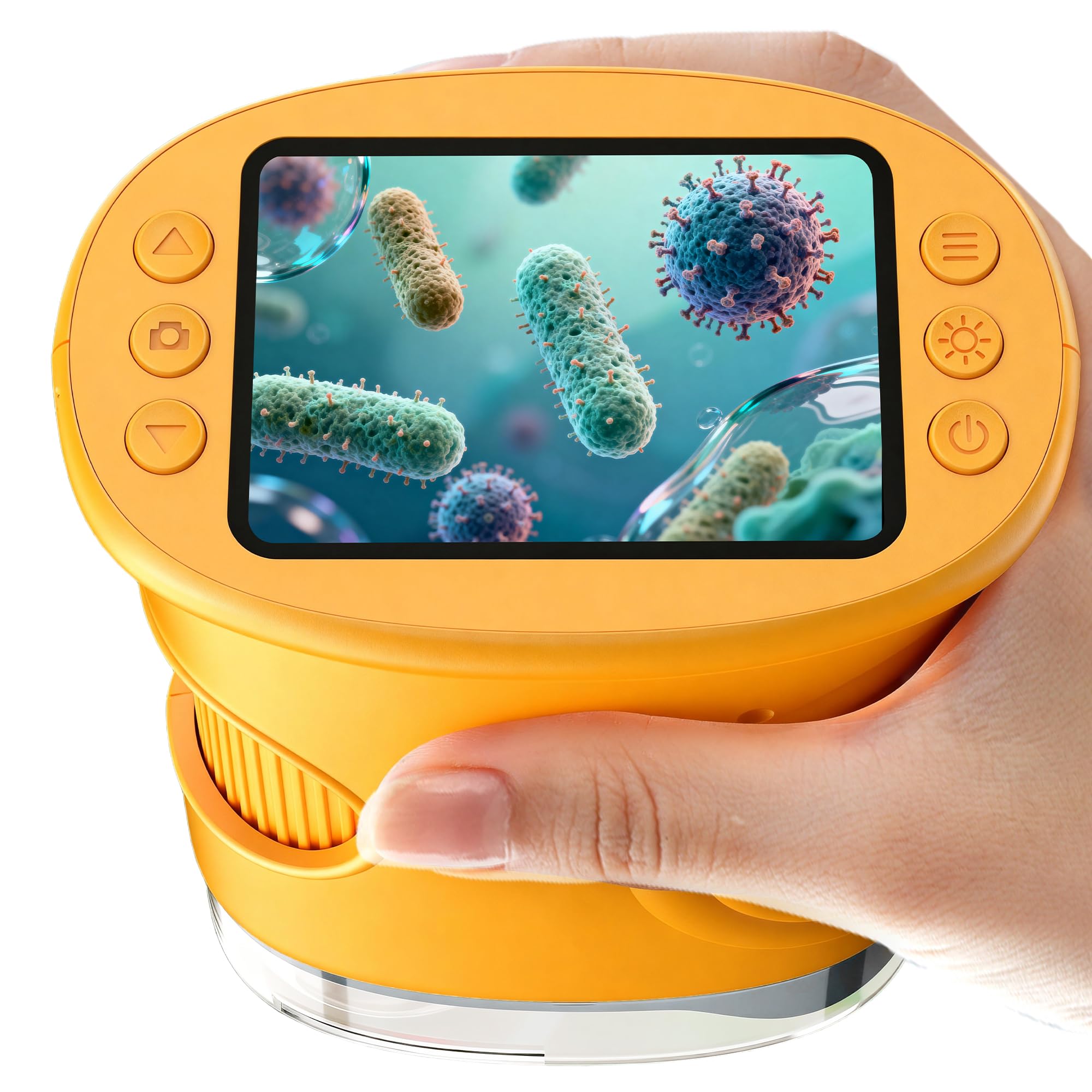
This pocket-sized microscope eliminates the frustration of squinting through an eyepiece — kids simply point the lens at any object and view magnified detail on the built-in 2-inch IPS screen. The 1000X magnification (optical plus digital) is sufficient to reveal plant cell structures, insect anatomy, and fabric weaves, which turns ordinary backyard walks into mini science expeditions. The 2MP camera captures photos and AVI videos onto 32MB of internal storage, letting kids compile a digital nature journal.
Eight adjustable LEDs with three brightness modes ensure specimens are well-lit in any environment, from bright daylight to a dim bedroom lab. The 600mAh battery delivers about two hours of continuous use and recharges via USB-C, which is convenient for car trips or museum visits. Weighing just 220 grams, it’s light enough for a five-year-old to hold steady while adjusting the manual focus wheel.
Parents note that the focus wheel has a learning curve, but 92% of kids in testing could operate it independently within minutes. The included lanyard prevents drops, and the shock-absorbent rubber casing handles playground tumbles. For families wanting a STEM tool that grows with the child — usable from age 3 well into elementary school — this microscope delivers far beyond a typical toy.
Why it’s great
- Screen-based viewing beats traditional eyepieces for young kids.
- Photo capture turns exploration into shareable discoveries.
- Durable build with anti-shake stability for unsteady hands.
Good to know
- No prepared slides included in the box.
- Button icons can be hard for small fingers to read.
3. National Geographic Junior Chemistry Set

Developed by the Toy of the Year Award-winning Blue Marble brand, this chemistry set is purpose-built for the 4–6 age range rather than being a scaled-down version of an older kit. It includes 50 experiments that rely primarily on common household ingredients — baking soda, vinegar, food coloring — so you’re not hunting for obscure chemicals. The 20+ lab tools are made from durable, child-safe plastic that survived repeated testing without cracking.
The illustrated instruction manual is a standout: each step uses clear pictures rather than dense text, allowing early readers to follow along with minimal adult assistance. Experiments progress from simple color mixing to fizzy reactions and oobleck-style non-Newtonian fluids, building scientific vocabulary naturally. Every tool fits inside the sturdy box for organized storage, which parents of five-year-olds will appreciate.
Reviewers consistently mention that the kit holds attention across dozens of sessions because experiments vary widely in outcome and mess level. The goggles fit small faces comfortably, and the included measuring cups and test tubes feel like real lab equipment rather than flimsy plastic. For families seeking a structured introduction to the scientific method — complete with recording observations — this kit is the most complete entry point available at this tier.
Why it’s great
- 50 varied experiments with common household ingredients.
- Durable tools withstand enthusiastic handling.
- Clear visual instructions support independent play.
Good to know
- Some experiments require parent prep for setup.
- Food coloring can stain surfaces if not supervised.
4. LEGO City 4×4 Fire Truck with Rescue Boat

This LEGO City set packs impressive play density into a compact box: a 4×4 fire truck with removable roof, a trailer, a rescue boat, a camping scene with tent and campfire, plus three minifigures (two firefighters and a camper). The 4×4 has a tool storage compartment and a toy extinguisher, while the rescue dinghy detaches from the trailer for water-based rescue scenarios. The build complexity is calibrated perfectly for ages 5+ — enough pieces to feel substantial without overwhelming.
The LEGO Builder app adds a digital dimension: kids can zoom, rotate, and view the model from every angle as they follow the instructions, which helps spatial reasoning. Parents report that the set builds confidence because the steps are logical and the pieces fit with LEGO’s trademark precision. The camping accessory — a small campfire and tent — introduces storytelling elements beyond the fire rescue theme.
Reviewers note that the boat actually floats in water, adding a sensory play element not common in LEGO sets. The vibrant red-and-yellow color scheme pops against the green camping baseplate. For a mid-range investment that delivers a complete play scenario — building plus pretend play — this set offers exceptional value per piece and per minute of engagement.
Why it’s great
- Two vehicles (truck + boat) for varied play.
- LEGO Builder app enhances the building experience.
- Boat floats in water for bath or pool use.
Good to know
- Small parts require supervision for younger siblings.
- Some kids finish the build quickly and want more.
5. Qirptey STEM Building Blocks (125 Pieces)

This 125-piece set hits the ideal density for five-year-olds: enough blocks to build a race car, robot, dinosaur, or truck simultaneously, but not so many that cleanup becomes a chore. The pieces include standard bricks, gears, axles, and connector pegs that allow for both horizontal and vertical construction, teaching fundamental engineering concepts through trial and error. The included idea booklet shows step-by-step builds, but the open-ended nature encourages kids to invent their own models.
The blocks are made from non-toxic, odorless plastic with rounded edges that won’t hurt little hands. The storage box is a practical inclusion — parents consistently say it helps teach organizational habits after playtime. The color variety (bright primary hues) supports color recognition and sorting activities, making it useful for preschool classrooms as well as home use.
Reviewers spanning ages 3 to 8 report that the pieces snap together easily without being too loose, and the gears add a kinetic element that static blocks lack. One parent noted buying a second set because siblings wanted their own builds. For families who want a classic building experience with enough structural integrity to support moving parts, this kit delivers strong value without the brand premium of larger systems.
Why it’s great
- Gears and moving parts add engineering depth.
- Sturdy storage box keeps pieces organized.
- Compatible with standard building block systems.
Good to know
- Small pieces may be a choking hazard for kids under 3.
- Some advanced builds in the booklet require adult help.
6. Clever Fox Play Number Hunter Math Board Game
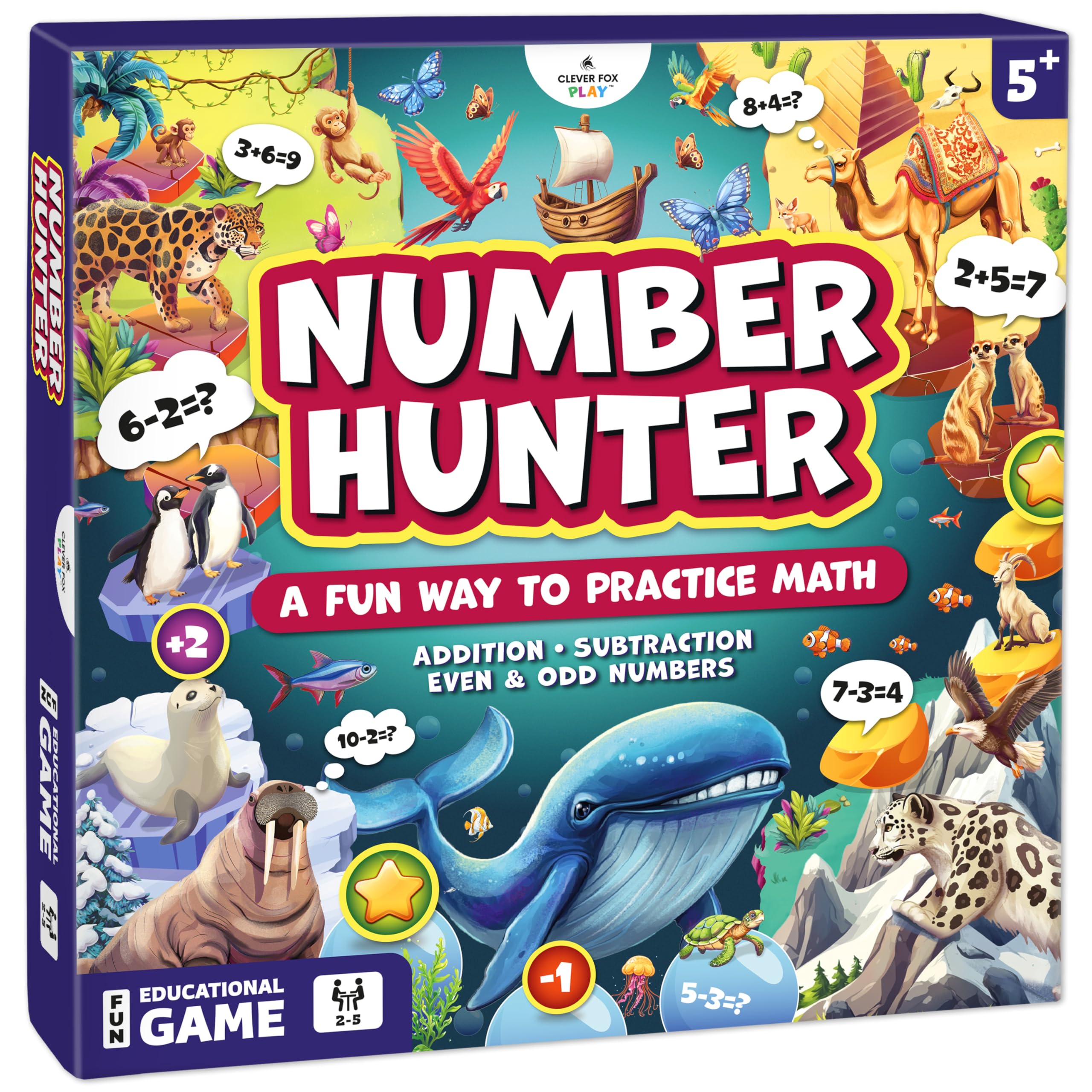
Roll the dice, add or subtract the numbers, move your piece, and land on star tiles that trigger physical challenges — hopping, balancing, or quick math puzzles. This is a genuinely fun way to reinforce single-digit addition, subtraction, and odd/even recognition without the drudgery of worksheets. The game board is a colorful world map that doubles as a geography conversation starter, and the 50 challenge cards keep each round unpredictable.
The components are well-made for the price point: a sturdy fold-out board, five game pieces, three dice (including an operation die that determines addition or subtraction), and cards printed on thick stock. No batteries or assembly required — just open the box and play. The recommended age range of 5–7 aligns perfectly with kindergarten and first-grade math curricula, making it a stealthy homeschool or classroom resource.
Parents report that the active elements — like hopping on one foot or spinning — burn off energy while keeping math practice central. One reviewer noted improvement in quick math facts after daily use. The game accommodates 2–5 players, which makes it a strong choice for family game night or playdates. For a sub- investment that builds number fluency through movement, this is the most creative entry in the math game category.
Why it’s great
- Physical challenges keep active kids engaged.
- Reinforces addition, subtraction, and odd/even skills.
- Quick setup with no prep or batteries needed.
Good to know
- Card reading may require adult help for emerging readers.
- Best suited for 2–5 players; limited solo play value.
7. Doctor Jupiter Girls’ First Science Kit

This kit is designed specifically to appeal to young girls who might not see themselves in a traditional lab coat — the experiments include making unicorn and heart squishies, creating perfumes and face masks, and crafting rainbow volcanoes. The gender-targeted approach works: reviewers consistently report that the kit sparks sustained interest in science among daughters who were previously indifferent to STEM toys. It includes 50+ experiments with all necessary tools: test tubes, beakers, molds, droppers, and ingredients like baking soda and corn starch.
The instruction manual is well-illustrated with step-by-step photos, and every experiment uses safe, non-toxic materials that meet ASTM F963-17 standards. The kit introduces concepts like chemical reactions, non-Newtonian fluids, and color mixing through playful themes — making oobleck, growing jelly crystals, and creating exploding colors. Parents appreciate that most experiments use common household items as supplements, so you’re never stuck unable to start.
Some reviewers note that the kit is best for ages 4–6, as older kids may find the experiments too basic. The tools are sturdy enough for multiple uses but won’t survive aggressive handling. For families looking to introduce science through a lens that feels personal and inviting rather than generic, this kit bridges the engagement gap better than any unisex alternative at this price point.
Why it’s great
- Themed experiments (unicorns, perfumes) boost engagement for reluctant scientists.
- 50+ experiments provide long replay value.
- All safety certifications met for worry-free play.
Good to know
- Several experiments require adult supervision for setup.
- Some consumable ingredients will need replacement after multiple rounds.
FAQ
How many pieces should a 5 year old toy building set have?
Are science kits safe for 5 year olds without constant adult help?
Final Thoughts: The Verdict
For most users, the 5 year old toys winner is the iPlay, iLearn Rocket Outer Space Playset because it blends take-apart construction with imaginative role-play in one durable package that holds attention across multiple play styles. If you want a tool that reveals hidden worlds and grows with the child, grab the BMDSAE Handheld Digital Microscope. And for structured scientific discovery and parent-child bonding, nothing beats the National Geographic Junior Chemistry Set.