
Our readers keep the lights on and my morning glass full of iced black tea. As an Amazon Associate, I earn from qualifying purchases.
Specs are compiled from manufacturer listings and verified buyer reviews and can change over time — please confirm the key details on the product page before buying.
The mountain doesn’t care about your brand loyalty—it cares whether your feet stay warm and dry at 10,000 feet. You need a boot that grips steep shale, moves quietly through timber, and holds warmth when temperatures drop. This guide delivers a tight, honest shortlist of insulated, waterproof boots that earn their place in your pack.
I’m Min — the founder and writer behind Gadgets Feed. This guide is built by comparing the manufacturers’ published specifications and the patterns across verified customer reviews, so you get each pick’s real strengths and trade-offs instead of marketing spin.
From 400-gram hikers to 1,200-gram winter beasts, here is the straightforward breakdown of the boots for elk hunting that handle the backcountry without weighing you down.
Our Picks at a Glance


How To Choose The Best Boots For Elk Hunting
Elk hunting punishes boots. You are not walking a flat field—you are side-hilling across blowdowns, crossing icy creeks, and sitting motionless for hours in below-freezing temps. Your choices on insulation, weight, and ankle support decide whether you reach the elk or turn back early.
Insulation Weight: the just-right Problem
Insulation is measured in grams of Thinsulate (or PrimaLoft) packed into the boot. A 400-gram boot is a versatile three-season choice—warm enough for early season and moderate cold, but not so puffy that your feet sweat on a long climb. A 1,200-gram boot is a dedicated winter weapon, ideal for sitting in a stand at 10°F but stifling on a 50°F October afternoon. Consider your typical hunting window and activity level before you commit to the warmest option.
Waterproofing: The Non-Negotiable
Wet feet are dangerous, not just uncomfortable. Crossing a creek or hiking through wet snow with a leaky boot can end your hunt—or worse, lead to frostbite. Look for a literal waterproof membrane (like Gore-Tex) or a full rubber/neoprene construction. The trade-off is breathability: a fully rubber boot keeps water out but traps sweat, while a leather-and-membrane boot breathes better but demands more care to stay sealed.
Weight and Ankle Support
Weight matters most on a 4,000-foot elevation gain. Some insulated rubber boots feel like concrete blocks; others, built with EVA midsoles, glide like sneakers. Meanwhile, a tall, stiff leather upper gives your ankle the support it needs on rocky descents. The best boot balances sturdiness and lightness—protective yet forgettable on your feet.
Quick Comparison
| Model | Best For | Insulation | Height | Weight | Amazon |
|---|---|---|---|---|---|
| LaCrosse Alphaburly Pro 18″★ Best Overall | Swamp & Bog Tactics | 400G | 18″ | — | Amazon |
| KEEN Revel 4 PolarTop Performer | Harsh Winter Hikes | — | Mid | — | Amazon |
| ROCKY Blizzard StalkerArctic Pick | Extreme Cold | 1200G | 8″ | 5.4 lbs | Amazon |
| HOT SHOT Huntsman | Duck & Waterfowl | 800G | — | — | Amazon |
| Trudave Hunting Boots | Steel Shank Support | 800G | — | — | Amazon |
| Muddy DV8 Insulated | Lightweight Comfort | 1000G | 17″ | — | Amazon |
| ROCKY Ridgetop | All-Day Mobility | 600G | 8″ | — | Amazon |
| Dryshod Nosho Ultra | Subzero Ice Fishing | — | Knee-High | 4 lbs | Amazon |
| LaCrosse Cold Snap | Deep Winter Sitting | 2000G | 9″ | — | Amazon |
| Danner Pronghorn | Long-Distance Elk Hunts | 400G | 8″ | 58 oz | Amazon |
| Kenetrek Mountain Extreme | Rugged Backcountry | 400G | 10″ | 4.2 lbs | Amazon |
In-Depth Reviews
1. LaCrosse Alphaburly Pro 18″ Insulated Hunting Boots
Our pick — over 4.5★ from 250+ verified ratings; the strongest balance of quality and price.
The swamp-crosser that keeps you bone-dry without weighing your stride down.
The defining spec here is the 18-inch knee-high shaft—it is the difference between stepping over a bog and wading straight through it. Built from natural rubber over neoprene, these are the boots buyers reach for when the “hunting” involves creek trout fishing or marshland set-ups. The 400G Thinsulate keeps things warm for a typical 20-40°F hunt without the bulk of a winter boot.
You get a boot that stays put in mud, thanks to the Active Fit design (a snugger, more secure fit around the calf and foot). Buyers report they are genuinely durable—the review pages sum it up: “Durable, no cracks/leaks after swamp use.” An EVA footbed cushions every step, which matters when you are walking muck all morning. The trade-off is real: getting them off takes technique. There is a kick ridge on the back heel, and owners find that folding the shaft down makes removal dramatically easier. A few also note the fit runs large—if you are between sizes, you will likely want to size down.
Go with these if your elk hunt involves crossing water or if you want a boot that doubles as your go-to for wet-weather chores. Think twice if your hunt is mostly a 5+ mile slog up a dry mountain ridge—these are not built as long-distance hiking boots, and one buyer found a 5-mile trip left his feet sore.
Built For The Bog
- 18″ shaft lets you wade deep creeks without water getting in
- Natural rubber construction that stays crack-free through swamp use
- 400G Thinsulate hits the balance for cold, wet hunts
The Sticky Points
- Hard to pull off without folding the shaft down
- Runs large—size down if you are between sizes
- Boots this tall are awkward for long-distance hiking
Reach for these if: your hunt involves wet ground, creek crossings, or you want one tough pair for all wet-weather outdoor work.
Look elsewhere if: your hunt is a 10-mile mountain traverse—these are waders, not hikers.
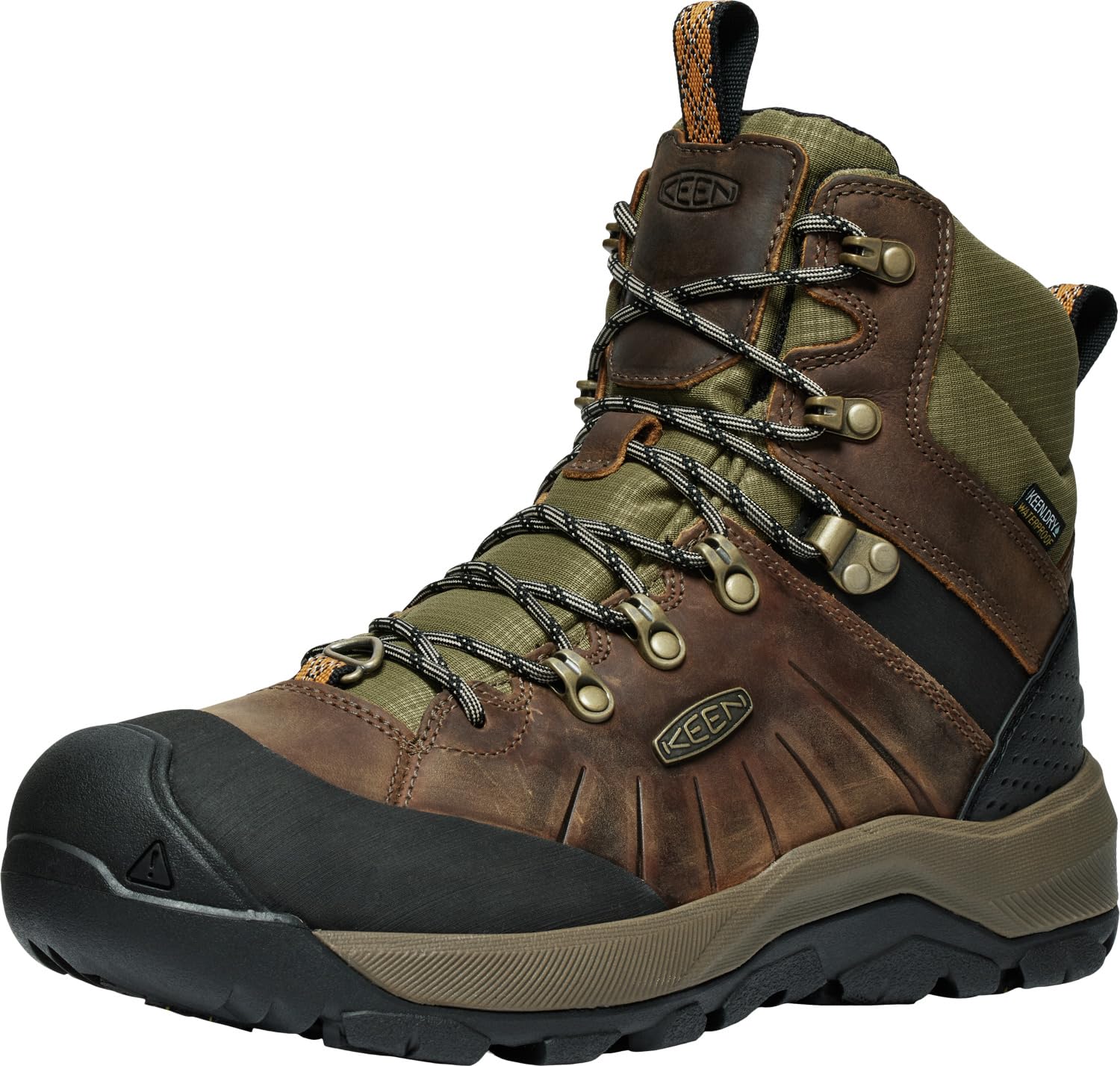
2. KEEN Revel 4 Mid Height Polar Insulated Waterproof
The winter hiker that treats your toes like royalty—even at -5°F.
KEEN’s signature wide toe box is the headline feature here. It gives your toes room to wiggle and accommodates thick winter socks, which is exactly what you need when you are trudging through lake-effect snow. A thermal heat shield inside captures warmth, and the speed lace system makes cinching them up fast work, even with gloves on.
The review pages hold a serious brag: “Climbed CO fourteener in March, heavy snow/ice, -5°F winds; feet dry and warm.” That is a 14,000-foot peak in brutal conditions. The traction on muddy hillsides earns consistent praise, and buyers with EEE wide feet finally find a winter boot that fits. The recurring gripe is the shoelace anchors—a few owners mention those plastic pieces breaking, so treat the laces gently. Insulation here is lighter than the heavy hitters, so this shines as a cold-weather hiker rather than a sit-in-a-stand-all-day winter boot.
This is the boot for the hunter who covers miles in the snow and hates a cramped toe box. It walks a brilliant line between hiking agility and winter warmth, but if your entire season is subzero sitting, you may want more insulation than this offers.
The verdict: the most comfortable cold-weather hiker here—roomy, warm, and grippy on snow, with the only real concern being the lace anchors.
3. ROCKY Blizzard Stalker Waterproof 1200G Insulated Boot
The -25°F snowmobile boot that refuses to let the cold in.
Your feet stay warm in extreme cold, because this boot packs 1,200 grams of Thinsulate Ultra insulation—a full 3.0x more than the 400G LaCrosse Alphaburly above. Owners put it to the ultimate test and report: “Used them Snowmobiling at -25f and my feet stayed warm.” If your hunt involves sitting on a frozen lake or riding a snowmobile to your spot, this is the level of warmth you need.
The construction backs up the cold-weather claims. A split suede upper with 900 denier high-abrasion textile keeps the elements out, while the multi-directional Blizzard outsole grips uneven, icy terrain. At 5.4 pounds per pair (size 10), this is a heavy boot—buyers call it “clunky” but accept it as the price of 1200-gram warmth. The fit runs big; several owners recommend sizing down, especially if you plan thinner socks. A removable mesh PU footbed with a TPU heel stabilizer keeps your heel locked in place on uneven ground.
Choose this when your priority is pure, unapologetic warmth for deep cold. The biggest knock is durability—one buyer’s pair fell apart after about 10 uses, though another reports a previous pair lasting 15 years of cold-weather use. It is a gamble on longevity, but the warmth is never in question.
The takeaway: class-leading warmth for subzero hunts, but you pay for it in weight and a slightly clunky feel. Best for the hunter who sits cold rather than hikes warm.
4. HOT SHOT Duck Commander x Huntsman Men’s Hunting Boot

The feather-light rubber boot that moves like a slipper but holds 800 grams of warmth.
The headline here is the 6mm Neoprene construction coated in rubber, giving you a 100% waterproof shell that stays flexible in the cold. The 800g Thinsulate inside packs serious warmth for the weight, and customers note wearing them for six straight hours in sub-freezing temps during duck hunts without cold feet. The built-in heel kicks mean you can step out of them hands-free after a long day—a small feature that earns big appreciation.
Fit is the most-praised aspect, with owners finding the sizing accurate and the boots comfortable with little to no break-in. These are a smart value pick if you want a dedicated waterfowl or wet-terrain boot that does not cost premium money. The honest caveat: quality is a gamble. While some owners have “made it through the first hunting season with flying colors,” others report the sole detaching from the boot after light use. It is the most-discussed concern and the reason this sits as a value pick rather than a workhorse recommendation.
Grab these for early-season elk or waterfowl setups where you want lightweight, warm, and utterly waterproof coverage. Skip them if you need a boot that will survive years of brutal abuse—the durability reviews are too split to promise that.
The bottom line: a fantastic fitting, ultralight, warm rubber boot for the money—just know durability is a roll of the dice.
5. Trudave Hunting Boots for Men – 6mm Neoprene Insulated

The steel-shanked camo boot that keeps you steady on slick, snowy ridges.
The defining spec here is the steel shank running through the sole. That rigid plate gives you support on uneven ground and stops the boot from folding when you step on a rock edge—a real stability win for mountain hunting. Combined with the 6mm neoprene upper and 800-gram insulation, you get a boot that shrugs off 20°F rain and snow while keeping your feet dry. Reviewers point out perfect warmth on 20°F days with zero leaks.
The durability story here is clean: buyers describe them as well-made, with a quality feel that punches above expectations. They run large and wide, so sizing down is the common advice—unless you have wide feet, in which case the roomy fit is a blessing. They are on the heavier side and need a short break-in period before they soften up, but the payoff is a high-traction, waterproof workhorse.
If you want the support of a hiking boot with the waterproofing of a rubber boot, this is a strong middle-ground pick. The cons are mild: they are heavy and the break-in is real, but the grip and steel-shank stability make them a dependable choice for rough-weather elk hunts.
The read: a sturdy, well-built boot where steel-shank stability is the star—just plan for a break-in week and size down.
6. Muddy Men’s Dv8 Insulated Boot
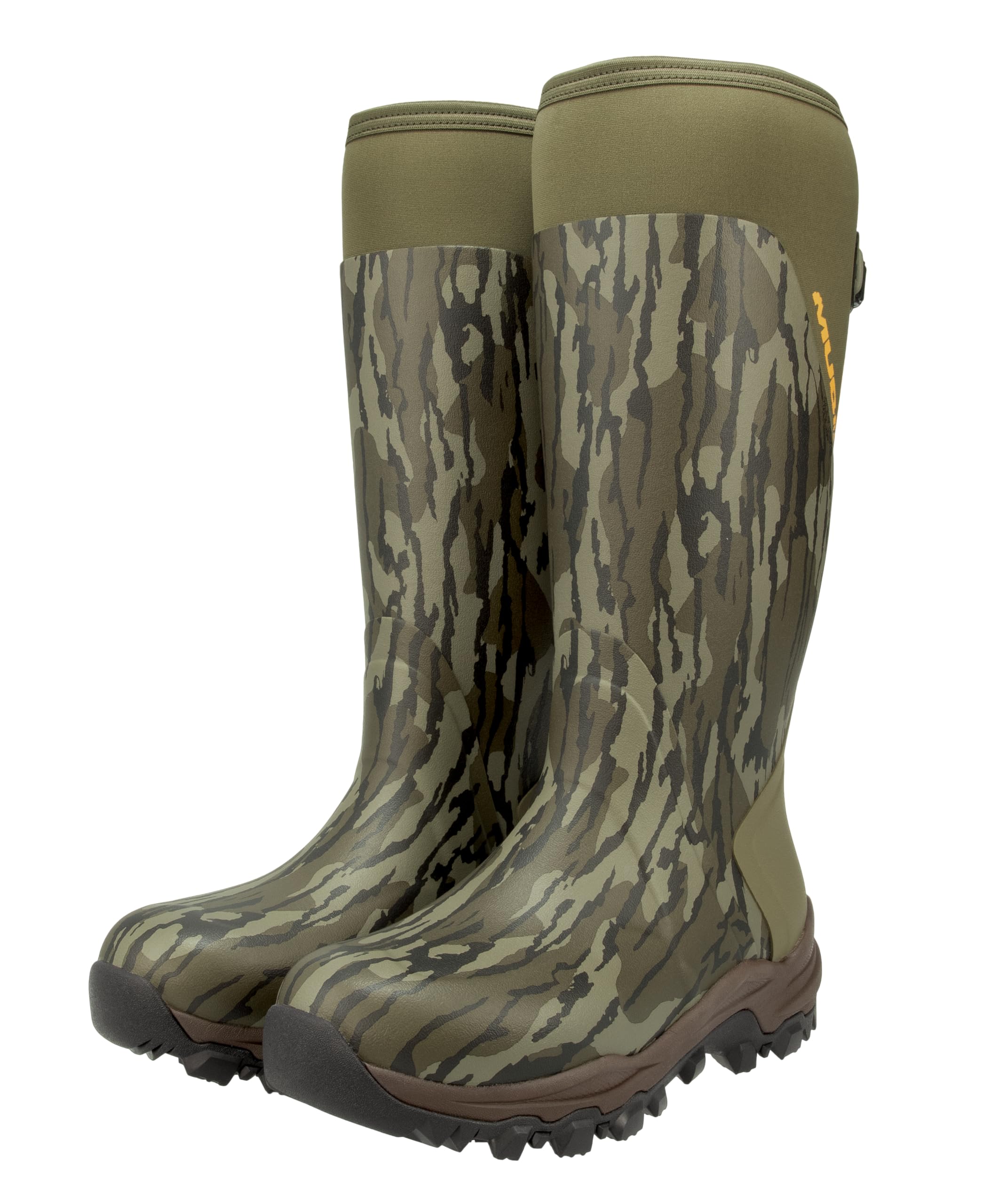
The warmest-feeling sneaker you will ever lace up for a 17-inch rubber boot.
The Muddy DV8’s a neat extra is its weight—or rather, its lack of it. Owners call them “ridiculously light for their size,” and the lightweight, dual-density EVA midsole delivers a sneaker-like feel that rubber boots rarely achieve. That comfort is backed by a 17-inch shaft, 5mm neoprene build, and a serious 1000g of 3M Thinsulate in the toe box. Rated for comfort from -50 to 50 degrees, these are built to handle the extremes.
The roll-down calf pipe is a thoughtful touch—you can tuck your pants in or vent heat when the temps climb. A 4-inch TPU shank adds stiffness to the footbed, and the 4×4 grip outsole earns praise for traction in all weather. The catch is sizing: these run small. Owners consistently recommend going up a full size (or even a half to full size bigger than your normal boot), especially if you plan heavy socks. The ankle runs snug, which is a comfort and warmth advantage once you get the sizing right.
This is the boot for the hunter who hates the clunky, heavy feel of most insulated rubber boots but still needs serious warmth. It is a near-perfect hybrid of comfort and cold-weather capability, assuming you nail the size.
Why It Wins Fans
- Remarkably light for a 17″ insulated boot
- 1000g insulation keeps feet warm even in extreme cold
- Roll-down calf pipe adds versatility
What To Watch
- Runs small—go up a full size
- Snug ankle fit may not suit everyone
- Not the best for mild-temperature hunts
Perfect if: you want the warmth of a tall rubber boot without the heavy, boot-like stomp.
Think twice if: you are between sizes or have broad calves—the snug fit is the main complaint.
7. ROCKY Ridgetop 600G Insulated Waterproof Outdoor Boot

The lightweight hiker that defies the “sturdy means heavy” myth on the trail.
You cover ground faster because the LightTrac rubber outsole delivers exceptional traction and support without weighing you down. Owners consistently describe these as comfortable right from the start, with zero break-in required, and a sole that feels “sneaker-like.” The 600g of 3M Thinsulate Ultra insulation offers solid warmth for typical 20°F to -10°F hunts, with buyers noting they are warm and light for snow blowing or general cold-weather tramping.
You get a tough, durable shell from the nubuck leather and 900 denier nylon upper, backed by Rocky’s guaranteed waterproof construction. A dual-density EVA midsole provides the cushion that makes them comfortable all day. The honest trade-offs: the fit runs large for some (size down if you prefer a snug fit and thin socks), and the 600g insulation is not enough for extreme subzero sitting—shoppers say that below -10°F you will want the 1200-gram version. A few owners also find the leather quality feels cheaper than earlier versions.
Pick these if you want a do-it-all hunting hiker that is light, warm, and instantly comfortable. They are the just-right choice for the mobile hunter—more warmth than a summer hiker, far less bulk than a winter beast.
The word: a light, comfortable, waterproof hiker that handles everything down to about -10°F—the smart choice for the hunter who walks miles before the shot.
8. Dryshod Nosho Ultra Hunt Extreme Conditions Hunting Boots

The knee-high ice-fishing fortress that keeps you warm on subzero days.
You stay warm and dry for 8 plus hours on subzero ice, as buyers report using these with only a light cotton sock. That warmth comes from the 5mm Densoprene foam insulated bootie—a neoprene layer that keeps the cold out and the warmth in. The Hydrokote water-repellent treatment means water rolls off and dries in seconds, and the genuine hand-laid natural rubber construction (no PVC or PU) gives superior stability with rigid shanks.
The design is smart for cold-weather hunters: a roll-down calf pipe lets you vent heat or tuck in pants, and a generous heel kick makes them easy to pull off. The 4-way stretch breathable airmesh lining keeps feet dry from sweat, while the loose fit helps with circulation and staying warm. The catch is width—this boot is narrow, and multiple owners with wide feet found them unwearable. Others note the heavy stitching in the heel can cause blisters until broken in. This is a niche pick for the ice-fishing or extreme-cold hunter, not an all-around elk boot.
If your hunt involves sitting on a frozen lake or glassing in brutal subzero temps, this is a serious contender. But for the walking hunter, the narrow fit and heavy build make it a hard sell.
The caution: extraordinary warmth for extreme cold, but the narrow fit is a dealbreaker for wide-footed hunters.
9. LaCrosse Men’s Cold Snap 9″ Hunting Boots with 2000G Thinsulate
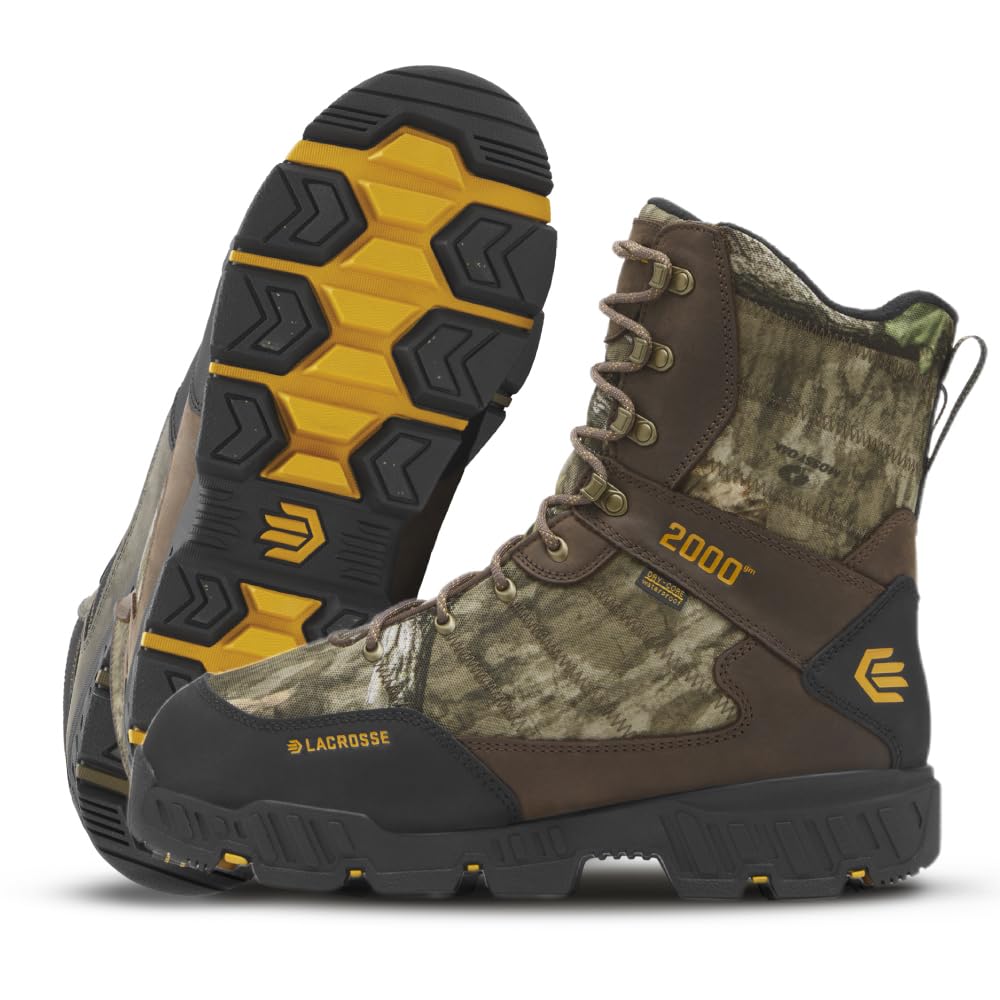
The “moon boot” warmth that finally delivers hiking-boot comfort.
This is the warmest boot in the lineup—a serious 2000G of Thinsulate Ultra insulation packed into a 9-inch leather-and-nylon upper. That is the kind of warmth that lets you sit motionless all day in the teens or 20s°F and never feel the cold creep in. Owners confirm: “feet stayed warm sitting all day in teens/20s°F hunting.” For a hunter who sits on a snowy ridge for hours, this is the difference between a productive hunt and an early retreat to the truck.
The magic is that this warmth does not come with the usual bulk. The Dry-Core lining keeps moisture managed, and the Permafrost outsole provides grip in icy, snowy conditions. Buyers call them “comfortable” and “well-fitting,” with a true-to-size fit and plenty of room for thick socks. They are noticeably heavier than a 400G boot—”slightly clunky” and “heavy” are the fair words—but for the hunter whose priority is staying warm, that weight is a fair trade. The only real complaint is stiffness when new, which fades as they break in.
Choose the Cold Snap if you are a late-season or high-elevation hunter who sits more than you hike. For a 50°F early-season archery hunt, this is overkill and will make your feet sweat.
The Warmth Factor
- 2000G Thinsulate is the most insulation on this list
- Comfortable and true to size with room for thick socks
- Permafrost outsole grips well in snow
The Weight Cost
- Heavy—you feel the 2000G on the climb
- Stiff when new, needs break-in
- Too warm for mild early-season hunts
Get these if: your hunt is a sit-and-wait game in deep cold. The warmth is class-leading.
Skip them if: you hike miles in varied temps—the weight and heat will wear you out.
10. Danner Men’s Pronghorn 8″ 400G Gore-Tex Hunting Boot

The legendary hiker that feels like a running shoe on the steepest elk country.
The Danner Pronghorn is the gold standard for the mobile elk hunter. The defining spec is the Gore-Tex liner—it is the benchmark for waterproof breathability, keeping water out while letting sweat escape. That is critical when you are hiking hard up a ridge and cannot afford clammy, sweaty feet. Weighing in at 58 oz per pair, these are light enough to forget you are wearing them, yet built to handle rough terrain for years.
The praise here is overwhelming: “light, supportive; 400g insulation keeps feet warm/dry in snow/spring.” A 400G PrimaLoft insulation level is a strong balance for a three-season boot—warm enough for cold mornings, breathable enough for a midday climb. The Vibram SPE rubberized EVA outsole provides secure traction across marshes, woods, snow, and mud. The full-grain leather upper is durable and, with a recommended size up for thick socks, roomy enough for comfort. The only mild critiques: they run a half size small, and they are priced at a premium that some find steep. But for a boot that one owner reports wearing since 2018 with “no complaints,” the longevity justifies the cost.
This is the boot for the backcountry elk hunter who hikes miles every day and wants a boot that disappears on the foot. It leans towards a lighter insulation, so for deep-winter sitting hunts, you will want a heavier option.
The final call: the best all-around hiking hunting boot in this lineup—light, breathable, and durable, with the Gore-Tex guarantee.
11. Kenetrek Men’s Mountain Extreme 400 Insulated Hiking Boots
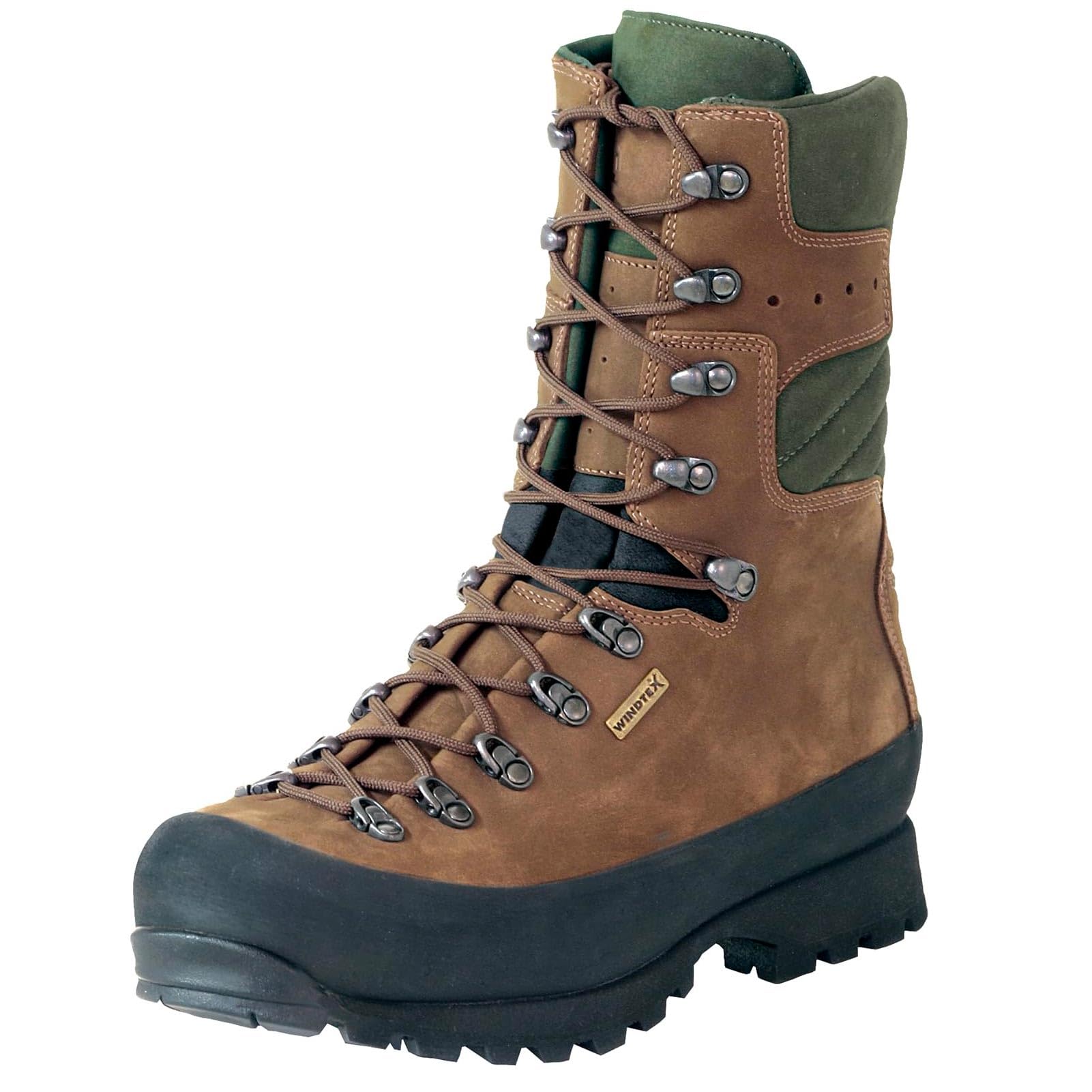
The 10-inch leather fortress that turns jagged talus into a walk in the park.
You get class-leading ankle support on steep, uneven ground from the 10-inch full leather upper—owners call it “the best support ever” and note they can hike several miles without discomfort. A 400-gram Thinsulate insulation keeps it warm, while the K-Talon outsole gives you a high-traction grip on rock and dirt. This is a boot built to handle the worst the mountains can throw at it, with reinforced double and triple stitching in high-wear areas and a 7mm nylon midsole for stability.
The comfort is a recurring theme: “feels like a glove, true to size,” and many note it feels broken-in straight from the start. The roomy toe box is a favorite for hunters who hate cramped footwear. The honest trade-offs are the stiffness of the sole and the price. The stiff construction offers superior support on rock but can feel treacherous on wet, algae-covered logs or slippery grass—several owners warn about falling on damp surfaces. And the premium price tag leads some to question the value, though most agree the quality justifies it.
Invest in these if you are a serious backcountry hunter who needs maximum ankle support and durability. Skip them if you hunt mostly flat, damp ground where the stiff sole is a liability rather than an asset.
The Strength
- 10″ leather upper provides elite ankle support
- Roomy toe box and quick break-in for high comfort
- Built to last with reinforced stitching
The Weakness
- Sole is stiff—hazardous on wet, slick surfaces
- Top-tier price that may not fit every budget
- Heavy build for the hiking purist
Best for the mountain hunter: who values ankle support and durability above all else.
Not for the flatlander: who crosses slick creek beds—the stiff sole demands your attention.
Understanding the Specs
Insulation (Grams of Thinsulate)
The number you will see everywhere—400G, 800G, 1200G—refers to the weight of the synthetic insulation layer. It is a measure of how much warmth the boot traps. 400G is your versatile, three-season friend; 800G leans into colder weather; 1200G and 2000G are for sitting still in deep cold. The trade-off is always weight and breathability: more grams mean warmer feet but a heavier, hotter boot on the climb.
Waterproofing Membranes (Gore-Tex vs. Rubber)
A waterproof membrane like Gore-Tex is a thin, breathable layer that stops water from getting in while letting sweat vapor escape. It is ideal for hiking boots because it keeps your feet dry from both rain and sweat. Full rubber or neoprene boots are completely impermeable—nothing gets in, but your feet can get clammy. Choose the membrane for hiking, the rubber for standing in water.
FAQ
What is the best insulation weight for elk hunting?
Will a rubber boot like the LaCrosse Alphaburly work for hiking?
How should elk hunting boots fit?
Are Gore-Tex boots worth the extra money?
How long do elk hunting boots last?
Is 1200G insulation too warm for early season elk?
What is the advantage of a taller boot shaft?
Can I use my elk hunting boots for ice fishing?
Do I need a steel shank in my hunting boot?
How do I keep my feet warm while sitting in a stand?
Final Thoughts: The Verdict
For most hunters, the boots for elk hunting winner is the LaCrosse Alphaburly Pro because it delivers the best mix of waterproofing, warmth, and durability for the wet, rugged terrain most elk hunters actually face. If you want the ultimate breathable hiking boot for covering serious miles, grab the Danner Pronghorn. And for deep winter sits where warmth is everything, the LaCrosse Cold Snap is the one to reach for.
How We Picked
We do not accept paid placement. Every pick is matched to a real buyer and a real use-case; we do not hands-on test units.
Sources & Methodology
Specifications: manufacturer listings and product documentation. Review insights: verified customer reviews, as of August 2026. Pricing: not shown on this page (it changes often); check the current price via the retailer link.
As an Amazon Associate, Gadgets Feed earns from qualifying purchases. This does not affect which products we feature.