
Our readers keep the lights on and my morning glass full of iced black tea. As an Amazon Associate, I earn from qualifying purchases.
Specs are compiled from manufacturer listings and verified buyer reviews and can change over time — please confirm the key details on the product page before buying.
The fastest way to rescue a yellowing blueberry bush or a struggling azalea is to fix the soil’s acidity, which decides whether roots can absorb nutrients. Blueberries, rhododendrons, and gardenias are acid-lovers that starve in neutral or alkaline ground no matter how much you feed them. This guide breaks down the bagged mixes that get the pH right so your plants push out new growth and flowers.
I’m Min — the founder and writer behind Gadgets Feed. This guide is built by comparing the manufacturers’ published specifications and the patterns across verified customer reviews, so you get each pick’s real strengths and trade-offs instead of marketing spin.
Whether you are repotting one houseplant or refreshing a whole bed, the right acidic potting soil makes healthy roots and vivid blooms far easier to achieve.
Our Picks at a Glance

How To Choose The Best Acidic Potting Soil
Acidic potting soil is a pre-mixed growing medium designed for plants that need a lower soil pH than standard garden dirt provides. Instead of guessing and adding sulfur yourself, you start with a blend that is already in the right range — usually around 4.5 to 5.5 — so the roots can take up nutrients immediately.
Match the bag volume to your pots
The biggest practical mistake is buying a bag that is either far too small for the container or needlessly heavy for one houseplant. A single 4-quart bag comfortably handles one or two starter blueberry plants in pots, while a 20-quart bag goes much further if you are refreshing several containers or a garden bed.
Quick Comparison
| Model | Best For | Volume | Key Acidifying Ingredient | Feeding Style | Amazon |
|---|---|---|---|---|---|
| Coast of Maine (2-Pack)★ Best Overall | Best Overall & Larger Plantings | 40 qt (2-pack) | Organic Compost Blend | Natural Compost | Amazon |
| Soil Sunrise | Top Performer for Pots | 12 qt | Peat Moss & Pine | All-Natural Blend | Amazon |
| Perfect Plants Blueberry Soil | Best Value with Slow-Release Feed | 4 qt | Peat Moss | 18-6-8 for 12 Months | Amazon |
| Doter Organic | Budget Champion for Starters | 10 qt | Peat Moss & Pine Bark | Mycorrhizae-Enhanced | Amazon |
In‑Depth Reviews
1. Coast of Maine Organic Acid-Loving Planting Soil (2-Pack)
Our pick — over 4.5★ from 300+ verified ratings; the strongest balance of quality and price.
The big-value blend that revives acid-loving beds without breaking your back.
The 2-pack gives you two 20-quart bags — at 40 quarts total versus the Perfect Plants 4 quarts — so you can refresh several containers or a whole garden bed in one go. The soil is an organic compost blend with a low-pH formula that’s naturally lightweight, which makes hauling it from the car to the garden noticeably easier than a standard heavy bag.
Buyers report plants thriving within two weeks, with better blooms and strong root growth. What wins people over is the overall quality, with buyers praising the dark, rich, moist texture that holds water without turning soggy. One owner summed it up: “Earth seems very high quality, potted 2 plants & didn’t even use an entire bag yet.”
It is OMRI listed for organic use, so you can use it with confidence if you garden organically. The blend suits a long list of acid-lovers — rhododendrons, azaleas, hollies, blueberries, strawberries, ferns, camellias, and dogwoods — indoors or out.
Why It Wins
- Huge 2-pack volume handles beds and many pots
- OMRI-listed organic compost base
- Lightweight texture that retains moisture well
Keep In Mind
- pH feedback is mixed — test with a meter for fussy plants
- Large bags are overkill for a single small houseplant
Reach for this if: you’re planting multiple acid-lovers or refreshing a bed and want generous, organic volume.
Think twice if: you only have one small pot — the 2-pack will leave you with far more soil than you need.
2. Soil Sunrise Acid Loving Plant Potting Soil Mix (12 Quarts)
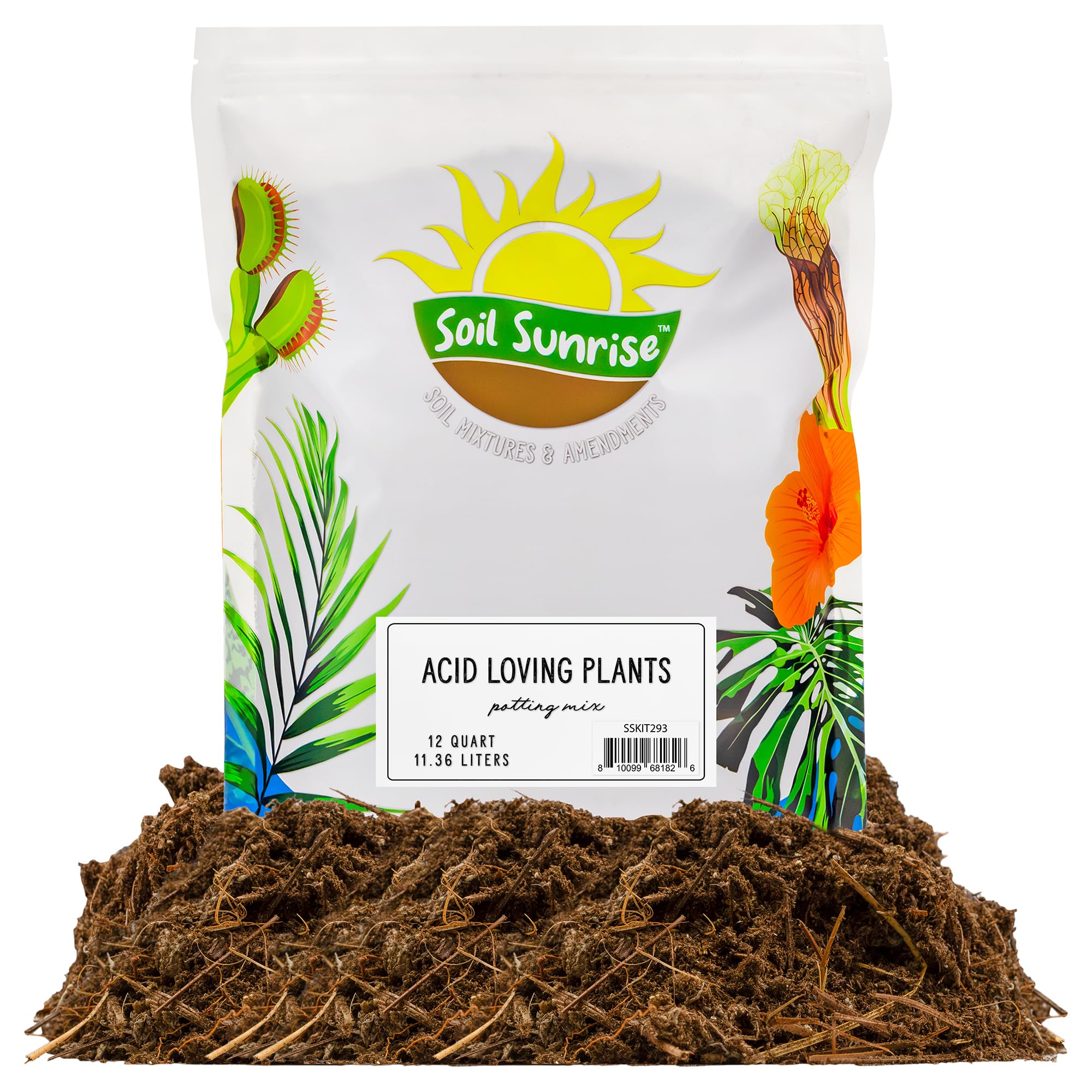
A carefully balanced container blend that grows a gardenia, fuchsia, or olive bush with vigor.
Soil Sunrise skips the one-size-fits-all approach and mixes a precise recipe just for pots: peat moss, pine needle mulch, pine bark mulch, sphagnum moss, and vermiculite. The pine and peat do the acidifying work naturally, while perlite and sphagnum keep the structure airy so roots can breathe and water drains properly. That aeration is the difference between a plant that merely survives and one that pushes out constant new growth.
Reviewers report an olive cutting grew from 6 inches to a 5-foot bush in 3 years, and a fuchsia flowered heavily after repotting. The recurring note is that this soil arrives dry and can repel water at first, so the fix is to pre-moisten it in a bucket and let it drain before planting.
It is an all-natural, eco-friendly mix artisan-crafted in Kentucky, and the 12-quart volume is a practical middle ground between a tiny starter bag and the big 20-quart packs.
Growth results: the most-discussed aspect is plant growth — gardenias, fuchsias, and coffee plants all show strong responses after repotting.
One caveat: the soil is hydrophobic when dry; pre-moisten it before planting to help it absorb water properly.
Choose this for: potted acid-lovers like gardenias, fuchsias, and azaleas where you want a tailored, airy container blend.
Look elsewhere if: you want a ready-to-use soil straight from the bag — this one needs a quick pre-soak first.
3. Perfect Plants Blueberry Soil (4 qt)
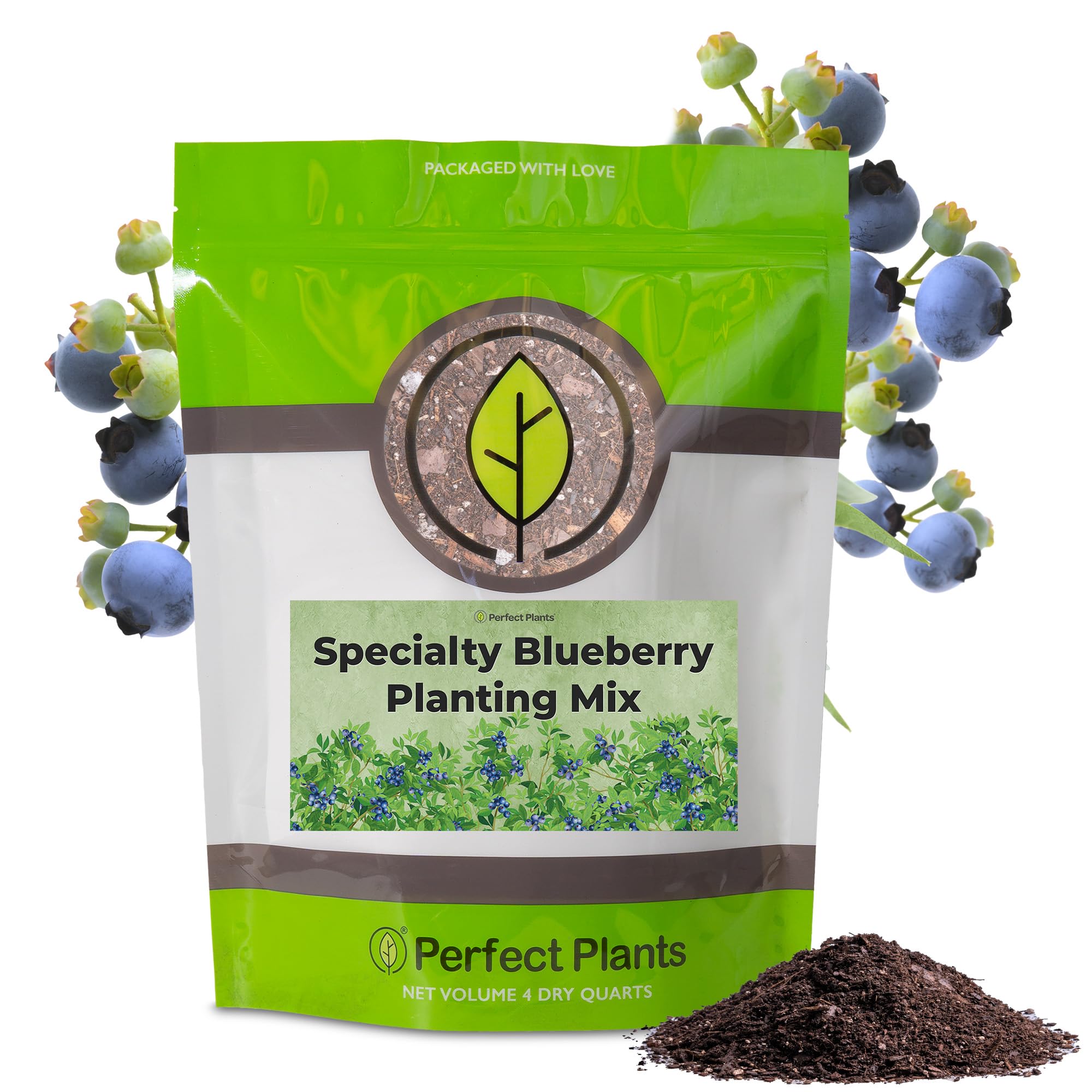
A smart little bag that turns yellowing potted blueberries green again.
If your blueberry bush is in a pot and looking sickly, this is the targeted rescue. The 4-quart bag is engineered specifically for berries, using peat moss to lower pH naturally without any added sulfur — which means there’s no harsh chemical swing, just a steady move toward the acidic range blueberries crave. It is hand-mixed in the USA on a family farm with over 40 years of horticulture experience.
The standout feature is the built-in 18-6-8 slow-release fertilizer that feeds for up to 12 months. That means one repot sets your plant up for a full year of nutrition without you remembering to fertilize monthly. Owners mention potted bushes looking healthier within days, perking up from yellowing leaves to green growth.
It comes in a heavy-duty, resealable bag that keeps the mix fresh between uses, and it works for both rabbiteye and northern highbush blueberry varieties.
What Stands Out
- 18-6-8 slow-release feed lasts up to 12 months
- Peat moss acidifies without added sulfur
- Resealable bag for storing leftovers
The Trade-Off
- 4-quart volume is small — enough for one or two starter pots
- Best for blueberries specifically, not a general acid-lover mix
Grab this if: you have potted blueberries (rabbiteye or highbush) that need a quick acidity and feeding boost.
skip it if: you’re planting a large bed or a mix of acid-lovers — you’ll want a bigger, broader bag.
4. Doter Organic Blueberry Soil Mix (10 qt)

A straightforward acidic starter mix for beginners getting blueberries going in pots.
This one is built for getting acid-loving plants off to a clean start, especially if your local soil runs alkaline. The formula targets a pH of roughly 4.5 to 5.5, which is exactly the range blueberries need to absorb nutrients effectively. It mixes peat moss and pine bark for acidity with perlite and sand for drainage, so excess water flows away and helps prevent root rot.
The extra touch here is mycorrhizae — beneficial fungi added to boost root absorption of water and nutrients, which makes young plants more resilient. Customers note a single small bag sufficed for two blueberry starter plants, both staying healthy weeks later while retaining moisture well. One owner’s words: “Small bag sufficed for two blueberry starter plants; weeks later both healthy, retaining moisture well.”
The honest catch is size — the recurring gripe is that the bag is small, so check your pot size before buying. For one or two starts it’s plenty; for a large container you may need a second bag.
Starter-friendly: the quality earns consistent praise, and the low pH is ideal for getting acid-loving plants established before transplanting to a permanent spot.
Size reality: the bag is small — measure your pot first, since several buyers found it tinier than expected.
Pick this up if: you’re a beginner repotting one or two blueberry starters indoors or in pots.
Pass if: you need to fill a large raised bed or several big containers at once — the volume won’t stretch that far.
Understanding the Specs
Volume in Quarts
The bag size sets how many pots you can fill, and it varies wildly across mixes — from a compact 4-quart starter bag up to 20-quart bags. A 4-quart bag suits one or two small pots, while a 20-quart bag handles several containers or a garden bed. Always measure your pots before you buy so you don’t end up with too little soil mid-planting.
Acidifying Ingredients
Look for what actually lowers the pH: peat moss is the most common natural acidifier, often joined by pine bark, pine needles, or compost. Some mixes add sulfur for a stronger pH drop, while others skip it for a gentler effect. The ingredients tell you whether the acidity comes fast or gradually.
FAQ
What pH range should acidic potting soil have?
How much acidic soil do I need for one blueberry plant?
Can I use blueberry soil for azaleas or gardenias?
Why are my blueberry leaves turning yellow?
Do I still need to add fertilizer if the soil has it?
What does sulfur-free acidifying mean?
Is acidic potting soil safe for houseplants?
How do I store leftover acidic potting soil?
Final Thoughts: The Verdict
For most buyers, the acidic potting soil winner is the Coast of Maine 2-Pack because its huge 20-quart volume and proven quality make it the best all-round choice for beds and multiple pots. If you want a tailored container blend with impressive growth results, grab the Soil Sunrise. And for a quick, targeted fix for a potted blueberry, the Perfect Plants mix with its built-in 12-month feed is the one to reach for.
How We Picked
We do not accept paid placement. Every pick is matched to a real buyer and a real use-case; we do not hands-on test units.
Sources & Methodology
Specifications: manufacturer listings and product documentation. Review insights: verified customer reviews, as of August 2026. Pricing: not shown on this page (it changes often); check the current price via the retailer link.
As an Amazon Associate, Gadgets Feed earns from qualifying purchases. This does not affect which products we feature.