
Our readers keep the lights on and my morning glass full of iced black tea. As an Amazon Associate, I earn from qualifying purchases.
Specs are compiled from manufacturer listings and verified buyer reviews and can change over time — please confirm the key details on the product page before buying.
Flat feet and basketball usually mix about as well as ice and a crossover — every landing drives shock straight through your arch, and by the fourth quarter your knees and shins are the ones calling the shots. The fix isn’t new shoes; it’s the right set of insoles that actually hold your arch up through hard cuts and rebounds. This guide cuts through the noise to rank the basketball insoles for flat feet that real players trust, whether you’re a weekend warrior or a 200-pound center playing two leagues deep.
I’m Min — the founder and writer behind Gadgets Feed. This guide is built by comparing the manufacturers’ published specifications and the patterns across verified customer reviews, so you get each pick’s real strengths and trade-offs instead of marketing spin.
After breaking down the arch support, shock absorption, and durability claims, here’s the shortlist of the best basketball insoles for flat feet to protect your feet on the court.
Our Picks at a Glance

How To Choose The Best Basketball Insoles For Flat Feet
When your arch has collapsed, every step and jump sends force up your chain — through your heel, into your knees, up to your hips. The best basketball insoles for flat feet counter that by doing three jobs at once: holding your arch up, cradling your heel so it doesn’t roll inward, and softening the landing so your joints don’t take the beating.
Arch height and rigidity
Flat feet need an arch that’s firm enough to support you, but not so tall it stabs you. Look for an insole with a pronounced, structured arch that fills the space where your arch used to be. Some insoles use a flexible arch that lets you move naturally; others use firmer materials like TPU (a stiff plastic-like base) to hold you up. Try a firm option if you feel your ankles rolling inward, a flexible one if you want a softer, more natural feel.
Heel cup depth and stability
A deep heel cup is non-negotiable for flat feet. It wraps the back of your heel, locking it in place and stopping overpronation — that inward roll that leads to shin splints and knee pain. The deeper the cup, the more stable your foot on lateral cuts and landings. Look for the words “deep U-shaped heel cup” or “deep decoupled heel cup” in the specs.
Shock absorption and density
Basketball is a sport of hard landings. The insole’s midsole foam absorbs that impact. Softer foams like memory foam and EVA (a light, bouncy foam) feel plush, but a firmer layer underneath helps you push off powerfully. Many performance insoles stack both — a soft top layer, a stiff support frame — so you get cushion without losing propulsion.
Quick Comparison
| Model | Best For | Arch Support | Heel Cup | Weight | Amazon |
|---|---|---|---|---|---|
| Move Game Day★ Best Overall | All-surface versatility | Patented | Deep | 4.48 oz | Amazon |
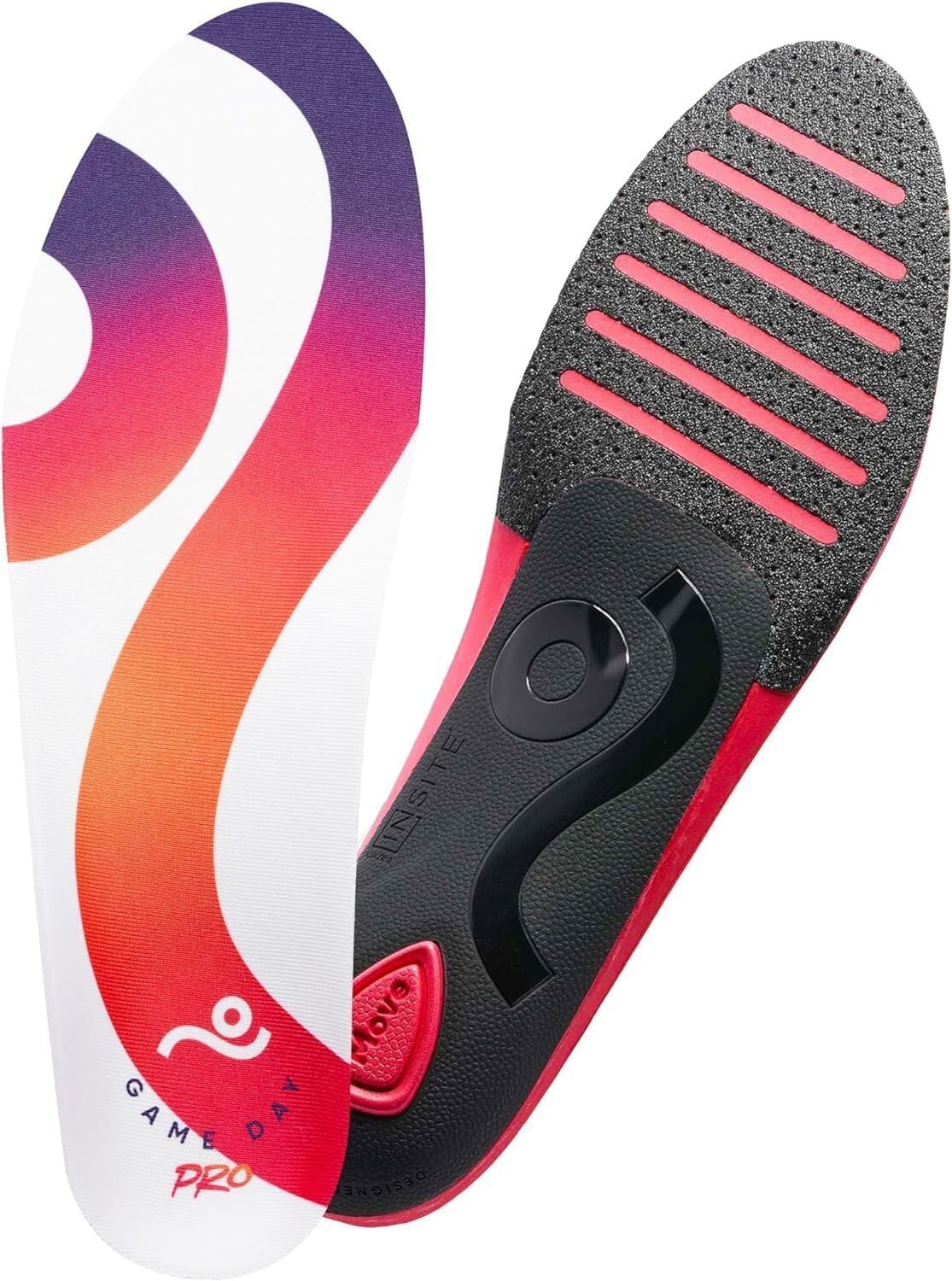
| Move Game Day ProTop Performer | Elite performance | High | Active Heel | 3.21 oz | Amazon |
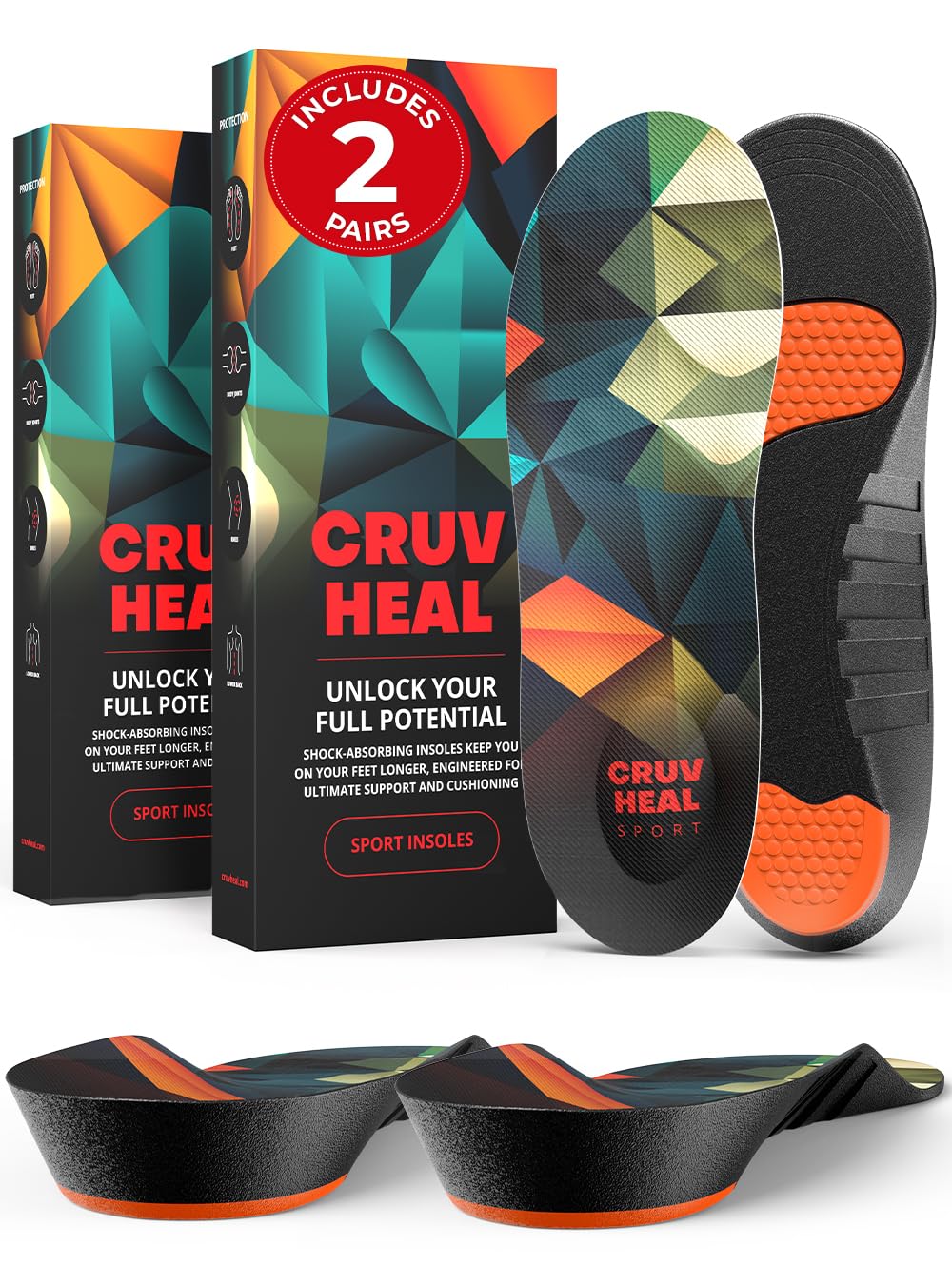
| CRUVHEAL 2-PackBest Value | Multi-sport value | Neutral | Deep curved | 12.31 oz (pair) | Amazon |
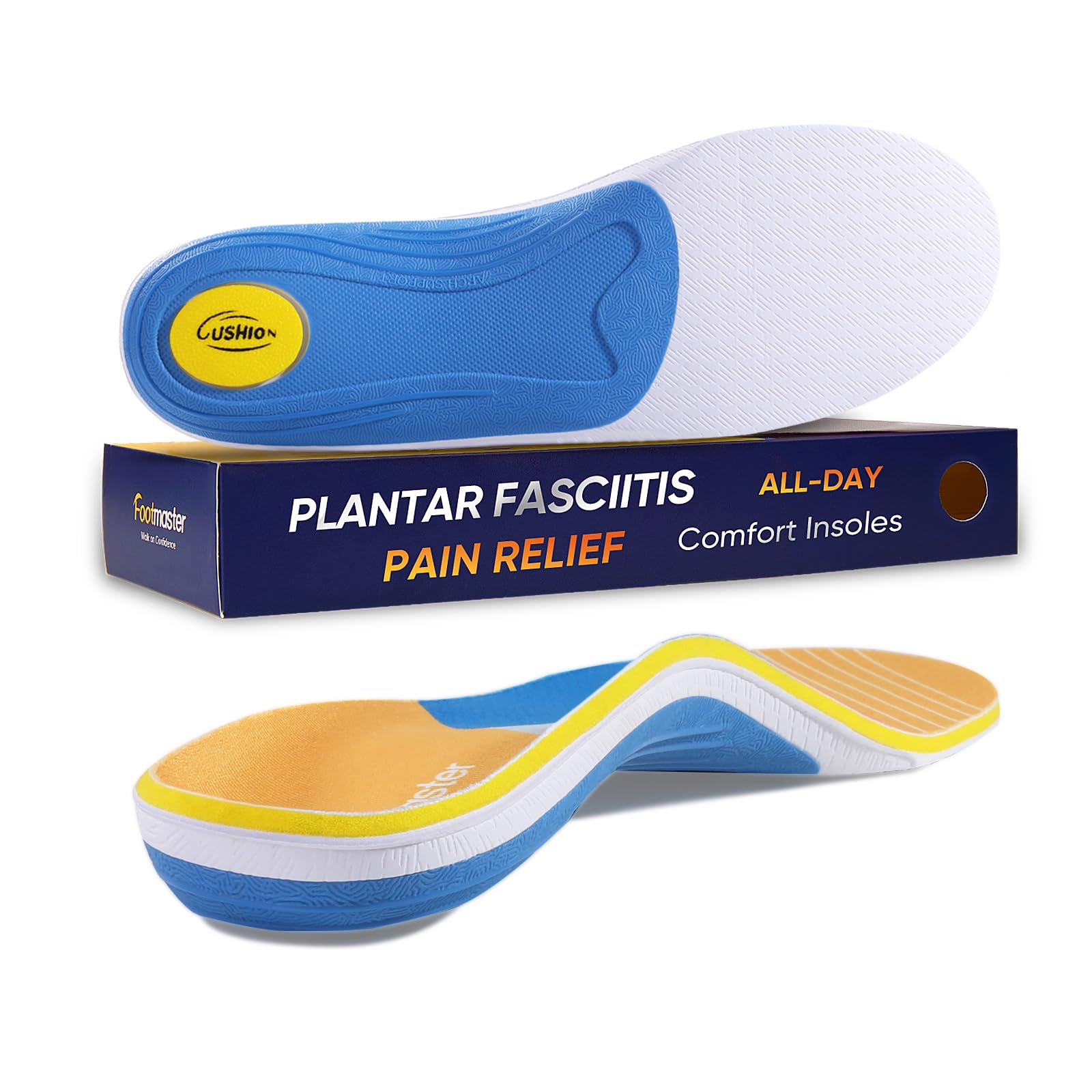
| Plantar Fasciitis Relief (220+lbs) | Heavy lifters | TPU firm | Deep | 7.37 oz | Amazon |
| OrthoComfoot | Immediate comfort | Firm | U-shaped | 8.82 oz | Amazon |
| Arch Support Orthotic (Poron) | Long shifts + court | Golden Triangle | Deep U-shaped | 7.05 oz | Amazon |
| Welnove Running Sports | Lightweight feel | Ergonomic | Standard | 4.16 oz | Amazon |
| FootMaster ProMax | 12-hour shifts | 3D | U-shaped | 6 oz | Amazon |
| CURREX ActivePro | Custom-like fit | Multi-profile | Deep decoupled | 4.64 oz | Amazon |
In‑Depth Reviews
1. Move Game Day Performance Insoles
Our pick — over 4.5★ from 800+ verified ratings; the strongest balance of quality and price.
The co-founded-by-Damian-Lillard insole that molds to your foot without fighting your shoe.
The Move Game Day takes the top spot because it solves the flat-foot athlete’s real problem: an insole stiff enough to support you but flexible enough that it never bites back. Its patented arch support mimics the feel of a custom insole, and the molded forefoot locks your foot in place. Buyers report it ends the “I’ve suffered from shin splints for the past 5+ years” cycle — a recurring win for runners and hoopers alike.
Comfort is the thing everyone raves about here — over 80 owners single it out — with arch support a close second. Players wear it for tennis, basketball, running, and walking without swapping out. A 45-year-old with bad ankles found it wasn’t rigid enough for them on an outdoor court, so if you need maximum stiffness under heavy weight, the Game Day Pro below is the stricter choice. One honest note: buyers consider the price/value a mixed bag — you pay for the brand name.
The crowd favorite — 4.6 stars across 800+ owners — is proof this isn’t hype. It earned a full season of volleyball for several players without flattening. If you want one insole that lives in your game shoes and never needs a second thought, this is it.
Why it wins on court
- Patented arch support with custom-insole feel
- Comfort leads every owner conversation
- Molds to your foot across any sport
Where it steps back
- Softer than the Game Day Pro — not for maximum rigidity
- Four stars from heavier players with ankle history
- Value verdict is split among buyers
Reach for it: if you’re an all-surface athlete wanting one insole for basketball, tennis, and running.
Look elsewhere if: you need a very firm, unyielding platform for heavy landings — the Pro handles that.
2. MOVE Game Day Pro
The firmer, faster big brother — built for explosive takeoffs and plush landings.
Where the standard Game Day flexes, the Game Day Pro locks in. It swaps the softer feel for a firmer X-Frame torsional support (a stiff frame under the midfoot) that gives you a solid platform to push off from while the cushioned top layer absorbs the landing. Weighing a mere 3.21 ounces, it’s the lightest of all nine picks, so you’re not hauling dead weight up and down the court. Its Active Heel Technology targets pressure points in sensitive areas — exactly where flat-footed players feel the burn.
You get a blend of cushion and spring that holds up: one 6’6″, 205-pound volleyball player confirmed it fits five different shoe models and called it “durable, lasts ~1yr vs + failing in months.” Owners mention no foot pain after 2 hours of tennis, and they praise the full-length arch support, which beat both Curex and Superfeet in direct comparisons. It’s firmer and more rigid than its sibling, so it suits players who want their foot held on a stricter platform.
The trade-off is the price tag — it’s the premium end of this list, and buyers are split on whether it’s worth the outlay. But for high-arch support, knee-pain prevention, and leg-fatigue reduction during intense workouts, this is the one serious hoppers keep coming back to.
Edge over the #1: 3.21 oz vs 4.48 oz makes it lighter, yet it runs firmer — the better pick for explosive players wanting shock absorption without squish.
The honest catch: expect to pay premium dollars and see a split verdict on value.
3. CRUVHEAL 2-Pack Sport Running Insoles
Two insoles, one year of coverage, and pain-free 10k steps — the value champ.
This is the buy-two-for-the-price-of-one play: a 2-pack of athletic insoles with strategically placed gel pads that soften impact in basketball, running, and training. The deep curved heel cup and non-slip gel heel pads keep them planted during fast breaks — no slipping mid-crossover. Customers note walking 10k steps with zero pain, and a 68-year-old runner finished a 5k pain-free. The neutral arch support works for flat feet without forcing a tall, aggressive arch.
Comfort leads the owner conversation with over 60 positive mentions, and pain relief follows with 43. They fit wide feet, cut down to size easily, and one owner reports they eliminated foot/ankle pain from 14-hour shifts on cold cement — so they pull double duty between work boots and court shoes. The 1-year coverage even applies after trimming, which is rare in this category.
The honest downside? They’re slightly heavier than the competition at 12.31 ounces for the pair, which some players feel — but that heft buys durability. At this price for two, it’s the smart budget play for anyone needing insoles in more than one shoe.
Buy if: you want two pairs of reliable insoles without paying double.
Skip if: weight matters more to you than value — the Game Day Pro is 3.21 oz lighter per insole.
4. CURREX ActivePro Insoles

The pick for feet that refuse to settle for a one-size-fits-all arch.
Most insoles give you one arch profile and hope it fits. CURREX goes the other way — the ActivePro comes in low, medium, and high arch profiles with a flexible, decoupled heel cup (a heel cradle that wraps and locks your foot for stability without forcing a stiff platform). At 4.64 ounces, it’s a light option for basketball, volleyball, dance, and running. Its premium foam cushioning manages moisture, keeping feet dry in quick games.
Arch support is what customers praise most — 21 positive mentions — and it’s a recurring favorite over prescription orthotics. One owner reports plantar fasciitis disappeared with daily use, while a cheerleader’s parent buys them for extra tumbling support. The dynamic arch technology also reduces fatigue across long courtside stretches.
The trade-off: comfort draws mixed reviews and the value verdict is negative — meaning for some, it’s great, for others it’s not worth the premium. If you know your arch height and want a custom-like fit, this is the one to try; if you’re guessing your arch profile, measure first.
Its superpower: three arch profiles mean a genuinely tailored fit — “better than my prescription orthotics” is the recurring theme.
Who should pass: anyone unsure of their arch height — mistaking it makes this a costly miss.
5. FootMaster ProMax Orthotic Insoles
Engineered for 12-hour shifts and 10k-step days without the foot fall-out.
The FootMaster ProMax is built for exactly that, with a biomechanical design supporting up to 240+ lbs and a three-point support system that spreads body weight across the whole foot. Its three-layer shock-absorption stack, including a military-grade cushioning layer, eats the impact of every step. The 3D airflow mesh keeps feet dry during marathon days, and premium EVA foam retains cushioning over 500+ miles of use.
The recurring owner story is plantar fasciitis relief that stuck — one player reports it “really seemed to have helped my Plantar Fasciitis” after placing them in every shoe. The U-shaped heel design is designed to realign your center of gravity, reducing uneven wear on your soles and pressure on knees. At 6 ounces, it’s a mid-weight option that balances support with comfort.
The catch: some with sensitive, “sick feet” find it too hard, and the manufacturer warns your feet may take 3 to 7 days to adjust. Start with 2-6 hours a day and build up — it’s a support-first insole, not a cloud.
Ideal for: bigger players and anyone whose feet need to survive both a shift and a game.
Not for: those wanting a soft, plush bed — this one is firm by design.
6. Arch Support Orthotic Insoles (Poron)

The all-day fighter that moves from hospital shifts straight onto the court.
Flat feet don’t clock out when the game ends, and this insole understands that. Built on U.S. PORON dual-layer technology, it delivers serious shock absorption for athletes while a full PU (polyurethane) layer and soft fabric keep feet cushioned and fresh from morning to night. Its “Golden Triangle” high-arch design offers three-point support to cut arch strain and encourage natural alignment — a thoughtful structure for flat-footed players who also spend hours standing.
The standout owner story is a hospital housekeeping worker who relieved arch pain after long shifts, with the insole fitting a size 8 women’s shoe perfectly with no cutting required. Reviewers point out it beats pricier “NASA something” brands on both comfort and value, and one husband ordered more pairs for his other shoes after feeling a big difference. The deep U-shaped heel cup adds ankle protection for running, walking, or intense training.
Expect a short adjustment period — shoppers say it takes a few days for your feet to adapt to real arch support. The one recurring negative across owners is roughly split: some find the fit perfect, others report it runs large. If you’re between sizes, check the sizing chart before ordering.
Best for: the player whose feet work a full day and then need to show up for a game.
Think twice if: you’re between shoe sizes — fit reports lean either “perfect” or “runs big.”
7. OrthoComfoot Insoles for Flat Feet

The no-cutting, no-fuss insole that’s comfy from the very first step.
Most orthotic insoles demand a bit of DIY — trimming, breaking in, adjusting. The OrthoComfoot skips all that with a trim-free fit designed to drop straight into work boots, sneakers, or casual shoes. Its reinforced U-shaped heel cup locks your heel to prevent overpronation (that inward roll of the foot), while a high-resilience GEL heel pad absorbs impact for a “walking on clouds” feel. The ventilated, moisture-wicking top layer keeps feet cool, dry, and odor-free through long stretches.
Buyers with “very flat feet” report excellent support that shifts weight off a fallen arch and bunion — comfy from step one with zero break-in complaints. Another owner notes the arch support may wear down faster than the shoes, but at about half the price of new shoes, swapping insoles extends the life of your sneakers. For a budget-friendly pick that works from the start, it’s a strong contender.
The main gripes are fit-related rather than quality-related: some size 8.5 feet find it too narrow and too thick for snug shoes, and one owner reports a squeezing noise while walking. If your shoes are already tight, measure before buying.
The appeal: instant comfort with no cutting or lengthy break-in — rare in this category.
The limitation: bulky and narrow for some feet, so it needs roomier shoes.
8. Plantar Fasciitis Relief Insoles (220+lbs)

The budget-friendly heavyweight that stands up to 370-pound players without flattening.
Most flat-foot insoles collapse under serious weight. This one was built for the heavy hitters — it uses sturdy TPU (a rigid thermoplastic base) for arch support, topped with soft memory foam and separate GEL cushioning pads at the forefoot and heel. At 7.37 ounces, it’s noticeably heftier than the move Game Day’s 4.48 ounces, but that weight signals the dense, durable build that doesn’t flatten. A 370-pound user reports “excellent arch support, durable, no flattening, reduces heel/knee pain” — a rare endorsement for heavy players. A 245-pound lifter even prefers it over Superfeet, citing thicker foam, a firmer higher arch, and less ball-of-foot pressure. It’s designed for basketball, running, hiking, tennis, golf, and long work shifts for doctors, nurses, and waiters.
Foot support is what customers praise most — 53 positive mentions — and one buyer reports it eliminated severe foot/heel pain in about 10 days, avoiding a custom insole bill. The deep heel cup corrects pronation and stabilizes the foot on hard landings, which is why it suits heavy-impact sports.
Expect a first-week adjustment period — the manufacturer recommends starting with 2-3 hours daily. Comfort and fit draw mixed reviews: some feet don’t hurt at all, others report discomfort, and some find it runs a bit big. It’s a firm, support-first insole for players who need structure over plushness.
Built for the big boys
- TPU-based arch holds up under 370 lbs
- Separate GEL pads at forefoot and heel
- Foot support is the #1 owner praise
Who it won’t fit
- Firm feel takes a week to adjust to
- Fit reports lean toward running big
- Mixed comfort reviews — not for everyone
Grab it if: you’re a heavier player needing an insole that refuses to flatten.
Pass it up if: you want a soft, plush ride — this one is firm on purpose.
9. Welnove Running Sports Insoles
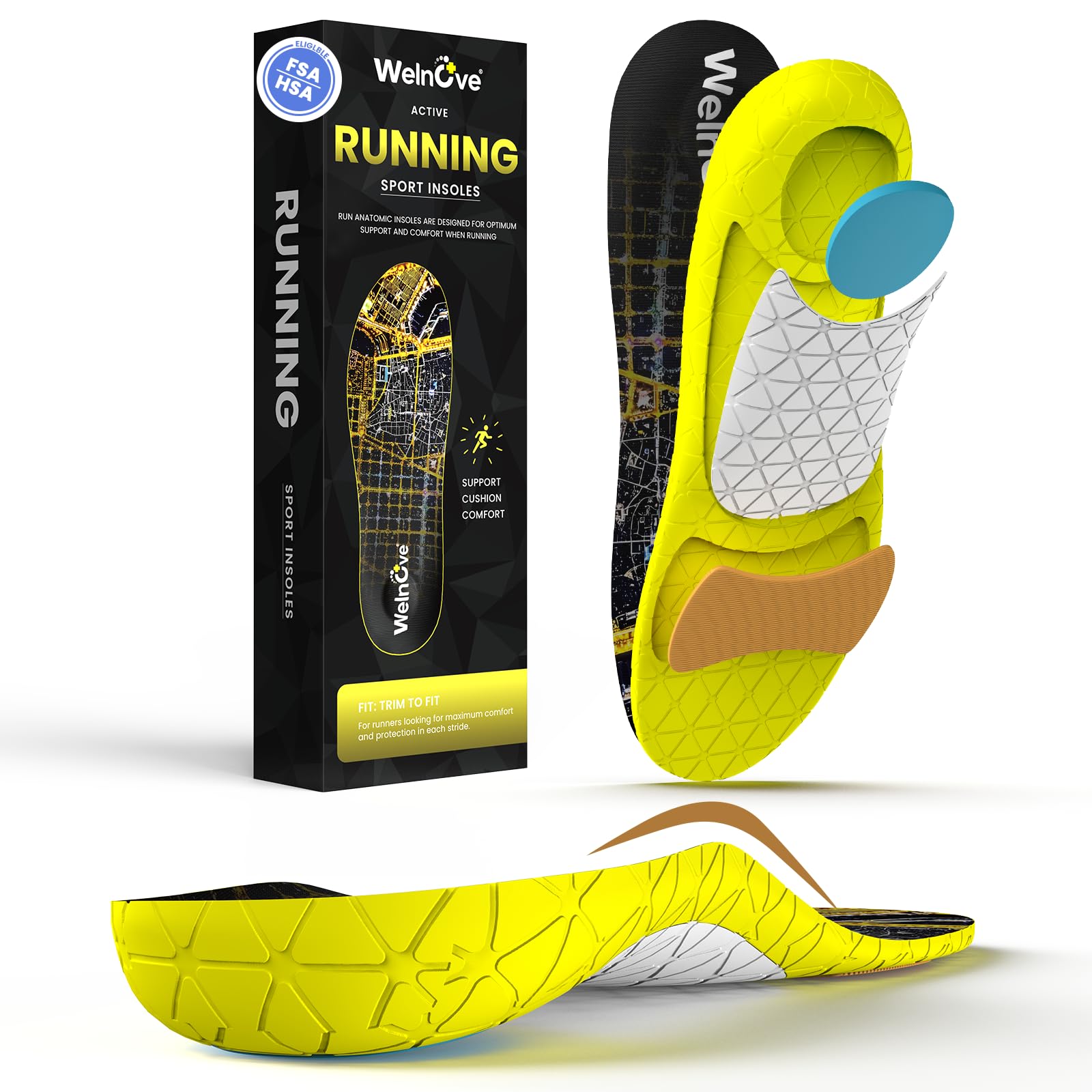
The barely-there insole that relieves heel pain without weighing your sneakers down.
Some flat-foot players don’t want to feel their insole at all — they want support that vanishes into the shoe. At 4.16 ounces, the Welnove is the lightest of all nine picks, and its soft, lightweight foam delivers effective arch support and shock absorption while you’d hardly feel the weight. It targets flat feet, plantar fasciitis, and hollowed feet, making it a multi-sport option for running, basketball, football, and even yoga. A parent reports their son wears them in all his basketball sneakers, and they “relieved the heel pain he used to have” — with the insole lasting six months under daily use.
The owner wins center on pain relief: one runner reports it eliminated shin splints and knee pain, running their fastest mile pain-free, while another says their feet simply don’t hurt like they used to after 3-4 mile runs a few times a week. The ergonomic design helps correct posture during sports, and the cushion pad absorbs shock on landings.
The trade-off is inconsistency. A few buyers found them thin and flimsy, with one reporting wrong sizing that didn’t fit even after cutting, and a blister issue during a half marathon. The manufacturer recommends a 2-5 day break-in period starting with 3-5 hours daily. If you want a light, unnoticeable insole and are willing to adjust, it’s a decent budget play — but serious marathoners should size up carefully.
The appeal: featherlight foam that relieves heel pain without adding bulk — great for basketball sneakers.
The risk: quality reports are split; sizing can be off and some find it too thin.
Understanding the Specs
Arch Support Height
This is the single most important spec for flat feet. A collapsed arch needs a supportive structure that fills the gap and prevents the foot from rolling inward. Look for a pronounced, firm arch (often labeled “high arch support” or “patented arch”). Flexible arches — like CURREX’s multi-profile system — let you move naturally, while firm arches like those on the Move Game Day Pro lock you in place. Try a firm option if your ankles roll in; a flexible one if you want a softer feel.
Heel Cup Depth
The heel cup is the cradle at the back of the insole that wraps your heel bone. A deep, U-shaped cup is critical for flat feet because it stops overpronation — that inward roll that causes shin splints and knee pain. The deeper the cup, the more stable your foot on lateral cuts and landings. Look for “deep U-shaped heel cup,” “deep decoupled heel cup,” or “Active Heel Technology” in the specs.
FAQ
Will basketball insoles for flat feet fit in my existing sneakers?
How long does it take to break in new basketball insoles?
Can insoles fix flat feet or just relieve the pain?
What is the difference between the Move Game Day and the Game Day Pro?
Are basketball insoles with high arch support good for flat feet?
How often should I replace my basketball insoles?
Are insoles for flat feet better than getting custom orthotics?
Which insole is best for heavy players over 220 pounds?
Can I use basketball insoles for running and daily walking?
Do I need to remove the factory insole before adding an orthotic?
Final Thoughts: The Verdict
For most players, the basketball insoles for flat feet winner is the Move Game Day because it delivers patented arch support, featherweight 4.48-ounce comfort, and proven all-surface versatility — and it holds the strongest owner satisfaction across the board. If you want a firmer, more explosive platform for hard landings, grab the Game Day Pro, which adds X-Frame support at just 3.21 ounces. If value is the priority, grab the CRUVHEAL 2-pack — that same crowd-approved comfort in two insoles with a full year of coverage.
How We Picked
We do not accept paid placement. Every pick is matched to a real buyer and a real use-case; we do not hands-on test units.
Sources & Methodology
Specifications: manufacturer listings and product documentation. Review insights: verified customer reviews, as of August 2026. Pricing: not shown on this page (it changes often); check the current price via the retailer link.
As an Amazon Associate, Gadgets Feed earns from qualifying purchases. This does not affect which products we feature.