
Our readers keep the lights on and my morning glass full of iced black tea. As an Amazon Associate, I earn from qualifying purchases.
Specs are compiled from manufacturer listings and verified buyer reviews and can change over time — please confirm the key details on the product page before buying.
A rangefinder that only gives you straight-line distance is lying to you on steep ground — the arrow drops differently than the tape measure says. For bowhunters in hills or treestands, the fix is angle compensation (also called slope mode or ARC), which calculates true horizontal distance, so a 40-yard shot uphill is treated like the 35-yard shot it really is. This guide sorts through the models that genuinely deliver this feature, from dedicated archery units to long-range binocular combos, and explains which specs actually matter when you’re drawing from a ridge.
I’m Min — the founder and writer behind Gadgets Feed. This guide is built by comparing the manufacturers’ published specifications and the patterns across verified customer reviews, so you get each pick’s real strengths and trade-offs instead of marketing spin.
Here’s the breakdown of the best archery rangefinder with angle compensation on the shelf, ranked by how well they merge accuracy, glass quality, and field-ready reliability.
Our Picks at a Glance


How To Choose The Best Archery Rangefinder With Angle Compensation
The core job is simple: you aim up or down a hill, and the unit tells you the distance the arrow actually travels horizontally, not the straight line through the air. But once you start comparing models, the differences show up in glass clarity, ranging speed, and how smart the slope math is.
Angle Compensation vs. Ballistic Calc
Basic angle compensation gives you horizontal distance, so you know how far your arrow will actually travel on a slope. More advanced bow-specific systems, like Leupold’s Archer’s Advantage or Flightpath, go further — they take your arrow weight, arrow velocity, and peep height to predict your arrow’s arc and even show you if a limb is in the way. If you only hunt flat ground, simple slope mode is enough; if you shoot steep timber, the ballistic models earn their keep.
Display and Light Transmission
The readout has to fight daylight. Red OLED displays (like Leupold’s TOLED) stay bright in low light, while auto-adjusting black-to-red reticles (Bushnell’s ActivSync) morph to their background. High light transmission through the glass — some claim 95%+ — keeps targets visible in thick brush and dusk.
Quick Comparison
| Model | Best For | Max Range | Magnification | Weight | Amazon |
|---|---|---|---|---|---|
| Leupold RX-1400I TBR/W Gen 2★ Best Overall | All-round hunting accuracy | 1,200 yds (trees) | 5x | 5.1 oz | Amazon |
| Leupold RX-FullDraw 5Best Value | Serious competitive archery | — | — | 7.5 oz | Amazon |
| Bushnell Fusion X 10×42Premium Pick | Binocular + rangefinder combo | 700 yds | 10x | 2.2 lbs | Amazon |
| REDTIGER H002 | Rechargeable all-in-one | 1,600 yds | 7x | 5.6 oz | Amazon |
| AOFAR HX2000 | Long-range budget | 2,000 yds | — | 9.44 oz | Amazon |
| CIGMAN 3280 | Multi-mode versatility | 3,280 yds | 6x | 0.14 kg | Amazon |
| Vortex Sonora HD 1800 | Warranty + clarity | 1,800 yds | 6x | 6.1 oz | Amazon |
| Nikon PROSTAFF 1000i | Pocket-friendly accuracy | 1,000 yds | 6x | 4.6 oz | Amazon |
| MILESEEY IONJET | Dedicated archery tech | 2,000+ yds | 7x | — | Amazon |
| Bushnell Prime 1700 | Rifle + bow hybrid | 1,760 yds | 6x | 169 g | Amazon |
| Maven RF.1 | Backcountry extreme range | 5-4,500 yds | 6.02x | 10 oz | Amazon |
In-Depth Reviews
1. Leupold RX-1400I TBR/W Gen 2
Our pick — over 4.5★ from 400+ verified ratings; the strongest balance of quality and price.
The hunter’s rangefinder that pairs serious wind math with a dedicated bow mode built for treestand angles.
What wins people over here is sheer build confidence — the crowd favorite among Leupold fans (4.7 stars across over 400 owners) keeps proving itself in rain, fog, and steep shots. The TBR/W (True Ballistic Range / Wind) technology doesn’t just correct for angle; it computes a hold point for a 10-mph wind at a 90-degree angle out to 800 yards, which is more than most hunters ever need but exactly what long-distance rifle shooters want.
For archers, the selectable Bow mode with Flightpath technology shows potential arrow obstructions and calculates angle-compensated ranges. The 1,400-yard reflective ranging (and 1,200 yards on trees) is overkill for a bow, but it means this unit handles both your rifle and your bow without compromise. Buyers report: “Had the old 1100 version, gave me years of service.”
The aluminum body keeps it light at just 5.1 ounces — a full 4.3 ounces lighter than the AOFAR HX2000 below. The selectable TOLED display uses bright red numbers with adjustable brightness, and auto-off saves the CR2 battery between hunts.
precision optics leader
- Wind-hold calculation out to 800 yards for rifle shots
- Bow mode with Flightpath shows arrow obstructions
- Featherlight 5.1 oz aluminum build
- Adjustable red TOLED display for changing light
pricey for beginners
- Some owners mention cheap plastic parts breaking with rough use
- 5x magnification is lower than several rivals
trusted glass: you want one rangefinder that nails both your bow setup and your rifle shots with Leupold’s proven optics.
budget buyers: you need maximum magnification for spotting tiny targets at extreme distance, since the 5x tops out lower than many competitors.
2. Leupold RX-FullDraw 5 Rangefinder with DNA
The archer’s computer that plots your arrow’s arc so you stop clipping limbs on long shots.
If you shoot competition archery or hunt from steep positions, this is the unit that separates “close enough” from “pin-point.” The RX-FullDraw 5’s Archer’s Advantage bow ballistics takes your arrow weight, arrow velocity, and peep height to calculate accurate ranges for steep-angle and long-distance shots. It’s the same DNA as the RX-1400I but tuned purely for the bow.
The Flightpath technology uses your bow’s ballistics to display the highest point of your arrow’s flight. Competition shooters report this has “saved me from hitting limbs on longer shots for TAC and SHOT tournaments.” The selectable OLED display uses bright red characters with adjustable brightness, ideal for low-light tournament halls and dawn hunts.
The 7.5-ounce aluminum body feels solid, and Last Target mode reads the farthest target in the laser’s path, filtering out grass and twigs. For archers who want to see the arc before they commit, this is the defining feature — a true “high speed stuff” moment, as one owner put it.
bowhunter’s angle brain
- Arrow-weight and velocity ballistics for true bow range
- Flightpath shows the peak of your arrow’s flight
- Last Target mode filters out grass and twigs
- Consistent and accurate for daily competition use
setup complexity
- Takes time to input your arrow’s flight path data correctly
- Price sits at the premium end of the range
archery ace: archery is your main pursuit and you want ballistic-level correction plus a limb-avoidance display.
casual shooters: you mostly shoot a rifle — the wind-hold features on the RX-1400I serve that job better.
3. Bushnell Fusion X 10x42mm Rangefinder Binoculars
Two tools merged into one waterproof package — glass the ridge and range the buck without dropping your binos.
The Fusion X answers the classic hunter’s frustration: spotting a buck through binoculars, then fumbling to swap to a rangefinder while it trots off. With a 10x42mm binocular body and a built-in rangefinder, you glass and range in one motion. The 10x magnification gives you far more detail than any dedicated rangefinder’s 6x or 7x, and the 2.2-pound weight is the price you pay for that all-day viewing comfort.
ARC (Angle Range Compensation) technology with ±1-degree angle accuracy gives you true horizontal distance alongside line-of-sight distance, so your uphill and downhill shots match level-ground accuracy. The ActivSync Reticle Technology auto-adjusts the black-to-red reticle to your background, keeping the readout visible whether you’re glassing a snowfield or a dark treeline — a real edge over fixed-color displays.
The build is honestly the star here: IPX7 waterproof construction means it survives submersion at 1 meter for 30 minutes. Customers note the accuracy “matched” another laser rangefinder in a side-by-side test. The catch is setup — the unit ships with no printed instructions, and you’ll be downloading a manual, which owners describe as a genuine hassle.
two tools in one: the hunter who wants one tool for glassing and ranging, with water-proofing that shrugs off a rain-soaked day.
bulky on neck: anyone who wants a pocket rangefinder — at 2.2 pounds and 10×42 size, this lives on a chest harness, not in a pack.
4. Vortex Sonora HD 1800 Laser Rangefinder

The rangefinder you can bash around the backcountry and send back for free if it ever fails.
Vortex’s reputation rests on their unlimited, unconditional lifetime warranty, and the Sonora HD 1800 leans into it. The 6x magnification with a 21mm objective lens ranges 1,800 yards on reflective targets and 700 yards on game. The HD optical system cuts chromatic aberration (that color fringing you see on cheap glass) and delivers the kind of clarity that owners call “fantastic” and “very clear.”
For angle work, HCD (Horizontal Component Distance) technology gives bow and rifle shooters the true horizontal distance they need for accurate shots on slopes — the same critical measurement the Leupold units provide, but in a simpler package that’s easier to navigate. The ultra-hard ArmorTek coating protects exterior lenses from scratches, oil, and dirt, so it shrugs off being dropped in the brush.
At 6.1 ounces, it’s light enough to forget you’re carrying it, and the included bungee cord lanyard keeps it close. O-ring seals make it waterproof, and a tripod adaptor means you can steady it for long-range glassing. For a mid-range price, you get a lifetime promise that no other brand in this list matches.
crisp HD clarity: that transferable VIP warranty — repair or replace for life, no questions about how it broke.
short range cap: 700-yard game range is lower than the Leupold RX-1400I’s tree range, so if you range deer at extreme distances, check the specs.
5. MILESEEY IONJET Hunting Rangefinder
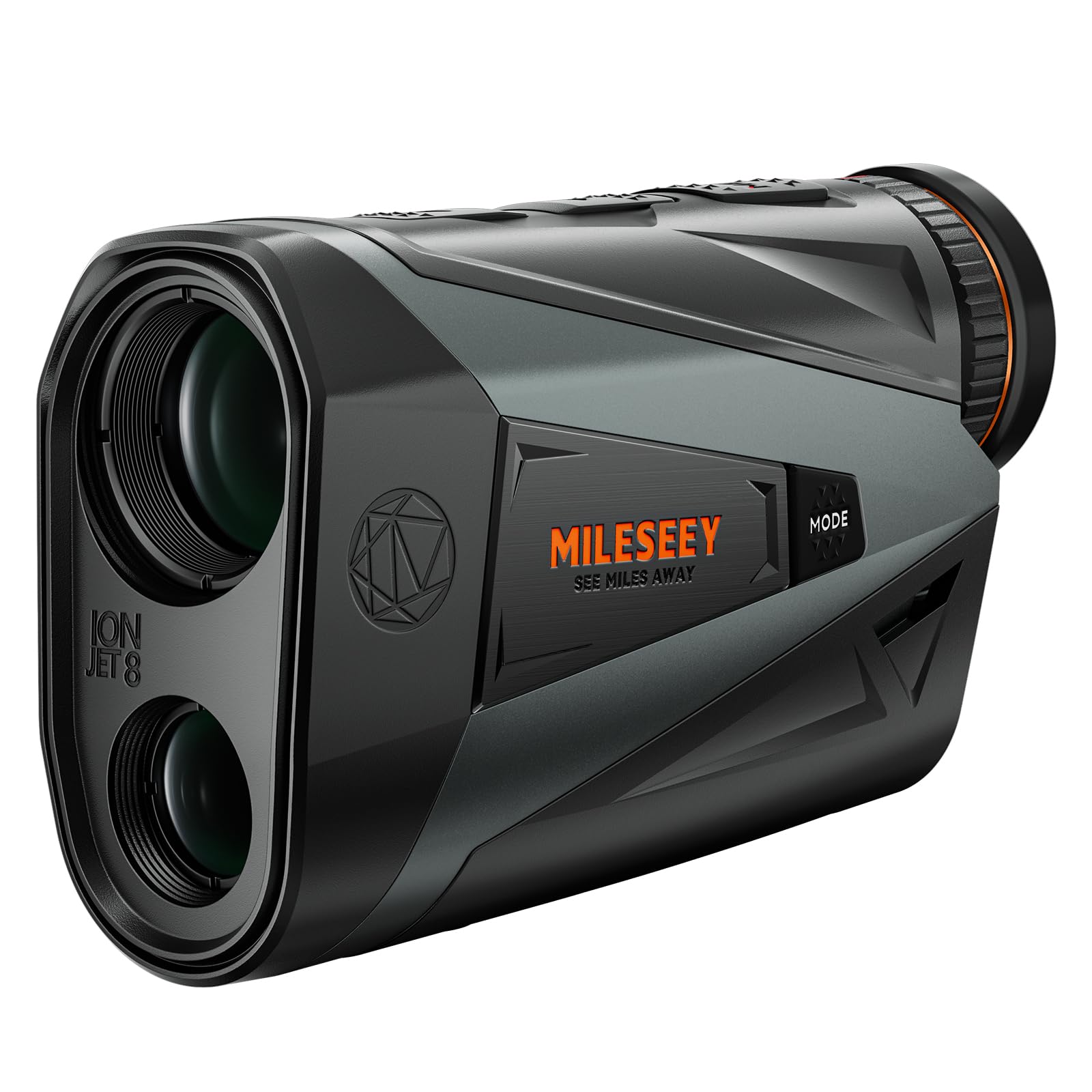
A rangefinder that thinks like a bowhunter — three ranging modes and four target modes in a rugged, silent body.
The IONJET is the most feature-dense unit here for archers who want options. It offers three ranging modes — LOS (line-of-sight), HD (horizontal distance for slope shots), and ARCH (ballistic correction for bowhunting) — plus four target modes (Best, Auto, First, Last) that filter background and foreground interference. That means you can lock onto a buck behind a bush without grabbing the bush instead.
The 7x magnification paired with a 7.5° field of view helps you find moving game quickly, while the 90% VLT (visible light transmission) keeps the image clear in both bright glare and low-light timber. The dual power system — USB-C rechargeable and replaceable CR2 batteries, each supporting a stated 10K+ measurements — ensures you’re never stranded on a dead battery.
The thoughtful touches set it apart: a noise-dampened magnetic mount for hands-free attachment, a diopter ring to fine-tune focus for your eyesight, and a twist-up eyecup to cut stray light. With an IP65 rating and a 5-year manufacturer warranty, it’s built for serious field abuse. Field users have confirmed its accuracy at 1,300 meters.
fast laser lock: the tech-minded archer who wants ballistic correction and a modular battery system in one package.
battery hog: minimalists — the learning curve across three modes and four target modes is real.
6. REDTIGER H002 Hunting Rangefinder

The budget-friendly bruiser that reads out to 1,750 yards and never needs a trip to the battery store.
The REDTIGER H002 punches above its price with a 1,600-yard range and 7x magnification — 25% more reach than the AOFAR HX2000’s 2,000 yards? Actually, the AOFAR outranges it at 2,000 vs 1,600 yards, but the REDTIGER’s real claim is the rechargeable battery. The 1000mAh cell (upgraded from 750mAh) delivers up to a stated 8,000 measurements per charge — several seasons for most hunters.
The ±0.5-yard accuracy with readings under 0.5 seconds is genuinely fast — reviewers point out it “will read out to 1750 yards” — and the two-mode switching handles horizontal distance, angle, height, straight-line distance, and speed. The IP54 rating and 5.6-ounce weight keep it field-friendly, and the 2-year unconditional warranty plus 24/7 technical support backs it up.
The glass achieves up to 80% light transmission, which is solid but not class-leading. A few owners note the buttons feel less premium than pricier units, and the plastic body won’t win you over if you’re used to aluminum frames. But for the price, the charging convenience makes it a standout value pick.
rugged budget build: you want a rechargeable rangefinder with generous range and don’t want to fuss over CR2 batteries.
menu maze: you need maximum optical clarity — the 80% transmission lags behind Leupold and Vortex glass.
7. AOFAR HX2000 Hunting Rangefinder
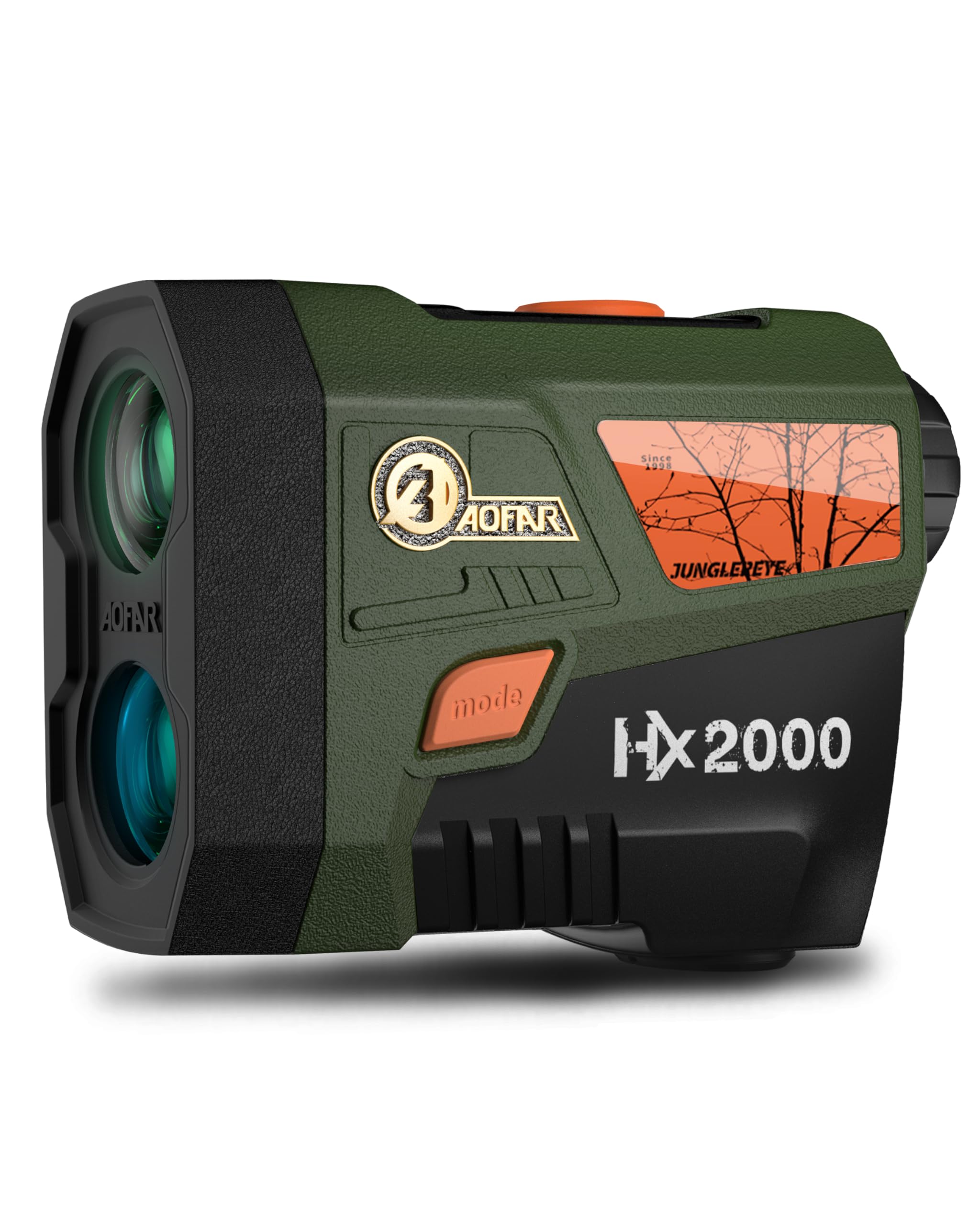
The value-priced workhorse that reads a 2,000-yard ridge line with a display you can tune to the light.
The AOFAR HX2000 brings serious reach to a modest price point, ranging out to a full 2,000 yards while its dual-color OLED display lets you switch the readout for different environments. The glass transmits over 95% of light (per the maker), helping you spot game at dusk — a rare strength at this price.
It’s a big unit at 9.44 ounces — roughly 85% heavier than the 5.1-ounce Leupold RX-1400I — but owners say that extra bulk actually helps the grip: “the body is a little thicker than some range finders but that makes it easy to hold.” The aluminum-alloy body wrapped in high-density rubber adds comfort and durability, and the IP rating keeps it water-resistant for wet-weather hunts.
Angle and horizontal distance are displayed together, so you get your slope-compensated range without menu-diving. The scan mode (version 3.0 per the maker) updates fast enough to track moving game. Just note that while most shoppers say “extremely accurate and easy to use,” a single critical review describes erratic readings under 40 yards — worth being aware of if you only shoot close-range archery.
wide field view: hunters who want 2,000-yard reach and a readable display without paying premium prices.
low light lag: close-range archery purists who need flawless sub-40-yard performance.
8. CIGMAN Hunting Rangefinder 3280 Yards

Seven shooting modes in a camo body — the rangefinder that refuses to pick a sport.
The CIGMAN is the Swiss Army knife of this list, juggling 7 modes from ranging and continuous scan to speed, two-point height/angle, two-point horizontal/angle, golf slope compensation, and flagpole lock. Whether you’re bowhunting, rifle shooting, or on the golf course, there’s a mode for it. The multi-coated lens with 6x magnification delivers a bright view in dense woods, per the listing.
It measures from 5 to 3,280 yards with ±1-yard accuracy in under a second. Buyers verified the math against Google Maps: “1,541 yards on the rangefinder checks out to 4,622 feet on Google Maps” — spot-on. The Type-C rechargeable battery holds a 750mAh charge (up to a stated 6,000 uses), charges fully in 3 hours, and includes a low-battery indicator.
The compact camo body fits comfortably in your hand, and the IP54 rating plus 12-second auto shut-off handle the outdoors. It’s genuinely lightweight and portable, making it a solid gift for any outdoor lover. The trade-off is the plastic build and the sheer number of modes — it takes time to learn which setting fits the moment.
extreme yardage reach: you want one rangefinder for archery, rifle, and golf without buying three separate units.
heavy unit: you prefer a simple push-button-and-read unit — the mode cycling here is more involved.
9. Nikon PROSTAFF 1000i 6×20 Laser Rangefinder
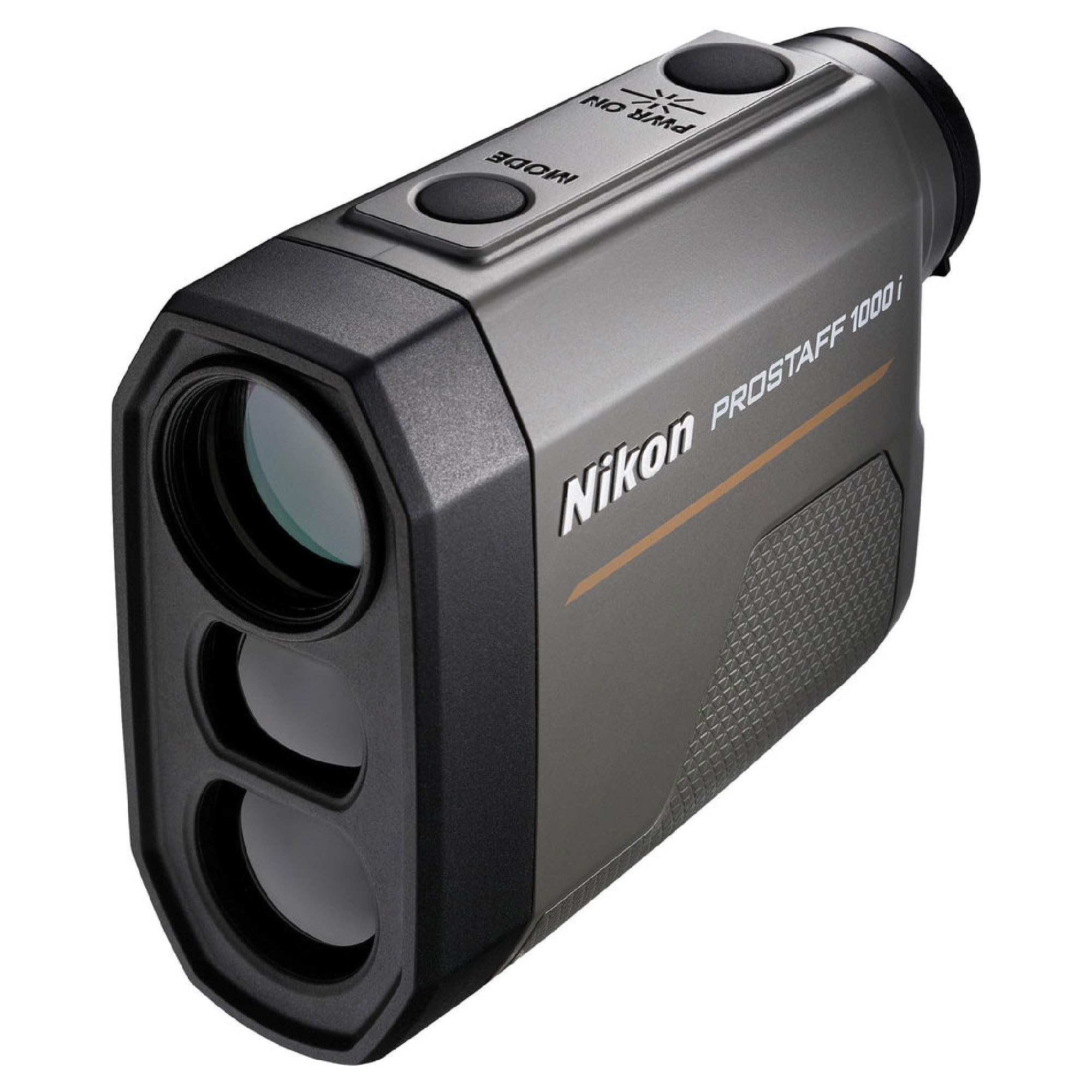
A featherweight 4.6-ounce Nikon that handles extreme slopes — up to ±89 degrees — and slips into a pack pocket.
Nikon’s ID (Incline/Decline) Technology calculates true horizontal distance at angles up to ±89 degrees, so a near-vertical shot from a cliff edge still gives you an honest usable range. That’s the steepest angle compensation on this list, and it makes the PROSTAFF 1000i a legitimate option for mountain hunters who glass across deep canyons.
The 6x magnification with a 20mm objective lens delivers bright, sharp images, and TRU Target Technology lets you switch between First Target and Distant Target priority — crucial for isolating a buck in front of a treeline. Accuracy is rated ±1 yard up to 100 yards and ±2 yards beyond, with a max of 1,000 yards to reflective surfaces.
At just 4.6 ounces, it’s the lightest unit here, and the compact 3.6 x 2.9 x 1.5-inch body fits a bino pack pocket, as owners note. The IPX4-equivalent housing handles rain and snow, and the 17mm eye relief accommodates eyeglass wearers. The trade-off: no illuminated display, so you’re relying on bold daylight LCD contrast — which owners say is “bold” but not for legal shooting hours beyond.
compact classic: hunters who want a pocketable, reliable slope-compensated unit without bulk, especially eyeglass wearers.
small exit pupil: users who insist on an illuminated readout for early-morning or late-evening shots.
10. Bushnell Prime 1700 Hunting Laser Rangefinder

The 1,760-yard veteran with dedicated archery and rifle modes — and a brush-penetrating Bullseye reticle.
The Bushnell Prime 1700 has been a dependable field companion for years, and owners confirm it’s still going strong: “Yep years later they’re still going.” The 6x24mm optics deliver a crisp image, and the 1,760-yard measuring range covers everything from bow setups to long-range rifle work. Dedicated Slope mode, Archery mode, and Rifle mode let you switch the compensation math to fit the weapon in your hands.
The Brush mode and Bullseye mode are the real differentiators — Brush mode filters out foreground interference like grass and twigs, while Bullseye mode locks onto the exact target you’re aiming at. That’s a practical edge when your buck is standing in a tangle of undergrowth. At 169 grams, it’s light enough for a chest harness all day.
The build quality draws mixed feedback — some owners call it “a bit cheap lightweight” and note the eyepiece turns easily out of focus when pocketed, while others praise the “crisp optics.” Value is the consistent winner here, though: accuracy tests against survey markers came back dead-on. It’s a proven workhorse with a few rough edges.
bright clear image: you want a battle-tested dual-role rangefinder with genuine brush-penetrating target modes.
limited angle modes: the eyepiece can drift out of focus in a pocket, so treat it with care between hunts.
11. Maven RF.1 Hunting Rangefinder
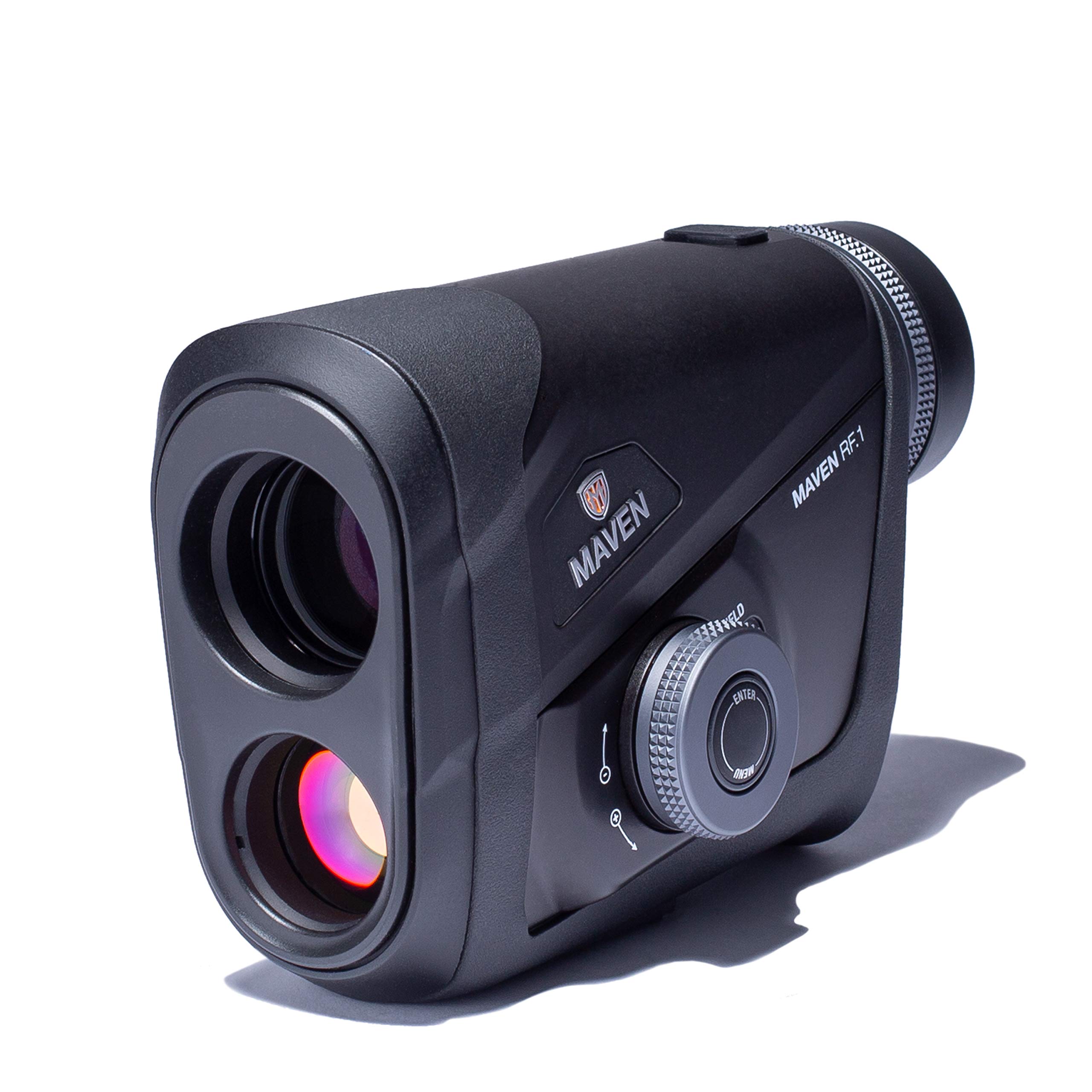
The backcountry beast that ranges non-reflective targets to 3,000 yards — mile-after-mile capability in a 10-ounce body.
For the hunter who measures distances in miles, not yards, the Maven RF.1 is the ultimate tool. Its 5 to 4,500-yard range (on the spec sheet) means it can reach across canyons and mountain faces, and owners confirm it ranges even non-reflective items out to 3,000 yards — a feat most units can’t touch. One reviewer who owns Vortex and tactical pro brands says it “blows Vortex out of the water for speed, range, accuracy.”
The built-in angle compensation calculates true horizontal distance for uphill and downhill shots, which is exactly what you need when glassing across steep, mountainous terrain. The 6.02x magnification with a 10-ounce aluminum body feels substantial but portable, and the waterproof construction handles rain, snow, and dust. It comes with a CR2 battery, lanyard, and microfiber pouch.
The manual gain (brightness) control is a favorite among owners who want to dial the display for specific light conditions. The catch: there’s no ballistic calculator or Kestrel connectivity, so you’re getting raw range performance, not smart holds. The protruding dial also makes it a squeeze in some cases, as buyers report. For pure distance capability and Maven’s lifetime warranty, nothing else here comes close.
sleek lightweight build: western mountain hunters and long-range shooters who need maximum reach and a lifetime warranty.
premium price tag: archers who want built-in ballistic solutions — this unit is a pure ranger, not a calculator.
Understanding the Specs
Angle Compensation vs. Straight-Line Distance
Straight-line distance is the simple laser reading — the physical line from you to the target. Angle compensation (also called slope mode or ARC) measures the angle and calculates the true horizontal distance. For a bow shot from a treestand at a 30-degree downhill angle, that horizontal number is the one your pin should use. It’s the single most important spec for archery rangefinders.
Ranging Distance and Real-World Limits
Manufacturers quote max ranges on reflective targets (like road signs), but real game is non-reflective — a deer’s hide won’t bounce the laser like a metal plate. A unit rated for 2,000 yards on reflective might only reliably range game at 700-800 yards. Match the spec to your hunting terrain: thick eastern timber rarely needs more than 400 yards, while western mountain hunting justifies the long-range units.
FAQ
What does angle compensation actually do for an arrow shot?
Is the range in yards or meters on these rangefinders?
How does Flightpath technology on the Leupold work for archery?
Which is better for a bow hunter, a dedicated rangefinder or a binocular rangefinder combo?
How often do I need to recharge or replace the battery?
What does IP54 or IPX7 waterproof rating mean in practice?
Is higher magnification always better in a rangefinder?
Will a rangefinder for rifle hunting work for archery too?
Final Thoughts: The Verdict
For most hunters, the winner is the Leupold RX-1400I because it combines proven Leupold optics, a dedicated bow mode with Flightpath, and wind-hold calculations — all in a featherlight 5.1-ounce body. If you’re a dedicated archer who wants to see your arrow’s arc and avoid limbs, the Leupold RX-FullDraw 5 is the specialist’s choice. And for the hunter who wants max range and a lifetime warranty for steep western mountains, the Maven RF.1 is the one to reach for.
How We Picked
We do not accept paid placement. Every pick is matched to a real buyer and a real use-case; we do not hands-on test units.
Sources & Methodology
Specifications: manufacturer listings and product documentation. Review insights: verified customer reviews, as of August 2026. Pricing: not shown on this page (it changes often); check the current price via the retailer link.
As an Amazon Associate, Gadgets Feed earns from qualifying purchases. This does not affect which products we feature.