
A cold, brittle solder joint that fails the first time you power up a board is a frustrating waste of time. The right 60/40 rosin-core wire melts predictably, flows smoothly across a pad, and solidifies into a bright, conductive connection that lasts. This guide separates the spools worth your bench space from the ones that will leave you chasing shorts and rework.
I’m Min — the co-founder and writer behind Gadgets Feed. I analyze technical specifications, flux-core formulations, and alloy purity data to identify the most reliable soldering materials for electronics work. (And Homer 🐱 supervised by kneading the cardboard box the solder spools arrived in).
Whether you’re repairing a guitar amp, assembling a PCB, or wiring up a drone, the alloy ratio, diameter, and flux core all impact your results. Here is my curated selection of 60/40 solder for clean, dependable joints every time.
How To Choose The Best 60/40 Solder
Selecting the right 60/40 solder wire is about more than grabbing the cheapest spool. The alloy ratio, flux type, and wire diameter must match your specific soldering iron and the components you are joining. A mismatch leads to poor wetting, excess residue, or damaged pads.
Wire Diameter and Your Work
For standard through-hole PCB work, a 0.031-inch (0.8mm) diameter is a versatile sweet spot — thick enough to deliver solder quickly to a joint but fine enough for precision. For surface-mount components or fine-pitch ICs, step down to 0.020-inch (0.5mm) to avoid bridging adjacent pins. If you are soldering large lugs on battery terminals or speaker wire, a 0.062-inch (1.5mm) diameter will feed the joint faster.
Flux Core: Rosin, RA, or RMA?
The flux core inside 60/40 wire cleans oxidation and promotes wetting. Rosin (R) flux is mildly activated and leaves a non-corrosive residue, making it ideal for general electronics. Rosin Mildly Activated (RMA) flux adds a touch more cleaning power without becoming conductive. Rosin Activated (RA) flux is aggressive — great for tarnished surfaces but should be cleaned off after soldering. Every spool here uses a rosin-type core, but the activation level makes a real difference in joint quality and cleanup.
Quick Comparison
On smaller screens, swipe sideways to see the full table.
| Model | Category | Best For | Key Spec | Amazon |
|---|---|---|---|---|
| Kester 24-6337-0027 | Eutectic 63/37 | Professional PCB Assembly | 0.031″ Diameter, 63/37 Alloy | Amazon |
| AIM Solder 60-40 1lb | Bulk Pro Spool | High-Volume Repairs | 454g Spool, 0.032″ Diameter | Amazon |
| Weller WSW Sn60Pb40 | Pro-Grade | Guitar Electronics & Audio | 0.039″ Diameter, 100g Spool | Amazon |
| RadioShack SnPb 60/40 | Classic DIY | General Hobbyist Work | 0.062″ Diameter, 8 oz Spool | Amazon |
| Miniatronics Corp 1064004 | Mid-Range | Small Electronics & Hobby | 4 oz Spool, 0.03″ Diameter | Amazon |
| Mandala Crafts 60/40 | Budget Pick | Beginners & Stained Glass | 0.5mm Diameter, 50g Spool | Amazon |
| Kester 44 63/37 Tube | Fine Pitch | Precision RC & PCB Work | 0.020″ Diameter, 1 oz Tube | Amazon |
In‑Depth Reviews
1. Kester 24-6337-0027 Solder Roll, Core Size 66, 63/37 Alloy, 0.031″ Diameter
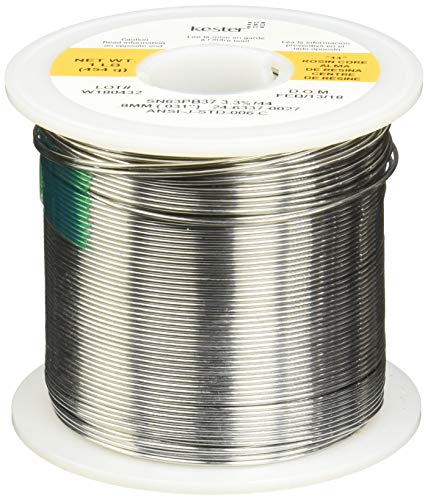
Kester’s 63/37 eutectic alloy is the gold standard for precision electronics work. Unlike standard 60/40, this 63/37 formulation transitions instantly from liquid to solid without passing through a pasty phase, which eliminates the risk of disturbed joints as the solder cools. The 0.031-inch diameter is a perfect match for through-hole components on PCBs and general wiring tasks from 28 AWG up to 12 AWG.
The rosin core in this Kester spool delivers consistent, aggressive flux action that promotes excellent wetting on clean copper and tin-lead surfaces. Users with temperature-controlled irons report shiny, strong joints at 340–350°C with no cold-solder failures. The spool size offers substantial length for multiple projects without taking up excessive bench space.
This is the solder experienced technicians reach for when reliability matters most. It outperforms generic spools in both flow characteristics and final joint appearance, making rework rare. If you want a single spool that handles the majority of electronics assembly and repair jobs, this is the one.
Why it’s great
- Eutectic 63/37 alloy eliminates the pasty range for cleaner joints
- 0.031″ diameter suits both through-hole and light gauge wire
- Consistent flux core delivers reliable wetting every time
Good to know
- Premium tier pricing compared to standard 60/40 spools
- Best results come from a temperature-controlled soldering iron
2. AIM Solder 60-40 Tin Lead Rosin Core Solder Wire, 0.032″ Diameter, 1lb Spool
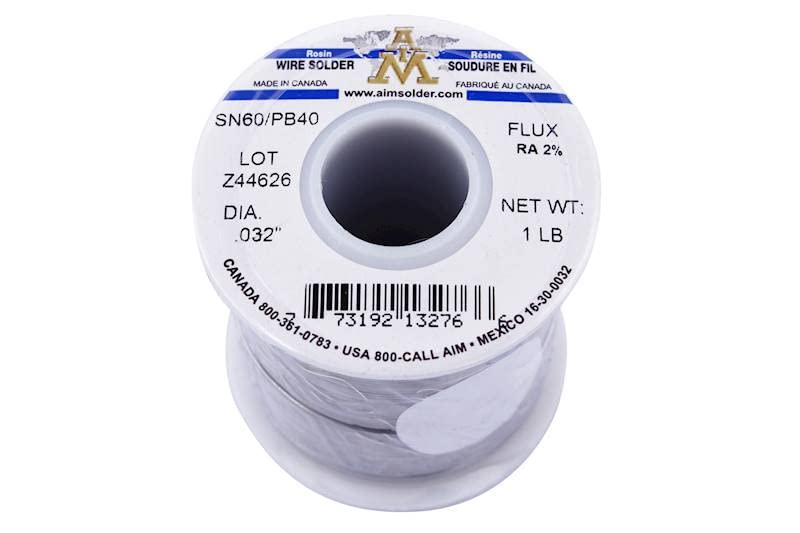
AIM Solder brings industrial-grade alloy purity to the hobbyist and repair bench with this 1-pound spool of 60/40 rosin-core wire. The 2% rosin-activated flux core provides strong cleaning action that cuts through light oxidation on pads and leads, and the 0.032-inch diameter (0.8mm) is ideally matched for general PCB work and electrical repairs on radios, speakers, and appliances.
The 454g spool is a substantial quantity that serves high-volume users well — you will not run out mid-project. The melting range of 361–370°F (183–188°C) is typical for the 60/40 alloy, and the flux residue is manageable with standard cleaning solvents. Users building antenna systems and repairing motor windings report strong mechanical joints that hold up to vibration.
For the price per gram, AIM delivers pro-quality material that competes directly with name-brand spools at a lower entry point. The wire feeds smoothly off the spool without kinking, and the rosin core is evenly distributed along the entire length. It is a solid, no-surprises choice for anyone who goes through solder quickly.
Why it’s great
- Large 1lb spool offers excellent value per foot of solder
- 2% RA flux core handles light surface oxidation effectively
- 0.032″ diameter is versatile for most electronics tasks
Good to know
- RA flux residue should be cleaned from boards after soldering
- Not ideal for fine-pitch SMD work without a finer diameter option
3. Weller WSW SnPb T0051403199 Solder Wire, 0.039″ Diameter, 100g

Weller’s WSW series solder wire is engineered for professionals who demand consistency from joint to joint. The Sn60Pb40 alloy with 2.2% flux content strikes a careful balance — enough flux to wet stubborn terminals without leaving excessive residue that requires heavy cleanup. The 0.039-inch (0.8mm) diameter is slightly thicker than typical fine-pitch wire, making it ideal for guitar electronics, heavy-duty PCB joints, and connector soldering.
The flux core in this Weller spool is uniformly distributed, which prevents dry spots that cause cold joints. Users frequently note the solder flows smoothly and wets both pad and lead on the first try, even with moderately tarnished surfaces. The 100-gram spool is compact enough for a field kit but holds enough length for several repair sessions.
This is the solder that experienced guitar techs and audio engineers choose for its predictable behavior on switch lugs, pot terminals, and jack sockets. It also works exceptionally well on copper ground planes where heat sinks rapidly. If you value consistency and minimal rework in a mid-size spool, Weller delivers.
Why it’s great
- 2.2% flux core provides strong wetting with less residue
- Slightly thicker 0.039″ diameter suits heavy joints and lugs
- Uniform flux distribution eliminates dry sections
Good to know
- 100g spool is smaller than bulk options for high-volume use
- Best paired with a quality temperature-controlled iron
4. RadioShack SnPb 60/40 Rosin-Core Solder, 0.062″ Diameter, 8 oz Spool

The RadioShack brand carries decades of trust among hobbyists, and this 8-ounce spool of 60/40 rosin-core solder lives up to that reputation. The 0.062-inch diameter is noticeably thicker than the 0.031-inch standard — it feeds a lot of alloy into a joint fast, which is useful for heavy-duty wiring, battery tabs, and larger mechanical connections where you need to bridge gaps or fill holes.
This spool is not aimed at fine-pitch SMD work. Instead, it excels on through-hole boards with larger pads, terminal strips in vintage audio gear, and automotive electrical repairs. The rosin core provides adequate wetting on clean surfaces. Multiple long-time technicians confirm the alloy flows well and produces strong, shiny joints when used with a properly heated iron.
If your work leans toward the larger side of electronics — think power supplies, speakers, and relays — this diameter saves time by depositing more metal per pass. The spool size is generous for the price, and the classic formula is a reliable fallback for general-purpose bench work.
Why it’s great
- Thick 0.062″ diameter speeds up large joint soldering
- Generous 8 oz spool lasts through many projects
- Classic formula trusted by hobbyists for years
Good to know
- Too thick for fine-pitch ICs and SMD components
- Flux core is adequate but not as aggressive as RA types
5. Miniatronics Corp 1064004 Rosin Core Solder 60/40, 4 oz

Miniatronics Corp delivers a solid mid-range 60/40 rosin-core solder that hits the sweet spot for small-scale electronics work. The 0.03-inch diameter is nearly identical to the standard 0.031-inch size used in professional PCB assembly, making it directly compatible with through-hole boards and component leads. Users consistently report the alloy melts cleanly at approximately 300°C and wets well with minimal smoke and residue.
The 4-ounce spool is compact enough for a hobbyist’s drawer but holds enough length for dozens of joints. The rosin core produces a nice shine on finished joints, which is a reliable visual indicator of proper soldering temperature and good intermetallic bonding. Several repeat buyers note the packaging seals well, preventing oxidation during storage.
This solder works equally well with low-wattage irons and temperature-controlled stations. It handles copper tubing for non-electrical applications and general-purpose wiring without complaint. If you need a dependable 60/40 spool for weekend projects and the occasional repair, this is a strong, budget-conscious selection.
Why it’s great
- 0.03″ diameter matches common PCB through-hole standards
- Clean melting with minimal smoke at ~300°C
- Well-sealed packaging preserves flux integrity
Good to know
- Not marked as RA flux; less aggressive on oxidized surfaces
- 4 oz spool is smaller than bulk options for frequent users
6. Mandala Crafts 60/40 Solder Wire – 50g 0.5mm Rosin Core

Mandala Crafts offers an entry-level 60/40 solder wire that serves beginners and light DIY users well. The 0.5mm (0.020-inch) diameter is noticeably thinner than the standard 0.031-inch wire, which makes it suitable for smaller joints, stained glass work, and fine electronics where bridging adjacent pads is a concern. The 50-gram spool provides approximately 20 yards of wire — enough for several small projects.
The rosin core is evenly distributed, and the alloy melts at a low temperature starting around 376°F (191°C), reducing the risk of heat damage to sensitive components. Users transitioning from generic unbranded solder notice smoother flow and better shine. Multiple beginners report successful first-time joints on guitar electronics, LED strips, and drone wiring.
While it does not deliver the same consistent wetting as premium brands like Kester or Weller on heavily oxidized surfaces, it performs admirably for its price tier. For someone learning to solder or working on non-critical hobby projects, this spool provides a low-cost way to get reliable results without a large upfront investment.
Why it’s great
- Fine 0.5mm diameter reduces bridging on tight pads
- Low melting point protects heat-sensitive components
- Budget-friendly price for learning and hobby use
Good to know
- 50g spool is small for high-volume work
- Flux performance is below premium-tier brands
7. Kester 44 Solder Wire 63/37, 0.031″ Diameter, 1-ounce Dispense Pak

The Kester 44 is a legend in the soldering community for good reason. This 1-ounce Dispense Pak contains approximately 27 feet of 63/37 eutectic alloy at a fine 0.020-inch diameter, purpose-built for precision electronics work like Pinecil V2 soldering, RC motor and ESC connections, and fine-pitch PCB repair. The high-activity RA (Rosin Activated) flux formulation aggressively cleans pads and leads for superior wetting.
Users consistently describe the Kester 44 as the benchmark for quality — it produces perfectly smooth, shiny joints with very little smoke and no unpleasant odor. The 63/37 composition eliminates the plastic range, meaning the joint goes from liquid to solid instantly, reducing movement-related defects. Pre-tinning wires before soldering improves wicking into connectors and through plated holes.
This is not a budget option, but the per-joint reliability is unmatched. Several long-time technicians who switched from generic spools to Kester 44 report dramatically fewer rework sessions. If you solder critical components where joint failure is not acceptable, this tube earns its place on your bench.
Why it’s great
- 63/37 eutectic alloy eliminates the pasty cooling phase
- RA flux provides aggressive cleaning for reliable wetting
- 0.020″ fine diameter is perfect for precision and SMD work
Good to know
- RA flux residue should be cleaned post-soldering
- 1-ounce tube is small, intended for specialty use
FAQ
What is the difference between 60/40 and 63/37 solder?
Can I use 60/40 solder for surface-mount components?
Final Thoughts: The Verdict
For most users, the 60/40 solder winner is the AIM Solder 60-40 1lb Spool because it delivers industrial-grade alloy purity and consistent flux performance at an unbeatable value per gram. If you demand the highest joint reliability for critical electronics, grab the Kester 24-6337-0027 63/37 Spool. And for fine-pitch work and portable precision, nothing beats the Kester 44 63/37 Dispense Pak.