
Your car’s A/C vents are pushing warm, humid air, and the dashboard pressure is rising faster than the cabin temperature. Before you grab the nearest can of refrigerant, you need to know that one wrong connection or a mismatched gas type can damage your compressor or blow a seal, turning a simple top-up into a costly shop visit. Choosing the correct refrigerant and the right tools for your vehicle’s specific system is the only way to restore that ice-cold airflow without causing expensive damage.
I’m Min — the co-founder and writer behind Gadgets Feed. For years, I’ve analyzed automotive A/C system specs, cross-referenced OEM compatibility charts, and dug into real-world recharge data so you don’t waste money on the wrong gas or a gauge that reads false pressures.
To make a smart purchase, you need to know the exact refrigerant type your car requires, the right tools for charging, and which kits actually seal leaks versus just masking the problem. This guide breaks down the essential specs and features of the best air conditioning freon for car options so you can make a confident choice and get your A/C back to full power.
How To Choose The Best Air Conditioning Freon For Car
Selecting the right refrigerant or recharge kit for your vehicle starts with a single non-negotiable step: checking the under-hood label for the approved refrigerant type. Most cars built before 2015 use R134a, while models from 2015 onward use R1234yf. Using the wrong gas can lead to system contamination, compressor failure, or unsafe pressure readings.
Verify Refrigerant Type (R134a vs R1234yf)
The two common automotive refrigerants are chemically different and not interchangeable. R134a systems use standard thread fittings, while R1234yf systems use a reverse-thread design to prevent accidental connection of the wrong type. If you own a 2018 Jeep Grand Cherokee or a 2020 Honda Civic, you almost certainly need R1234yf. If you drive a 2008 FJ Cruiser or a 2006 RAV4, R134a is your gas.
Decide Between a Recharge Can vs. a Full Gauge Set
If your A/C simply blows warmer than usual and you have a basic idea of the low-side port location, a simple recharge can with a short hose can work. However, if you suspect you have a leak, are replacing a compressor, or want to check both high and low side pressures, you need a manifold gauge set. A 4-way set lets you connect a vacuum pump, a refrigerant can, and both service ports simultaneously, saving time and providing a proper evacuation.
Look for Leak-Sealing Additives
Some recharge cans include chemistry that aims to recondition rubber O-rings and gaskets, potentially stopping small, seepage-level leaks. Products like the A/C Pro with Max-Seal are designed for this purpose. For larger leaks at the condenser or evaporator, however, no additive can fix a hole, and a proper repair is required before recharging.
Quick Comparison
On smaller screens, swipe sideways to see the full table.
| Model | Category | Best For | Key Spec | Amazon |
|---|---|---|---|---|
| ZeroR R1234YF | Refrigerant Can | Modern Cars (2015+) | 8 oz, reverse-thread SSV | Amazon |
| A/C Pro ACP-105 | Recharge w/ Sealant | Leaky & Older Systems | 12 oz, Max-Seal additive | Amazon |
| Orion Motor Tech 4-Way | Manifold Gauge Set | Diag & Full Recharge | 4 hoses, 800 psi rating | Amazon |
| CALPOSE 3-Way Gauge | Manifold Gauge Set | Budget Diag Kit | 3 hoses, R410a adapter | Amazon |
| ZeroR R134a Replacement Kit | Recharge Kit | Eco-Friendly R134a | 2 cans, SSV, 14″ hose | Amazon |
| National Refrigerants R1234yf | Refrigerant Can | OEM 1234yf Top-Up | 8 oz, SAE J2844 compliant | Amazon |
| Boltigen R134a Kit | Recharge Hose Kit | Versatile DIY Kit | Bullet tap, 3000 psi hose | Amazon |
In‑Depth Reviews
1. ZeroR Genuine R1234YF Refrigerant Can
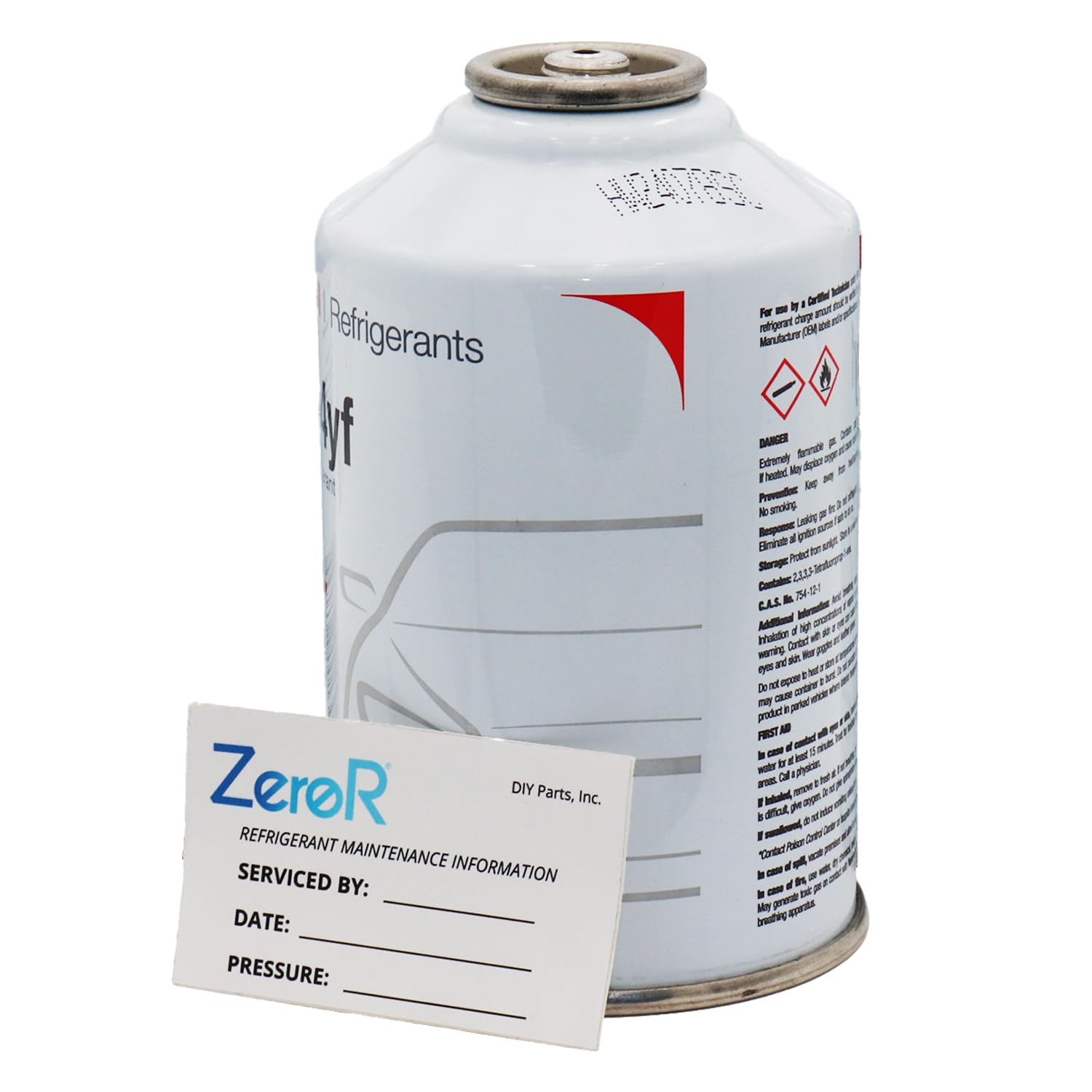
ZeroR’s R1234YF refrigerant is the cleanest drop-in choice for post-2015 vehicles that require the low-GWP gas. Each 8-ounce can is filled by weight, not volume, which matters because R1234yf systems are sensitive to precise charge amounts — overfilling can damage the compressor just as easily as underfilling. The reverse-thread design on the can valve is an intentional safety feature that prevents you from connecting it to an R134a tool, eliminating the most common DIY mistake.
Users consistently report restoring vent temperatures down to 45°F after charging with one or two cans. The included service sticker is a small but practical detail for labeling your system for future maintenance, especially if you swap vehicles or sell the car. The HFO-1234yf blend delivers reliable cooling without the high global warming potential of its predecessor.
For a 2018 Jeep Grand Cherokee or any modern R1234yf system, this is the refrigerant that simply works. It pairs perfectly with a compatible SSV tool, and the self-sealing valve lets you store leftover gas for a future top-up without waste.
Why it’s great
- Reverse-thread valve prevents cross-type mistakes
- Measured by weight for accurate charging
- Includes service sticker for system labeling
Good to know
- Most systems need 2-3 cans for a full recharge
- Requires a dedicated R1234yf tool kit
2. A/C Pro ACP-105 Refrigerant With Max-Seal

A/C Pro’s ACP-105 is the reference standard for R134a recharge cans that double as a maintenance treatment. The 12-ounce capacity is matched with its proprietary Max-Seal 2-in-1 chemistry, which includes agents designed to recondition rubber O-rings and gaskets while also sealing small micro-leaks. Users have documented vent temperature drops from 62°F to 46°F after adding just 4 ounces of this refrigerant.
This product really shines for older vehicles with minor seal seepage. One verified customer revived a 16-year-old car’s A/C after three years of disuse using only this can and a gauge. The formula also contains no-corrosion additives to combat moisture and acid buildup inside the system, a common issue in cars that haven’t been serviced in years.
It’s a quick fix that also provides a maintenance benefit. If your system has a serious leak at the condenser or evaporator, this won’t fix it, but for O-ring seepage and general top-ups, it’s an incredibly effective and easy entry point.
Why it’s great
- Sealant helps recondition seals and stop leaks
- Anti-corrosion additives protect system
- Simple three-step use, very beginner-friendly
Good to know
- Only for use with R134a systems (pre-2015)
- Not for large holes or mechanical failures
3. Orion Motor Tech 4-Way Manifold Gauge Set
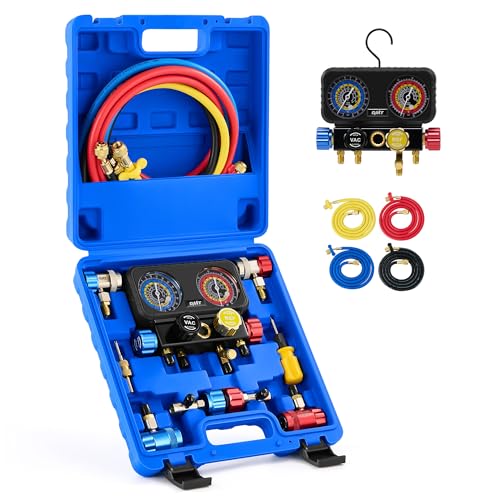
Orion Motor Tech’s 4-way manifold gauge set is the most versatile tool on this list for anyone doing their own A/C service. The set includes quick couplers for both R1234yf and R134a, plus two self-sealing can taps (one for each refrigerant type) and adapters for both left-hand and right-hand threads. The fourth hose is a game-changer because it lets you keep your vacuum pump and refrigerant can connected simultaneously without swapping lines.
The gauges feature oil-filled cores for shock resistance and calibration screws for 1.6% accuracy. The hoses are color-coded and rated to 800 psi working pressure with a 4000 psi burst pressure, which is well above the operating range of any automotive A/C system. A master mechanic with 45 years of experience verified that the kit works perfectly for R1234yf on a 2016 Honda Civic, noting the clear instructions for left-hand thread installation.
If you plan to evacuate and recharge multiple vehicles, or if you want the ability to diagnose high-side and low-side pressures properly, this set offers professional capability at a fraction of the cost of Snap-On or Matco equivalents.
Why it’s great
- Fourth hose allows simultaneous pump & fill
- Includes both R1234yf and R134a fittings
- Oil-filled gauges with 1.6% accuracy
Good to know
- Plastic storage box is a tight fit
- Fittings may not match Snap-On precision
4. CALPOSE 3-Way AC Manifold Gauge Set for R1234yf
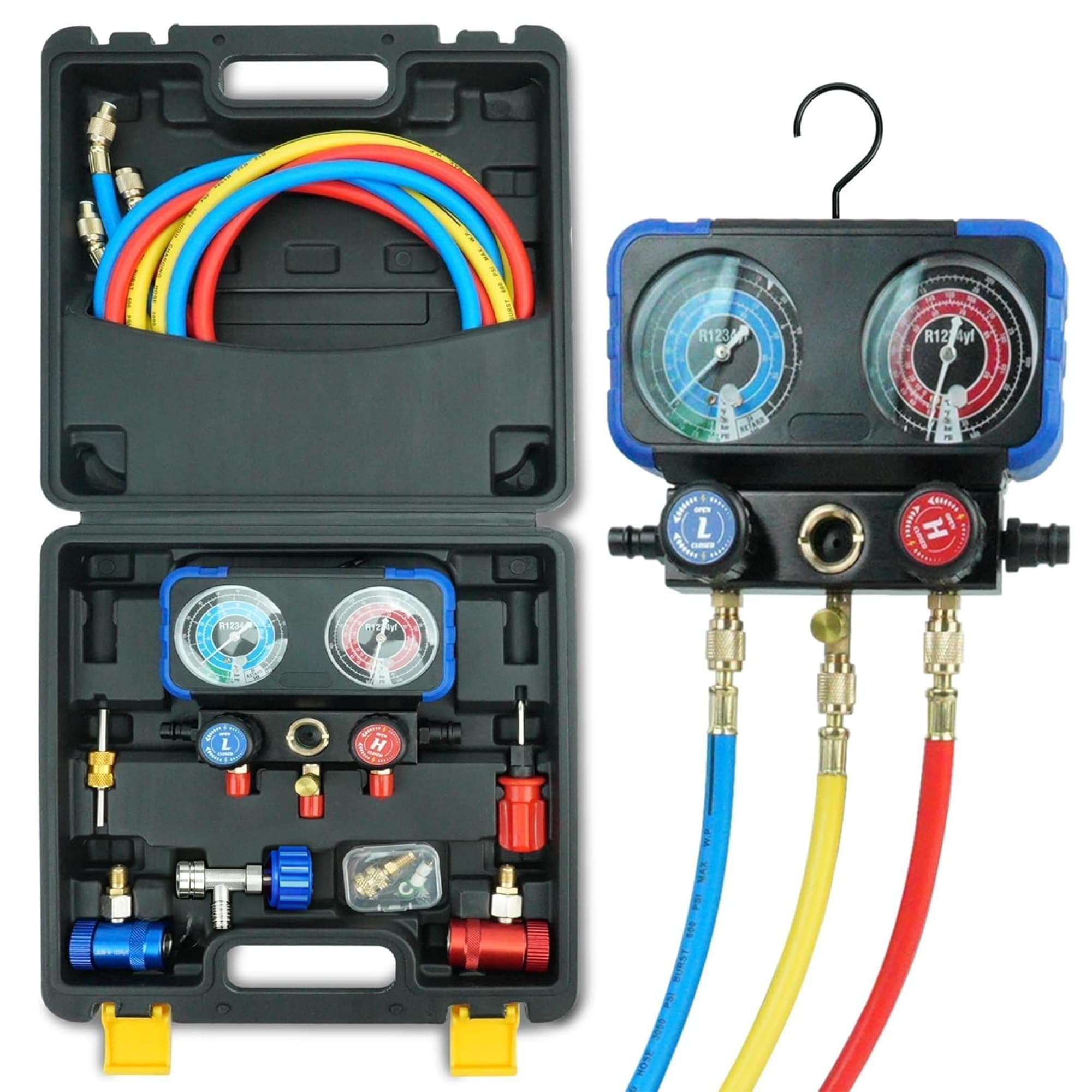
CALPOSE offers a dedicated 3-way manifold set for R1234yf, making it a great choice if you own a single modern vehicle and don’t need the dual-refrigerant capacity of the Orion set. The aluminum body with copper fittings provides solid corrosion resistance, and the anti-collision dials feature a calibration screw for maintaining 1.6% accuracy over time. The included R410a adapter expands its usefulness beyond automotive to home mini-split systems if needed.
Users have successfully recharged a 2020 Jeep after a condenser replacement, praising the secure connections and easy fit to the car’s R1234yf ports. The 4-layer reinforced hoses are rated to 600 psi working pressure with a 3000 psi burst pressure, which is adequate for automotive use. The viewing window lets you monitor coolant condition in real-time.
It’s important to note that some users reported receiving R134a-style adapter holders instead of correct R1234yf ones, so double-check the contents upon arrival. For occasional home use on a single vehicle, this is a capable and budget-friendly diagnostic tool.
Why it’s great
- Dedicated R1234yf set with aluminum body
- Includes R410a adapter for home systems
- Anti-collision dials for accurate readings
Good to know
- Some units shipped with wrong adapter holders
- Not for professional daily use
5. ZeroR AC Recharge Kit R134a Replacement (2 Cans)
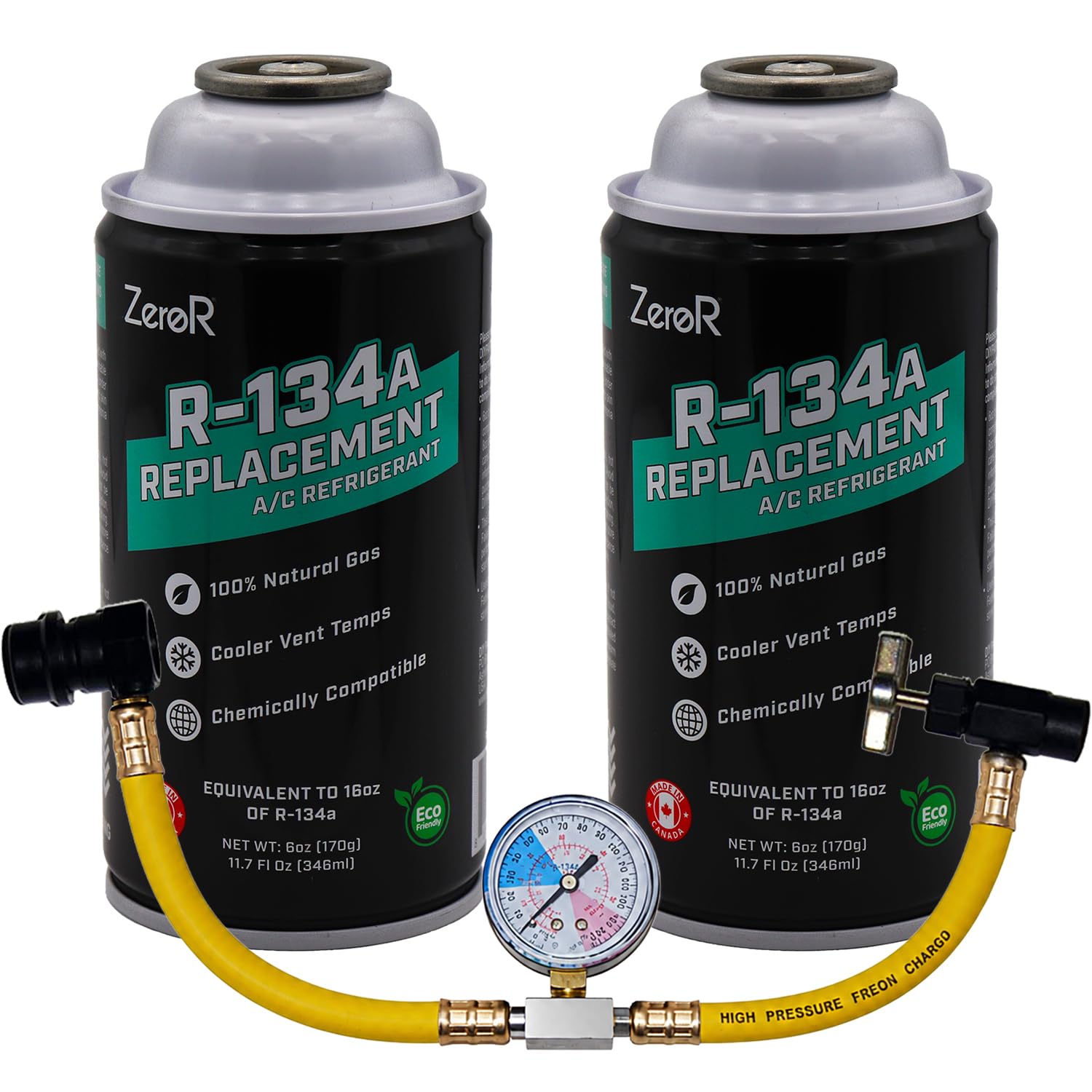
ZeroR’s R134a replacement kit uses a hydrocarbon blend that is 100% natural, ozone-safe, and has near-zero global warming potential, making it an environmentally conscious choice for older R134a systems. Each 6-ounce SSV can is measured by weight, and the kit comes with a 14-inch charging hose designed for SSV-compatible tools. The self-sealing valve allows you to store unused refrigerant without losing it.
Several users have reported great results with a single can on a 2008 FJ Cruiser, restoring proper cooling with no complications. The kit includes two cans, which is often enough for a complete recharge of a passenger vehicle. It’s chemically compatible with R134a systems, meaning you won’t need to flush or replace seals before using it.
One important note: this is a hydrocarbon blend and is classified as flammable, like many modern refrigerants. It is explicitly labeled for non-MVAC (motor vehicle air conditioning) use in its regulatory disclosures, though many car owners do use it successfully in automotive systems. Verify your local regulations and safety requirements before charging.
Why it’s great
- Low GWP, ozone-safe natural hydrocarbon blend
- SSV cans allow storage of unused gas
- Chemically compatible with R134a systems
Good to know
- Hydrocarbon blend is flammable — handle with care
- Labeled for non-MVAC use; check regulations
6. National Refrigerants R1234yf 8 oz Can

National Refrigerants delivers a straightforward, OEM-compatible R1234yf can that meets SAE J2844 standards, which is the industry benchmark for safety and performance in mobile A/C systems. The 8-ounce size is ideal for quick top-ups when you know your system is low but not empty, and it’s compatible with most standard R1234yf recharge kits and tools. The clean, no-additive formulation means you’re only putting refrigerant into the system, nothing extra.
Users report that it works exactly as expected for topping up R1234yf systems, with orders arriving well-packaged and the cans functioning properly. One user humorously noted it’s not a beverage, but it is effective at its job. Because it contains no leak sealant or stop-leak additives, it’s the correct choice for systems that are mechanically sound and only need a gas top-up.
This is a budget-friendly entry point for R1234yf recharging, but you will need your own R1234yf-compatible hose and gauge to use it. It’s best for experienced DIYers who already own the proper equipment and just need the gas.
Why it’s great
- Meets SAE J2844 professional standards
- Clean refrigerant without additives
- Good for simple top-ups on 1234yf systems
Good to know
- Requires a separate R1234yf recharge tool
- No sealant — won’t fix leaks
7. Boltigen R134a Refrigerant Recharging Hose with Gauge
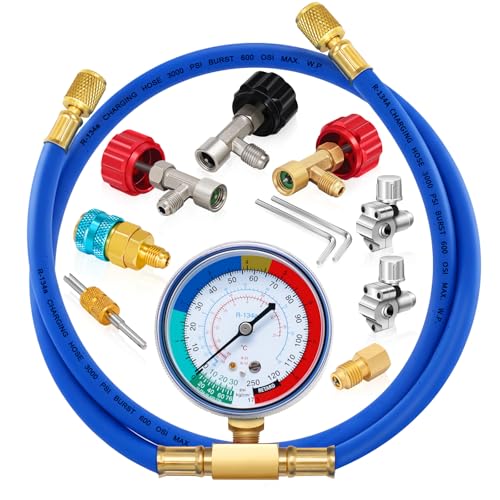
Boltigen’s R134a recharge kit is the most complete multi-purpose set for anyone working with older refrigerants like R134a, R12, or R22. The kit includes a gauge hose rated to 250 psi with a hose rated to 3000 psi burst pressure, two R134a can tap valves (both piercing and self-sealing styles), a R12 self-sealing can tap, and a bullet piercing valve for accessing sealed lines. The brass construction on the taps resists rust and provides a reliable seal.
One user successfully recharged their 2008 Ford Edge, noting the hose length of 41 inches was sufficient, and the rest pressure of 55 psi was expected before adding 6 ounces of refrigerant. The set is notably versatile, including an adapter for 1/4-inch, 5/16-inch, and 3/8-inch outside diameter pipes via the bullet tap. It’s a fantastic solution if you have a mix of R134a vehicles or need to service home appliance lines.
The main drawback is the lack of clear labeling on the different valve types, which forced some users to search online for guidance. For a DIYer who is comfortable with A/C basics and wants a single kit for multiple systems, this offers incredible value.
Why it’s great
- Includes both piercing and self-sealing can taps
- Bullet valve works on multiple pipe sizes
- Brass taps and 3000 psi burst hose
Good to know
- Valve types are not labeled clearly
- No instructions included for beginners
FAQ
Can I use R134a in a car that takes R1234yf?
How do I know if my car’s A/C just needs a top-up or has a leak?
Will a refrigerant can with leak sealant fix a hole in my condenser?
What does the SAE J2844 standard mean for R1234yf cans?
Final Thoughts: The Verdict
For most users, the air conditioning freon for car winner is the ZeroR R1234YF Refrigerant Can because it delivers precise, OEM-spec charging for modern vehicles with the safety of a reverse-thread valve and a included service sticker for record keeping. If you drive an older R134a vehicle and want a quick fix for a slightly warm cabin, grab the A/C Pro ACP-105 — its Max-Seal additive can stop small O-ring leaks and restore cooling in minutes. And for the serious DIYer who wants to properly evacuate and recharge any vehicle, nothing beats the Orion Motor Tech 4-Way Gauge Set, offering four-hose capability that accelerates full system service.