
Our readers keep the lights on and my morning glass full of iced black tea. As an Amazon Associate, I earn from qualifying purchases.
Specs are compiled from manufacturer listings and verified buyer reviews and can change over time — please confirm the key details on the product page before buying.
A dead car air conditioning compressor turns summer commutes into a rolling sauna, and the wrong replacement part can turn a simple repair into a weeks-long headache of returns and re-installs. Match the pulley grooves, oil type, and refrigerant, and the right compressor drops in cleanly and blows cold for years. This guide matches each compressor to the exact engine, pulley groove count, and oil spec it needs for a bolt-on fit.
I’m Min — the founder and writer behind Gadgets Feed. This guide is built by comparing the manufacturers’ published specifications and the patterns across verified customer reviews, so you get each pick’s real strengths and trade-offs instead of marketing spin.
Here is how to pick a car air conditioning compressor that fits right the first time, cools hard, and doesn’t rattle your dashboard.
Our Picks at a Glance


How To Choose The Best Car Air Conditioning Compressor
When your AC blows warm air and the engine bay gets noisy, the culprit is often the compressor—the pump that pressurizes refrigerant and drives the cooling loop. To pick a replacement that lasts, focus on three things: exact vehicle fitment, the right physical specs, and a realistic view of how long a non-OEM part should last.
Check your exact engine, year, and trim
Compressors are not universal — a 2006 Honda Civic 1.8L uses a different unit than a 2008 Honda Pilot 3.5L. Before you buy, note your vehicle’s year, engine size, and whether it’s gas or a hybrid, then verify fitment with the seller’s chart or Amazon’s garage tool. Many sellers flag this with notes like “gas only,” and ignoring those details is the #1 cause of returns.
Match the pulley grooves and compressor style
Every engine has a specific belt setup, so the compressor’s pulley groove count must match what your car came with. The compressor style (a code like DKV10R or DKS17D) tells you the internal design your vehicle expects — matching it ensures the mounting bolts and ports line up perfectly.
Understand oil, refrigerant, and the clutch
Most aftermarket compressors arrive pre-filled with PAG oil, saving you that step, but they still need the correct refrigerant level added after install. The clutch is the electromagnetic switch that engages the compressor, and a good replacement includes a new one so you don’t reuse a worn-out part.
Quick Comparison
| Model | Best For | Compressor Style | Pulley Grooves | Oil Prefilled | Amazon |
|---|---|---|---|---|---|
| A-Premium Subaru Compressor★ Best Overall | Subaru owners wanting OE-style fit | DKV10R | 6 | 100ml | Amazon |
| ECCPP Mazda 3 / 5 CompressorBudget Champion | Budget Mazda cooling with cold output | Panasonic | 5 | 130ml | Amazon |
| ECCPP Honda Civic CompressorBest Value | Civic 1.8L owners on a budget | TRSE07 | 7 | 130ml | Amazon |
| SCITOO Honda Pilot Compressor | Quiet operation for Honda/Acura SUVs | 10S20C | 6 | 170ml | Amazon |
| COOLIGO Hyundai Accent Compressor | Hyundai/Kia small cars needing a fresh clutch | — | 6 | 150ml | Amazon |
| ILONPA Nissan Compressor | Nissan Maxima/Murano/Pathfinder/Quest | DKS17D | 7 | 140ml | Amazon |
| SCITOO Ford Escape Compressor | Quiet cooling for Ford/Mazda/Mercury SUVs | DKS17DS | 6 | — | Amazon |
| PHOBOOS Acura/Honda Compressor | V6 owners wanting max cooling capacity | 10SR15C | 6 | 140ml | Amazon |
| BDELI Nissan Compressor | Owners wanting factory-fresh, never rebuilt | DKS17D | 7 | 160ml | Amazon |
| A-Premium Nissan Altima Compressor | Altima/Sentra 2.5L owners wanting cold air | DCS171C | 6 | 160ml | Amazon |
| TadaMark Kia/Hyundai Compressor | Kia Sportage and Hyundai Tucson owners | DVE16 | 6 | 150ml | Amazon |
In‑Depth Reviews
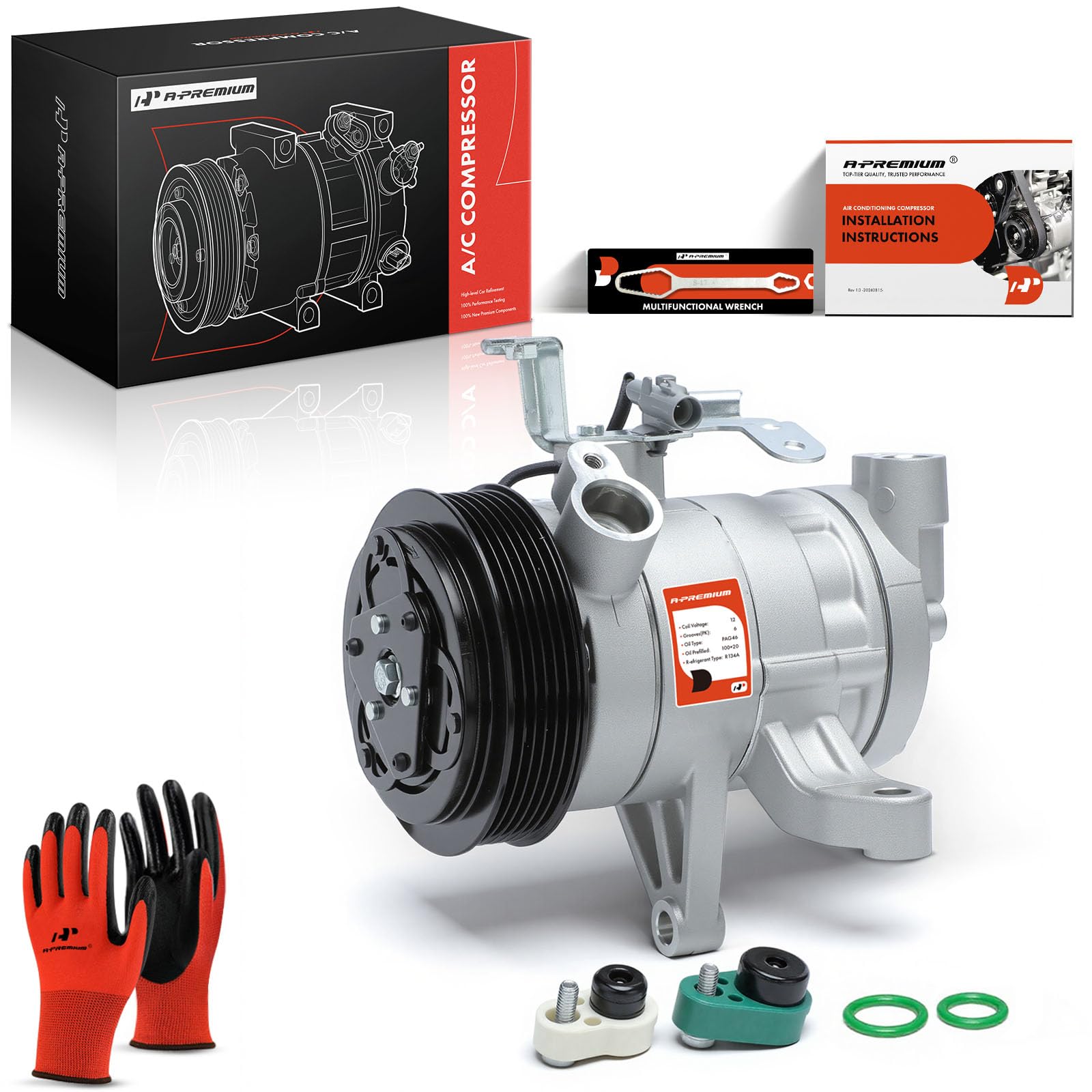
1. A-Premium Air Conditioner AC Compressor with Clutch
Our pick — 4.5★ from 150+ verified ratings; the strongest balance of quality and price.
The Subaru drop-in that keeps the cabin arctic without the factory price tag
For Subaru Foresters, Imprezas, and Crosstreks, this A-Premium compressor earns its spot because buyers report a fit that is “like factory.” It uses the DKV10R compressor style (a specific rotary-vane design) your Subaru expects, has 6 pulley grooves to match the belt, and arrives pre-filled with 100ml of PAG46 oil (a standard refrigerant oil), so you skip the messy oil-filling step.
Owners swapping out a dead OEM unit in a 2015 Crosstrek XV report a clean install with the included gloves, wrench, and instructions. The cooling is strong enough that people describe the result as “very good AC,” and several note it runs quieter than the old factory part it replaced — a recurring theme in the feedback.
The crowd favorite — 4.5 stars across 170 ratings — is held there by the confidence that this fits right the first time. The honest caveat from the review data is that durability and noise get mixed notices; most owners are thrilled, but a small number report a shorter life or some chatter. It replaces part numbers 73111FJ000, 73111FJ040, 73111FJ041, and 73111FJ050, and A-Premium backs it with a one-year unlimited-mileage guarantee.
bolt-on subaru fit
- Bolts in “like factory” for Forester, Impreza, and Crosstrek gas models
- Prefilled with 100ml PAG46 oil, so no oil step on install
- Often reported quieter than the factory unit it replaces
clutch noise reports
- Only fits GAS Crosstrek and XV Crosstrek models, not hybrid versions
- A few owners saw durability issues within a year
subaru swap choice: you drive a gas Subaru Forester, Impreza, or Crosstrek and want a straightforward OE-style swap from a brand with a one-year guarantee.
noisy units: you own a hybrid Crosstrek — this unit is gas-only.
2. ECCPP AC Compressor for Mazda 3 and Mazda 5
The Mazda bargain that pushes icy air for a fraction of dealership cost
This ECCPP unit is a value play that covers a wide Mazda range — Mazda 3 2.0L and 2.3L from 2004-2009, plus the Mazda 5 2.3L through 2010. It runs a Panasonic-style compressor with 5 pulley grooves at a 98mm pulley diameter, and ships pre-filled with 130ml of PAG46 oil, so the first-use oil step is handled.
The review data shows people love the price and the cold output: one owner measured a breezy ~57°F at 1700 RPM on a Mazda after a proper vacuum and R134a charge. Owners mention it fits perfect with no leaks, and the fit and easy installation are what owners praise most about this one.
That said, this is a budget part, and the reviews are honest about the trade-off: reliability gets mixed feedback, with most units working flawlessly while a small number fail quickly. Owners mention a “vane sweep noise” during break-in that settles down. If you’re handy and want to save money on an older Mazda, this is a strong contender.
mazda budget pick: Mazda 3 or Mazda 5 owners who want a genuinely cold system on a budget and don’t mind doing the install right with a proper flush and charge.
tight bays: you need maximum long-term certainty — reliability reports are split, so this fits best on a car you’re willing to wrench on.
3. ECCPP AC Compressor for Honda Civic 1.8L
The Civic fix that handles Texas heat without the dealership markup
Built for the 2006-2011 Honda Civic 1.8L, this ECCPP compressor uses the TRSE07 style your Civic expects, with 7 pulley grooves spinning a 100mm pulley. It arrives pre-filled with 130ml of PAG46 oil and comes with the clutch, so a standard bolt-on swap is all that’s needed.
Customers note it blows “ice cold air” even in brutal Florida and Texas summer heat, and one person with 13 years in the auto parts business calls it top-notch quality that’s quiet and simple to install. The fit is praised as perfect out of the gate, and it’s noticeably lighter than the factory unit while still lining up fine.
The review data is split on durability — most owners are happy, but a chunk report failures within a year, and there are mentions of noise and leakage. The value story is strong: reviewers point out it works as well as an OEM part that costs 6 times more, which is why nearly a thousand owners have rolled the dice on it. ECCPP covers it with a 12-month warranty.
civic value pick: Civic 1.8L drivers who want strong cold air at a budget price and are comfortable with the durability gamble that comes with entry-level parts.
leak-prone: your car sits in 100°+ climates daily and you’d rather pay more for documented long-term reliability.
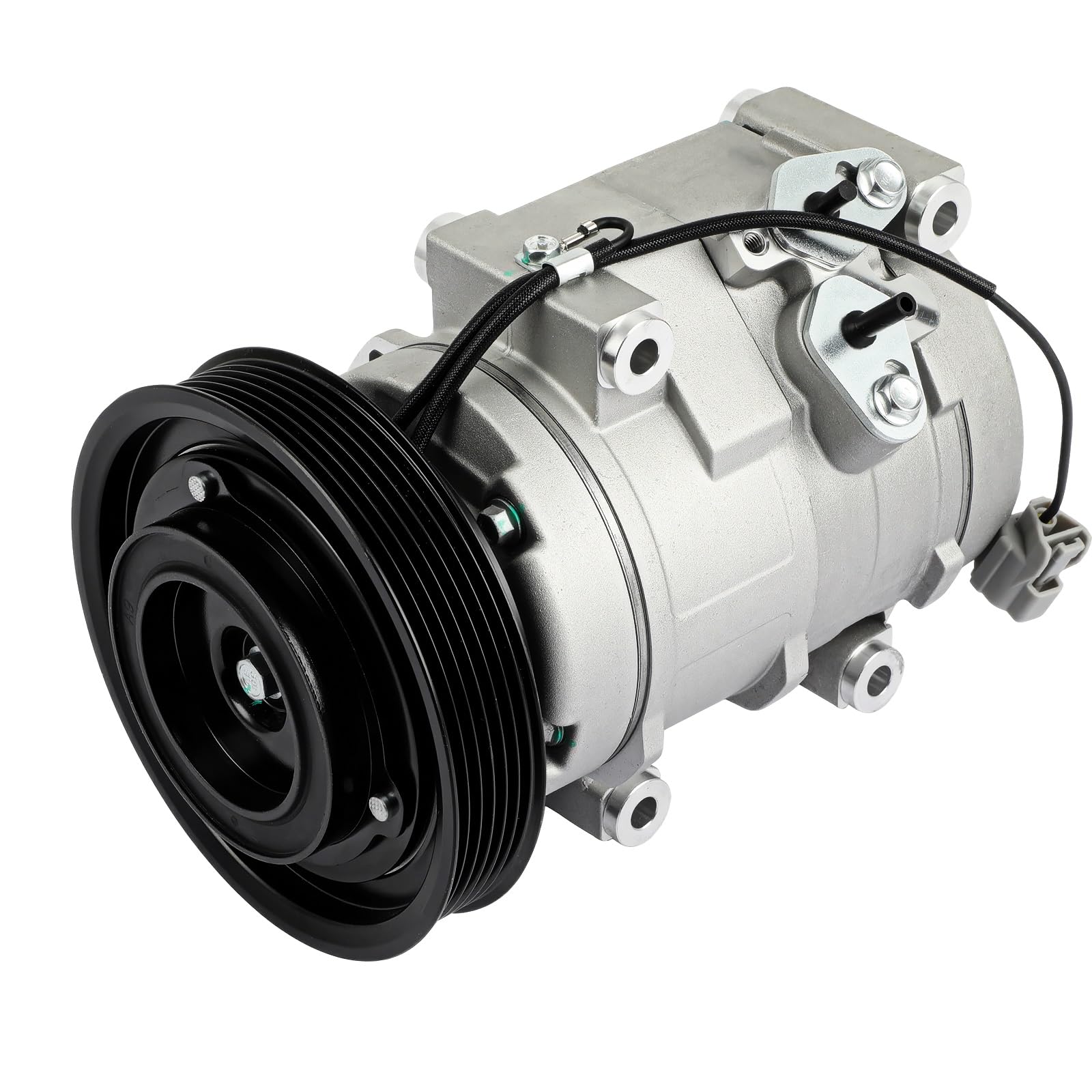
4. SCITOO AC Compressor for Honda Pilot 3.5L
The Pilot part that cools fast and stays whisper-quiet at highway speed
This SCITOO compressor covers a lot of ground under the Honda and Acura badge — Pilot 3.5L 2005-2008, Odyssey, Ridgeline, plus Acura MDX and TL models. It runs the 10S20C compressor style with 6 pulley grooves on a 5.51-inch pulley, and ships with a generous 170ml of PAG46 oil already loaded.
This unit shines on noise: it’s engineered to run at ≤72 dB (about as loud as a normal conversation) with minimal vibration, so you get a “super cool and peaceful trip.” Owners describe the cooling as “blowing snowballs,” which is about the highest praise an AC part gets. It works with R134a refrigerant (the common automotive coolant), and the note to add refrigerant to 70-80% rather than fully filling is a helpful touch for DIYers.
The honest read from the review data: fit and value are praised most, but reliability is mixed, with a few owners seeing failures after weeks or months, and clutch performance drawing some negative notes. Buyers also recommend cleaning your cooling system pipes before install to avoid debris shortening the part’s life. It’s a 4.0-star unit across 319 ratings — a solid choice for the right Honda or Acura if you accept the variance.
pilot oem alt: you drive a Pilot, Odyssey, Ridgeline, MDX, or TL and rank a quiet ride alongside fast cooling.
belt issues: you need the highest odds of multi-year reliability — reports are mixed enough that this is a gamble on older high-mileage SUVs.
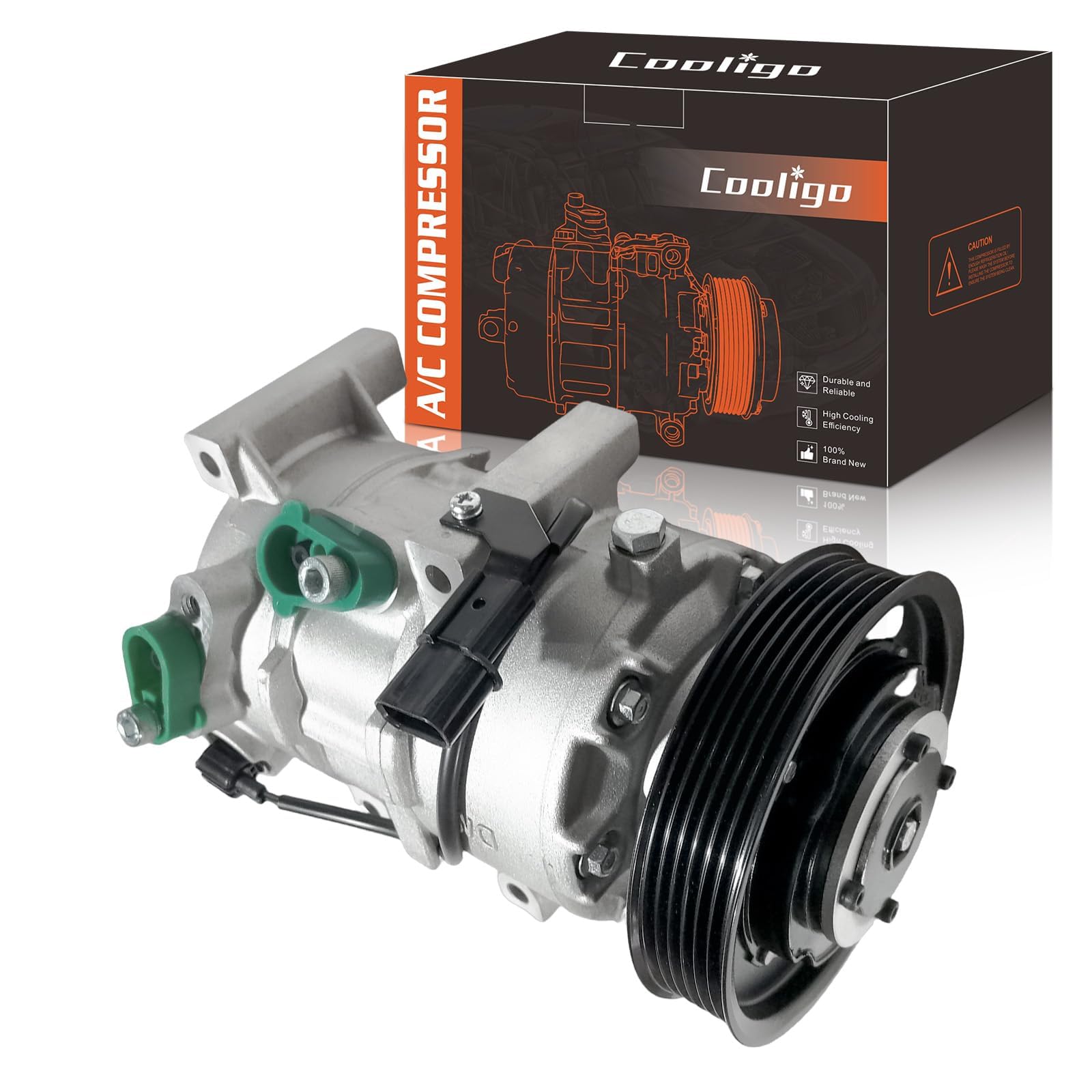
5. COOLIGO AC Compressor for Hyundai Accent and Kia Rio
The compact-car compressor that includes a fresh clutch for a complete swap
For the 2012-2017 Hyundai Accent 1.6L and Kia Rio 1.6L, this COOLIGO unit saves you from reusing a worn electromagnetic clutch (the part that engages the compressor) because the clutch is included—often the real failure point. It has 6 pulley grooves and comes pre-filled with 150ml of oil (10ml tolerance) for R134a systems, so you can install it without buying extra parts.
Shoppers say it installs quickly and “works perfectly,” with early feedback all positive on price and function. The unit references part numbers 977011R100 and 977011W600, so cross-referencing your old part number is straightforward before you order.
The catch here is the small review sample — this is a newer listing, so you’re betting on the COOLIGO build with less long-term data than the established names. Buyers mention checking the fitment chart carefully before ordering, which is always smart with compressors. What you get is a complete, clutch-ready kit for a very common small car.
hyundai kia cheap: Accent or Rio owners who want a full swap kit — compressor and clutch together — without hunting down a separate clutch.
wobble risk: the review history is short, so you’re an early adopter on long-term durability.
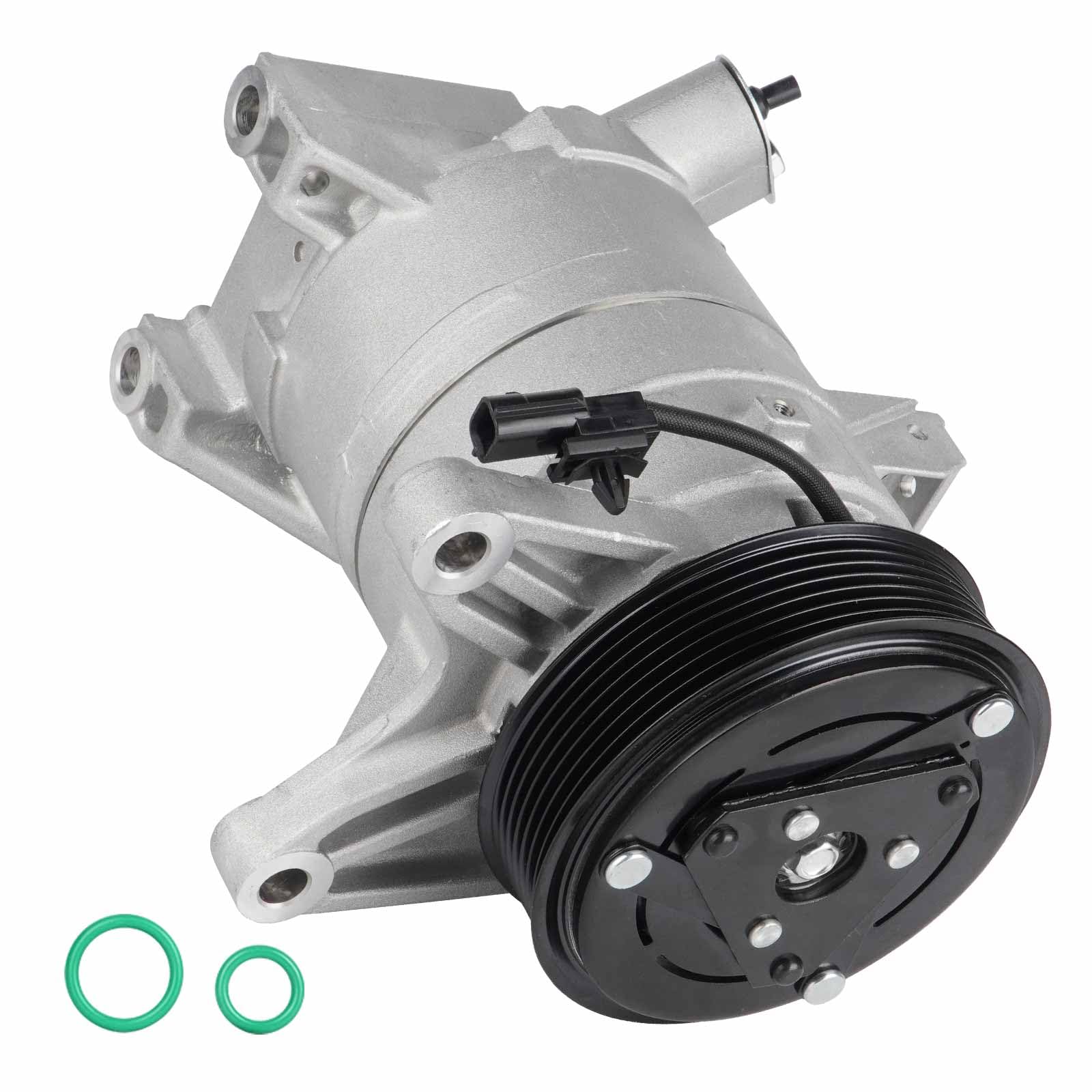
6. ILONPA AC Compressor for Nissan Maxima, Murano, Pathfinder, Quest
The Nissan-family swap that keeps three different vehicles blowing cold
This ILONPA compressor fits multiple vehicles: the Maxima and Murano 3.5L from 2009-2014, plus the Pathfinder 3.5L (to 9/14) and Quest 3.5L (to 8/14). It uses the DKS17D style (a swash-plate design) with 7 pulley grooves on a 115mm pulley, and notably switches to PAG 100 oil at 140ml pre-filled—a different oil spec than the PAG46 units, so check your system’s requirement before buying.
The build is high-strength aluminum alloy aimed at low noise and minimal vibration, and buyers report it “working fine” in 100° Houston heat in a 2012 Murano, with a 2013 Maxima owner calling it efficient and perfect. Fitment gets consistent praise, and it ships with mounting hardware, clutch, and hoses included.
The review base is small but uniformly positive, so this is a confident pick for the listed Nissan models if you verify your cut-off date (pre-9/14 for Pathfinder, pre-8/14 for Quest). The instruction to fully clean the AC system before install is worth heeding — owners mention it protects the new part’s lifespan.
nissan v6 pick: you own a listed Nissan Maxima, Murano, Pathfinder, or Quest and want a bolt-on fit with favorable early owner reports.
stress cracks: your exact production date — the Pathfinder and Quest fit ends at specific build cutoffs.
7. SCITOO AC Compressor for Ford Escape 2.5L
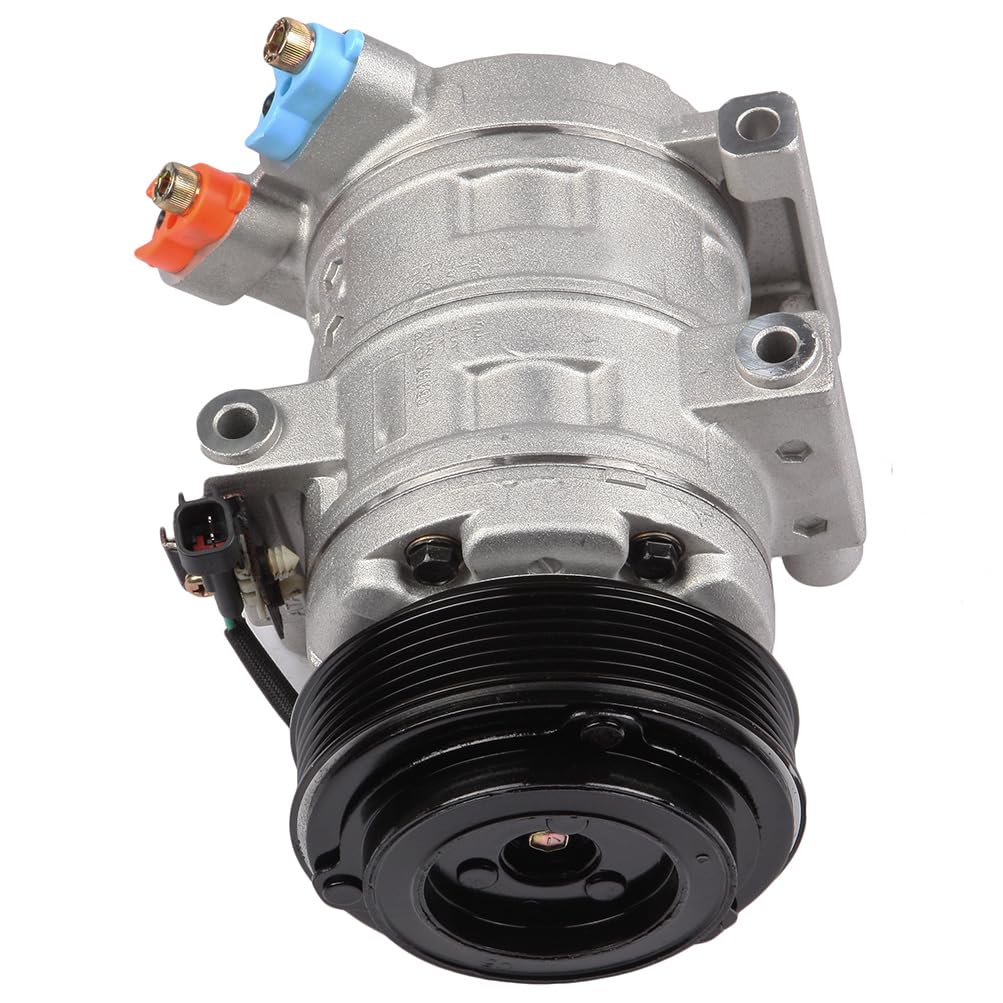
The Escape compressor that targets near-silent operation at 65 dB
For Ford Escape 2.5L models from 2009-2012 — plus the Mazda Tribute and Mercury Mariner twins — this SCITOO unit runs the DKS17DS style with 6 pulley grooves on a 116mm pulley. It lists a noise spec of 65 dB in the technical data and is described as engineered for quiet operation, aiming to turn a hot, stuffy interior into a comfortable cabin almost immediately.
The feature set mirrors the Honda SCITOO above: near-instant cooling, pre-filled oil so no first-use oil step, and the guidance to add refrigerant to 70-80% rather than full. Owners who got a good unit report it “works like a charm,” and one Honda Accord owner even made it work on their car.
This one has the weakest reliability picture of the list—review data flags durability as a real concern, with some buyers seeing the clutch fail after 30 days or the compressor die within a day of professional install. Buyers repeatedly advise cleaning the cooling system pipes before install to avoid debris shortening the part’s life. It’s a budget-forward pick for Escape owners willing to accept that variance.
escape budget: Escape, Tribute, or Mariner owners who want affordable, quiet cooling and are prepared for some lottery-ticket risk on longevity.
drag issues: you need reliability you can bank on — durability is the most-discussed concern in the owner data.
8. PHOBOOS AC Compressor for Acura TL, TSX, RDX and Honda Accord
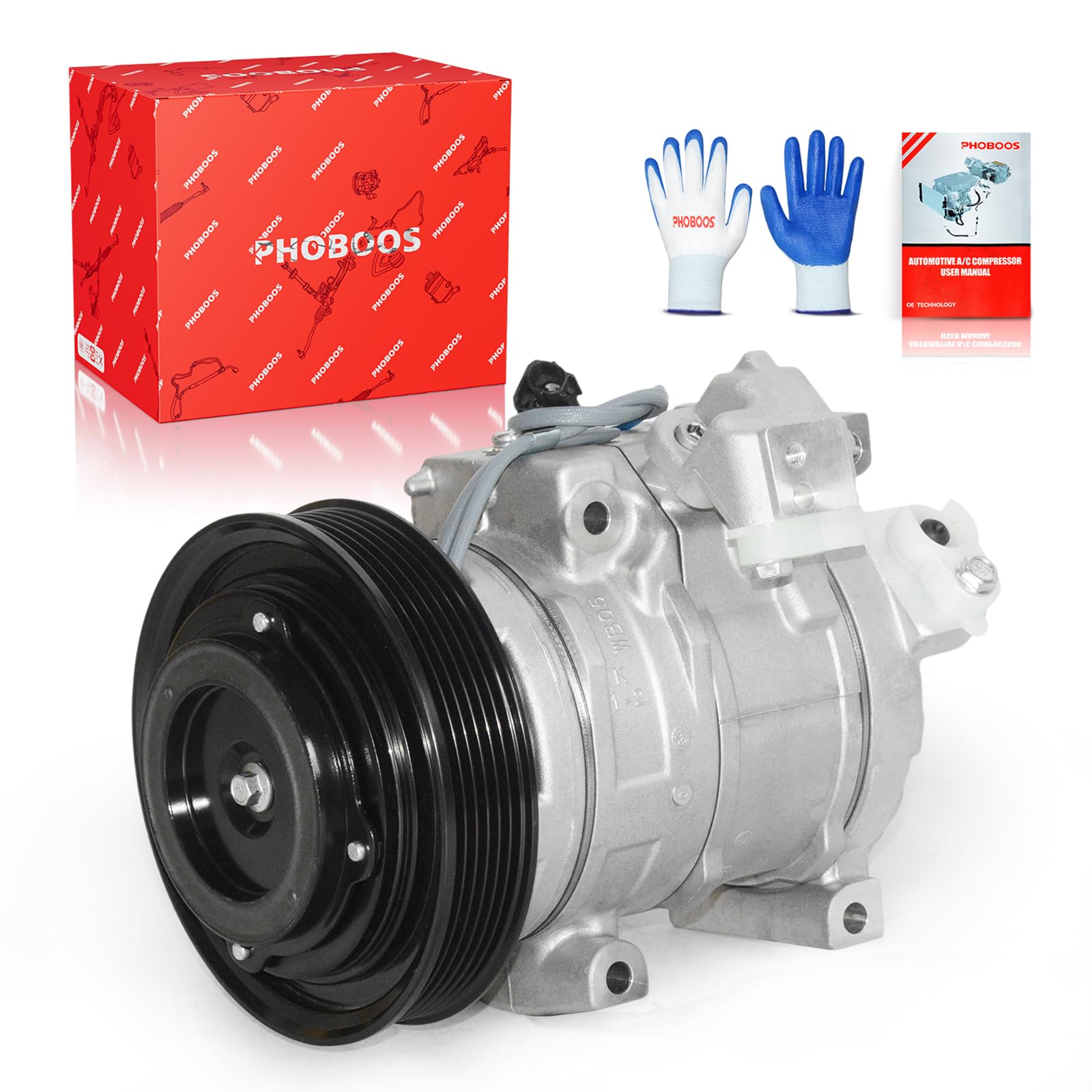
The V6 heavyweight pushing 4000W of cooling for Acura and Honda
This PHOBOOS compressor is the performance pick for the V6 crowd — Acura TL 2009-2014, TSX 2010-2014, RDX 2013-2015, and Honda Accord V6 2008-2012, plus Crosstour models. It runs the 10SR15C style with 6 pulley grooves on a large 135mm pulley (5.315 inches), and claims up to 4000W of cooling capacity in 149°F conditions — the strongest stated output on this list.
Owners confirm the cold: one calls it “10 degrees colder than the last compressor,” and another reports it pumping nice cold air after six months in a 2009 Accord V6. The build is OE-matched for a direct bolt-on fit, comes pre-filled with 140ml of PAG46 oil, and is designed for noise under 70 dB. It’s backed by a 12-month unlimited mileage warranty.
The review data is overwhelmingly positive on functionality, quality, and fit, with buyers describing it as a perfect fit and great value. Rare critical feedback exists — one owner’s technician reported internal valve damage from high pressure out of range, which is a system-level issue rather than a part defect. Note the fitment is for V6 engines only, and the pressure port requires 3 mounting holes, so verify before ordering.
acura honda fit: you drive a V6 Acura or Honda and want maximum cooling output — the 4000W claim is the headline spec here.
sensor fuss: your engine is V6 and your pressure port has 3 mounting holes, as this unit won’t suit four-cylinder models.
9. BDELI AC Compressor for Nissan Maxima, Murano, Pathfinder, Quest
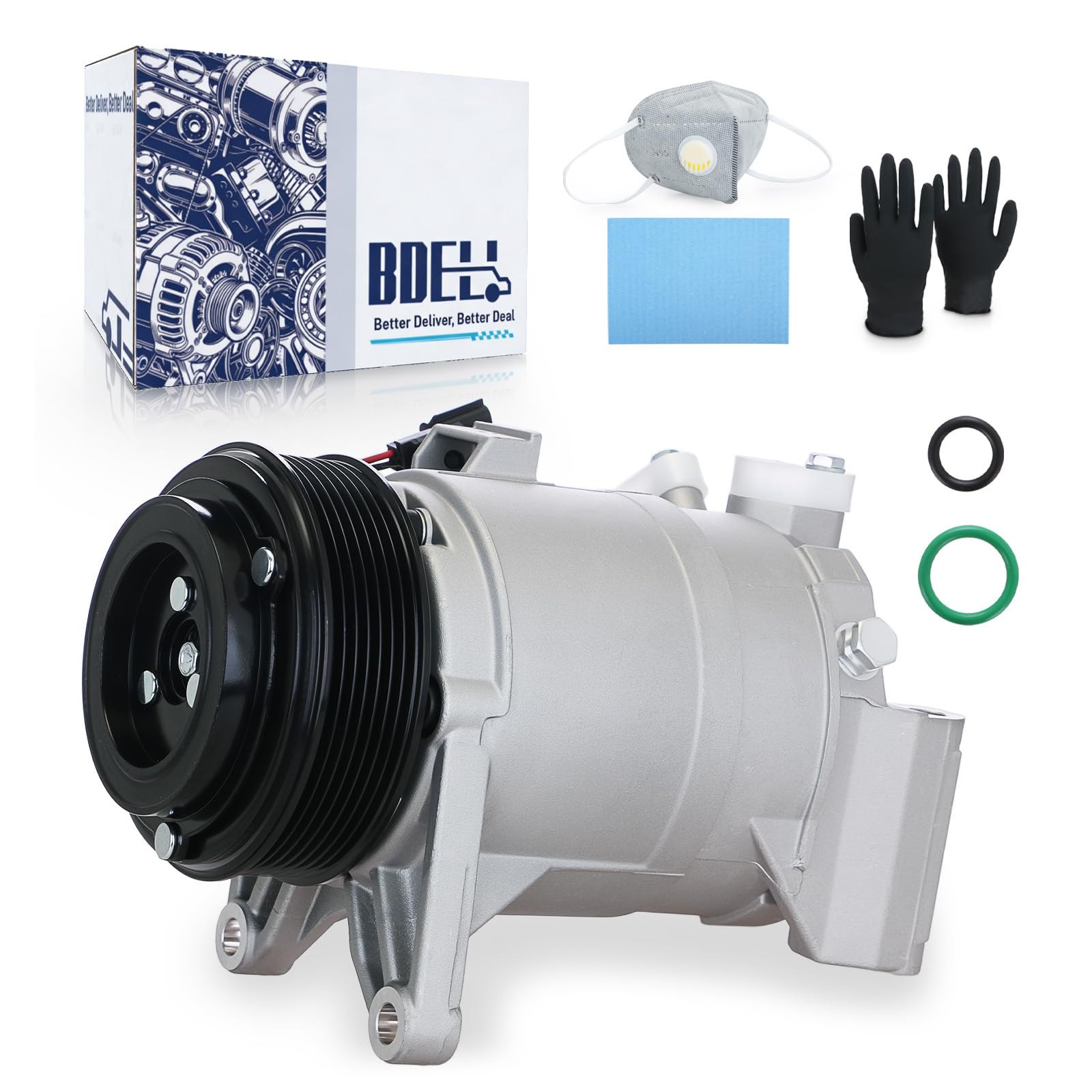
The brand-new Nissan compressor that backs itself with dual certifications
This BDELI compressor is emphatic about one thing: it’s 100% brand new — never rebuilt, never used, never refurbished — sourced from ISO 9001 and IATF 16949 certified factories. For the Maxima and Murano 2009-2014, Pathfinder 2013-2014, Quest 2011-2015, and Infiniti JX35/QX60, it uses the DKS17D style with 7 pulley grooves and comes pre-filled with a generous 160ml of PAG46 oil.
Customers note serious cold: one replaced the compressor on a son’s Nissan and, after flushing the full system and swapping the expansion valve and condenser, it’s been “blowing ice cold for weeks.” A Murano owner confirms three months of very cold air with no drop-off. The 1.5 hp rating (about 1.1 kW) and high-strength alloy steel construction point to a part built for the long haul.
The review data is small but uniformly positive, and the dual manufacturer-plus-seller backing with a 1-year replacement warranty adds confidence. Reviewers point out installation is straightforward but requires several tools, and the note about small oil stains on the casing being normal is a useful heads-up so you don’t mistake a non-issue for a defect.
nissan alt oem: you want the reassurance of a genuinely new unit from ISO-certified production, not a rebuilt or refurbished gamble.
noise prone: the review count is modest, so early returns are strong but long-term data is still building.
10. A-Premium Air Conditioner AC Compressor for Nissan Altima and Sentra
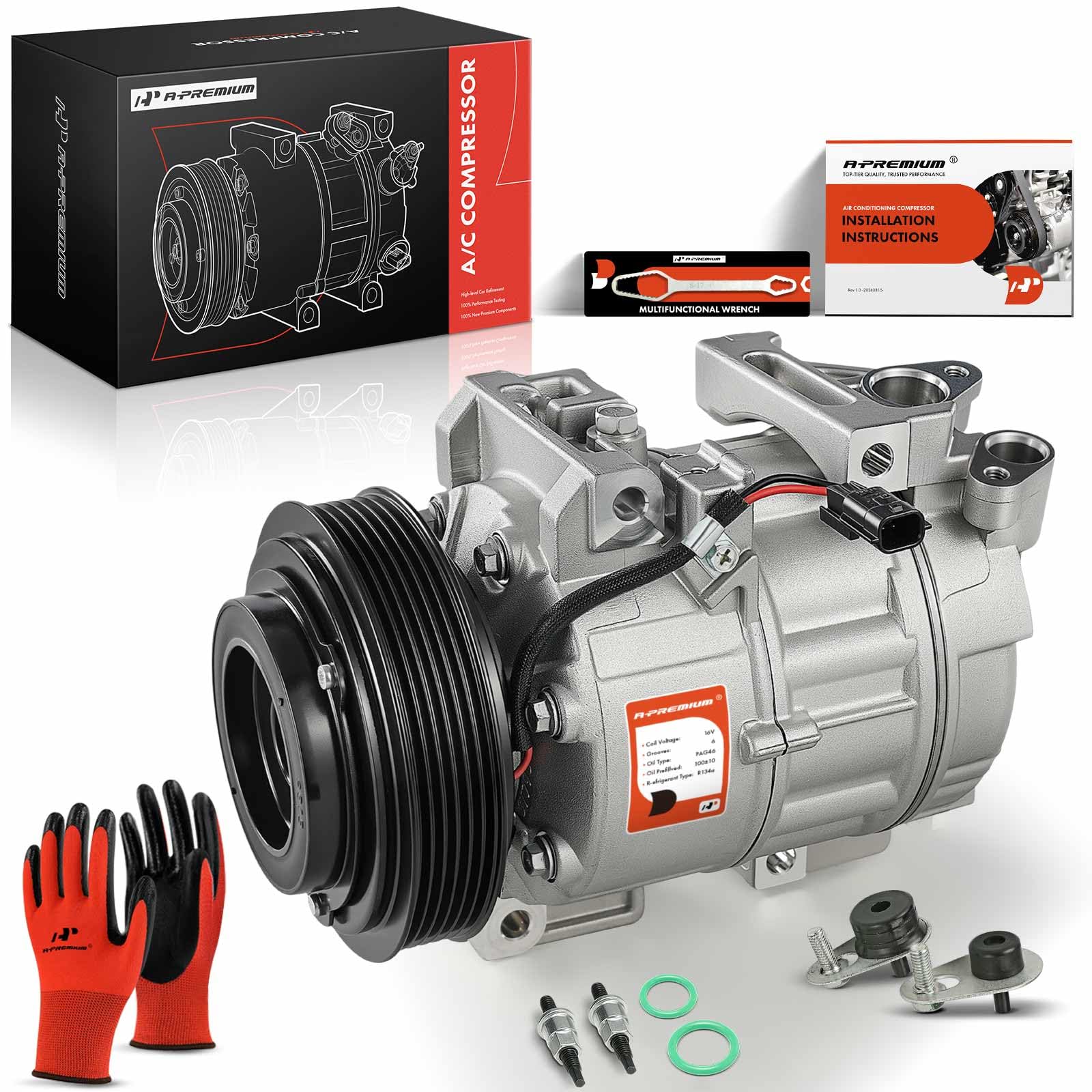
The Altima workhorse that keeps blowing cold a year down the road
For the Nissan Altima 2.5L 2007-2012 and Sentra 2.5L 2007-2012, this A-Premium unit runs the DCS171C style with 6 pulley grooves and arrives with 160ml of PAG46 oil pre-filled. It operates on 12 volts, and shoppers say it matches OEM quality with correct low and high pressures — one owner notes the clutch staying engaged is normal for a variable compressor.
The feedback across 183 ratings is anchored by functionality and quality: owners put one in a 2010 Altima and report A/C “blowing cold” after a week, while others confirm very cold air and a clutch that behaves correctly. Fit and value for money score well, and the fact that buyers describe it as “built to work well” at a lower price than OEM is the recurring theme.
The catch is installation, which draws mixed notices — some find it easy, others wrestle with it, so a proper flush of the system before install is strongly recommended. There’s also a single report of a unit failing after one month, which is the kind of variance you see across any aftermarket compressor. A-Premium’s one-year unlimited-mileage guarantee covers the part cost.
altima cheap fix: Altima or Sentra 2.5L owners who want a well-reviewed, cold-blowing replacement from a brand with a clear warranty.
chatter risk: a mixed install experience — factor in a professional flush and charge for the best odds.
11. TadaMark AC Compressor for Kia Sportage and Hyundai Tucson
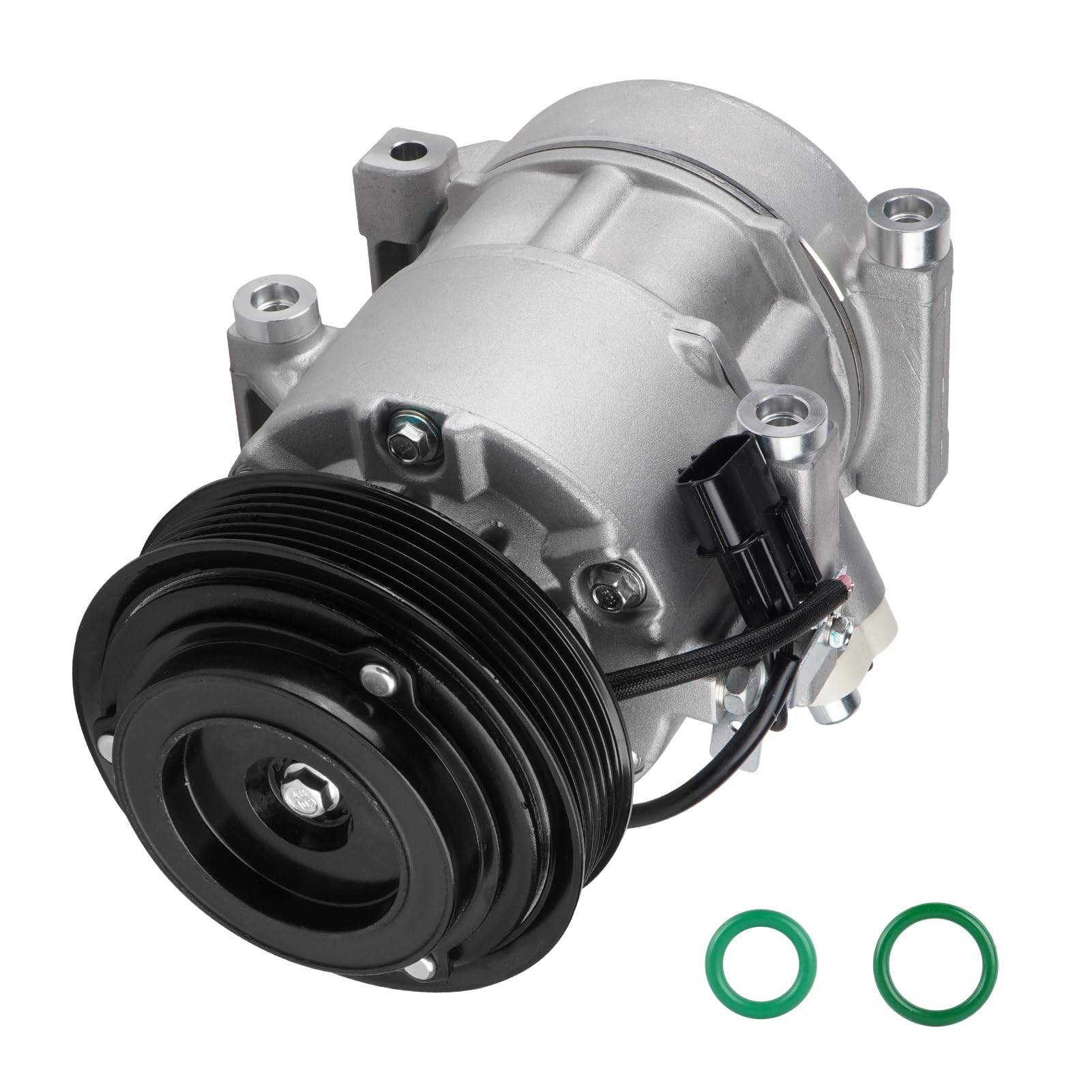
The Sportage and Tucson part that looks factory-fresh from day one
This TadaMark compressor covers the Kia Sportage 2.0L and 2.4L 2011-2016 and the Hyundai Tucson 2.4L 2010-2015 with the 2.0L 2011-2013. It runs the DVE16 style with 6 pulley grooves on a 120mm pulley, and arrives pre-filled with 150ml of PAG46 oil, clutch included, so it’s a complete swap package.
Owners describe the fit as perfect — one installed it on a 2012 Tucson 2.4L AWD and notes it “looks OEM,” reusing the original line bolts and working well after a week. A Sportage owner confirms it fit perfectly and was still running strong after three weeks. The polished exterior and clean build quality come through consistently in the feedback.
The review base is small but all positive, which means early confidence without a huge long-term sample. There’s a practical note from a buyer who disliked the new Allen bolts and preferred the original hardware, so keep your factory bolts handy. TadaMark backs it with a one-year guarantee, and the instruction to fully clean the system before install is echoed here — especially important if your old compressor failed with debris.
kia hyundai pick: you drive a Sportage or Tucson and want a clean-fitting, factory-looking replacement from a brand standing behind a one-year guarantee.
bearing wear: you may prefer reusing your original line bolts over the included Allen hardware, and the long-term track record is still short.
Understanding the Specs
Compressor Style and Pulley Grooves
The compressor style — a code like DKV10R, DKS17D, or TRSE07 — tells you the internal design your vehicle expects, ensuring mounting bolts and ports line up exactly. The pulley groove count matters just as much: it must match the belt your engine already uses, so a Civic unit might need 7 grooves while a Mazda 3 uses 5. Get this wrong and the belt won’t sit right, no matter how good the pump is.
Oil Type and Pre-Fill Amount
Most aftermarket compressors ship pre-filled with PAG oil in a specific weight — PAG46 for most, PAG 100 for some Nissan systems. The pre-fill amount (like 100ml, 130ml, or 160ml) saves you the messy oil step, but you must still add refrigerant after install. Adding extra oil on top of the pre-fill can actually damage the compressor, so trust the factory fill and focus on a proper refrigerant charge.
FAQ
How do I know which AC compressor fits my car?
What does “pre-filled with oil” mean for installation?
Why does pulley groove count matter so much?
What is the difference between PAG46 and PAG 100 oil?
Can I install a new AC compressor myself?
How long should an aftermarket AC compressor last?
Why do I need to flush my AC system before installing a new compressor?
What is the difference between a rebuilt and a brand-new compressor?
Is the clutch included with these compressors?
What refrigerant type do these compressors use?
Final Thoughts: The Verdict
For most buyers, the car air conditioning compressor winner is the A-Premium Subaru Compressor because the fit is the thing owners praise most — a factory-style drop-in for gas Foresters, Imprezas, and Crosstreks with the oil already loaded. If you want maximum cooling output for a V6 Acura or Honda, grab the PHOBOOS Compressor with its 4000W claim. And for a budget-conscious Mazda fix that still blows properly cold air, the ECCPP Mazda Compressor is the one to reach for. Before ordering, match your exact engine, year, and pulley groove count, then install with a clean system and proper refrigerant charge.
How We Picked
We do not accept paid placement. Every pick is matched to a real buyer and a real use-case; we do not hands-on test units.
Sources & Methodology
Specifications: manufacturer listings and product documentation. Review insights: verified customer reviews, as of August 2026. Pricing: not shown on this page (it changes often); check the current price via the retailer link.
As an Amazon Associate, Gadgets Feed earns from qualifying purchases. This does not affect which products we feature.