
Our readers keep the lights on and my morning glass full of iced black tea. As an Amazon Associate, I earn from qualifying purchases.
Specs are compiled from manufacturer listings and verified buyer reviews and can change over time — please confirm the key details on the product page before buying.
When your RV or dryer suddenly loses power, a fried plug is often the culprit—and you can swap it out yourself in an afternoon. To pick the right 4 prong plug, you need to match three things: the amperage your appliance draws (30 vs 50 amp), how comfortable you are with wiring, and if you want just the plug head or a full cord with the plug attached. Below, we break down top-rated options so you can match one to your setup without getting lost in technical jargon.
I’m Min — the founder and writer behind Gadgets Feed. This guide is built by comparing the manufacturers’ published specifications and the patterns across verified customer reviews, so you get each pick’s real strengths and trade-offs instead of marketing spin.
Whether you are rewiring an RV, hooking up a welder, or replacing a dryer cord, the right 4 prong plug must match your outlet type and wire gauge to be safe.
Our Picks at a Glance


How To Choose The Best 4 Prong Plug
Before you pick a plug, you need to know what your appliance or outlet demands. A 4 prong plug has four wires — two hots, a neutral, and a ground — which is the modern standard for large 240-volt devices like dryers, ranges, and RV hookups.
Match the Amperage and Voltage First
This is the single most important step. A 50 amp plug like a NEMA 14-50P will not fit a 30 amp outlet, and forcing it is both impossible and dangerous. Check the breaker and outlet to confirm you need a 30 amp or 50 amp configuration, then buy the matching plug.
Wire Gauge and Terminal Types
Heavier current needs thicker wire. A 50 amp plug typically accepts 6AWG/3C plus 8AWG/1C cable, while a 30 amp dryer cord uses 10AWG. For plugs, look for marked terminals and brass or tinned copper connections that resist corrosion and make the wiring job straightforward.
Safety Listings and Build Quality
An ETL or UL listing means the plug has passed independent safety testing for heat and fire resistance. ABS plastic housings that are flame-retardant and UV-resistant hold up better outdoors and near hot appliances, and a strain relief clip keeps the cord from pulling loose.
Quick Comparison
| Model | Best For | Amperage | Plug Type | Wire Size Accepted | Amazon |
|---|---|---|---|---|---|
| Veepeak 50 Amp★ Best Overall | RV & EV chargers | 50 A | NEMA 14-50P | 6AWG/3C + 8AWG/1C | Amazon |
| AIDA 14-30P & 14-50PElectrician’s Pick | Dryers & generators | 50 A | NEMA 14-50P | Up to #4 AWG | Amazon |
| OPL5 50 AmpGreat Value | RVs & campers | 50 A | NEMA 14-50P | 6AWG/3C + 8AWG/1C | Amazon |
| Snowy Fox 50 Amp | DIY generator cables | 50 A | NEMA 14-50P | 6AWG/3C + 8AWG/1C | Amazon |
| Plutreas 50 Amp | Welders & workshops | 50 A | NEMA 14-50P | 10 to 4 gauge | Amazon |
| SVNR 50 Amp | 5th wheels & trailers | 50 A | NEMA 14-50P | 10 to 4 gauge | Amazon |
| Deeklify Dryer Cord | Electric dryers | 30 A | NEMA 14-30P | 10 AWG | Amazon |
| Elecan Dryer Cord | Dryer upgrades | 30 A | NEMA 14-30P | 10 AWG | Amazon |
In‑Depth Reviews
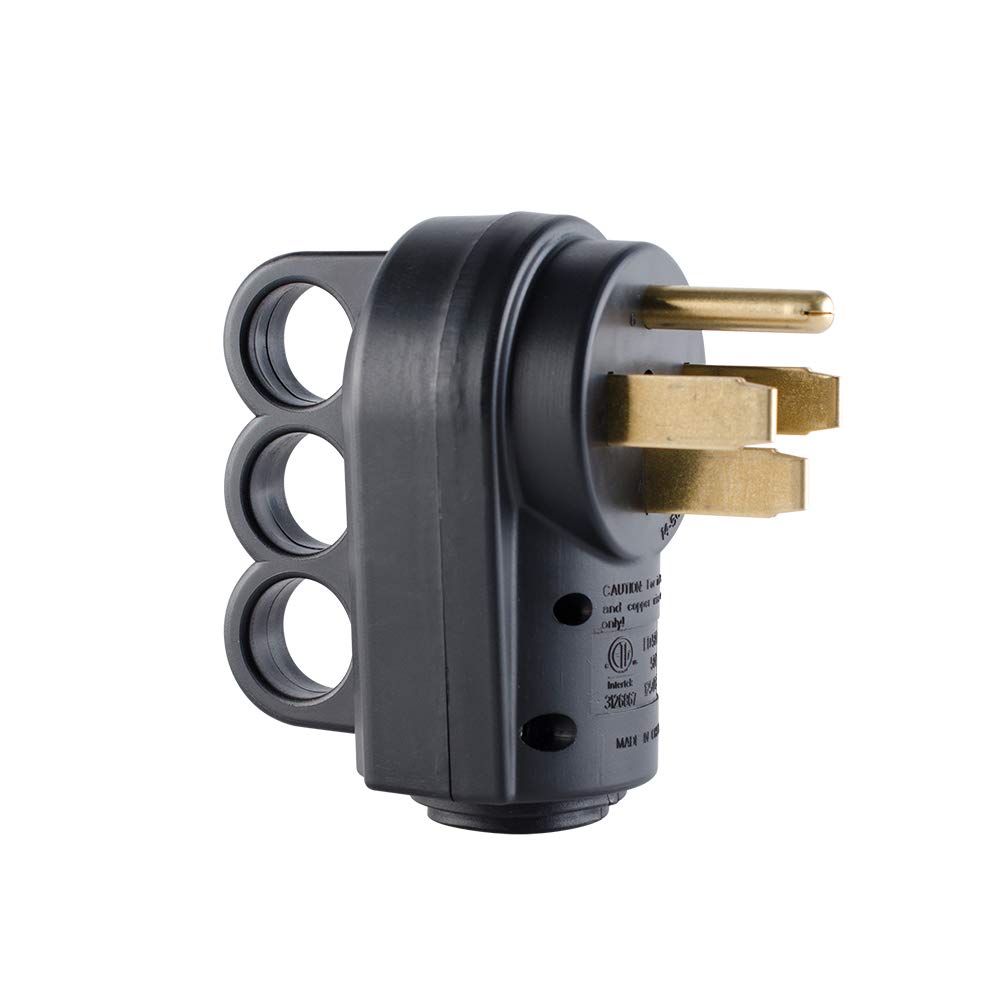
1. Veepeak 50 Amp RV Plug Male Replacement
Our pick — over 4.5★ from 800+ verified ratings; the strongest balance of quality and price.
The crowd-favorite 50-amp head with a grip that feels like it belongs on a tool, not a toy.
If you’re re-terminating an RV, camper, or EV charger cable, this Veepeak head is the one most owners land on—over 60 buyers specifically praise its build quality. The housing is made of UV-resistant, flame-retardant ABS plastic, and it carries an ETL listing (independent safety certification), so you get verified protection, not just a marketing claim. It accepts 6AWG/3C plus 8AWG/1C wire (thick cables for high current) and handles a max load of 12,500 watts at 125/250V, so it powers heavy appliances safely.
Wiring it is genuinely beginner-friendly — the instructions walk you through cutting and stripping, and the wire colors are clearly marked. The 3-hole ergonomic handle is the detail that wins people over, making that stubborn plug-in and unplug motion much easier on your hands. Buyers report that it performs without overheating at a stable 50A, and several note it is a perfect fix for a fried or melted plug after a power loss.
The one honest caution: a few owners have called the build “cheap” and found it didn’t hold up for their specific heavy use. That is the minority view, but it is worth knowing if you plan daily commercial-duty abuse. For standard RV, trailer, and EV charging duty, this is the safest bet of the bunch.
What Wins People Over
- Clear instructions with well-marked wire colors for fast hookup
- Ergonomic 3-hole handle eases plugging and unplugging
- ETL listed with UV and flame resistant ABS shell
Know Before You Buy
- An occasional unit feels flimsy for heavy industrial use
- Only a replacement head — you supply your own cable
Reach for this if: you want the most-trusted 50A replacement head for an RV, camper, or EV charger, backed by a one-year warranty.
Look elsewhere if: you need a daily-abuse commercial-grade plug — treat this as a premium home and hobby option.
2. AIDA NEMA 14-30P & 14-50P Right Angle Plug
A right-angle two-in-one that a veteran electrician happily used on his own generator cable.
This AIDA is the rare plug that pulls double duty: it comes with blades for both 30 amp (14-30P) and 50 amp (14-50P) configurations, so one unit covers a range of appliances. The UL listing is a strong trust signal, and the solid brass blades are built for maximum conductivity — meaning less heat and a more reliable connection under load. It accepts up to #4 AWG standard conductors, working with both copper and aluminum wire.
The right-angle body is the standout here, letting the cord lie flat against the wall — a real plus behind a tight range or dryer install. Terminals are marked for fast wiring, and a self-grounding clip simplifies the job further. Owners mention it “worked Great” and saved money on a generator cable build, and the review pages sum it up honestly: “These are descent four prong plugs.”
One fit note: the dual-blade design means you must confirm which NEMA your appliance actually needs before wiring. It also is not the easiest plug to use with a cramped outlet box, given the angled profile. For a pro-grade, corrosion-resistant job, this is a top-tier choice.
Built Like a Tool: solid brass blades and UL listing make this the most corrosion-resistant, conductivity-focused pick here.
The Catch: dual blades add a little bulk, so check your outlet clearance before committing.
3. OPL5 50 Amp RV Plug Male Replacement
A budget-friendly 50A head that rewards careful assembly with a solid, secure fit.
This OPL5 plug gives you the same 125/250V 50A rating and 6AWG/3C plus 8AWG/1C wire acceptance as pricier rivals, at a more accessible price point. The ABS housing is high-heat resistant, and the included strain relief clip holds the cord firmly for a stable connection. It is ETL listed, so the safety certification is there.
Owners say assembly is straightforward: you cut and strip the wires, then pop the pins out to attach them—one welder found it easy enough to skip the ground wire entirely since his setup doesn’t use one. The ergonomic pull handle lets you unplug without yanking the cord, which reduces wear. Quality and ease of installation are the two most-cited positives in reviews.
The trade-off is that assembly demands patience — some owners found it “tricky to assemble” and needed screwdrivers, a drill, and cutting tools. Durability also gets mixed feedback, with a few reporting the back of the case cracking. If you read the instructions fully and take your time, this is a dependable budget pick.
Best for: DIY owners who want an ETL-listed 50A replacement without spending top dollar.
Think twice if: you want a tool-free install — this one needs tools and careful reading.
4. Snowy Fox RV 50 Amp Male Replacement Plug

A yellow high-visibility head with finger grips that older hands find genuinely easy to operate.
The Snowy Fox is easy to spot in a dark RV bay or generator compartment thanks to its bright yellow flame-retardant ABS housing—a small but real safety plus. It’s rated 125/250V at 50 amps and accepts the standard 6AWG/3C plus 8AWG/1C RV cord, with a strain relief clip and bushing that anchor the wire so it doesn’t pull loose. At 10.56 ounces, it feels solid in your hand, which reassures you it’s built to last.
Installation is the thing most owners praise, with the “keep it simple” instructions letting even a first-timer finish solo. The ergonomic handle and finger grips earn consistent love — one owner building a generator cable noted they are “easy for older gentlemen to operate.” The copper pins and ABS shell give a stable, safe connection.
Here is the honest fit note: durability chatter is mixed, with some finding it stout and others reporting brittleness, and the most-flagged issue is the center post that holds the plug together breaking. The seller does make it right with replacements, and occasional rain exposure is not advised since this is not a molded waterproof connector. For occasional RV and generator use, it is a capable budget-to-mid option.
Why It Wins Fans
- High-vis yellow shell is easy to spot in low light
- Finger grips make plugging and unplugging easy
- Simple instructions let a beginner finish the job alone
The Honest Trade-Off
- Not a molded waterproof connector — keep it out of the rain
- Some customers note the center post is prone to breaking
Pick this if: you want a high-visibility, easy-grip 50A head for occasional RV or generator use.
skip it if: you need a daily-use plug — the build is solid but not industrial-duty.
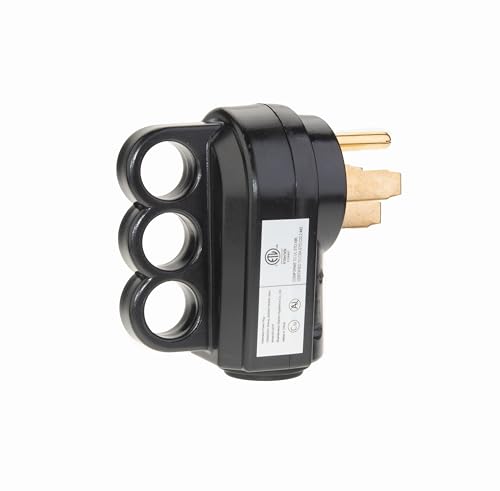
5. Plutreas 50 AMP Male RV Replacement Plug
A no-nonsense 50A head that welders and garage tinkerers keep coming back to for a second buy.
This Plutreas plug is ETL certified with a flame-retardant, UV-resistant ABS body, and it accepts a wide range of cable — from 10 to 4 gauge — for 50Amp RV, camper, trailer, and 5th wheel extensions. That broad wire tolerance makes it unusually flexible if you are working with leftover cable of varying thicknesses. The 3-hole ergonomic handle is the same easy-grip design that makes insertion and removal safe.
The biggest endorsement is repeat buying: several owners note this is their second unit, with one using it as a welder cart whip in the garage and praising the finger grips for easy plugging and storage. Functionality, installation, and quality are all praised equally, and the tight clamp keeps a solid secure fit on the cable.
One practical tip from the review pages: strip your individual wires longer than the instructions suggest, then trim them to length, to avoid short connections. Also, if your outlet is tight, grab the body instead of the finger holes to avoid stripping the threads. For a well-built, value-conscious 50A head, this is a strong contender.
Reach for this if: you run a welder or shop tool and want a durable 50A head that handles a range of wire gauges.
Look elsewhere if: you need a plug with a molded, weatherproof cable — this is a screw-together head only.
6. SVNR 50 Amp RV Plug Replacement NEMA 14-50P
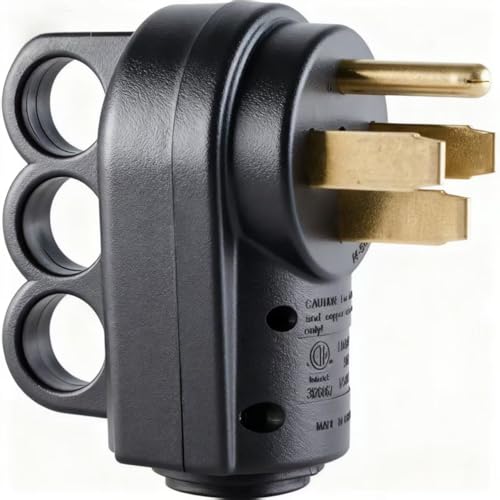
A heavy-duty 50A head with an ergonomic handle and prongs that pop out to make wiring easier.
SVNR’s plug is ETL certified and built from high-heat, rugged ABS plastic, with an inner strain relief clip and outer bushing that anchor your cable firmly. It is rated for 10 to 4 gauge wires on 50Amp RVs, campers, trailers, 5th wheels, and caravans at 125/250V. The well-conductive copper parts pair with the shell to make a connection owners describe as nearly indestructible.
What stands out in the feedback is ease of use — the prongs come out for convenient wiring, which is a genuinely thoughtful touch when you are wrestling a thick 6/3 cord. One owner running a 6/3 welder line without a ground found the strain relief a touch loose, but a little electrical tape on the cord tightened it right up. The ergonomic handle saves effort on removal.
Buyers consistently call this plug “very sturdy” and “well worth the money,” making quality the top praise. The shell is hard plastic rather than rubber, so it doesn’t flex much, but that rigidity also helps it resist impacts without cracking. If you want a dependable 50A head without paying top dollar, this is a strong mid-range pick—just know it won’t absorb bumps like a rubberized plug.
A Step Up in Design: removable prongs and an ergonomic handle make this one of the easiest 50A heads to wire and use.
Worth Knowing: the hard plastic shell has no rubber give, so pair it with the right cord thickness for a snug clamp.
7. Deeklify 5FT 4 Prong Dryer Cord
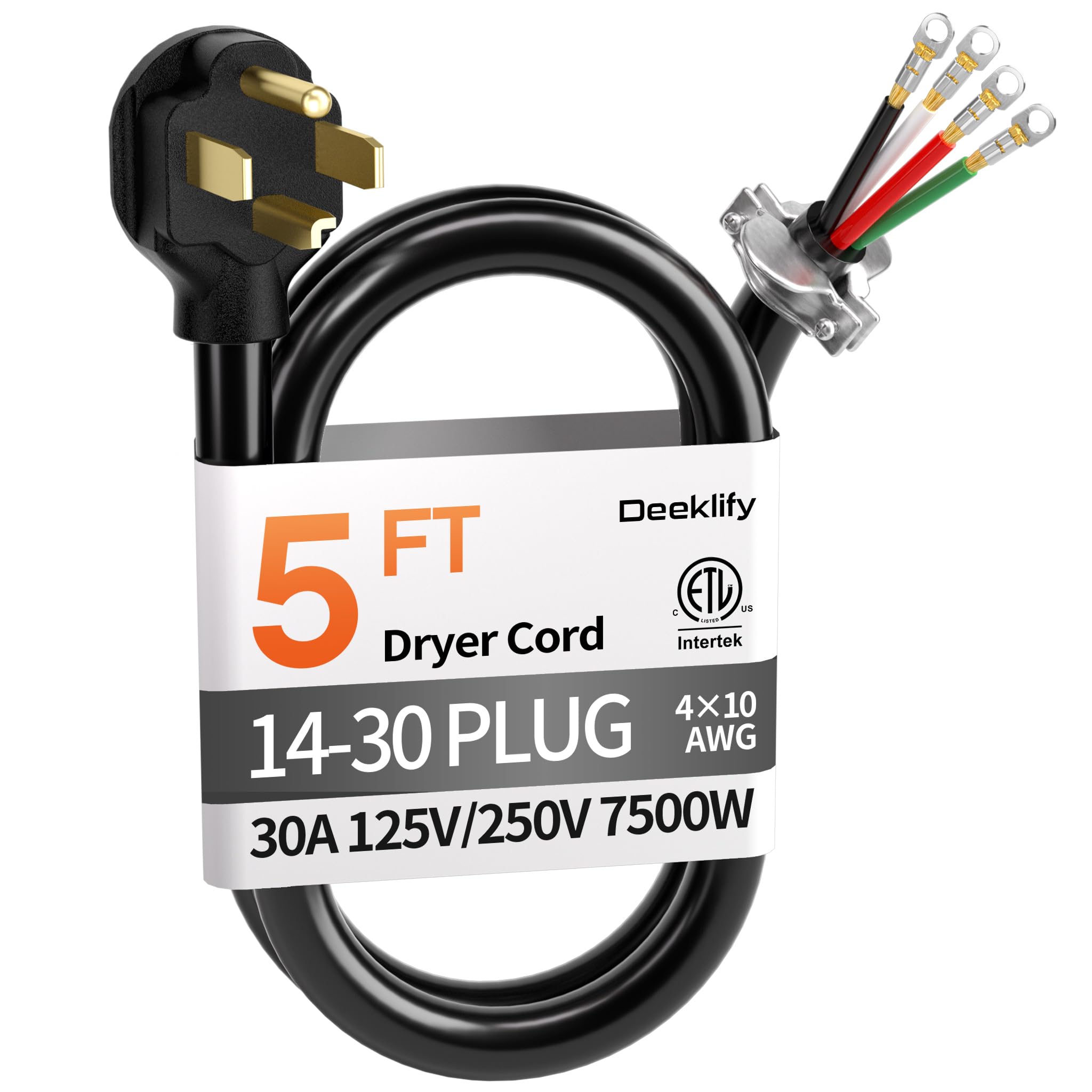
A complete 5-foot dryer cord with pure copper wire that one owner swapped in within five minutes.
Unlike the replacement heads above, this Deeklify is a full cord — 5 feet of 10AWG SRDT jacket with a NEMA 14-30P plug already molded on, rated 125/250V for 7500W performance. It is ETL listed, and the SRDT jacket resists moisture and high laundry-room temperatures to prevent overheating and aging. The pure copper core keeps conductivity excellent for everyday demands.
Installation is genuinely quick thanks to color-coded wires and tinned copper ring terminals that fit over screws snugly — no electrician required, and one owner noted a 10 ft version worked perfectly for a stacked washer and dryer. The right-angle plug fits flush against the wall, saving space in tight corners, while the anti-slip grip and strain relief bracket reduce pull damage.
The compatibility list is broad — front-load, top-load, and steam dryers on most brands — so this is a safe upgrade for older 3-wire dryers moving to a modern 4-prong outlet. The recurring feedback is that it works as expected, feels thick and well-insulated, and is heavy-duty. For a ready-to-go dryer solution, this is the easiest path.
Best for: anyone replacing an old dryer cord who wants a plug-and-play 5-foot solution with no head assembly.
Think twice if: you only need a replacement head — this is a complete cord, not a bare plug.
8. Elecan 4-Prong Dryer Power Cord 4 Ft
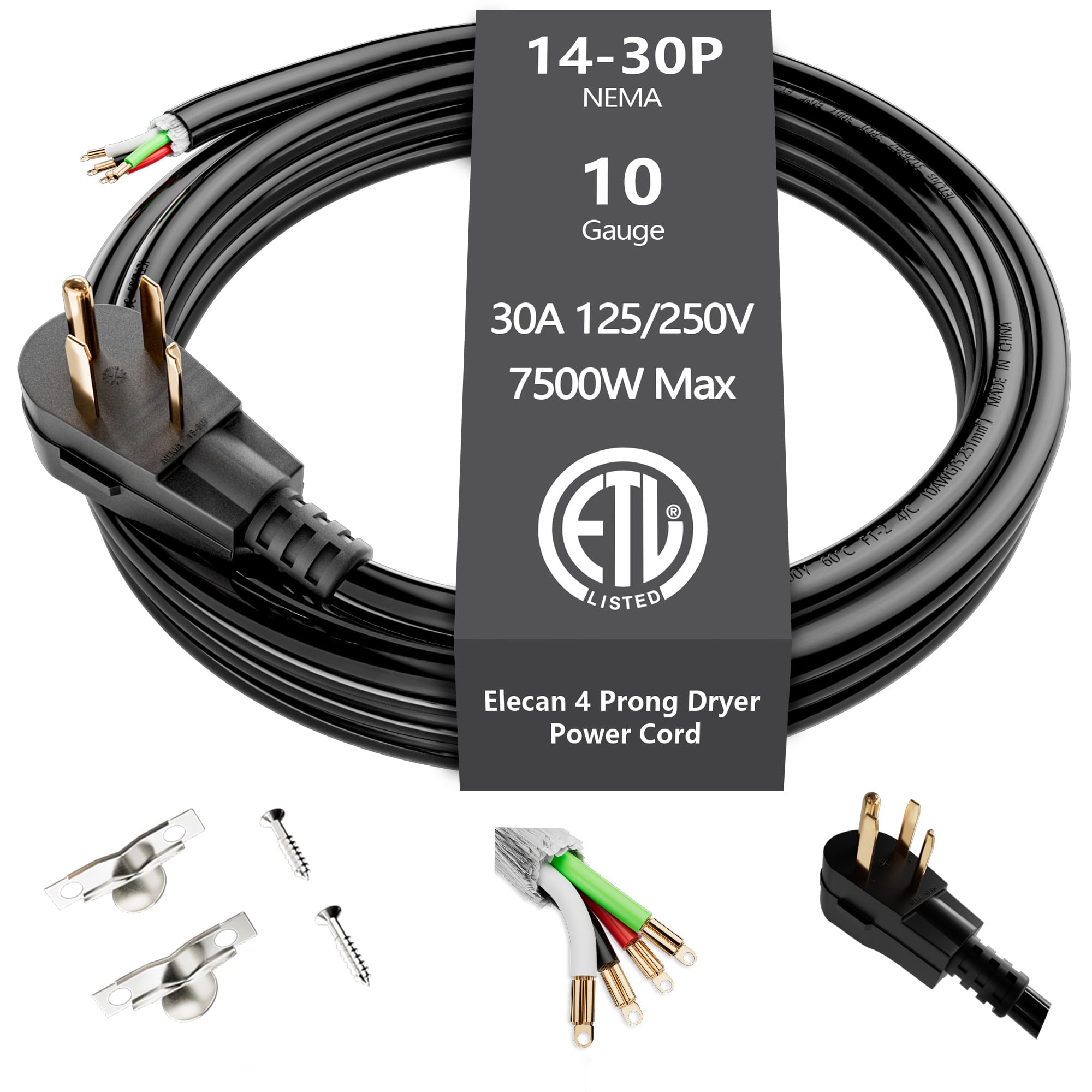
A 4-foot dryer cord with IP65 water resistance — a spec most laundry-room cords simply do not have.
This Elecan cord is built for the laundry room with a heavy-duty, heat-resistant, and flame-retardant jacket that also carries an IP65 water-resistance rating — meaning it shrugs off moisture that would age a standard cord. It is 48 inches of 10AWG SRDT cable rated 30 amps at 125/250V, supporting up to 7500W for NEMA 14-30P outlets. The 100% copper wire has been continuity and conductivity tested.
The molded ring terminals are color-coded and fit snugly over screws, so you get a secure connection without guesswork. A stress relief bracket at the dryer end supports the cord’s weight, preventing it from pulling loose over time. Owners upgrading from a 3-wire dryer plug report it works perfectly, and the extra 4-foot length gives you welcome reach in tight laundry closets. It fits Whirlpool, Kenmore, Sears, LG, and most electric dryers.
Buyers praise its functionality first, with value for money a close second—it’s a heavy-duty cord that simply does its job. The two-year warranty offers confidence that many rival cords lack. If you need a dryer-specific, weather-resistant upgrade, this cord delivers reliable performance while staying affordable.
Standout Spec: IP65-rated jacket and a two-year warranty make this the most weatherproof dryer cord here.
Keep in Mind: it is 4 feet long, so measure your dryer-to-outlet gap before buying.
Understanding the Specs
NEMA 14-30P vs 14-50P
These are the two standards you will meet. The 14-30P is the 30-amp plug used by most electric dryers, rated 125/250V up to 7500W. The 14-50P is the 50-amp plug used by RVs, EV chargers, ranges, and welders. The letters and numbers tell an electrician the amperage, voltage, and pin layout at a glance, so matching the plug to your outlet is non-negotiable.
Wire Gauge and AWG
AWG stands for American Wire Gauge, and the lower the number, the thicker the wire. A 50-amp plug needs thick 6AWG conductors, while a 30-amp dryer cord runs on 10AWG. If your wire is too thin for the current, it overheats; if it is too thick, it may not fit the terminals. Always check what gauge your plug accepts before wiring.
FAQ
Will a NEMA 14-50P plug fit my 30 amp dryer outlet?
Can I use a 50 amp RV plug for a welder?
What wire gauge do I need for a 50 amp plug?
Is an ETL or UL listing important for a plug?
How do I know if my dryer needs a 3 prong or 4 prong cord?
Can I wire a 4 prong plug myself or do I need an electrician?
What does the strain relief clip on a plug do?
Are plastic ABS plugs durable enough for outdoor RV use?
Final Thoughts: The Verdict
For most buyers, the best 4 prong plug is the Veepeak 50 Amp because it pairs an ETL listing with the most-praised build quality and an easy-grip handle, backed by a one-year warranty. If you want a two-in-one with brass blades for both 30 and 50 amp circuits, grab the AIDA right angle plug. And for a ready-to-go dryer solution, the Deeklify 5-foot cord is the one to reach for.
How We Picked
We do not accept paid placement. Every pick is matched to a real buyer and a real use-case; we do not hands-on test units.
Sources & Methodology
Specifications: manufacturer listings and product documentation. Review insights: verified customer reviews, as of August 2026. Pricing: not shown on this page (it changes often); check the current price via the retailer link.
As an Amazon Associate, Gadgets Feed earns from qualifying purchases. This does not affect which products we feature.