
The difference between a skate video that gets replayed and one that gets swiped past often comes down to one thing: the camera’s ability to handle violent, unpredictable motion without turning the landing into a blurry mess. When you’re pushing off curbs, grinding rails, or dropping into a bowl, your camera needs to be compact enough to mount on a board or helmet, robust enough to survive a tumble, and equipped with stabilization that doesn’t fall apart the second the board leaves the ground. A standard smartphone or a basic point-and-shoot simply can’t keep up with the jerky, high-speed dynamics of a skate session.
I’m Min — the co-founder and writer behind Gadgets Feed. I’ve spent hundreds of hours dissecting technical specs, reading through user reports, and analyzing stabilization algorithms, field-of-view measurements, and low-light sensor performance to find out exactly which cameras can actually handle the abuse and angles of street skating and vert riding. (And Homer 🐱 has supervised every lens comparison from his spot on my desk, occasionally pawing at slow-motion playback of kickflips).
Whether you’re filming a line at the local park or documenting a road trip to hit every spot in the city, you need gear that’s reliable, rugged, and ready. This guide breaks down the top options on the market to help you find the absolute camera for skateboarding that fits your budget and style without sacrificing a single frame of the action.
How To Choose The Best Camera For Skateboarding
Finding the right camera for filming skateboarding means matching specific specs to the real conditions of the sport: unpredictable motion, variable lighting from parking lots to parks, and the occasional drop or crash. Here are the four factors that matter most.
Stabilization Is Non-Negotiable
A camera without strong electronic image stabilization (EIS) will produce unwatchable footage the moment your skater pops an ollie or lands a crooked grind. Look for cameras that advertise Horizon Lock or advanced gimbal-like algorithms—these keep the shot level even when the board is rotating or tilting mid-air. The best units can handle 360-degree rolls without losing a stable horizon.
Frame Rate and Slow Motion Flexibility
Skateboarding demands high frame rates to capture the detail of a spin or a flip. A camera that can shoot 4K at 60fps is the baseline for smooth motion. For dramatic slow-motion replays, aim for 120fps or higher at 1080p or 2.7K. The ability to slow down a kickflip by 8x or 10x separates a casual clip from a cinematic one.
Mounting and Field of View
The best angle for skateboarding is often a board mount or a chest mount, not a handheld shot. Make sure the camera you choose is compatible with adhesive mounts and has a wide field of view (at least 130 degrees) to capture the full stretch of a rail slide or the height of a launch. Fisheye-style lenses are particularly popular in skate culture for that classic wide-angle look that makes every trick look bigger.
Quick Comparison
On smaller screens, swipe sideways to see the full table.
| Model | Category | Best For | Key Spec | Amazon |
|---|---|---|---|---|
| DJI Osmo Action 6 | Action Cam | All-around POV and vlogging | 8K @ 30fps, 1/1.1″ sensor | Amazon |
| Insta360 X5 | 360 Camera | Never-miss-a-moment 360 filming | 8K 360°, 49ft waterproof | Amazon |
| GoPro MAX2 | 360 Action Cam | 360 reframing with replaceable lenses | True 8K 360 spherical video | Amazon |
| DJI Osmo 360 | 360 Camera | Invisible selfie stick third-person shots | 8K/30fps 360°, 120MP photos | Amazon |
| GoPro HERO13 Black | Action Cam | High-res action with interchangeable lenses | 5.3K60 video, 27MP photos | Amazon |
| Xtra Muse | Pocket Gimbal | Handheld cinematic skate clips | 4K/120fps, 1″ CMOS, 3-axis gimbal | Amazon |
| Xtra Edge Pro | Action Cam | Low-light and deep-water filming | 4K/60fps, 1/1.3″ sensor | Amazon |
| AKASO 360 | 360 Camera | Budget-friendly 360 and invisible stick effects | 5.7K 360°, 48MP dual sensors | Amazon |
| AKASO Brave 7 LE | Action Cam | Entry-level dual-screen filming | 4K/30fps, 20MP, 131ft waterproof | Amazon |
In‑Depth Reviews
1. DJI Osmo Action 6 Enhanced Combo
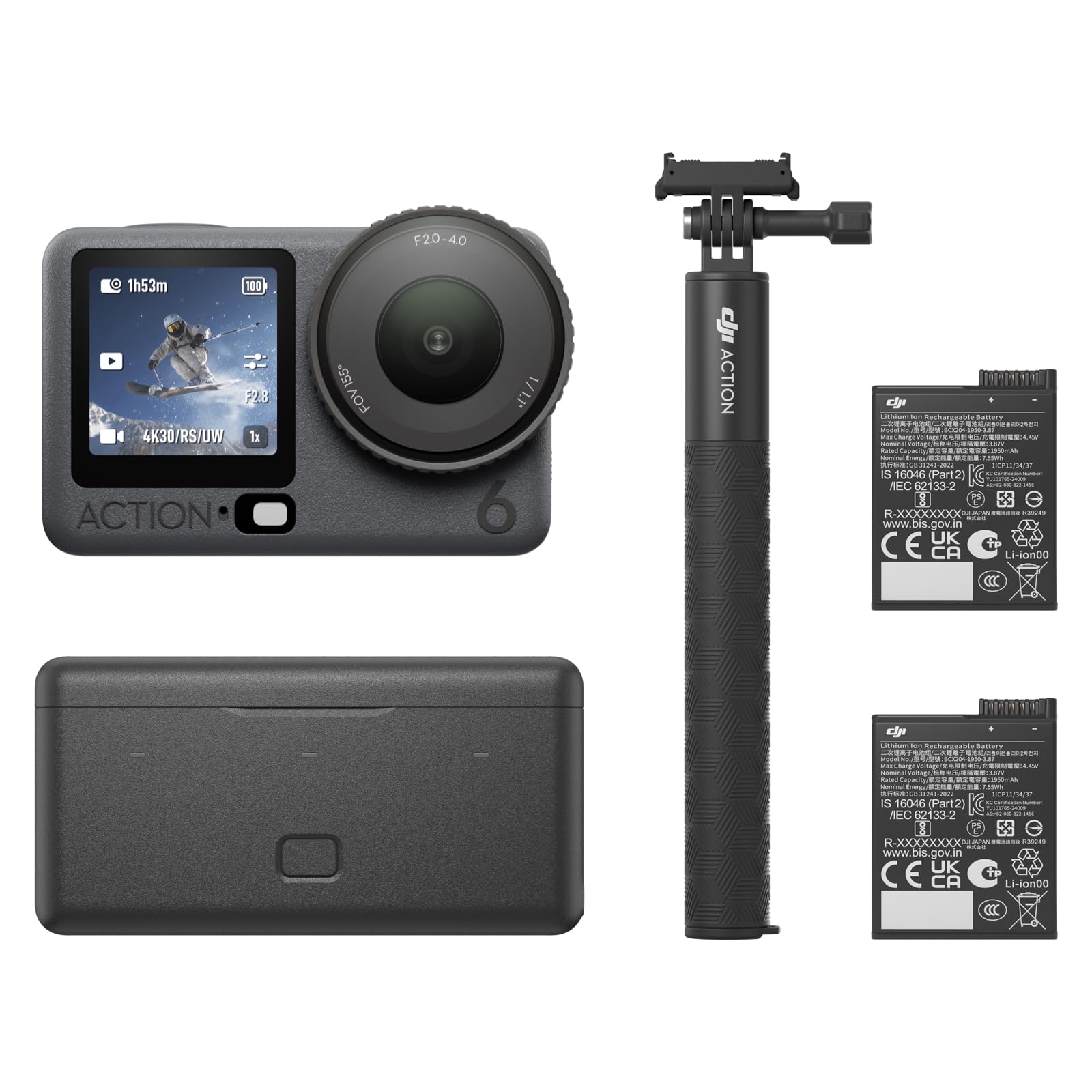
The DJI Osmo Action 6 raises the bar for skateboarding cameras with its 1/1.1-inch square sensor and variable aperture that adapts from f/2.0 to f/4.0 — an industry first in this category. This means you can film a sun-drenched session at the park without blowing out highlights, then step into a dimly lit garage spot and still retain crisp detail. The 360-degree HorizonSteady mode locks the horizon even when your camera rotates fully during a flip, something that sets it apart from standard stabilization that only corrects pitch and yaw.
With 8K recording capability (via a firmware update), a robust 4-hour battery life, and deep waterproofing to 20 meters without a housing, this camera is built to take a beating. The Enhanced Combo includes a 1.5-meter extension rod, two 1950mAh Extreme Batteries, and a multifunctional battery case that charges everything on the go — essential for all-day skating trips. The magnetic quick-release mounting system makes swapping between a helmet mount and a board mount effortless, while the 50GB of onboard storage gives you confidence when you forget your microSD card.
The only trade-off is the built-in microphone, which some users find thin compared to dedicated mics. If crisp audio commentary is part of your skate vlogs, you’ll want to connect an external DJI Mic transmitter (supported directly without a receiver). Otherwise, the Osmo Action 6 delivers the smoothest, most vibrant POV footage of any action camera in this class, making it my top overall choice for serious skate filmers.
Why it’s great
- Variable aperture handles extreme lighting transitions in outdoor spots
- 360° HorizonSteady keeps the shot level through full rotations
- Magnetic mounting system makes rapid POV changes fast
Good to know
- Built-in audio is weak; external mic recommended for commentary
- 8K mode generates large file sizes requiring faster cards
2. Insta360 X5 Essentials Bundle

The Insta360 X5 is purpose-built for the kind of “reframe later” shooting that skateboarders love. With dual 1/1.28-inch sensors pumping out 8K 360-degree video, you can strap this camera to a board, point it in any direction, and never miss the angle a trick lands from. The Invisible Selfie Stick effect creates those iconic third-person follow shots that make a simple ollie down a set of stairs look massive, and the new InstaFrame mode lets you export a flat 16:9 video instantly without diving into the editing timeline.
Low-light performance is noticeably better than previous 360 models thanks to the triple AI chip design that actively reduces noise while preserving detail — critical for evening skate sessions under parking lot lights. The replaceable lenses are a game-changer: if you scuff the glass on a rough landing, you swap it out in seconds instead of sending the camera back for repair. Battery life stretches to nearly 3.5 hours, and the fast-charging case brings the battery to 80% in just 20 minutes, so you can keep filming through the afternoon.
The included 114cm Invisible Selfie Stick and Utility Fast Charge Case are welcome additions, though the Essentials Bundle doesn’t include a microSD card, so factor that into your purchase. The app-based editing workflow is powerful but takes a few sessions to master, especially for users accustomed to standard linear editing. Still, for any skateboarder who wants the freedom to capture every angle simultaneously and decide the hero shot later, the X5 is the most capable 360 option available.
Why it’s great
- Reframe trick angles after shooting; never miss the landing angle
- Replaceable lenses handle skateboard tumbles without full camera loss
- Triple AI delivers clean footage in low-light parking lots
Good to know
- Steep learning curve for 360 editing in the app
- MicroSD card not included in the Essentials Box
3. GoPro MAX2
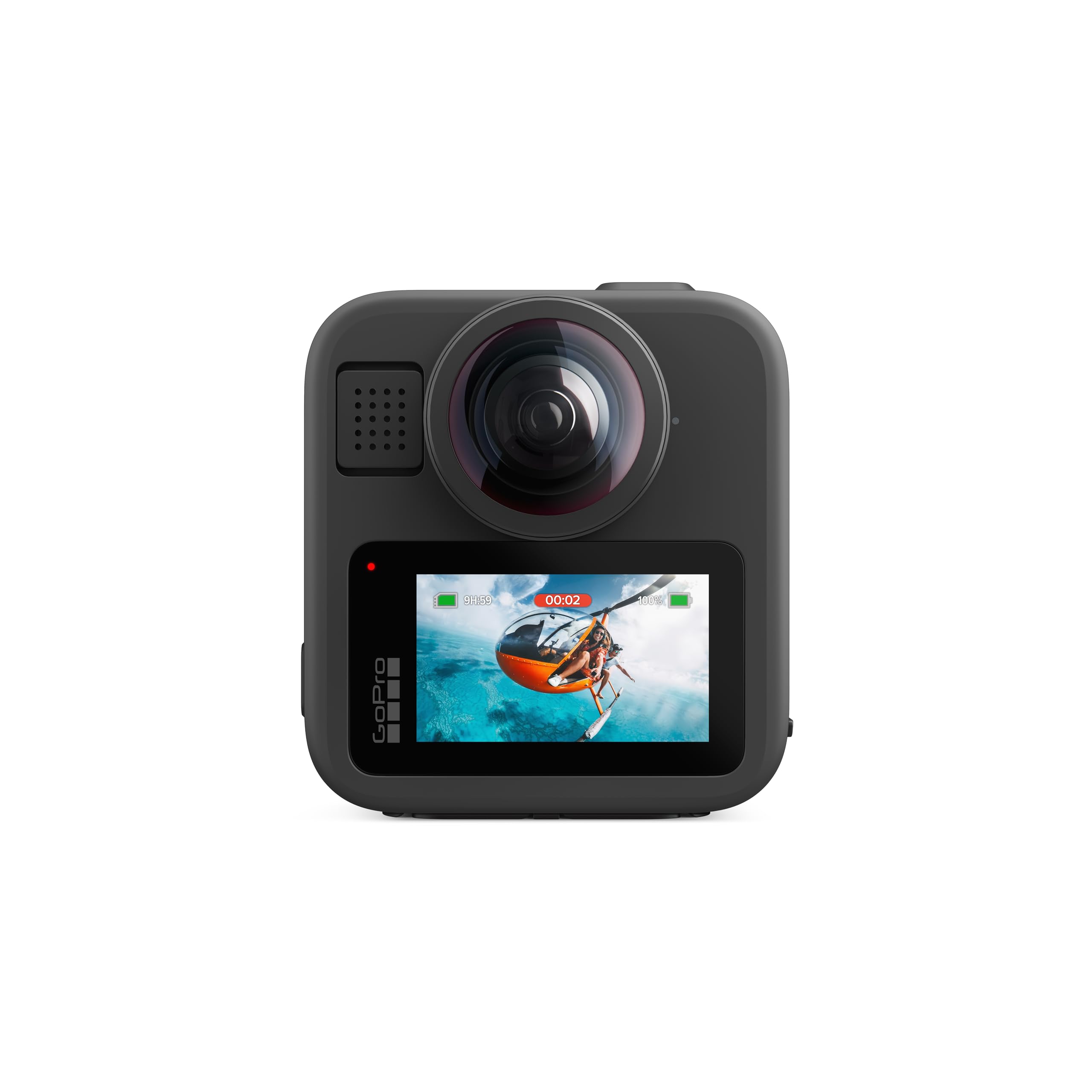
The GoPro MAX2 delivers a very specific advantage for skate filmers: its True 8K spherical recording means you can reframe your 360 footage into a traditional 4K clip without the resolution penalty that older 5.6K 360 cameras suffer from. This is a big deal when you want to publish a clean, high-detail edit of a line through the park. The HyperSmooth stabilization in 360 mode locks the horizon even during a full 360-degree spin, so board-mounted shots that rotate completely during a shove-it remain level.
The modular lens system is another practical highlight — if you scratch a lens on rough concrete, you can replace just the glass rather than the entire camera unit. With 29MP 360 photos and six microphones that capture ambisonic audio, you can pull high-res stills from your footage and record atmospheric sound that shifts naturally as you pan the camera in post. The built-in Enduro battery offers solid runtime, and the camera is waterproof to 33 feet without needing an extra housing.
Heat management can be a concern when recording long 8K clips in direct sun, but for typical 2-3 minute trick sequences, the MAX2 stays cool. The GoPro Quik app makes reframing intuitive, though the monthly subscription fee for cloud storage of large 360 files is an added cost some users may not anticipate. If your style of skate filming revolves around single-camera, shoot-first-frame-later coverage, the MAX2 is the GoPro 360 model to beat.
Why it’s great
- Reframed 360 footage retains true 4K quality without resolution drop
- Replaceable lenses reduce repair costs after concrete crashes
- 6-microphone array captures rich spatial audio for immersive edits
Good to know
- Extended 8K recording can cause heat buildup on hot days
- Cloud storage of large 360 files requires a subscription
4. DJI Osmo 360 Essential Combo
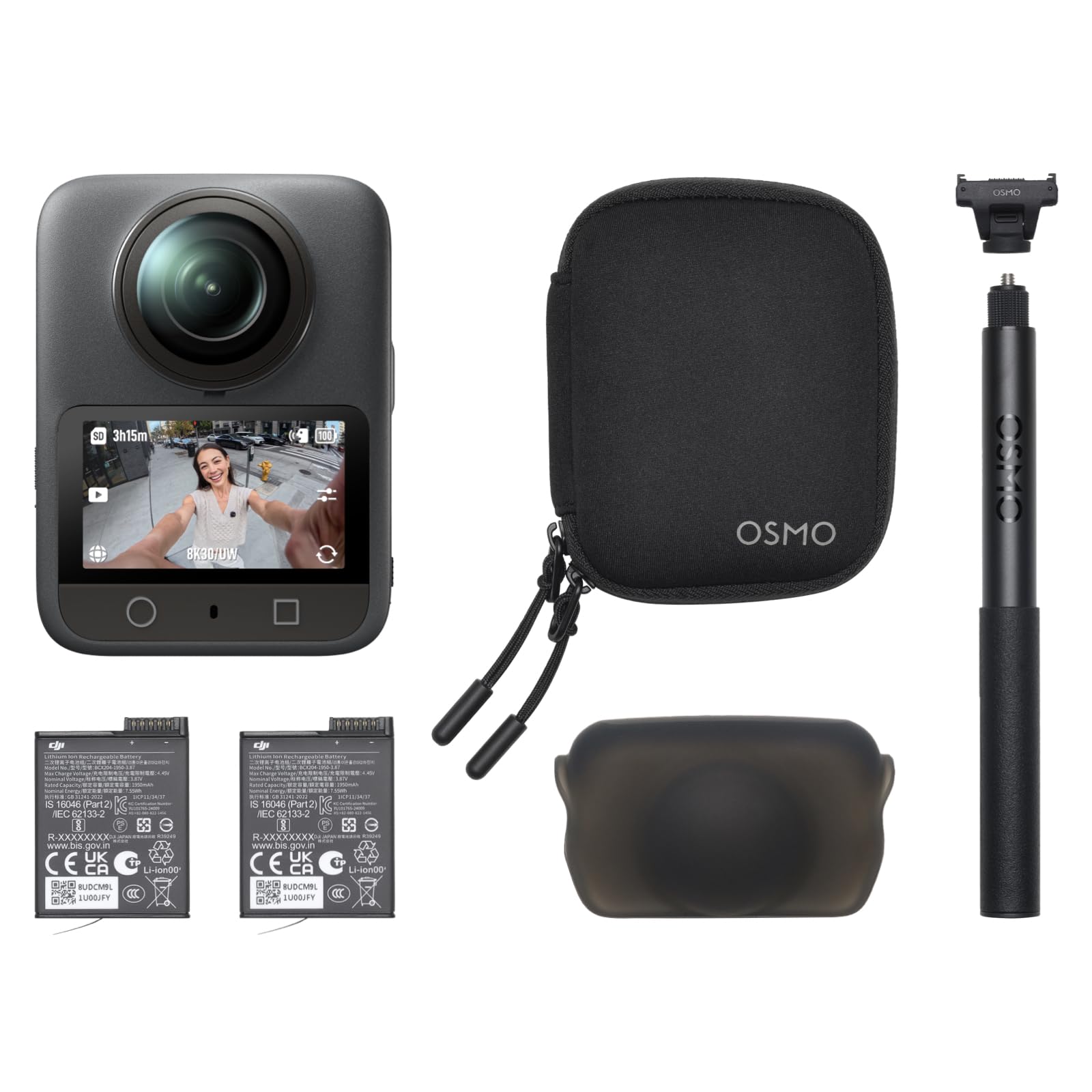
The DJI Osmo 360 changes the game with a 1-inch 360-degree sensor — the largest in any consumer 360 camera — delivering significantly better low-light performance and richer color than its smaller-sensor rivals. This matters for skateboarding because sessions often run from golden hour into twilight, and the Osmo 360 keeps shadows clean and highlights intact. The 8K/30fps 360-degree video is crisp, and the Invisible Selfie Stick effect (with an included 1.2-meter stick) lets you film clean third-person follow shots without any post-production guesswork.
What really sets this camera apart for skaters is the magnetic quick-release system that works with DJI’s ecosystem of mounts. You can snap from a board mount to a selfie stick in under a second without fiddling with threads. The built-in 105GB of storage means you can shoot a full day without worrying about a card, and the dual-battery Essential Combo extends runtime to about 190 minutes of steady recording. The four-microphone array with direct DJI Mic transmitter pairing also makes voiceovers and park banter cleaner than most 360 competitors.
The trade-off is that the DJI Mimo app (required for editing 360 footage) was removed from Google Play, so Android users need to download it from the DJI website, which adds a small friction point. Additionally, the single-lens non-360 mode is less versatile than the dedicated dual-lens cameras from Insta360. But for pure 360 quality, especially in mixed lighting, the Osmo 360 is the sharpest tool in the lineup.
Why it’s great
- 1-inch sensor delivers best-in-class low-light and color depth
- 105GB internal storage eliminates card anxiety during long sessions
- Magnetic quick-release mounts enable rapid switching between board and stick
Good to know
- DJI Mimo app must be sideloaded on Android via DJI’s website
- Non-360 mode is less flexible than dedicated action cameras
5. GoPro HERO13 Black

The GoPro HERO13 Black is the most mature action camera in GoPro’s lineup and a proven workhorse for skateboarding. Its 5.3K resolution at 60fps provides 91% more detail than standard 4K, meaning you can crop into a trick in post and still retain sharpness. The HB-Series Lens system adds genuine versatility: the Ultra Wide Lens Mod delivers the extreme fisheye perspective that skate culture traditionally loves, while the Macro Lens Mod can capture tight detail shots of grip tape and board graphics for intro sequences.
HyperSmooth stabilization is best-in-class and handles board-mounted shakes, drops off curbs, and quick shoulder pans without the jello-wobble effect that plagued earlier GoPros. The 8x Burst Slo-Mo mode records at 13x slower speeds, which turns a frontside boardslide into a 7-second cinematic moment. The camera is waterproof to 33 feet without a case, which is plenty for rain-slicked skate sessions. The included Enduro battery holds up well in cold weather — a real asset if you skate in northern climates.
The HERO13 Black does not pack a 360-degree sensor, so if you want the reframe-later flexibility, you’d be better off with a MAX2 or Insta360. It also runs warm during extended 5.3K recording, though GoPro’s thermal management has improved drastically since earlier generations. For the dedicated traditional action camera shooter who wants the highest single-lens quality with modular lens options, the HERO13 Black is the definitive choice.
Why it’s great
- HB-Series lenses allow fisheye and macro options for skate detail shots
- HyperSmooth stabilization eliminates jello-wobble on board mounts
- 8x Burst Slo-Mo captures 13x slower action for dramatic replays
Good to know
- No 360-degree capture if you want post-shoot reframing
- Extended 5.3K recording can produce noticeable warmth
6. Xtra Muse

The Xtra Muse is a pocket-sized gimbal camera that feels like a natural companion for skate video cinematography when you want smooth, handheld tracking shots of a skater rolling down the street. The built-in 3-axis gimbal provides mechanical stabilization that is fundamentally different from EIS — it physically counters each bump and jiggle, giving footage an almost dolly-like fluidity that is ideal for following a skater through a long line. The 1-inch CMOS sensor captures 4K video at an impressive 120fps, giving you both high resolution and the ability to slow down fast tricks.
The Master Follow mode uses face and object tracking to keep a skater centered in the frame automatically, even as they change direction — this is a huge help when you are filming yourself with a tripod. The 2-inch touchscreen is bright enough for outdoor use and supports horizontal-to-vertical switching quickly, which is handy if you are editing for both YouTube and TikTok. The included carrying bag and threaded handle make it easy to mount on a monopod for overhead angle shots over rails.
Where the Xtra Muse falls short for some pure action shooters is its lack of rugged waterproofing — it’s not built for mounting directly on a board or surviving a crash onto concrete. The stabilization is incredible, but the camera is better suited as a filmmaker’s companion than a helmet-cam. For skateboarders who want to produce polished, cinematic edits with smooth panning shots and slow-motion segment intros, the Xtra Muse offers a unique tool that no action camera can quite replicate.
Why it’s great
- 3-axis gimbal delivers true mechanical stabilization for handheld skate tracking shots
- 4K/120fps provides high-res slow motion for trick analysis
- Master Follow automatically tracks a skater through the frame
Good to know
- Not waterproof or rugged enough for direct board-mount use
- Cannot survive a hard fall onto concrete like an action camera can
7. Xtra Edge Pro Action Camera
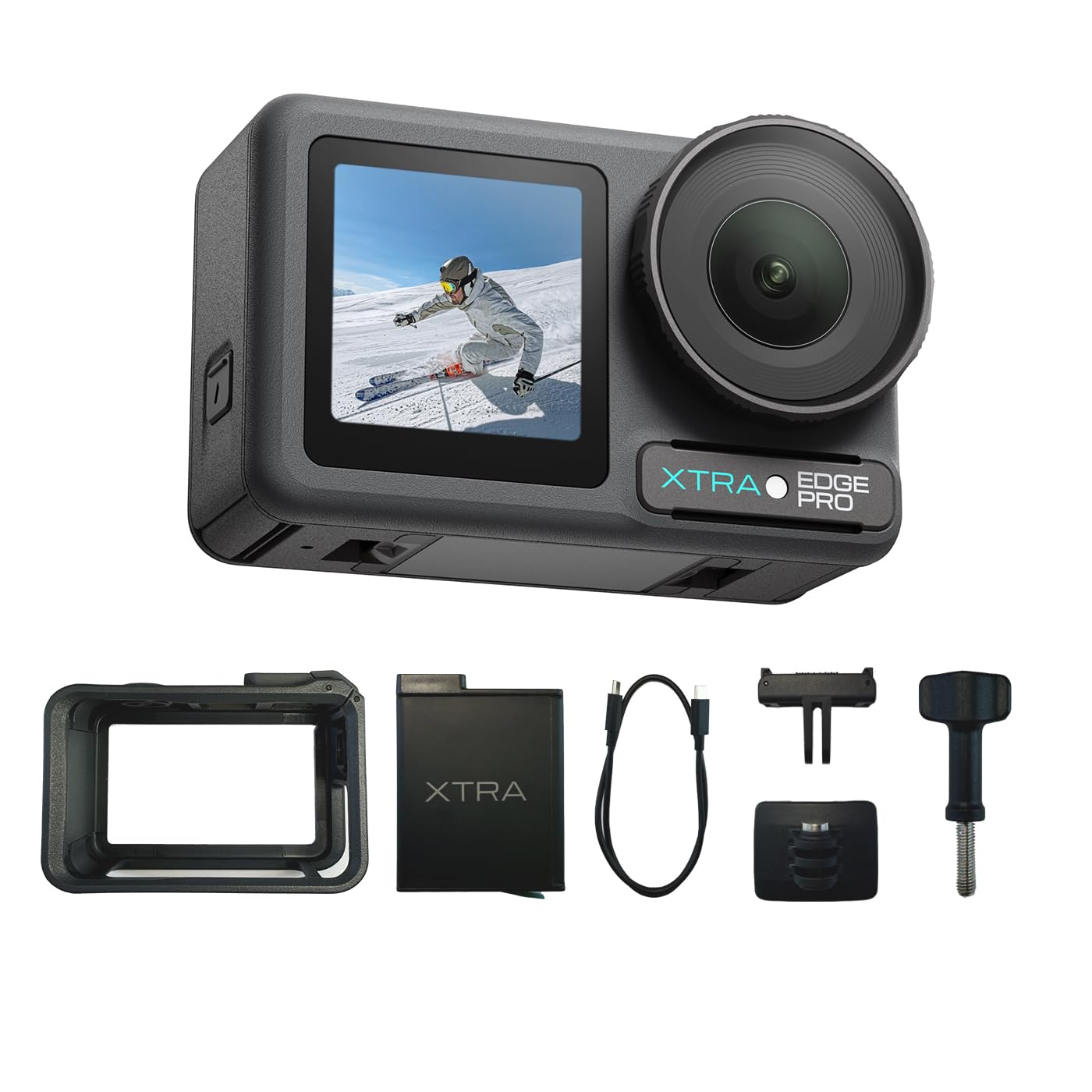
The Xtra Edge Pro punches well above its class with a 1/1.3-inch sensor — a size typically reserved for higher-priced cameras — that provides excellent low-light performance for sunset and indoor skate sessions. It shoots 4K at 60fps with smooth stabilization that includes 360 Lock and TiltGuard features to correct horizon roll. The Night View Mode brightens evening sequences without excessive noise, which is a genuine advantage when you are filming at a lit park after dark.
This camera is also ready for wet conditions, rated waterproof to 65 feet without a case, so you can film in rainy weather or even take it into a skatepark that uses a splash zone. The bundled Xtra Edge Pro Standard Kit includes a cold-resistant battery, a dual-orientation protective frame, and various mounts, making it ready for board and helmet mounting out of the box. The burst photo mode captures 20MP stills at high speed, which is great for pulling exact frames of a trick landing.
The app connectivity is straightforward via USB, though the companion app is less polished than what DJI or GoPro offer, and Wi-Fi connectivity can occasionally drop during file transfers. The stabilization, while good, is not quite as seamless as the HyperSmooth or RockSteady from the premium brands. Still, if you want a large-sensor action camera that performs in challenging light and handles rough weather without draining your budget, the Xtra Edge Pro is a seriously compelling option.
Why it’s great
- Large 1/1.3-inch sensor delivers strong low-light performance for after-dark skating
- Waterproof to 65ft without a case, ideal for rain sessions
- Burst photo mode is effective for capturing mid-trick stills
Good to know
- Companion app connectivity can be less reliable than top-tier brands
- Stabilization is good but not as refined as premium systems
8. AKASO 360 Action Camera
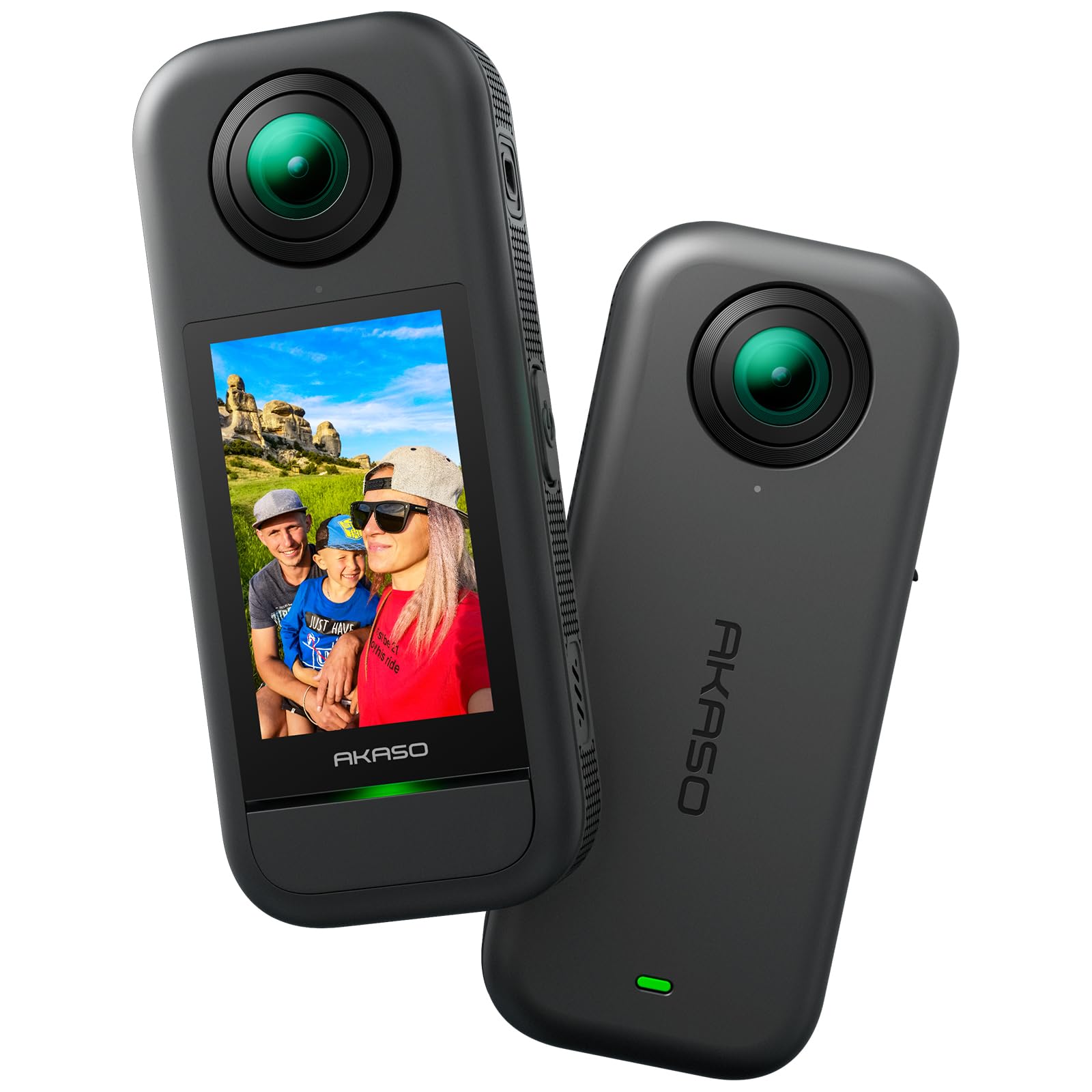
The AKASO 360 brings 360-degree skate filming to a much more accessible price point without sacrificing the core features that make 360 shooting so useful. Its dual 1/2-inch 48MP sensors capture 5.7K 360-degree video, and the Invisible Selfie Stick effect works convincingly when editing through the AKASO 360 Studio app. The 360-degree SuperSmooth stabilization and Horizon Lock keep the footage level even when the camera spins — essential for board-mounted 360 clips.
The AI Subject Tracking is a standout feature at this price tier, automatically keeping a skater centered in the frame during edits. The DNG8 RAW Photo mode offers greater dynamic range for editing, and the 72MP 360-degree photos are surprisingly sharp for landscape and group shots at the park. The camera is weatherproof, so you don’t have to panic if a session starts in drizzle. The included standard combo comes with a battery and USB cable, though the Invisible Selfie Stick is sold separately.
The main compromise is low-light performance — without HDR support and with smaller sensors than premium 360 cameras, dusk sessions will show more noise and less detail. The app, while functional, can occasionally feel sluggish when processing high-resolution 360 clips. Battery life is decent but falls behind the bigger names, especially with Wi-Fi and stabilization active. For skaters on a tighter budget who want to experiment with 360 reframing, the AKASO 360 is a smart entry point.
Why it’s great
- Entry-level 360 solution with effective Invisible Selfie Stick effect
- AI Subject Tracking simplifies post-shoot editing for single skaters
- DNG8 RAW photos provide good editing flexibility
Good to know
- Low-light video quality degrades noticeably compared to premium 360 cameras
- App processing can be slow with large 5.7K files
9. AKASO Brave 7 LE

The AKASO Brave 7 LE is the perfect starter camera for new skateboard videographers who want a proper action camera setup without a steep investment. Its dual display system — a 2-inch rear touchscreen and a vivid front screen — is ideal for vlog-style sessions where you are filming yourself skating with the board-mounted setup and need to see your framing. The 4K/30fps video with Electronic Image Stabilization 2.0 provides a decent smooth result for cruising speed clips and flat-ground tricks.
The IPX7 waterproof rating protects against rain and splashes, and with the included waterproof housing, you can take it down to 131 feet for pool skating or underwater shots. The bundle includes two rechargeable batteries, a remote control, and a variety of mounting brackets, so you can start filming as soon as you unbox it without buying extra accessories. The remote control is especially useful for triggering recording while the camera is mounted under your board.
The stabilization works well for lower-speed skating but shows noticeable wobble with hard landings, fast flips, or rough terrain — it’s not in the same league as premium systems. The white noise issue in audio reported by some users is worth noting if you plan to do voiceovers while skating. Overall, the Brave 7 LE is a value-focused entry point that gets you filming immediately, but skaters who progress into more technical tricks and faster lines will likely outgrow its capability.
Why it’s great
- Front-facing screen simplifies self-filming and vlogging while skating
- All-inclusive bundle with remote, batteries, and mounts is ready out of the box
- Waterproof housing allows deep-water and rain filming without worry
Good to know
- Stabilization struggles with high-impact landings and fast flips
- Audio has reported white noise issues during recording
FAQ
What is the best frame rate to film skateboarding?
Can I use a smartphone gimbal for skateboarding?
Final Thoughts: The Verdict
For most users, the camera for skateboarding winner is the DJI Osmo Action 6 because it combines the most advanced stabilization in the market with a variable aperture that handles any lighting condition at a park. If you want the freedom of shooting 360-degree footage and reframing tricks after the session, grab the Insta360 X5. And for the classic single-lens action camera lover who values modular lens options and burst slow-motion, nothing beats the GoPro HERO13 Black.