
Our readers keep the lights on and my morning glass full of iced black tea. As an Amazon Associate, I earn from qualifying purchases.
Specs are compiled from manufacturer listings and verified buyer reviews and can change over time — please confirm the key details on the product page before buying.
A dead belt drive motor usually means a cold house, a silent attic fan, or a garage door that won’t budge. The fix is picking the right replacement the first time, because these motors come in a maze of horsepower ratings, frame sizes, and shaft diameters that are easy to mix up. This guide sorts through the most reliable belt drive motors for furnaces, whole-house fans, swamp coolers, and garage doors, translating the spec-sheet jargon into plain English so you can order with confidence.
I’m Min — the founder and writer behind Gadgets Feed. This guide is built by comparing the manufacturers’ published specifications and the patterns across verified customer reviews, so you get each pick’s real strengths and trade-offs instead of marketing spin.
If you need a belt drive motor for a blower, fan, or garage opener, you want one that fits your mount and delivers the right power without noise. This guide covers the top picks, from horsepower and RPM to frame size and quietness, so you can match the right motor to your exact replacement job.
Our Picks at a Glance

How To Choose The Best Belt Drive Motor
Choosing a belt drive motor starts with reading the label on your old unit. The key numbers — horsepower, RPM, and voltage — need to match, but the physical mounting is just as critical. A motor that spins at the right speed won’t help you if its base doesn’t line up with your equipment’s bolt holes.
Frame Size and Shaft Dimensions
The NEMA frame size (like 48 or 56) determines the mounting footprint and shaft height. Pay attention to the shaft diameter and length, since the pulley needs to seat properly. A 1/2-inch shaft is common on these blower motors, but the length can vary slightly between models.
Horsepower and Speed
Horsepower must be equal to or greater than the original motor to avoid straining the system. Most of these fans run at 1725 RPM, but some equipment needs a specific speed to move the correct amount of air. Using a faster motor can over-spin a blower wheel and cause noise or vibration.
Electrical and Environmental Ratings
Check if the motor is reversible, as furnace blowers often need a specific rotation direction. The enclosure type matters too — an ODP (open drip proof) unit is fine for indoor furnace use, but a swamp cooler demands extra moisture protection. Automatic overload protection is a good safety feature to have on any motor.
Quick Comparison
| Model | Best For | Horsepower | Speed | Frame | Amazon |
|---|---|---|---|---|---|
| A. O. Smith GF2034★ Best Overall | Reliable furnace blower replacement | 1/3 HP | 1725 RPM | 48/56 | Amazon |
| Leungoo GF2034Budget Champion | Budget-friendly multi-brand swap | 1/3 HP | 1725 RPM | 48 | Amazon |
| GW 1/4 HP Fan MotorQuiet Performer | Quiet heating system fix | 1/4 HP | 1725 RPM | 48 | Amazon |
| Leungoo GF2054 | Strong 1/2 HP blower upgrades | 1/2 HP | 1725 RPM | 48 | Amazon |
| Packard 45014 | Versatile furnace and pump use | 1/4 HP | 1725 RPM | 48/56 | Amazon |
| A. O. Smith GF2054 | Powerful all-around replacement | 1/2 HP | 1725 RPM | 48/56 | Amazon |
| Chamberlain B3000 | Quiet garage doors near bedrooms | 1/2 HP | — | — | Amazon |
| Genie StealthDrive | Smart, ultra-quiet attached garages | 1 1/4 HP | — | — | Amazon |
| Chamberlain B6713T | Premium lighting and quiet power | — | — | — | Amazon |
In-Depth Reviews
1. A. O. Smith GF2034
Our pick — over 4.5★ from 300+ verified ratings; the strongest balance of quality and price.
The furnace blower standby that owners trust to bring the heat back fast.
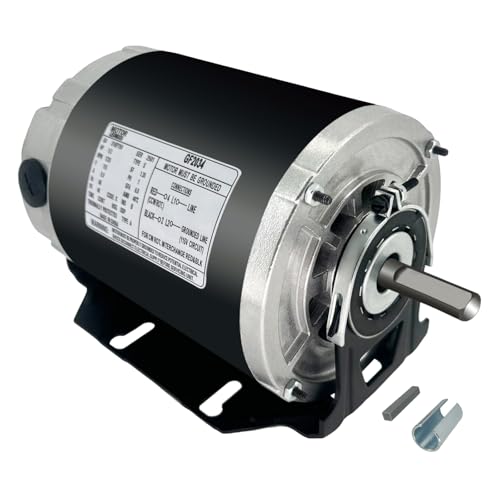
This motor is the first pick because it nails the two things every furnace owner cares about: it fits and it works. The 1/3 horsepower rating and 1725 RPM speed are standard for most residential blowers, and the 48/56 frame gives you flexibility across different brands. Buyers report it runs quietly and is simple to install, with the frame size fitting existing mounts without modification.
What wins people over here is the reliability story. The cast iron construction feels substantial compared to lighter stamped-steel motors, and the split-phase design has powered furnaces for decades. One long-time homeowner summed it up well after replacing a 50-year-old motor: they don’t expect another 50 years out of it, but a couple more decades of service would be plenty.
proven tank durability
- Functionality earns the most praise — owners love that it works flawlessly as a drop-in replacement
- Quality is the second most-discussed positive, with solid cast iron build
- Installation is straightforward for most people
needs regular flushing
- Durability shows a mixed record — some units last only a couple of summers
- It is a single-speed motor, so check your original before ordering
the reliable choice: Reach for this if you want a proven furnace blower replacement with strong owner consensus — it is the crowd favorite at 4.6 stars with hundreds of ratings backing it.
double-check first: If your old motor was multi-speed, this single-speed unit will not be a direct match for that application.
2. Leungoo GF2034
The cross-brand swap artist that lists dozens of compatible part numbers.
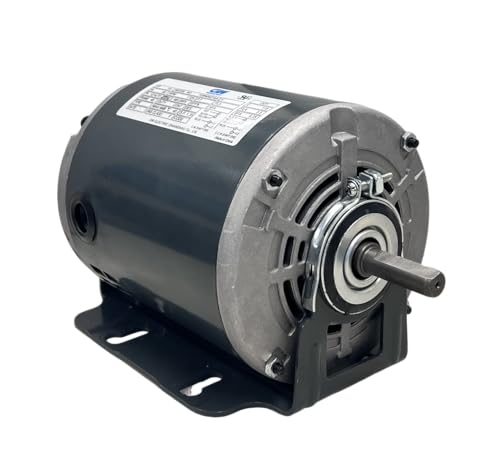
If your furnace or attic fan has been running on a motor from a brand you’ve never heard of, this one likely replaces it. The listing reads like a phone book of cross-references, covering AO Smith, Emerson, GE, Carrier, Packard, and Baldor numbers among others. It is built to fit the 48 frame with a 1/2-inch shaft, and the reversible rotation means you can adapt it to spin either direction.
This 16.3-pound, 1/3 HP motor draws 245 watts at 115V. Owners describe it as a simple blower motor that did the job on a house fan in the attic and worked well on an old drill press with minor mounting adjustments. The trade-off is a durability expectation of about a year to two years, according to some buyers who wished for sealed bearings to keep moisture out.
budget-friendly performance: This mid-range value gets you a capable 1/3 HP motor with a 2-year warranty and wide compatibility, best if you need a quick, affordable swap without hunting for an exact OEM match.
3. GW 1/4 HP Fan Motor
A quiet workhorse that keeps a broken heating system humming again.
This 1/4 HP motor is an entry-level pick praised for easy installation and quiet operation. The split-phase design with a resilient cradle base helps absorb vibration, which is why it earns praise for low noise. It draws 6.35 amps with a 1.35 service factor for brief overloads.
This motor fits standard furnace blower mounts thanks to its 48 frame (a standardized size for blower motors), and the flat 0.5-inch diameter shaft with 1.5-inch length works with most pulleys, so you can swap it in without custom parts. Owners mention it got their heating systems back online just in time, and several note the price felt right for the job. The alloy steel construction and auto overload protection (which shuts the motor off if it draws too much current) add confidence for a replacement motor.
grab it for: A straightforward furnace or fan swap where quiet operation is the priority and 1/4 HP is sufficient for your blower.
remember size: This is a 1/4 HP motor, so it won’t have the reserves of a 1/3 HP unit if your system needs more push.
4. Leungoo GF2054

A 1/2 HP blower motor that got one owner’s heat back on fast.
Need more muscle for a bigger job? This is the stronger sibling in the Leungoo lineup, delivering 1/2 horsepower at 1725 RPM (revolutions per minute, or how fast the shaft spins) while drawing 375 watts from a 115V supply. That is a significant step up in grunt compared to the 1/3 HP motors above, making it a good fit for larger furnace blowers or workshop equipment like cement mixers — one owner’s husband installed it in his mixer and declared it works “fantastic.”
The 48 frame and 1/2-inch shaft keep it a straight swap for most applications, and the 2-year warranty shows the maker stands behind it. Owners describe it as a well-built, durable motor that runs quietly once installed. The reversible rotation is a plus, though it requires swapping the red and black wires on the motor itself, which some found slightly tricky.
higher capacity model: This mid-range pick gives you 1/2 HP of quiet power — double the rating of the GW motor above — so it handles heavier loads without straining. But the reliability reviews show it isn’t universally flawless, so confirm your wiring setup before committing.
5. Packard 45014

The versatile 1/4 HP motor built for furnaces, centrifugal pumps, and fans.
Packard markets this as a continuous-duty motor rated for 40°C ambient temperatures, which means it can run for long stretches without overheating. The resilient base comes with both 48 and 56 frame mounting holes, giving you two fit options in one motor. It is rated for centrifugal pumps and belt drive furnace blowers, making it a flexible spare to keep around.
This split-phase motor is reversible, has automatic overload protection, and draws 4.80 amps at 115V. Customers note it was an exact replacement for an OEM blower motor that got their furnace running again, and a second buyer’s unit from the same line has been going strong for two years. The rolled steel housing with class B insulation keeps it solid for most home applications.
best if: You need one motor that can jump between a furnace blower, a pump, or a fan, and you want the 48/56 frame flexibility that most other 1/4 HP units lack.
worth knowing: Some owners ran this continuously for non-stop duty like a rock tumbler and saw it fail after about 5 weeks, so continuous heavy loads may exceed its comfort zone.
6. A. O. Smith GF2054
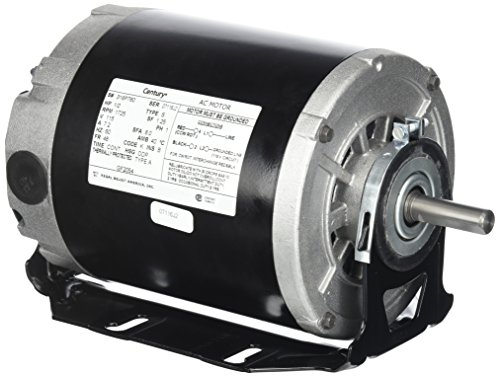
A copper-wound 1/2 HP motor that feels built to outlast the season.
This is the premium blower motor from the brand that defined the category, and the 746 ratings behind it make it among the most-verified picks here. The 1/2 HP split-phase motor spins at 1725 RPM, draws 7.2 amps, and has a 1/2-inch shaft on a vibration-absorbing cradle base. At 17.6 pounds, the copper construction gives it a heft that suggests durability.
Owners say the quality is clear from the moment you unbox it, with many calling it the equal of the original OEM motor. Its versatility shines — one buyer powers an entire RV setup with it. The main criticism is the wiring: some units arrive without leads attached, and the connections can be confusing if you’re not comfortable with electrical work. The label suggests calling the manufacturer if you get stuck.
strong heating output: This premium pick leads on quality and install satisfaction, but the reversal procedure demands attention — check your wiring configuration carefully before you button it up.
7. Chamberlain B3000
A reinforced belt and quiet DC motor made for garages next to living spaces.
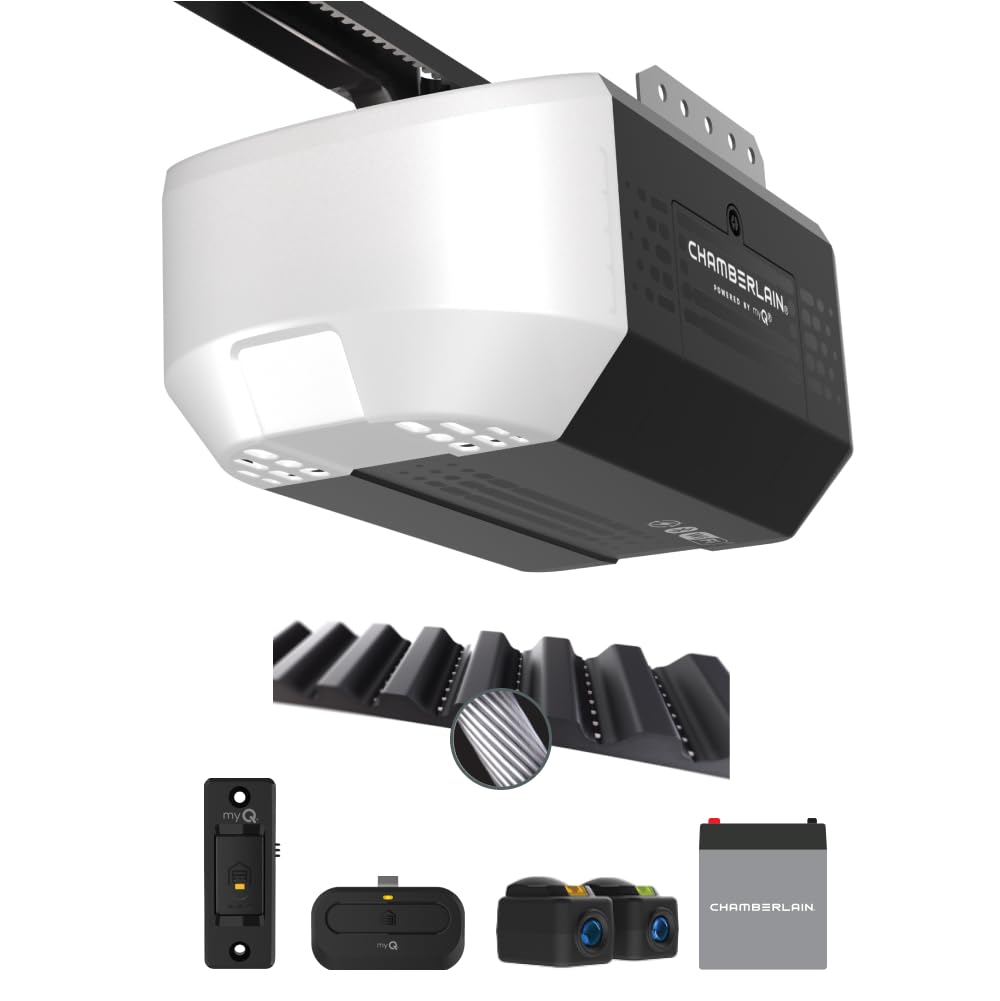
This is a different kind of belt drive motor — one that lives on your garage ceiling, not your furnace. The 1/2 HP DC motor and reinforced belt keep operation whisper-quiet for attached garages. It is myQ compatible and includes a battery backup so you can open and close the door during power outages.
The kit comes with two remotes, a sleek one-button wall control, and safety sensors (which reverse the door if something blocks it). Owners upgrading from 20-year-old Craftsman units found the parts surprisingly compatible, reusing existing rails and mounting. The included 1-bulb lighting (bulb sold separately) is basic, but the 5-year motor and belt warranty adds real confidence.
choose this for: A well-priced smart garage opener that prioritizes quiet operation and battery backup without premium smart-garage add-ons.
expect pairing: The installation is genuinely complex — while one owner found it very easy, others recommend a professional, and the instructions are thin in places.
8. Genie StealthDrive Connect

A steel-reinforced belt drive with a strong DC motor and serious smart-home chops.
This premium opener pairs a 1 1/4 HPC DC motor with a steel-reinforced belt, giving it the strength of a chain drive with the silence of a belt. It is built specifically for attached garages near bedrooms or nurseries. The built-in Aladdin Connect tech lets you monitor and control the door from your smartphone, and it works with Alexa and Google Home for voice control.
The battery backup delivers up to 50 open/close cycles during a power outage. The 5-piece rail system snaps together without added hardware. Owners consistently praise how easy it was to install solo and how quiet it runs compared to older screw-drive units. The bundle also includes two LED bulbs that are vibration-resistant and won’t interfere with your remote’s range.
stealthy quiet operation: This premium pick is the choice if you want the strongest smart-home integration and the quietest operation — owners rate it 4.7 stars, among the highest here — and you don’t mind paying for those features. It’s ideal for attached garages where noise carries into living spaces.
9. Chamberlain B6713T

An ultra-quiet belt drive with corner-to-corner LED lighting that sees everything.
This top-tier opener is for the buyer who wants their garage illuminated like a workshop, not a cave. The integrated corner-to-corner LED lighting produces 2,000 lumens of brightness, is motion-activated, and uniformly lights every corner of the garage. For context, that is double the light output you’d get from a standard pair of bulbs.
The DC motor’s soft start and stop minimize vibration for rooms above or beside the garage. The myQ app gives you remote control and monitoring from anywhere, and the battery backup keeps the door operational during outages. Owners upgrading from older units rave about how much quieter the belt drive is versus a chain, and note the lighting quality is a standout feature.
reach for this if: You want the best lighting setup and quietest operation available, with smart control as a bonus — this is the premium end of the Chamberlain line.
before you buy: The installation is easier with existing rails, and while most owners found it smooth, the safety sensor brackets were too short for one buyer and required a DIY extension.
Understanding the Specs
Horsepower and RPM
Horsepower (HP) tells you how much work the motor can do. A 1/3 HP motor handles standard furnace blowers, while 1/2 HP provides more reserve for larger systems or workshop equipment. RPM (revolutions per minute) sets the speed — most of these blower motors run at 1725 RPM, and matching this is critical so your fan moves the right amount of air without straining.
Frame Size and Shaft
The NEMA frame (48 or 56) determines the bolt pattern and mounting height. A 48 frame is compact and common for residential furnaces; a 56 frame is slightly larger. The shaft diameter (often 1/2 inch) and length must match your pulley. Getting this wrong means the motor won’t mount, or the pulley won’t seat properly.
FAQ
What is the difference between a belt drive motor and a direct drive motor?
How do I know which horsepower I need for my furnace blower?
Will a 48 frame motor fit my furnace?
Can I use a higher horsepower motor as a replacement?
What does it mean when a motor is reversible?
Why does my motor need to be 1725 RPM?
What is a split phase motor?
How long should a belt drive blower motor last?
Final Thoughts: The Verdict
For most buyers, the belt drive motor winner is the A. O. Smith GF2034 because it has the strongest owner consensus — 4.6 stars across 300+ ratings — and the cast iron build that survives the test of time. If you want the extra muscle of 1/2 HP, grab the Century GF2054. And for a silent garage door that works with your smart home, the Chamberlain B6713T is the one to reach for.
How We Picked
We do not accept paid placement. Every pick is matched to a real buyer and a real use-case; we do not hands-on test units.
Sources & Methodology
Specifications: manufacturer listings and product documentation. Review insights: verified customer reviews, as of August 2026. Pricing: not shown on this page (it changes often); check the current price via the retailer link.
As an Amazon Associate, Gadgets Feed earns from qualifying purchases. This does not affect which products we feature.