
Our readers keep the lights on and my morning glass full of iced black tea. As an Amazon Associate, I earn from qualifying purchases.
Specs are compiled from manufacturer listings and verified buyer reviews and can change over time — please confirm the key details on the product page before buying.
Waking up on the ground with a screaming lower back is the fastest way to ruin a camping trip. The real fix is a sleeping surface that keeps your spine aligned, not just more padding. That’s what separates a back-friendly camping mattress from a plain slab of foam.
I’m Min — the founder and writer behind Gadgets Feed. This guide is built by comparing the manufacturers’ published specifications and the patterns across verified customer reviews, so you get each pick’s real strengths and trade-offs instead of marketing spin.
A back-friendly camping mattress prevents morning stiffness and pain. The right camping mattress for bad back keeps your hips and shoulders supported all night, whether you choose a dense floor futon, a self-inflating pad with insulation, or a raised cot that gets you off the dirt.
Our Picks at a Glance


How To Choose The Best Camping Mattress For Bad Back
Your back cares about spinal alignment, hip support, and insulation—not brand names. It cares about three things: whether your spine stays straight, whether your hips sink too deep, and whether the cold ground is sucking warmth out of you. Focus on these areas and you’ll narrow the field fast.
Firmness and density beat fluff every time
Soft, plush padding feels great briefly but lets your hips sink and spine curve. Then your hips sink down, your lower spine curves, and you wake up stiff. To avoid that, look for high-density foam — measured in D ratings (a higher D means firmer, more supportive foam). Denser foam resists sinking and keeps your body on a level plane, so your spine stays straight. A medium-firm mattress is usually the balance for back pain.
Thickness keeps you off the hard ground
Your hip bone and shoulder are the pressure points that hurt most on a hard surface. A mattress around 3 inches or thicker lets those bony spots press into the foam instead of the dirt below. Thinner mats might pack smaller, but they trade away the very cushioning your back needs.
Insulation matters more than you think
Cold ground pulls heat from your body all night, and a cold, tense back is a sore back. That’s where the R-value comes in — it measures how well the pad blocks cold from below. A high R-value in the 9.5 range means you stay warm and your muscles stay relaxed, even in chilly weather.
Quick Comparison
| Model | Best For | Thickness | Support Core | Weight | Amazon |
|---|---|---|---|---|---|
| Feisaibaoly Futon★ Best Overall | Firm floor sleeping | 3.5 inches | High-density foam | 10 lbs | Amazon |
| Wevelel PadBest Insulated | Self-inflating comfort | 3.1 inches | 50D memory foam | 6.59 lbs | Amazon |
| NYECHTO PadFastest Setup | Fast powered setup | 3.14 inches | 28D memory foam | 5.95 lbs | Amazon |
| HomeMate Pad | Roll-up floor sleeping | 3 inches | Memory foam | 7.8 lbs | Amazon |
| Novilla Trifold | Foldable guest sleeping | 4 inches | Memory foam | 7.8 lbs | Amazon |
| CYMULA Pad | Wide cot topping | 3 inches | Carbon-fiber foam | 17 lbs | Amazon |
| ZonLi Futon | Compact guest bedding | 2.5 inches | Egg-crate foam | 11.9 lbs | Amazon |
| King Koil Air | Raised, adjustable firmness | 20 inches | Coil-beam air | — | Amazon |
| KAMPKEEPER Cot | improve off-ground sleep | 23 inches | Air + steel frame | 17.6 lbs | Amazon |
In‑Depth Reviews
1. Feisaibaoly 6th Generation Japanese Floor Futon
Our pick — 4.5★ from 800+ verified ratings; the strongest balance of quality and price.
The floor futon that ended one buyer’s severe lower back pain after a single night.
The defining spec here is the 9-layer structure built around high-density foam — and it shows in how owners describe it: “cushy yet firm,” with just enough give to absorb pressure without letting your hips sink. At 10 pounds and 80 x 39 x 3.5 inches, it’s a full twin-size surface that lays flat on the floor and holds its shape for back sleepers and stomach sleepers alike.
This is the pick around which “eliminated severe lower back pain and insomnia after one night on floor” gets repeated across multiple owners. The foam disperses pressure points instead of letting them concentrate under your lower spine. The microfiber cover uses a three-dimensional lattice stitch to lock the filling in place, so you get a uniform surface rather than lumpy shifting foam.
What wins people over, in review after review, is the comfort — it’s the single most-praised trait, with more than 140 owners calling it out. The recurring theme is that it’s neither too soft nor too firm, which is exactly the balance a bad back needs. Give it up to 3 weeks in cold climates to fully expand after unboxing, since it ships tightly compressed.
What Makes It Work
- Firm yet pressure-relieving support that owners credit with easing back pain
- 9-layer construction with 5 padding layers resists sagging over time
- Foldable and portable enough to toss in a car for camping
Honest Trade-Offs
- Thickness is a point of debate — a few say it reads thinner than the photos suggest
- Cleaning is spot-only with a damp cloth, not machine-washable
Grab it for: firm, spine-friendly floor sleeping that doubles as a guest bed or play mat at home.
Think twice if: you want a raised bed height — this one sits flat on the ground by design.
2. Wevelel Memory Sleeping Pad
A 50D memory foam pad that self-inflates in about 30 seconds flat.
The headline spec is a 50D foam density — versus the 19D found in typical camping pads — and that density translates directly to less hip and shoulder pressure. It inflates to 77 x 26.98 x 3.1 inches, and the brand says it holds up to 800 lbs under 24 hours of static pressure without leaking. For a back-pain sufferer, that means your spine stays supported even when you toss and turn.
Insulation is where this pad quietly dominates. The 9.5 R-value, verified by ASTM testing, blocks cold ground from sapping your body heat — which matters because a chilled, tense back is a sore back. Buyers report sleeping through the night without back pain, and the built-in pillow saves you from packing a separate one. It’s heavier than a backpacking pad at 6.59 lbs, so this is car-camping territory, not a long-trail companion.
Set-up is genuinely easy: open three valves, let it expand for 10 seconds, close the back two, and step on the front inlet for 20 seconds. Storage is just as simple thanks to a dual-use valve that lets air out without sneaking back in. The 50D stretch knit cover is noiseless, too, so you won’t hear crinkling every time you shift.
What owners love: comfort is the runaway favorite, with over 120 buyers singling it out, and ease of use follows closely behind with more than 100 votes. A 56-year-old camper summed up the appeal: “I need more roughage and less roughing it.”
The catch: it’s bulky when rolled and not built for backpacking — plan for car or tent camping.
3. NYECHTO Self Inflating Sleeping Pad with Electric Pump
One touch on a built-in pump and this pad inflates itself in seconds.
The built-in intelligent air pump with a rechargeable battery powers fast, easy inflation. — two 1200mAh cells that power roughly 7 inflations per charge, refilled via USB-C in 2-3 hours. That kills the single most annoying part of camping for a sore back: huffing and puffing into a valve. One owner measured full inflation at under 30 seconds, with deflation just as fast.
At 3.14 inches thick with a 28D high-density foam core, it holds up to 665 pounds and keeps you improve off hard ground. The comfort reviews are emphatic — over 70 owners call it out as the top trait, with many noting they woke up without the usual aches. It’s a touch firmer than pure memory foam, which actually helps your spine stay aligned rather than sagging into a hammock position.
You can sleep warm in winter and cool in summer because the 9.5 R-value (a measure of insulation against ground cold) makes it a genuine four-season pad. It folds down to a compact 26.37 x 9 inches and weighs just 5.95 lbs, with a built-in pillow for head support. It won’t fit in a backpack, but for car and tent camping, it’s tough to top for convenience.
Standout feature: the battery pump is the reason to choose this over a manual pad — it also compresses the pad to 0.7 inches for storage, so no wrestling with rolls.
Fair warning: the pump is briefly noisy while running, and it’s not lightweight enough for backpacking trips.
4. HomeMate Memory Foam Camping Mattress Pad
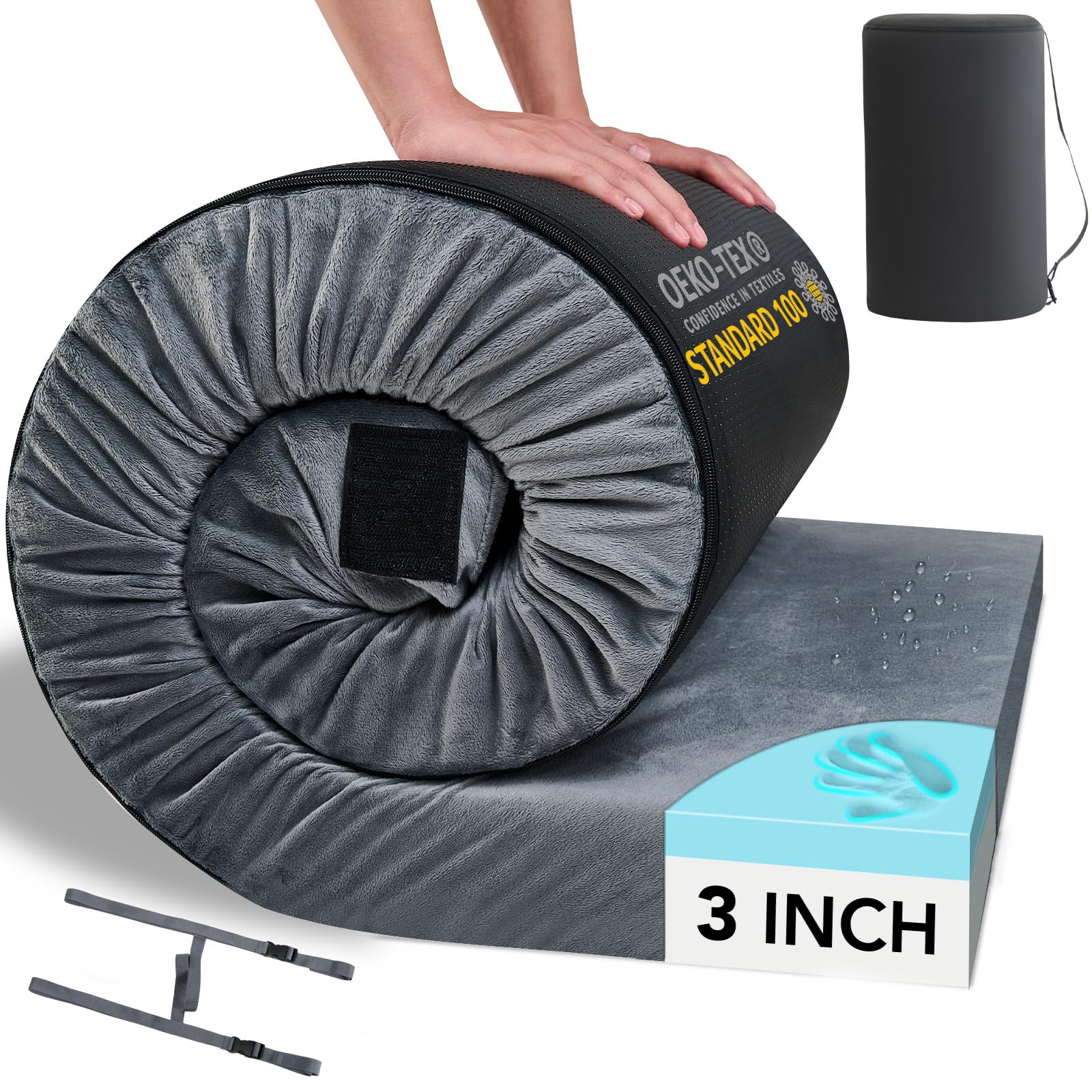
A 3-inch memory foam slab that rolls up tight for the car or the cot.
Comfort is the story here — it’s the most-mentioned trait by a wide margin, with over 120 owners praising it. One disaster-relief volunteer who sleeps on cots called it a huge difference in sleep quality, and another owner uses it at home on the floor specifically to wake up “no back pain.” The 3-inch memory foam core does the pressure-relief work your hips and shoulders need, so you wake up without stiffness.
Unlike the air pads above, this one has a waterproof, non-slip bottom. Damp ground won’t seep through, and the rubberized base keeps the pad from sliding around under you — two things that quietly wreck sleep quality on uneven campsites. The cover is removable and machine-washable with a durable zipper, so it stays fresh after muddy trips.
It rolls up compactly with adjustable straps and a storage bag, which makes it a solid choice for car trunks, truck cabs, and guest rooms. Owners note the rolled size is a bit bulky to carry far, so it’s not a backpacking pad — but for car camping and cot topping, it’s a reliable, comfortable pick that’s easy to tuck away.
Why it earns its spot: the combination of washable cover, waterproof base, and genuine back-friendly foam at a value price is hard to match.
The trade-off: the rolled bundle is bulky — plan for trunk space, not a hiking pack.
5. Novilla Foldable Mattress Topper

The 4-inch trifold that turns into a sofa, a cushion, or a floor bed on demand.
At 75 x 25 x 4 inches, this is the single-size option with the most thickness in the list — a full 4 inches of 2-layer responsive comfort foam. That depth is what lets it work as both a camping mattress and a permanent guest bed. It’s also noticeably thinner in profile than the futons above: at 7.8 pounds versus the Feisaibaoly’s 10, it’s the lighter carry of the two floor mats.
The versatility is the real draw. Fold it into three sections and it becomes a sofa seat, a deck chair cushion, or a stool top. Leave it flat and it’s a guest bed or RV sleeper. The non-slip fabric on the bottom keeps it planted, and the washable knitted cover is certified by CertiPUR-US and Oeko-Tex, meaning the foam and fabric meet independent standards for emissions and safety.
Owners consistently praise the quality and foldability — the two most-cited traits, with 30 and 27 mentions respectively. The honest caveat is longevity: one buyer updating after 4 months of use noted the foam softened and lost some shape with daily sleeping. For travel, guests, and kids, it’s an easy, comfortable choice; for a permanent every-night mattress, expect it to wear.
Best for: campers and hosts who need one mattress that folds into furniture and stores flat.
Look elsewhere if: this will be your full-time bed — daily use takes a visible toll on the foam.
6. CYMULA Memory Foam Camping Mattress Pad
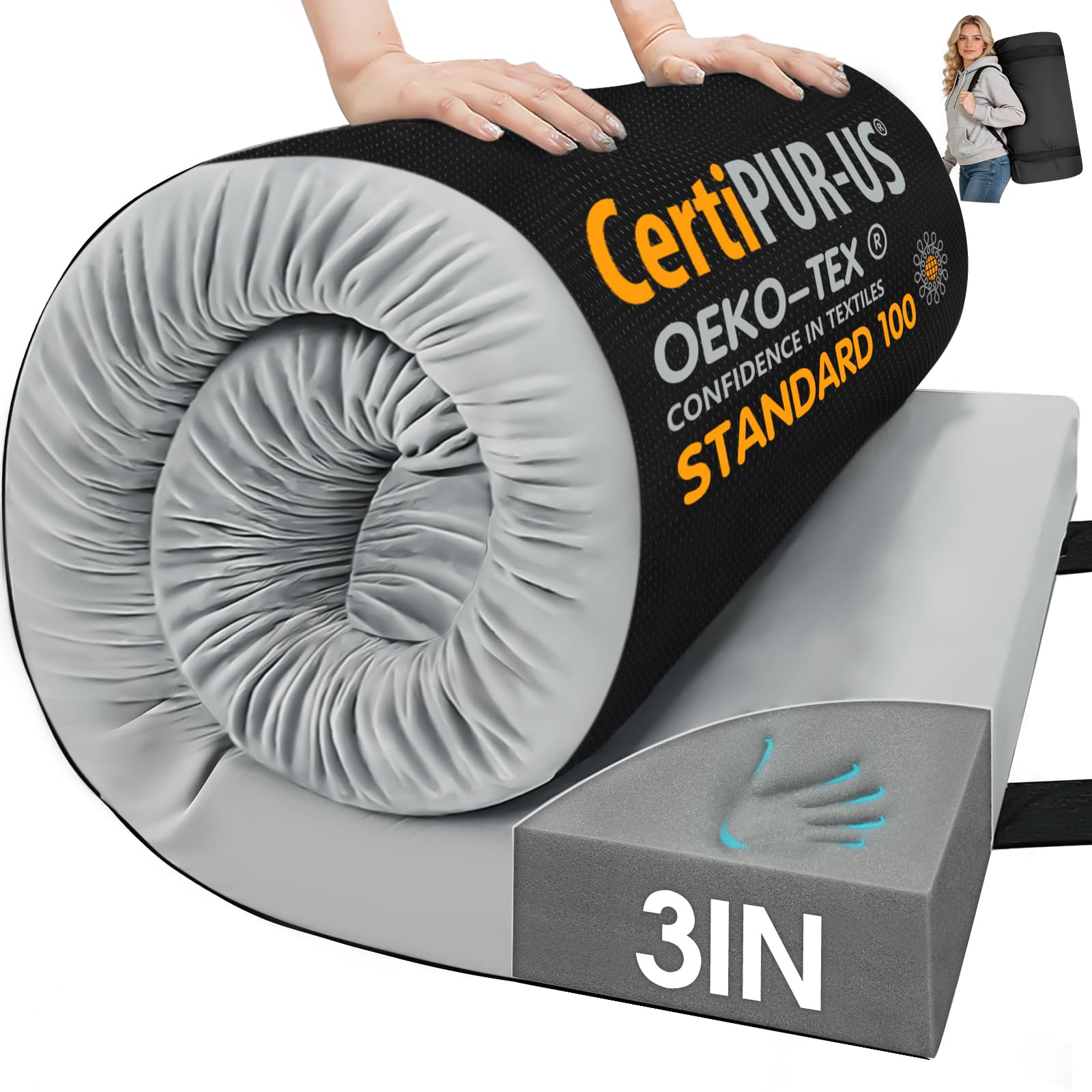
A wide 54-inch foam pad that makes thin cot mattresses feel like a real bed.
The defining spec here is width: at 75 x 54 x 3 inches, this is the widest foam pad in the lineup — wide enough that two kids fight over who sleeps on it, according to owners. The carbon-fiber high-elasticity memory foam is designed to relieve muscle pain, and the high-density support sponge handles hard floors without bottoming out.
This is the pick for cold-weather campers. Owners rate it excellent for fall and winter conditions, with one noting it delivered the “best camping sleep ever” in 30s°F weather on a platform. The removable, machine-washable cover zips off for easy cleaning, and rubberized dots on the bottom plus straps keep it anchored to a cot or crib so it doesn’t slide around at night.
Camping use is the most-praised trait with 46 mentions, followed closely by rollability at 44 — it rolls up with built-in straps for storage. The trade-off is weight and bulk: at 7.71 kg (about 17 lbs), it’s the heaviest foam option here and noticeably bulky when rolled. This is car-camping gear, full stop.
What stands out: the combination of generous width and genuine cold-weather warmth makes it a favorite for family camp setups.
Before you buy: measure your cot — a few owners found the 54-inch width too narrow for standard camping cots.
7. ZonLi Japanese Floor Mattress Futon
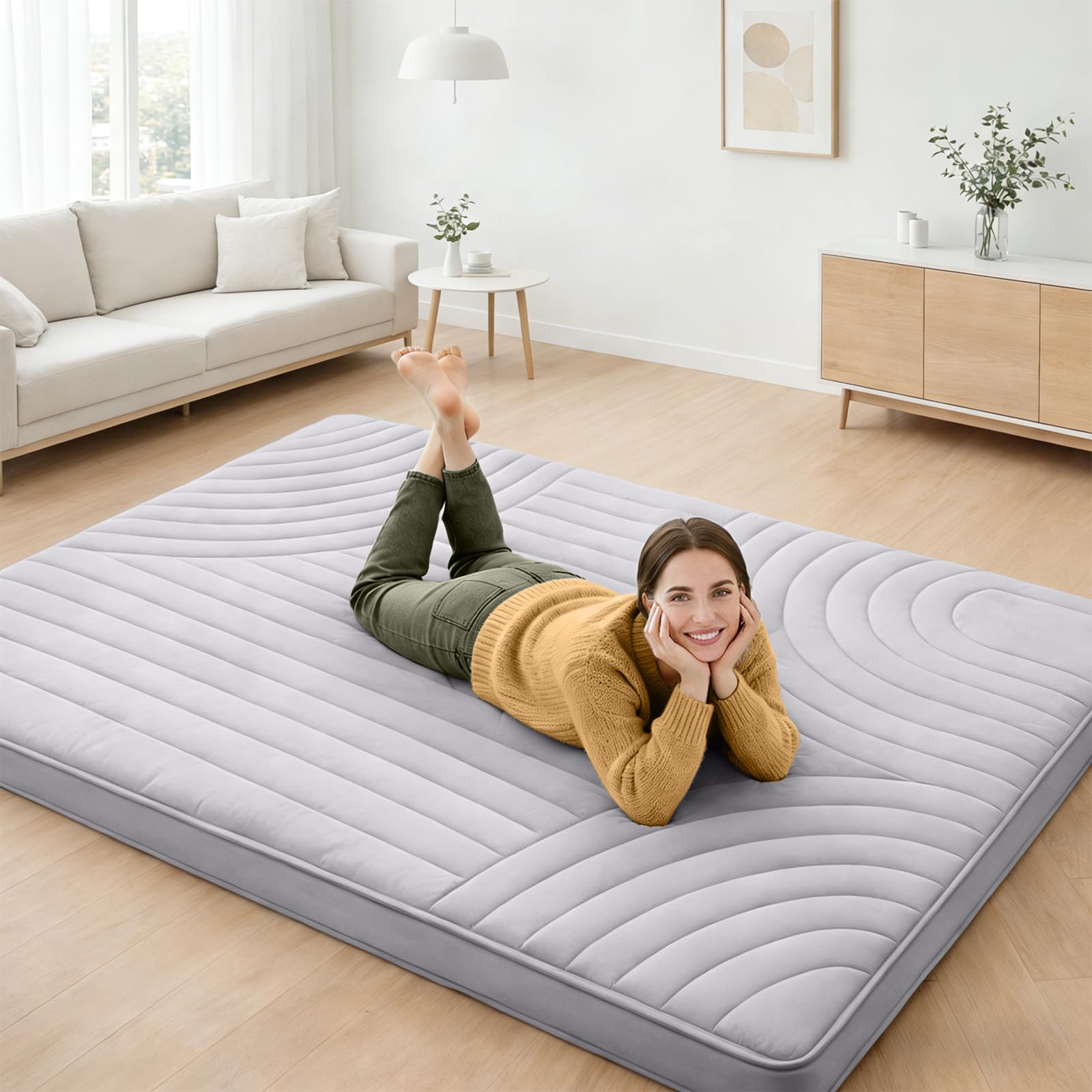
A 2.5-inch foldable futon with a zip-off, machine-washable cover.
The star feature is the removable cover — unzip it and toss it in the washer, which is rare at this price tier and a real advantage for camping grime. Inside is 25D egg-crate memory foam layered over crushed sponge, giving it a plush feel that owners describe as comfortable with good firmness. Comfort is the runaway top trait here, with over 160 buyers praising it.
At 75 x 39 x 2.5 inches, it’s a twin-size surface that fits small rooms and folds up with two elastic straps for storage. It’s marketed for everything from a yoga mat to a guest floor bed, and the calming grey color gets specific compliments. The compressed packaging regains full thickness in 2-3 days after opening.
There are two honest trade-offs to weigh. The first is thickness — at 2.5 inches, it’s the thinnest foam option here, and some owners note it’s not as thick as the photos suggest, which means less cushioning for heavy pressure points. The second is durability, the one aspect owners flag negatively, so treat it as an occasional-use guest bed rather than a nightly floor mattress.
Pick this for: a budget-friendly, washable guest bed that stores flat and doubles as a yoga or play mat.
skip it if: you need serious pressure relief for a bad back every single night — the thinner core won’t cut it.
8. King Koil Air Mattress Queen
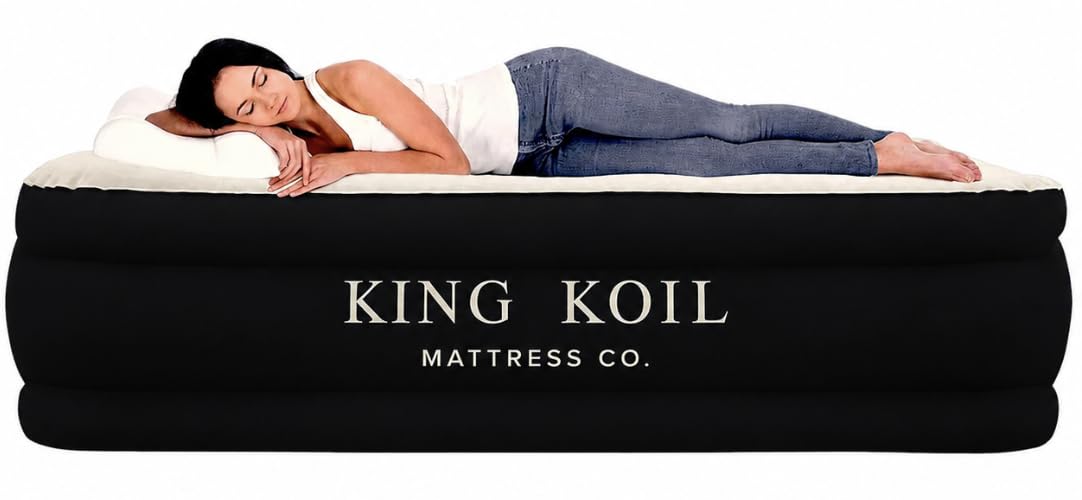
A 20-inch-tall queen airbed that inflates in 90 seconds flat.
This is the crowd favorite for its reliable firm support and adjustable comfort. — a massive owner base keeps coming back to its patented coil-beam construction, which provides firm support that doesn’t sag or sink overnight even with two adults. The raised 20-inch height is the key back-pain feature: you step up into bed rather than lowering yourself to the ground, which is a huge relief for anyone with a stiff spine. Its spinal-alignment design is endorsed by the International Chiropractors Association.
The built-in 120V / 210W AC pump is genuinely fast — inflate in 90 seconds, and separate knobs let you dial in firmness from soft to rock-hard. That adjustability matters for back pain because you can fine-tune support to your exact preference. The flocked velvet top feels like a real mattress, and the 600-pound capacity means two adults sleep without bottoming out.
The trade-off is durability and air retention — the two most-mixed aspects in the data. Some owners mention it holds air for days after an initial stretch, while others note leaks over time. The 1-year warranty and responsive customer service are a real safety net, with multiple owners describing quick replacements. It’s also a wired pump unit, so it needs a power source — bring an inverter for camping.
Why It’s The Crowd Favorite
- Raised 20-inch height spares your back from getting down to the ground
- Adjustable firmness lets you find your perfect support level
- 90-second inflation with a built-in pump, no manual effort
Realistic Caveats
- Air retention is hit-or-miss — some units need a top-up the next morning
- Requires a wall outlet or power source, limiting true off-grid camping
Reach for this if: you want real-bed height, adjustable firmness, and don’t mind staying near a power source.
Consider instead: a foam pad if you’re headed deep off-grid with no electricity for the pump.
9. KAMPKEEPER Camping Cot with Air Mattress

A steel-frame cot plus air mattress that gets you fully off the cold ground.
The defining spec here is elevation. At 80 x 60 x 23 inches, this queen-size cot-and-mattress combo lifts you a full 23 inches off the dirt — which is the single best thing you can do for your back at a campsite. Owners describe it as sleeping like a home mattress, and one noted it’s “ideal for back pain” because you’re not fighting the ground’s contour. The anti-rust steel frame with an X-shaped structure supports up to 500 pounds.
Comfort is the most-praised trait with 88 mentions, with easy setup right behind at 81. It inflates quickly with your own pump — note, no pump is included, so factor that into your packing list. The PVC-coated Oxford fabric is durable and reduces noise when you shift at night. The under-cot space doubles as storage, so your gear is off the damp floor too.
The honest caveats are size and air. The mattress loses a little air overnight for some owners — a known trait of hybrid cot setups — and the whole unit is bulky and heavy at 8 kg (about 17.6 lbs). It packs into its own carry bag, but this is strictly car-camping gear. One owner called the included hand pump exhausting and recommended an electric one.
Best for: car campers and glampers who want the spine relief of a real raised bed with storage underneath.
Plan ahead: bring your own electric or battery pump, since none ships with the cot.
Understanding the Specs
Foam Density and Firmness
Density is measured in D units — like 28D or 50D — and higher numbers mean firmer, more resilient foam. For a bad back, you want enough firmness to keep your hips from sinking deep, which lets your spine stay in a neutral line. Medium-firm is usually the right call; pillow-soft foam feels nice for an hour but leaves you aching by sunrise.
R-Value Insulation
R-value measures how well a pad blocks cold from the ground beneath you. A higher number means better insulation — a 9.5 R-value like the Wevelel and NYECHTO pads are four-season capable. Cold ground pulls heat from your body all night, and a cold, tense back is a sore back, so this number matters as much as cushioning.
FAQ
Is a firm or soft camping mattress better for a bad back?
How thick does a camping mattress need to be for back pain?
What is R-value and why does it matter for my back?
Will a foam pad or an air mattress be better for my spine?
How long does a compressed camping mattress take to expand?
Can I use a floor futon inside as my regular bed?
Does an improve cot actually help with back pain?
How do I clean a camping mattress after a muddy trip?
Final Thoughts: The Verdict
For most people, the camping mattress for bad back winner is the Feisaibaoly Japanese Futon because its 9-layer high-density foam delivers the firm, even support that owners credit with easing severe lower back pain — all in a foldable, portable package. If you want self-inflating convenience with winter-grade insulation, grab the Wevelel pad with its 9.5 R-value. And for the ultimate raised-bed comfort that spares your back from the ground entirely, the KAMPKEEPER cot is the one to reach for.
How We Picked
We do not accept paid placement. Every pick is matched to a real buyer and a real use-case; we do not hands-on test units.
Sources & Methodology
Specifications: manufacturer listings and product documentation. Review insights: verified customer reviews, as of August 2026. Pricing: not shown on this page (it changes often); check the current price via the retailer link.
As an Amazon Associate, Gadgets Feed earns from qualifying purchases. This does not affect which products we feature.