
Nothing derails a night under the stars faster than the high-pitched whine of a mosquito in your ear or the lingering dread of a tick you might have missed. The right bug spray is the single most important piece of gear you will not share; it is your invisible perimeter defense, and choosing the wrong active ingredient or format means you are either unprotected or covered in a greasy, foul-smelling film for the entire trip.
I’m Min — the co-founder and writer behind Gadgets Feed. I have spent hundreds of hours analyzing field data, comparing active-ingredient concentrations, and cross-referencing EPA registration details so you know exactly which formula actually holds up against mosquitoes, ticks, and biting flies in real campsite conditions. (And Homer 🐱 sniffed every aerosol canister and promptly vetoed the ones with strong odors).
Whether you need a fabric treatment that bonds for six washes, a skin-safe repellent with zero greasy residue, or a wipe you can toss in a daypack, this guide breaks down the only seven options that belong in your kit. This is the definitive breakdown of the best bug spray for camping, built from ingredient concentrations, duration data, and real-world user reports.
How To Choose The Best Bug Spray For Camping
The best bug spray for camping is not the strongest concentration — it is the one you actually apply correctly and reapply on schedule. Understanding the active ingredient, the format (spray vs. wipe vs. fabric treatment), and the duration claim relative to your specific environment (deep woods vs. lakeside vs. alpine meadow) is how you avoid both bites and buyer’s remorse.
Active Ingredient: DEET, Picaridin, OLE, or IR3535
DEET at 30% to 40% remains the gold standard for protection against ticks and mosquitoes in heavy-infestation zones like tall grass and dense underbrush. Picaridin at 10% to 20% matches DEET’s effectiveness against mosquitoes but is odorless, non-greasy, and gentler on synthetic fabrics and gear. Oil of Lemon Eucalyptus (OLE) at 30% provides a plant-based alternative that lasts up to six hours for mosquitoes, though tick protection drops to about four hours. IR3535, a synthetic amino-acid derivative, is nearly odorless and non-sticky but typically requires more frequent reapplication in high-heat, sweaty conditions. If you are camping with young children or prefer to avoid DEET, Picaridin or OLE are the strongest alternatives.
Fabric Treatment vs. Skin Repellent
Permethrin is not for skin — it is sprayed on clothing, tents, sleeping bags, and camp chairs and bonds to fabric fibers for up to six weeks or through six wash cycles. It kills ticks and mosquitoes on contact rather than simply repelling them. A University of Rhode Island study found that wearing Permethrin-treated footwear reduced the likelihood of a tick bite by 73.6 times. For the highest level of protection, treat your gear with Permethrin before the trip and apply Picaridin or DEET to exposed skin at the campsite. Do not rely on a fabric treatment alone if you are wearing shorts and a t-shirt.
Format: Aerosol, Pump Spray, or Wipes
Aerosol sprays allow fast, even coverage over large areas of skin and clothing, making them ideal for the first application of the day. Pump sprays give you more control and avoid the loud hiss that can disturb tentmates, but they require a bit more rubbing to spread evenly. Wipes are the most packable and TSA-friendly option — each individually sealed wipe is perfect for a day hike or a plane-to-campsite transition, though you use exactly one per application and cannot micro-adjust the dose. If you camp with a group, a 6-ounce aerosol canister will last multiple trips; if you solo backpack, a pack of 12 wipes weighs almost nothing and leaves no bulky can in your trash bag.
Quick Comparison
On smaller screens, swipe sideways to see the full table.
| Model | Category | Best For | Key Spec | Amazon |
|---|---|---|---|---|
| Sawyer Permethrin | Fabric Treatment | Gear & clothing protection | Bonds 6 weeks / 6 washes | Amazon |
| Repel Sportsmen Max | DEET Aerosol | Heavy tick & mosquito zones | 40% DEET concentration | Amazon |
| Grandpa Gus’s | DEET-Free Spray | Plant-based family use | 8 hr tick / 6 hr mosquito | Amazon |
| Murphy’s Naturals | OLE Pump Spray | Non-greasy skin protection | 30% Oil of Lemon Eucalyptus | Amazon |
| Ben’s 30% DEET Wipes | DEET Wipes | Packable day-hike defense | Up to 7 hours protection | Amazon |
| Avon Skin So Soft Picaridin | Picaridin Wipes | Travel-friendly DEET-free | 10% Picaridin / 12 hr ticks | Amazon |
| Zevo On-Body IR3535 | IR3535 Spray | Odorless all-day wear | 8-hour mosquito / tick | Amazon |
In‑Depth Reviews
1. Sawyer Products Premium Permethrin Insect Repellent

The Sawyer Permethrin is the only product on this list that you never apply to your skin — and that is precisely its superpower. Spray it onto your tent, sleeping bag, boots, socks, and pant legs, and the permethrin bonds to fabric fibers for up to six weeks or six wash cycles, creating a contact-kill zone against ticks, mosquitoes, chiggers, mites, and over 55 other insect types. A 2017 University of Rhode Island study found that treating shoes and socks with permethrin reduced the likelihood of a tick bite by 73.6 times, which is an absurdly high statistical win for a single product step.
The 18-ounce aerosol bottle treats roughly four full outfits (shirt, pants, and socks) when applied until the fabric is damp, and the formula is fragrance-free once fully dry. Unlike DEET or Picaridin skin repellents that wash off with sweat or rain, permethrin remains active even when you are soaked — UV sunlight and machine agitation are what degrade it, not moisture. Frequent campers should treat their gear a day before the trip and let it dry completely; the dry time can stretch to two weeks in high-humidity or cold weather, so plan ahead.
The biggest catch is toxicity to cats while wet — you must keep treated gear completely out of reach of felines until the fabric is bone-dry. Once dry, it is safe around pets. Pair this with a Picaridin or DEET skin repellent for head-to-toe protection and you have the most effective layered defense system available for the money.
Why it’s great
- Bonds to fabric for up to 6 weeks, surviving rain and sweat cycles
- Kills ticks and mosquitoes on contact rather than just repelling them
- Treats multiple outfits per bottle, making it extremely cost-effective for frequent trips
- Odorless when dry — no chemical smell on your gear
Good to know
- Highly toxic to cats before the treated fabric dries — keep gear out of reach
- Requires several hours to full days of drying time before the gear is safe to wear
- Not a skin repellent — must be paired with a topical product for exposed skin
2. Repel Insect Repellent Sportsmen Max Formula 40% DEET
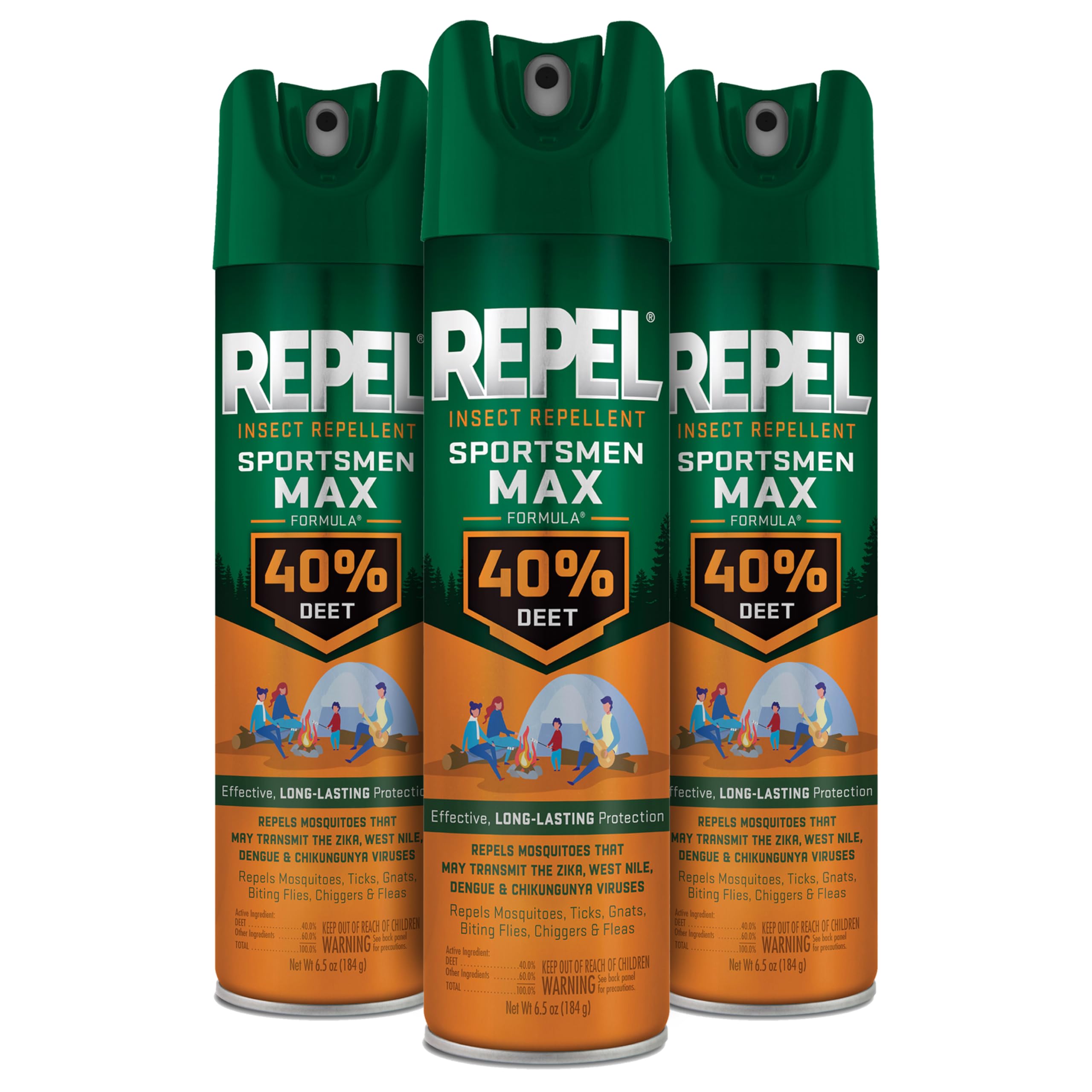
Repel Sportsmen Max Formula packs 40% DEET, which is the sweet spot for campsite protection — high enough concentration to deter ticks, mosquitoes, gnats, biting flies, chiggers, and fleas for hours, but without the sticky, chemically aggressive feel of military-grade 98% DEET variants. The aerosol format allows fast coverage across your legs, arms, and neck, and the 6.5-ounce can is compact enough to fit in a camp kitchen bin or a daypack side pocket without taking up significant volume.
What makes this a reliable choice for family camping trips is the long-lasting residual activity. Users in Northeast Texas — infamous for brutal chigger populations — report that a single morning application holds up all day through yard work, field hikes, and campfire lounging. The formula is fragrance-free, which is a blessing when you are eating around a camp table, and it does not degrade synthetic tent fabrics or fishing line the way higher DEET concentrations can.
The 3-pack gives you one can for the main campsite, one for your daypack, and one as a spare in the car. The trade-off is the typical DEET downside: it feels slightly slick on skin after heavy sweating, and the spray has a distinctive chemical odor during application that fades but does not disappear entirely. For campers in heavy tick or mosquito zones who want proven, affordable protection without hunting for niche ingredients, this remains the default choice.
Why it’s great
- 40% DEET delivers field-proven all-day protection against a wide insect spectrum
- Aerosol can covers large areas fast, ideal for quick applications before hikes
- 3-pack value ensures you always have a backup can in the vehicle or tent
- Fragrance-free formula avoids overwhelming scent around cooking areas
Good to know
- DEET can feel slightly greasy and sticky on skin during prolonged sweaty activity
- Chemical smell is noticeable during application and lingers lightly on the skin
- Aerosol cans are bulky relative to wipes or pump bottles for ultralight backpacking
3. Grandpa Gus’s Natural Tick and Mosquito Repellent Spray
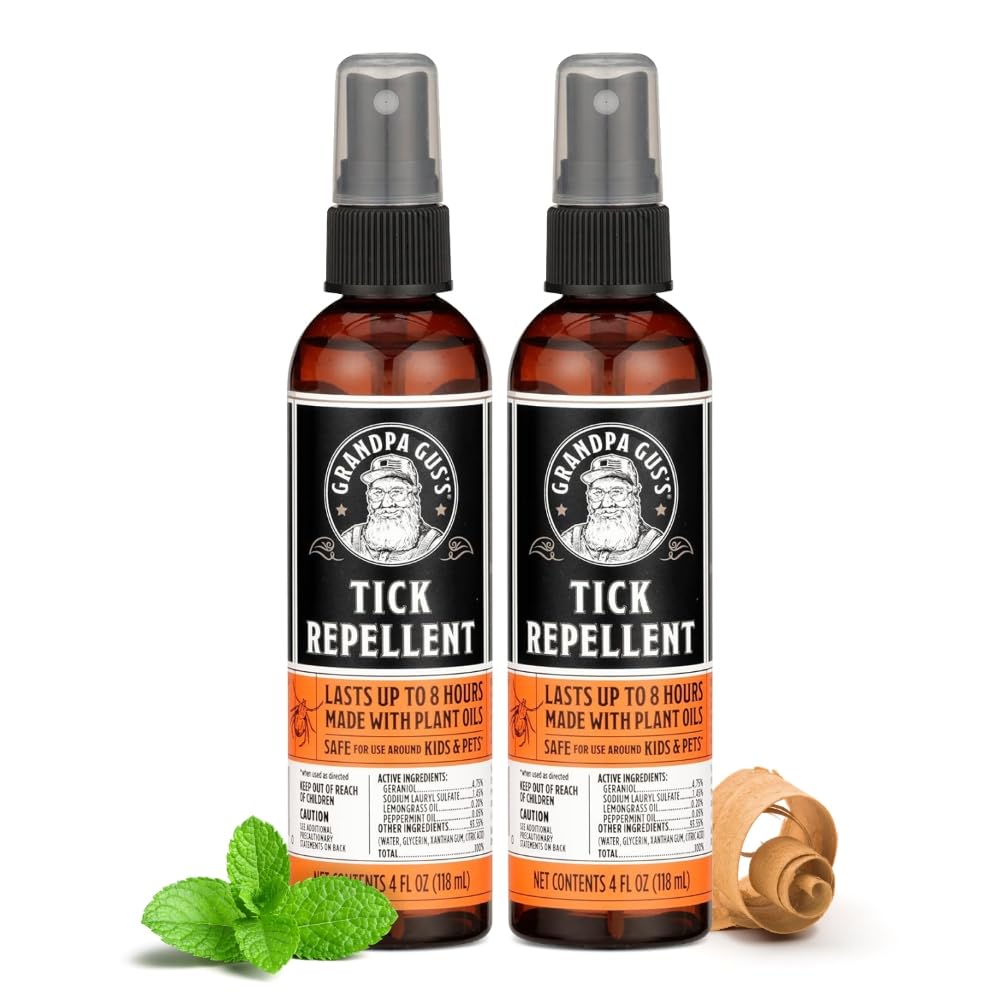
Grandpa Gus’s is built around a blend of geraniol, lemongrass, and peppermint oils — plant-based active ingredients that deliver up to eight hours of tick protection and six hours of mosquito protection without any DEET. That duration claim is on par with many synthetic formulas and significantly longer than most natural competitors, which typically fade after two to three hours. The 4-ounce pump bottles are easy to pack and the non-greasy, non-staining formula works well both on exposed skin and across pant legs and sleeves.
Users in heavily wooded properties report that ticks found on clothing treated with Grandpa Gus’s did not latch — a strong indicator that the repellent disrupts the tick’s host-seeking behavior even at close range. The scent is herbal and pleasant, reminiscent of a kitchen garden rather than a chemical lab, and the formula is dermatologist-tested and non-irritating for kids when applied by an adult. The 2-pack gives you one bottle for the campsite and a backup for the car or pack.
The main limitation is that mosquito protection drops off faster than tick protection, especially in hot, humid conditions where essential-oil-based formulas evaporate more quickly. Reapplication every four to six hours is necessary for consistent coverage, and the spray nozzle requires a brisk shake before each use to keep the oils mixed. For campers who prioritize DEET-free, plant-derived ingredients and are comfortable with a reapplication routine, this is the strongest natural option on the list.
Why it’s great
- Plant-based formula with geraniol, lemongrass, and peppermint oils lasts up to 8 hours against ticks
- Non-greasy and non-staining on outdoor gear and synthetic fabrics
- Pleasant herbal scent with no harsh chemical residue on skin
- Dermatologist-tested and safe for family use when applied per label
Good to know
- Mosquito protection fades faster than tick protection in hot, humid weather
- Needs frequent reapplication every 4 to 6 hours for full coverage
- Must be shaken thoroughly before each use to mix essential oils
4. Murphy’s Naturals Mosquito & Tick Bug Repellent Spray
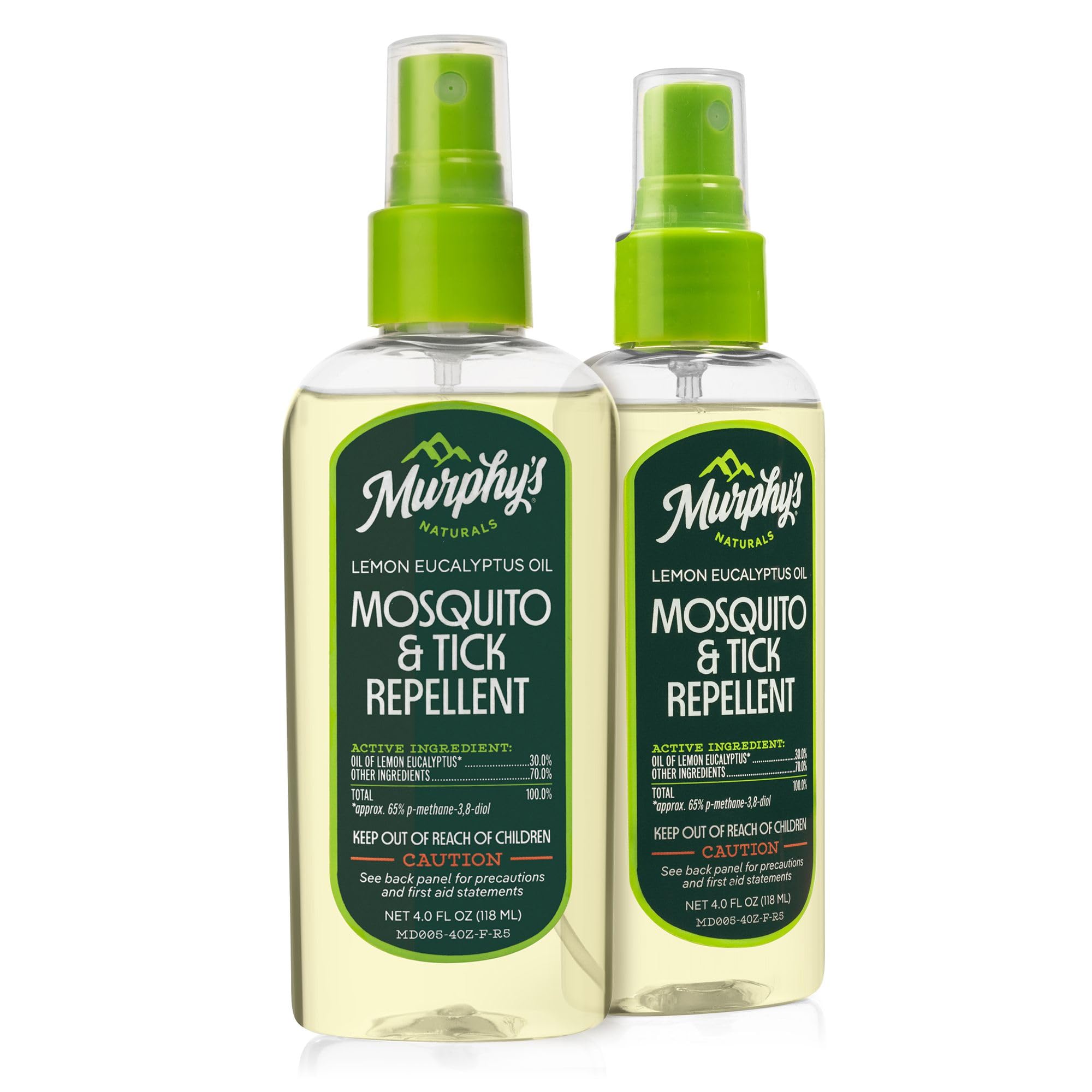
Murphy’s Naturals uses 30% Oil of Lemon Eucalyptus (OLE) — the only plant-based active ingredient that the EPA recognizes as comparable to low-concentration DEET for mosquito protection. This formula delivers up to six hours against mosquitoes and four hours against ticks, and it does so without the greasy film that many DEET sprays leave behind. The lemon-eucalyptus scent is strong and fresh during application but dissipates within a few minutes, leaving no lingering chemical odor on your skin or gear.
Users report excellent real-world results in high-pressure mosquito environments. One camper in Virginia logged only two mosquito bites over four days of constant exposure — a result that matches many DEET-based products in controlled tests. The pump spray format gives you precise control, which is useful when applying to children’s arms and legs or around the face (spray on hands first, then pat on face, avoiding eyes and mouth). The formula does not damage outdoor gear and wipes off cleanly with soap and water at the end of the day.
The shorter duration against ticks is the primary constraint — four hours means you will need to reapply midway through a full-day hike or camp session. Some users also find the eucalyptus scent overwhelming immediately after application, though it fades within minutes. For campers who want a DEET-free, Picaridin-free option with proven efficacy against mosquitoes, Murphy’s Naturals is the strongest OLE choice available.
Why it’s great
- 30% OLE is EPA-recognized as comparable to DEET for mosquito protection
- Non-greasy, fast-drying formula that does not stain or damage outdoor gear
- Pump spray allows precise, controlled application for kids and face coverage
- Fresh lemon-eucalyptus scent that fades quickly and leaves no residual chemical smell
Good to know
- Only 4 hours of tick protection — requires reapplication on long treks
- Strong eucalyptus smell immediately after application may be overpowering for some
- Oil of Lemon Eucalyptus is not recommended for children under 3 years old
5. Ben’s Tick & Insect Repellent Wipes – 30% DEET

Ben’s 30% DEET wipes solve a specific campsite problem: you need reliable protection but you do not want to carry a bulky aerosol can or risk a pump bottle leaking in your pack. Each 30% DEET towelette is individually foil-wrapped, providing up to seven hours of protection against mosquitoes, ticks, and biting flies. The wipe format is ideal for plane-to-campsite transitions since the sealed packets are TSA-approved and count as neither a liquid nor an aerosol.
The water-based formula is alcohol-free and fragrance-free, so it does not sting on freshly shaved legs or leave a chemical residue on your hands after application. One wipe comfortably covers both arms and both legs for an average adult, and the individually sealed packets mean you only carry what you need for that specific hike. Users report zero bites after applying these wipes in notoriously buggy environments like Houston swamps and Caribbean jungles, which is a strong endorsement for a wipe format that skeptics often dismiss as less effective than sprays.
The DEET concentration at 30% is slightly lower than the 40% sprays, though in practice the duration difference is negligible. For backpackers, fly-in campers, or anyone who hates aerosol waste, Ben’s wipes are the most packable DEET solution available.
Why it’s great
- Individually wrapped, TSA-approved wipes that take up zero liquid allowance in luggage
- 30% DEET provides up to 7 hours of protection against ticks and mosquitoes
- Water-based, alcohol-free formula that does not sting or leave a greasy residue
- No risk of leaks or aerosol can damage inside a pack
Good to know
- Each wipe is single-use — you cannot partially apply or reseal a partially used packet
- 48-wipe pack may exceed what a solo weekend camper actually needs
- 30% DEET duration is slightly shorter than 40% aerosols in extreme conditions
6. AVON Skin So Soft Bug Guard Plus Picaridin Insect Repellent Towelettes
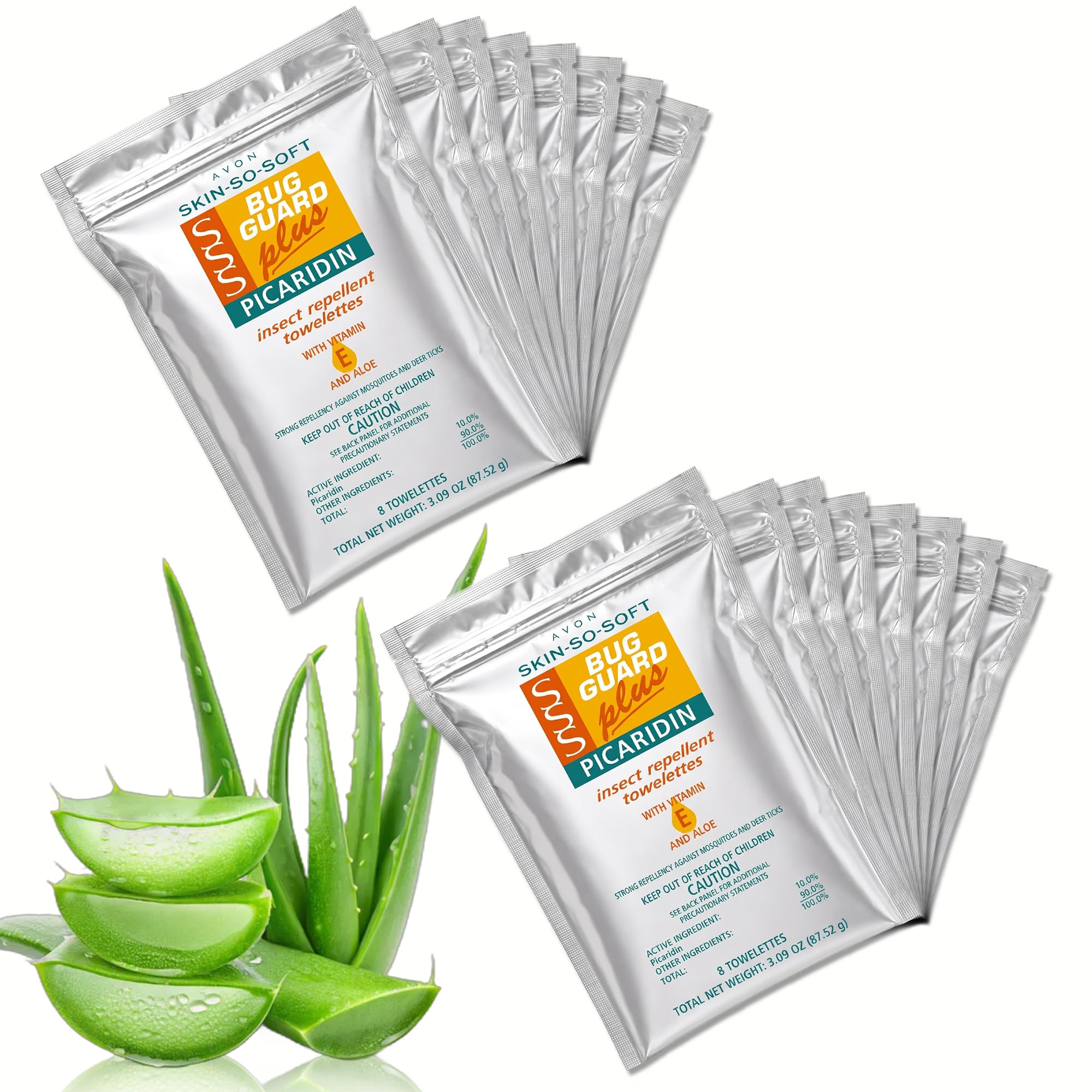
Avon’s Skin So Soft Bug Guard Plus wipes use 10% Picaridin, a DEET-free synthetic repellent that matches DEET’s efficacy against mosquitoes while being completely odorless, non-greasy, and kind to synthetic fabrics. Each individually wrapped towelette provides eight hours of mosquito protection and a full twelve hours against deer ticks — the longest tick-duration claim on this entire list. The formula is enriched with Vitamin E and Aloe, so it leaves the skin feeling moisturized rather than stripped or sticky.
These wipes excel in travel scenarios where leaking liquids are a hazard. The resealable bag keeps the unused foil packets fresh between trips, and because they are wipes, you never worry about aerosol can restrictions, pump bottle pressure changes on flights, or chemical spills inside a duffel bag. Users report success against no-see-ums and sand flies in tropical destinations like Curacao, and the lack of DEET makes them a favorite among campers who dislike the smell and feel of traditional repellents.
The per-wipe cost is higher than bulk sprays, which is the main deterrent for frequent or long-duration campers. Sixteen wipes cover roughly eight full-body applications (one wipe per person per day), so a week-long family trip will deplete the bag quickly. The 10% Picaridin concentration is lower than some 20% Picaridin sprays, though in practice the duration claims hold well in moderate to high insect pressure. If you prioritize skincare compatibility and zero chemical odor, these wipes are the best DEET-free travel companion.
Why it’s great
- 10% Picaridin lasts 8 hours against mosquitoes and a category-leading 12 hours against deer ticks
- Completely odorless and non-greasy, with added Vitamin E and Aloe for skin feel
- Individually sealed wipes eliminate leak risk and are TSA-friendly
- Effective against no-see-ums and sand flies, not just mosquitoes and ticks
Good to know
- Higher per-wipe cost than pump sprays or aerosols
- 16-count bag depletes quickly on extended family trips or multi-day treks
- 10% Picaridin concentration is lower than some 20% pump sprays
7. Zevo On-Body Tick & Mosquito Repellent Spray

Zevo On-Body is powered by IR3535, a synthetic amino-acid derivative that is virtually odorless, non-sticky, and gentle enough for repeated daily application. The 3-bottle kit includes two aerosol cans for fast, no-touch coverage and one pump bottle for targeted application around the face and onto children — a versatile bundle that covers any campsite scenario. The formula provides up to eight hours of defense against both mosquitoes and ticks, and users consistently describe it as the closest thing to wearing no repellent at all in terms of sensory feel.
What sets Zevo apart is the complete absence of smell. Even the OLE and essential-oil-based repellents have a noticeable scent, but IR3535 leaves no fragrance footprint, which makes it ideal for campers who eat, sleep, and cook in close proximity to their repellent. The pump bottle is especially useful for reapplying inside a tent or vehicle without gassing out the interior, and the see-through packaging lets you monitor the remaining volume at a glance.
The trade-off is that IR3535 has a shorter field-test reputation than DEET or Picaridin — it is a newer active ingredient in the consumer repellent market, so long-term user data is less extensive. Some users report that it requires a more generous application than DEET to achieve the same bite-free outcome in heavy mosquito pressure, particularly in hot, humid conditions where IR3535 can break down faster. For campers who prioritize zero sensory impact above all else, this is the most comfortable option on the list.
Why it’s great
- IR3535 formula is completely odorless with zero greasy or sticky residue
- 3-bottle kit (2 aerosol + 1 pump) covers all application preferences
- Pump bottle allows no-fume reapplication inside tents or vehicles
- Gentle amino-acid formulation that does not irritate sensitive skin
Good to know
- IR3535 may require heavier application than DEET in high-pressure bug zones
- Shorter field-use track record than DEET or Picaridin in consumer camping
- Aerosol cans in the kit are not refillable — you use the bundle and repurchase
FAQ
Can I use Permethrin on my skin?
How often should I reapply bug spray while camping?
Is DEET safe for children on camping trips?
Will bug spray damage my tent or camping gear?
Which active ingredient works best against ticks?
Final Thoughts: The Verdict
For most campers, the bug spray for camping winner is the Sawyer Permethrin because treating your clothing and gear before a trip creates a silent, continuous kill-zone that works even when you forget to reapply. If you want a skin repellent with zero odor and no greasy feel, grab the Zevo On-Body IR3535 kit. And for deep-woods expeditions where tick pressure is extreme, nothing beats the Repel Sportsmen Max 40% DEET for reliable, long-duration protection on exposed skin.