
A basement flood doesn’t wait for a convenient time — it starts mid-storm at 2 AM, and a failed sump pump turns a wet floor into thousands in water damage. The difference between a dry basement and a catastrophic flood isn’t the horsepower sticker on the box; it is the reliability of the float switch, the construction of the motor, and how the pump handles debris when you are not home to notice. Every auto sump pump on this list has been selected because it solves those specific failures, not because it looks good on a shelf.
I’m Min — the co-founder and writer behind Gadgets Feed. I’ve spent years analyzing market specifications and real-world performance data across residential water-removal equipment, cross-referencing motor types, flow rates, shut-off heights, and float-switch failure modes to separate durable installations from disposable replacements. (And Homer 🐱 supervised the testing pile from his perch on the sump pit cover).
Whether you are replacing a failing unit in an existing basin or installing a new primary pump, finding the right auto sump pump means choosing one built with the materials, motor, and switch redundancy that match your specific pit dimensions and water volume.
How To Choose The Best Auto Sump Pump
An auto sump pump is a deceptively simple machine — a motor spins an impeller, the impeller pushes water out through a discharge pipe, and a float switch tells the motor when to start and stop. The problem is that every one of those components can fail, and they fail in ways that matter enormously to a homeowner. Choosing a pump means understanding which failures you can budget for and which you cannot.
Cast Iron vs Plastic Housing
A pump running in a sump pit is sitting in cool water, which sounds helpful, but the motor generates heat constantly during operation. Cast iron acts as a massive heat sink, pulling that heat away from the motor and into the surrounding water, letting the pump run longer cycles without thermal shutdown. Plastic housings trap that heat inside the motor, accelerating wear on the windings and the start capacitor. For a primary pump expected to handle heavy rain seasons, cast iron is the baseline. Plastic pumps are lighter and cheaper, but they trade years of service life for that lower upfront cost.
Float Switch Mechanism
This is the single most common failure point in an auto sump pump. A tethered float switch hangs from the pump body by a cord; if debris snags the cord, the float gets stuck in the “on” or “off” position. A vertical float switch slides up and down a guide rod, which is less prone to snagging but takes up vertical space in the pit. A caged dual-float switch uses two floats inside a protective cage — if one float fails, the second still triggers, and the cage prevents debris from blocking either float. Diaphragm switches, found on some premium pumps, use water pressure to activate and avoid moving parts entirely but have their own reputation for intermittent failure. Buyers with narrow pits should prioritize vertical or caged dual floats; buyers with wide pits can use tethered floats without much risk.
Horsepower, GPH, and Shut-Off Height
Horsepower matters only as an input spec; what matters for your installation is gallons per hour (GPH) at your specific discharge lift. A 1/2 HP pump rated at 4300 GPH at 0 feet may deliver only 2500 GPH at a 15-foot vertical lift. Measure the vertical distance from the sump pump discharge outlet to where the pipe exits your basement wall — that is your lift. Add any horizontal pipe run (because friction reduces flow), then match the pump’s published GPH at that height to your basin inflow rate. Most residential installations require between 2500 and 3500 GPH at the actual lift height. A shut-off height that is too close to your actual lift means the pump runs near its performance ceiling, which strains the motor and shortens its life.
Quick Comparison
On smaller screens, swipe sideways to see the full table.
| Model | Category | Best For | Key Spec | Amazon |
|---|---|---|---|---|
| Red Lion RL-SC50V | Premium | Heavy-duty continuous use | 4300 GPH at 0 ft, 1/2 HP cast iron | Amazon |
| Zoeller M57 Mighty-Mate | Premium | Long-term reliability in harsh pits | 2580 GPH, 3/10 HP cast iron with vortex impeller | Amazon |
| Basement Watchdog SIT-50D | Mid-Range | Narrow pits with redundant floats | 4400 GPH at 0 ft, caged dual float switch | Amazon |
| Basement Watchdog BWT050 | Mid-Range | Backup or secondary pump setup | 4200 GPH at 0 ft, separate float switch | Amazon |
| Little Giant 6-CIA | Premium | Fountain or shallow sump systems | 2760 GPH at 5 ft, integral diaphragm switch | Amazon |
| VEVOR 1/2 HP | Mid-Range | Yard drainage and high-flow needs | 4320 GPH at 0 ft, stainless steel body | Amazon |
| Green Expert 1/3HP | Budget | Low-water sensor drainage tasks | 2000 GPH at 0 ft, water sensor switch | Amazon |
In‑Depth Reviews
1. Red Lion RL-SC50V

The Red Lion RL-SC50V is built around a rugged cast iron housing and a 1/2 HP Permanent Split Capacitor motor that draws only 5.3 running amps, making it one of the most energy-efficient high-output pumps in this category. It pushes 4300 GPH at zero feet with a 28-foot shut-off height, and the piggy-back vertical float switch activates at 7.25 inches and shuts off at 2.75 inches, giving a generous cycle depth that reduces short cycling. The clog-resistant impeller handles semi-solids up to 3/8 inch, which matters in pits that accumulate silt or small debris.
Multiple long-term reviews note the pump emptied a 24-inch basin in roughly five seconds and remained completely inaudible ten feet away. The tethered float switch, while prone to occasional snagging, has been replaced by owners using the simple piggy-back plug design without any wiring changes — a major convenience for anyone who has ever replaced a hardwired pump.
The one recurring modification owners recommend is adding a screen over the intake feet, as the open design can pull small gravel or stones into the impeller if the pit floor is not perfectly clean. This is a minor adjustment for a pump that otherwise delivers the quietest, most efficient performance in its class.
Why it’s great
- Energy-efficient 1/2 HP PSC motor draws only 5.3 amps
- Cast iron housing provides superior heat dissipation for long motor life
- Very quiet operation — users report it is inaudible from 10 feet
Good to know
- Intake feet may pull small gravel; a screen is recommended
- Piggy-back float switch can snag on debris in cluttered pits
2. Zoeller M57 Mighty-Mate
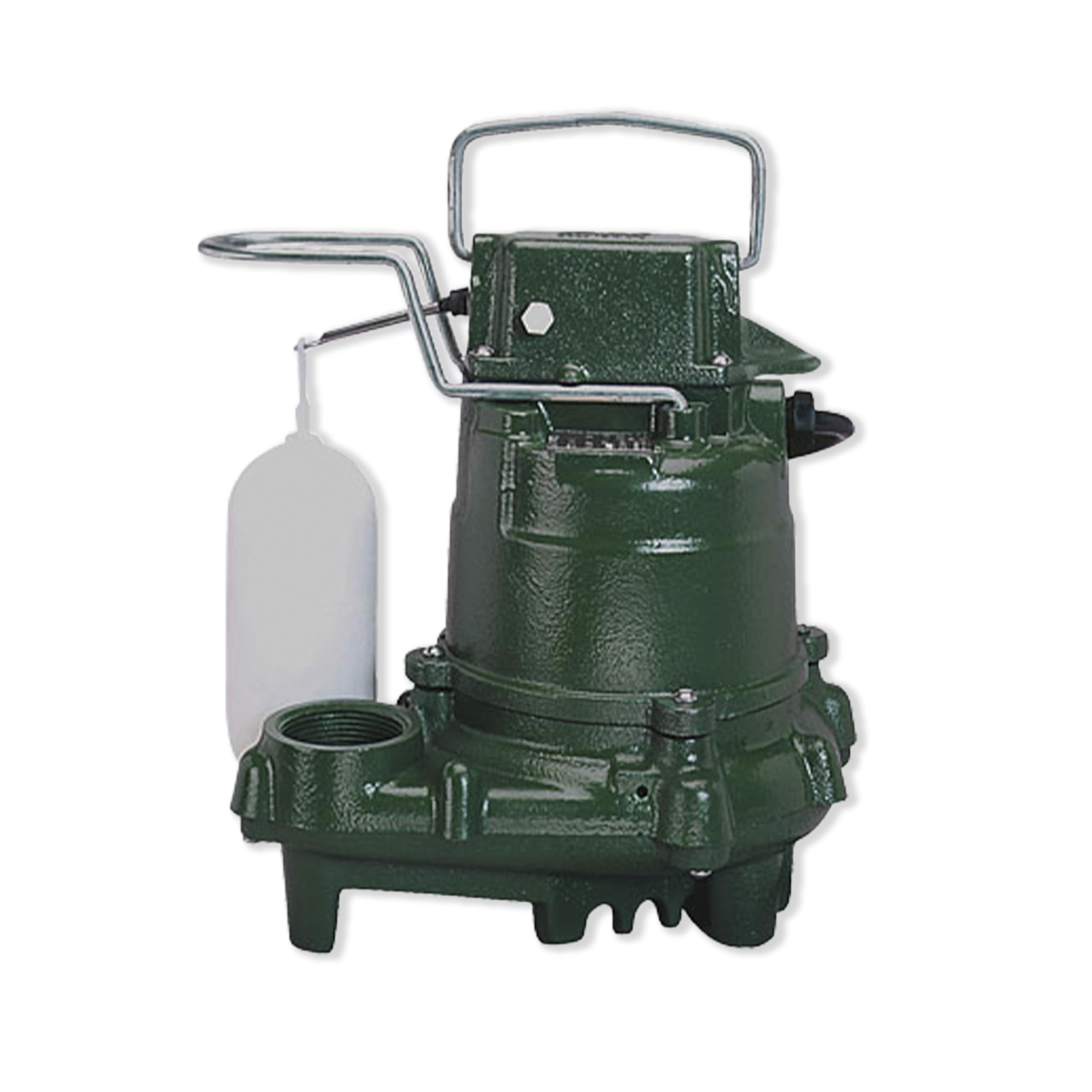
The Zoeller M57 is the pump that keeps showing up in owner reviews with phrases like “11 years in rainy Seattle with zero maintenance” and “still running after 20 years.” Its oil-filled motor and full cast iron housing give it the thermal mass to run long, punishing cycles without overheating, while the non-clogging vortex impeller passes solids without jamming — a critical feature in pits that collect debris from sump pump basin seepage. At 3/10 HP, it is not the most powerful pump on this list, but its 2580 GPH and 19.25-foot shut-off cover the vast majority of residential installations.
The pump ships with a vertical snap-action float switch and a polypropylene float that cannot become waterlogged, eliminating the “sinking float” failure common on cheaper switches. Owners consistently note that the pump is noticeably heavier than similarly-rated competitors (about 27 pounds), which reflects the cast iron construction that keeps the motor cool and the pump firmly planted on the basin floor. A recurring detail in reviews is that the Zoeller runs so quietly that owners have to visually confirm it is operating.
The most common criticism is that the pump arrives in minimal packaging that can damage the float rod during shipping, though Zoeller’s customer service replaces damaged parts free of charge. Some owners also note surface rust on the stainless steel hardware within weeks of installation, which is cosmetic and does not affect function but is worth knowing if aesthetics matter in your setup.
Why it’s great
- Oil-filled motor and cast iron housing for exceptional heat dissipation
- Non-clog vortex impeller passes solids without jamming
- Decades-long service life reported by thousands of owners
Good to know
- Shipping packaging is minimal; float rod may arrive damaged
- Stainless steel hardware may show surface rust over time
3. Basement Watchdog SIT-50D

The Basement Watchdog SIT-50D is engineered specifically for narrow sump pits that cannot accommodate a wide tethered float. Its compact body measures just 6.25 x 6.25 inches, with a top-discharge design and an adjustable-height caged dual-float switch that provides redundancy — if one float fails or gets stuck, the second float still triggers the pump. The 1/2 HP copper-wound PSC motor delivers 4400 GPH at zero feet and 3540 GPH at 10 feet, which is well within the real-world performance range most homeowners need.
Owners fitting this pump into small 11-inch diameter pits consistently praise the protective float cage, which prevents debris, pipe insulation, or loose wiring from interfering with the switch mechanism. The top-discharge arrangement also simplifies installation in tight spaces, though some users note that the newest model moves the discharge to the top of the pump body, which can make check valve replacement more difficult if your basin is very shallow. Multiple long-term reviews confirm the pump runs quietly and handles seasonal heavy rain with no issues.
The unit ships with the float controller pre-assembled and requires no adjustment beyond setting the activation height on the discharge pipe. The 3-year warranty from Glentronics is one of the longest in this category, and the company’s customer service team is widely praised for sending free replacement parts without hassle when issues arise.
Why it’s great
- Caged dual-float switch provides redundancy against float failure
- Compact 6.25-inch footprint fits narrow 11-inch pits
- Top-discharge design simplifies installation in tight spaces
Good to know
- Top discharge may complicate check valve access in shallow pits
- Warranty requires registration for full coverage and free check valve
4. Basement Watchdog BWT050
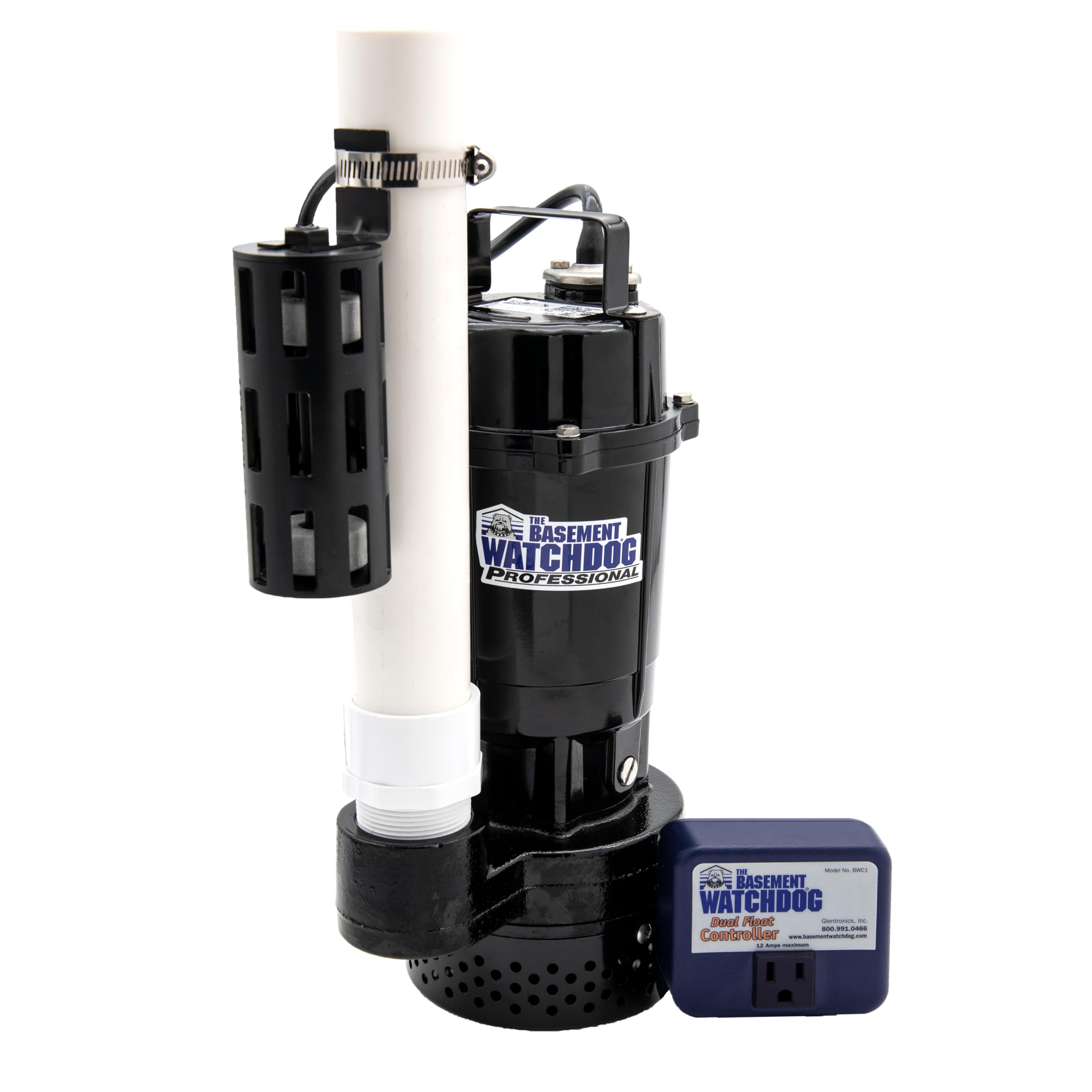
The Basement Watchdog BWT050 distinguishes itself with a design that separates the float switch from the pump body entirely. The caged micro-reed dual float connects via a piggy-back plug, so if the switch fails, you replace the switch — not the whole pump. This is the primary reason owners choose this model for backup or secondary pump duty: the narrow 7.5-inch width fits easily beside a primary pump in a standard basin, and the adjustable switch height lets you set the backup pump to activate higher than the primary, so it only runs if the primary fails or gets overwhelmed.
The 1/2 HP copper-wound PSC motor pumps 4200 GPH at zero feet and 2770 GPH at 10 feet, with a 31-foot shut-off height that is the highest in this lineup. Owners report this pump lasting anywhere from 9 months to 12 years — the variance depends heavily on pit cleanliness and sludge buildup. The cast iron and cast aluminum construction resists corrosion, but the motor relies on the surrounding water for cooling, so a dry-pit installation without proper water depth will shorten its life. The 3-year warranty is a strong safety net, and owners consistently praise the manufacturer for responsive support.
Some buyers have reported that the initial installation can be confusing because the float switch controller requires a specific orientation and plug arrangement — the piggy-back plug has a dedicated socket for the float and a pass-through for the pump. Misplugging it causes the pump to run continuously or not at all. Following the manual closely avoids this issue.
Why it’s great
- Separate float switch design allows replacement without pulling the pump
- Narrow profile fits beside a primary pump for backup setups
- Highest shut-off height in this roundup at 31 feet
Good to know
- Piggy-back plug must be wired correctly or pump will misbehave
- Long-term reliability depends on pit cleanliness
5. Little Giant 6-CIA
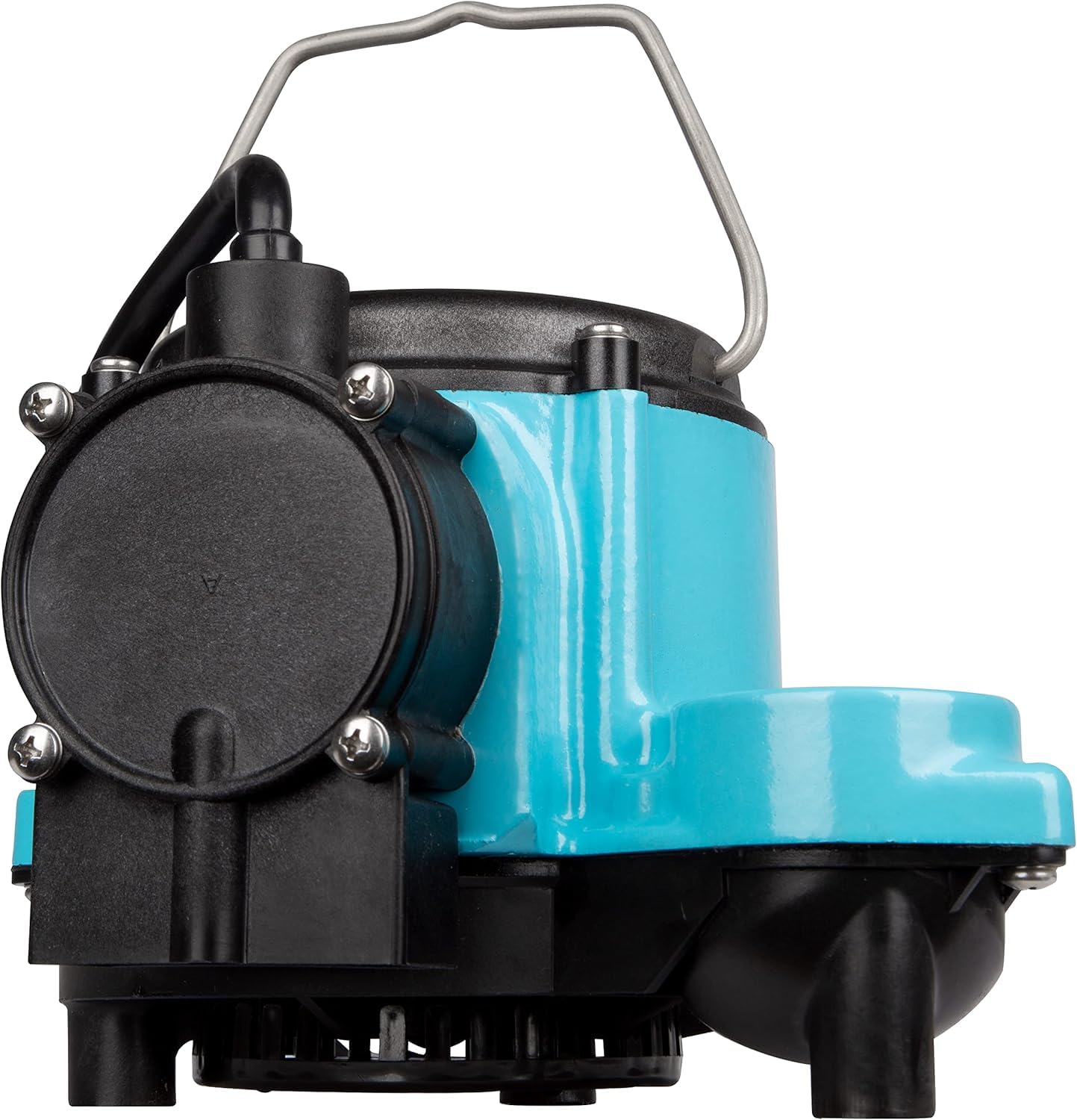
The Little Giant 6-CIA uses a cast iron housing and an integral diaphragm switch that activates based on water pressure rather than a mechanical float. This eliminates the snagging and sticking issues common with tethered and vertical float switches, but it also means the pump is not recommended for general dewatering or emergency water removal — it is designed specifically for residential sump systems where the water level rises and falls predictably. The 1/3 HP shaded-pole motor pumps 2760 GPH at 5 feet of lift, with an 18-foot shut-off and a maximum fluid temperature of 140°F.
Multiple owners report their 6-CIA units running reliably for 20-plus years with nothing more than occasional cleaning. The epoxy-coated cast iron and nitrile/carbon/ceramic mechanical seal hold up well even in harsh ground water conditions. The vortex-style impeller passes small solids without clogging, and the 10-foot power cord is long enough for most pit-to-outlet distances. The CSA listing for both the US and Canada adds a layer of electrical safety that matters in damp environments.
The biggest caveat is that the diaphragm switch is non-adjustable and activates at 7 to 10 inches and turns off at 1 to 4 inches — a narrower activation range than float-based pumps. Owners who have had two units in a row fail to auto-activate in standing water blame the pressure switch, which can lose sensitivity if silt builds up in the breather tube. This makes the 6-CIA a better choice for homeowners who can periodically test the switch and clean the intake than for absentee owners.
Why it’s great
- No moving float switch parts to snag or jam
- Two-decade service life reported by long-term owners
- CSA listed for electrical safety in wet environments
Good to know
- Diaphragm switch can fail to auto-activate if breather tube clogs
- Not recommended for general dewatering or emergency water removal
6. VEVOR 1/2 HP

The VEVOR 1/2 HP sump pump offers the highest flow rate in this roundup at 4320 GPH, paired with a stainless steel body and an IPX8 waterproof rating. The 1/2 HP copper motor with thermal overload protection lifts water to 28 feet, and the tethered float switch allows hands-free automatic operation with a piggy-back plug. The pump passes solids up to 0.1 inch in diameter, which is enough for fine silt but not for larger debris. The 15.7-pound weight is notably lighter than cast iron competitors, which makes installation easier but reduces the thermal mass benefit of a heavier housing.
Owners using this pump for yard drainage and heavy rain runoff consistently report that it moves water aggressively and handles the occasional solid without jamming. The stainless steel surface resists rust well, and the ergonomic handle makes adjustments simple. Several reviewers note that this pump is a significant upgrade over less expensive plastic-bodied pumps, with noticeably quieter operation and faster basin emptying.
The tethered float switch requires a basin at least 22 inches high and 15 inches in diameter, so this pump will not fit in narrow or shallow pits. Like all tethered switches, debris or pipe positioning can interfere with free float movement, so the installation site must be kept reasonably clean. The 1-1/2 inch NPSC discharge matches standard sump plumbing, and the 10-foot cord is sufficient for most setups.
Why it’s great
- Highest flow rate in the roundup at 4320 GPH
- Stainless steel body resists rust in wet environments
- Quiet operation for a high-output pump
Good to know
- Requires a minimum 22-inch tall, 15-inch wide basin
- Tethered float can snag in cluttered or debris-filled pits
7. Green Expert 1/3HP

The Green Expert 1/3HP is the most budget-friendly option in this lineup, but it carves out a specific niche that higher-priced pumps cannot match: last-inch drainage down to 1/25 inch. The water sensor switch — rather than a float — detects the presence of water and runs the pump until the sensor is dry, then automatically stops after 15 seconds. This makes it uniquely capable of leaving a flat floor nearly dry, which is critical for finished basements where standing water that stays below float-switch activation will never be removed by a traditional pump.
The 1/3 HP PSC motor with thermal overload protection moves 2000 GPH at zero feet and 22.5 GPM at a 10-foot lift, with a 23-foot shut-off height. The pump weighs only 8.8 pounds, making it ultra-portable and easy to move between locations — owners use it for hot tubs, window wells, water tanks, and even pool covers. The included three-way adapter kit connects to 1-inch, 1.5-inch, 3/4-inch garden hose, and 1.5-inch NPT fittings, so it adapts to most discharge configurations without additional parts.
The water sensor is both the feature and the weakness. Multiple owners report that the sensor gradually loses sensitivity over time and requires periodic cleaning with a toothbrush to maintain function. In low-conductivity water such as distilled or condensation water, the sensor may not trigger at all, requiring manual mode. For homeowners who can dedicate occasional maintenance and want pump-down capability to near-dry floors, the Green Expert is a low-cost tool. For absentee owners or primary basement protection without regular inspection, a float-switch pump at this price tier is more reliable.
Why it’s great
- Drains down to 1/25 inch for near-dry floors
- Ultra-portable at 8.8 pounds with multiple hose adapters
- Dual automatic and manual operating modes
Good to know
- Water sensor requires periodic cleaning to maintain function
- May not trigger in low-conductivity water like distilled or condensation
FAQ
How often should I test my auto sump pump float switch?
Can I use a 1/3 HP auto sump pump in a pit that requires high lift?
Why does my auto sump pump cycle on and off rapidly during rain?
Final Thoughts: The Verdict
For most users, the auto sump pump winner is the Red Lion RL-SC50V because it delivers the highest flow rate with cast iron durability and the quietest operation in the class, all while drawing remarkably low amperage for its output. If you need a pump that fits a narrow pit and provides float redundancy, grab the Basement Watchdog SIT-50D. And for a legacy-grade installation where you want to install one pump and forget about it for a decade, nothing beats the Zoeller M57 Mighty-Mate.