
Our readers keep the lights on and my morning glass full of iced black tea. As an Amazon Associate, I earn from qualifying purchases.
Specs are compiled from manufacturer listings and verified buyer reviews and can change over time — please confirm the key details on the product page before buying.
Standing at your front door with rain blowing straight at the threshold is the moment you realize a fixed awning isn’t a luxury—it’s a permanent wall between your entryway and the weather. The real question isn’t whether to buy one, but which material, size, and mounting system will survive your specific climate without turning into a sagging, rusted headache.
I’m Min — the founder and writer behind Gadgets Feed. This guide is built by comparing the manufacturers’ published specifications and the patterns across verified customer reviews, so you get each pick’s real strengths and trade-offs instead of marketing spin.
Because fixed awnings live outside for decades, you need to know which ones hold up in wind, snow, and sun before you drill into your facade. Read on for the best fixed awnings that earn their place on your wall.
Our Picks at a Glance

How To Choose The Best Fixed Awnings
Every fixed awning does the same basic job: it sits permanently over a door or window and redirects rain, snow, and sun away from your home. But the differences in material, width, and drainage design determine whether yours still looks good after a decade of storms or starts bending the first season.
Start with the material: polycarbonate vs. metal
Polycarbonate sheets are lightweight, let natural light through, and block UV rays, which makes them a favorite for windows where you still want daylight. Metal awnings—usually aluminum or steel with a powder coat—offer a more solid, opaque barrier and handle snow loads better, but they block light and weigh significantly more. Your climate should dictate the choice: metal for heavy snow, polycarbonate for bright, sunny regions where keeping visibility matters.
Measure the projection, not just the width
Width gets all the attention, but projection—how far the canopy extends from the wall—is what actually keeps rain off your doorstep. A 40-inch projection clears a standard door threshold comfortably, while shallower canopies leave the outer edge of your welcome mat wet in wind-driven rain. Match the projection to your door’s setback and the average rainfall in your area.
Quick Comparison
| Model | Best For | Material | Width | Projection | Amazon |
|---|---|---|---|---|---|
| GGNEBAI 40x80in★ Best Overall | Standard back doors | Polycarbonate | 78.74″ | 40″ | Amazon |
| VIVOHOME 38x115inWide-Coverage Pick | Wide entryways | Polycarbonate | 115.4″ | 38.2″ | Amazon |
| NEBAIKA 40x80inBest Drainage Design | Gutter drainage | Polycarbonate | 80″ | 40″ | Amazon |
| GGNEBAI 40x120in | Patio doors | Polycarbonate | 120″ | 40″ | Amazon |
| VEVOR Aluminum 60x42in | Side windows | Aluminum | 41.73″ | 59.84″ | Amazon |
| VEVOR Metal 104x36in | Heavy snow regions | Steel + iron | 104″ | 36″ | Amazon |
| Kozyard Adjustable | Adjustable shade | Metal canopy | 55″ | 22″–31″ | Amazon |
| DAWNINGHOMM 40x160in | Extra-wide coverage | Polycarbonate | 48″ | 39.5″ | Amazon |
In‑Depth Reviews
1. GGNEBAI 40x80in Door Awning
Our pick — over 4★ from 350+ verified ratings; the strongest balance of quality and price.
The entry-level pick that punches well above its weight class in a storm
What makes this the crowd favorite is the combination of a transparent 40″ projection and a narrow 78.74″ width that fits most standard back doors without overwhelming the facade. The polycarbonate sheet lets natural light pour into your entryway while the high-impact material takes on rain and snow—owners in Florida specifically praise how it holds up through their intense rain seasons.
Quality is what wins people over here, with more owners praising the build than any other single trait, and the appearance running a close second. It’s note the install gets mixed verdicts—some call it super easy, others find the instructions lacking—and the general advice is to grab a universal joint adapter for your socket to reach the top lags. The ABS brackets and aluminum alloy bars give it genuine wind resistance, but a few owners note the materials feel light and wonder about the long haul.
Buyers report it as “sturdy and looks good” once secured, and the drainage handles heavy storms without complaint. The manufacturers suggest applying glass glue at the joints for a tighter seal, which tells you the factory fit alone might not be perfectly watertight on every unit.
What Owners Love
- Transparent panels keep your entryway bright
- Aluminum bars and ABS brackets resist wind
- Mounts on wood, brick, or concrete
Honest Caveats
- Install can be tricky without a socket adapter
- Materials feel light to some owners
- Glass glue recommended for a perfect seal
The daily driver: ideal for homeowners who want a bright, low-maintenance canopy over a standard door and don’t mind a slightly fiddly install.
Consider a metal unit: if your region sees heavy accumulating snow, polycarbonate might not be the reassurance you want.
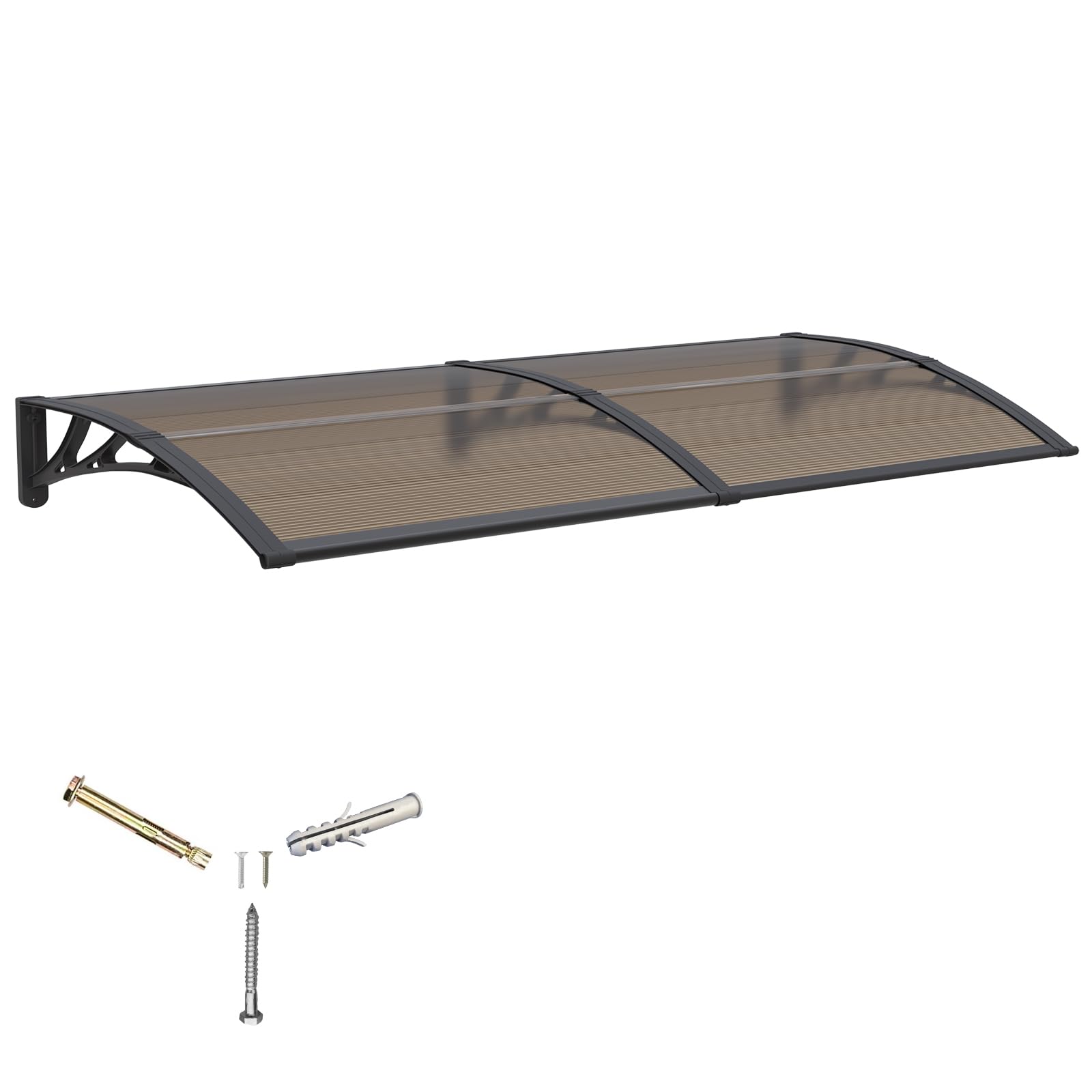
2. VIVOHOME Polycarbonate Window Door Awning 38x115in
A spliced two-panel giant that makes a wide doorway feel fully armored
If you have double doors or a wide storefront-style entry, this awning covers the full 115.4-inch width with a 38.2-inch projection—something a single panel can’t do. Instead of one heavy sheet, you get two panels, each holding up to 30 lbs., that join so cleanly they look like one piece. The leak-proof aluminum bars keep every connection tight, so water can’t sneak through the seam.
Quality and appearance are the twin strengths here, with each earning strong positive feedback. The 15.4-pound total weight sounds light, but owners say it feels surprisingly sturdy once it’s fixed in place—one even installed solo in 2.5 hours and uses it to protect a pool heater from rain. The honest caveat is that durability gets mixed reviews; some owners mention the plastic bends or scratches easily and sags in heavy rain, so this is best suited to moderate climates rather than brutal snow zones.
Compared to the GGNEBAI above, this one trades a bit of that model’s simplicity for a much wider footprint, making it a better match for commercial entrances or homes with unusually broad doorways. Clear instructions and all mounting hardware come in the box, though mounting still realistically needs two people.
Strengths
- 115.4″ wide coverage for double doors
- Loads up to 30 lbs. on the two-piece frame
- Neutral brown blends with most facades
Watch For
- Plastic can scratch and bend in heavy weather
- Needs 2–3 people for comfortable install
- Long-term durability is unproven
Reach for this: a wide, light-diffusing canopy for broad entries, especially if you’re covering equipment or a pool heater from direct rain.
Look elsewhere: if you deal with heavy snow loads, the thinner polycarbonate just isn’t built for that stress.
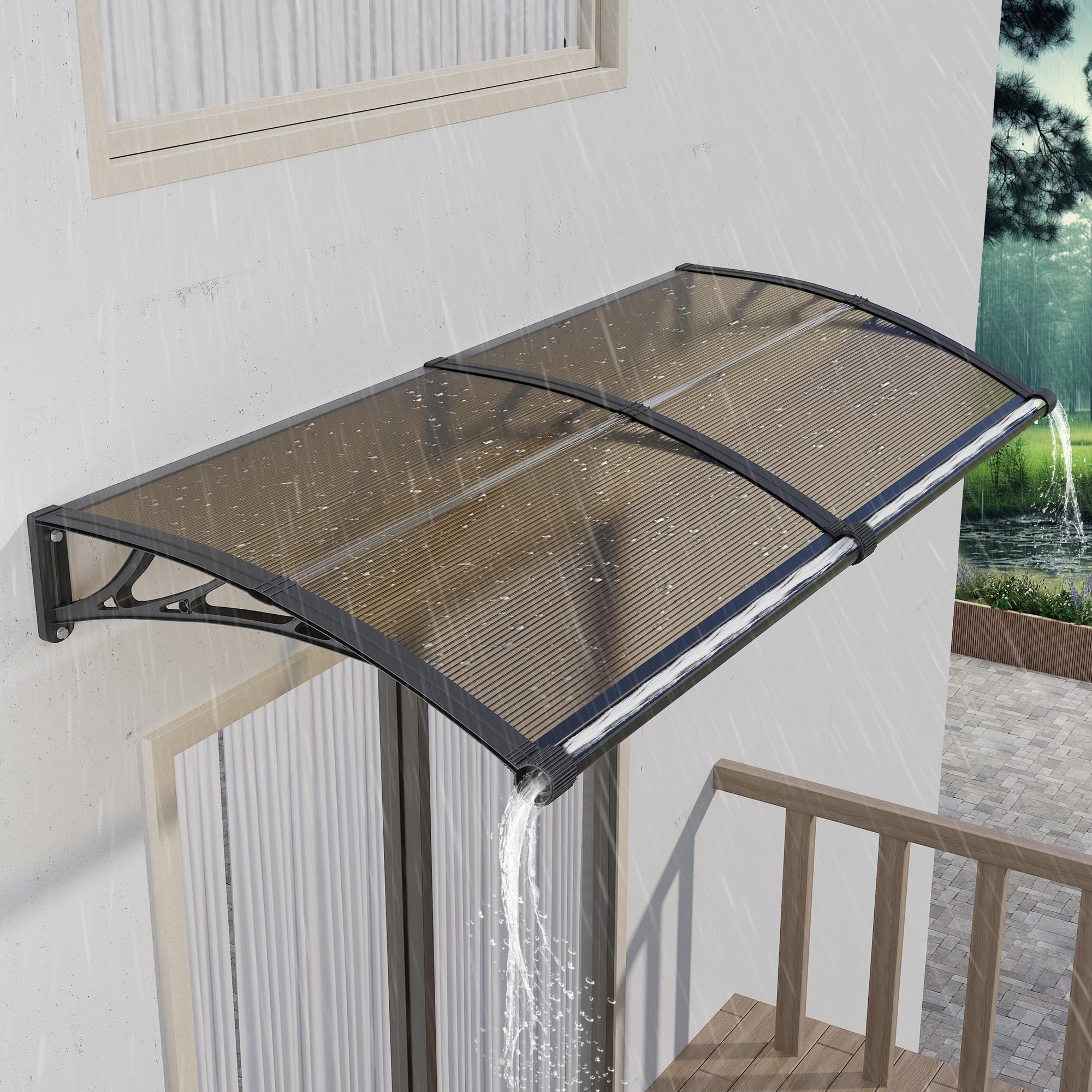
3. NEBAIKA 40x80in Door Awning with Gutter
The one that thinks about where the water goes, not just where it lands
Most awnings just deflect rain forward; this one adds a proper front drainage channel and oversized gutter that redirects water away in a controlled flow. That’s the difference between a dry welcome mat and a puddle forming exactly where you step. With a 40″ projection and 80″ width, it matches the top pick’s footprint but distinguishes itself on the engineering of water management.
Owners who stood under it during a downpour confirm it “blocked it all out,” and the setup earns repeated praise for being simple even for non-DIY types. The 5mm UV-coated polycarbonate resists cracking and warping, backed by a reinforced aluminum stripe and rust-resistant ABS brackets. Five types of screws ship in the parcel so you can mount on wood, brick, or cement.
The recurring tip from installers is to use clear caulking during assembly, or the unit can come apart while you’re lifting it into place—especially noticeable on the 80-inch version above a garage. It’s a minor hiccup that disappears once fastened, but worth knowing before you start.
The smart drain: for buyers who live in heavy-rain areas and want an engineered gutter solution rather than a simple sloped sheet, this is the clear upgrade over the basic GGNEBAI design.
The trade-off: you’ll want caulking on hand for assembly, and a helper makes the job dramatically easier.
4. GGNEBAI 40x120in Door Awning Exterior
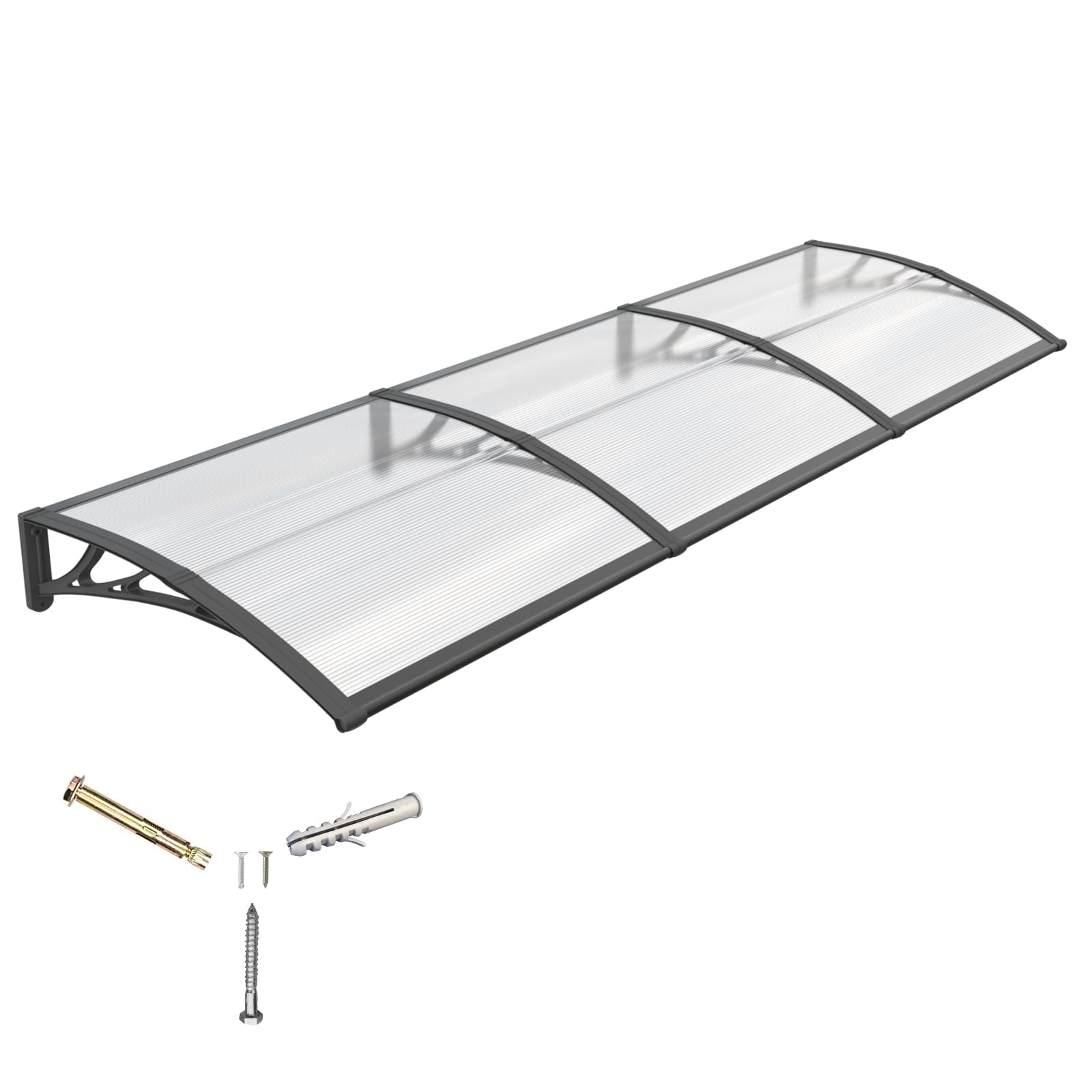
Ten feet of clear canopy that turns a patio door into a covered landing
If you’re stepping out of a sliding patio door or a wide entrance, the 120″ width of this transparent canopy gives you sweep of coverage that shorter awnings can’t approach. The 40″ projection reaches well past the threshold, and customers note it keeps steps dry and even solves water splashing into a dog door. The standout real-world win is the Oklahoma owner who put it through genuine wind concerns with no issues.
Appearance and functionality tie as the most-praised aspects, which makes sense for a panel this size—it reads as a deliberate architectural feature rather than an afterthought. The hollow polycarbonate blocks UV rays while letting light through, with ABS brackets and corrosion-resistant aluminum rods for support. All five wall types—concrete, brick, wood—are covered by the included screw assortment.
The honest downside is the mixed word on durability: some owners find it sturdy, others describe the all-plastic build as something that could disintegrate under stress. The instructions also get flagged as vague. This is a “looks the part, serves the purpose” awning with lingering questions about decade-scale longevity.
The Upside
- Ten-foot width for patio and double doors
- Keeps steps and dog doors dry
- Transparent panels preserve natural light
The Catch
- All-plastic construction raises durability questions
- Instructions are vague, per several owners
- Two-person install recommended
Grab it for: wide patio entrances where you need maximum span at a reasonable price and light transmission matters.
Think twice: if you want a canopy that’ll shrug off decades of punishing weather without worry.
5. VEVOR Aluminum Awning 60 x 42 in
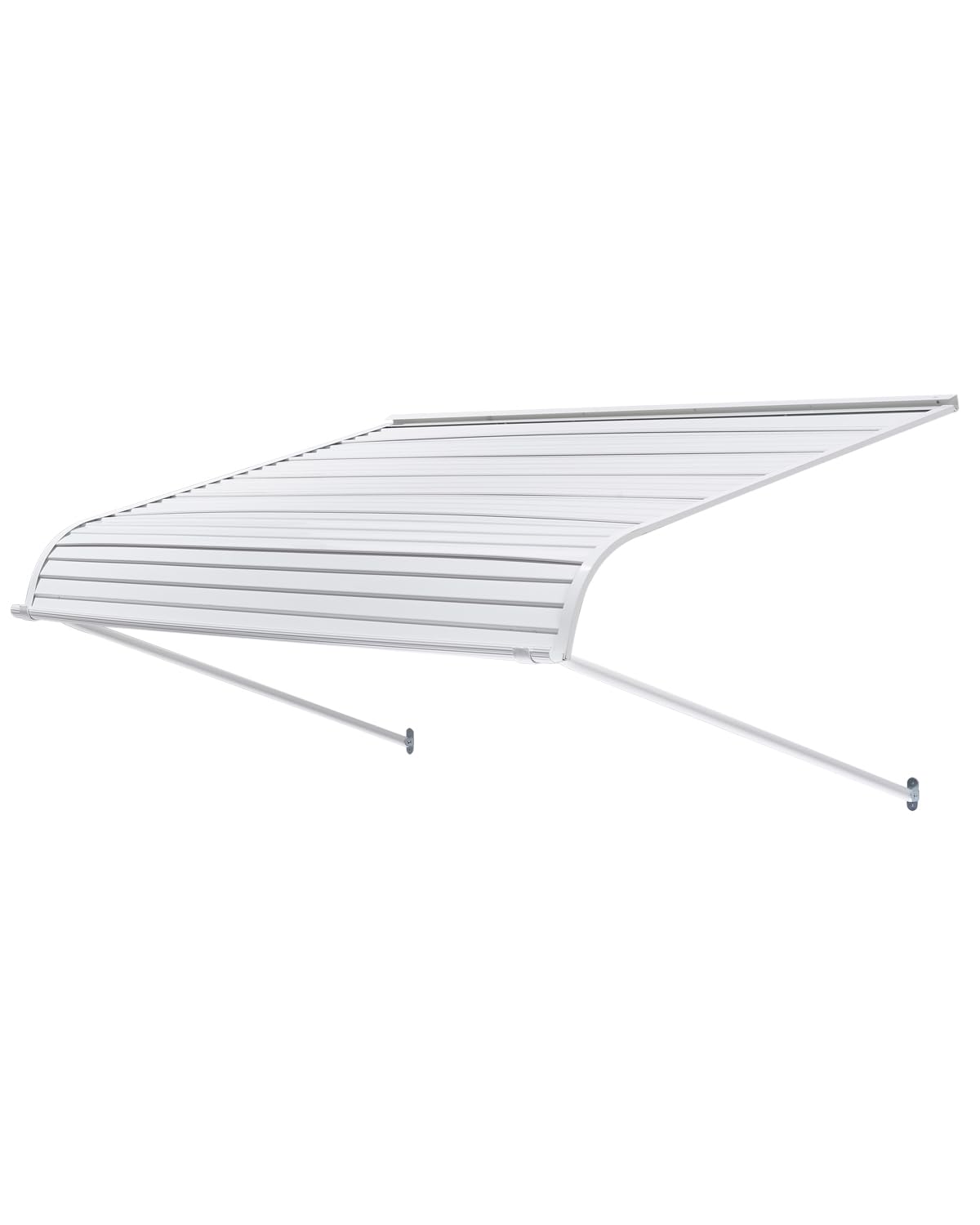
The first aluminum pick for buyers who want a solid, opaque barrier
Here’s your switch from the polycarbonate world: this VEVOR uses 0.6mm aluminum sheets with a heavy-duty frame and 22mm thick support rods, giving it a permanence that plastic panels don’t offer. The 7.87-inch wide aluminum ripple panels connect tightly, and the curved edges channel rainwater away so nothing pools on top. It’s a genuinely different material philosophy—built for buyers who distrust plastic and want metal between them and the snow.
Appearance and quality lead the positive feedback, with owners noting it covers stairs even better than their old metal awnings did. The white finish complements any siding, and at 17.9 pounds it’s remarkably light for a metal unit—light enough that one owner says it has held up through storms without complaint. The drainage works as advertised, keeping rain from blowing back into the door.
The honest friction is assembly: this is the most polarizing install of the lineup, with some finding it easy and others spending two days on it. The picture-only instructions come out of order, and the unit feels flimsy until every screw is seated. Watch the brand’s video before starting and you’ll save yourself a headache.
Metal Advantages
- Rust-resistant aluminum construction
- Ripple panels shed water cleanly
- Covers stairs better than most competitors
Assembly Reality
- Picture-only instructions are confusing
- Flimsy until fully screwed together
- Needs 2 people and possibly 2 days
Who it fits: DIY-friendly owners who want an opaque metal awning and are willing to wrestle with a tricky build for a solid result.
Who should pass: anyone who wants a quick weekend install—this one demands patience and a second pair of hands.
6. VEVOR Fixed Metal Awning 104 x 36 in
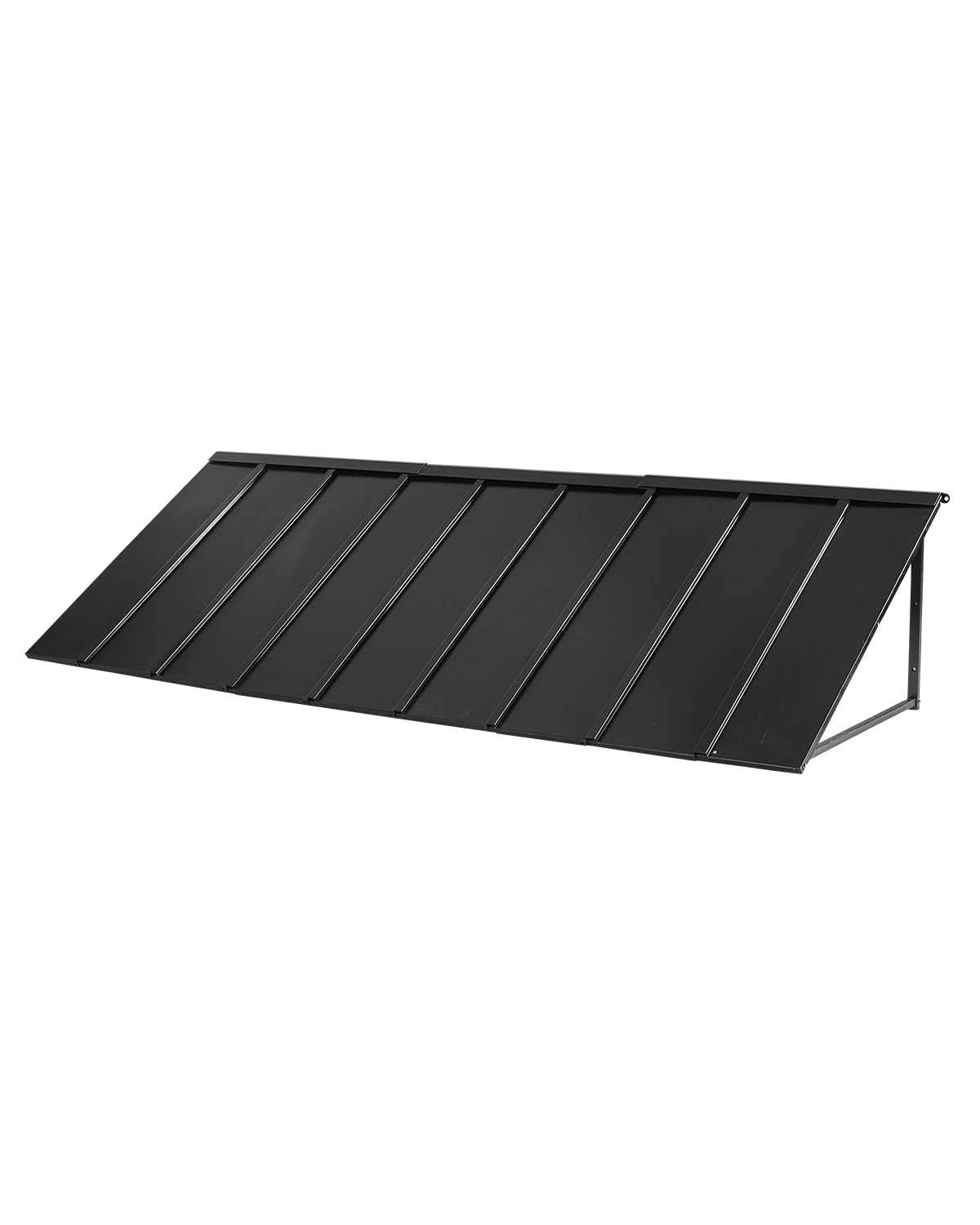
The heavy lifter—58.9 pounds of steel and iron that laughs at snow loads
At 58.9 pounds with 0.8mm metal tiles and a triangular steel support frame, this is the brute of the lineup—a fixed awning built for regions where winter actually bites. The sloped design routes rainwater away before it can pool and add pressure, and the heavy build simply doesn’t flex the way lighter polycarbonate units do. One owner left a window open during a downpour and found not a drop on the sill, even in strong wind.
Quality leads the praise here, with owners calling it “very well made and sturdy” and noting it handles windy conditions without issue. The 104″ width suits garages, storefronts, and long banks of windows, while the black powder coat gives it an upscale, commercial look that improve a shed or side entrance. The appeal is broad enough that it “looks great on my shed” per one owner.
The trade-offs are real: installation gets mixed reviews because the instructions are genuinely bad, and the included zinc screws are cheap enough that some owners swap them for painted ones. The drip rail angle draws a critique too. It’s a fantastic awning once up, but plan for a patient Saturday and possibly a hardware store run.
The fortress: for snow-heavy climates and anyone who wants a genuinely heavy, immovable metal canopy, this is the most reassuring build in the lineup—just budget time for a frustrating assembly.
The premium trade: bring your own screws and expect the instructions to be only marginally helpful.
7. Kozyard Adjustable Door Window Awning
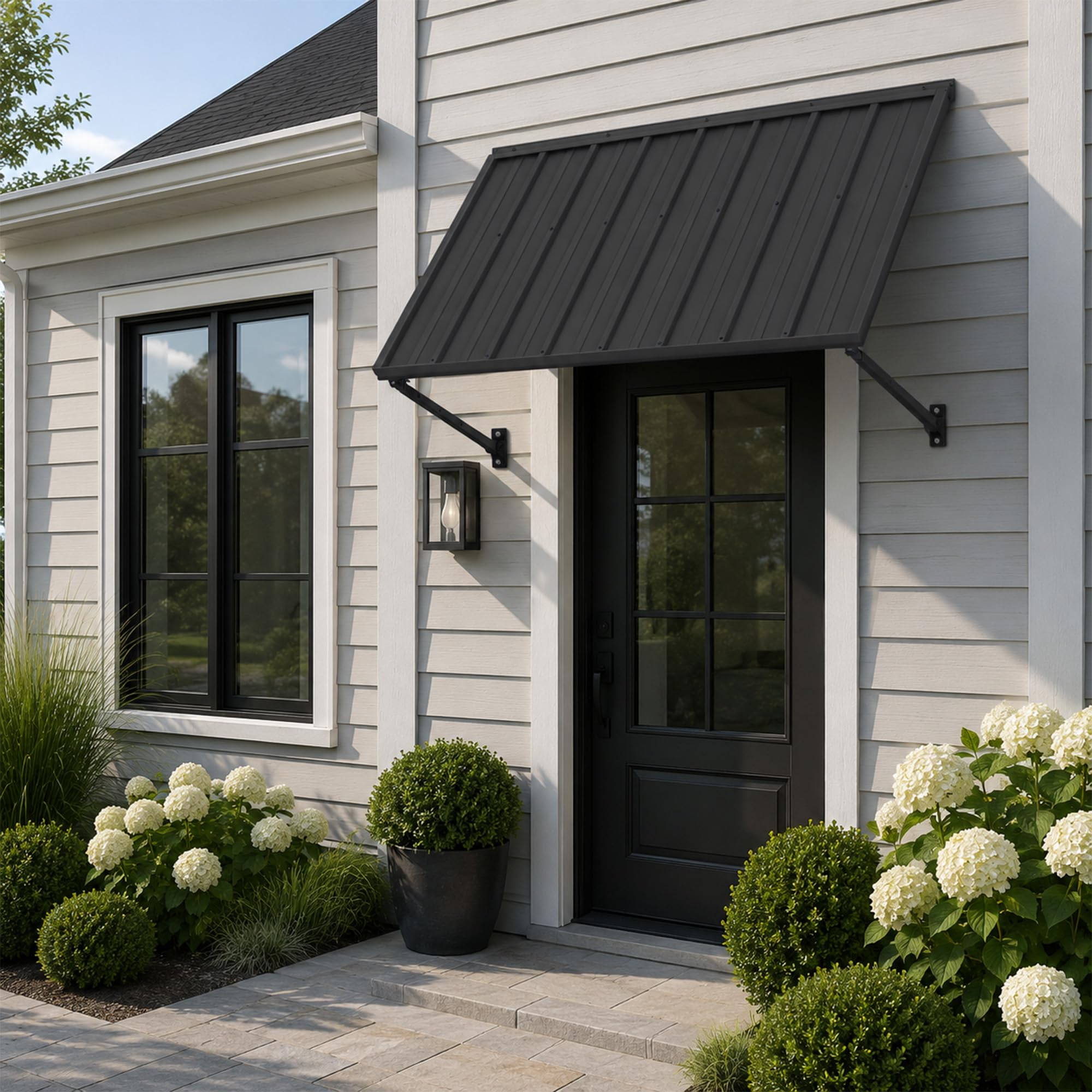
Not fixed in spirit—four tilt angles let you chase the sun through the seasons
This is the rule-breaker: a “fixed” awning that lets you adjust its angle between four positions to control shade and airflow as the seasons change. Block the harsh summer sun at one tilt, then open up for ventilation when it cools. The powder-coated iron resists rust and fading, and owners say the smart rail-mount system lets a solo installer slide the canopy into place at ground level first instead of fighting it overhead.
Appearance is the runaway favorite feature, giving a doorway a genuinely fresh look while delivering rain and shade protection. The built-in front gutter directs water away, and owners describe it channeling perfectly to the side holes. It’s sturdy enough that even wind doesn’t rattle it, and the versatile design works over AC units and EV chargers—not just doors and windows.
The reality check: a few owners had to modify the mount because the center support ran short at max extension, and the provided anchor hardware draws criticism. It’s also the design that’s engineered to handle about 3–4 feet of snow accumulation, which makes it the best all-weather compromise between lightweight polycarbonate and the heavy VEVOR steel unit above.
Why It Stands Out
- 4-level tilt adjusts shade through the year
- Rail-mount allows solo ground-level assembly
- Handles 3–4 feet of snow when properly mounted
The Compromise
- Some owners modify the center support
- Anchor hardware could be better
- Coverage is narrower at 55″ width
Best for: the homeowner who wants one canopy to adapt through all four seasons and values adjustability over sheer width.
Keep in mind: if you need extra-wide coverage, this 55″ footprint won’t span a double door.
8. DAWNINGHOMM 40 x 160in Window Door Awning Canopy
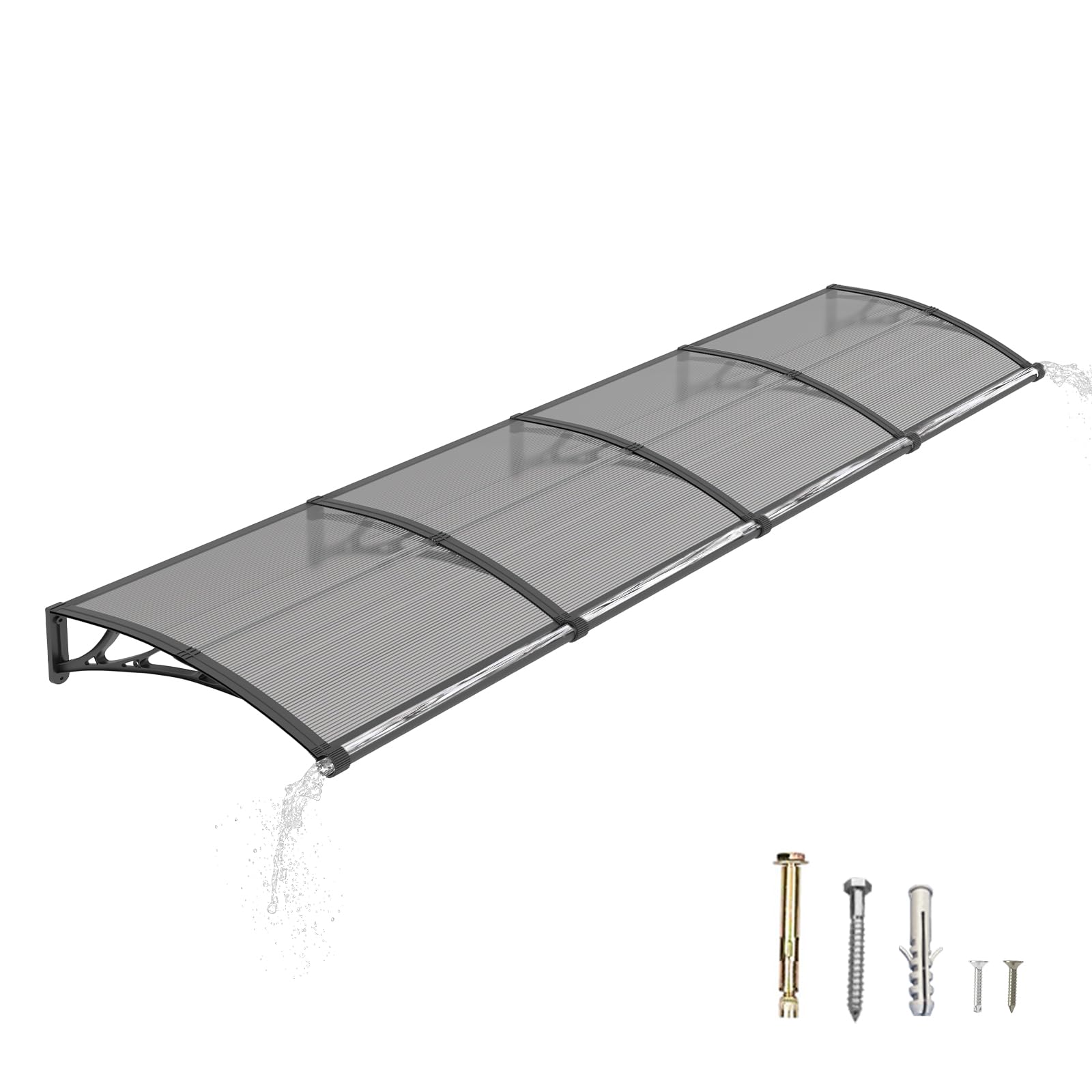
The premium polycarbonate that adds UPF 50+ armor to a wide, modern span
This DAWNINGHOMM sits at the premium end of the polycarbonate range, and it adds UPF 50+ UV protection (a rating that blocks 98% of the sun’s rays)—a real upgrade over panels that only claim to “block harmful rays.” With a 39.5-inch projection and medium smoke gray panels, it looks like an automotive tint while still letting light through. It’s the most feature-complete polycarbonate design here, thanks to upgraded aluminum alloy rods and tightly sealed joints that resist water.
Owners repeatedly describe the install as easy and the result as “perfect easy affordable weather guard,” with one using it over a fully exposed walk-in garage door. The modern black bracket and smoke gray panel combination looks deliberate rather than utilitarian, which is exactly what you want over a front entrance that guests see first. The hollow polycarbonate panels resist cracking from temperature swings, a common failure in cheaper sheets.
The honest note is this: with a 48″ item width listed, coverage fits single wide doors and windows rather than the massive spans of the VIVOHOME above. It’s premium in materials and finish, but you’re paying for quality rather than sheer footprint. For an exposed walk-in garage door that demands reliable weather defense with a modern look, this is the finishing touch.
The refined pick: for buyers who want premium polycarbonate with UV-rated protection and a sleeker colorway, at the top of the price range for this material type.
The catch: the 48″ width won’t span wide patio doors—check your opening before committing.
Understanding the Specs
Projection vs. Width
Projection is how far the awning sticks out from the wall—the part that actually shields your doorway from rain. Width is how much of the wall it covers horizontally. A 40-inch projection clears most standard thresholds comfortably, while 38 inches (like the VIVOHOME’s 38.2″) can leave the outer step wet in wind-driven rain. Match both to your door’s setback and how much of the facade you want covered.
Polycarbonate vs. Metal
Polycarbonate sheets are lightweight, transmit natural light, and block UV rays—ideal for windows and doors where you still want visibility. Metal awnings (aluminum or steel) are opaque, handle snow loads far better, and feel more permanent, but they block light and weigh significantly more. If your region sees heavy snow, lean metal; if you want bright entries in sunny climates, polycarbonate wins.
FAQ
What’s the difference between a fixed awning and a retractable one?
Will a polycarbonate awning block harmful UV rays?
How much snow can a fixed awning handle?
Can I install a fixed awning by myself?
What wall types can I mount these awnings on?
Should I use glass glue or caulking during installation?
What’s the best material for a windy climate?
How do I choose the right width for my door?
Final Thoughts: The Verdict
For most buyers, the best fixed awnings winner is the GGNEBAI 40x80in because it delivers the proven combination of quality, transparency, and wind resistance that the crowd consistently backs. If you want engineered drainage for a rainy climate, grab the NEBAIKA with gutter, and if you need to shed heavy snow, the VEVOR steel unit is the one to reach for.
How We Picked
We do not accept paid placement. Every pick is matched to a real buyer and a real use-case; we do not hands-on test units.
Sources & Methodology
Specifications: manufacturer listings and product documentation. Review insights: verified customer reviews, as of August 2026. Pricing: not shown on this page (it changes often); check the current price via the retailer link.
As an Amazon Associate, Gadgets Feed earns from qualifying purchases. This does not affect which products we feature.