
Running power to a detached garage, shed, or workshop means trusting a buried cable that won’t degrade in wet soil or sag under continuous load. The difference between a safe, code-compliant installation and a frustrating, costly re-pull comes down to the conductor configuration of your 4/2 Aluminum Wire — the three insulated phase conductors and the bare neutral or ground that handle voltage drop over long trench runs.
I’m Min — the co-founder and writer behind Gadgets Feed. I’ve spent years analyzing electrical cable specifications across hundreds of builds, from 60-amp subpanels to 100-amp service entrances, parsing ampacity tables, burial ratings, and stranding counts to separate compliant cable from cut-rate spools that don’t last.
Whether you are wiring an outbuilding, upgrading an existing service feeder, or burying a secondary line through conduit, this guide breaks down the top-rated spools on the market. You will learn exactly how gauge size, burial rating, and stranding flexibility affect your installation so you can pick the right 4/2 aluminum wire for your project without second-guessing the data sheet.
How To Choose The Best 4/2 Aluminum Wire
Selecting the right aluminum feeder cable means matching conductor gauge to your breaker size, understanding whether the cable is rated for direct burial or only above-ground service entrance, and checking the stranding count for conduit flexibility. Overlooking any one of these can lead to voltage drop, code violations, or a cable that is too stiff to pull through a 90-degree sweep.
Conductor Gauge and Ampacity
2 AWG conductors typically handle 100 amps at 75°C termination temperature, while 4 AWG conductors top out around 60 to 70 amps under the same conditions. Your breaker size must never exceed the cable’s rated ampacity. For a 100-amp subpanel, look for 2-2-2-4 quadruplex cable; for a 60-amp shed or small workshop, 4-4-4 triplex or a 4/2 configuration is often sufficient.
Burial Rating — Direct Burial vs. Service Entrance
Direct burial URD (Underground Residential Distribution) cable is jacketed and rated for placement directly in a trench without conduit. SER (Service Entrance Round) cable, by contrast, is listed for above-ground use and must be run in conduit or protected inside a building. Check the product specification for “direct burial” stamping before you install, especially if the run crosses a driveway or high-moisture zone.
Stranding Count and Flexibility
Most 2 AWG and 4 AWG aluminum cables use 7-strand construction. This minimizes stiffness enough to pull through moderate-length conduit runs but still holds its shape when landed in a panel. If your route includes multiple tight 90-degree bends, a compact-stranded or finer-strand cable may be easier to work with, though it is less common in standard utility-grade spools.
Quick Comparison
On smaller screens, swipe sideways to see the full table.
| Model | Category | Best For | Key Spec | Amazon |
|---|---|---|---|---|
| Wirenco 100′ SER 2-2-2-4 | Service Entrance | 100A above-ground subpanel | 100 ft length / 7-strand / Gray | Amazon |
| NASSAU 150′ URD 2-2-2-4 | Direct Burial | 100A buried feeder | 150 ft / 155A direct burial | Amazon |
| NASSAU 80′ URD 2-2-2-4 | Direct Burial | Short buried runs | 80 ft / 155A / 7-strand | Amazon |
| Nassau 175′ Triplex 4-4-4 | Direct Burial | 60A triplex feeder | 175 ft / 125A / 7-strand | Amazon |
| Nassau 300′ Triplex 4-4-4 | Direct Burial | Long 60A triplex runs | 300 ft / 0.754″ OD / 7-strand | Amazon |
| Wirenco 50′ SER 2-2-2-4 | Service Entrance | Short above-ground feeds | 50 ft / 100A / Gray jacket | Amazon |
| Southwire 250′ 12-2 UF/G | Underground Feeder | Low-current outdoor loads | 250 ft / 600V / Copper | Amazon |
In‑Depth Reviews
1. Wirenco 2-2-2-4 SER Aluminum Service Entrance Cable (100FT Cut)

This Wirenco spool delivers 100 feet of 2-2-2-4 SER cable in a gray compact jacket, purpose-built for above-ground service entrance panels where 100-amp capacity is required. The three 2 AWG conductors and one bare 4 AWG neutral provide full four-wire capability for a 100A subpanel feeder, and the 7-strand construction keeps the cable pliable enough to route through conduit or along joist bays without excessive force.
Rated for 600 volts and listed for wet and dry locations, the cable holds up well in unconditioned spaces like crawlspaces or attics. At 0.359 pounds per linear foot, the 100-foot length is manageable for a two-person pull, and the gray outer jacket resists abrasion from drag points. Buyers consistently report receiving the full measured length with a small courtesy extra, and the wire strips cleanly with standard tools.
Keep in mind that SER cable is not rated for direct burial — this spool belongs inside a conduit or a protected interior chase. If your project is a buried feed to a detached structure, you will want the URD variant instead. For above-ground 100-amp work, however, this Wirenco spool is the most straightforward, value-conscious choice on the list.
Why it’s great
- Full 100-amp capacity on 2 AWG conductors
- 7-strand construction for good flexibility in conduit
- Measured length matches order with extra margin
Good to know
- Not rated for direct burial
- Stiffer than copper equivalents when making tight bends
2. NASSAU ELECTRICAL SUPPLY 150′ Aluminum URD Dyke 2-2-2-4 Cable Direct Burial Quadruplex Secondary Wire
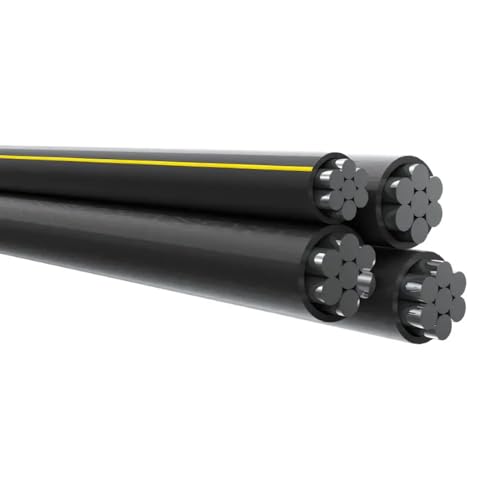
This 150-foot spool of NASSAU URD quadruplex wire is built for the most demanding direct-burial applications. The 2 AWG phase conductors are rated for 155 amps in direct-burial conditions and 115 amps when run in duct, making it over-spec for a standard 100-amp subpanel and a strong choice for larger loads. The 4 AWG bare neutral completes the quadruplex bundle, and the 0.973-inch overall diameter still fits through 1.5-inch schedule 40 PVC conduit with room to spare.
Buyers consistently praise how easily this cable pulls with a little wire-pulling lubricant. The 7-strand formulation is stiff enough to hold its shape once terminated but flexible enough to navigate 90-degree sweeps without kinking. Multiple verified purchasers used this exact cable for 110-foot to 175-foot runs to detached garages, reporting that the length delivered was accurate to within a foot and that the insulation stripped cleanly without sticking to the aluminum.
One trade-off is that the individual conductors are not wrapped in an overall jacket — they are taped together at intervals, which means they can separate and twist as you unroll. This is standard for URD cable, but it requires a bit more organization on the pull. Also, the cable is heavy at 367 pounds per 1,000 feet, so a 150-foot length is best handled by two people or a wire cart.
Why it’s great
- High 155A direct-burial ampacity for oversized feeds
- Pulls smoothly with lubricant through conduit
- Length accurate to spec with consistent insulation quality
Good to know
- No outer jacket; conductors can tangle if unrolled carelessly
- Very heavy — plan for two-person handling or a cable roller
3. NASSAU ELECTRICAL SUPPLY 80′ Aluminum URD Dyke 2-2-2-4 Cable Direct Burial Quadruplex Secondary Wire
If your buried run is on the shorter side — feeding a workshop 60 feet from the main panel, for instance — this 80-foot NASSAU URD spool gives you the same 155A rated conductors as the longer spool at a lower entry point. The 2-2-2-4 configuration again delivers three 2 AWG phase lines and a 4 AWG bare neutral, all rated for 600 volts and direct burial without conduit, though running it inside conduit is also permissible.
The cable exhibits the same 7-strand, 0.973-inch diameter construction as its 150-foot sibling, so you get identical pulling behavior and termination ease. Verified purchasers have reported using it for 100-amp subpanel feeds in both direct-burial and in-conduit installations, noting that the PVC insulation preps smoothly for lug connectors and does not crack when bent at the panel entry. Several reviewers highlighted that the price undercuts local big-box stores by a noticeable margin.
The 80-foot length limits you to shorter runs, but for a typical garage or shed less than 70 feet from the main panel, it is plenty. Just be sure to measure your trench path carefully — adding even a short splice with this cable is impractical because it requires an underground junction box rated for direct burial.
Why it’s great
- Full 155A rating in a short, affordable spool
- Works for direct burial or in-conduit installation
- Priced well below retail electrical supply houses
Good to know
- 80 ft limits your installation distance
- No overall jacket — conductors may separate during unspooling
4. Nassau Electrical Supply 175′ 4-4-4 Vassar Aluminum URD Triplex Direct Burial

This 175-foot triplex cable uses 4 AWG conductors for both phase lines and the neutral, making it a clean fit for 60-amp and 70-amp subpanels where a full 2 AWG quadruplex would be overkill. The triplex configuration includes two insulated phase conductors and one bare neutral — three wires total — so it pairs naturally with a separate ground rod at the outbuilding, which many local codes allow for detached structures.
The cable measures 0.754 inches in diameter and weighs 200 pounds per 1,000 feet, which makes this 175-foot spool noticeably lighter and easier to pull solo than the 2 AWG quadruplex options. Direct-burial ampacity is rated at 125 amps, and duct-rated ampacity at 90 amps, so it comfortably exceeds a typical 60-amp feeder requirement. Verified buyers used it for tiny homes, backyard workshops, and pump houses, consistently reporting that the PVC insulation holds up well against rocks in the trench backfill.
The main consideration is that this is a triplex, not a quadruplex — there is no separate insulated neutral for a 4-wire subpanel feed. If your planned installation requires an isolated neutral and ground (as most modern subpanels do), you will need to supplement with a ground rod or run a separate ground conductor in the same trench.
Why it’s great
- Lighter and easier to handle than 2 AWG options
- 125A direct-burial rating exceeds 60A load needs
- Good length for medium to long runs
Good to know
- Triplex lacks separate insulated neutral
- Not intended for 100-amp service
5. 300′ 4-4-4 Vassar Aluminum URD Triplex Direct Burial
When your trench runs 250 feet from the main panel to a remote shed or well house, voltage drop becomes a real concern. This 300-foot spool of 4-4-4 Vassar triplex gives you enough length to cover long runs without splicing, using two 4 AWG insulated phase conductors and a bare 4 AWG neutral in a direct-burial rated jacket. The 7-strand construction and 0.754-inch diameter keep the cable manageable on a long pull, especially if you use a tugger or a pulling grip.
The direct-burial ampacity of 125 amps means this cable can handle a 60-amp breaker with plenty of overhead for surge loads like well pumps or table saws. Verified purchasers have used it for tiny-home feeders on 60-amp breakers with runs between 200 and 300 feet, reporting no noticeable voltage drop issues and a cable that arrives coiled cleanly without kinks. The price per foot on this long spool is more economical than buying two shorter spools and a splice kit.
The triplex format again means no separate insulated neutral for a 4-wire split-phase subpanel. If your local code requires an isolated neutral and a separate ground, you have two options: drive a ground rod at the outbuilding (where allowed) or pull a separate insulated ground conductor alongside the triplex in the same trench.
Why it’s great
- Single 300-ft spool eliminates splices on long runs
- 125A rating handles 60A loads with headroom
- Good per-foot value for extended installations
Good to know
- Triplex — you will need a ground rod or separate ground
- Very long spool requires planned unspooling area
6. Wirenco 2-2-2-4 SER Aluminum Service Entrance Cable (50FT Cut)
If your subpanel is in the same building or an attached garage just a few feet from the main panel, a 50-foot cut of SER cable is all you need. This Wirenco spool offers the same 2-2-2-4 configuration and 100-amp, 600-volt rating as the 100-foot version, but in a shorter, lighter package that is easier to store and handle. The gray PVC jacket is rated for wet and dry locations, so it is safe for basement, crawlspace, or attic runs.
The 7-strand conductors are stiff but manageable over 50 feet — one person can easily feed the cable through a wall cavity or short conduit stub. Verified purchasers consistently note that the length is accurate with a small extra, that the cable strips cleanly for lug connectors, and that the shipping speed beat their local supply house. The per-foot cost on this shorter cut is slightly higher than the 100-foot spool, but for a small job you avoid paying for cable you will not use.
This is not a direct-burial cable, so keep it inside conduit, raceway, or building structure. For a short run between a meter and an indoor panel, though, it is a direct, hassle-free solution.
Why it’s great
- Compact 50-ft length avoids excess waste
- Full 100A, 600V rating in a light spool
- Arrives fast with accurate length measurement
Good to know
- Higher cost per foot than longer options
- Not suitable for direct burial
7. Southwire 13055955 250′ 12-2 UFW/G Wire, Gray, 250 Feet

This Southwire spool is in a different class from the aluminum feeders above — it is a 12-gauge copper UF-B cable designed for low-current underground loads like post lamps, gate openers, and small pumps. At 250 feet, it gives you ample length for long landscape runs, and the copper conductors eliminate the oxidation and creep issues that sometimes accompany aluminum terminations at smaller gauges.
The cable is rated for 600 volts and direct burial, with a solid PVC jacket that resists moisture and soil chemicals. Verified purchasers used it for long driveway gates, fountain pumps, and outdoor lighting, consistently praising its durability when buried directly in rocky soil or run in shallow conduit. The 12-2 configuration (a black hot, a white neutral, and a bare ground) covers standard 120-volt lighting and receptacle circuits up to 20 amps.
This is not a feeder cable for a subpanel — the 12 AWG conductors are capped at 20 amps, so it cannot replace the 2 AWG or 4 AWG aluminum cables needed for 60-100 amp services. But for low-current outdoor branch circuits, it is the most budget-friendly, code-compliant option on this list.
Why it’s great
- Copper conductors eliminate aluminum termination concerns
- 250-ft length covers long landscape trench runs
- Direct-burial rated with durable PVC jacket
Good to know
- Only rated for 20-amp circuits
- Not suitable for subpanel feeder applications
FAQ
Can I run 4/2 aluminum wire directly in the ground without conduit?
What is the maximum breaker size for 4 AWG aluminum wire?
Why does my 2-2-2-4 aluminum cable have four wires but my subpanel needs four?
Final Thoughts: The Verdict
For most users, the 4/2 aluminum wire winner is the Wirenco 100-foot SER 2-2-2-4 because it delivers the most common configuration — 100-amp, 600-volt, four-wire feeder — at a length that suits the majority of residential subpanel installations without excess or shortage. If you need a buried run, grab the NASSAU 150-foot URD 2-2-2-4 for its high 155-amp direct-burial rating and proven pullability. And for a lighter 60-amp feeder with long reach, nothing beats the Nassau 300-foot 4-4-4 triplex for value over distance.