
Our readers keep the lights on and my morning glass full of iced black tea. As an Amazon Associate, I earn from qualifying purchases.
Specs are compiled from manufacturer listings and verified buyer reviews and can change over time — please confirm the key details on the product page before buying.
The moment you research aquarium-safe epoxy, you hit a wall of conflicting claims. One tube promises a reef-safe bond, another lists a cure time that could leave your tank empty for a week, and a single wrong choice can mean disaster for your fish. This guide cuts through that confusion by comparing the published specs and the real patterns across verified owner experiences, so you can seal a pond, glue a frag, or line a stock tank with genuine confidence.
I’m Min — the founder and writer behind Gadgets Feed. This guide is built by comparing the manufacturers’ published specifications and the patterns across verified customer reviews, so you get each pick’s real strengths and trade-offs instead of marketing spin.
What follows is a focused look at the three most trusted ways to protect your aquatic life, starting with the aquarium safe epoxy resin options that owners actually rely on for waterproof, fish-safe repairs and builds.
Our Picks at a Glance

How To Choose The Best Aquarium Safe Epoxy Resin
Choosing the wrong epoxy can mean redoing a whole project or, worse, risking the health of your fish. The first thing to decide is the job itself: are you coating a large surface like a pond or tank interior, or are you bonding small pieces like coral frags to live rock? That single question separates the two main product types in this category.
Surface coating versus spot bonding
A brush-on epoxy paint is built to cover broad areas and create a continuous waterproof barrier. It is the right tool for lining a wooden tank, sealing a concrete basin, or painting a metal stock tank. A kneadable putty-style epoxy, by contrast, is meant for small, strong bonds — sticking a frag to a rock or repairing a crack — and it can stick to wet surfaces right out of the package.
Working time and cure time
The clock matters more than you expect. The working time is how long you have to apply the epoxy before it starts to set, and the cure time is how long until it is safe for your fish to swim in. Some coatings allow service in as little as 24 hours, while others demand patience and careful temperature control. Read both numbers before you commit, because a batch that sets too fast can leave you with lumps and a wasted afternoon.
Surface prep is the hidden variable
Every product here demands some prep, but the amount varies wildly. Some formulas are self-priming and stick to wood, metal, stone, or plastic with minimal work. Others need an acid etch or a solvent wipe to bond properly, and skipping that step can cause bubbling or peeling later. Match the prep effort to your willingness to do it, not just to the price tag.
Quick Comparison
In-Depth Reviews
1. Pond Armor SKU-BLACK-QT-R Non Toxic Pond Shield Epoxy Paint, 1.5-Quart
Our pick — over 4★ from 400+ verified ratings; the strongest balance of quality and price.
The heavy-coverage liner that turns a bare tank into a fish-safe home in 24 hours.
This is the workhorse for anyone building or renovating an entire water feature. The formula is a liquid epoxy paint that you roll or brush across a whole surface, and it was specifically designed for underwater use while staying non-toxic to fish and plants. Because it is self-priming, it bonds reliably to wood, metal, stone, concrete, and most plastics without a separate primer step.
The 24-hour service time is the headline here — you can put your tank back into use faster than most competing coatings allow. A 72-gallon Koi tank owner reported no flaking or cracking after three months, with fish staying healthy. Owners most often praise its quality, with effectiveness a close second.
The trade-off is in the prep and the finish. Some owners found the working time honest but the surface demanding: one concrete fountain project needed its own mixing cups, 99% isopropyl alcohol, and an acid etch, and leftover acid residue caused bubbles in the bottom. Another saw bubbles when using 90% isopropyl with a longer dry time. Plan for careful surface prep and you will avoid the main complaints.
What wins people over
- Back in service in 24 hours, so your fish are not waiting a week
- Self-priming formula sticks to wood, metal, stone, concrete, and plastic
- Low odor and easy cleanup during application
The honest catch
- Surface prep is real work — some jobs need isopropyl and an acid etch
- Finish can bubble if prep chemicals are not fully neutralized
- Achieving a flawless glossy finish takes patience
Reach for this if: you are lining a whole pond, tank, or fountain and want fish-safe results in 24 hours.
Look elsewhere if: you need a tiny spot repair — a putty-style epoxy will be quicker for small bonds.
2. ARKA CSE120 Coralscaper Epoxy 2K Coral Glue 2 x 60g

The knead-and-stick putty that attaches frags to live rock, even underwater.
For bonding parts inside a running saltwater aquarium, this putty-style epoxy grabs well on wet surfaces, so you can press it into place without draining the tank. You knead two 60g sticks together by hand, then press the mix where you need it. Its high adhesive strength holds firm underwater, and after curing it turns a lime-like color that blends into live rock instead of standing out.
Owners who use it for its intended purpose are enthusiastic, calling it easy to use and suitable for any saltwater aquarium, and praising how it looks right from the start. It is the go-to for mounting coral frags, rebuilding reef structures, and even shaping plastic shell holders. The real-world verdict from the reef community is that it hardens fast enough and delivers a lot of product for the money.
The honesty moment: a few owners hit real problems. Mixing the two parts together is genuinely awkward at first, and one reviewer noted the bond breaking apart like dried play-dough if conditions were not right. One rare report linked fish deaths within three days to the user checking ingredients too late. That is a rare but sobering reminder to verify any epoxy’s safety claims against your specific livestock before it goes in the water.
Best for: reef keepers mounting frags or rebuilding live rock, where a wet-surface bond matters more than surface coverage.
The trade-off: mixing is fiddly, and the safety record is less uniformly reassuring than the brush-on coatings above.
Pick this for: fast, permanent frag mounts and reef builds where the lime-colored cure hides in plain sight.
Think twice if: you are coating a whole tank wall — this putty is for point repairs, not surfaces.
3. Pond Armor SKU-CBLUE-QT-R Non-Toxic Pond Shield Epoxy Paint, 1.5-Quart
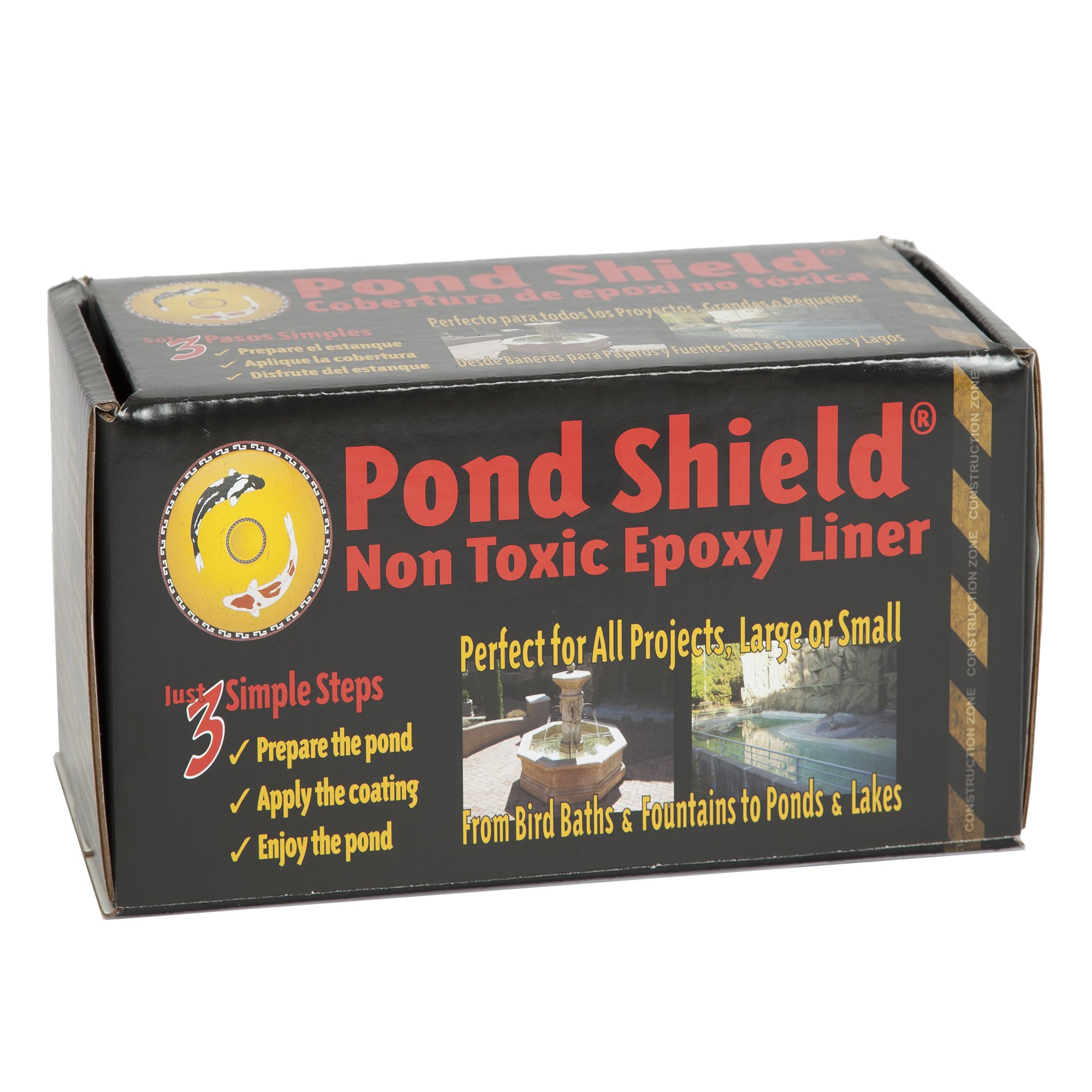
The glossy blue liner that turns a stock tank into a spa-like showpiece.
If the black Pond Armor is the utilitarian workhorse, this Competition Blue version is the one owners pick when looks matter. It delivers the same fish-safe, plant-safe, self-priming epoxy paint in a gloss finish, with enough material to cover up to 60 square feet in a single 1.5-quart can. The color alone is a conversation starter — buyers describe it as looking spa-like once applied.
Buyers report using it to seal a chest freezer into a cold plunge, line a galvanized steel stock tank into a backyard pond, and coat a metal stock tank for summer swimming — all with smooth, professional finishes and no primer required. One owner found the 30-minute working time ample for a single coat. Another buyer noted their turtles took to it well.
Read the prep notes before you start. The recurring advice is to sand with 80 grit, wipe down with vinegar, and mix and apply quickly because the paint sets fast. One owner saw lumpy batches at 80°F but smooth results near 70°F, and another warned brush hairs can shed mid-application. An 84-square-foot concrete waterslide showed flaking and fading after two years, so stick to tanks and stock tanks, not large outdoor concrete.
Why it stands out: performance and appearance are the two most-praised traits, and both show in the glossy, professional finishes owners post about.
Set expectations: fast-setting paint demands quick work, and large outdoor concrete surfaces may not hold up as well as tanks do.
Choose this for: DIY tanks, stock-tank ponds, and cold plunges where a glossy, fish-safe finish is part of the appeal.
skip it if: your project is a big outdoor concrete surface — the long-term durability reports point elsewhere.
Understanding the Specs
Working time vs. cure time
Working time is how long the epoxy stays workable once mixed or opened — the window you have to apply it smoothly. Cure time is how long until it is fully hardened and safe for fish. A 24-hour service time means your tank can be filled again within a day, while a formula with a 45-minute working window demands that you move fast during application.
Self-priming and coverage
A self-priming epoxy bonds directly to clean surfaces without a separate primer layer, which simplifies the job. Coverage tells you how much area a can will handle — for example, up to 60 square feet per 1.5 quarts. The larger the coverage, the fewer cans you need for a whole tank or pond, but the more surface prep you must do to get an even, lasting result.
FAQ
Can I use any epoxy resin in an aquarium if it says non-toxic?
How long after applying the epoxy can I put my fish back in the water?
What is the difference between a brush-on epoxy paint and a putty-style epoxy?
Will the ARKA Coralscaper epoxy work in a freshwater tank as well as saltwater?
Do I need to prime the surface before applying Pond Armor epoxy?
Can this epoxy be applied to metal surfaces like a galvanized stock tank?
What happens if the epoxy is exposed to freezing or hot conditions?
How do I mix the two parts of the ARKA Coralscaper epoxy?
Final Thoughts: The Verdict
The crowd favorite in the aquarium-safe epoxy space is the Pond Armor Black because it combines fish-safe certification with a fast 24-hour service time and the most consistent owner results for whole-tank projects. If you are a reef keeper mounting frags and rebuilding live rock, the ARKA Coralscaper is the wet-surface putty to reach for. And for anyone building a DIY tank or turning a stock tank into a showpiece, the Pond Armor Competition Blue delivers the glossy finish that owners rave about most.
How We Picked
We do not accept paid placement. Every pick is matched to a real buyer and a real use-case; we do not hands-on test units.
Sources & Methodology
Specifications: manufacturer listings and product documentation. Review insights: verified customer reviews, as of August 2026. Pricing: not shown on this page (it changes often); check the current price via the retailer link.
As an Amazon Associate, Gadgets Feed earns from qualifying purchases. This does not affect which products we feature.