
Our readers keep the lights on and my morning glass full of iced black tea. As an Amazon Associate, I earn from qualifying purchases.
Specs are compiled from manufacturer listings and verified buyer reviews and can change over time — please confirm the key details on the product page before buying.
If your laptop takes minutes to start and programs crawl, a 500 GB SATA SSD is the single most effective fix you can make. This guide compares nine proven 2.5-inch drives to show you exactly which one deserves your money, based purely on the specs and the real experiences of thousands of owners.
I’m Min — the founder and writer behind Gadgets Feed. This guide is built by comparing the manufacturers’ published specifications and the patterns across verified customer reviews, so you get each pick’s real strengths and trade-offs instead of marketing spin.
You’ll see how raw read and write speeds, cache sizes, and endurance ratings translate into faster boots and smoother multitasking, helping you choose the right 500 gb sata ssd for your desktop or laptop.
Our Picks at a Glance


How To Choose The Best 500 GB SATA SSD
To pick the right drive, match your budget and your machine’s age to a few key specs. For SATA drives, the interface itself sets a speed ceiling, so most modern options perform similarly in everyday use.
Cache Memory: The Unsung Hero
The cache is a fast staging area that holds data temporarily to keep write speeds high. A larger DRAM cache (a small amount of fast memory on the drive) helps maintain fast write speeds during big file transfers, while a smaller cache can slow down when the drive gets full or stressed—a key difference between a 256MB cache and a 512MB cache under heavy loads.
Endurance and Flash Type
Endurance tells you how much data you can write before the drive wears out. Drives using 3D NAND TLC chips offer a longer lifespan in writes compared to QLC alternatives, making them a safer bet for a primary system drive you plan to keep for years.
Quick Comparison
| Model | Best For | Max Read Speed | Max Write Speed | Cache Size | Amazon |
|---|---|---|---|---|---|
| Crucial MX500★ Best Overall | Reliable all-rounder | 560 MB/s | 510 MB/s | 256 MB | Amazon |
| fanxiang S101Value Pick | Budget value pick | 500 MB/s | 450 MB/s | 500 GB | Amazon |
| Fikwot FS810Eco Upgrade | Cost-effective upgrade | 560 MB/s | 500 MB/s | 6 GB | Amazon |
| PNY CS900 | Secondary storage | 550 MB/s | 500 MB/s | 512 MB | Amazon |
| Crucial BX500 | Budget boot drive | 550 MB/s | 500 MB/s | 500 MB | Amazon |
| SanDisk SSD Plus | Shock-resistant choice | 545 MB/s | 505 MB/s | — | Amazon |
| SanDisk Ultra 3D | High-end performance | 560 MB/s | 530 MB/s | 500 MB | Amazon |
| Samsung 870 EVO | Top-tier reliability | 560 MB/s | 530 MB/s | 1 GB | Amazon |
| Samsung 850 EVO | Proven classic | 540 MB/s | 520 MB/s | 512 MB | Amazon |
In‑Depth Reviews
1. Crucial MX500
Our pick — over 4.5★ from 55,500+ verified ratings; the strongest balance of quality and price.
The benchmark 2.5-inch drive that gives old machines a second life, backed by massive owner trust.
Owners consistently point to this drive when reviving a dead laptop. It pairs a 256 MB cache with the SATA III 6 Gb/s interface (the standard connection for most older laptops) to deliver read speeds up to 560 MB/s, so a machine that took seven minutes to boot can start in around 90 seconds.
The package includes Acronis True Image for Crucial cloning software, so you can migrate your old hard drive’s data without reinstalling Windows. Buyers report flawless use in HP laptops, Dell machines, and even a PlayStation 3, where it cut GTA V load times dramatically.
Performance and speed are the two things owners praise most, with the installation process also earning high marks for being straightforward. A 7mm-to-9.5mm spacer is included to fit thicker drive bays, and the whole package benefits from a Data Recovery Service as a safety net.
What owners love
- Large 256 MB cache keeps write speeds steady during big transfers
- Includes cloning software and a spacer for easy fit
- Rated for heavy everyday use in old and new systems
The honest trade-off
- Long-term reliability gets mixed notes—most see no issues, a few report failures around the six-month mark
- Priced above entry-level drives for the extra features
Reach for it if: you want a dependable, well-rounded boot drive with cloning software included, and you trust the brand’s track record.
Look elsewhere if: your budget is extremely tight and you are willing to trade the extra features for a bare-bones drive.
2. fanxiang S101
A budget drive that boots your PC at least 50% faster than a hard drive, while staying affordable.
If you just want a cheap way to speed up an aging computer, this fanxiang hits the mark with read speeds up to 500 MB/s. It uses 3D NAND TLC chips, which give it a longer lifespan in writes than cheaper QLC alternatives, making it a smarter pick for a primary drive.
The drive works across desktops, laptops, and all-in-one PCs, supporting Windows, Linux, and Mac OS. Owners have used it as plug-and-play storage for camera hubs and video recorders, where it is recognized instantly and runs quietly with no vibration.
The thing owners praise most is the value for money, followed closely by the build quality. There is a caveat though: some units worked for years in a PS4 before corrupting, likely due to consistent heat, so it is best suited to cooler, well-ventilated systems.
Smart budget buy: you get a reliable speed boost for less, backed by a 3-year quality assurance.
Worth noting: if you run it in a hot console or heavy sustained workloads, consider a higher-end drive instead.
3. Fikwot FS810
This drive excels at resurrecting vintage machines, with 3D NAND TLC and a rugged shock-resistant build.
What wins people over here is the reliability—owners trust it to breathe new life into old computers, including a 25-year-old iMac G3 via an IDE adapter, which it boots faster than it did in 1999. The 3D NAND TLC flash provides a solid balance of performance and price for daily use.
Read speeds reach up to 560 MB/s, which is among the fastest for a SATA drive. One owner cloned their HDD in about an hour and saw Windows updates drop from taking all day to just 10 minutes for six updates, making an old laptop feel viable again.
The 6 GB cache memory installed is on the smaller side, but for typical boot and application loads it is plenty. The drive is also hot-swappable and shock-resistant, adding durability for systems that get moved around.
Perfect for restorations: if you are reviving an old desktop or laptop, this is a cost-effective way to make it feel new again.
Not ideal if: you need the absolute peak sustained write speeds for heavy video editing—look at a pricier model.
4. PNY CS900

A trusted brand drive that runs cool and quiet, ideal for backing up files without the noise of a hard drive.
Owners frequently use this as a secondary drive to back up business files and documents, praising how it runs cool, quiet, and much faster than a traditional HDD. With sequential read speeds up to 550 MB/s and writes up to 500 MB/s, it handles everyday file transfers with ease.
The 512 MB cache is generous for a drive in this class, helping maintain performance during sustained writes. It is also backwards compatible with SATA II 3GB/sec, so it will work in older machines without issue.
Owners praise its performance most, with quality and speed close behind. One builder used it for a home arcade machine, finding the 500GB ample for the OS, games, and media, while appreciating the ultra-low power consumption.
Best as a workhorse: this is your reliable second drive for backups and media, not necessarily the star of a high-end build.
Note: the plastic case can feel cheap, and it is wise to keep backups of critical data since reliability has mixed reviews over time.
5. Crucial BX500

The entry-level Crucial that still delivers 550 MB/s reads and a noticeable speed boost on a budget.
This is the drive to grab when you want the Crucial name without the premium price tag. It reads at up to 550 MB/s and writes at up to 500 MB/s, and one owner used two of them to fix up laptops that were over 15 years old, amazed at the reduced boot time.
The SATA/600 interface is designed to tune burst performance for enhanced efficiency, and the power-efficient design ensures maximum reliability. It is a great fit for basic productivity tasks, web browsing, and light multitasking.
Owners praise its performance most, with quality and value for money close behind. One user even used it in an Nvidia Jetson TX-1, showing its versatility beyond standard PCs.
Smart entry point: if you are on a strict budget but want a dependable drive from a recognized brand, this is a strong choice.
Keep in mind: the 500 MB cache is smaller than the MX500’s, so sustained heavy writes may slow down sooner.
6. SanDisk SSD Plus
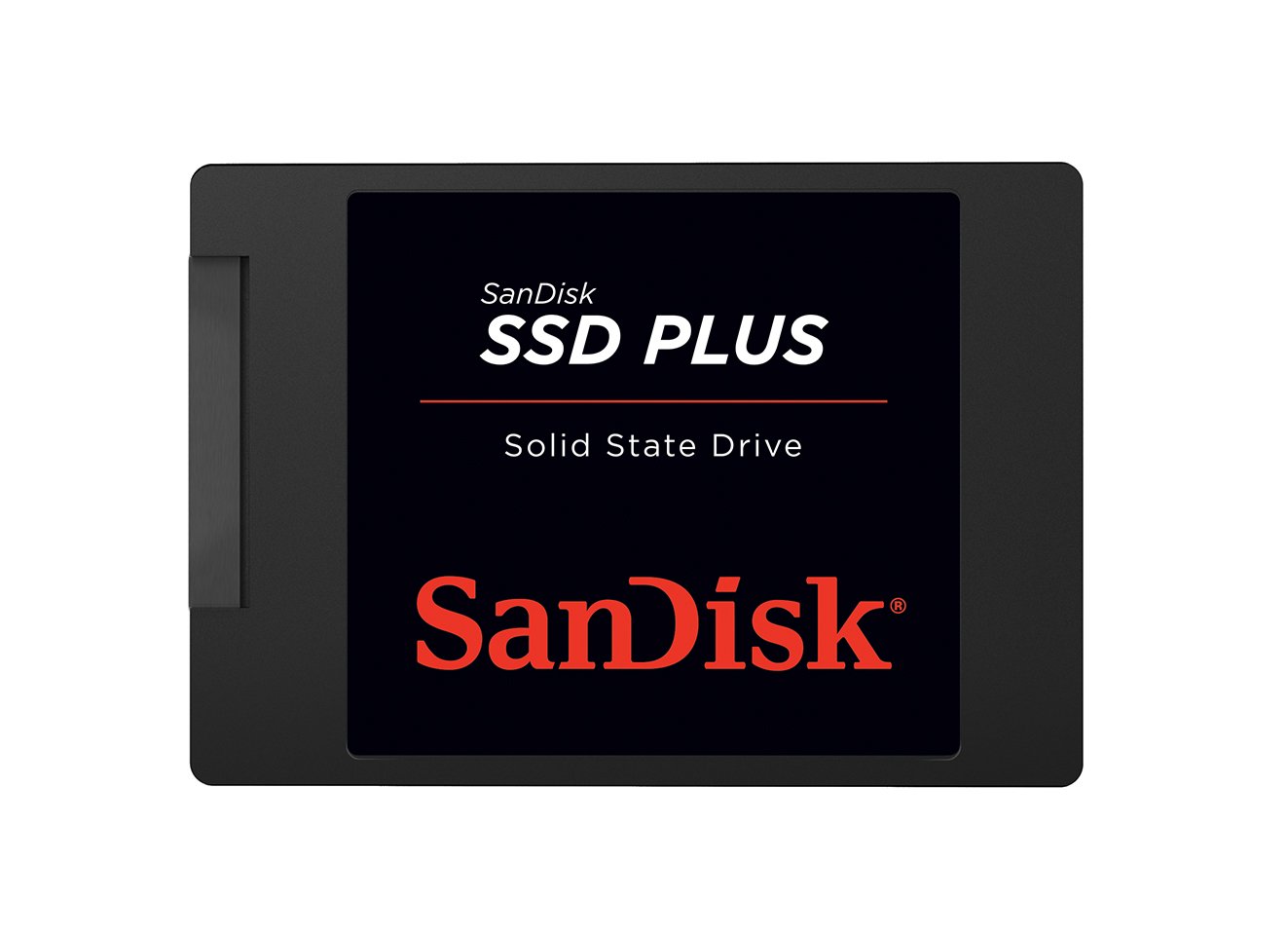
A drop-resistant drive that brings 545 MB/s reads to laptops, security systems, and retro consoles alike.
SanDisk markets this as shock-resistant for proven durability—even if you drop your computer. That makes it a sensible pick for laptops that travel, or for a modded PS2 where owners mention silent, faster loads and a 500GB capacity that fits a huge game library.
Sequential read speeds reach up to 545 MB/s with writes up to 505 MB/s. One owner installed it in a security camera system and found it was instantly recognized, ran quietly, and offered great value for the performance.
Owners praise its reliability most, with build quality close behind. The 2.5-inch/7mm form factor fits standard laptop bays, and the drive runs cool even under sustained use.
Good for mobile setups: if your PC gets bumped around or you are upgrading a console, the shock resistance is a real plus.
Fair warning: the lack of a dedicated DRAM cache means it is not the fastest for heavy, sustained write workloads.
7. SanDisk Ultra 3D

The premium SATA drive that hits the interface limit with 560 MB/s reads and nCache 2.0 acceleration.
This is the drive for gamers and power users who want the absolute fastest SATA speeds without moving to NVMe. It delivers sequential reads up to 560 MB/s and writes up to 530 MB/s, which owners say makes boot times virtually instant—ready to use in under 5 seconds in some systems.
The 3D NAND provides greater endurance so the drive lasts longer and uses less power, while NCache 2.0 technology delivers blazing-fast speeds. One owner cut a 2015 ThinkPad’s boot time from over 2 minutes down to 16 seconds, saving them from buying a new laptop.
Owners praise its performance most, with speed and quality close behind. The 500 MB cache helps maintain speeds during file transfers, and the drive runs cool, silent, and uses low power across stable builds.
Top-tier speed: if you want the best SATA performance for gaming or graphics work, this delivers.
Price premium: it costs more than budget drives, but owners find the reliability justifies it.
8. Samsung 870 EVO

The industry standard for reliability, rated for up to 600 TBW with a 5-year warranty.
This is the drive IT professionals reach for when they need unquestioned dependability. It boost the SATA interface limit with sequential speeds of 560 MB/s read and 530 MB/s write, and it maintains long-term high performance with a larger variable buffer.
The 870 EVO has been compatibility tested for major host systems including chipsets, motherboards, NAS, and video recording devices. Customers note running seven of these drives for over two years with zero failures, and using them in RAID setups for servers with nightly backups.
Reliability is the standout praise here—with 1,800 owners highlighting it, it is clearly what this drive is known for. The included Samsung Magician 6 software helps you monitor drive health and keep firmware updated, adding to the confidence.
Why pros choose it
- Up to 600 TBW endurance rating under a 5-year limited warranty
- Larger variable buffer keeps write speeds fast over time
- Samsung Magician software for health monitoring and updates
Cost of confidence
- Priced at a premium over other 500GB SATA drives
- Overkill if you only need a basic boot drive for a secondary PC
9. Samsung 850 EVO

The legendary drive that proves its worth by reviving an 11-year-old laptop in seconds.
This is the drive that set the standard years ago and still holds up remarkably well. It delivers sequential read/write speeds up to 540 MB/s and 520 MB/s respectively, with random read/write IOPS up to 98K and 90K, making it a top-tier performer even by today’s standards.
Owners have used it to give new life to laptops from 2007, cutting boot times from 3-4 minutes down to 10-12 seconds. The 512 MB cache keeps things snappy, and the included Samsung Data Migration and Magician software make installation and management straightforward.
Owners praise its performance most—3,400 mention it, making it the clear highlight. The drive is also energy efficient and comes backed by a 5-year limited warranty, though you will need to source your own mounting hardware as it is not included.
A proven winner: if you want a drive with a long, established track record of performance, this is it.
Consider carefully: given its age, newer drives offer similar specs at a lower price—buy this only if you find it at a good deal.
Understanding the Specs
Sequential Read/Write Speeds
These are the maximum speeds a drive can hit when reading or writing large, continuous files like movies or game installs. For a SATA drive, the real-world ceiling is around 560 MB/s for reads and 530 MB/s for writes—numbers higher than that are marketing hype. In everyday use, the difference between 500 MB/s and 560 MB/s is barely noticeable for boot times and app launches.
Cache Memory and Endurance
The cache acts as a fast buffer that holds data temporarily to keep write speeds high. A larger cache (like 256 MB or 512 MB) helps maintain fast write speeds during big file transfers, while a smaller one can slow down under sustained load. Endurance, measured in TBW (terabytes written), tells you how much data you can write before the drive wears out—higher is better for a primary drive.
FAQ
Will a 500 GB SATA SSD fit in my laptop?
Can I clone my old hard drive to the new SSD?
What is the real difference between a SATA SSD and an NVMe drive?
How long will a 500 GB SSD last?
Why is the fanxiang S101 more prone to heat issues?
Does the driver require TRIM support?
Can I use a 500 GB SATA SSD in a gaming console?
What does the cache size actually do for me?
Final Thoughts: The Verdict
Across the board, the 500 gb sata ssd winner is the Crucial MX500 because it pairs the fastest read speeds with cloning software and a large cache at a price that makes it the crowd favorite—backed by a stellar 4.8-star rating from over 55,000 owners. If you want the absolute best reliability for a primary system drive, grab the Samsung 870 EVO. And for a budget-friendly way to revive an old laptop, the fanxiang S101 is the one to reach for.
How We Picked
We do not accept paid placement. Every pick is matched to a real buyer and a real use-case; we do not hands-on test units.
Sources & Methodology
Specifications: manufacturer listings and product documentation. Review insights: verified customer reviews, as of August 2026. Pricing: not shown on this page (it changes often); check the current price via the retailer link.
As an Amazon Associate, Gadgets Feed earns from qualifying purchases. This does not affect which products we feature.