
Our readers keep the lights on and my morning glass full of iced black tea. As an Amazon Associate, I earn from qualifying purchases.
Specs are compiled from manufacturer listings and verified buyer reviews and can change over time — please confirm the key details on the product page before buying.
The real challenge with orthotics is finding a shoe with enough depth and width to hold the insert without cramping your toes. A good orthotic shoe has a deep, removable footbed and a wide toe box so your inserts sit flat and your toes have room. We’ve matched six athletic shoes against that exact challenge, using the manufacturers’ specs and the patterns in thousands of verified owner reviews.
I’m Min — the founder and writer behind Gadgets Feed. This guide is built by comparing the manufacturers’ published specifications and the patterns across verified customer reviews, so you get each pick’s real strengths and trade-offs instead of marketing spin.
For custom orthotics to work, the shoe must have a deep footbed and a removable insole. These picks range from slip-ons for daily errands to trainers for long walks, so you can match the shoe to your routine. athletic shoes for orthotics must have room for your inserts without squeezing your feet.
Our Picks at a Glance


How To Choose The Best Athletic Shoes For Orthotics
Your orthotics are only as effective as the shoe they sit in. A glued-in insole or tapered toe box will misalign your insert and cause discomfort with every step. Evaluate the footbed first, then the width, then the outsole.
The removable insole is non-negotiable
You need a footbed that lifts out cleanly so your prescription orthotic sits on the shoe’s base. On top of removing it, the shoe should have some extra depth so your insert doesn’t push your foot too high against the laces or upper. The Orthofeet line addresses this directly, with extra depth built in for custom inserts.
Width labels tell you the real story
Widths like 2E, 4E, and 6E are not marketing fluff—they mark real, measurable increases in how much room the shoe allows. A 2E is standard wide, while a 6E is dramatically wider. If you have bunions, hammertoes, or swollen feet, don’t guess; measure your foot and match it to the widest width that fits comfortably.
Quick Comparison
| Model | Best For | Width Options | Closure | Key Cushioning | Amazon |
|---|---|---|---|---|---|
| Orthofeet Tilos★ Best Overall | Hands-free slip-on comfort | Wide | Slip-On | Ortho-Cushion System | Amazon |
| FitVille Rebound CoreWidest Fit | Extra-wide fit up to 6E | 2E / 4E / 6E | Lace-Up | PropelCore Sole | Amazon |
| Women’s Orthopedic Road Runner | Stylish all-day wear | Standard | Slip-On | Arch Support Cushion | Amazon |
| OrthoComfoot Men’s Road Runner | Breathable daily running | Standard | Lace-Up | Support Cushion | Amazon |
| Orthofeet Stroll | Casual style with real support | Wide | Lace-Up | Ortho-Cushion System | Amazon |
| Gravity Defyer Energiya | Shock absorption for standing | M / W / XW | Lace-Up | VersoShock® Hybrid | Amazon |
In‑Depth Reviews
1. Orthofeet Tilos Orthopedic Men’s Sneakers
Our pick — over 4★ from 800+ verified ratings; the strongest balance of quality and price.
The slip-on that ends the daily bend-over struggle while giving your inserts a deep, cushioned home.
This pick leads with a hands-free, slip-on design, so you don’t have to sit down or reach down to tie laces—a genuine relief if bending is painful. The water-repellent stretch upper hugs the top of your foot without pressing on bunions or sore spots, and the deep, roomy toe box is the standout feature for anyone whose toes need space to spread.
Underneath, the Ortho-Cushion System lets you customize the feel. The insole lifts out to make room for your prescription orthotics, and there are stackable inserts and extra arch supports that adjust the fit. Buyers report that “with my prescription insoles, these shoes are good looking, very comfortable and show little wear after 3 months,” which speaks to both the comfort and the build quality. The crowd favorite by far is the comfort—well over a hundred owners single it out as the reason they keep coming back, and quality is the second most-praised trait.
The main trade-off is that the “water-repellent” claim has limits. One owner walked through wet grass and ended up with wet feet, so treat them as weather-resistant for light rain, not for puddles. Also, they run about a half to full size big, so size down if you’re between sizes.
cushioned comfort
- Hands-free slip-on saves bending and effort every time
- Deep, removable insole plus extra arch supports fit custom orthotics
- Wide toe box gives toes real room to spread
- Owners note the shoe holds up well even after months of wear
bulky fit
- Water-repellent upper isn’t fully waterproof in wet grass
- Runs a half to full size big
- Better for flat street walking than uneven terrain
comfort seekers: you want a slip-on that pairs easily with prescription insoles and gives toes generous room.
narrow feet: you need a trail shoe or plan to walk through heavy rain—this is for everyday street comfort.
2. FitVille Extra Wide Walking Shoes Rebound Core
A true 6E option that swallows wide feet and orthotics without squeezing a single toe.
If you’ve struggled to find shoes for genuinely wide feet, this is the one to measure against. FitVille’s Rebound Core comes in 2E, 4E, and 6E widths, and it’s one of the few athletic shoes that carries a size 16 for men. The wide toe box and high instep design reduce friction between your foot and the shoe, which is exactly what you need when you’re also sliding a custom orthotic underneath.
The insoles are removable and the maker states they accommodate custom orthotics perfectly. The patented dual-density PropelCore sole brings arch support and cushioning together, with an anti-pronation heel ring for extra stability. Owners are loyal—this is a second or third pair for several—and the thing everyone raves about is the quality, which earns the most mentions by a wide margin, ahead of comfort and arch support.
Fit is the honest catch here. Buyers are split on width: some say the wide sizes run true, but others report that even the XX-wide feels narrow. One reviewer wrote, “I ordered the xxwide and it didn’t feel that way, I had to take out the soles for a more comfortable fit.” If you need maximum width, order one size up in width or remove the insoles and drop in your own orthotics.
wide stable base
- Rare 6E width and size 16 options for very wide feet
- Removable insole accommodates custom orthotics
- Patented PropelCore sole with anti-pronation heel ring
- Quality is the most-praised aspect across hundreds of owners
firm sole
- Width fit is mixed—some find XX-wide still snug
- A few owners mention durability concerns over time
wide feet: you have very wide feet or need a size up to 16 and want room for orthotics.
arch support: you’re between widths—the fit runs inconsistently, so order accordingly.
3. Women’s Orthopedic Road Running Shoes
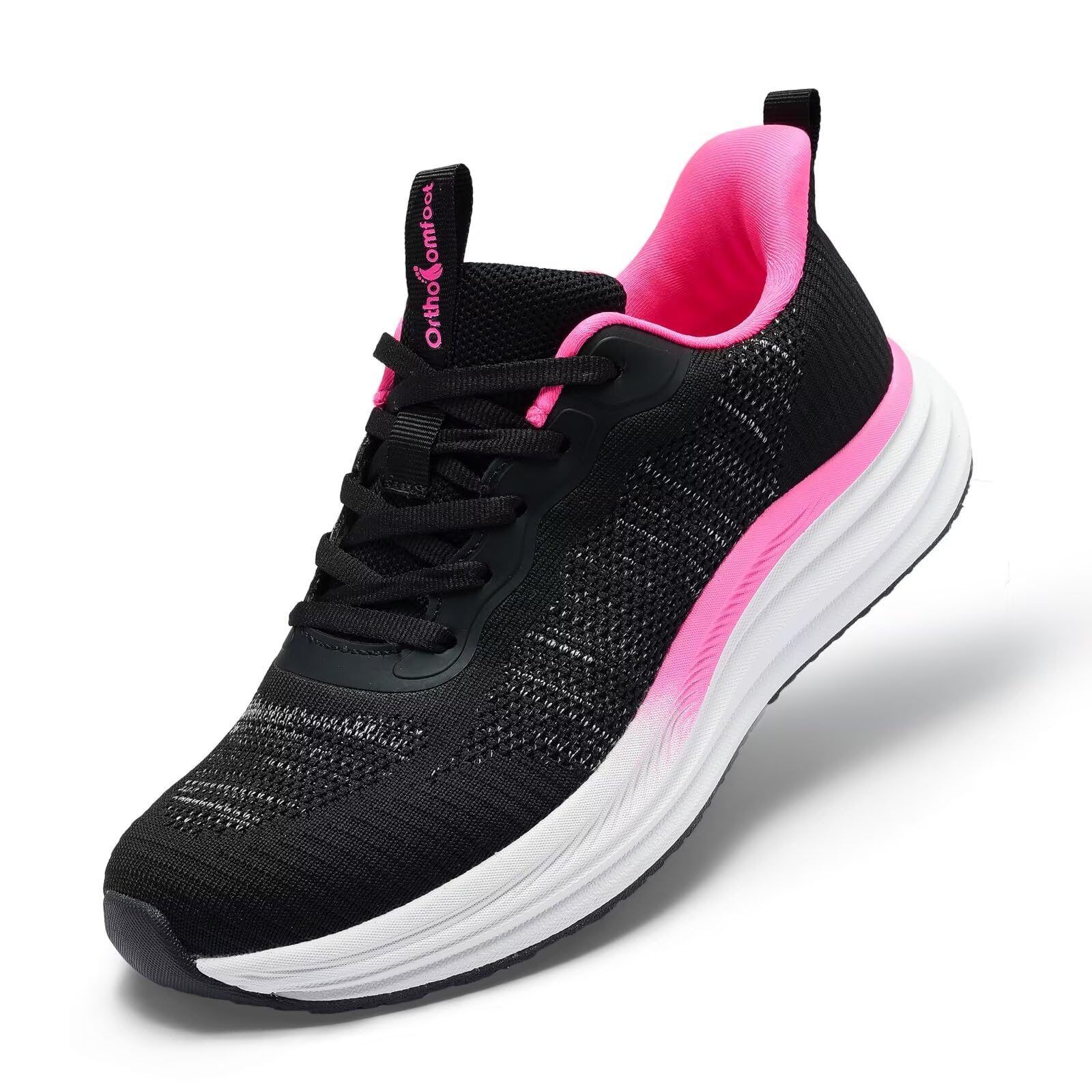
The orthopedic shoe that doesn’t look orthopedic, with two insoles for instant customization.
Most orthopedic shoes scream “medical device,” but this one doesn’t. Owners consistently note that it looks like a normal, cute sneaker, which matters when you’re wearing them all day at work or out to dinner. The slip-on design means you can get them on without help, a detail one buyer with limited mobility called a dream come true after years of struggling.
The comfort is the top-praised feature, with arch support close behind. The shoe arrives with two insoles, so you can choose the level of cushion you want or pull one out to make room for your custom orthotics. One owner walks 10-hour shifts, 5 days a week on concrete and says they still look great after two months—impressive durability for the price. They report it beats Hokas for all-day concrete walking, with a cloud-like feel.
The fit is the mixed note here. Some find it true to size, while others say it runs large, so be ready to size down if you’re between sizes. One owner found the shoe didn’t conform to their foot shape and tended to roll their foot outward, so it’s not the right match for every foot structure.
lightweight ride: two insoles in the box give you the freedom to tailor the fit or pull one out for orthotics, all in a shoe that looks like a fashion sneaker.
daily runners: you want a stylish, slip-on orthopedic shoe that works for long shifts on your feet.
trail use: you need a very wide width—this runs in standard sizing only and fit runs large for some.
4. OrthoComfoot Men’s Orthopedic Road Running Shoes
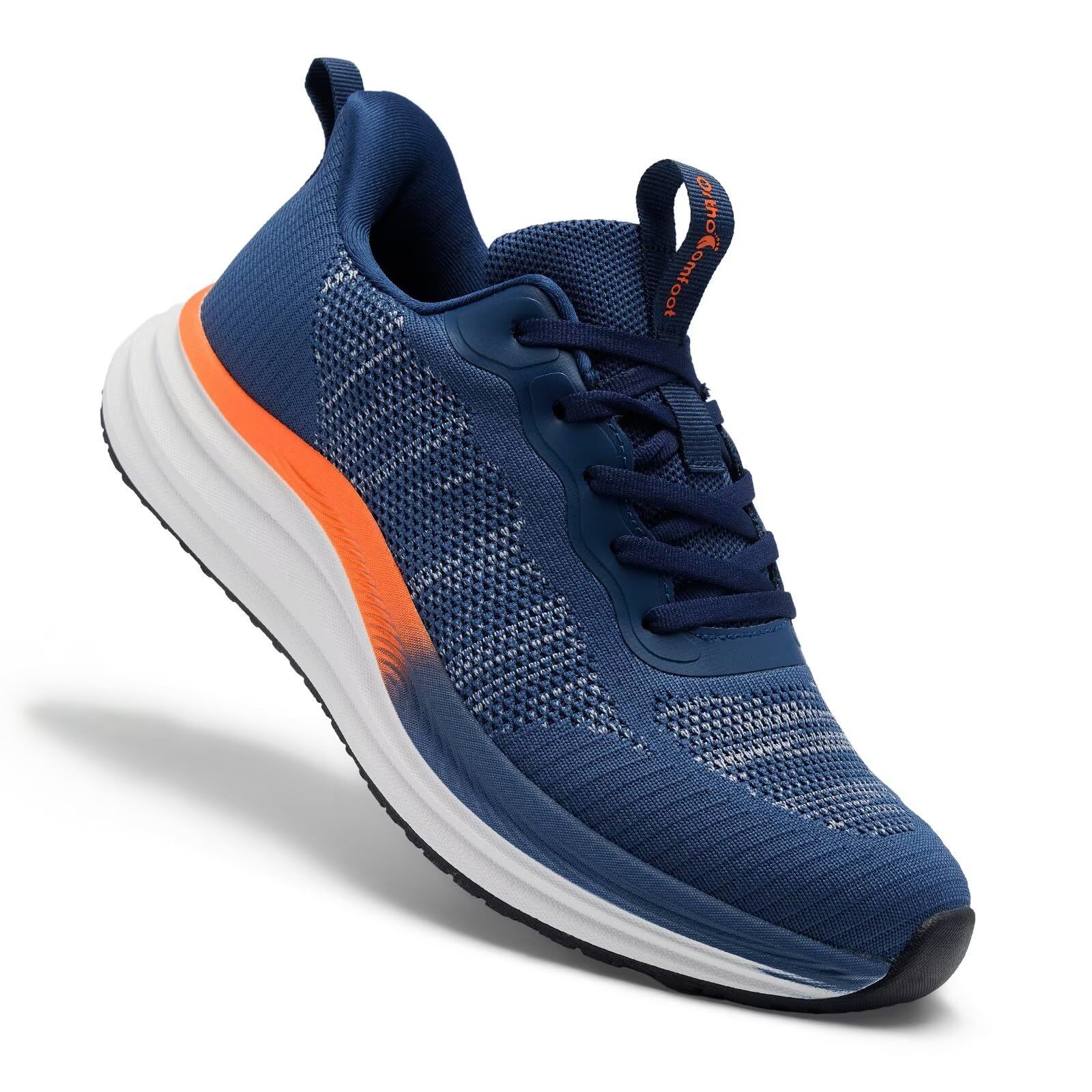
A breathable daily trainer that supports feet, ankles, and knees without looking like a medical appliance.
If you want orthopedic support without the clunky look, this men’s runner fits the bill. Owners consistently mention how much better it looks than other orthopedic brands, which matters when you’re wearing them beyond the gym. The breathable upper keeps feet cool, and the arch support works for people who want long-term foot, ankle, and knee support rather than treating an active injury.
One owner is walking 5 miles daily in them and reports they feel great, while another bought them for work and loves them. The support is the recurring theme—it’s comfortable from the start and gives solid structure. For anyone with a Haglund’s deformity (a painful bony bump at the back of the heel), the fit matters most, and the manufacturer advises making sure you get a very good fit.
The honest note is sizing. Several owners needed to size up for the perfect fit, so don’t assume your usual running shoe size will work. It’s a standard-width shoe, so if you need wide or extra-wide, this isn’t the one.
balanced support: breathable, supportive, and good-looking enough for daily wear, with a comfort level that holds up for 5-mile walks.
neutral gait: you want a breathable, supportive daily shoe that doesn’t say “orthopedic” at a glance.
heavy pronation: you need wide sizing—this runs standard width and tends to fit snug, so size up.
5. Orthofeet Stroll Orthopedic Women’s Casual Sneakers
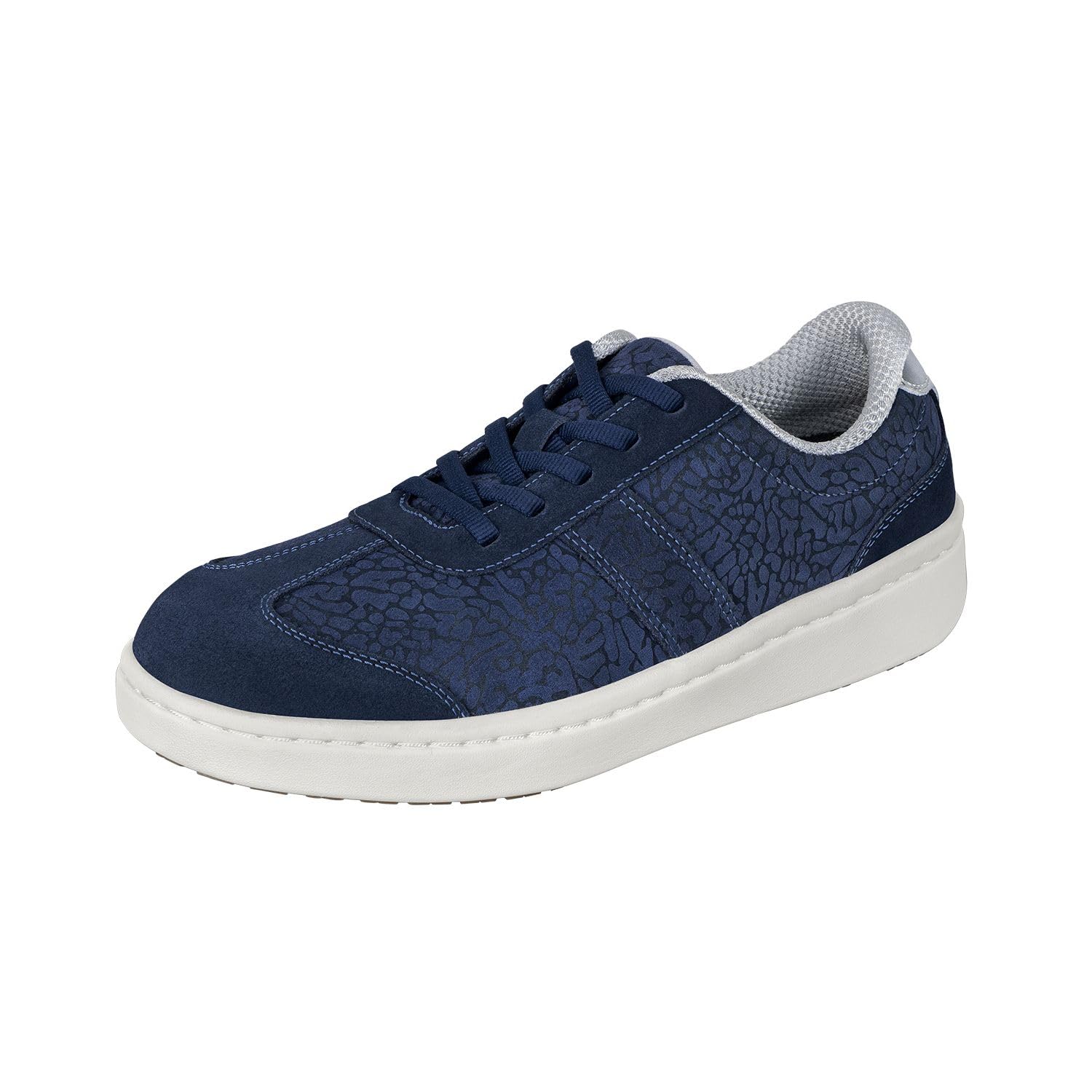
A suede casual sneaker that you’d never guess hides Orthofeet’s full orthopedic system inside.
This is Orthofeet’s answer for women who want orthopedic support in something that pairs with jeans and capris. The suede leather upper gives it a casual, dressed-down look, and owners say it’s cuter than most shoes available in their size. It comes with a built-in orthotic insole, a shock-absorbing sole, and a pressure-free fit—the brand’s Ortho-Cushion system.
For orthotic users, the key spec is the removable insole and extra depth to accommodate most custom orthotics. It also includes plastic arch supports and two different thicknesses of insoles, so you can dial in the fit or pull them out for your own inserts. One owner wore them every day of a 2-week vacation averaging about 10,000 steps a day, with sore feet and ankles and wide feet with past surgeries, and would recommend them. The comfort is the most-praised aspect, with appearance second.
The trade-off is the toe box. Some owners find it true to size, but others specifically note the toe box is too narrow for their toes—one said the rest of the shoe was too wide while the toe area felt snug. If you have very wide toes, this may not be the roomiest Orthofeet option.
stylish support
- Casual suede look that hides full orthopedic support
- Removable insole with extra depth fits custom orthotics
- Includes plastic arch supports and two insole thicknesses
- Comfort is the top-praised feature, with appearance second
narrow toe box
- Toe box runs narrow for some owners
- A few find the sole a little stiff at first
casual wear: women who want orthopedic support in a shoe that looks good with everyday casual outfits.
wide toes: you have very wide toes—the toe box is the frequent fit complaint.
6. Gravity Defyer Energiya Cross Training Shoes

The rocker-sole shock absorber that turns long hours on concrete or a forklift into a pain-free day.
Gravity Defyer built this shoe around the VersoShock® Hybrid cushioning system, and it shows. The rocker sole promotes a natural heel-to-toe gait, which buyers describe as springy and bouncy while still absorbing shock. Owners with back and knee pain, including someone with metal rods in their spine, call these the only shoes they wear for work.
For orthotic users, this box is a gift: it includes three orthotic insoles, so you can pick the level of support you need or remove the footbed to drop in your custom orthotics. The wide toe box adds room, and it’s HSA/FSA eligible. The single most-praised thing is comfort, with quality second, and one owner described the feel as “like walking on air.”
Two honest cautions. First, sizing: the shoes run small, and multiple owners recommend going up half a size—one went from 10.5 to an 11W. Second, the crosshatch sole pattern traps fine gravel, which is annoying if you walk on trails or gravel paths. Also, they’re thick and not light, so they’re built for walking and standing, not for speedwork.
responsive energy
- Three orthotic insoles included for instant customization
- Rocker sole eases back and knee pain, per owners
- Shock absorption that owners call “like walking on air”
- HSA/FSA eligible
stiff upper
- Runs small—most owners size up half a size
- Sole pattern traps fine gravel on trails
- Thick and not light, so not ideal for running
cross training: you stand or walk all day and want serious shock absorption with three insole options.
long walks: you want a lightweight running shoe—this is a cross-training and walking shoe built for support, not speed.
Understanding the Specs
Removable Insole & Extra Depth
This is the most critical spec for orthotic users. A removable footbed lets you lift out the stock insole and drop in your prescription orthotic so it sits flat against the shoe’s base. “Extra depth” means the shoe has room for your insert without pushing your foot too high against the laces, which would cause pressure and rubbing. If a shoe doesn’t explicitly state the insole is removable, assume it’s not.
Width Labels (2E, 4E, 6E)
These letters and numbers measure the width of the shoe, not just the length. A 2E is a standard wide, 4E is extra wide, and 6E is extra extra wide—each step adds noticeable room across the ball of your foot and toes. For orthotic users, extra width means your insert won’t squish your toes sideways. If you have bunions, hammertoes, or swelling, matching the width is often more important than the length.
FAQ
Will my custom orthotics fit in any of these shoes?
What does a 6E width actually mean?
Should I size up or down when wearing orthotics?
Are these shoes good for plantar fasciitis?
Can I wear these shoes if I have wide or swollen feet?
Are slip-on orthopedic shoes as supportive as lace-ups?
How long do these shoes last with daily orthotic use?
Can I use these shoes for running or just walking?
Final Thoughts: The Verdict
Across the board, the athletic shoes for orthotics winner is the Orthofeet Tilos because it pairs a hands-free slip-on design with a deep, removable footbed and extra arch supports, plus proven durability. If you need the widest fit available, grab the FitVille Rebound Core with options up to 6E. And for all-day standing with serious shock absorption, the Gravity Defyer Energiya, with its three included orthotic insoles, is the one to reach for.
How We Picked
We do not accept paid placement. Every pick is matched to a real buyer and a real use-case; we do not hands-on test units.
Sources & Methodology
Specifications: manufacturer listings and product documentation. Review insights: verified customer reviews, as of August 2026. Pricing: not shown on this page (it changes often); check the current price via the retailer link.
As an Amazon Associate, Gadgets Feed earns from qualifying purchases. This does not affect which products we feature.