
Great video without great audio is just half the story. An audio video camera bridges the gap between capturing a stunning visual and preserving every nuanced vocal performance, footstep, and ambient whisper that brings a scene to life. The best models pair high-resolution sensors with professional-grade microphone inputs and preamps, ensuring your final edit sounds as good as it looks.
I’m Min — the co-founder and writer behind Gadgets Feed. I’ve spent years dissecting technical specifications, comparing sensor readout speeds, dual-pixel autofocus systems, and codec ecosystems to separate genuine tools from marketing fluff. (And Homer 🐱 supervised the lens comparison from a warm spot on the tripod case).
Whether you are filming interviews, run-and-gun documentaries, or narrative shorts, choosing the right hybrid body requires balancing stabilization, dynamic range, and audio connectivity. This guide breaks down the leading contenders to help you find the best audio video camera for your specific production workflow.
How To Choose The Best Audio Video Camera
Searching for a camera that seriously handles both sound and vision means you must prioritize features typical still-image cameras treat as afterthoughts. Look for dedicated 3.5mm microphone jacks, headphone monitoring outputs, and preferably a hot shoe that supports an external audio adapter. Without these three ports, your audio quality will always be capped by the in-camera preamplifier.
Sensor Size and Low-Light Performance
Full-frame sensors (like the 24.2MP sensor in the Canon EOS RP or the 24.2MP sensor in the Panasonic S5II) give you cleaner high-ISO footage and shallower depth of field, which dramatically shapes a cinematic look. Super 35 / APS-C sensors (such as the one in the Sony FX30 or Blackmagic 6K G2) offer a larger depth of field — often desirable for run-and-gun shooting where you need more of the scene in focus. Larger sensors also help dual-base ISO cameras like the Sony FX30 maintain clean images across a wider range of lighting conditions.
Codec and Bit Depth Flexibility
The ability to shoot in 10-bit 4:2:2 or in a RAW format directly affects your grading latitude. Cameras like the Blackmagic Pocket Cinema Camera 4K and 6K G2 record 12-bit Blackmagic RAW and ProRes, giving you enormous flexibility in post. The Panasonic S5II offers unlimited 10-bit 4:2:2 recording internally, while the Canon EOS R8 oversamples 6K down to crisp 4K UHD. If color grading is part of your pipeline, prioritize a camera that outputs Log or flat profiles without huge sensor crops.
In-Body Stabilization vs. Gimbal-Free Workflows
For handheld video, IBIS (In-Body Image Stabilization) is a game-changer. The Panasonic S5II and Sony FX30 have excellent IBIS systems that let you walk and shoot without a gimbal. The LUMIX G85 even offers dual image stabilization that combines in-body and optical stabilization. The Sony FDR-AX43 camcorder includes a unique built-in gimbal hybrid, while cinema-oriented bodies like the Blackmagic Pocket models lack IBIS altogether, meaning you must budget for a tripod or gimbal if your production style demands moving shots.
Quick Comparison
On smaller screens, swipe sideways to see the full table.
| Model | Category | Best For | Key Spec | Amazon |
|---|---|---|---|---|
| Sony FX30 | Cinema Camera | Filmmakers needing S-Cinetone & Dual Base ISO | 6K oversampled 4K, 14+ stops DR | Amazon |
| Canon EOS R8 | Mirrorless | Hybrid content creators & vloggers | Uncropped 4K60 from 6K oversample | Amazon |
| Panasonic S5II | Mirrorless | Hybrid shooters needing unlimited 4K 10-bit | Phase Hybrid AF, Active I.S., 20-60mm kit | Amazon |
| Blackmagic 6K G2 | Cinema Camera | Indie film & narrative productions | 6K Super 35, 12-bit RAW, EF mount | Amazon |
| Canon 5D Mark IV | DSLR | Professional stills & occasional 4K video | 30.4MP full-frame, 61 AF points | Amazon |
| Canon EOS RP | Mirrorless | Travel & vlogging on a full-frame budget | Full-frame 26.2MP, RF 24-105mm f4-7.1 | Amazon |
| Blackmagic Pocket 4K | Cinema Camera | Budget cinema with RAW & ProRes flexibility | MFT mount, 13 stops DR, Dual ISO | Amazon |
| Sony FDR-AX43 | Camcorder | Family events & easy point-and-shoot 4K | 20x optical zoom, Balanced OIS | Amazon |
| Nikon Z 30 | Mirrorless | Entry-level vloggers & streamers | 4K 30p, flip-out screen, USB-C streaming | Amazon |
| Panasonic G85 | Mirrorless | Budget hybrid with best-in-class stabilization | 5-axis IBIS + Power OIS, 4K 30p | Amazon |
| Canon R100 | Mirrorless | Budget entry into interchangeable-lens 4K | 24.1MP APS-C, DIGIC 8, 4K 24fps | Amazon |
In‑Depth Reviews
1. Sony Cinema Line FX30 Super 35 Camera

The Sony FX30 delivers cinema-grade quality on an APS-C sensor that feels almost indistinguishable from its full-frame sibling the FX3 in real-world scenarios. Its 20.1MP Exmor R sensor outputs 6K oversampled 4K video with an impressive 14+ stop dynamic range, and the dual base ISO (640 and 2500) means you can shoot in challenging light without introducing excessive noise. The inclusion of S-Cinetone, S-Log3, and user LUTs gives you finished looks straight out of camera or a flat profile for heavy grading.
Videographers will appreciate the active cooling system that prevents overheating during long takes, plus a full-size HDMI port, dual SD card slots (one UHS-II), and a multi-interface shoe that supports digital audio via Sony’s ECM-B1M microphone. The autofocus is fast and reliable, with Real-time Eye Tracking for humans and animals. The camera’s magnesium alloy body is weather-sealed and compact enough for gimbal use.
The biggest trade-off is battery life — the NP-FZ100 provides roughly an hour of continuous 4K recording, so a multi-battery grip or external power is wise for all-day shoots. The menu system is a maze, though Sony has improved the touchscreen responsiveness over earlier generations. For indie filmmakers and content creators who want cinema quality without spending FX6 money, the FX30 sets a new benchmark.
Why it’s great
- S-Cinetone produces beautiful skin tones without grading.
- Dual base ISO provides clean images in low light.
- Active cooling allows unlimited 4K recording.
- Full-size HDMI and dual card slots for pro workflow.
Good to know
- Battery life is only around one hour in 4K.
- No built-in ND filter or mechanical shutter.
- Complex menu system requires time to learn.
2. Canon EOS R8 Mirrorless Camera Body

The Canon EOS R8 is essentially an R6 Mark II sensor and processor crammed into a lighter, more affordable body. The 24.2MP full-frame CMOS sensor with DIGIC X delivers uncropped 4K video at 60fps, oversampled from a 6K readout for exceptional sharpness and detail. Dual Pixel CMOS AF II covers 100% of the frame with 1053 zones, and the deep-learning subject detection tracks people, animals, and vehicles with remarkable tenacity.
Video features include 10-bit C-Log3 and HDR PQ for grading flexibility, plus Full HD recording at up to 180fps for slow-motion. The vari-angle touchscreen is bright enough for outdoor monitoring, and the camera supports UVC/UAC for plug-and-play webcam use over USB-C. At 461 grams, it is one of the lightest full-frame bodies on the market, making it a strong travel companion for vloggers and creators.
There is no in-body image stabilization, so you will need stabilized RF lenses or a gimbal for smooth handheld footage. The LP-E17 battery delivers only around 500 shots per charge, and the single SD card slot (UHS-II) lacks redundancy for paid client work. If you can live without IBIS and want the best image quality for the weight, the R8 is an astonishing value.
Why it’s great
- Uncropped 4K60 from 6K oversample is extremely sharp.
- Lightest full-frame Canon body for travel and vlogging.
- C-Log3 and HDR PQ for professional grading.
- Superb Dual Pixel AF II with deep learning tracking.
Good to know
- No in-body image stabilization.
- Small LP-E17 battery with limited endurance.
- Single card slot with no backup.
3. Panasonic LUMIX S5II Mirrorless Camera + 20-60mm
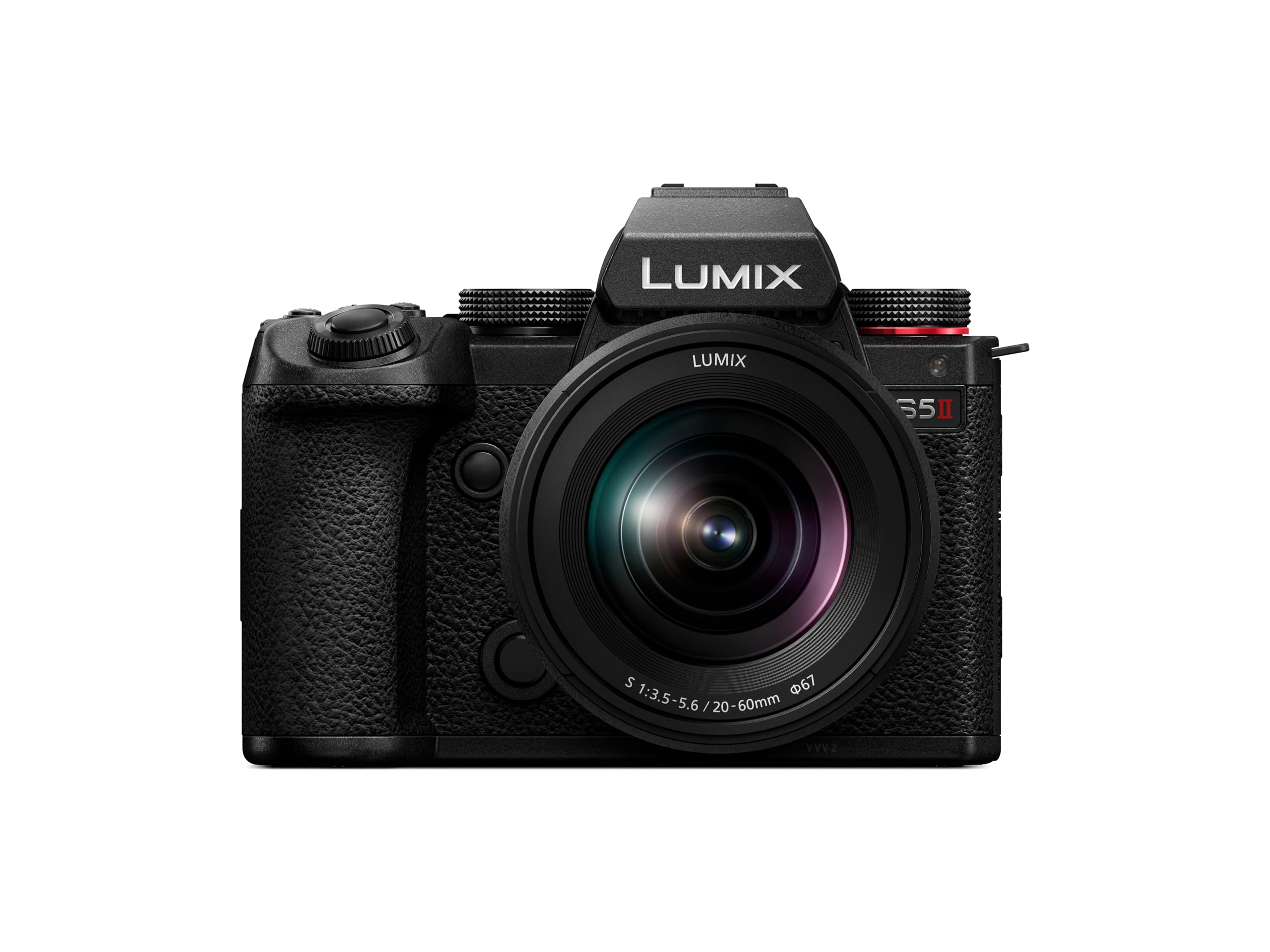
The Panasonic S5II marks a watershed moment for the L-mount system by finally introducing phase-detection autofocus alongside the brand’s legendary stabilization. The 24.2MP full-frame sensor captures 6K 30p Open Gate footage with a 3:2 ratio, letting you reframe in post for vertical and square deliverables. Unlimited 4:2:2 10-bit recording via the internal fan and heat sink means you never hit a recording limit, even in warm environments.
Active I.S. technology uses gyro data to correct walking motion, effectively replacing a gimbal for many shots. The camera includes 14+ stops of V-Log/V-Gamut for wide dynamic range, plus REAL TIME LUT for applying custom color grading in-camera. The 20-60mm f3.5-5.6 kit lens covers a versatile wide-angle to standard focal range, and the L-mount ecosystem now includes lenses from Sigma and Leica.
Battery life is middling at about 250-300 shots per charge with the standard LP-S5 battery, though USB-C PD charging lets you top up between takes. The body is larger than the S5 but still compact for a full-frame. Some users report the rubber port covers wear quickly, and high ISO above 51,200 is noisy. For hybrid shooters who demand stabilization, unlimited video, and reliable autofocus, the S5II is a powerhouse.
Why it’s great
- Active I.S. eliminates the need for a gimbal in many scenarios.
- Internal fan enables unlimited 10-bit 4K recording.
- Phase hybrid AF finally solves Panasonic’s autofocus gap.
- Open Gate 6K allows versatile reframing in post.
Good to know
- Battery life is average for a full-frame mirrorless.
- No built-in flash.
- Ergonomics are boxy and the finish scratches easily.
4. Blackmagic Design Pocket Cinema Camera 6K G2

The Blackmagic Pocket Cinema Camera 6K G2 offers the same Super 35 sensor and 13 stops of dynamic range as the original 6K Pro but with a tilting 5-inch touchscreen and a more refined handgrip. It records natively at 6144 x 3456 resolution and supports 12-bit Blackmagic RAW up to 60fps, plus Apple ProRes for lighter editing workflows. The EF lens mount lets you use Canon glass and cheap vintage lenses without adapters, making custom rigging simple.
Audio features are outstanding: two mini-XLR inputs with phantom power, a 3.5mm line input, and a headphone jack mean you can capture clean dialogue with professional microphones directly into the camera. The included DaVinci Resolve Studio license provides a complete color grading and editing pipeline. Dual gain ISO up to 25,600 keeps noise manageable in low light.
The NP-F570 battery will last only about 45 minutes in 4K, making external V-mount or NP-F battery plates almost mandatory for serious shoots. There is no in-body stabilization and no active autofocus, so this camera is best suited for tripod, gimbal, or manual-focus productions. Raw file sizes are enormous and demand fast CFast or SSD storage. For narrative filmmakers who want a true cinema camera on a budget, the 6K G2 delivers unmatched image quality.
Why it’s great
- Records 12-bit Blackmagic RAW and ProRes in-camera.
- Dual mini-XLR inputs with phantom power for pro audio.
- EF mount opens up vast and affordable lens options.
- Includes full DaVinci Resolve Studio license.
Good to know
- Short battery life requires external power solution.
- No IBIS or continuous autofocus.
- Large RAW files need fast CFast cards or SSDs.
5. Canon EOS 5D Mark IV Body Only
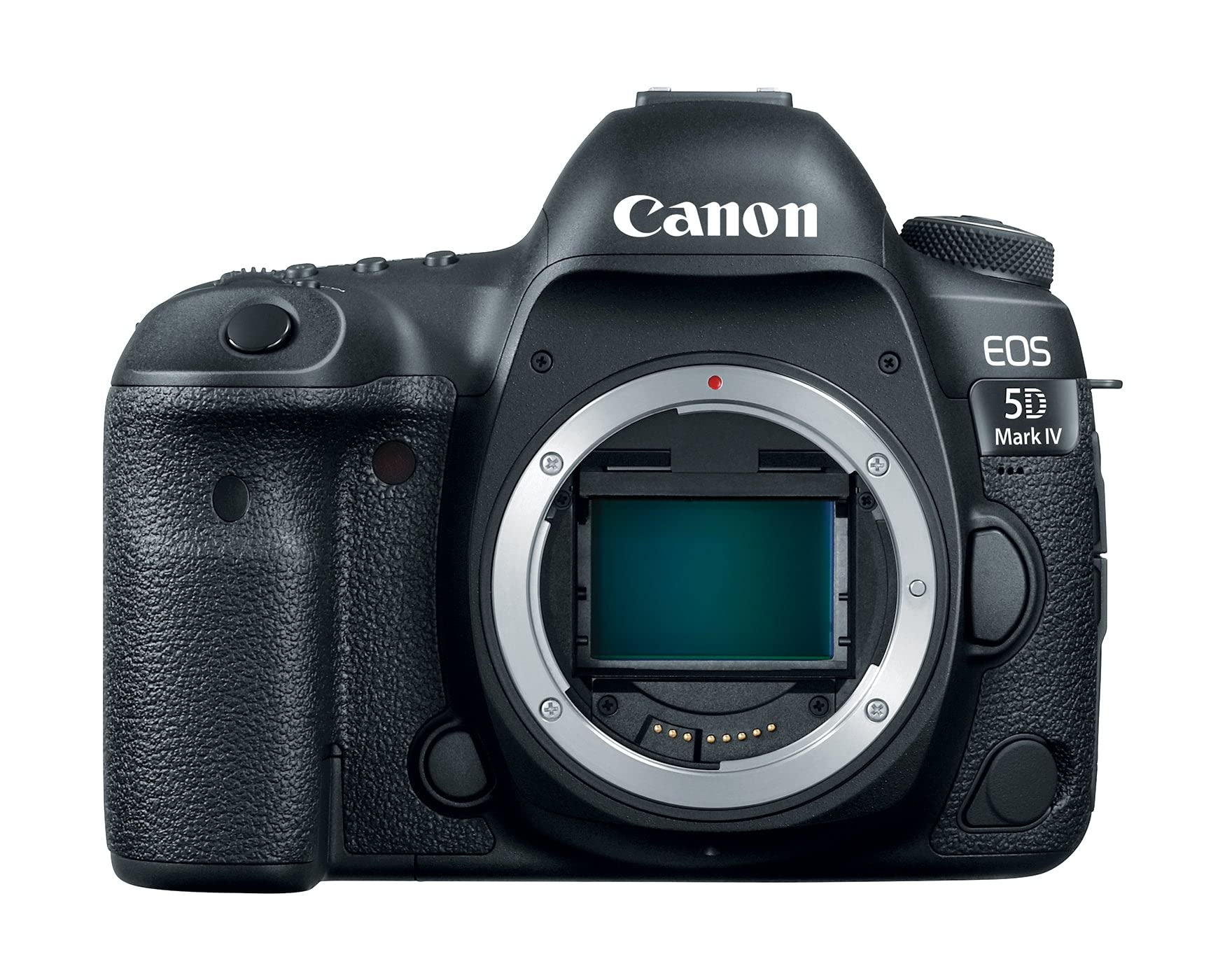
The Canon EOS 5D Mark IV remains a benchmark DSLR for professionals who need reliable stills performance with video capability. The 30.4MP full-frame CMOS sensor and DIGIC 6+ processor deliver exceptional image quality with an ISO range expandable to 102,400. The 61-point high-density reticular AF system plus Dual Pixel CMOS AF provide fast, accurate focus in live view and video mode.
For video, the camera shoots 4K DCI at 24/30fps in Motion JPEG format, which produces massive files compared to modern codecs. Full HD up to 60fps and HD up to 120fps are available for slow motion. Built-in Wi-Fi, NFC, and GPS are useful for location-tagged shoots and file sharing. The body has a durable magnesium alloy chassis with weather sealing that has been field-tested by professionals for years.
The 4K Motion JPEG codec creates huge file sizes (around 600MB per minute) and shows a 1.74x crop factor, which limits wide-angle applications. There is no IBIS and no flip-out screen, and the 3.2-inch fixed touchscreen is not vari-angle. For photographers who want occasional high-quality 4K video and need a tank-like body with proven reliability, the 5D Mark IV is still a compelling tool.
Why it’s great
- Excellent dynamic range and low-light performance.
- Dual Pixel CMOS AF provides smooth video autofocus.
- Built-in GPS and Wi-Fi for on-location tagging.
- Rugged weather-sealed magnesium alloy body.
Good to know
- 4K has a 1.74x crop and uses large Motion JPEG files.
- No vari-angle screen or IBIS.
- GPS drains the battery quickly.
6. Canon EOS RP Full-Frame + RF24-105mm Lens

The Canon EOS RP offers one of the most affordable entry points into full-frame mirrorless photography and video. The 26.2MP full-frame sensor paired with the DIGIC 8 processor delivers beautiful color science and excellent low-light performance, especially when compared to APS-C alternatives. The RF 24-105mm f4-7.1 IS STM kit lens provides optical stabilization and a versatile zoom range perfect for everyday shooting.
Video quality is strong at 1080p with Dual Pixel CMOS AF providing reliable face detection, which is excellent for vloggers. The camera body itself is lightweight at only 485g, and the vari-angle touchscreen allows creative framing from high and low angles. EOS Utility Webcam Beta support turns it into a high-quality video conferencing camera without extra software.
The 4K mode has a 1.6x crop factor and is limited to 30fps with no audio monitoring jack. The LP-E17 battery provides about 250 shots, so a spare battery is essential for day trips. For photographers upgrading from a crop-sensor DSLR who want stunning stills and decent 4K video, the RP kit is a fantastic value.
Why it’s great
- Lightest full-frame mirrorless with versatile kit lens.
- Beautiful color science and high-ISO performance.
- Vari-angle touchscreen works well for vlogging.
- USB-C can power and charge the camera.
Good to know
- 4K has a heavy 1.6x crop and no audio monitoring.
- Small battery with limited endurance.
- Limited dynamic range compared to price-adjacent cameras.
7. Blackmagic Design Pocket Cinema Camera 4K

The Blackmagic Pocket Cinema Camera 4K democratized cinema-quality video when it launched, and it remains a favorite among indie filmmakers for its 13 stops of dynamic range and dual native ISO (400 and 3200). The 4/3-type image sensor with an active MFT lens mount records 4K DCI at up to 60fps in 12-bit Blackmagic RAW or 10-bit ProRes. The 5-inch touchscreen is bright and responsive, eliminating the need for an external monitor in most setups.
Audio capture is a strong suit: the camera includes a mini XLR input (with 48V phantom power), a 3.5mm microphone input, and a headphone jack, giving you professional sound recording right out of the box. The USB-C port supports external SSD recording, which keeps media costs much lower than CFast cards. The included DaVinci Resolve Studio activation key provides a full professional post-production workflow.
There is no in-body stabilization and no autofocus beyond one-shot for stills, so this camera demands manual focusing skill and a stabilized support system. The LP-E6 batteries last roughly 45 minutes in 4K, so external power is a must for extended shoots. Beginners should also budget for a cage and external monitor if they need advanced assist features. For filmmakers who prioritize image quality over convenience, the Pocket 4K is still unbeatable at this price.
Why it’s great
- Records 12-bit Blackmagic RAW and 10-bit ProRes.
- Dual native ISO provides clean high-ISO images.
- USB-C SSD recording saves on media costs.
- Professional mini XLR audio input with phantom power.
Good to know
- No IBIS or continuous autofocus.
- Short battery life demands external power.
- MFT mount crop factor affects wide-angle use.
8. Sony FDR-AX43 UHD 4K Handycam Camcorder

The Sony FDR-AX43 is a dedicated camcorder designed for families and event videographers who want a simple point-and-shoot experience without compromising on 4K quality. Its 1/2.5-inch Exmor R CMOS sensor and BIONZ X processor deliver true-to-life 4K video with the help of a Balanced Optical SteadyShot stabilizer that mimics a built-in gimbal. The 20x optical zoom (30x Clear Image Zoom in 4K, 40x in HD) brings distant subjects close without losing resolution.
The ZEISS Vario-Sonnar T wide-angle lens starts at 26.8mm, giving you a decent field of view for group shots and landscapes. Fast Intelligent AF keeps moving subjects in focus, and the built-in Wi-Fi and NFC allow easy file transfer and remote control via a smartphone. The camcorder has a 3-inch touchscreen and an electronic viewfinder for bright-light shooting.
The FDR-AX43 has no internal memory and requires a UHS-I SD card. The included battery pack is large and sticks out from the back, making the camera somewhat awkward for use with a selfie stick. The date/time reset issue when the battery is removed is a known annoyance. For shooters who value a long zoom, reliable stabilization, and simple operation over interchangeable lens flexibility, the AX43 is a solid choice.
Why it’s great
- 20x optical zoom provides incredible reach.
- Balanced OIS stabilizes handheld footage effectively.
- Intuitive camcorder ergonomics for beginners.
- Built-in Wi-Fi and NFC for easy sharing and remote control.
Good to know
- Date/time resets when the battery is removed.
- No internal memory, requires an SD card.
- Large battery design is awkward for selfie-stick use.
9. Nikon Z 30 with 16-50mm Wide-Angle Zoom Lens

The Nikon Z 30 was built from the ground up for vloggers and streamers. Its DX-format 20.9MP sensor and EXPEED 6 processor deliver sharp 4K UHD video at 30fps, oversampled from a wider readout for enhanced detail. The flip-out 3-inch touchscreen is flush against the top plate when turned toward the user, so it never blocks the hot shoe. Eye-tracking autofocus works reliably for both humans and pets, keeping your face in focus even during movement.
The built-in stereo microphone has adjustable sensitivity and a red REC tally light that makes it obvious when recording has started. Live streaming is plug-and-play: Full HD 60p over USB-C, 4K 30p over HDMI, and the camera can draw constant power via USB-C for marathon streams. The 16-50mm f3.5-6.3 VR kit lens is compact and optically stabilized, making it an excellent walk-around companion.
There is no electronic viewfinder, which may be a dealbreaker for those who prefer eye-level framing in bright sunlight. The Z 30 also lacks a headphone jack for audio monitoring, and its 4K video is limited to 30fps with no 10-bit internal recording. For creators who live in front of the lens and need a lightweight, socially-optimized camera, the Z 30 is hard to beat.
Why it’s great
- Flip-out screen is flush with camera body when facing front.
- USB-C power and data for streaming and charging.
- Compact and lightweight for all-day vlogging.
- Eye-tracking AF is reliable for people and animals.
Good to know
- No viewfinder for bright sunlight shooting.
- No headphone jack for audio monitoring.
- 4K is limited to 30fps with 8-bit color.
10. Panasonic LUMIX G85 4K Mirrorless + 12-60mm Lens

The Panasonic LUMIX G85 is a Micro Four Thirds camera that punched above its weight class when it launched and remains a phenomenal value for hybrid shooters. The 16MP sensor (with no low-pass filter) resolves fine detail well, but the real star is the 5-Axis Dual I.S. that combines in-body and lens stabilization, letting you shoot handheld 4K video that rivals gimbal footage. The 12-60mm f3.5-5.6 Power O.I.S. kit lens is sharp and versatile, covering an effective 24-120mm range.
The camera offers 4K 24/30p video, plus Panasonic’s exclusive 4K Photo mode allows you to extract 8MP stills from 30fps bursts. The exposure tools include zebras, peaking, and a built-in waveform monitor, which is rare at this price. The magnesium-alloy front chassis is splash and dust resistant, and the articulated touchscreen makes creative framing easy. A 3.5mm microphone input is present, allowing better audio than most entry-level cameras.
The 49-point contrast-detect autofocus system can hunt in low light or during 4K video, and the camera lacks a headphone jack. The battery is rated for about 320 shots, so a second pack is recommended for a full day of video work. For budget-conscious filmmakers who prioritize video stabilization and build quality, the G85 remains a hidden gem.
Why it’s great
- Dual I.S. provides gimbal-like stabilization.
- Weather-sealed magnesium alloy body is well-built.
- Includes a versatile 12-60mm kit lens with OIS.
- 3.5mm mic input for better audio than basic cameras.
Good to know
- Contrast-detect AF hunts in low light.
- No headphone jack for audio monitoring.
- Battery life is average for video work.
11. Canon EOS R100 Mirrorless + RF-S 18-45mm Kit

The Canon EOS R100 is the smallest and lightest body in the EOS R series, making it a perfect entry point for beginners who want to learn on the RF mount system. The 24.1MP APS-C CMOS sensor with DIGIC 8 captures excellent stills with natural bokeh, and the kit RF-S 18-45mm f4.5-6.3 IS STM lens covers a standard zoom range with optical image stabilization. Dual Pixel CMOS AF covers 143 zones with human face and eye detection, providing reliable focus in live view and video.
Video capabilities include 4K UHD at 24fps, Full HD at 60fps, and HD at 120fps for slow-motion. The camera supports Wi-Fi and Bluetooth for easy image transfer to a smartphone. The ergonomics are solid for a camera this size, with a deep grip and clear quick menu layout that makes learning photography intuitive. Continuous shooting reaches 6.5fps with One-Shot AF, fast enough for capturing action.
The 4K video is cropped and has no headphone jack or microphone input, making it a poor choice for serious audio-video projects. The 2.36-million dot EVF is serviceable but dim compared to more expensive models. There is no vari-angle touchscreen, which restricts vlogging and overhead shots. For a beginner who wants to build a lens library for the Canon RF system without breaking the bank, the R100 is a solid foundation.
Why it’s great
- Smallest and lightest body in the Canon RF system.
- Dual Pixel CMOS AF is fast and reliable.
- Good continuous shooting speed of 6.5fps.
- Easy wireless image transfer via Wi-Fi and Bluetooth.
Good to know
- No microphone jack or headphone port.
- 4K video has a 1.5x crop factor.
- Fixed screen, not vari-angle.
FAQ
What is the minimum audio input I need in an audio video camera?
Should I choose a full-frame or APS-C sensor for video?
Final Thoughts: The Verdict
For most users, the best audio video camera winner is the Sony FX30 because it delivers cinema-grade color science, professional audio inputs, and robust stabilization in a compact body built for demanding hybrid work. If you want unmatched stabilization and unlimited 10-bit video, grab the Panasonic S5II with its fan-cooled recording engine. And for narrative filmmakers prioritizing RAW flexibility and dual XLR audio, nothing beats the Blackmagic 6K G2.