
A four-season tent is not simply a three-season tent with thicker fabric. The difference lies in the structural engineering: snow-load-rated pole geometry, reinforced struts, full-coverage rainflies that extend to the ground, and closedable vents that prevent spindrift from entering while you sleep. Choosing wrong means waking up to a collapsed pole or a sleeping bag soaked by condensation, which can turn a winter trip into a survival situation before sunrise.
I’m Min — the co-founder and writer behind Gadgets Feed. I’ve spent years researching mountaineering shelters and analyzing the material science that separates storm-worthy gear from fair-weather gear, from hydrostatic head ratings to pole-hub articulation..
The right shelter balances packed weight against livable interior volume and wind-shedding geometry. After evaluating fabric denier, pole architecture, vestibule design, and real-world storm reviews, here is a clear breakdown of the best 2 person 4 season tent options available today.
How To Choose The Best 2 Person 4 Season Tent
Choosing a mountaineering tent for two people involves more than reading the season rating on the tag. Four-season tents are built to handle snow accumulation, high winds, and freezing temperatures that would snap the poles of a three-season shelter. The key factors are pole material and gauge, fabric denier and waterproof coating, floor construction, and the effectiveness of the ventilation system when the fly is fully sealed against the elements.
Pole Architecture and Snow Load Resistance
The pole system determines how much snow the tent can bear before collapsing. Look for DAC aluminum poles with a larger diameter (9.0mm or above) and a crossing geometry that creates a shallow dome. A four-way hub design increases headroom but also creates a stress point that must be reinforced. Freestanding designs are preferred for winter camping because you can pitch the tent on snow platforms without staking into frozen ground.
Fabric, Waterproofing, and Condensation Management
Winter tents trap body heat and moisture inside, creating condensation that freezes on the inner walls overnight. A good four-season tent uses a double-wall construction — an inner mesh layer and a separate fly — to allow moisture to escape while keeping precipitation out. Look for a fly with a 3000mm hydrostatic head rating minimum and a 5000mm floor coating to prevent meltwater from seeping through the bathtub floor when you sleep on snow.
Vestibule Space and Interior Volume
In winter conditions, you need space inside the tent to store boots, cook gear, and dry out layers. Two vestibules are ideal — one on each side — so both occupants can access their packs without crawling over each other. Interior height above 42 inches allows you to sit upright to change layers, and a floor area of at least 30 square feet keeps two sleeping pads from overlapping.
Quick Comparison
On smaller screens, swipe sideways to see the full table.
| Model | Category | Best For | Key Spec | Amazon |
|---|---|---|---|---|
| ALPS Mountaineering Tasmanian 2P | True 4-Season | Heavy winter camping | 5000mm floor coating | Amazon |
| Big Agnes Copper Spur HV UL2 | Ultralight 4-Season | Backpacking in snow | 3 lbs 2 oz trail weight | Amazon |
| Naturehike Massif Hot Tent | Hot Tent | Winter stove camping | Stove jack included | Amazon |
| OneTigris Stella 4 Season | Budget 4-Season | Entry-level winter shelter | 4.8 lb packed weight | Amazon |
| The North Face Stormbreak 2 | 3-Season Rated | Three-season base camping | 75D polyester taffeta | Amazon |
| Kelty Grand Mesa 2P | 3-Season Value | Thru-hiking and car camping | 54 sq ft floor area | Amazon |
| Big Agnes Salt Creek SL 2 | Ultralight 3-Season | Fast-and-light backpacking | 4 lb 7 oz trail weight | Amazon |
| MSR Hubba Hubba NX 2 | Premium 3-Season | Three-season backpacking | 1200mm Durashield floor | Amazon |
| Body Armor 4×4 Sky Ridge Pike | Rooftop Tent | Overland vehicle camping | 280gsm ripstop canvas | Amazon |
In‑Depth Reviews
1. ALPS Mountaineering Tasmanian 2-Person Tent

The ALPS Mountaineering Tasmanian is one of the few tents at this price point built with a genuine four-season construction. The 5000mm polyurethane coating on the floor is double the industry standard for three-season tents, which means meltwater from snow platforms won’t wick through the bathtub floor during the night. The full-coverage rainfly extends to the ground and includes closable vents that seal against spindrift, a detail often missing in tents that claim a four-season rating but lack a true storm fly.
Setup is freestanding with shock-corded aluminum poles that clip over the tent body rather than threading through sleeves, cutting setup time to under five minutes even with cold-stiffened hands. The 46-inch center height is generous for a two-person shelter, allowing both occupants to sit upright while changing layers. The two vestibules provide 20 square feet of covered storage between them, enough to keep boots, packs, and cooking gear dry and separate from the sleeping area.
Real-world feedback from users who have camped in 8°F snow, Scottish Highland gales, and Yosemite winter conditions confirms the Tasmanian sheds wind and resists snow loading effectively. At 7 pounds 15 ounces, it is not an ultralight backpacking tent — it is designed for car camping, basecamp setups, or short winter hikes where durability matters more than grams. The zippered windows and vents allow cross-ventilation when the fly is sealed, reducing the condensation that plagues lesser four-season designs.
Why it’s great
- 5000mm floor coating handles snowmelt and puddles
- Two vestibules provide separate gear storage for each occupant
- Freestanding dome sheds wind from all directions
Good to know
- Heavier than dedicated backpacking tents
- Pole sleeves can be tricky to thread in low light
2. Big Agnes Copper Spur HighVolume UL2 Tent

The Big Agnes Copper Spur HV UL2 redefines what a two-person tent can weigh without sacrificing livable volume. The high-volume hub design uses a four-way DAC pole hub that creates near-vertical sidewalls, giving each occupant 88 inches of length and a peak height that allows sitting upright without brushing the fly. The trail weight of 3 pounds 2 ounces makes it a viable option for winter backpackers who need to shave every half-pound from their pack but still want a shelter that can handle snow loads.
The awning-style vestibules can be propped open with trekking poles (not included) to create covered cooking and gear-prep space, which is particularly valuable in wet snow conditions. The TipLok tent buckle integrates pole capture, rainfly attachment, and stake-out into a single point, reducing the number of fumbling moments when setting up in sub-freezing temperatures. The included mtnGLO LED lighting system provides enough light for reading and organizing gear without requiring a headlamp that blinds your tentmate.
Users have reported surviving 60–70 mph dust storms with the Copper Spur, keeping 90 percent of sand and debris out, though the awning-to-rain-roof conversion proved leaky in wind-driven rain. The ultralight 20D nylon double ripstop fabric is thin by four-season standards — this tent is best suited for shoulder-season mountaineering and three-season backpacking rather than full-winter expeditions. The 8 included DAC stakes are sufficient for calm conditions, but a 12-stake configuration is recommended for severe weather.
Why it’s great
- Ultralight packed weight for a two-person shelter
- Near-vertical walls maximize usable headroom
- Dual vestibules with awning conversion
Good to know
- Thin 20D fabric requires careful site selection
- Awning mode can leak in sustained wind-driven rain
3. Naturehike Massif Hot Tent with Stove Jack

The Naturehike Massif is a hot tent with a stove jack that allows you to use a wood-burning or gas stove inside the shelter, a feature that transforms winter camping from a cold endurance exercise into a comfortable overnight experience. The tent body uses 70D nylon with a 3000mm waterproof coating on the fly, and the bathtub floor prevents meltwater from seeping through when snow melts underneath. The separate hall and vestibule design gives you 89 square feet of total covered space, which is enormous for a two-person shelter.
The included aluminum alloy 7001 poles are thicker than the standard 7000-series found in many budget tents, providing better wind resistance in exposed alpine sites. The two ventilation windows and breathable mesh inner tent work together to minimize condensation when the stove is running — a common failure point in hot tents where moisture from breathing and cooking has no escape route. The snow skirt runs around the entire perimeter, blocking drafts and preventing snow from being blown underneath the fly.
User feedback highlights the tent’s ability to retain heat and stay stable in snow without guy lines, though the vestibule ceiling is low enough that taller users will hit their heads when sitting. The inner tent floor seeped moisture from damp grass in one user’s experience, suggesting a groundsheet is advisable for wet conditions. At 10.5 pounds packed weight, this tent is best suited for car camping and short winter hikes rather than multi-day backpacking trips.
Why it’s great
- Stove jack enables comfortable winter camping with a wood stove
- Massive 89 sq ft of total covered space
- Snow skirt prevents spindrift and blocks drafts
Good to know
- Heavy at 10.5 pounds; not for backpacking
- Low vestibule ceiling limits sitting height
4. OneTigris Stella 4 Season Camping Tent

The OneTigris Stella is a lightweight four-season tent that weighs 4.8 pounds, making it one of the lightest entry-level options for winter camping. The 20D nylon outer fabric with a single-layer silicone coating provides a 3000mm hydrostatic head, sufficient for heavy rain and moderate snow loads. The dome geometry uses two crossing poles anchored at four corners, a classic design that sheds wind efficiently when properly guyed out.
User reports confirm the Stella survived 30–40 mph winds and experienced no leaks or structural damage, though condensation control was noted as a weak point when all the doors were closed. The single vestibule is small — adequate for a pair of boots but not for packs or cooking gear. The packed size of 21.7 by 6.3 inches fits into most backpacking packs without dominating the internal volume.
The inner mesh tent provides decent airflow in moderate conditions, but the lack of side mesh vents means the interior gets hot quickly when the fly is fully sealed. Taller users over 6 feet will find the 45-inch peak height restrictive when sitting upright. At this price, the Stella delivers genuine four-season capability in a lightweight package, but the trade-offs in ventilation and vestibule space are real.
Why it’s great
- Light enough for winter backpacking
- Tested in 30–40 mph winds without failure
- 3000mm waterproof rating handles heavy rain
Good to know
- Condensation builds when fully sealed
- Vestibule is too small for gear storage
5. The North Face Stormbreak 2 Tent

The North Face Stormbreak 2 is officially rated as a two-season tent, which means it is designed for mild-weather camping rather than winter mountaineering. The 75D polyester taffeta fabric on both the canopy and fly provides good abrasion resistance for base camp use, and the fully seam-taped construction keeps water out during rainstorms. The high-low ventilation openings allow for decent airflow, reducing condensation buildup during cool nights.
The twin-zip vestibules provide covered gear storage on both sides, which is a rare feature at this price point and makes the tent practical for two people who want separate access to their packs. The mesh stuff pockets on the doors keep the entryways clear during setup, a small detail that improves usability in low-light conditions. At 5 pounds 14 ounces trail weight, it is competitive with heavier backpacking tents but lacks the pole strength to handle significant snow loads.
Users consistently praise the Stormbreak 2 for its easy setup and robust build quality for its category. The tent kept users dry in heavy rain on the first night of use, and multiple reviewers noted it fits two people comfortably without feeling cramped. However, this tent is not a substitute for a four-season shelter — attempting to use it in winter conditions with significant snowfall or high winds risks pole failure.
Why it’s great
- Twin-zip vestibules on both sides for balanced storage
- Easy setup with color-coded clips
- Durable 75D polyester resists tears and abrasion
Good to know
- Two-season rating limits use to mild weather
- Not designed for snow loads
6. Kelty Grand Mesa 2P Backpacking Tent
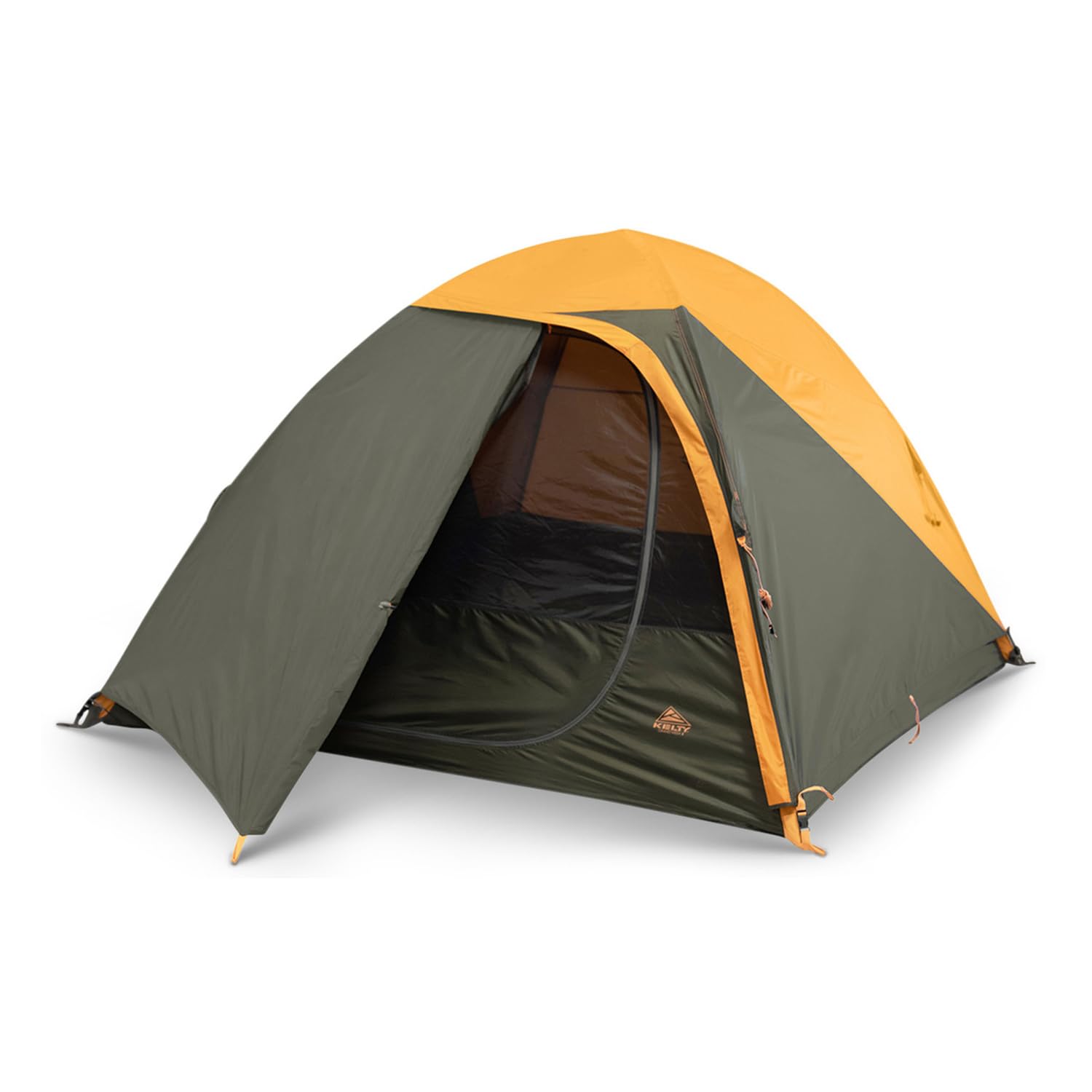
The Kelty Grand Mesa 2P is a three-season tent that prioritizes living space without excessive weight. With a floor area of 54 square feet — significantly larger than most two-person tents — it provides enough room for two 25-inch-wide sleeping pads side by side plus gear at the foot. The 56-inch peak height is generous, allowing both occupants to sit upright without brushing the ceiling.
The freestanding dome design uses two aluminum pressfit poles that set up in under five minutes, aided by Kelty’s Quick Corner system that holds the poles in place during assembly. The color-coded clip and fly attachments make setup intuitive even in low light, and the EZ-Zip vestibule provides covered gear storage outside the main sleeping area. The packed size of 18 by 7.5 inches is manageable for backpacking, though the tent is bulkier than dedicated ultralight models.
Users report the Grand Mesa survived sideways rain without leaking, and the bathtub floor design kept moisture out even on wet ground. The vestibule provides enough space for boots and a small pack, but a second vestibule would improve the two-person experience. Some users noted the zippers required a break-in period to operate smoothly. This tent is best for three-season conditions; it lacks the pole gauge and snow-shedding geometry needed for heavy winter loads.
Why it’s great
- Spacious 54 sq ft floor fits two adults comfortably
- Quick Corner system speeds up setup in windy conditions
- Bathtub floor with taped seams resists ground moisture
Good to know
- Single vestibule limits gear storage options
- Not built for snow loads
7. Big Agnes Salt Creek Superlight 2 Tent
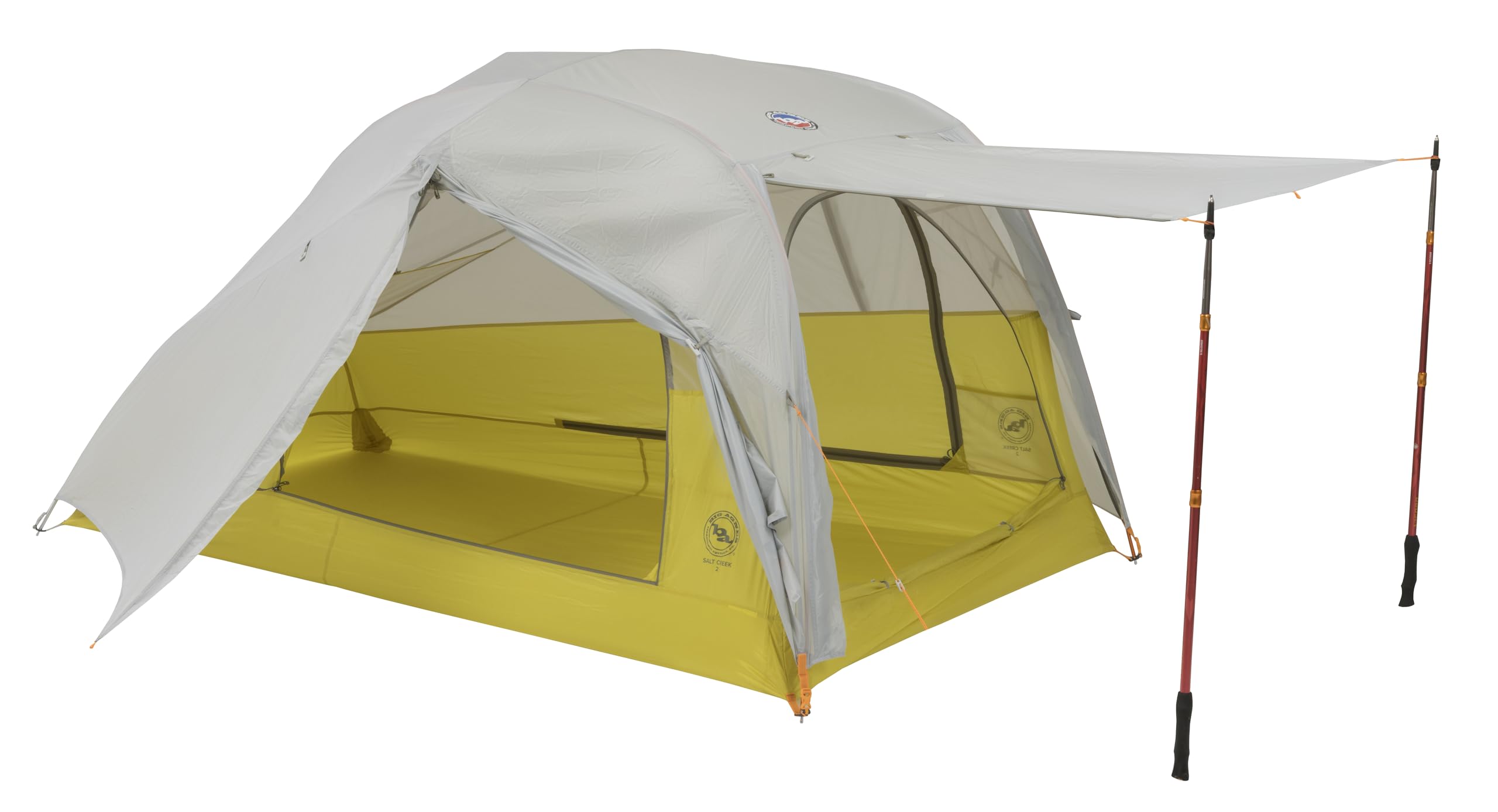
The Big Agnes Salt Creek Superlight 2 is a three-door, two-vestibule backpacking tent that pushes the boundary of livable weight. The three-door configuration — two side doors plus a head-entry door with an awning entrance — provides exceptional access for both occupants without crawling over each other. The proprietary TipLok tent buckle streamlines pole capture and rainfly attachment, reducing setup time in wet conditions.
The 20D polyester ripstop fabric keeps the trail weight at 4 pounds 7 ounces, making it competitive with many two-person tents while providing significantly more interior volume. The 3D shelf in the foot area uses unused space above your feet for gear storage, and the four interior mesh pockets plus a ceiling pocket help keep small items organized. The low vent feature on the vestibule doors allows airflow even with the fly fully attached, helping to manage condensation.
User feedback is mixed on durability — while the materials and DAC pole construction are high quality, the 1500mm hydrostatic head rating on the floor is lower than a true four-season tent. Some users reported failed stakes and a ripped rainfly after limited use. The thin fabric requires careful site selection and a footprint (sold separately) to protect the floor from punctures. This tent is ideal for fast-and-light backpacking in moderate conditions but is not designed for winter camping.
Why it’s great
- Three-door design eliminates crawling over tentmates
- Very lightweight for the interior volume
- Awning entrance creates a covered porch area
Good to know
- 1500mm floor coating is low for wet snow conditions
- Thin fabric requires careful site prep and footprint
8. MSR Hubba Hubba NX 2 Tent
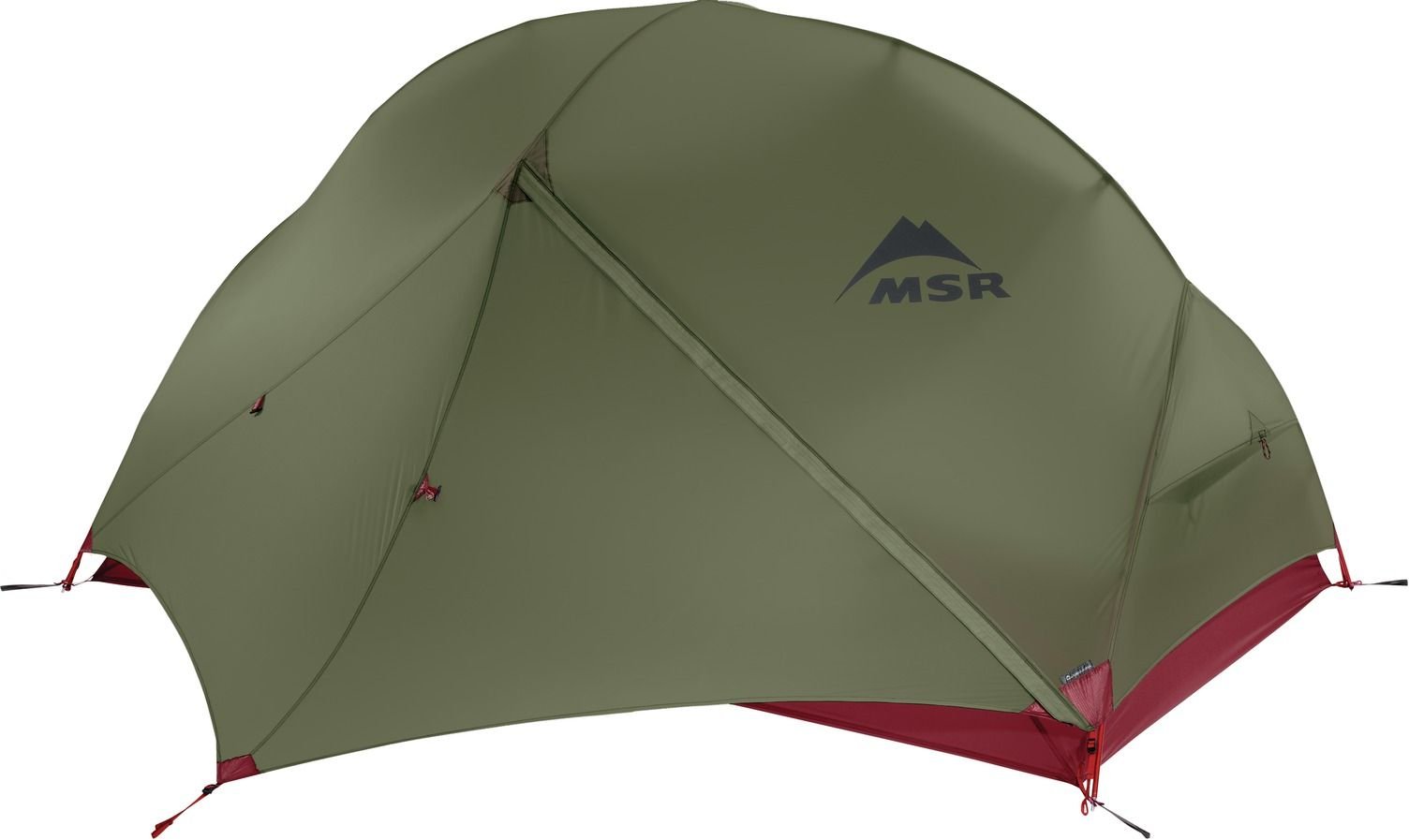
The MSR Hubba Hubba NX 2 is a three-season backpacking tent that has earned a reputation for reliability over years of production. The ripstop 20D nylon with 1200mm Durashield coating on the floor provides adequate waterproofing for rain and wet ground, but the 1200mm rating is below the threshold for standing snowmelt. The hexagonal shape balances interior space with wind-shedding capabilities, making it a solid choice for exposed ridge camps in treeless terrain.
The pole system uses DAC aluminum poles in a three-pole crossing configuration that creates a stable dome without excessive weight. The single door and vestibule keep the packed weight low at 3.3 pounds, making the Hubba Hubba one of the lightest two-person tents in its class. The interior dimensions fit two standard sleeping pads with room for gear at the head and foot, though larger users may find the 48-inch floor width snug for two 25-inch pads.
User reviews consistently praise the tent’s straightforward setup and weather resistance in three-season conditions. The inner tent pitches first, which can be inconvenient in continuous rain — a common complaint among users in wet climates. At a premium price point, the Hubba Hubba delivers refined design and proven performance, but its three-season rating means it should not be relied upon in winter conditions with significant snow accumulation.
Why it’s great
- Proven three-season design with reliable weather resistance
- Very lightweight at 3.3 pounds packed
- DAC poles provide excellent strength-to-weight ratio
Good to know
- Three-season rating unsuitable for winter use
- Inner-first pitch leaves rainfly exposed during setup
9. Body Armor 4×4 Sky Ridge Pike 2-Person Tent

The Body Armor 4×4 Sky Ridge Pike is a rooftop tent designed for overland vehicle camping, not ground-based backpacking. The 280gsm ripstop reinforced polyester/cotton canvas with polyurethane coating provides 2000mm waterproofing, while the separate rainfly uses 420D Oxford fabric with 2500mm coating. This dual-layer approach ensures the tent interior stays dry even in sustained rain, and the heavy-duty 1200D PVC travel cover protects the folded tent during transit.
The sky view window and three large mesh-covered windows provide natural light and ventilation while keeping insects out. The included telescoping ladder supports user weights up to 175 pounds without excessive flex, and the 3-inch memory foam mattress offers significantly more comfort than ground pads. Setup requires two people for the initial installation on roof crossbars, but once mounted, the clamshell design unfolds in minutes.
User feedback over 25-plus nights confirms the tent remains dry in heavy rain and holds up well in wind. The ladder is stable but requires level ground to prevent wobbling. At this premium price point, the Sky Ridge Pike is a complete overland solution for two people who want to sleep off the ground in all seasons, but it is not a backpacking tent and requires a vehicle with roof rails to function.
Why it’s great
- Durable canvas construction with high waterproof ratings
- Memory foam mattress provides superior sleeping comfort
- Sky view window and mesh windows offer good ventilation
Good to know
- Requires vehicle roof rails and two-person installation
- Heavy and bulky; not for backpacking
FAQ
Can I use a four-season tent in the summer without overheating?
What is the minimum floor area for two adults in a winter tent?
How much snow load can a four-season tent typically handle?
Final Thoughts: The Verdict
For most users, the best 2 person 4 season tent winner is the ALPS Mountaineering Tasmanian 2-Person because it combines genuine four-season construction with a 5000mm floor and two vestibules at a price that undercuts dedicated mountaineering brands. If you want an ultralight shelter for winter backpacking, grab the Big Agnes Copper Spur HV UL2. And for car camping with a wood stove in deep snow, nothing beats the Naturehike Massif Hot Tent.