
Our readers keep the lights on and my morning glass full of iced black tea. As an Amazon Associate, I earn from qualifying purchases.
Specs are compiled from manufacturer listings and verified buyer reviews and can change over time — please confirm the key details on the product page before buying.
You want a backpacking down blanket that keeps you warm without hogging your pack. A good one compresses to loaf-of-bread size while still delivering a warm night in cool conditions. A poor one is heavy, loses loft quickly, and consumes valuable pack volume. The deciding factors are fill power, total weight, and compressed size. Below are the actual specs and verified owner insights.
I’m Min — the founder and writer behind Gadgets Feed. This guide is built by comparing the manufacturers’ published specifications and the patterns across verified customer reviews, so you get each pick’s real strengths and trade-offs instead of marketing spin.
Whether you’re thru-hiking or car camping, the backpacking down blanket you choose must balance warmth-to-weight against packability and budget, and this guide breaks down the trade-offs for you.
Our Picks at a Glance


How To Choose The Best Backpacking Down Blanket
A down camping blanket is designed to provide sleeping-bag warmth at a fraction of the weight. But the category spans ultralight summer quilts, three-season workhorses, and near-mummy bags, so the right pick depends entirely on the coldest temperature you actually plan to sleep in.
Fill power: the single number that matters most
Fill power measures how many cubic inches one ounce of down takes up — the higher the number, the more air it traps and the warmer you stay per gram. A 650-fill blanket like the Blue Ridge Activ will feel noticeably fluffier than a 600-fill one (a 8% loft gap), while a premium 850-fill quilt like the Featherstone Moondance packs dramatically smaller for the same warmth.
Weight and pack size: your back will thank you
Each ounce adds up during a full day of hiking. A 1.1-pound throw is a different animal than a 1.5-pound quilt. The stuff sack diameter — whether it’s 10.2 inches folded or compressed to 12.5 inches — determines whether it fits inside your pack or has to hang off the outside.
Temperature rating: know your actual low
Most of these blankets are honest about being 40°F-and-up gear, with only the Featherstone Moondance carrying an ISO-tested 26°F T-Limit rating. If you plan to sleep below freezing, buy a true quilt with pad straps and a draft collar; if you’re a summer camper, a lighter blanket saves you real weight.
Quick Comparison
| Model | Best For | Fill Power | Weight | Dimensions | Amazon |
|---|---|---|---|---|---|
| Get Out Gear Down Blanket★ Best Overall | Budget ultralight all-rounder | 650 | 1.1 lbs | 70″ x 60″ | Amazon |
| Blue Ridge Activ FluffyTravel Pick | Travel-friendly lightweight throw | 650 | 1.1 lbs | 70″L x 60″W | Amazon |
| ONETIGRIS Down BlanketPoncho Pick | Wind-resistant poncho versatility | 600 | 1.5 lbs | 79″L x 55″W | Amazon |
| Gaialoop Down Puffy | Cozy car camping warmth | — | 1.7 lbs | 78″L x 53.1″W | Amazon |
| ZOOOBELIVES Alplive R300 | Hammock and mild-cold use | 650 | 1.35 lbs | 78″L x 54″W | Amazon |
| SnugHug Puffy Blanket | Budget cool-evening versatility | — | 1 lb | 80″L x 54″W | Amazon |
| Kelty Galactic Down | Stadium and campfire warmth | 550 | — | 72″L x 55″W | Amazon |
| Sea to Summit Traveller | Convertible sleeping bag-blanket | 650+ | 1.29 lbs | 77.2″L x 60.6″W | Amazon |
| Featherstone Moondance 25 | Serious cold-weather ultralight | 850 | 1.7 lbs | 90.16″L x 57.87″W | Amazon |
In‑Depth Reviews
1. Get Out Gear Down Camping Blanket
Our pick — 4.5★ from 3,000+ verified ratings; the strongest balance of quality and price.
The crowd favorite that proves ultralight warmth doesn’t need a three-figure price tag.
This is the blanket buyers praise most for quality — the build and materials win people over before they even pack it. At 1.1 pounds and 650 fill power, it’s a full pound lighter than the ONETIGRIS (1.5 lbs) while offering a comparable 650 fill, making it the clear pick for anyone counting every ounce on a thru-hike.
At 70 by 60 inches, this blanket genuinely fits two people, and owners say it packs down small enough to drop into its own stuff sack with room to spare. Buyers report it works beautifully as a hostel blanket too — one hiker on the Camino de Santiago uses it every night and still fits their liner in the same sack, proof that “ultralight” here is real, not just a label.
The main limitation is its warm-weather temperature range.: it’s a warm-weather blanket, not a winter kit. Multiple owners note it needs layering below the low 50s, though one tested it at 33°F with thermal layers and stayed comfortable.
Why owners love it
- Packs tiny with a liner in the same sack
- Big enough for two people at 70″ x 60″
- Versatile enough for home use, not just camping
The warm-weather caveat
- Needs layering below the low 50s
- Stuff sack lacks a pull tab, per some buyers
Grab it if: you want a genuinely light, budget-friendly blanket for warm-weather trips that doubles as a couch throw.
Look elsewhere if: your trips dip below 45°F and you refuse to carry extra layers.
2. Blue Ridge Activ Fluffy 650 Fill Power Throw
A featherlight throw built for the traveler who wants warmth without the baggage.
The most-praised trait here is lightweight — as in 1.1 pounds light, which puts it in a dead heat with the Get Out Gear on the scale. Where it stands out is the responsibly-sourced hydrophobic 650-fill down (75% down, 25% feather) that resists moisture far better than untreated fills, so a little tent condensation won’t collapse the loft.
Buyers have put it through real travel — the review pages sum it up: “I took it on the overnight train with me and it worked perfectly.” At 70 by 60 inches it’s genuinely roomy. Owners mention it works as a darkening partition in a camper van or a cozy wrap for cold-sensitive folks at appointments.
It’s note the warmth ceiling: this is a 50°F-and-up throw, not a winter bag. A few owners found it thinner than expected, ideal for summer camping but not a deep-cold solution.
Real-world verdict: The carry-anywhere blanket — small enough for a suitcase, warm enough for cool nights, and waterproofed down that keeps working when damp. skip it if you’re chasing below-40°F warmth.
3. ONETIGRIS Down Camping Blanket
A cold-weather quilt that buttons into a poncho, so you stay warm hands-free.
The defining feature here is the snap-button poncho conversion — click the sides shut and it becomes a cloak, leaving your hands free for camp chores. That’s a genuine differentiator versus the Get Out Gear, which is strictly a flat quilt. The 20D nylon shell and 300T polyester pongee lining fend off wind, splash, grease, and stains, making it the most weather-resistant pick in the mid-range.
Owners rave about the warmth — the most-praised aspect — with one sleeping outside at 8800 feet in Colorado from June through September, draping it over a cheaper bag as a comforter for most of the fall. At 79 inches long it’s also the longest of the flat blankets, beating the Blue Ridge’s 70 inches for taller sleepers.
The catch is weight and slipperiness. At 1.5 pounds it’s heavier than the 1.1-pound Blue Ridge and Get Out Gear. Some buyers couldn’t keep it on the bed — the fabric slides off during the night, so it’s better as a campfire wrap than a thrash-around sleep blanket.
Reach for this if: you want one piece of gear that works as a blanket, top-quilt, and poncho in temperatures from 46°F to 77°F.
Think twice if: you’re an ultralight purist — the extra ounces and slippery shell are real trade-offs.
4. Gaialoop Down Puffy Blanket
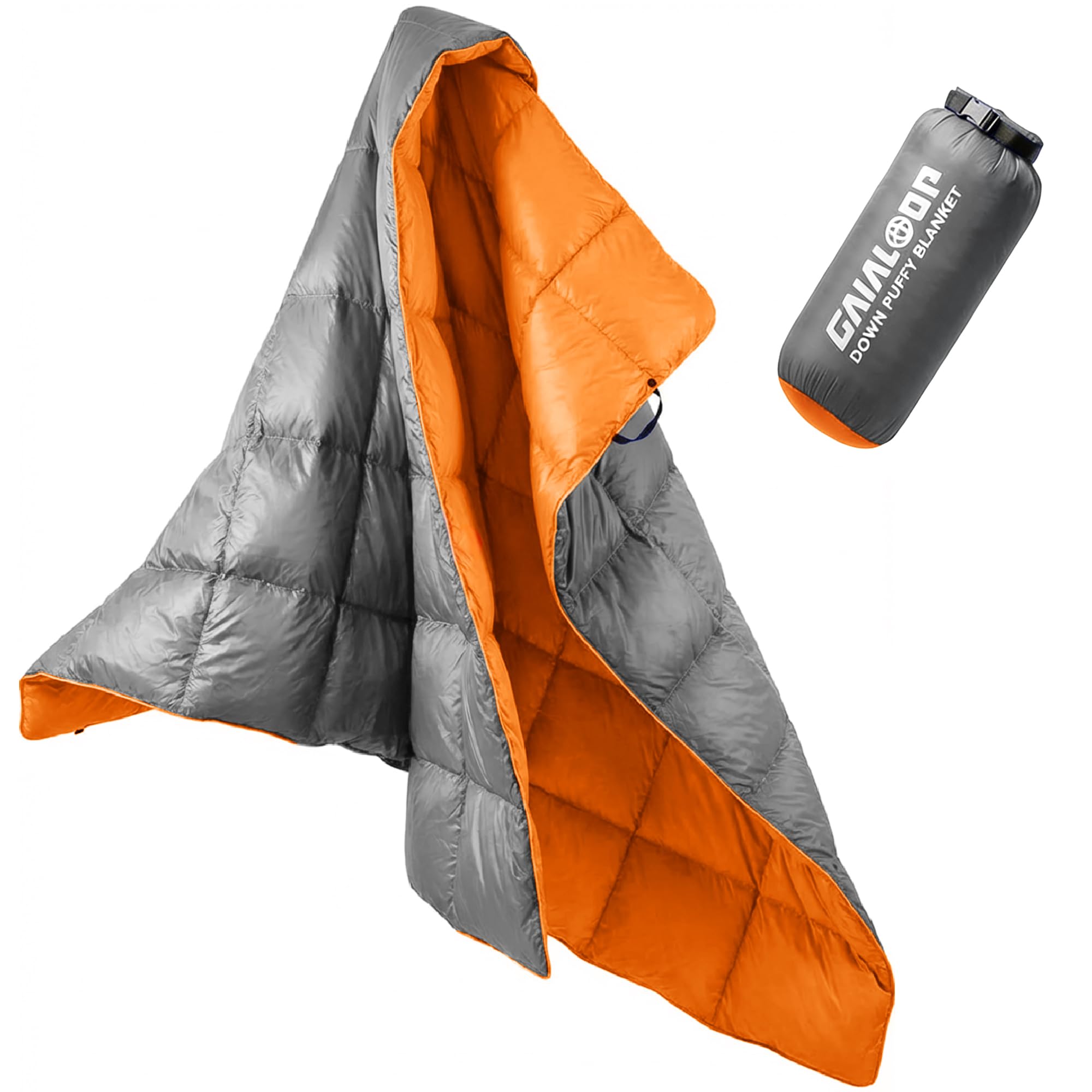
A plush, silky-feeling quilt that leans more car-camp cozy than ultralight.
Warmth is the thing everyone raves about here — owners consistently call it warm and high quality, with the 80% duck down and 20% feather fill doing serious work at temperatures above 41°F. The 78 by 53.1-inch spread is big enough that several customers note it covers two people, and the zone stitching keeps the down from shifting into cold spots.
Reviewers point out the silky 20D nylon and 25D polyester shell feels soft against skin, and it snaps into a poncho for hands-free warmth just like the ONETIGRIS. What wins people over is the value — owners say it rivals pricier options while hitting full loft in about 24 hours.
The fair warning: at 1.7 pounds it’s the heaviest of the mid-range group, and taller users around 6’3″ found it a bit short. The stuff sack buckle is also the recurring weak point, with some owners swapping in a separate 5L compression sack.
Best suited to: car campers and cozy backyard loungers who want a soft, warm quilt and don’t mind extra ounces.
Who should pass: height-challenged backpackers over 6’2″ looking for a true ultralight shelter.
5. ZOOOBELIVES Alplive R300
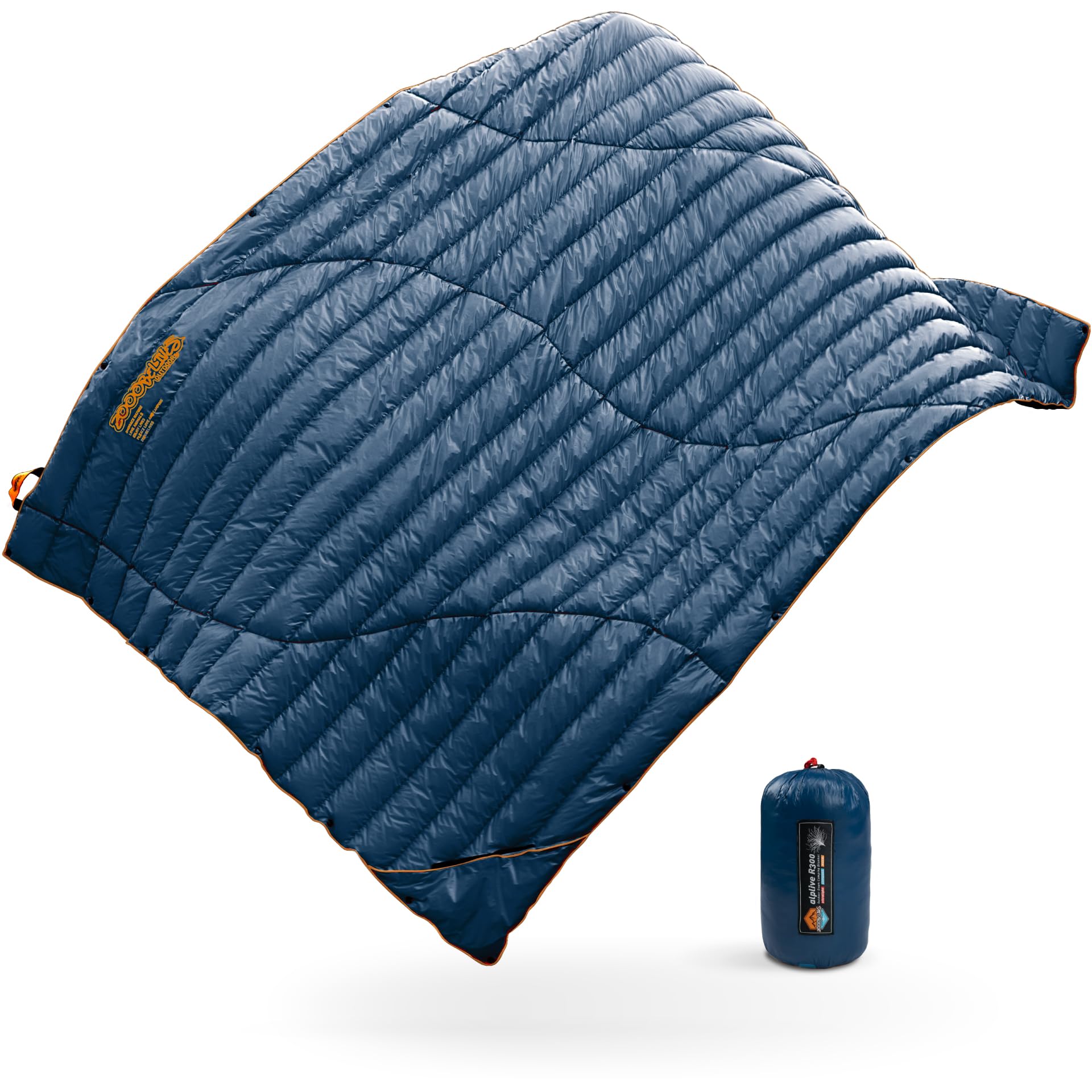
A water-resistant 650-fill quilt that hammock campers swear by for mild nights.
Quality leads the praise here, with warmth a close second — thanks to the 650 fill power water-resistant duck down and the tough 20D ripstop nylon shell with a durable water-repellent finish. At 1.35 pounds and 78 by 54 inches, it threads the needle between the ultralight Get Out Gear and the heavier ONETIGRIS. Shoppers say it compresses into its included 12.5 by 6-inch mesh storage bag, so it disappears into a pack.
The standout feature for hammock users is the corner pocket and hang loops, plus lower snaps that let it fold up like a sleeping bag rather than a flat top quilt. Buyers running it under a 20°F underquilt stayed warm at 60°F, and one van-lifer uses it daily for extra warmth — the mesh bag is praised for keeping the down fluffy between uses.
The honest limit: it’s a 50°F-and-above blanket, and owners advise it’s not for cold-weather hiking — one noted the construction feels slightly less premium than big-name brands.
Bottom line: The best-balanced mid-range option for hammock and mild-cold campers who want water resistance, a real storage system, and a price that undercuts cottage brands.
6. SnugHug Puffy Blanket

A featherweight 1-pound blanket that’s machine washable and packs to almost nothing.
At exactly 1 pound, this is the lightest blanket in the entire lineup — lighter even than the 1.1-pound Get Out Gear — and at 80 by 54 inches it’s also the longest, giving tall sleepers full coverage. The premium nylon shell is water, dirt, and odor resistant, and unlike many down products, it’s machine washable, which solves the care problem that plagues most of the category.
The versatility justifies the mid-range price: buyers report it converts into a hands-free poncho for campfire cooking, and it stuffs into its included water-resistant sack for car-emergency duty or stadium seats. Buyers praise it as a solid sleeping bag alternative for cool evenings, with the snaps allowing neck and poncho configurations.
The catch is warmth consistency: some owners found the fill uneven across squares with under-filled sections, and it takes days to fully loft. It’s a cool-evening blanket, not a winter bag — one review called the warmth underwhelming for colder temps.
Choose it if: you want the absolute lightest, most packable blanket for summer trips and you value being able to throw it in the wash.
Pass it up if: you need reliable below-50°F warmth — the uneven fill makes it a gamble in real cold.
7. Kelty Galactic Down Blanket

A name-brand 100% down throw that trades packability for plush comfort.
Kelty’s reputation for quality camping gear since the 1950s shows here — with 100% traceable down, owners are quick to note this is genuinely all-down, not the sneaky down-blend wording some cheaper blankets use. The 550 fill power is lower than the 650 in the Get Out Gear, so it’s not the fluffiest per ounce, but the 50D 300T polyester taffeta shell is durable, stain-resistant, and silky to the touch.
At 72 by 55 inches, it’s wide enough to drape over both sides of a twin bed, and owners mention it retains heat well in 30-40°F conditions. The stuff sack is sized just right, making packing up quick, and it holds up as a campfire blanket, stadium wrap, or couch throw.
The honest trade-off: the outer shell is very slippery. Toss-and-turn sleepers report constantly repositioning it during the night, making it better as a campfire blanket than a sleeping bag replacement.
The takeaway: A premium, made-in-USA throw for car camping and stadium seats, not for backcountry ultralight — and slippery fabric means active sleepers should look at the quilt-style picks instead.
8. Sea to Summit Traveller Down Sleeping Bag Blanket

A premium 2-in-1 that unzips from sleeping bag to blanket — the most versatile pick here.
This is the rare gear that legitimately does double duty: it arrives as a rectangular sleeping bag with a full-length zipper, but unzips flat into a blanket, and you can zip two together for a couple’s setup. The 650+ fill power duck down is Responsible Down Standard certified and treated with a non-PFC Ultra-Dry treatment that keeps loft even in damp conditions — a serious upgrade over untreated fills.
At 1.29 pounds and 77.2 by 60.6 inches, it’s impressively roomy: one 6’4″ owner reports plenty of space, and the shoulder and foot drawcords let you tune warmth or ventilation. Buyers love it for motorcycle tours and bike packing, as customers note it “compresses WAY down for the trail” with the included Ultra-Sil compression sack. The recycled 20D polyester shell with DWR finish rounds out a genuinely premium build.
The fair caveat: it’s rated for 45°F, and owners are clear it’s not for cold below 50 degrees. You’re paying a premium for the convertible design and certified materials, not for deep-cold performance.
Worth the premium if: you want one piece that works as a blanket at home, a sleeping bag on the trail, and a two-person system — and you value RDS-certified, PFC-free materials.
9. Featherstone Moondance 25

The serious ultralight quilt — 850-fill down, ISO-rated to 26°F, and warmer than any blanket here.
Unlike the flat blankets above, this is a true mummy-style top quilt.: it’s a true mummy-style top quilt with an ISO-tested 26°F T-Limit rating, making it the only pick here rated for genuine cold-weather camping. The 850 fill power DOWNTEK duck down is RDS certified and PFC-free water repellent, giving it a warmth-to-weight ratio that beats everything else in this list by a wide margin.
Warmth is the aspect owners praise most — reviewers point out sleeping comfortably at 30°F and testing it down to 28°F with a beanie, with one recounting an 11-day Philmont trip in 40-70°F nights. The 10D nylon shell is remarkably light yet durable, with no reports of feather leaks, and the included pad straps keep it wrapped around your sleeping pad so you don’t slide off. At 90.16 inches long, it’s also the longest option here, with extra long/wide sizing available for tall campers.
The critical thing to understand: this is a quilt, not a sleeping bag — the open back requires an insulated sleeping pad underneath. Owners note the center neck cinch cord can slap your face, a fixable quirk, and the straps have mixed feedback, though most find them excellent for wrapping around the pad.
What serious campers get
- ISO-rated 26°F rating with 850-fill down
- Included pad straps and compression sack
- Lifetime warranty from a U.S. company
Know before you buy
- Requires an insulated pad — it has no back
- Neck cinch cord can slap your face mid-sleep
For cold-weather backpackers: this is the pick that replaces your sleeping bag — lighter, warmer, and more compressible, but only if you commit to the quilt-and-pad system.
pass on it if: you’re a summer-only camper who’ll never need below-40°F performance and don’t want to learn the quilt game.
Understanding the Specs
Fill Power: the loft thermometer
Fill power tells you how fluffy the down is — a higher number means each ounce of down takes up more space and traps more warm air. A 650-fill blanket like the Get Out Gear will feel noticeably puffier than a 550-fill Kelty, while the 850-fill Featherstone packs dramatically smaller for the same warmth. For backpacking, 650 is the practical balance; go 850 only if you’re serious about cold-weather weight savings.
Weight and pack size
Total weight is what your spine feels, and packed size is what your pack’s volume feels. A 1-pound blanket like the SnugHug disappears into a side pocket, while a 1.7-pound Gaialoop demands real pack space. Check the folded dimensions — a 10.2-inch roll fits inside a pack, but a bulkier stuff sack may need external lashing. Remember: down must loft fully to work, so let it breathe a few hours before you need it.
FAQ
What temperature rating do I need for a backpacking down blanket?
What is the difference between a down blanket and a down top quilt?
How does fill power affect how warm and packable a blanket is?
Can I use a backpacking down blanket instead of a sleeping bag?
How long does down take to loft after being compressed?
What is water-resistant or hydrophobic down and do I need it?
Is 650 fill power better than 600 fill power?
How do I wash and care for a down camping blanket?
Can two people share one backpacking down blanket?
Will a down blanket fit in my backpack?
Final Thoughts: The Verdict
For most people, the backpacking down blanket winner is the Get Out Gear Down Blanket because it nails the weight-to-warmth-to-price balance with 650 fill power at just 1.1 pounds, earning it the highest buyer satisfaction in the lineup. If you need serious cold-weather performance, the Featherstone Moondance 25 is the one to reach for with its ISO-rated 26°F warmth. And for car campers wanting cozy versatility, the Gaialoop Down Puffy delivers soft, two-person comfort without the ultralight compromises.
How We Picked
We do not accept paid placement. Every pick is matched to a real buyer and a real use-case; we do not hands-on test units.
Sources & Methodology
Specifications: manufacturer listings and product documentation. Review insights: verified customer reviews, as of August 2026. Pricing: not shown on this page (it changes often); check the current price via the retailer link.
As an Amazon Associate, Gadgets Feed earns from qualifying purchases. This does not affect which products we feature.