
Our readers keep the lights on and my morning glass full of iced black tea. As an Amazon Associate, I earn from qualifying purchases.
Specs are compiled from manufacturer listings and verified buyer reviews and can change over time — please confirm the key details on the product page before buying.
You want a 23.5-inch monitor that keeps fast games smooth, shows accurate colors for work, and doesn’t break your budget—and that balance usually lands on 24-inch models, which this guide covers. A sharp screen also reduces eye strain during long work sessions, keeping you comfortable from morning to night.
I’m Min — the founder and writer behind Gadgets Feed. This guide is built by comparing the manufacturers’ published specifications and the patterns across verified customer reviews, so you get each pick’s real strengths and trade-offs instead of marketing spin.
We’ve analyzed the specs and owner feedback to rank the top 23.5 inch monitor choices, focusing on refresh rates, panel quality, and everyday comfort features that actually make a difference.
Our Picks at a Glance

How To Choose The Best 23.5 Inch Monitor
Before you click buy, focus on three key specs that define your daily experience: the panel type, the refresh rate, and the connectivity options. Getting these right for your specific needs prevents buyer’s remorse.
Refresh Rate: 60Hz vs 120Hz vs 144Hz
The refresh rate tells you how many times the screen updates its image each second. A standard 60Hz screen is fine for office work and web browsing. A 120Hz or 144Hz panel makes scrolling feel silky smooth and is a huge advantage for fast-paced gaming, as it reduces motion blur and input lag.
Panel Type: IPS vs VA vs TN
IPS (In-Plane Switching) is the safe choice for most people. It offers the best color accuracy and wide viewing angles, so the picture doesn’t wash out when you move your head. VA panels offer better contrast for deep blacks but can suffer from ghosting in games. TN panels are fast but have the worst colors and angles.
Connectivity Essentials
Check the ports on the back. HDMI is a must-have for modern laptops, PCs, and consoles. DisplayPort (DP) is best for higher refresh rates on gaming PCs. VGA is an older port, only useful if you’re connecting a very old machine. Also check for a 3.5mm audio jack if you need to plug in speakers.
Quick Comparison
| Model | Best For | Refresh Rate | Panel Type | Key Ports | Amazon |
|---|---|---|---|---|---|
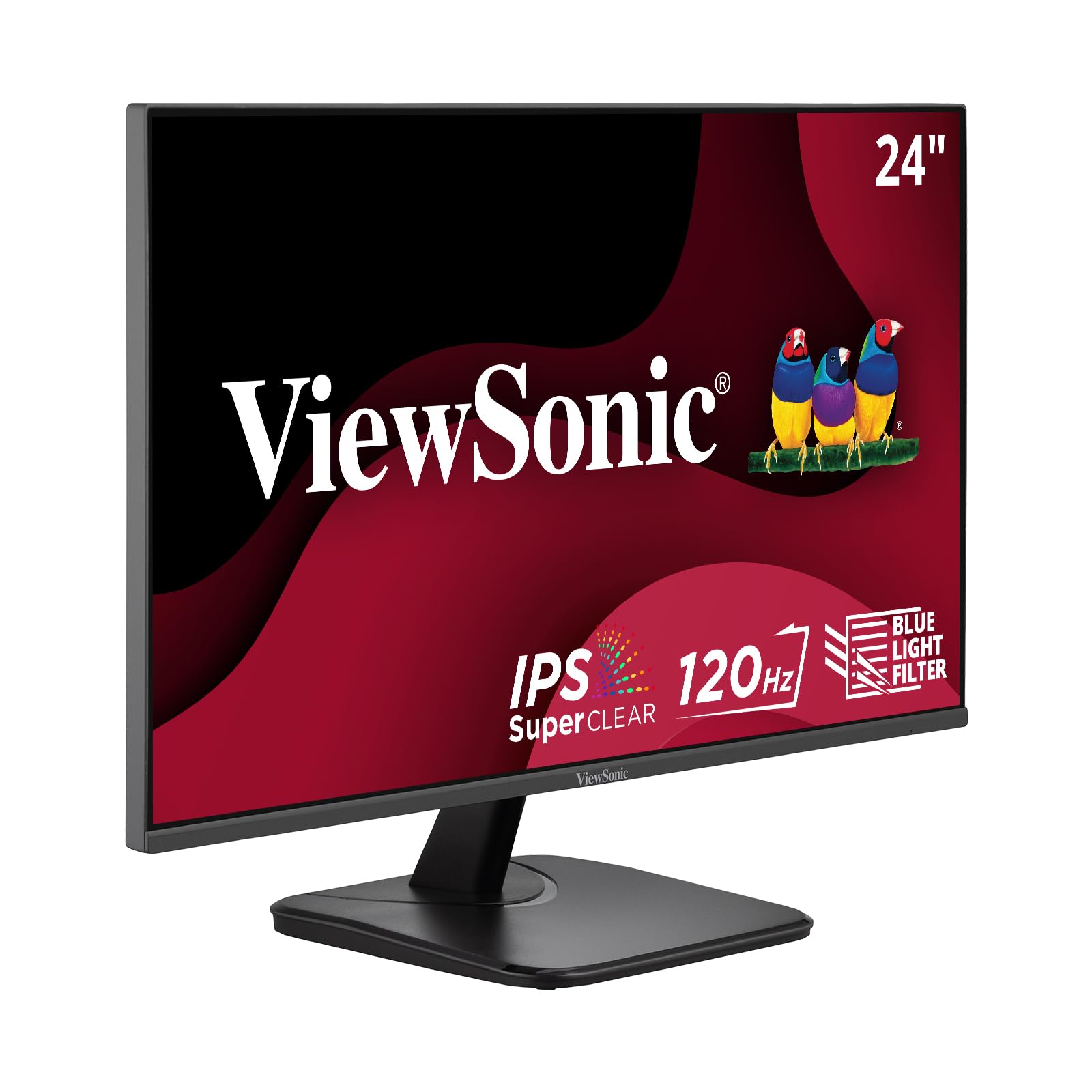
| ViewSonic VA2456A-MHD★ Best Overall | Versatile Value | 120Hz | IPS | HDMI, DP, VGA | Amazon |
| MSI PRO MP243LBudget Champion | Budget Console Gaming | 144Hz | IPS | HDMI, VGA | Amazon |
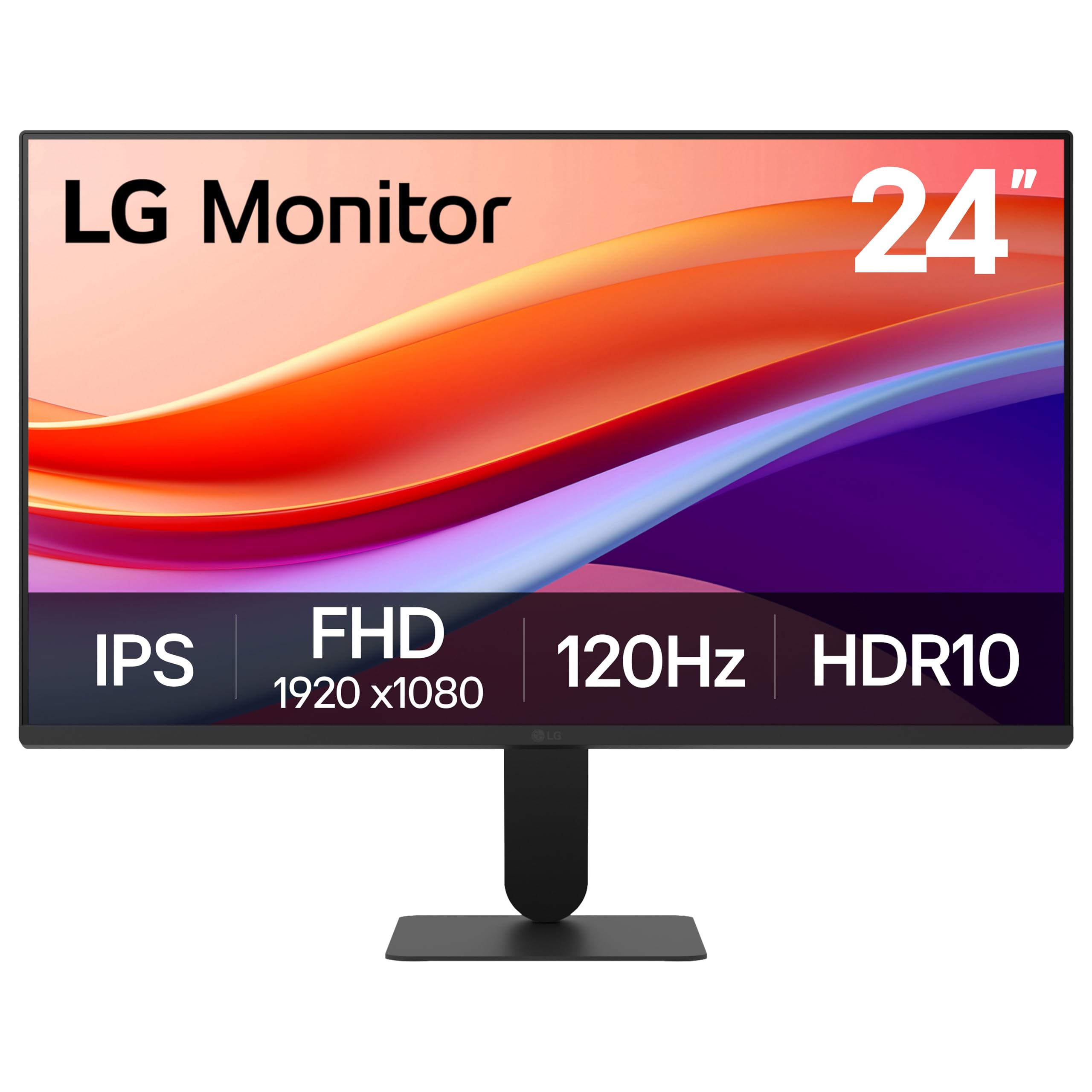
| LG 24U411A-BProductivity Pro | Everyday Office & Home | 120Hz | IPS | HDMI | Amazon |
| Amazon Basics Monitor | Budget Office Simplicity | 75Hz | IPS | HDMI, DP, VGA | Amazon |
| LG 24G411A-B | Serious Competitive Gaming | 144Hz (O/C) | IPS | HDMI, DP | Amazon |
| Dell 24 Plus S2425HSM | Ergonomic Adjustability | 144Hz | IPS | HDMI | Amazon |
| ViewSonic VX2476-SMHD | Sharp Text & Productivity | 100Hz | IPS | HDMI, DP, VGA | Amazon |
| ASUS TUF VG249QL3A | Ultra-Smooth Esports | 180Hz | Fast IPS | HDMI, DP | Amazon |
| Samsung S32GF | Home Office Simplicity | 120Hz | IPS | HDMI | Amazon |
In‑Depth Reviews
1. ViewSonic VA2456A-MHD
Our pick — over 4.5★ from 400+ verified ratings; the strongest balance of quality and price.
The 120Hz all-rounder that makes everyday scrolling feel premium.
This ViewSonic nails the balance between work and play with its 120Hz refresh rate, which makes scrolling through documents feel twice as smooth as a standard 60Hz screen. The display quality is the thing owners praise most, and a 1500:1 contrast ratio gives you deeper blacks and brighter highlights, with a picture sharp enough that text looks crisp.
Connectivity is a big part of its versatility. You get HDMI, DisplayPort, and VGA inputs, so it will happily serve a modern laptop, a desktop PC, or even an older machine. The built-in Flicker-Free and Blue Light Filter technologies are a genuine comfort boost for long desk sessions, and buyers report that these displays remain “still working great” after months of daily use.
One trade-off to know about: the built-in speakers are the most mixed feature, so you’ll likely want external speakers or headphones. The stand is also basic with no height adjustment, but the thin bezels make it an excellent candidate for a dual-monitor setup.
Why It Wins
- 120Hz smoothness at a value price
- Flexible HDMI, DP, and VGA inputs
- Eye-care tech that reduces fatigue
- Accurate colors from wide viewing angles
Where It Compromises
- Built-in speakers are weak
- Stand lacks height adjustment
- Brightness capped at 250 nits
Reach for this if: you want one monitor that does office work, movies, and casual gaming while staying affordable.
Look elsewhere if: you’re a competitive gamer who needs the absolute highest refresh rate, or if your desk setup demands a height-adjustable stand.
2. msi PRO MP243L E14
A 144Hz gaming panel that punches far above its entry-level price.
If you want the smoothest motion for the smallest budget, this MSI delivers a 144Hz refresh rate — a full 20% higher than the 120Hz on the ViewSonic above. That means even faster-moving frames look fluid, and it’s TÜV Rheinland certified for Flicker Free and Low Blue Light, which is reassuring for long sessions.
The picture quality is vibrant, and while the listed contrast ratio is 100000000:1 on paper, owners confirm the colors look clear and rich, making it great for gaming and even 3D modeling work. The 178°/178° viewing angles mean you can see accurate colors from almost any position in the room.
Note that connectivity is limited to HDMI and VGA, so there’s no DisplayPort. Owners mention it’s an excellent “budget console monitor,” though one owner notes it lacks a DisplayPort cable in the box. The stand offers tilt but no height adjustment, though the VESA 100×100mm mount pattern means you can easily attach it to a monitor arm.
The Fast Lane
- 144Hz refresh rate worth every penny
- Wide 178° viewing angles for group viewing
- Eye-care certified for eye strain relief
- VESA mount compatible for arms
The Slow Lane
- No DisplayPort, only HDMI and VGA
- Stand only tilts, no height adjustment
Who it beats: any 75Hz screen for gaming — the extra frames are immediately visible in fast games.
Who it doesn’t: PC users who want DisplayPort connectivity or a fully adjustable stand.
3. LG 24U411A-B
Eye-comfort features that make a long day at the desk feel lighter.
This LG earns its place with a suite of features tuned for work and reading. The Reader Mode lowers blue light levels dramatically, making it a standout choice for anyone who spends hours with documents or web pages., and its 120Hz refresh rate keeps everything feeling fluid rather than standard 60Hz jitter.
The picture is vibrantly colored with up to 99% sRGB color gamut coverage, and the quality is the most-praised aspect by a wide margin. The “virtually borderless” 3-side design makes it look clean and modern on a desk, and the tilt-adjustable stand moves from -5° to 20° to find your ideal angle.
The main catch is connectivity — it only has a single HDMI port, so you won’t be switching between multiple PCs without swapping cables. The stand also lacks height adjustment, and while it has HDR10 support, don’t expect true HDR performance at this level.
Best for readers: The Reader Mode and Flicker Safe tech make this the most comfortable pick for document-heavy work.
A fair trade-off: One HDMI port means it’s a single-source monitor, not a multi-device hub.
4. Amazon Basics 24-inch Monitor

The no-frills desk companion that prioritizes value and reliability.
When you just need a solid screen for work, this Amazon Basics monitor gets the fundamentals right. Its IPS panel delivers rich color that stays accurate from all angles, and it’s Energy Star certified to keep power consumption low. The value-for-money is the single most mentioned positive in owner feedback, making it a safe, sensible buy for a home office.
The stand is a real highlight at this level: it tilts from -5 degrees to 23 degrees, giving you more adjustment range than many pricier rivals. Setup is famously simple, with a standard 75Hz refresh rate that’s perfectly fine for email, spreadsheets, and video calls, though it’s not built for high-frame-rate gaming.
The biggest complaint is the sound — the built-in speakers are extremely weak, even at maximum volume. However, the 6.9-pound weight and VESA compatibility make it easy to mount or move, and its connectivity covers VGA, HDMI 1.4, and DisplayPort.
Solid and simple: A pragmatic choice for anyone who wants a dependable screen without paying for gaming features they won’t use.
Don’t expect: Strong audio from the built-in speakers, so plan for external ones.
5. LG 24G411A-B UltraGear
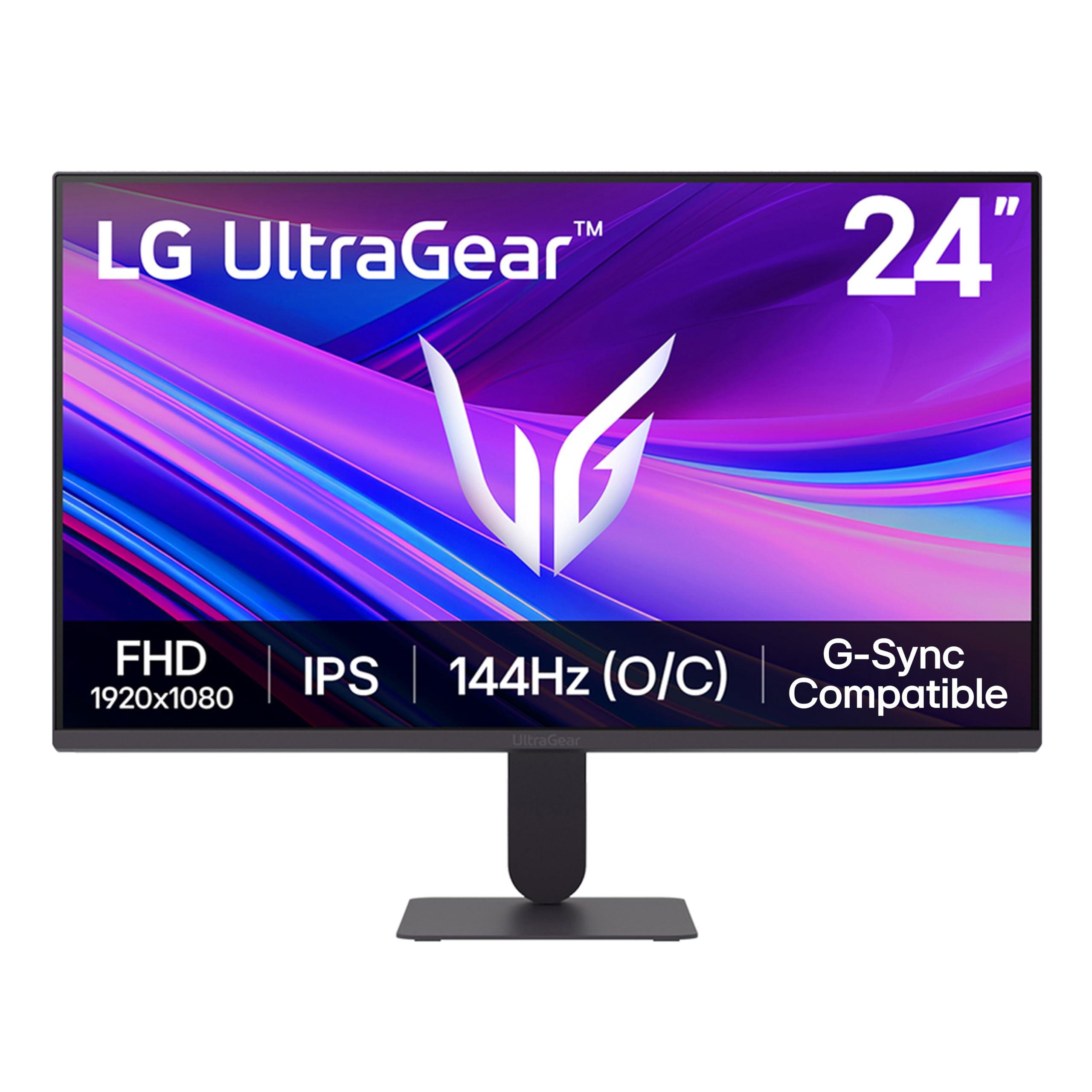
A dedicated gaming monitor that prioritizes speed and tear-free visuals.
For gamers who hate screen tearing, this LG from the UltraGear lineup delivers buttery-smooth motion. It runs at a native 120Hz (refreshes 120 times per second) and can be overclocked to 144Hz, and it supports both NVIDIA G-SYNC and AMD FreeSync—so whether you have an NVIDIA or AMD graphics card, you get a tear-free, low-latency experience in fast shooters.
Value for money is what owners rave about most, especially with an IPS panel that delivers vivid HDR10 color and up to 99% sRGB gamut coverage. The built-in Crosshair feature overlays a reticle on screen for improved accuracy in FPS games, and the Black Stabilizer brightens dark scenes so enemies hiding in shadows are easier to spot.
Connectivity is solid with both HDMI and DisplayPort, which is exactly what you want for reaching that high refresh rate on a PC. The main drawbacks are a stand that lacks height adjustment and some noticeable IPS glow on darker screens, a common trait of the panel technology.
Built for Combat
- Dual G-Sync and FreeSync compatibility
- 144Hz overclock for extra smoothness
- Gaming extras like Crosshair and Black Stabilizer
Not for Everyone
- Stand has no height adjustment
- IPS glow visible on dark scenes
Choose this for: gaming where every millisecond counts, and you want compatibility with both major GPU brands.
Choose something else for: a perfectly adjustable ergonomic office setup, or if you’re very sensitive to IPS glow in dark rooms.
6. Dell 24 Plus S2425HSM
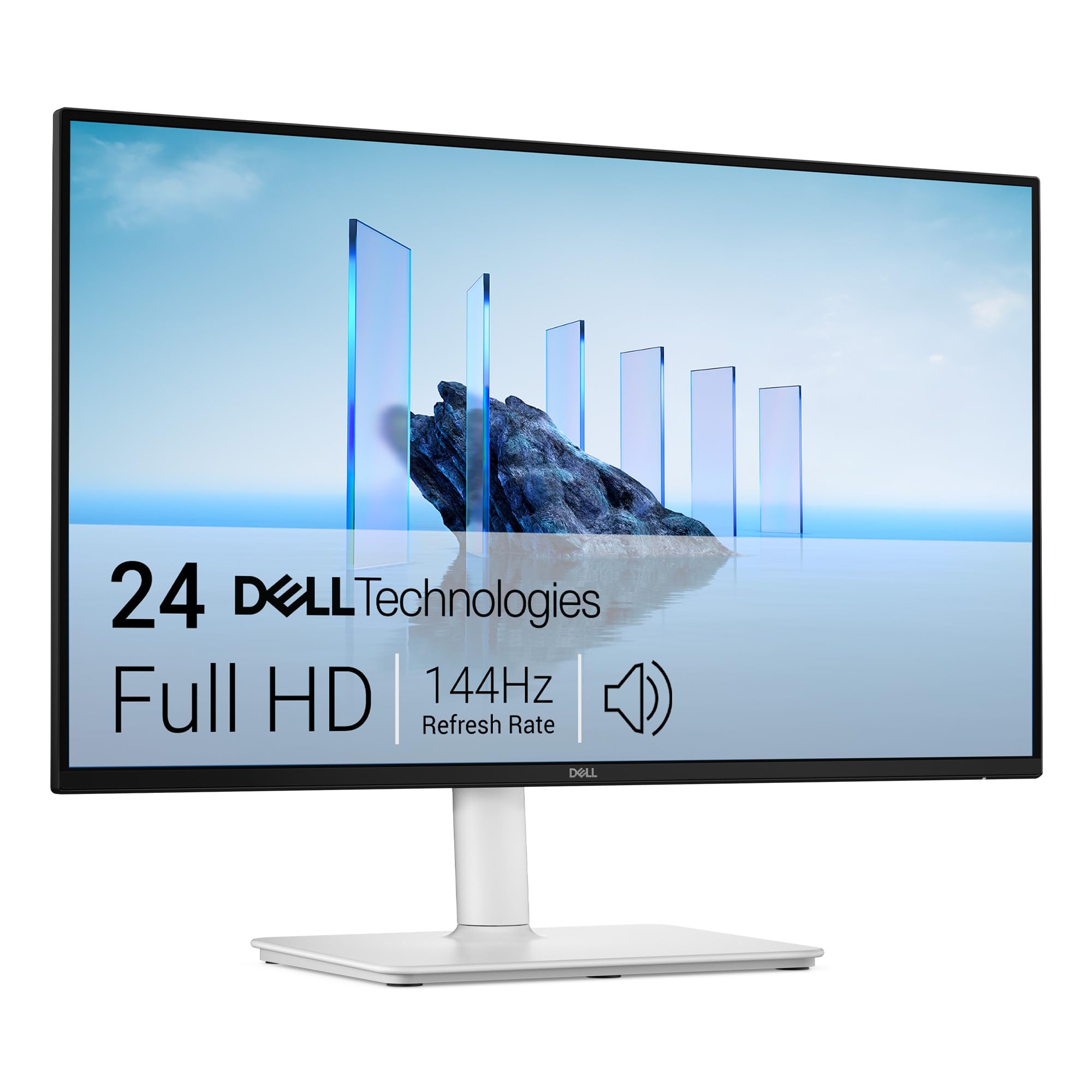
A 144Hz screen that treats your neck and ears as well as your eyes.
This Dell stands out because it does everything — a fast 144Hz refresh rate for smooth motion, a 1500:1 contrast ratio for rich detail, and 1ms MPRT for reduced ghosting. The quality is what owners mention most, and the picture clarity is praised as easy on the eyes even during long workdays.
Where it truly shines over the competition is adjustability. The stand provides height, tilt, pivot, and swivel adjustments, so you can position the screen perfectly for your posture. It’s also one of the few picks with genuinely usable integrated dual 3W speakers, which buyers call “great sound” for built-in audio.
The screen itself is “Ash White,” a stylish departure from the sea of black monitors, and it’s a 4-star TÜV-certified display for reduced blue light emissions. The main limitation is connectivity, with only HDMI inputs, so you won’t be plugging in multiple devices simultaneously.
The Ergonomic Edge
- Full height, tilt, pivot, and swivel stand
- 144Hz and 1ms for smooth visuals
- Decent dual 3W speakers included
Keep in Mind
- Only HDMI connectivity, no DisplayPort
- White color may not suit every setup
Grab it for: a comfortable, healthy work-from-home station where screen position changes throughout the day.
skip it if: you need to run a multi-PC setup and rely on DisplayPort, or you prefer a classic black bezel.
7. ViewSonic VX2476-SMHD

A frameless display known for razor-sharp text and a designer look.
Customers note the text looks crisp and images stay sharp, making this a strong pick for writers, editors, and anyone who reads on-screen all day. The 100Hz refresh rate (100 refreshes per second) is a clear upgrade over a standard 60Hz panel, so scrolling through long documents feels fluid and easy on your eyes.
Its ultra-thin bezels and black/silver styling give it a “beautiful frameless design” that reviewers love, and the stable metal stand with smooth tilt adjustment adds a premium feel. Connectivity is flexible with HDMI, DisplayPort, and VGA inputs, and the 5-button OSD menu is intuitive to navigate.
This pick is essentially a productivity-focused version of the VA2456A-MHD, sacrificing a bit of refresh rate (100Hz vs 120Hz) but keeping the same excellent IPS panel. The downside is the lack of height adjustment, and a few owners note the silver strip can reflect light from a bright keyboard.
Sharp shooter: The best pick here if your primary job is reading and editing text — the crispness is immediately obvious.
One thing to know: That “frameless” look means a small bottom chin and no height adjustment on the stand.
8. ASUS TUF Gaming VG249QL3A

The fastest panel here at 180Hz, built for serious competitive play.
If the MSI feels fast, this ASUS feels lightning-quick. The 180Hz refresh rate is the highest on this list, and it’s paired with a 1ms (GTG) response time and a “Fast IPS” panel that minimizes ghosting in fast action. The build quality is top-tier, which makes sense as it’s the most-mentioned positive in the feedback.
It includes both FreeSync Premium and G-SYNC compatibility, giving you tear-free gaming on almost any GPU. ASUS’s Extreme Low Motion Blur (ELMB) technology further reduces motion blur, and the Shadow Boost feature brightens dark scenes so you can spot enemies hiding in the shadows. The stand is also fully featured, offering height, tilt, swivel, and pivot adjustments.
At 350 cd/m2, it’s also one of the brightest screens here, which helps in well-lit rooms. A couple of honest notes: the built-in speakers are weak, and some reviewers point out the box only includes an HDMI cable, not a DisplayPort one, despite marketing suggesting otherwise. The PS5 will also cap your frame rate at 120Hz due to console limits.
The Need for Speed
- Top-tier 180Hz refresh rate
- 1ms response time with Fast IPS panel
- Fully adjustable ergonomic stand
- Bright 350 cd/m2 panel
Reality Check
- Weak built-in speakers
- DisplayPort cable not always included
Made for the one percent: If you play fast-paced shooters and want every possible frame of visual fluidity, this is the pick.
Overkill for others: Office and casual users won’t notice the difference between 120Hz and 180Hz, so it’s a premium you may not need.
9. Samsung S32GF Series S3
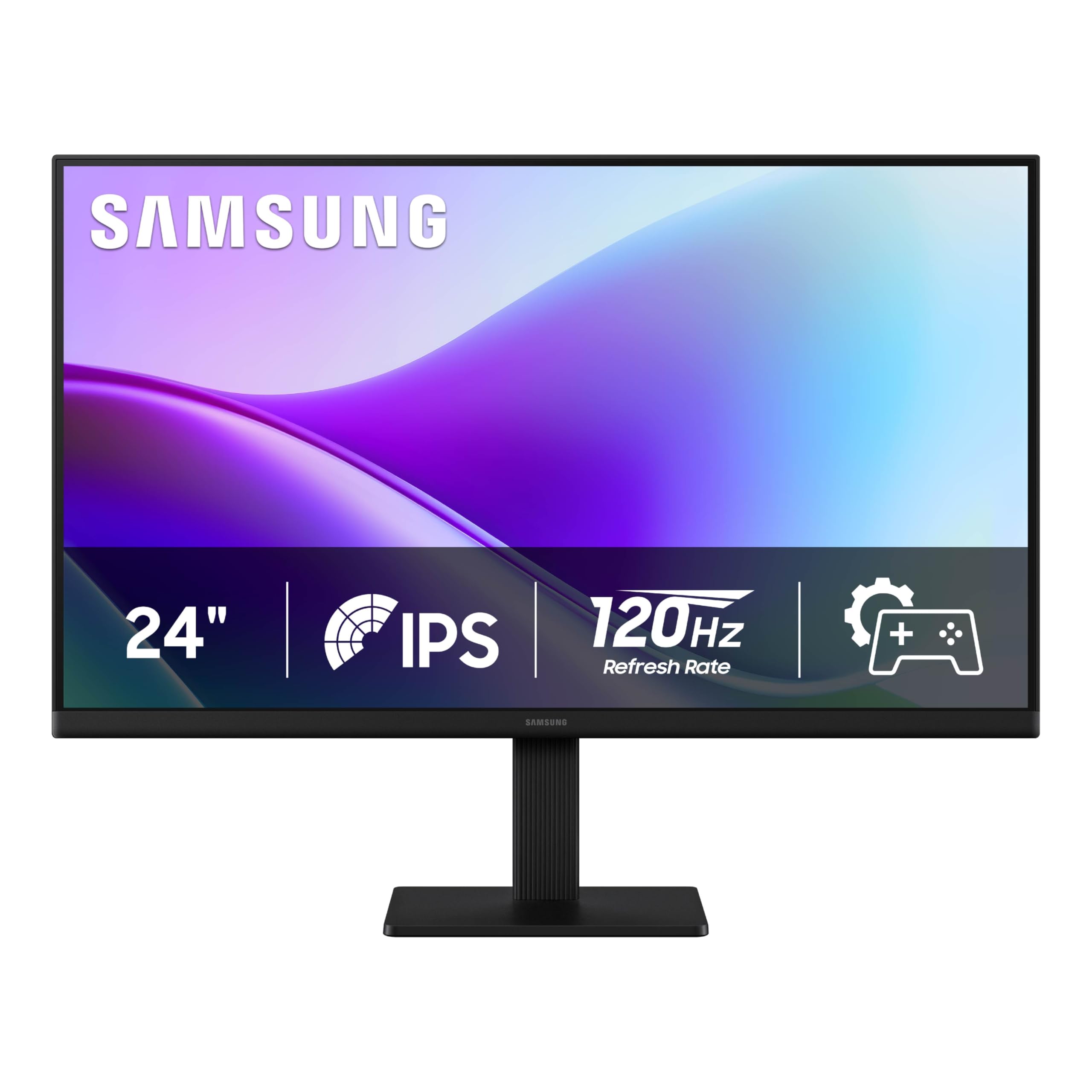
A super-slim Samsung that keeps colors vivid and your eyes comfortable.
This Samsung delivers a clean, modern aesthetic with a super-slim design and ultra-thin border bezels that look great in any room. The IPS panel ensures colors stay bright and clear even when you shift viewing angles, and the picture quality is praised as razor-sharp and excellent for home office work.
The 120Hz refresh rate is a welcome surprise at this level, making it smooth enough for light gaming and very fluid for everyday desktop use. The Eye Saver Mode and Flicker Free technology reduce blue light and screen flicker, a big plus for long work sessions. It also supports both FreeSync and G-Sync Compatibility.
This is a straightforward, plug-and-play monitor in the best sense — owners say it’s set up and ready in 5 minutes. The main limitations are a single HDMI connection and a fixed stand that doesn’t offer height adjustment. A minor note in reviews mentions the brightness can’t always be adjusted as expected, so make sure it fits your room’s lighting.
Clean and capable: A sleek choice for a tidy home office or student desk that wants eye comfort and 120Hz smoothness.
Expect: A single-purpose, single-cable setup without the flexibility of multiple ports or an ergonomic stand.
Understanding the Specs
Refresh Rate (Hz)
This is how many times a screen redraws its image each second. A higher number, like 120Hz or 144Hz, makes everything from scrolling webpages to gaming look much smoother and reduces eye strain compared to a standard 60Hz. It’s the single biggest factor in perceived “speed” of a monitor.
Color Gamut (sRGB)
This measures the range of colors a monitor can display. A score of 99% sRGB or higher means the screen can show almost all the colors used in web content and most digital images, resulting in rich, accurate colors. It’s essential for photo editing and enjoyable for everyday viewing.
FAQ
Is a 23.5-inch monitor the same as a 24-inch monitor?
What refresh rate do I really need for office work?
Can I use a 120Hz monitor with a gaming console like the PS5?
What is the benefit of an IPS panel over other types?
Is VGA connectivity still important on a modern monitor?
What is the difference between FreeSync and G-Sync?
Why should I care about a monitor’s color gamut?
How do built-in monitor speakers compare to external ones?
Final Thoughts: The Verdict
For most people, the 23.5 inch monitor winner is the ViewSonic VA2456A-MHD because it delivers a 120Hz refresh rate, flexible connectivity, and eye-care tech at a price that suits a wide range of budgets and uses. If you’re a gamer who wants the absolute smoothest motion, the ASUS TUF Gaming VG249QL3A with its 180Hz Fast IPS panel offers a clear performance edge. And for a purely ergonomic daily driver with excellent adjustability and decent speakers, the Dell 24 Plus S2425HSM is the one to reach for.
How We Picked
We do not accept paid placement. Every pick is matched to a real buyer and a real use-case; we do not hands-on test units.
Sources & Methodology
Specifications: manufacturer listings and product documentation. Review insights: verified customer reviews, as of August 2026. Pricing: not shown on this page (it changes often); check the current price via the retailer link.
As an Amazon Associate, Gadgets Feed earns from qualifying purchases. This does not affect which products we feature.