
Standard footwear with a narrow toe box and elevated heel can turn every step into a source of irritation when you’re dealing with neuropathy. The constant pressure on sensitive nerve endings, combined with a lack of space for natural toe splay, often amplifies the tingling, burning, or numbness rather than relieving it. Barefoot shoes, with their wide toe box and zero-drop sole, offer a fundamentally different approach — one that prioritizes unrestricted foot motion and ground feedback over cushioning and arch support.
I’m Rikta — the co-founder and writer behind Gadgets Feed. I’ve spent years analyzing foot health solutions, from orthotic inserts to minimalist footwear, focusing on how specific design specs like toe-box width in millimeters and sole flexibility index directly affect neuropathy pain during daily wear. (And Homer 🐱 supervised the fitting sessions from atop the shoe boxes, unimpressed by the lack of laces to bat around).
This guide breaks down the top seven options on the market, balancing toe-box room, sole thickness, adjustability, and material softness to help you find the right pair for your foot type. We’ve sorted through the specs to build the definitive list of the best barefoot shoes for neuropathy available right now.
How To Choose The Best Barefoot Shoes For Neuropathy
Not every minimalist shoe is built the same, and for neuropathy sufferers, small differences in design can mean the difference between relief and aggravation. The three specifications below matter most when filtering through the options.
Toe Box Shape and Volume
Look for a foot-shaped toe box that allows your toes to fully spread and stack naturally — not just a rounder front end. A toe box that is merely “wide” may still taper at the big toe, compressing the nerve bundles that run between the metatarsals. Measure the width at the widest part of your forefoot and compare it to the shoe’s internal dimensions, not the listed size.
Sole Thickness and Ground Feel
Neuropathic feet often struggle with proprioception — the brain’s ability to sense foot position. A thin sole, typically 3mm to 8mm thick, provides direct tactile feedback that helps restore balance and gait awareness. However, an extremely thin sole may feel harsh on hard pavement if you’re transitioning from heavily cushioned shoes. A stack height between 6mm and 10mm offers a safe middle ground for most users.
Closure System and Seamless Interior
Velcro straps, wide elastic openings, or lacing systems that allow variable tension across the midfoot are ideal. Fixed laces that press a tongue against the top of the foot can trigger pain in the superficial peroneal nerve. Likewise, interior seams, heel counters, and stitched logos create friction points that can aggravate sensitive skin — seamless uppers and smooth linings should be a priority.
Quick Comparison
On smaller screens, swipe sideways to see the full table.
| Model | Category | Best For | Key Spec | Amazon |
|---|---|---|---|---|
| OrthoComfoot Neuropathy Leather | Premium | All-day office & casual wear | Wide toe box with leather upper | Amazon |
| Vivobarefoot Primus Lite 3.5 | Premium | Training, running & high mobility | 3mm base + 2mm insole stack | Amazon |
| Xero Shoes Prio Neo | Mid-Range | Transitioning from orthotic shoes | Removable 3.5mm insole | Amazon |
| FitVille EasyTop Wings | Mid-Range | Swollen feet & edema management | Adjustable Velcro strap closure | Amazon |
| Hike Footwear HF Stride | Mid-Range | Improving balance & stability | Ultra-light 6mm zero-drop sole | Amazon |
| Hike Footwear HF Shade | Budget-Friendly | Casual daily walking | Wide toe box, thin sole | Amazon |
| OrthoComfoot Trail Running | Budget-Friendly | High-arch & plantar fasciitis needs | Dual-density arch support insoles | Amazon |
In‑Depth Reviews
1. OrthoComfoot Men’s Orthopedic Comfortable Diabetic Wide Shoes
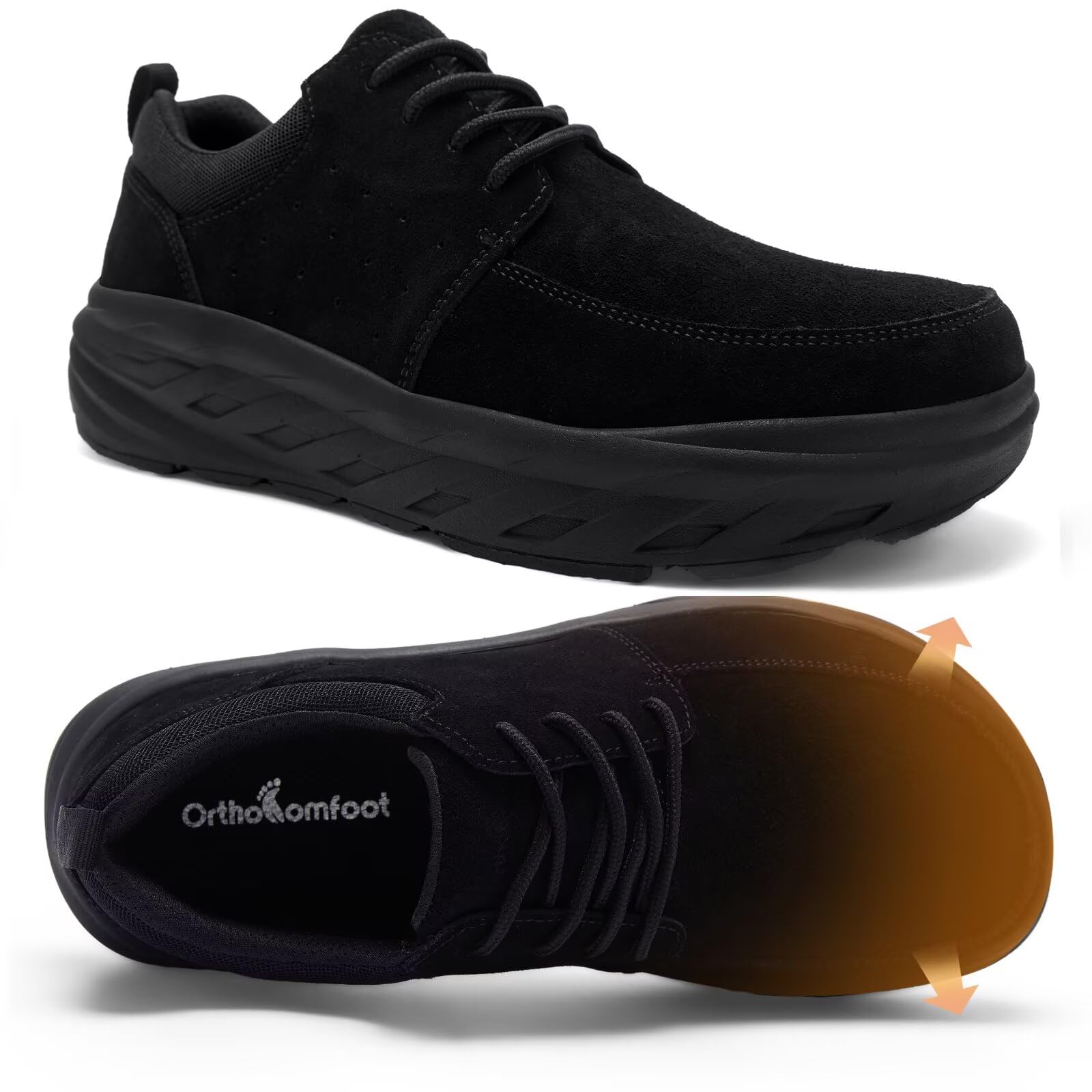
This shoe blends the wide toe box of a barefoot design with the structured support that many neuropathy sufferers need when standing for long hours. The leather upper is soft enough to avoid friction across the top of the foot, and the interior is free of prominent seams that could rub against sensitive nerve pathways. Users with diabetic neuropathy report a noticeable reduction in toe rubbing and overall foot pain after switching to this model.
The outsole provides a moderate stack height — not as thin as a true barefoot shoe, but low enough to offer better ground feedback than a standard walking shoe. This makes it an excellent bridge option for someone who wants neuropathy relief without committing to an extreme minimalist sole. The adjustable lacing lets you fine-tune pressure across the midfoot, a critical feature when dealing with swelling that fluctuates during the day.
Reviewers consistently mention that this shoe outperforms more expensive brands like Skechers for all-day foot comfort, and the leather construction ensures durability beyond what mesh-based alternatives offer. It leans toward the structured side of the barefoot spectrum, so if you require absolute zero-drop and paper-thin flexibility, you may want to look at the dedicated minimalist options below.
Why it’s great
- Soft leather upper with seamless interior reduces irritation on sensitive skin
- Wide toe box allows natural toe splay without compressing nerves
- Adjustable lacing system accommodates swelling throughout the day
Good to know
- Sole is thicker than true barefoot models, offering less ground feel
- Runs slightly small, consider ordering a half size up
2. Vivobarefoot Primus Lite 3.5 Mens Barefoot Shoes

The Primus Lite 3.5 is a reference-level barefoot shoe with a 3mm sole base and a 2mm removable insole, giving you the thinnest profile on this list. For neuropathy, this extreme ground feel helps restore proprioception — the sensory feedback loop that tells your brain exactly where your foot is relative to the ground. Users with unstable ankles and knee issues report that the shoe dramatically improves balance during walking and light training.
The upper is a breathable, seamless mesh that wraps the foot without internal pressure points. Unlike many barefoot shoes that feel tight across the midfoot, the Primus Lite accommodates a wide forefoot while staying secure at the heel. It runs long relative to Brannock measurements, so sizing down is common, and the lack of arch support means you must be comfortable with a completely neutral foot position.
This is a pure barefoot shoe with no concessions to cushioning or structure. If your neuropathy is accompanied by significant loss of sensation in the soles, the minimal material might feel too direct on concrete or asphalt. However, for training, casual wear, and any activity where foot strength and balance are the goal, this is the most technically refined option available.
Why it’s great
- Extremely thin sole provides maximum proprioceptive feedback for better balance
- Seamless, breathable mesh upper eliminates friction points
- Durable construction proven for daily wear and CrossFit training
Good to know
- White fabric upper is difficult to clean without staining
- Minimal cushioning may feel harsh on hard pavement during transition
3. Xero Shoes Women’s Prio Neo Barefoot Training Shoe
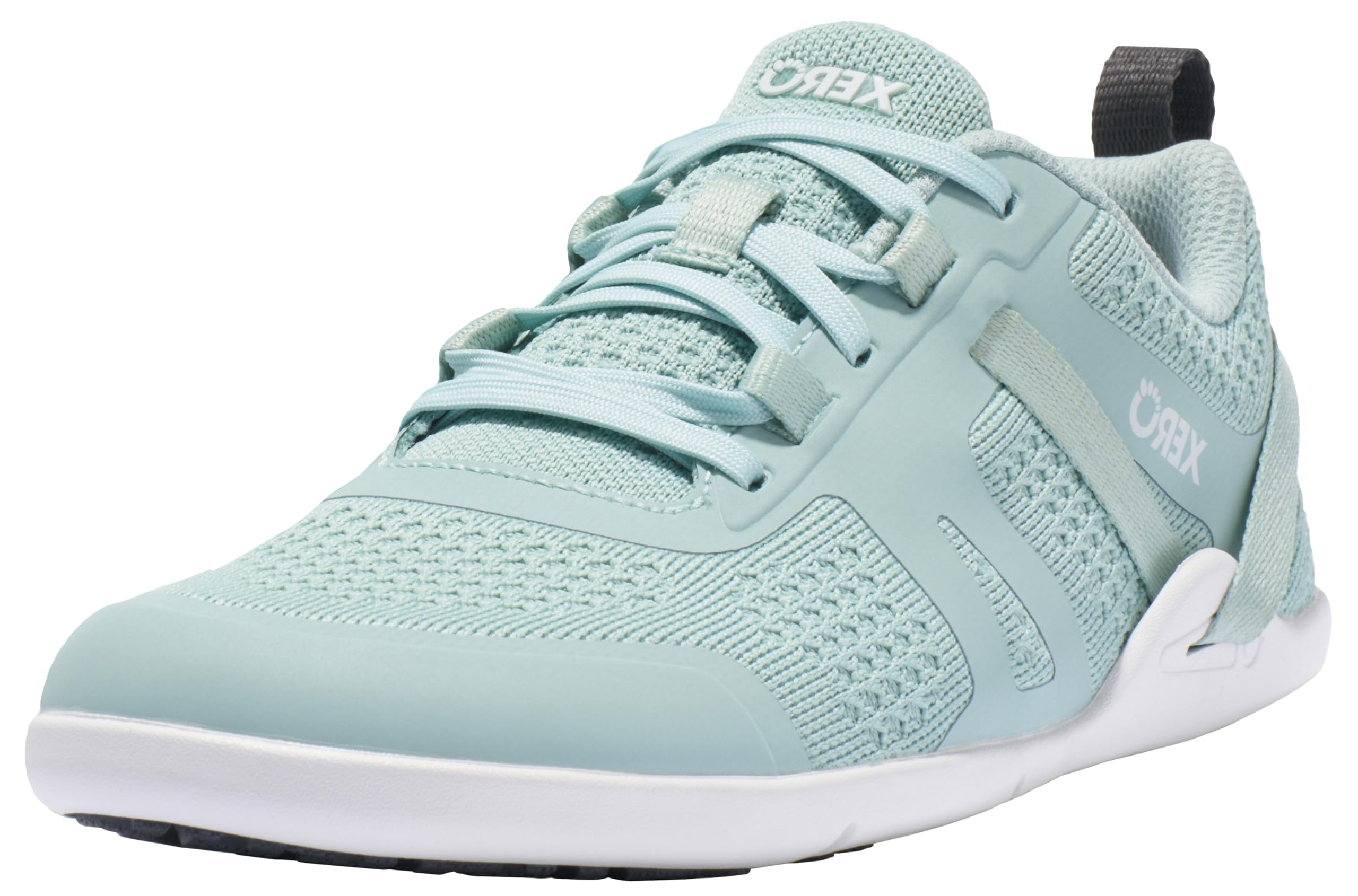
The Prio Neo is often the first barefoot shoe that people with neuropathy try, and for good reason: it includes a removable 3.5mm insole that you can keep in place during the transition period and remove later for a more authentic barefoot feel. This built-in flexibility lets you dial in exactly how much ground feedback you want, which is crucial when your feet are still adapting to zero-drop geometry.
The wide toe box is genuinely foot-shaped, with enough volume to accommodate Morton’s toe and hammer toes — two conditions that frequently accompany neuropathy. The upper is a stretchy knit material that conforms without constricting, and the open-top design avoids pressing on the dorsal nerves that run across the instep. Testers with Morton’s neuroma specifically note that the forefoot width prevents the pinching that triggers sharp nerve pain.
A common concern is the shoelace length, which reviewers find excessive and prone to coming undone. A single knot solves this, but it is an annoyance out of the box. The Prio Neo also lacks any arch support, which is intentional for barefoot mechanics but may feel unstable if you have been relying on orthotics. For most neuropathy sufferers transitioning from traditional shoes, this is the safest and most adjustable starting point.
Why it’s great
- Removable insole allows gradual adaptation from cushioned to barefoot feel
- Stretchy knit upper accommodates hammer toes and high insteps
- Genuinely foot-shaped toe box prevents Morton’s neuroma aggravation
Good to know
- Shoelaces are excessively long and need double-knotting
- May require gait retraining to avoid calf and knee pain initially
4. FitVille Diabetic Shoes for Men Extra Wide Slip-on EasyTop Wings

When neuropathy is paired with edema or fluctuating foot swelling, fixed laces become a liability. The FitVille EasyTop Wings uses a full Velcro strap closure that can be tightened or loosened in seconds without retying, making it the most adaptive option for feet that change size throughout the day. The extra-wide fit, combined with a front opening, accommodates high-volume feet that struggle to fit into standard wide sizes.
The interior is seamless, eliminating the common irritation points along the sides and heel that can worsen neuropathic pain. Reviewers with diabetic neuropathy and edema report that the shoes provide immediate pressure relief and stable walking support. The outsole is slip-resistant, which adds an important safety layer for anyone with reduced sensation in the soles who may not feel slippery surfaces.
These are not true barefoot shoes — the sole has more cushioning and less ground feedback than minimalist models. But for a user whose priority is accommodating swelling and avoiding internal friction over achieving proprioceptive feedback, this design hits the mark. The removable insoles let you swap in custom orthotics if needed, and the price point is well below comparable orthopedic offerings.
Why it’s great
- Velcro strap system adapts instantly to changing foot volume during the day
- Extra wide design with front opening fits swollen feet comfortably
- Slip-resistant outsole adds safety for reduced sensation in the soles
Good to know
- Sole is thicker and less flexible than true barefoot models
- Some customers want more footbed cushioning for extended standing
5. Hike Footwear HF Stride Barefoot Shoes
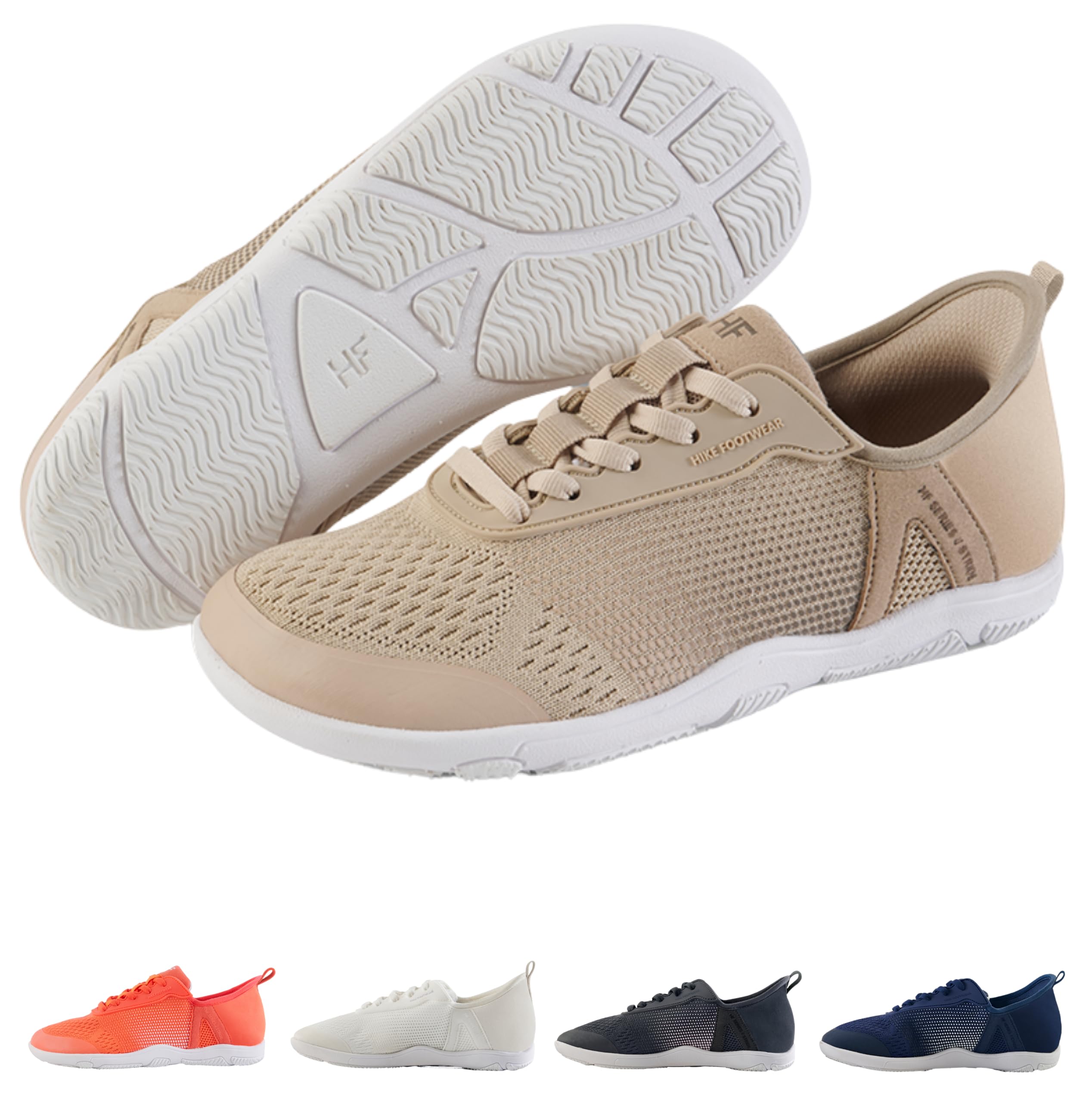
The HF Stride is engineered around a thin 6mm zero-drop sole that provides strong ground feedback while maintaining enough compliance for all-day wear on pavement. Multiple reviewers with balance issues report a dramatic improvement in stability after switching to this shoe, noting that the wide toe box and flat platform help them walk with more confidence and less wobble. This is exactly the kind of proprioceptive benefit that makes barefoot shoes valuable for neuropathy management.
The upper is a stretchy, slip-on design that works well with or without socks. The fit runs small — most users need to order one full size up from their standard measurement — but once sized correctly, the shoe feels secure across the midfoot without pinching the toes. The lightweight construction, under 200 grams per shoe, reduces fatigue during long walks and makes it easy to pack for travel.
It lacks arch support, which is intentional for barefoot function, but may feel unfamiliar if you have been wearing orthotic shoes. The traction pattern is adequate for dry surfaces but not aggressive enough for loose gravel or wet grass. As a daily walker designed to improve balance and walking mechanics, the HF Stride delivers genuine results at a price that undercuts most premium barefoot brands.
Why it’s great
- Thin sole provides excellent ground feedback for balance improvement
- Ultra-light design reduces foot fatigue during extended walks
- Wide toe box with slip-on entry fits barefoot or with socks
Good to know
- Runs small; most users must size up a full size
- Traction is mild and not suited for slippery or uneven terrain
6. Hike Footwear HF Shade Barefoot Shoes
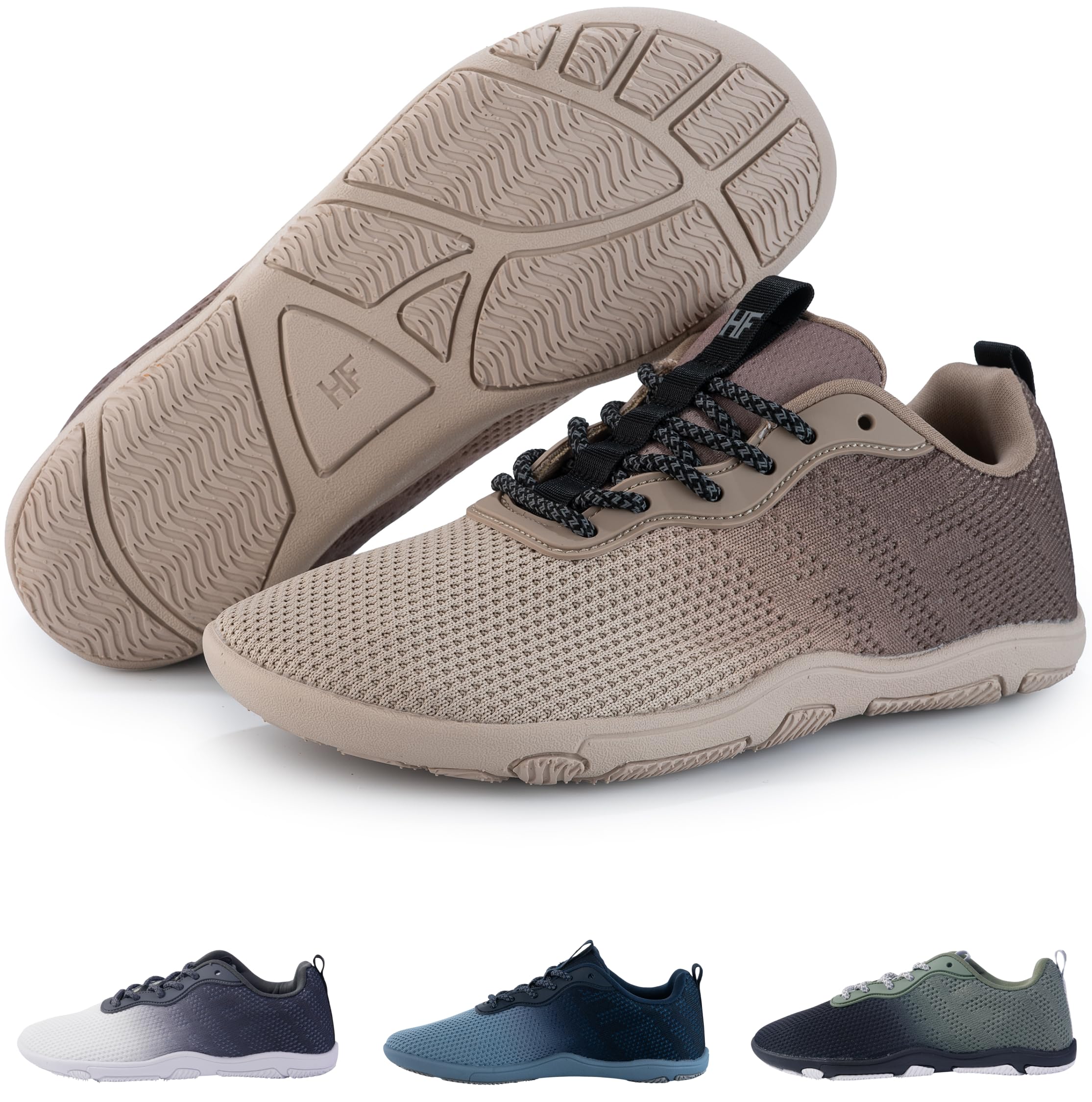
The HF Shade is a budget-friendly entry into barefoot footwear that still delivers a genuinely wide toe box and a thin, flexible sole. Users who wear them for casual daily walking report immediate relief from foot pain and improved balance, with several noting that their feet hurt significantly less from the moment they put the shoes on. The construction is lightweight, and the upper fits true to regular shoe size for most buyers — a welcome contrast to the sizing quirks of many minimalist brands.
Where the HF Shade falls short is in long-distance comfort. The thin sole offers great ground feel but lacks the cushioning needed for multi-mile walks on concrete, and it provides no arch support. Some users with wider feet find the fit tighter than expected, leading to returns. The toe box, while wide, has an unusual tapered shape that not every foot tolerates well — it is worth ordering two sizes and returning the one that does not fit.
For the price, this is a solid choice if you want to test whether barefoot footwear helps your neuropathy without making a large financial commitment. It works best for light errands, short walks, and indoor wear. If you plan to be on your feet all day, the extra investment in a more padded model will pay off in comfort.
Why it’s great
- Very affordable entry point into barefoot footwear for neuropathy
- Lightweight construction reduces strain during casual wear
- Immediate foot pain relief reported by many users right out of the box
Good to know
- Thin sole lacks cushioning for extended walking on hard surfaces
- Tapered toe box shape may not suit all foot widths
- Runs small for some; order two sizes and return the wrong one
7. OrthoComfoot Men’s Wide Orthopedic Plantar Fasciitis Shoes
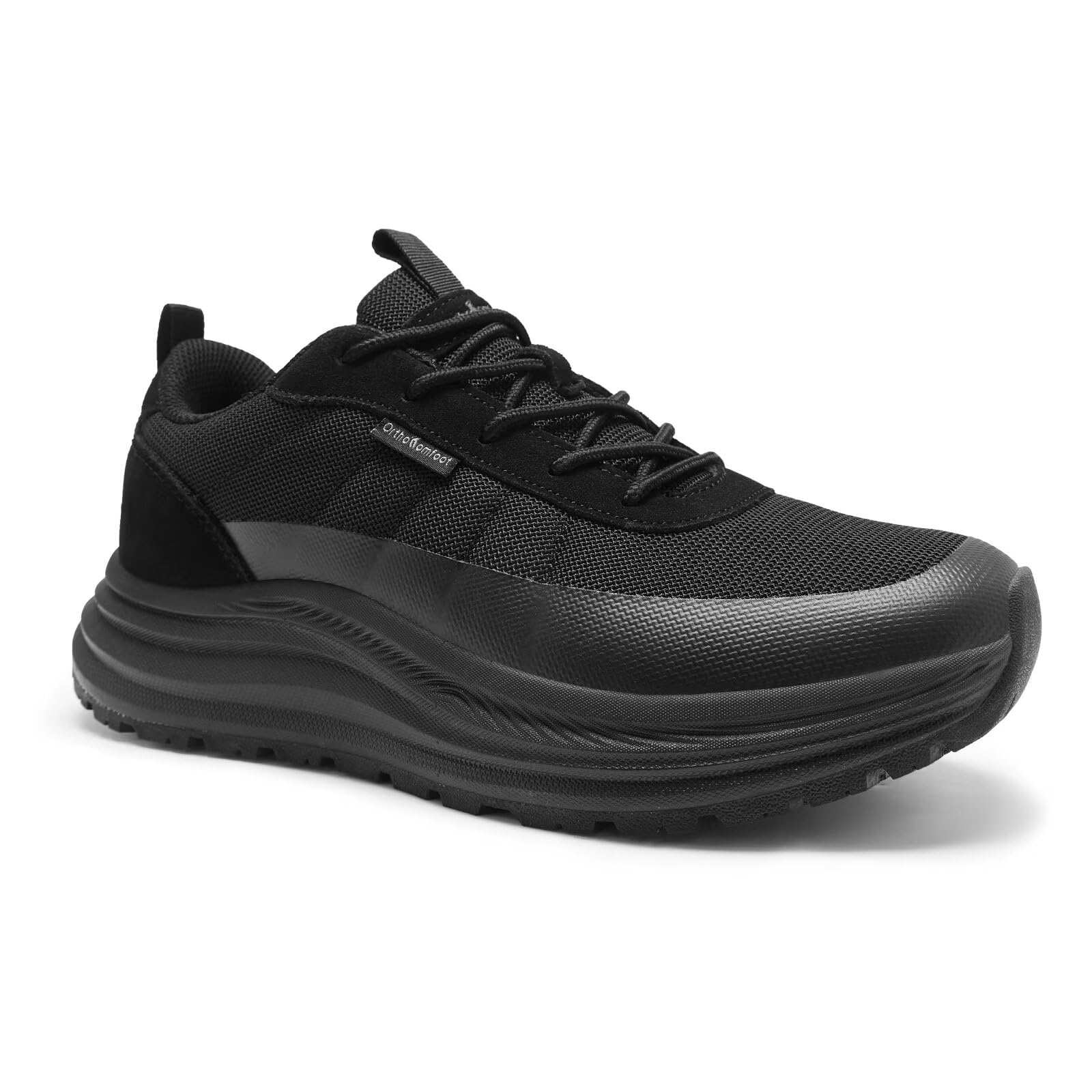
This model sits at the opposite end of the barefoot spectrum — it is a cushioned, arch-supported shoe designed for plantar fasciitis and high-arch feet, not for minimalist feedback. However, it earns a place in this guide because many neuropathy sufferers also deal with plantar fasciitis, and the dual-density arch support set included with this shoe can relieve strain in the plantar fascia that contributes to overall foot pain. The 1-inch thick cushioned sole absorbs shock on hard surfaces.
The wide toe box provides ample forefoot room, though the overall fit runs small, and customers who sized up had a much better experience. The shoe includes two sets of arch support insoles — one for standard support and one for higher arches — allowing you to customize the level of correction. Reviewers report that after a proper break-in period, walking on concrete becomes significantly more comfortable than with standard sneakers.
The shoe is not zero-drop — it has a slight heel elevation — and the thick sole blocks ground feel entirely. For neuropathy management, this means you lose the proprioceptive benefits of a true barefoot shoe. It also caused increased foot pain for some users, particularly those with specific foot mechanics that did not align with the arch support shape. Consider this only if your primary need is arch and heel pain relief rather than improving balance or nerve feedback.
Why it’s great
- Dual arch support insoles provide excellent relief for plantar fasciitis
- Thick cushioned sole absorbs shock on concrete and hard floors
- Wide toe box offers good forefoot room for swelling
Good to know
- Not a barefoot shoe — has heel elevation and thick sole, no ground feel
- Runs small; sizing up is essential for a comfortable fit
- Arch support may increase pain for some foot types and mechanics
FAQ
Can barefoot shoes really help with neuropathy pain?
How long does it take to transition from regular shoes to barefoot shoes?
Should I get barefoot shoes or extra-wide diabetic shoes for neuropathy?
Final Thoughts: The Verdict
For most users, the barefoot shoes for neuropathy winner is the OrthoComfoot Neuropathy Leather Shoe because it pairs a genuinely wide toe box with a soft leather upper and adjustable lacing, striking the best balance between neuropathy relief and all-day wearability. If you want maximum ground feedback and are ready for a pure barefoot experience, grab the Vivobarefoot Primus Lite 3.5. And for managing fluctuating foot swelling with easy adjustability, nothing beats the FitVille EasyTop Wings with its Velcro strap closure and extra-wide fit.