
A zero-turn mower isn’t a luxury — it’s a time machine. For anyone managing an acre or more of turf, the difference between a standard lawn tractor and a true zero-turn is measured in hours saved per mow and a finished lawn that looks like a putting green. But the price tag on most commercial-grade zero-turns can crash the budget before the first blade of grass is cut. That tension — wanting professional maneuverability without the dealer-level cost — defines the entire hunt for a budget zero turn mower.
I’m Rikta — the co-founder and writer behind Gadgets Feed. I’ve spent years combing through dealer inventories, reading service manuals, and cross-referencing real owner reports to find the equipment that delivers the specs that matter most in this category: deck width, turning radius, engine torque, and transmission durability against price. (And Homer 🐱 supervised every specs table from his warm laptop perch, tail flicking at each mulching-kit mention.)
In this guide, I compare seven machines that fit the bill — from traditional ride-on tractors to the latest wire-free robotic mowers — so you can find the best budget zero turn mower for your specific yard size and terrain without overpaying for features you won’t use.
How To Choose The Best Budget Zero Turn Mower
The term ‘budget’ in the zero-turn category doesn’t mean cheap construction — it means getting the right deck size, transmission durability, and engine power for your specific yard without paying for dealer-only accessories or overpowered hydrostats you’ll never use. Focus on four non-negotiables.
Deck Width and Construction Material
A 36-inch deck fits through standard 36-inch gates and handles up to 2 acres efficiently. A 42-inch deck covers more ground per pass on open lawns but won’t fit narrow side yards. Stamped steel decks are lighter and more affordable; fabricated (welded) decks are far more durable but usually push the price above the budget tier. For most homeowners managing 1 to 2.5 acres, a reinforced stamped steel deck offers the best balance of weight and longevity.
Transmission Type — The Long-Durability Variable
Hydrostatic transmissions (found on most true zero-turns) let you adjust speed smoothly without clutching or shifting gears. Many budget zero-turn mowers use manual 7-speed transmissions or continuously variable transmissions (CVT) that trade some low-speed control for lower cost. If you have slopes, wet grass, or frequent tight turns around landscaping, prioritize a hydrostatic or well-reviewed CVT system. The Craftsman models in this list use a 7-speed manual transmission, which is reliable but requires the operator to choose the gear before engaging the blades.
Engine Power and Deck Lift
Look for at least 11.5 HP for a 36-inch deck and 17 HP or higher for 42-inch decks. The engine should start reliably cold and maintain consistent RPMs under load in thick grass. Manual deck lift (a lever) is standard at this price point; powered deck lift is almost always a premium add-on. Budget-friendly models trade powered lift for a simpler, more reliable lever system that rarely fails.
Slope Capability and Obstacle Handling
For traditional ride-on mowers, the turning radius (18 inches is a solid number for tight maneuvering) and turf-saver wheels matter more than a slope percentage rating. For robotic mowers in this category, look for 4WD systems that climb 80% to 100% slopes, dual motors with high-torque cutting discs, and suspension systems that step over roots and curbs up to 2.8 inches high. If your yard has any incline over 20 degrees, a robot mower with independent wheel motors becomes a stronger option than a traditional ride-on.
Quick Comparison
On smaller screens, swipe sideways to see the full table.
| Model | Category | Best For | Key Spec | Amazon |
|---|---|---|---|---|
| Mammotion LUBA 3 5000H | Robot | Large complex lawns, steep slopes | 165W cutting motor, 15Ah battery | Amazon |
| Segway Navimow X430 | Robot | Damage-free zero-turn robot mowing | Dual 180W motors, 17 in cut | Amazon |
| ECOVACS Goat A3000 LiDAR PRO | Robot | Wire-free LiDAR + fast charging | 7500 mAh battery, 189W charger | Amazon |
| Worx Landroid Vision Cloud WR344 | Robot | No-wire RTK on complex terrain | 84% slope, 4WD, AI vision | Amazon |
| Lymow One Plus | Robot | Maximum slope (45°) + large daily coverage | 15,000 mAh LiFePO₄, 1785W peak | Amazon |
| CRAFTSMAN 42″ 13AN77XSA93 | Ride-on | 2-acre flat properties, traditional mowing | 42 in stamped steel deck, 7-speed | Amazon |
| CRAFTSMAN 36″ 13AC77XYA93 | Ride-on | Gated backyards, tight spaces | 36 in deck, 18 in turning radius | Amazon |
In‑Depth Reviews
1. Mammotion LUBA 3 AWD 5000H
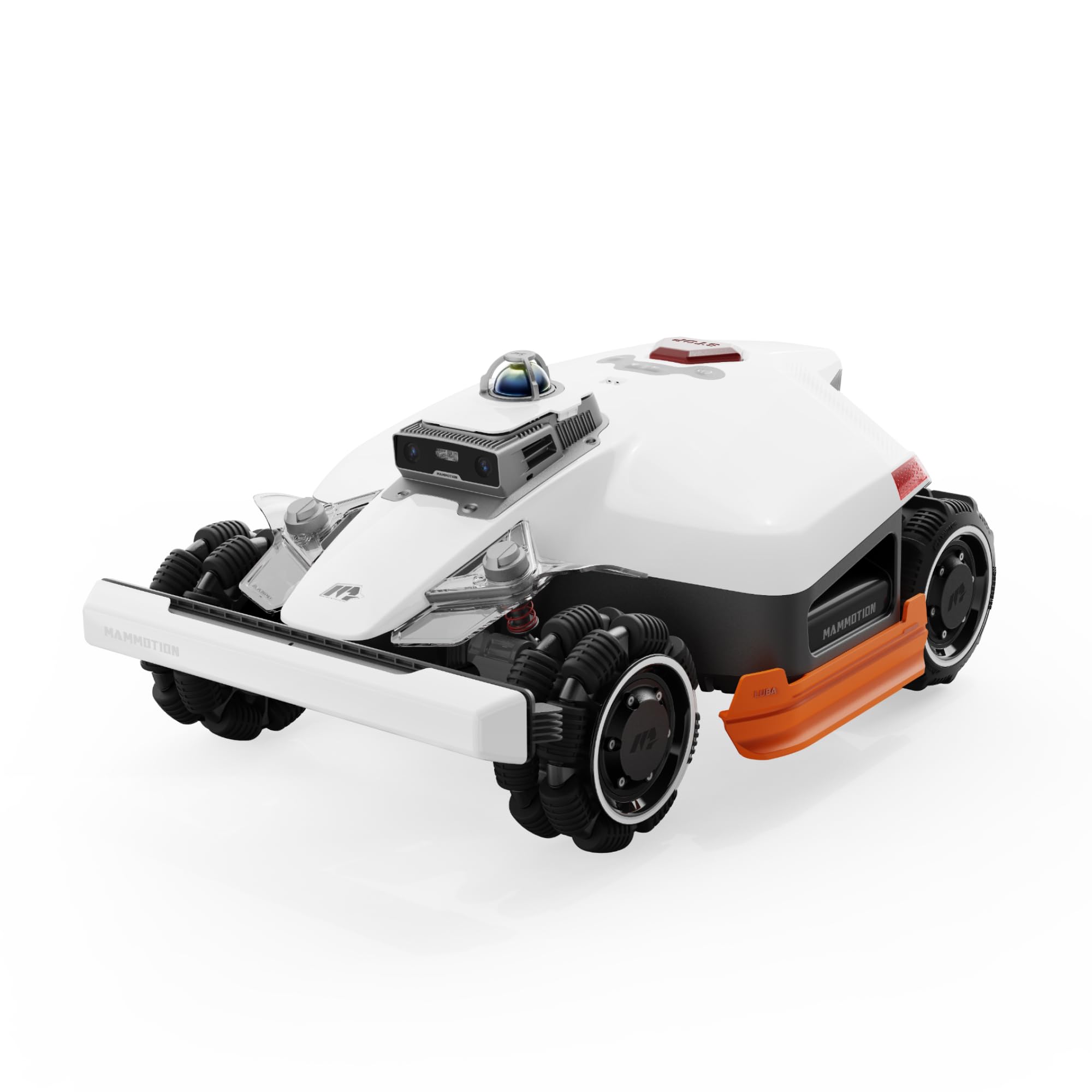
The Mammotion LUBA 3 5000H uses a tri-fusion system that fuses 360° LiDAR, NetRTK, and dual-camera AI vision to maintain centimeter-level accuracy even under dense tree cover where most RTK-only mowers drift. Its 165W dual-motor cutting system with six blades handles thick fescue and Bermuda without bogging, and the 15Ah lithium battery delivers up to 215 minutes of runtime per charge — enough for about half an acre per session depending on terrain complexity.
What sets this robot apart is its adaptive suspension: independent motor control on each wheel lets it step over roots and curbs up to 50 mm high without getting stuck, while the omni wheel pivots for clean zero-radius turns that avoid turf scuffing. Owners report near-perfect mowing lines and reliable obstacle avoidance for over 300 object types, though real-world battery coverage often lands around 60 percent of the advertised 5000 m² per day.
Setup is genuinely wire-free — no perimeter wire, no RTK antenna module to install — and the app supports up to 50 programmable mowing zones. The main trade-off is that battery replacement is not user-serviceable, and long-term parts availability is still unproven since Mammotion is a relatively new brand in this space.
Why it’s great
- Tri-fusion navigation handles shaded yards where GPS-only mowers fail
- 165W twin motors with 6-blade discs cut dense grass aggressively
- Adaptive AWD with omni-wheel steering prevents turf damage on turns
Good to know
- Battery is not user-replaceable; service center visit required
- Real-world daily coverage is roughly 60% of the rated spec
2. Segway Navimow X430
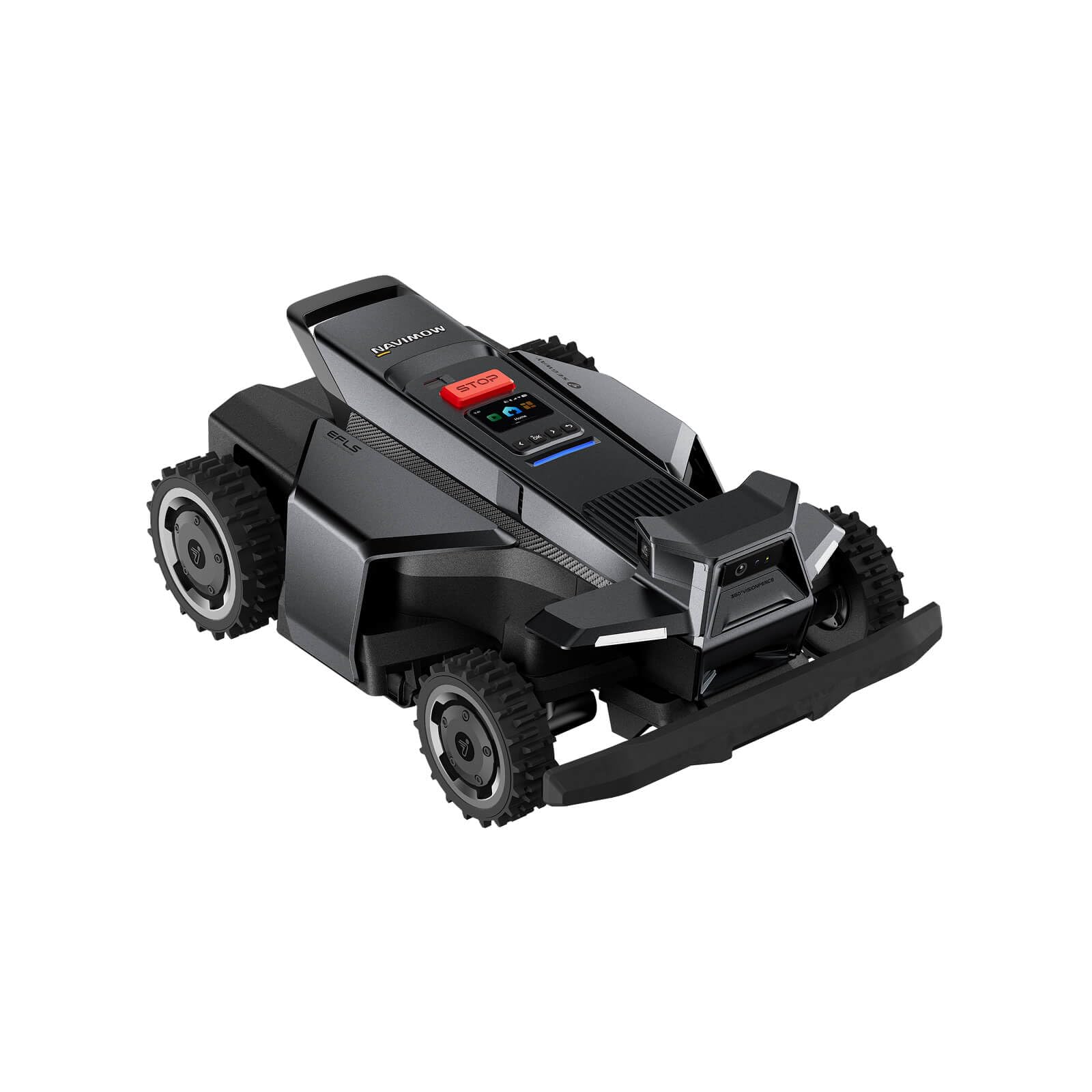
Navimow X430 is the only robot mower in this list that explicitly uses zero-turn steering — its Xero-Turn AWD system uses eccentric front-wheel steering with smart traction control to pivot without scuffing the turf, a design directly borrowed from Segway’s balancing robotics heritage. Twin 180W motors drive dual cutting discs with 12 blades, giving it a 17-inch cutting width that covers ground faster than most robot mowers in the sub- range.
The EFLS tri-frequency Network RTK combined with 360° Vision and VIO (visual-inertial odometry) keeps positioning accurate within two centimeters even near fences and under trees. EdgeSense reduces trimming margins to under two inches, meaning you spend far less time with a string trimmer after the robot finishes its pattern. The system also supports voice control through Alexa and Google Home, letting you start or pause a mow from the porch.
Owners praise the smooth patterned cutting and intuitive app interface, though initial setup sometimes requires relocating the charging station to improve satellite visibility. The mower handles 84 percent (40°) slopes without issue, and its ORV-tuned suspension crosses obstacles up to 2.8 inches tall. Customer support is noted as responsive, but early adopters experienced some app-related headaches before updates stabilized the mapping.
Why it’s great
- True zero-turn robot steering eliminates turf scuffing on tight pivots
- Dual 180W motors with 12 blades cut dense grass quickly
- EdgeSense trim margin under 2 inches reduces manual edging
Good to know
- Initial mapping may require repositioning base station for clear sky view
- App connectivity can be finicky until firmware is updated
3. ECOVACS Goat A3000 LiDAR PRO
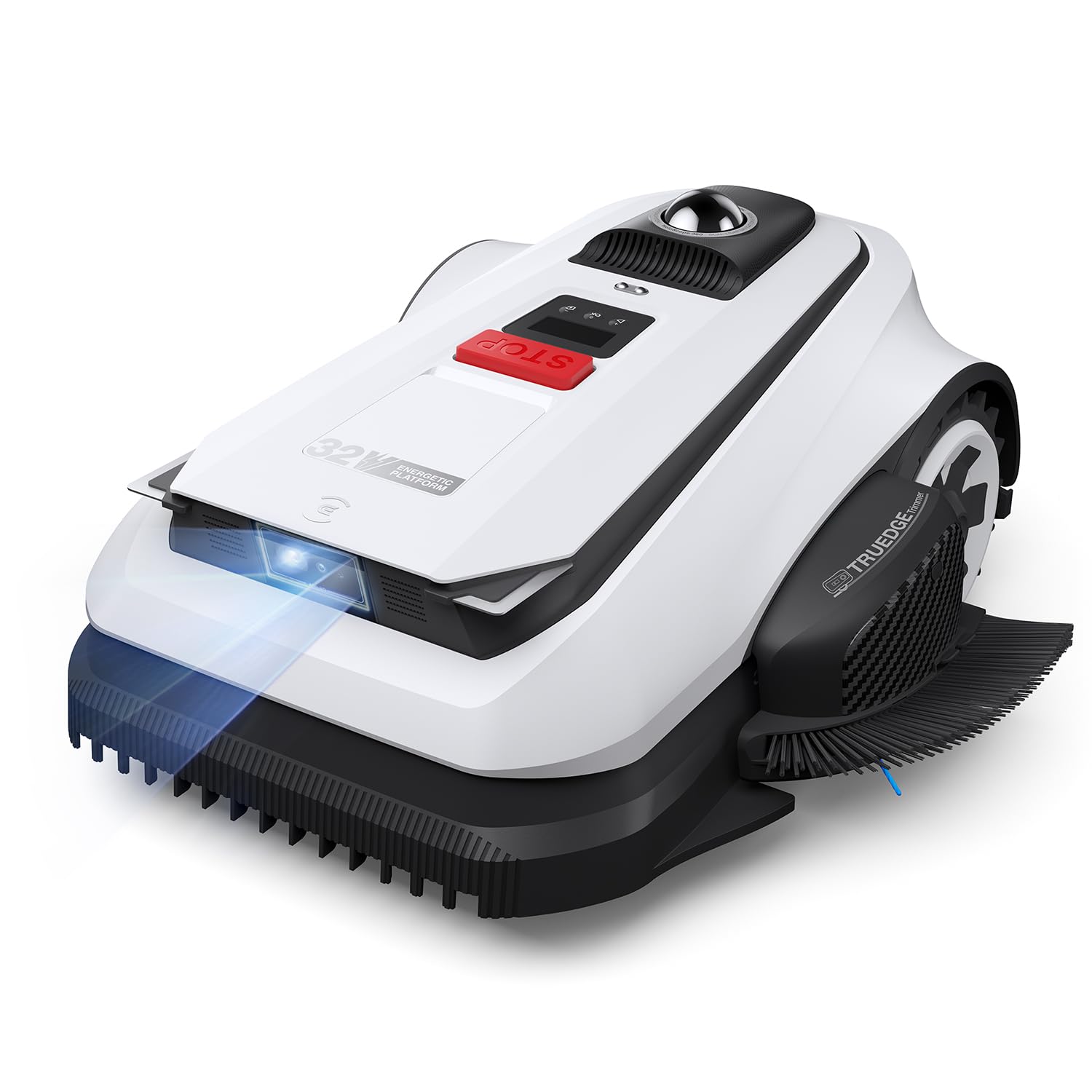
ECOVACS brings its home-robotics expertise to the lawn with the Goat A3000 LiDAR PRO, a wire-free mower that uses a HoloScope 360° Dual-LiDAR system instead of GPS or RTK. This approach keeps positioning precise (within 2 cm) even under heavy tree canopy or beside metal fences where satellite signals degrade. The 32V high-power platform and dual-blade disc system generate enough cutting torque for thick St. Augustine and Zoysia grass without requiring frequent passes.
The headline feature is the 7500 mAh battery paired with a 189W fast charger that fully replenishes the cell in about 70 minutes — noticeably faster than most competitors that take 100 to 130 minutes. This means the mower can complete a full mow, recharge quickly, and return to finish a second zone in the same afternoon. The built-in TruEdge trimmer cuts close to borders, sidewalks, and flower beds, reducing the need for manual string trimming along straight edges.
Setup uses a walk-and-map process that is simpler than marking perimeter wires, and the ECOVACS app allows multi-zone scheduling with individual cutting height adjustments. Some owners report the mower struggles in tight corners and on very uneven terrain, and a few units had persistent mapping failures. Battery life is rated at 70 minutes per charge, which is adequate for a quarter-acre but may require multiple cycles for larger yards.
Why it’s great
- Dual-LiDAR navigation works flawlessly under trees and near fences
- 189W fast charger refills 7500 mAh battery in ~70 minutes
- Built-in TruEdge trimmer minimizes manual edging along borders
Good to know
- Limited to 3/4 acre per charge; larger yards require multiple cycles
- Tight corners and bumpy terrain can challenge navigation consistency
4. Worx Landroid Vision Cloud WR344
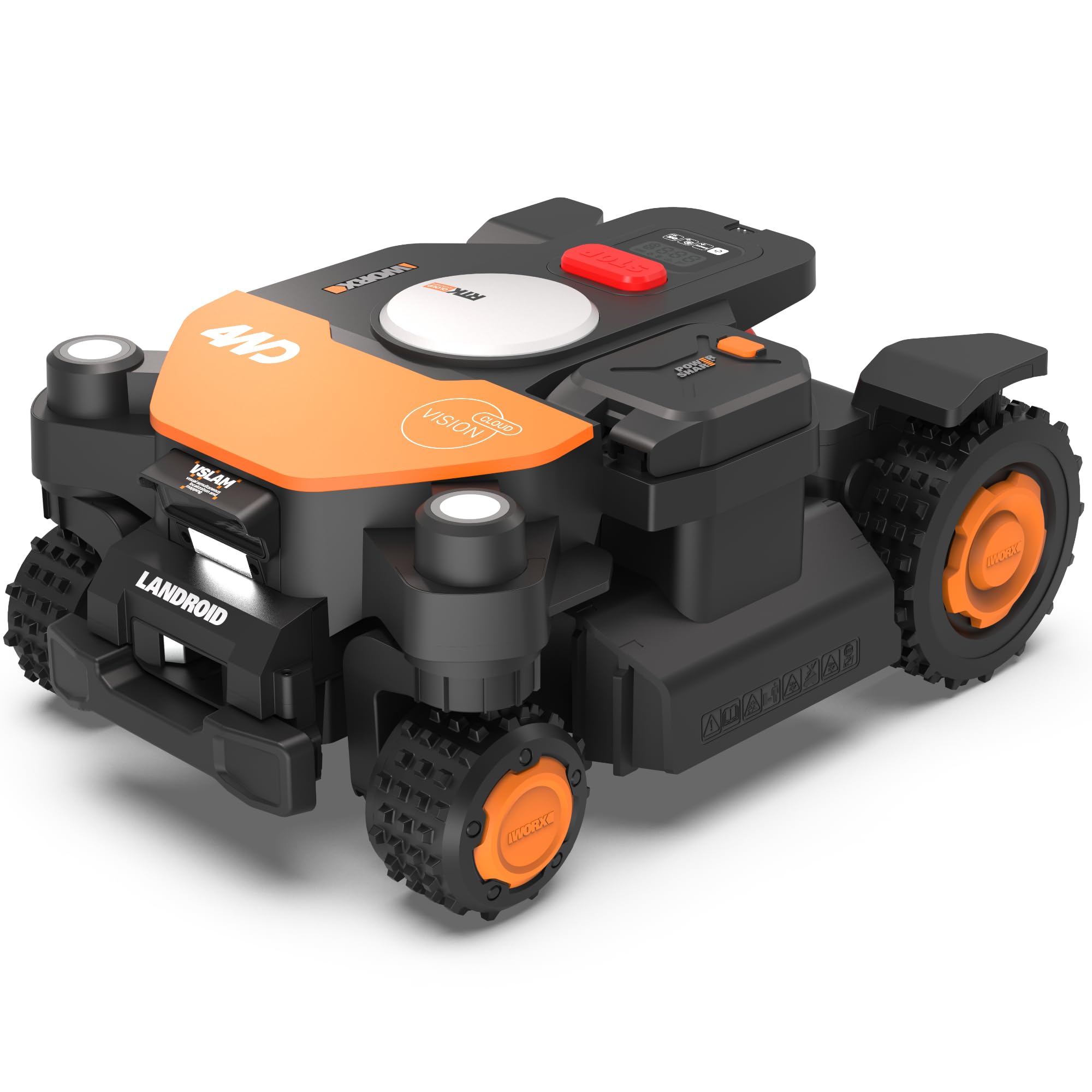
Worx’s Vision Cloud WR344 eliminates the biggest installation headache of robotic mowers — the perimeter wire — by using commercial-grade RTK technology delivered directly from the cloud with no local antenna required. Its AI vision system processes up to 10 trillion operations per second to identify obstacles, boundary types, and grass conditions in real time. The 4WD terrain-adaptive chassis keeps all four wheels planted on slopes up to 84 percent (~40°) and transitions smoothly over raised borders and uneven ground.
The Cut-to-Zero offset blade trims significantly closer to fixed borders than most robot mowers, and the Vision AI recognizes different boundary types — crossing ridable edges to minimize leftover grass and tucking close along impenetrable walls. Auto mapping works out of the box for most lawns, though users with highly complex, multi-section yards sometimes need to do a manual mapping pass for best results. The FiatLux light system enables safe night mowing by automatically activating eye-safe illumination when ambient light drops.
Owner experiences are split: many report a smooth, hands-free experience with excellent coverage on hilly terrain, while a smaller group encountered persistent connection errors and mapping failures that required firmware intervention or base station relocation. The 3.54-inch maximum cutting height is lower than some competitors, so it serves best for lawns kept under four inches. The mower includes GPS tracking via Find My Landroid with cellular connectivity, adding a layer of theft protection.
Why it’s great
- Cloud-based RTK means zero hardware installation — no antenna or wire
- AI vision with 10 TOPS processing identifies obstacles and boundary types
- FiatLux light enables safe, effective night mowing
Good to know
- Max cutting height of 3.54 inches may not suit all grass preferences
- A subset of users report persistent connection and mapping bugs
5. Lymow One Plus
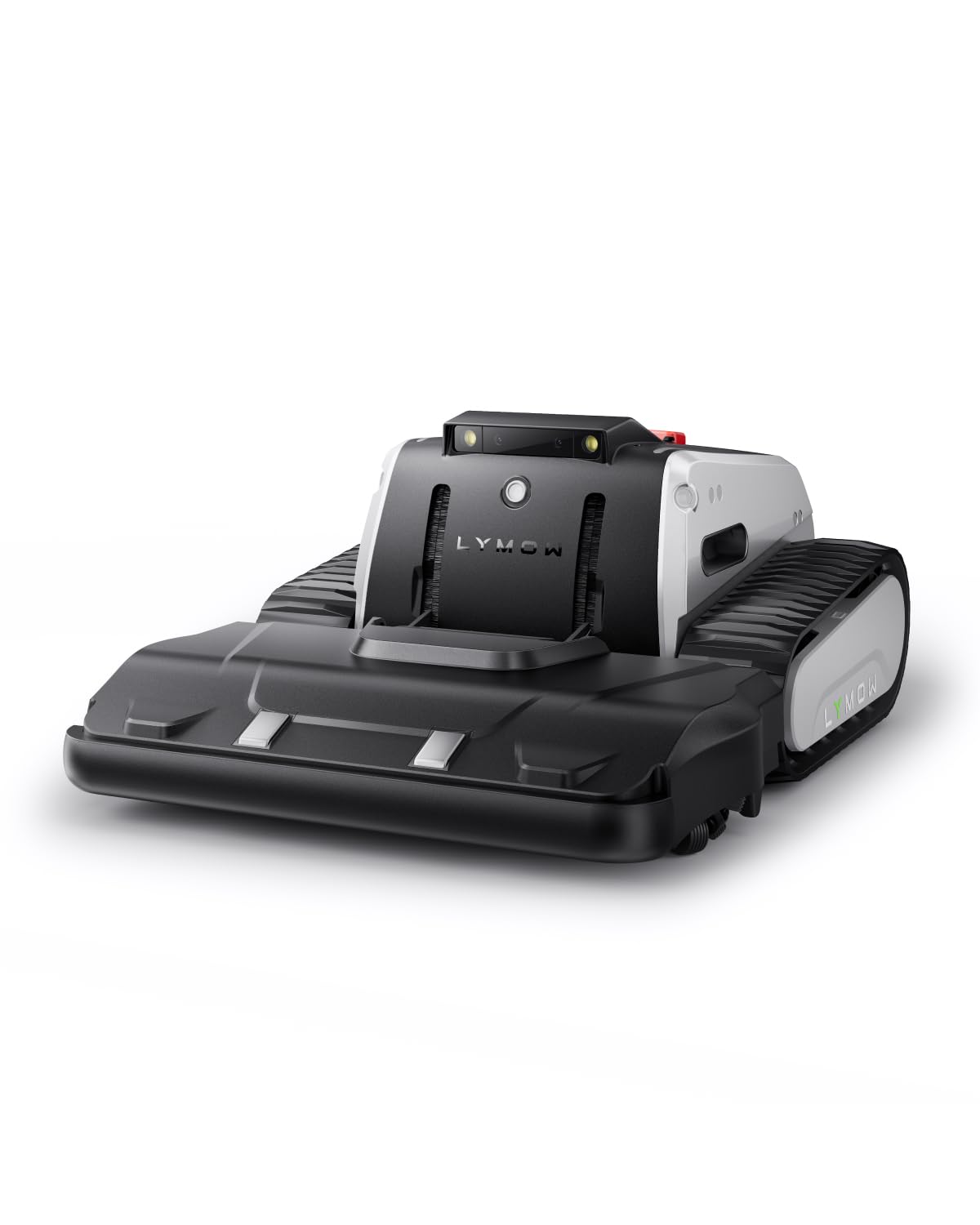
Lymow One Plus is the most extreme slope-climbing robot mower on this list, rated for 100 percent inclines (45°), thanks to its heavy-duty track drive system and 200-percent-stiffer hub motors. Its Lycut System 2.0 uses dual SK5 tool steel blades hardened to 50 HRC and a peak 1785W motor spinning up to 6,000 RPM. The cyclone airflow design lifts flattened grass before cutting, ensuring a clean, even finish on all grass types while mulching leaves into fine particles that nourish the lawn.
The 15,000 mAh LiFePO₄ battery is rated for over 2,000 charge cycles — significantly longer than standard lithium-ion packs — and IPX6 waterproofing means the mower can handle rain exposure without damage. RTK satellite positioning combines with VSLAM visual mapping for stable navigation near tall trees or high walls, and the AI vision with ultrasonic sensors detects and avoids pets, toys, and garden decorations. The mower supports up to 80 programmable zones with individual schedules and cutting heights.
Early adopters report excellent cut quality and the ability to mow 3 to 4 acres per day during heavy growing season, though the RTK placement is critical for reliable coverage and requires a clear sky view. Some users experienced battery failures or software glitches, and customer support responsiveness has been inconsistent. The blade deck lifts itself for easy cleaning, and single-side discharge keeps clippings off patios and walkways.
Why it’s great
- Track drive system climbs 45° slopes that stop wheeled mowers
- 15,000 mAh LiFePO₄ battery lasts 2,000+ cycles
- Cyclone airflow + dual tool-steel blades mulch leaves into lawn feed
Good to know
- RTK placement is finicky; needs unobstructed sky view for reliability
- Customer support has mixed reviews for responsiveness
6. CRAFTSMAN 42″ 13AN77XSA93
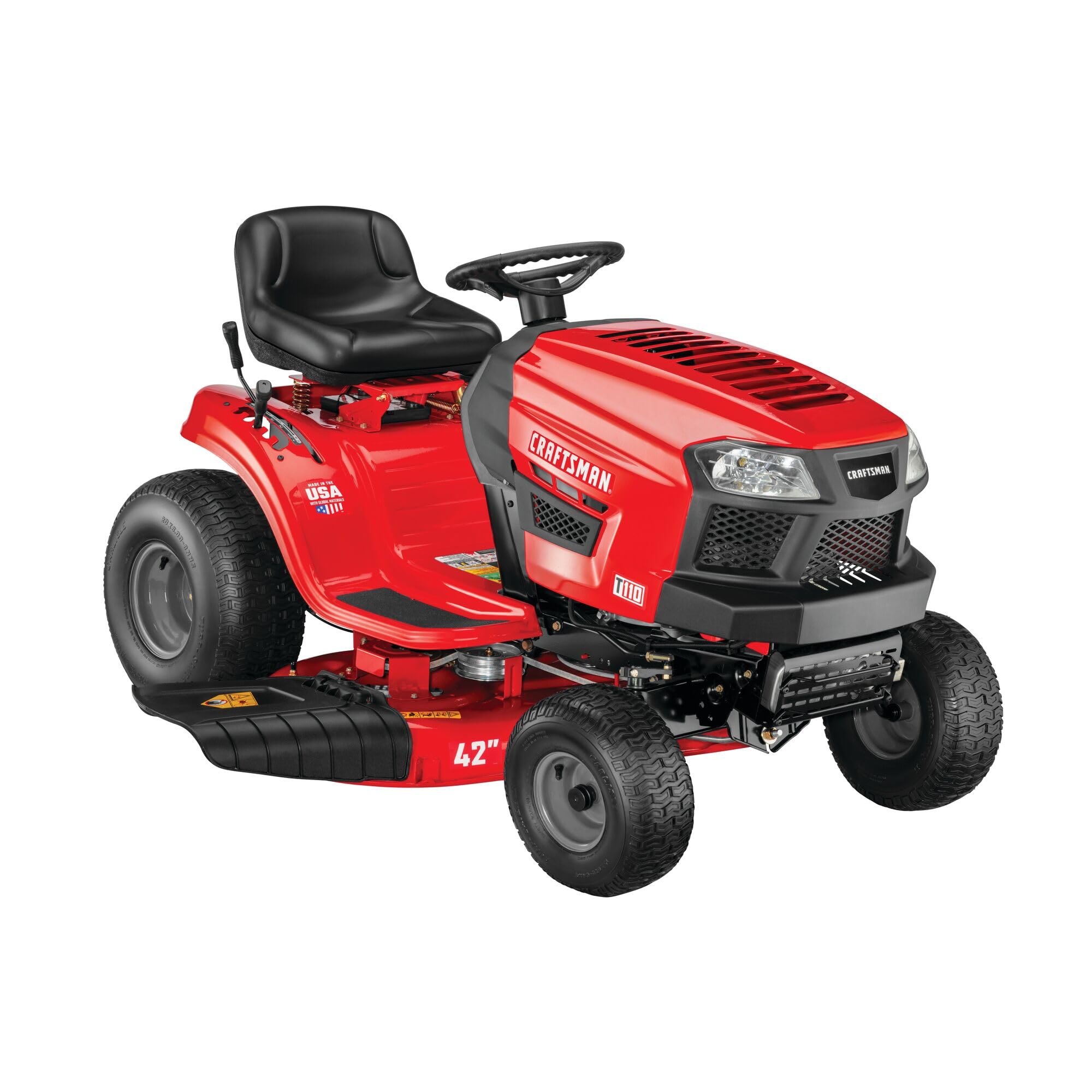
The 42-inch CRAFTSMAN is a traditional ride-on lawn tractor — not a true zero-turn mower with independent wheel controls, but its 18-inch turning radius and 7-speed manual transmission offer a level of maneuverability that approaches zero-turn territory for significantly less money. Powered by a 17.5 HP Briggs and Stratton single-cylinder engine, it cuts through thick grass and handles up to 2 acres on a single tank without bogging. The 42-inch reinforced stamped steel deck is wide enough for open lawns but may not fit through standard 36-inch gates.
The 7-speed transmission lets the operator choose the ideal ground speed for the grass density — slower for mulching thicker material, faster for clean side-discharge passes. The contoured low-back seat and heavy-duty 15×6/20×8 turf-saver wheels provide a comfortable ride over uneven ground, and the included mulching kit lets you finish like a pro without bagging. Assembly is straightforward, with most owners reporting 30 to 60 minutes from crate to first start.
Customer satisfaction is high, though a small number of units experienced drivetrain failures early in ownership. The stamped steel deck is durable for residential use but won’t hold up to commercial daily abuse. For budget-conscious buyers managing a flat or gently rolling 1-to-2-acre property, this 42-inch CRAFTSMAN delivers reliable performance with parts and service support available at most home centers.
Why it’s great
- 42-inch deck covers ground fast on open 1–2 acre lots
- 17.5 HP Briggs engine starts easily and runs smoothly
- 18-inch turning radius offers tight maneuverability for a tractor
Good to know
- Manual 7-speed transmission requires gear selection before engaging blades
- Some units experienced drivetrain issues shortly after purchase
7. CRAFTSMAN 36″ 13AC77XYA93
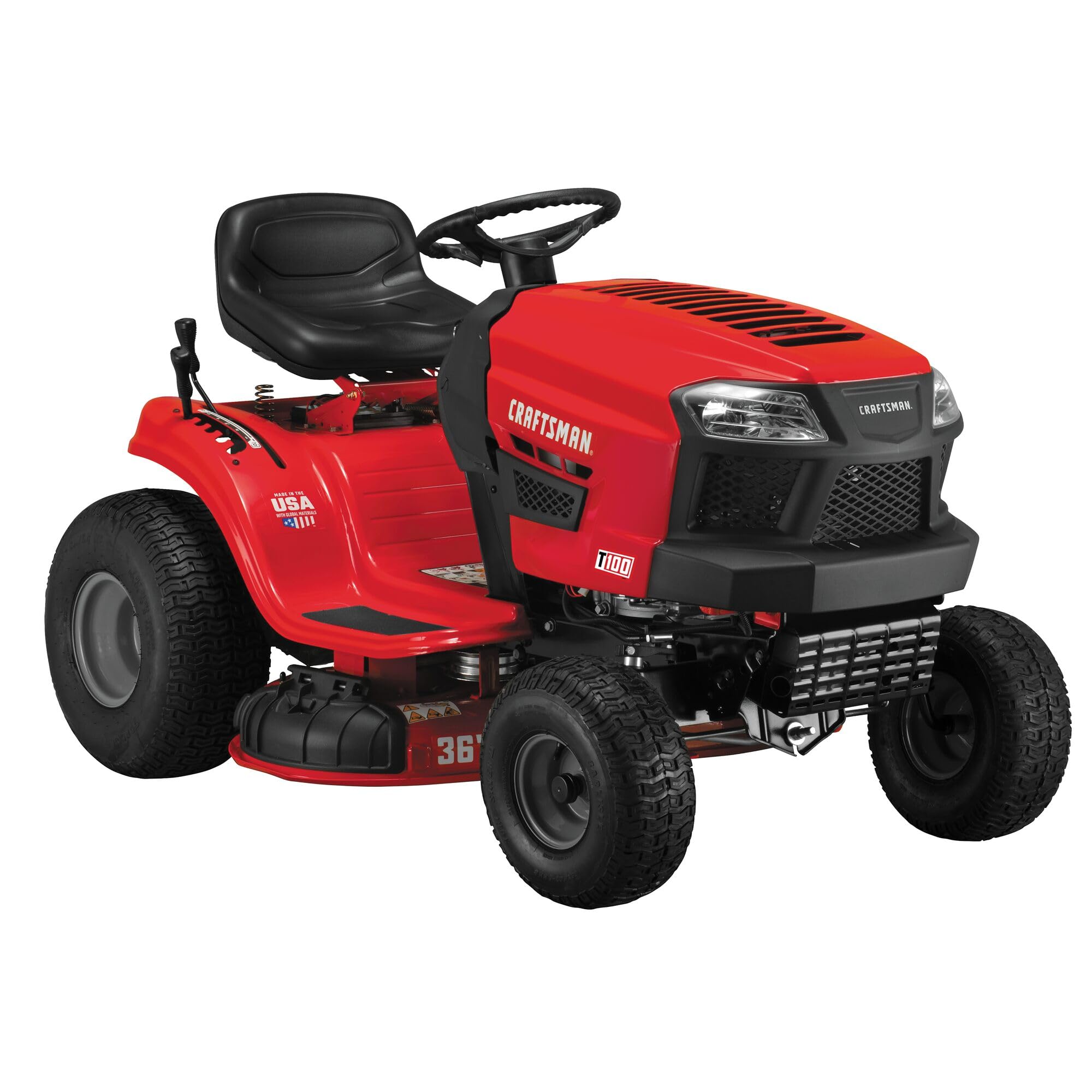
This 36-inch CRAFTSMAN is the most affordable entry point into zero-turn-like maneuverability in this guide, with an 18-inch turning radius that fits through standard 36-inch gates — making it the only ride-on option here that can access fenced side yards. The 11.5 HP Briggs and Stratton single-cylinder engine delivers enough power for up to 2 acres of grass, and the 36-inch reinforced stamped steel deck is nimble enough to weave around landscaping beds and trees without excessive back-and-forth.
The 7-speed manual transmission functions identically to its 42-inch sibling: the operator picks a gear before engaging the blade, then uses the foot pedal to control engagement. Heavy-duty turf-saver wheels protect the lawn from scuffing during tight turns, and the contoured low-back seat provides adequate comfort for mowing sessions up to about two hours. Assembly is moderate — the mower ships on a pallet and requires some mechanical confidence to attach the steering wheel, seat, and battery.
Most owners report perfect fit and finish, easy starting, and quiet operation. The primary complaints center on the delivery partner (CEVA) rather than the mower itself, and a small minority experienced drivetrain failures within the first few uses. For buyers with a gated yard or a tight budget who still want a ride-on mower with a tight turning circle, this 36-inch Craftsman is the sensible choice.
Why it’s great
- 36-inch deck fits through standard 36-inch gates — rare for ride-on mowers
- 18-inch turning radius navigates tight landscaping obstacles easily
- 11.5 HP Briggs engine provides reliable power for medium lawns
Good to know
- Manual transmission requires gear selection; not full hydrostatic
- Delivery service (CEVA) has inconsistent communication and handling
FAQ
What is the difference between a zero-turn mower and a lawn tractor?
How many acres can a budget zero turn mower handle per session?
Do I need perimeter wires for a robotic zero-turn mower?
What maintenance do ride-on zero-turn mowers require?
Can a robot mower replace a traditional zero-turn ride-on entirely?
Final Thoughts: The Verdict
For most users, the best budget zero turn mower winner is the Mammotion LUBA 3 AWD 5000H because it combines true wire-free tri-fusion navigation with a powerful 165W cutting system that handles thick grass and steep slopes without the recurring cost of a ride-on mower. If you want a traditional ride-on that fits through a gate and is easy for anyone to operate, grab the CRAFTSMAN 36″ 13AC77XYA93. And for maximum slope capability and the longest battery lifespan, nothing beats the Lymow One Plus with its track drive and 15,000 mAh LiFePO₄ battery.