
Our readers keep the lights on and my morning glass full of iced black tea. As an Amazon Associate, I earn from qualifying purchases.
Specs are compiled from manufacturer listings and verified buyer reviews and can change over time — please confirm the key details on the product page before buying.
Every parent hits the same wall: a baby who screams at feeding time, a bottle that leaks all over a fresh onesie, or a nipple your little one simply refuses. The real question isn’t which bottle looks best — it’s which one your baby will actually latch onto, drink from without gulping air, and let you clean in under a minute at 2 a.m. This guide sorts out the best baby bottles by what truly matters: how the nipple feels, how the venting works to reduce gas, and how few parts you’ll have to scrub.
I’m Min — the founder and writer behind Gadgets Feed. This guide is built by comparing the manufacturers’ published specifications and the patterns across verified customer reviews, so you get each pick’s real strengths and trade-offs instead of marketing spin.
Choosing a baby bottle depends on two things: the nipple your baby will accept and the anti-colic system your baby will tolerate. Focus on those, not the brand name, and you will find the right one for your family.
Our Picks at a Glance


How To Choose The Best Baby Bottle
Choosing a bottle is really three decisions rolled into one: the material of the body, the shape and flow of the nipple, and how the venting system handles air. Each one changes how your baby feeds and how much work you do at cleanup time.
Material: Glass, Plastic, or Silicone
Glass heats quickly, never stains, and has no plastic touching the milk — but it’s heavier and can break if dropped. High-quality plastics like PPSU look like glass but weigh far less and survive drops. Silicone bottles are soft enough to squeeze, which some babies love, and they bounce instead of shatter.
Nipple Shape and Flow Rate
A wide, breast-shaped nipple eases the switch between nursing and bottle feeding. Flow rate matters just as much: a newborn usually needs an extra-slow flow so they don’t choke, while an older baby wants a faster flow to avoid frustration. Many bottles let you swap nipples as your baby grows.
Venting and Anti-Colic Design
Air swallowed during feeding is the main cause of gas and fussiness. Some bottles use a vent in the base, some use an internal tube, and some use a soft collapsible liner. The trade-off is simple: more venting parts usually means more pieces to wash.
Quick Comparison
| Model | Best For | Material | Capacity | Flow Type | Amazon |
|---|---|---|---|---|---|
| Philips Avent Natural PPSU★ Best Overall | Breast to bottle transition | PPSU | 9 oz | Medium (Flow 3) | Amazon |
| Evenflo Feeding Classic GlassBudget Champion | Eco-friendly glass value | Tempered glass | 4 oz | — | Amazon |
| MAM Easy Start Anti-Colic+Newborn Calm | Newborn gas relief | Bio-circular plastic | 4.5 oz | Extra slow | Amazon |
| Tommee Tippee Natural Start Glass | Glass with growth kit | Medical-grade glass | 9 oz | Slow flow | Amazon |
| Nanobebe Flexy Silicone | Squeezable silicone feel | Silicone | 5 oz | — | Amazon |
| Playtex Drop-Ins | Travel and no-wash feeding | Plastic + disposable liners | 8 oz | — | Amazon |
| Comotomo Silicone Gen 2 | Premium soft wide-neck feel | Silicone | 8 oz | Medium | Amazon |
| Dr. Brown’s Options+ Glass | Severe colic relief | Borosilicate glass | 8 oz / 250 mL | Level 1 slow | Amazon |
| Pigeon PP Wide Neck | Picky breastfed babies | Polypropylene (PP) | 8.1 oz / 240 mL | Medium (M) | Amazon |
In‑Depth Reviews
1. Philips Avent Natural PPSU Baby Bottles, 9 oz (2-Pack)
Our pick — over 4.5★ from 500+ verified ratings; the strongest balance of quality and price.
The amber lightweight bottle that drinks like glass but survives like plastic
The PPSU body here is the standout spec: it resists heat up to 180°C/356°F, so you can sterilize and boil without worry, yet it weighs like a high-quality plastic rather than heavy glass. That means your baby gets a bottle that won’t shatter on a tile floor, and you get one that won’t leach microplastics when you warm it. The 9 oz capacity versus the 4 oz Evenflo bottles — useful once your baby starts taking bigger feeds.
The Natural Response nipple is where this bottle earns its Best Overall crown. It lets your baby control the pace of milk flow just like breastfeeding, and the no-drip design stops milk from spilling out of the tip between sips. Buyers report the transition from breast to bottle went smoothly, and the wide breast-shaped nipple mimics the real thing closely enough that babies latch without protest. The anti-colic valve keeps air away from the tummy during feeding, which owners say noticeably reduced gas.
Quality is the thing owners praise most — it’s the top-mentioned aspect by a clear margin. They also single out the cute design and the durability through repeated dishwasher washes. The medium flow nipples (Flow 3) are included in the pack, so most babies in the 3+ month range are covered from day one, though newborns may need a slower nipple.
The crowd favorite: a 4.9-star average across 500+ owners makes this the highest-rated and most consistently praised pick here.
Reach for this if: you’re combining breast and bottle feeding and want a lightweight, heat-resistant, leak-free bottle your baby will accept.
Think twice if: you need an extra-slow newborn flow — the included medium nipples suit older babies better.
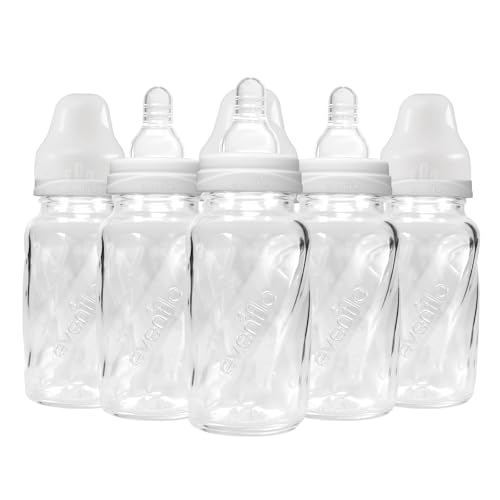
2. Evenflo Feeding Classic Glass, Twist Bottles, 4 oz (6-Pack)
The no-plastic glass workhorse that outlasts the trend cycles
This is the bottle for parents who read the ingredient list on everything. The tempered glass body is recyclable and sustainable, and it’s free of BPA, polycarbonates, PVC, and phthalates — so nothing plastic ever touches your baby’s milk. The twist shape isn’t just for looks: the ergonomic ridges make the bottle noticeably easier to hold during those long middle-of-the-night feeds.
With only 3 pieces, assembly and cleaning are quick — no hidden vents or tubes to scrub with a brush. The 4 oz capacity gives you a smaller, easier-to-hold bottle for newborns, and it fits onto most standard neck breast pumps so you can pump directly into the bottle. Durability is what owners praise most, with reports of bottles holding up after months of sanitizing, and owners mention they work well with a Medela pump.
The honest trade-off is the flow. Customers note the flow is a bit slow and recommend buying faster-flow nipples as your baby grows. Leakage gets mixed feedback too — occasional drips at the start that resolve once the nipple is adjusted properly. At 4 oz each, the 6-pack gives you 6 bottles versus the Avent 9 oz 2-pack’s 2 bottles, which makes this an outstanding value for a newborn stash.
Function over flash: owners call it “truly the best bottles — function over looks” — plain, durable, and reliable.
Pick this for: the budget-conscious parent who wants zero plastic touching the milk and doesn’t mind a plain look and a slower flow.
Heads up: you’ll likely buy faster nipples separately, and the measurement markings are hard to read in dim light.
3. MAM 4.5oz Easy Start Anti-Colic+ Vented Baby Bottle (2-Pack)
The vented-base bottle that targets newborn gas with a preemies-friendly nipple
What wins people over is the nipple acceptance — The pre-compressed, elongated nipple achieves a 94% acceptance rate, easing the breast-to-bottle switch. The bottle also self-sterilizes in just 3 minutes and stays clean for up to 48 hours when left untouched in the self-sterilizing position. That’s a real convenience for a newborn phase where sterilization feels constant.
The recurring gripe is the flow speed — some parents find it too fast for newborns despite the “extra slow” label, so watch your baby’s first couple of feeds closely. The 4.5 oz size is ideal for the newborn stage, and the 2-pack keeps a spare at the ready. Quality and ease of cleaning are the two most-praised aspects, with buyers noting the bottles are easy to clean, though leakage feedback is mixed.
What Owners Rave About
- Vented base genuinely reduces gas and colic
- 94% nipple acceptance eases breast-bottle switch
- Self-sterilizes in 3 minutes, stays clean 48 hours
The Fair Warning
- Flow can run fast for some newborns
- Base vent adds a piece to assemble
Best for: breastfed newborns and preemies where gas and colic are the main worry.
skip it if: your baby is already an eager gulper — the vented base works best with a gentler feeder.
4. Tommee Tippee Natural Start Glass Baby Bottles, 9oz (Pack of 3)
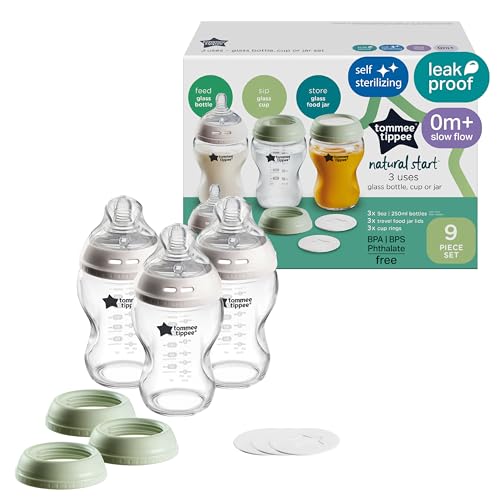
The glass kit that grows from bottle feed to sippy cup with the same set
The defining spec of this pack is the 3-in-1 growth kit: three 9oz glass bottles, three travel food jar lids, and three cup rings. That means the same bottles you use for newborn formula later become food storage jars and then open cup drinking rings — a single purchase that spans the whole first year. The medical-grade glass is long-lasting, stain-resistant, and free from BPA, phthalates, and toxins.
The silicone nipples are shaped to encourage a natural latch, reducing air intake and preventing nipple confusion when switching between breast and bottle. The self-sterilizing feature works in just three minutes, and the glass is heat and shock thermal resistant. Owners note the bottles heat faster than plastic or silicone options, with no fat loss from milk sticking to the walls — a real perk for breastmilk feeding.
Quality is what owners praise most, with the glass material a close second — parents love that it isn’t plastic. The honest caveat is weight: some find these bottles heavier than plastic, though babies handle them fine. Leakage gets some negative feedback, so be sure the screw ring, nipple, and cap are all fully secured — the maker says the bottle is 100% leakproof when all three are tightened.
Choose this for: the parent who wants one glass system to carry baby from bottle to weaning to open cup.
Watch for: the extra weight of glass and the need to double-check the lid seal to avoid drips.
5. Nanobebe Flexy Silicone Baby Bottle, 5 oz (2-Pack)
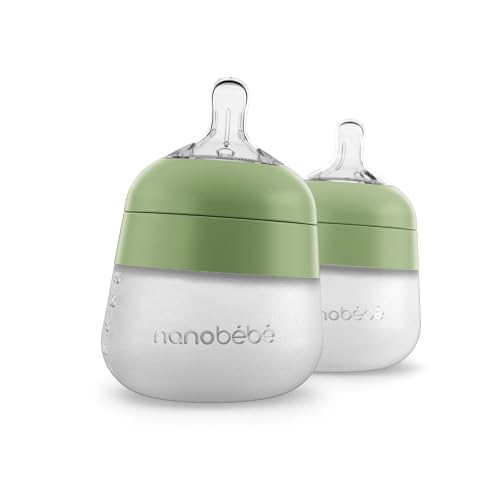
The extra-soft bottle that bends like a breast and squeezes while baby drinks
This bottle is made entirely from high-grade silicone, so it feels soft and familiar in your baby’s mouth, which helps avoid nipple confusion when moving from breast to bottle. Silicone is naturally hygienic, safe for dishwasher and microwave, and free of BPA, PVC, lead, and phthalates. The 5 oz size is ideal for newborns—small enough to hold easily, yet large enough to grow with your baby.
The advanced 360° triple vented, non-collapsible nipple keeps your baby latched without the nipple caving in, so feeding stays smooth without post-feeding gassiness. The stable base prevents tipping on any surface, and the easy-to-read volume scale takes the guesswork out of measuring. Owners note babies love to squeeze the soft body while drinking, which makes feedings feel more natural and playful.
Quality is the aspect owners praise most, with ease of cleaning a close second — the soft silicone is simple to wash by hand or in the dishwasher. Grip gets strong mentions too, since babies can hold the squeezable body easily. The caveat is the lid fit, which some find fiddly until you get the hang of snapping it on properly. An occasional unit arrives with a tricky seal, but most reviewers point out no leaks once the nipple is seated correctly.
The feel factor: owners call it the “soft and innovative” bottle that babies love to hold, with no-spill feeding and no gas.
Reach for this if: you’re after the most breast-like feel and a bottle your baby can grip and squeeze during feeds.
Think twice if: you dislike fussy lid assembly — the cap needs a firm, deliberate press to seal.
6. Playtex Baby Anti-Colic Nurser with Disposable Drop-Ins Liners, 8 oz (3 Count)

The travel bottle that collapses the liner to cut air and cut washing
The genius of this system is the disposable Drop-Ins liner. The bag collapses as your baby drinks, which naturally reduces the air they swallow — lowering the risk of gas and colic without any vent parts to clean. The set includes 15 pre-sterilized liners with 3 bottles, making it a complete travel-ready feeding kit right from the start.
Owners describe it as the perfect solution for long flights and travel days, because the disposable liners eliminate the need to wash bottles constantly. The 8 oz capacity suits most babies, and the soft nipples are easy to use. Shoppers say using these bottles across multiple kids and many years, praising how the liner collapses “just like the milk sacs in mom” for a natural feeding motion.
Ease of use is what owners praise most, with ease of cleaning a close second — there’s no dozen-part anti-colic disassembly here. The main trade-off is waste: the disposable liners create more trash than a reusable bottle, which some eco-minded parents won’t love. Air intake gets mixed feedback from a few, though the collapsing liner design is the whole point of the anti-colic claim. One buyer shared that this was the first bottle that helped their granddaughter’s severe colic after trying several others.
The convenience king: buyers report it “made feeding on long flights and travel days much easier” than any bottle that needs scrubbing.
Pick this for: frequent travel, road trips, or anyone who hates washing bottle parts at 3 a.m.
Heads up: you’ll keep buying disposable liners, so the ongoing cost and waste add up.
7. Comotomo Silicone Baby Bottle Gen 2, 8oz (Double Pack)
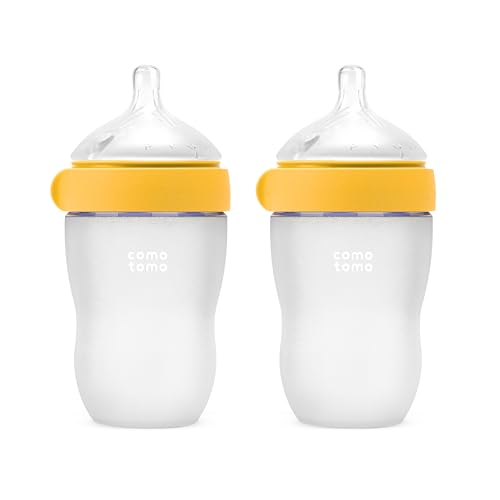
The refined wide-neck silicone bottle that fixed every Gen 1 complaint
This generator marks a decade of parent feedback compressed into one bottle. The Gen 2 gets a wider base, which owners say dramatically reduces accidental tip-overs during busy feeding moments. The truly wide neck design makes cleaning fast with no special brushes required, and the milk only ever touches food-contact-grade silicone, never plastic.
The defining upgrade is the nipple: softer and naturally tapered for a more comfortable latch, with reinforced structure that prevents collapsing during feeding. Owners who used the original Comotomo confirm the nipple no longer sucks inward, the caps are easier to remove, and the volume markings stay readable — all printed with safe silicone ink. The dual anti-colic vents and included medium flow nipples make it a strong option for babies who’ve rejected other bottles.
Bottle quality is what owners praise most, with softness a clear second — the flexible body feels closest to a real breast, which is why so many nursing moms reach for it. One twin mom switched from glass bottles that her babies refused and found instant acceptance with the Comotomo. The honest caveat is the lid functionality, which some find stiff until you learn the angle. A few owners note the medium flow is the included default, so newborns may need a slower nipple ordered separately.
The loyalist pick: “Comotomo always has been and always will be the best bottle on the market” — a pitch echoed across long-time owners.
Choose this for: the baby who has rejected glass and plastic — the soft body and breast-like nipple win over picky feeders.
Watch for: the lid needs a firm twist, and you’ll want to order a slower nipple for a newborn.
8. Dr. Brown’s Anti-Colic Options+ Narrow Glass Baby Bottle, 8 oz (4-Pack)
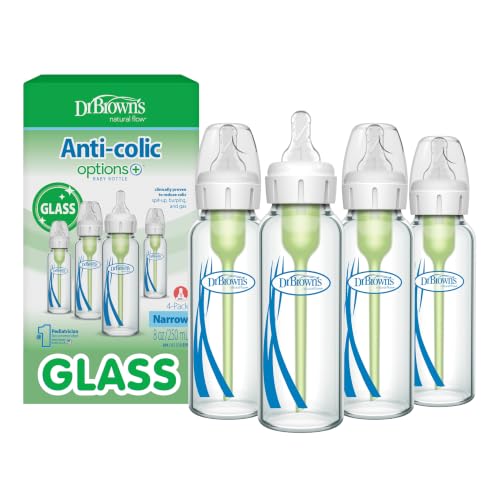
The clinical-grade vent system that attacks colic at the root cause
Its vacuum-free feeding system is the standout feature: it mimics breastfeeding with a steady flow, so your baby controls the pace. The breast-shaped nipple encourages a proper latch and eases the switch from breast to bottle. Owners mention less gas and fussiness, with many calling it the only bottle that worked for their colicky babies. Durability is a trade-off—a rare drop can shatter the glass, so handle it with care.
Quality is what owners praise most, with ease of cleaning a close second — the included cleaning brush makes short work of the narrow parts. The vent inserts are removable, letting you grow the bottle with your baby once colic subsides. Owners note the glass is heavier than plastic but retains warmth well, and there’s no chemical leaching to worry about. The recurring feedback is to hand-wash the vent inserts since the dishwasher can trap water inside them.
The specialist: customers note the anti-colic vent “really helps with the colic and gas reduction” — it’s the go-to for severe cases.
Reach for this if: your baby struggles with trapped gas, spit-up, or colic and you’ve tried simpler bottles without relief.
Think twice if: you want minimal parts — the vent system adds pieces that need the brush to clean.
9. Pigeon PP Wide Neck Anti-Colic Nursing Bottle, 8.1 oz (4-Pack)

The research-backed nipple that solved latch, spit-up, and vomiting for picky babies
This bottle is built on research into the 3 natural movements a baby makes while feeding in Japan, and that science shows up in the nipple. The super-soft, flexible silicone allows natural and smooth tongue movement, while the Latch-on Line curve guides your baby’s mouth into an appropriate latch for effective suction. It’s a purpose-built answer for the baby who refuses every other nipple.
With an 8.1 oz / 240 mL capacity and medium-flow M nipples (for 3 months and up), this bottle suits older babies. The wide neck and streamlined body make cleaning and holding easy. Owners who struggled with other bottles found success here—one called it “a standout” after “MANY trial and error bottles,” while another credits it with fixing latch, spit-up, and vomiting issues likely tied to tongue tie. It also lasts: one owner reports using it for over a year.
Quality is what owners praise most, with ease of cleaning a close second — the streamlined body and few parts make it a fast rinse. The nipple flow mimics breastfeeding closely, and babies stay latched throughout the whole feed. The caveat is the cost of additional flow nipples: you’ll need to buy different sizes as your baby grows, and they’re not cheap. Some find the brand less common, which actually helps prevent daycare mix-ups.
The picky-baby fix: reviewers point out “tried everything — these were the winner” — the soft nipple and latch guidance are the difference-makers.
Choose this for: the breastfed baby who’s fussy, has latch trouble, or spits up — the research-backed nipple does the heavy lifting.
Heads up: you’ll invest in replacement nipples at each flow stage, which adds to the long-term cost.
Understanding the Specs
Nipple Flow Rate
The flow rate decides how fast milk comes out, which must match your baby’s age and feeding ability. Newborns and preemies need an extra-slow or slow flow so they don’t choke or gulp air. Older babies get frustrated with slow nipples and may give up mid-feed. Most brands label flows by number or by month range (like 3m+, or Flow 3), and the correct size changes as your baby grows — expect to buy replacement nipples several times.
Venting and Anti-Colic Systems
Air swallowed during feeding is the main cause of gas, fussiness, and reflux-like symptoms. Bottles attack this in three ways: a vent in the base that stops air entering (like MAM), an internal tube that removes air from the milk (like Dr. Brown’s), or a collapsing liner that shrinks as baby drinks (like Playtex). More effective venting usually means more pieces to wash, so weigh the colic relief against your cleaning tolerance.
FAQ
How many bottles do I need for a newborn?
Should I choose glass or plastic baby bottles?
How do I know which nipple flow size my baby needs?
Can I switch between breastfeeding and bottle feeding easily?
Do anti-colic bottles really help with gas?
Is a vented-base bottle better than an internal-tube vent?
Can I put these bottles in the dishwasher or sterilizer?
Will these bottles work with my breast pump?
How do I stop bottles from leaking?
How long do baby bottles last before I need replacements?
Final Thoughts: The Verdict
For most families, the best baby bottle is the Philips Avent Natural PPSU because it resists heat up to 180°C, has a breast-like nipple for easy transition, and includes an anti-colic valve—all in a lightweight, shatterproof body. If your baby has severe colic and you want clinical backing, choose the Dr. Brown’s Options+ Glass. For travel days when washing isn’t possible, the Playtex Drop-Ins is your go-to—with 547 ratings, it’s the safest bet when you’re unsure which brand to trust.
How We Picked
We do not accept paid placement. Every pick is matched to a real buyer and a real use-case; we do not hands-on test units.
Sources & Methodology
Specifications: manufacturer listings and product documentation. Review insights: verified customer reviews, as of August 2026. Pricing: not shown on this page (it changes often); check the current price via the retailer link.
As an Amazon Associate, Gadgets Feed earns from qualifying purchases. This does not affect which products we feature.