
Finding a set of 15-inch wheels with a 4×100 bolt pattern that actually fits your Civic, Miata, Corolla, or Integra without rubbing or needing a stack of spacers is a deeper rabbit hole than most shoppers expect. Offset, hub bore, and rim width dictate whether you get a clean flush fit or a constant battle with fender liners and brake calipers.
I’m Rikta — the co-founder and writer behind Gadgets Feed. I’ve spent years analyzing wheel fitment data, offset charts, and load ratings to separate the bolt-on winners from the compromise-heavy options hiding behind glossy photos. (And Homer 🐱 supervised the unboxing from a warm spot on the hood — zero fender contact observed.)
The 4×100 15-inch landscape spans everything from lightweight alloy track specials to 100-spoke chrome wire baskets, and the right choice depends entirely on your car’s intended use and your tolerance for fitment fuss. This guide covers nine distinct wheels so you can match a 4×100 15 inch wheels set to your exact vehicle and budget without guesswork.
How To Choose The Best 4×100 15 Inch Wheels
Selecting the right wheel isn’t just about bolt pattern matching — three additional measurements determine whether your new wheels bolt on seamlessly or require adapters, spacers, or hub rings to run safely. Understanding offset, hub bore, and rim width before you click buy saves time, money, and a second trip to the tire shop.
Offset and Backspacing
The offset (measured in millimeters) tells you how far the wheel’s mounting surface sits from its centerline. A positive offset pushes the wheel inward toward the suspension, while a lower offset pushes it outward toward the fender. Most front-wheel-drive 4×100 cars (Civic, Corolla, Integra) run a +35mm to +45mm offset range. Running an offset outside this window often leads to brake caliper clearance issues on the inside or fender rubbing on the outside.
Hub Bore and Center Rings
The hub bore is the large hole in the center of the wheel that fits over your car’s hub flange. If the wheel’s bore is larger than your hub, you need hub-centric rings to center the wheel properly. A wheel that relies solely on lug nuts for centering (lug-centric) can vibrate at highway speeds. Factory wheels match the hub bore exactly — aftermarket wheels often use a universal 73.1mm bore that requires rings for vehicles with smaller hubs like Honda’s 56.1mm or Mazda’s 54.1mm.
Rim Width and Tire Fitment
A 15×6.5 wheel is the standard width that accommodates a 195/65R15 or 205/55R15 tire without stretch or bulge. Moving to a 15×7 or 15×8 opens up wider performance rubber but may require a lower offset to clear the strut housing — and fender rolling becomes more likely on lowered cars. A 15×10 wheel is a specialized fitment typically reserved for custom builds with widebody panels or reverse-mount configurations.
Quick Comparison
On smaller screens, swipe sideways to see the full table.
| Model | Category | Best For | Key Spec | Amazon |
|---|---|---|---|---|
| Enkei RPF1 | Alloy Race | Track & Autocross | 15×7, +35mm offset, 73mm bore | Amazon |
| Konig Helium | Alloy Street | Weight Saving | 11.4 lbs per wheel, 15×6.5 | Amazon |
| Circuit CP22 | Alloy Style | Honda/Acura Fitment | 15×6.5, +35mm offset, 73.1mm bore | Amazon |
| Enkei J10 | Alloy Classic | Dual Bolt Pattern | 15×6.5, 4×100/114.3, 38mm offset | Amazon |
| Circuit CP21 | Alloy Wide | Wider Stance | 15×8, +25mm offset, 73.1mm bore | Amazon |
| Motegi MR116 | Alloy Sport | Universal Fitment | 15×6.5, 4×100/4.5, 40mm offset | Amazon |
| Dorman 939-100 | Steel OEM | Replacement Spare | 18.2 lbs, steel construction | Amazon |
| Road Ready Corolla | Steel OEM | Corolla Spare | 19.2 lbs, 54.1mm center bore | Amazon |
| LA Wire Wheels | Wire Chrome | Classic Show Car | 15×10, 100-spoke, 4 adapters | Amazon |
In‑Depth Reviews
1. Enkei RPF1 15×7 (4×100)

This is the wheel that defined the lightweight performance segment for 4×100 platforms. The Enkei RPF1 in 15×7 with a +35mm offset and a 73mm bore is the go-to choice for Miata, Civic, and Integra owners who prioritize unsprung weight reduction. The cast-aluminum construction uses Enkei’s MAT (Most Advanced Technology) forming process, producing a wheel that resists impact damage better than standard gravity-cast designs without adding mass.
At roughly 11 pounds for the 15×7 variant, the RPF1 cuts rotational inertia significantly compared to factory steel wheels that often exceed 18 pounds. The spoke design clears many big-brake kits, including Wilwood and StopTech calipers, making it a frequent autocross and track-day favorite. The 35mm offset positions the wheel flush with most stock fenders on a 1990-2005 Miata or 1992-2000 Civic without needing fender rolling.
The wheel ships in genuine Enkei packaging with a factory valve stem included — the valve stem itself is a small but appreciated detail that reduces the number of parts you need to source before mounting tires. No center cap comes with the wheel, so budget roughly for a third-party set if you want the center bore covered. The machined silver finish cleans easily and resists brake dust adhesion better than clear-coated gloss surfaces.
Why it’s great
- Extremely light for a 15×7 — reduces unsprung mass noticeably
- Proven track durability across decades of competition use
- Clears many aftermarket big-brake kits without spacers
Good to know
- No center cap included; separate purchase needed
- Hub bore is 73mm — requires 56.1mm centering rings for Honda/Mazda
- Premium pricing compared to replica designs
2. Konig Helium 15×6.5 (4×100)

The Konig Helium is the wheel that proves lightweight performance doesn’t require a four-figure budget. Weighing just 11.4 pounds in the 15×6.5 configuration, this flow-formed cast wheel is a direct weight-saving upgrade for any 4×100 car. Owners of 2002-2005 Honda Civic Sis have reported shedding over 28 pounds of total rotational mass by swapping factory 20-pound steel wheels for a set of these — a reduction that improves acceleration feel and fuel economy measurably.
The eight-spoke styling draws clear inspiration from the ultra-premium Rays Volk CE28N, but at roughly a third of the price. The bronze finish pairs well with most car colors and hides brake dust better than silver or white wheels. The load capacity of 1,100 pounds per wheel gives ample headroom for daily driving, spirited cornering, and occasional track sessions without risking structural fatigue. Owners who have run these for years report zero rust or corrosion issues, even in wet and salt-treated road environments.
The 6.5-inch width is the trade-off — it limits tire selection to 195 or 205 widths, which is adequate for street driving but less ideal for aggressive track setups where a 7-inch or 8-inch wheel allows 225-section rubber. The offset isn’t listed in the standard spec sheet, but user reports place it around +40mm to +45mm, which sits slightly inward on most 4×100 cars. A thin spacer may be needed if you want a flush fitment, but for a straight bolt-on weight-loss program, this wheel is hard to beat at the price.
Why it’s great
- Extremely lightweight at 11.4 lbs — transforms handling feel
- Proven long-term durability from real-world owners
- Bronze finish resists brake dust staining and looks unique
Good to know
- 6.5-inch width limits maximum tire section width
- May require hub-centric rings for some vehicles
- Offset leans conservative — not ideal for flush-fitment builds
3. Circuit Performance CP22 15×6.5 (4×100)

The Circuit Performance CP22 brings the classic multi-spoke Spoon Sports aesthetic to the budget-conscious builder. Sized at 15×6.5 with a +35mm offset and a 73.1mm hub bore, this wheel is designed with Honda and Acura fitment as the primary target — specifically the EG, EK, and DC2 chassis that dominate the 4×100 enthusiast space. The full gloss black finish looks aggressive without being flashy and matches well with black trim, dark headlights, and tinted windows for a monochromatic build.
Build quality exceeds expectations at this price point. Owners who have mounted and balanced these wheels report needing less than one ounce of weight per wheel on a Hunter balancer, indicating consistent roundness and minimal runout. The aluminum construction keeps each wheel at 13.7 pounds, which is noticeably lighter than any steel wheel but slightly heavier than the premium flow-formed options. The 1,580-pound load index provides a generous safety margin even for heavier compact cars carrying passengers and cargo.
Fitment is straightforward for most 4×100 Honda and Mazda applications, but there are two caveats. The 73.1mm bore requires hub-centric rings if your car has a smaller hub diameter (56.1mm for Honda, 54.1mm for Mazda). Some users have also reported that the factory TPMS sensors from a 2009 Toyota Yaris do not fit the valve stem hole — aftermarket sensors with a smaller body are needed. On certain vehicles, a thin spacer may be required to prevent the brake caliper from contacting the inner barrel of the wheel.
Why it’s great
- Classic Spoon-style design at a fraction of the replica market price
- Consistent balance — minimal wheel weights needed during mounting
- Gloss black finish looks durable and easy to maintain
Good to know
- Hub bore is 73.1mm — centering rings required for most Hondas
- Some vehicles may need thin spacers for caliper clearance
- TPMS sensor compatibility varies by vehicle year and model
4. Enkei J10 15×6.5 (4×100/114.3)

The Enkei J10 solves a specific fitment puzzle that few other 15-inch wheels address: it carries both 4×100 and 4×114.3 bolt patterns in a single casting, making it viable for owners who switch between vehicles or for applications that sit at the edge of the 4×100 world. The 15×6.5 dimensions with a +38mm offset place it in the middle of the compatibility range for most front-wheel-drive compacts and older RWD Toyotas that use the 4×114.3 pattern.
The silver finish with a machined lip gives the J10 a classic two-tone appearance that catches light without looking aftermarket-garish. The 750-pound load index is lower than most other wheels on this list, but it still exceeds the gross axle weight rating of a typical compact car, so structural integrity isn’t a concern for normal use. Enkei’s casting quality ensures the wheel is round and true out of the box — owners report smooth highway rides with no vibration even at speed.
The biggest drawback is the hub bore. The J10 has a bore of roughly 72mm, which is larger than the hub on most 4×100 cars. You will need hub-centric rings to avoid a lug-centric fitment that can cause steering wheel shake. The wheel also requires special spline-drive lug nuts because the lug seats are recessed — a standard 19mm socket won’t fit. Dorman 711-355 spline nuts are a common fix. The machined lip can also be prone to corrosion in wet climates if not sealed with a wax or ceramic coating.
Why it’s great
- Dual bolt pattern (4×100 and 4×114.3) for multi-vehicle use
- Classic two-tone silver with machined lip looks period-correct
- Smooth, true out-of-box roundness from Enkei quality control
Good to know
- Requires hub-centric rings for most 4×100 applications
- Needs recessed spline-drive lug nuts — standard sockets won’t fit
- Machined lip can corrode over time without protective coating
5. Circuit Performance CP21 15×8 (4×100)

The Circuit Performance CP21 is built for the enthusiast who wants aggressive fitment without stepping into custom three-piece wheel pricing. At 15×8 with a +25mm offset, this wheel pushes the tire footprint outward by roughly 13mm compared to a standard 15×6.5 +35mm setup. The result is a noticeably wider track that fills the fenders on EG, EK, and DC2 chassis, especially when paired with a 205/50R15 or 225/45R15 tire.
The silver machined finish gives the face a bright contrasting look, though some buyers have noted that the color in person leans slightly different from the product photos — it’s a warm silver rather than a cool, bright machined aluminum tone. At 16.8 pounds, the CP21 is heavier than narrower alloy wheels, but that weight comes from the wider barrel and thicker spokes needed to handle the 1,580-pound load index. The 73.1mm hub bore is the same as the CP22, so the same hub-centric ring requirements apply.
Fitment is not a casual bolt-on affair for most stock cars. The +25mm offset pushes the wheel far enough outward that you will almost certainly need fender rolling on the rear arches, and potentially a small amount of front fender pulling depending on camber and ride height. Owners have reported smooth ride quality and good balance once the wheels are mounted, but brake caliper clearance should be verified before ordering — some owners needed 3mm to 5mm spacers up front to prevent rubbing on the inner barrel.
Why it’s great
- Wide 8-inch width allows 225-section tires for increased grip
- Low +25mm offset creates an aggressive flush stance
- High load capacity suitable for performance driving loads
Good to know
- Fender rolling is required for most applications
- Brake caliper clearance may require thin spacers up front
- Heavier than 6.5-inch alloy alternatives at 16.8 lbs
6. Motegi MR116 FS5 15×6.5 (4×100)
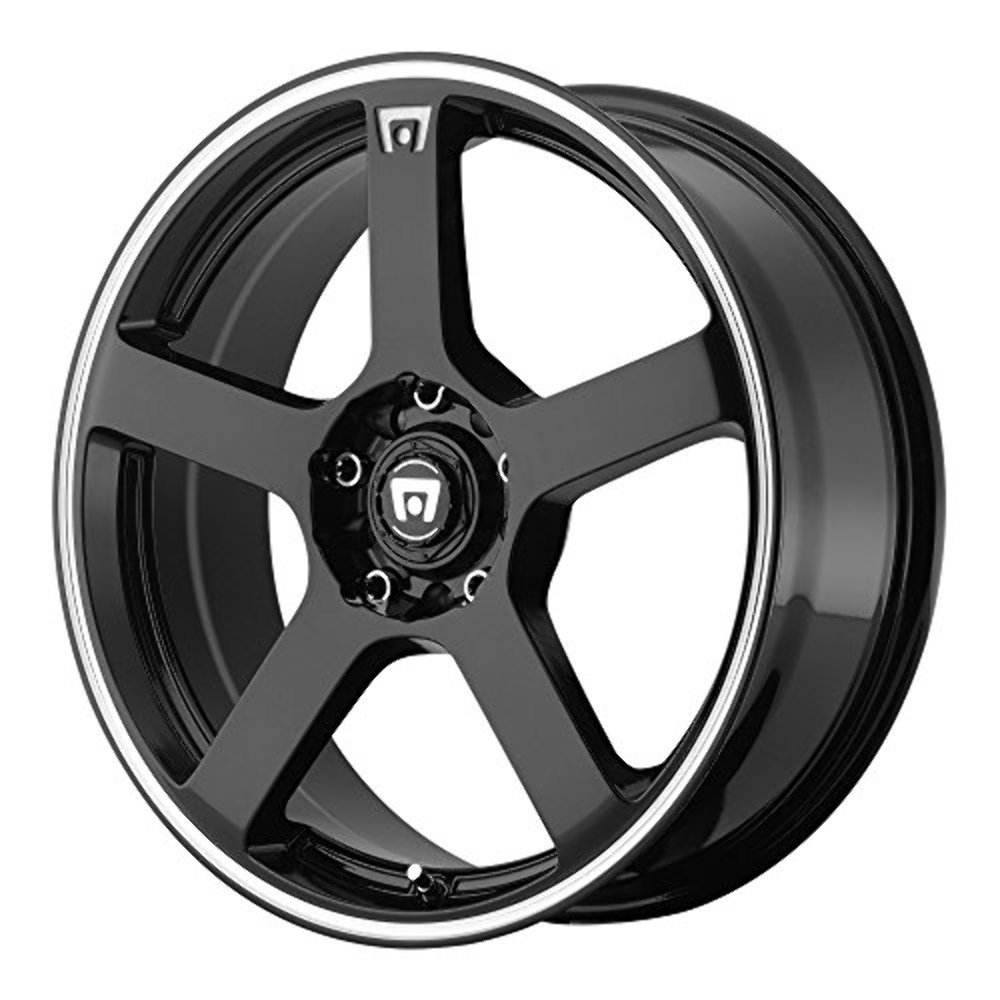
The Motegi MR116 FS5 splits the difference between a universal-fit budget wheel and a performance-minded aftermarket design. Sized at 15×6.5 with a +40mm offset, it sits slightly more inward than the CP22 or the Enkei J10, making it a safer fit for vehicles that have tight inner clearance — particularly the 2013-2018 Ford Fusion and Focus models that share a 4×10⁸ bolt pattern but can also run select 4×100 applications with the right adapters. The gloss black face with a machined flange edge gives the wheel a layered appearance that adds depth without looking busy.
Paint quality on these wheels stands out in the mid-range category. Owners consistently describe the finish as thick and immaculate, resisting chipping even during aggressive tire mounting. The aluminum construction saves noticeable weight over factory steel wheels — a set of four MR116 wheels can drop over 20 pounds of unsprung mass compared to OEM rims on a 2015 Ford Fusion Hybrid, which translates to a measurable improvement in acceleration feel and a small bump in fuel economy (roughly 0.2 MPG according to one owner’s logs).
Fitment is listed as universal, but you should verify your specific vehicle’s hub bore and offset requirements before purchasing. The wheel includes center caps, which is a nice inclusion that not all aftermarket wheels offer. One noted downside is that the company’s customer service contact avenues are limited — if you have a fitment question, check forums or third-party fitment guides rather than relying on manufacturer support. Some owners have reported needing only 0.5 to 1.25 ounces of balancing weight per wheel, indicating consistent manufacturing tolerances.
Why it’s great
- Thick, durable paint finish resists chips and scratches
- Lightweight aluminum construction reduces unsprung mass
- Center caps included in the package
Good to know
- Universal fit — verify hub bore and offset for your specific car
- Limited direct customer service contact from the manufacturer
- Less impact-resilient than steel wheels on rough roads
7. Dorman 939-100 Steel Wheel (Chevy/Pontiac)

The Dorman 939-100 is a no-frills steel wheel designed as a direct replacement for the factory wheel on specific Chevrolet and Pontiac models — think Chevy Cobalt, Pontiac G5, and similar GM compact cars from the mid-2000s. At 18.2 pounds, this is heavy compared to any alloy wheel, but that weight comes with the inherent durability of a stamped steel barrel. It’s the kind of wheel that survives pothole impacts that would bend a cast aluminum rim.
The wheel undergoes dynamic radial testing and run-out testing before leaving the factory, ensuring it spins true and doesn’t introduce vibration. The black painted finish is basic but functional — it resists light corrosion but will show rust over time if the paint gets scratched and exposed to road salt. A coat of wheel paint or rust converter can extend the cosmetic life significantly.
This is not a style upgrade — it’s a functional tool. Owners who bought it as a spare tire replacement or to replace a bent factory rim report perfect fitment on 2008-2010 Chevy Cobalts, with the steel wheel matching the OE bolt pattern and center bore exactly. The limited lifetime warranty adds peace of mind that you won’t find on most budget alloy wheels. However, the 4×100 bolt pattern on this wheel applies only to GM’s specific implementation — the lug seat and bore dimensions are GM-specific, so it won’t fit a Honda or Mazda without adapters.
Why it’s great
- Direct OE replacement for GM 4×100 applications — zero guesswork
- Steel construction withstands impact damage better than alloy
- Limited lifetime warranty from a century-old brand
Good to know
- Heavy at 18.2 lbs — increases unsprung mass
- Paint scratches easily and can rust in winter road-salt conditions
- GM-specific fitment — will not work on Honda/Mazda without modification
8. Road Ready Wheels 15-inch Steel (Toyota Corolla)
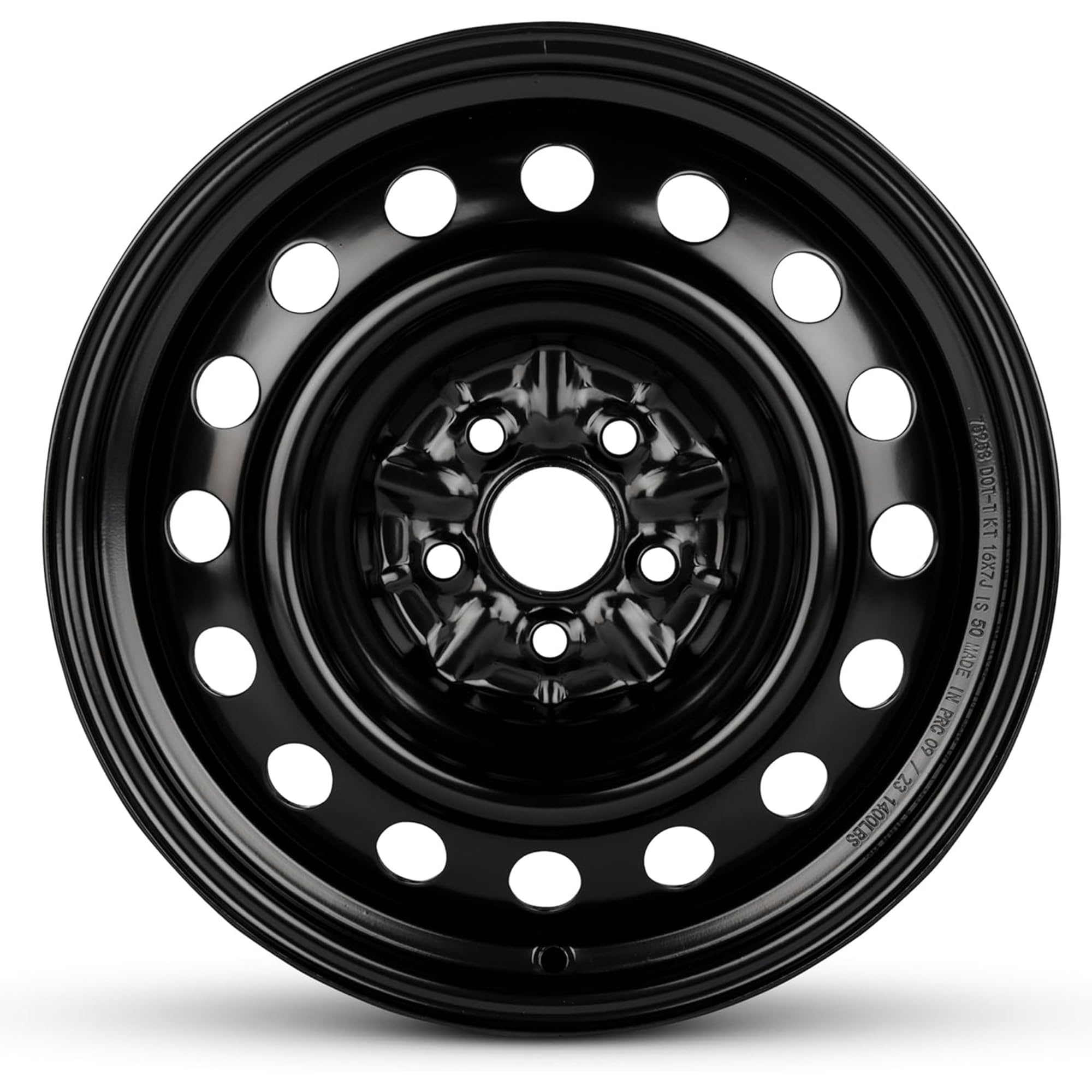
This Road Ready Wheels steel rim is engineered specifically for the 2009-2020 Toyota Corolla with a 4×100 bolt pattern, a 5x100mm pitch circle, and a 54.1mm center bore that matches the factory hub exactly. At 19.2 pounds, it’s slightly heavier than the Dorman option, but the weight is a direct consequence of the steel construction that prioritizes durability over performance. The black painted finish is chip-resistant and designed to withstand year-round exposure without flaking.
Wheel covers from the factory Corolla snap onto this rim without modification, so you can maintain a stock appearance if that’s your goal. The wheel accepts factory TPMS sensors, lug nuts, and valve stems without needing adapters or aftermarket parts — a significant convenience advantage over universal-fit alloy wheels that often require separate sensor purchases. The 1,212-pound load index provides a wide safety margin for passenger use, including fully loaded road trips.
Fitment is straightforward if your Corolla was originally equipped with 15-inch wheels and 195/65R15 tires. Owners report a perfect hub-centric fit with no vibration at highway speeds, which is exactly what you want from a spare tire or winter-wheel set. The wheel covers protect the steel barrel from direct exposure to road salt, which helps prevent the surface rust that bare steel wheels develop after a single winter season. This rim is not suitable for non-Toyota 4×100 applications because the 54.1mm bore is smaller than the universal 73.1mm standard used by most aftermarket wheels — it simply won’t fit over a Honda or Mazda hub.
Why it’s great
- Perfect hub-centric fit for 2009-2020 Corolla — no hub rings needed
- Accepts factory wheel covers, TPMS, and lug nuts seamlessly
- Insurance-grade quality testing for fatigue and salt spray resistance
Good to know
- Heaviest wheel on this list at 19.2 lbs
- Corolla-specific — will not fit Honda/Mazda 4×100 applications
- Steel surface will rust if wheel covers are removed in winter
9. LA Wire Wheels 15×10 Reverse 100-Spoke

The LA Wire Wheels 15×10 reverse 100-spoke set is an entirely different category of wheel — it’s a direct-drive wire wheel designed for show cars, lowriders, street rods, and classic vehicles where visual impact takes priority over weight savings and handling. The 10-inch width is massive for a 15-inch rim, and the 79mm backspacing places the mounting surface deep within the barrel. This wheel does not bolt directly to your car’s hub; instead, it uses the included bolt-on adapters that accommodate a wide range of bolt patterns, including 4×100, 4×114.3, 5×100, 5×114.3, and more.
The kit includes four chrome wire wheels, four knock-off spinners, four adapters, and the installation tool — everything needed to mount the wheels on vehicles from a 1963 Impala to a modern custom build. The chrome finish is highly reflective and true, with owners praising the packaging that uses foam inserts to prevent damage during transit. The spoke design is period-correct for traditional lowrider and hot-rod aesthetics, with 100 straight-lace spokes per wheel that create the classic wire wheel look that hubcap-style rims cannot replicate.
There are significant practical limitations. The 15×10 width and reverse-mount design severely restrict tire size options — you will need very small tires (think 185/75R14 or similar narrow touring sizes) that can look undersized in the wheel well. The seller requires you to message them with your vehicle year and model before shipping, as they have a 100% fitment guarantee policy. This is not a wheel for autocross, daily commuting, or any application where tire width matters — it is purely a cosmetic show piece. Long-term durability depends on keeping the chrome clean and sealed against the elements.
Why it’s great
- Complete kit with adapters, knock-offs, and tool — no extra sourcing
- 100-spoke chrome construction creates authentic classic-car aesthetics
- Adapts to 11 different bolt patterns including 4×100
Good to know
- Extremely limited tire size availability due to 10-inch reverse design
- Even heavier than steel wheels — not for weight-conscious builds
- Seller requires fitment verification before shipping — no instant order
FAQ
Will a 4×100 wheel from a Honda fit my Toyota Corolla?
Can I use a 15×8 wheel with a +25mm offset on a stock-height Civic?
Why do some 4×100 wheels need spline drive lug nuts?
What does +35mm offset mean on a 4×100 wheel?
Final Thoughts: The Verdict
For most users, the 4×100 15 inch wheels winner is the Konig Helium because it delivers the single largest weight reduction per dollar of any wheel on this list, transforming acceleration and ride quality without breaking the bank. If you want maximum grip and track-focused fitment, grab the Enkei RPF1. And for a show car or classic build where chrome presence and wire-spoke aesthetics are the top priority, nothing beats the LA Wire Wheels 100-spoke setup.