
That 80-yard approach shot lands soft, but the ball skips past the pin. The sand trap feels like a lottery. A 54-degree sand wedge is the club that turns those misses into tap-ins — if you pick the right one. The loft splits the difference between a gap wedge and a full sand iron, giving you the carry you need with the stopping power you can trust.
I’m Rikta — the co-founder and writer behind Gadgets Feed. I’ve spent hundreds of hours analyzing groove geometry, bounce angles, face milling patterns, and spin data across every tier of wedge construction to separate legitimate performance from marketing hype. (And Homer 🐱 supervised from atop my golf bag, unimpressed by any club he couldn’t swat off the table.)
A reliable 54-degree sand wedge should offer sharp grooves, a consistent bounce profile, and a face texture that grabs the ball from tight lies and deep sand alike. This guide breaks down the top models to help you find the 54 degree sand wedge that matches your swing and course conditions.
How To Choose The Best 54 Degree Sand Wedge
Selecting a 54° wedge is about matching your swing type and typical course conditions. The loft sits in a sweet spot — it can serve as your primary sand iron, a dedicated approach club, or a versatile chipping tool depending on the grind and bounce you choose.
Bounce Angle and Sole Grind
Bounce is the angle between the leading edge and the lowest point of the sole. Higher bounce (10°–14°) prevents the club from digging in soft sand or lush rough. Lower bounce (4°–8°) suits firm turf and tight lies where you need the leading edge to cut through. The sole grind affects how the club interacts with the ground — a heel or toe relief allows you to open the face without the trailing edge catching.
Groove and Face Technology
Aggressive, tightly spaced grooves increase friction and channel debris away at impact. CNC milled faces create a micro-rough texture that grabs the cover for higher spin. Models with full-face grooves extend that coverage across the toe, helping on off-center strikes or open-face shots. Cheaper wedges often use punched or cast grooves that wear down faster.
Construction Material and Feel
Forged carbon steel (typically 1025 or 8620) delivers a softer, more responsive feel at impact and is preferred by better players. Cast stainless steel or alloy steel is more durable and budget-friendly but can feel firmer and transmit less feedback. Shaft flex (regular vs. stiff) should match your iron set to keep distance gaps consistent.
Quick Comparison
On smaller screens, swipe sideways to see the full table.
| Model | Category | Best For | Key Spec | Amazon |
|---|---|---|---|---|
| TaylorMade Milled Grind | Premium | Precision spin control | 11° bounce, 4-way camber sole | Amazon |
| Cleveland RTX 6 Zipcore | Premium | Maximum spin consistency | HydraZip laser-milled face, UltiZip grooves | Amazon |
| Callaway Jaws Raw | Premium | Aggressive groove bite | AWS grooves, tungsten weighted head | Amazon |
| MAZEL Forged Wedge | Mid-Range | Forged feel at budget price | High-toe weighting, 4 weight ports | Amazon |
| Yamato Golf Wedge | Value | High spin on a budget | Wave scoring lines, forged carbon steel | Amazon |
| Gowolf Forged Wedge | Value | Full-face groove coverage | Full-face CNC milled, 0.48 kg weight | Amazon |
| Wilson Harmonized | Entry | Beginners and high handicaps | 60° loft available, steel shaft | Amazon |
In‑Depth Reviews
1. TaylorMade Milled Grind Wedge

The TaylorMade Milled Grind (MG) series is built around a precision‑mill process that maintains tighter sole tolerances than hand‑grinding can achieve. The 54° version comes with an 11° bounce angle and a classic full‑sole design with constant trailing edge relief, making it one of the most forgiving sand wedges for players who keep the face square to the target. The higher center of gravity (CG) works with a low‑profile head to keep launch angles controllable even when you swing hard from bunkers.
Machine‑milled face and groove technology enhance spin consistency from any lie. The tour‑proven 4‑way camber gives you smooth turf interaction whether you’re on a tight fairway or a fluffy lie. At address, the chrome finish reduces glare and the compact blade shape inspires confidence. The stiff flex shaft option suits faster swing speeds, but the regular flex still holds up well for mid‑handicap golfers.
Customer feedback consistently praises the feel and immediate short‑game improvement. One 5‑star reviewer noted it was the best wedge they’ve owned, and another highlighted the versatility from full swings to delicate chips. The price point puts it squarely in premium territory, but the craftsmanship justifies the investment for players who want consistent spin and predictable stopping power.
Why it’s great
- Precision milled sole ensures repeatable turf interaction
- Higher CG keeps spin and launch under control on full shots
- Tour‑proven 4‑way camber adapts to varied lies
Good to know
- Premium price may deter budget‑conscious golfers
- Less suited for players who like a low‑bounce grind from tight turf
2. Cleveland RTX 6 Zipcore Wedge

The Cleveland RTX 6 Zipcore takes a data‑driven approach to spin. The HydraZip face combines dynamic blast and laser‑milled lines to create a matte surface that maximizes friction in wet or dry conditions. The low‑density Zipcore technology has been expanded by up to 95% compared to the previous generation, shifting the CG right behind the strike zone while boosting MOI by 20%. The result is higher spin, better distance control, and more consistent feel on partial shots.
UltiZip grooves are sharper, deeper, and more tightly spaced than past TourZip designs. Two additional grooves on the face mean more edge contact when you catch the ball off‑center. The 54° model in Tour Satin presents a clean, glare‑free look at address. With a stiff flex shaft standard, this wedge rewards players who generate enough clubhead speed to activate the groove bite. The low 6° bounce angle is ideal for firmer turf and players who sweep rather than dig.
Users consistently report a soft, responsive feel and a noticeable improvement in bunker and chip shot consistency. One 5‑star reviewer described it as “solid” with great spin and forgiveness, while another mentioned the ease of opening the face for flop shots. The price sits at the upper end of the wedge market, but the technology package delivers measurable performance gains for improving players.
Why it’s great
- HydraZip face maintains spin in wet conditions
- Expanded Zipcore shifts CG for improved MOI
- UltiZip grooves increase edge contact on off‑center hits
Good to know
- Low bounce (6°) is less forgiving in soft sand
- Stiff flex may not suit slower swing speeds
3. Callaway Jaws Raw Wedge

The Callaway Jaws Raw features what the brand calls its most aggressive groove geometry ever, paired with a raw face that rusts over time to promote even higher spin. The 54° model carries a 12° bounce angle, making it a natural fit for soft sand and lush rough where the sole needs to glide rather than dig. This is the first Callaway wedge to incorporate tungsten weight technology, which balances the head for better feel and control on full and partial swings.
The cavity back head design offers a bit more forgiveness than a traditional blade, and Roger Cleveland’s decades of wedge design are evident in the sole grind and camber. The raw face is untreated steel — no plating — so it will develop a natural patina that some golfers find improves grip in damp conditions. The standard corded grip stays secure even with sweaty hands. The regular flex steel shaft pairs naturally with players who swing in the mid‑90s mph range with an iron.
Buyer reviews highlight the quality and the immediate improvement in short‑game performance. One 5‑star reviewer called it a must‑have, while another noted the black finish holds up well. A minority mentioned that the head feels smaller than the previous non‑raw model, requiring a more centered strike. For mid‑to‑low handicappers who want top‑tier groove aggression, this is a strong contender.
Why it’s great
- Most aggressive grooves in Callaway’s wedge lineup
- Raw face rusts for added friction over time
- Tungsten weighting balances the head for improved feel
Good to know
- Smaller head profile demands precise impact
- Raw face requires maintenance to prevent uneven rust
4. MAZEL Forged Sand Wedge
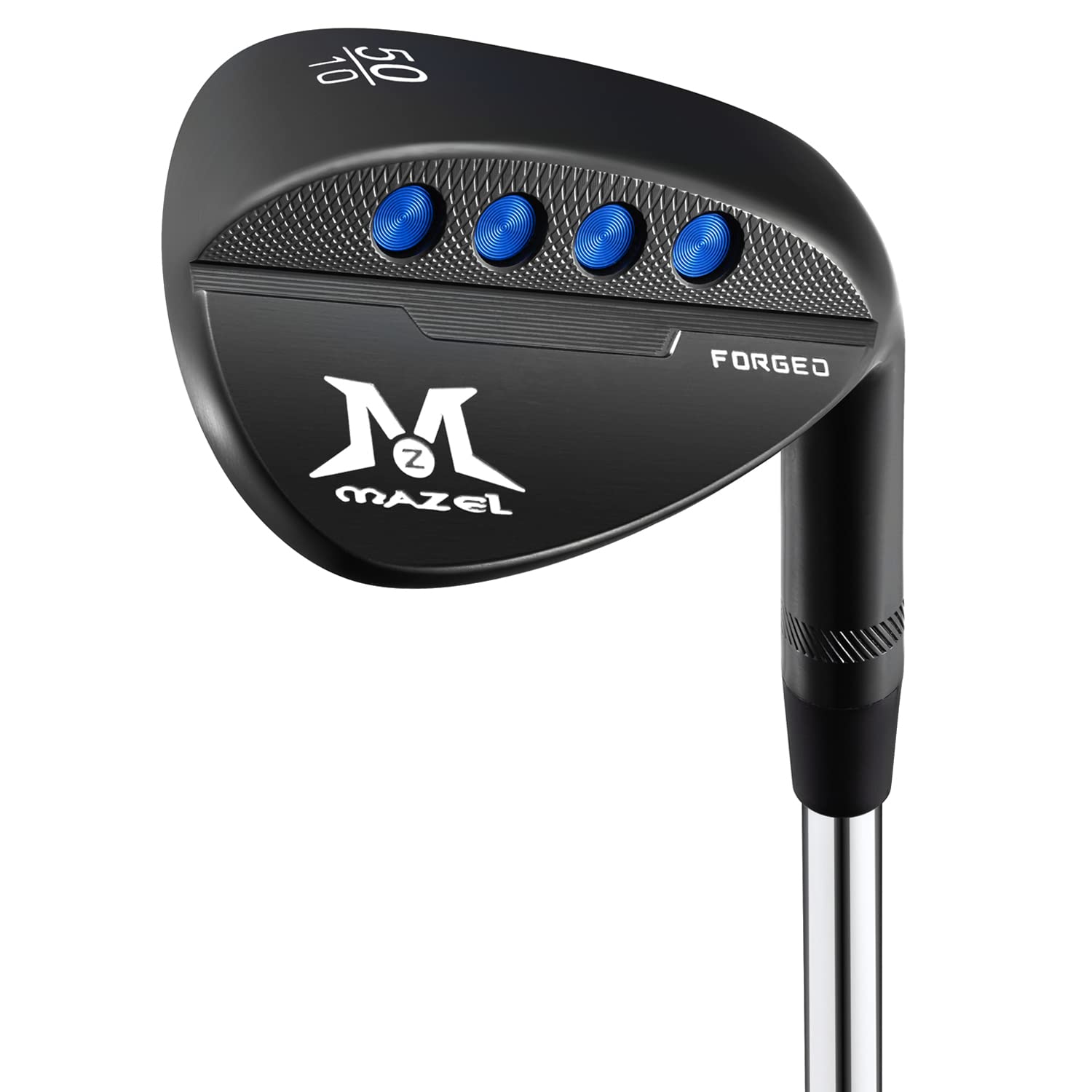
MAZEL offers a forged carbon steel construction at a price point that typically gets you a cast stainless club. The 54° wedge features a high‑toe design with four weight ports and milled aluminum medallions that shift the CG progressively upward as loft increases. That means you get a controlled launch angle and satisfying feedback on every swing — even on mishits toward the toe. The black finish is corrosion resistant and reduces glare.
CNC milled grooves are conforming and designed to maximize spin from the fairway, fringe, and rough. The sole grind and camber are precisely shaped to promote clean contact from tight lies. The standard rubber grip is serviceable but some users replace it with a premium option for added tack. At 0.5 kg, the swing weight feels balanced without being overly heavy.
Customer responses are overwhelmingly positive. One 5‑star reviewer compared it favorably to the Taylormade MG2 and Vokey SM9, noting the 48° version filled a gap perfectly. Another called it “my favorite sand wedge.” The main trade‑off is the grip quality: the stock grip can feel thin and may need upgrading for optimal control. For the price, you get forged feel and CNC precision that punches above its weight class.
Why it’s great
- Forged carbon steel delivers soft feel at impact
- High‑toe weighting and weight ports optimize CG
- CNC milled grooves provide strong spin performance
Good to know
- Stock grip may feel thin for some players
- Black finish can show wear over time
5. Yamato Golf Wedge

The Yamato wedge uses a unique “wave scoring line” pattern across the face that creates significant backspin from a variety of lies. The forged carbon steel head provides a feel that rivals wedges costing three times as much. The 56° model (closest to our 54° target) comes with a 10° bounce angle, which suits a wide range of conditions — soft enough for sand but not so high that it causes the leading edge to skate on firm turf. The tarnish finish reduces glare and offers a non‑traditional appearance at address.
A player with a 4 handicap reported spin rates around 10,000 RPM, which is on par with premium tour wedges. The alloy steel shaft in regular flex matches well with slower to moderate swing speeds, and the synthetic rubber grip provides adequate traction. Some users note the club feels slightly heavy after several rounds, but that weight also contributes to a solid, planted impact sensation.
Customers consistently highlight the “huge upgrade” in spin and control compared to stock set wedges. One verified buyer called it “better than high dollar premium wedge” and another praised the milled face for consistent chips and bunker shots. The trade‑off: the wedge is not USGA conforming according to one review, which matters only if you play in sanctioned competitions. For recreational golfers, it delivers tour‑level spin at a fraction of the cost.
Why it’s great
- Wave scoring lines generate exceptional backspin
- Forged carbon steel provides premium feel
- Competitive spin rates comparable to high‑end wedges
Good to know
- May not be USGA conforming for tournament play
- Club head feels heavier after extended use
6. Gowolf Forged Wedge
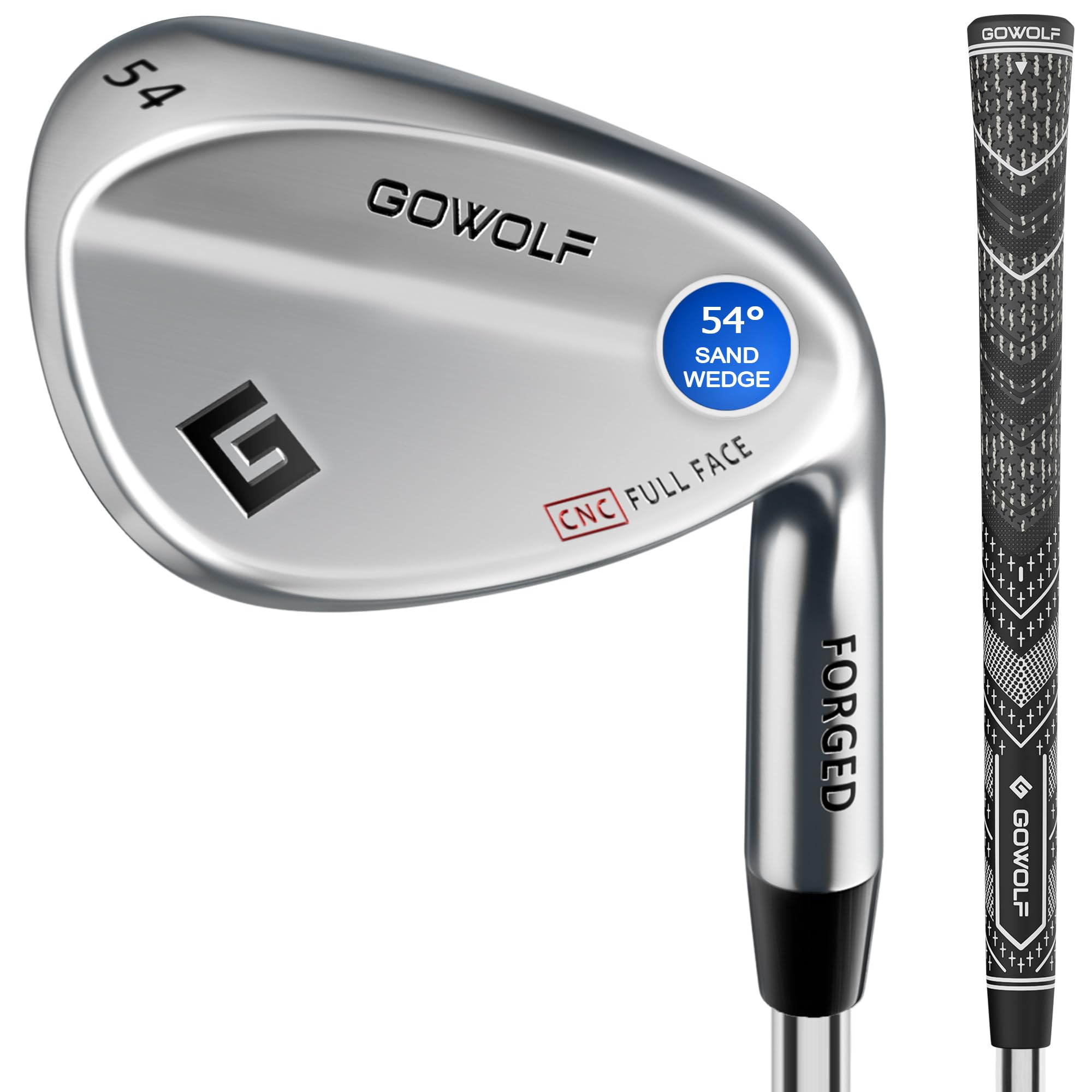
The Gowolf wedge stands out for its aggressive CNC milled face that extends full‑face grooves across the entire hitting area. That means maximum spin even when you catch the ball off the toe — a huge confidence booster for mid‑handicap players. The 54° chrome model has a clean, satin look at address, and the stainless steel construction offers durability that cheaper alloys can’t match. The regular flex shaft plays similarly to a Dynamic Gold profile, with a swing weight around D4.
The tighter groove spacing slices through grass and sand effectively, and several buyers noted the face texture is almost sandpaper‑like — it grips the ball hard but can accelerate ball cover wear. The stock rubber grips are thin and some users replaced them with Golf Pride options for better feel. Distance gapping is consistent: one player reported 89 yards with a 56° and 110 yards with a 52°, suggesting the 54° would land reliably in the 95‑105 yard window.
Customer reviews are overwhelmingly positive for the price. A 6‑handicap player compared the grind to a Titleist SM9 and felt performance was nearly identical. Another called it “super easy to hit” and was surprised by the quality given the modest price. The main drawback is that the aggressive face milling chews through golf balls faster than a standard wedge. For the money, it’s a high‑spin performer that won’t break your bank.
Why it’s great
- Full‑face grooves maintain spin on off‑center strikes
- Aggressive CNC milling grabs the ball from any lie
- Swing weight D4 provides solid, balanced feel
Good to know
- Face milling accelerates ball cover wear
- Stock grips are thin and may need replacement
7. Wilson Harmonized Unisex Wedge
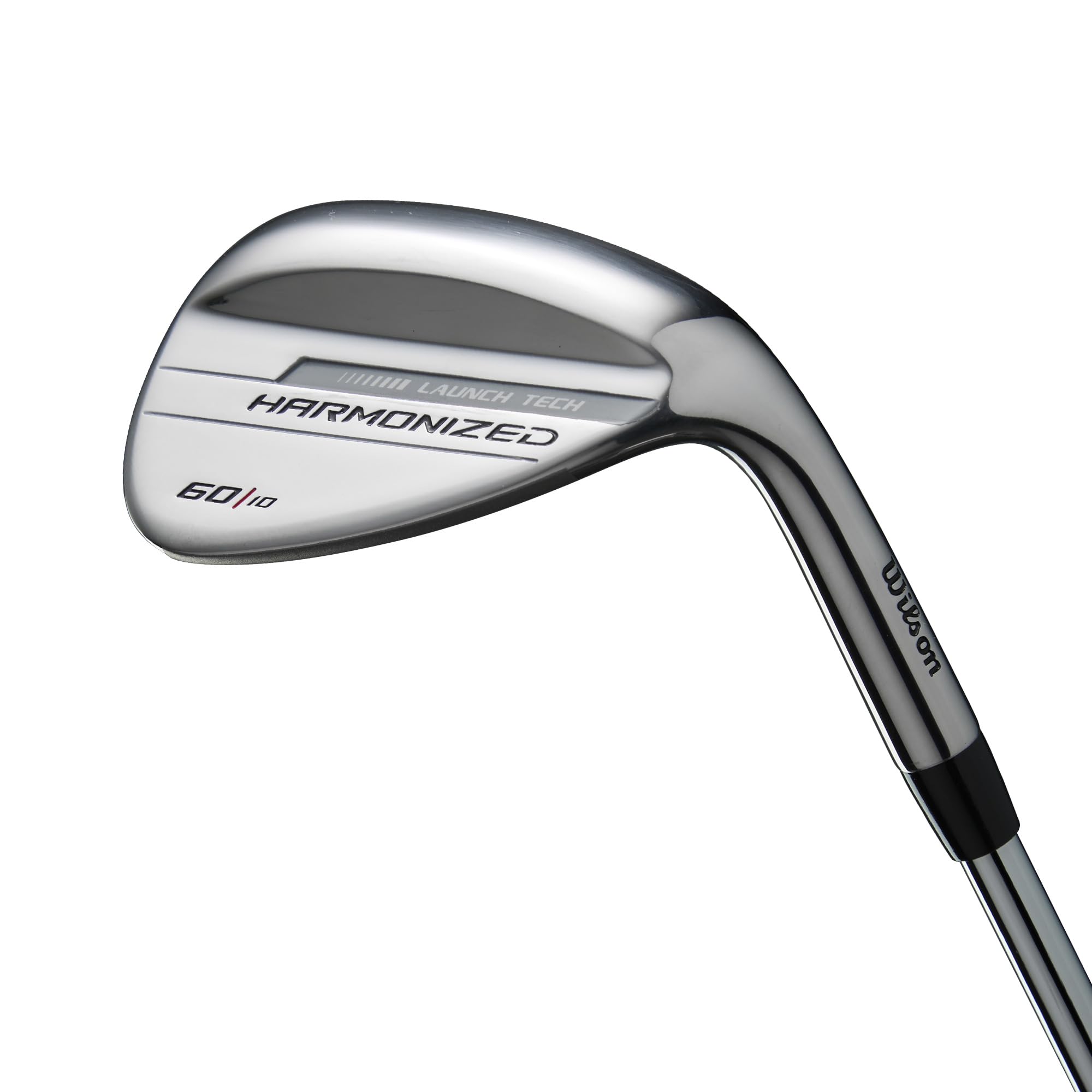
The Wilson Harmonized line is a staple for entry‑level and high‑handicap golfers who want a functional wedge without a big investment. The 60° model (the closest to the 54° target in the data) features a steel shaft and synthetic rubber grip, with a classic blade head shape. At 0.48 kg, the weight is average but some users find it slightly heavy — a quality that helps with stability on partial swings. The regular flex shaft is suitable for slower swing speeds.
Customer feedback mentions that the wedge feels decent for the price, with one 16‑handicap player noting the 56° version checked up well while the 50° rolled out more. Toe hits still produce respectable distance, which is a sign of reasonable forgiveness. The grip is standard and comfortable, though it won’t match the tackiness of premium corded options. The steel shaft provides a firm, predictable bend profile.
Reviews from parents buying for teenage golfers highlight the immediate improvement in course management — proper clubs for different situations let younger players hit the shots they envision. One 14‑year‑old saw his high school golf game improve after adding the 52° and 60° wedges. For a pure 54° sand wedge option, Wilson offers this model in multiple lofts, making it an easy, low‑risk entry point for new golfers or those on a tight budget.
Why it’s great
- Reliable performance at an accessible price point
- Forgiving on toe hits for high handicappers
- Classic blade shape aligns confidence at address
Good to know
- Heavier feel may not suit all swing types
- Grip lacks the tack and texture of premium options
FAQ
What bounce angle should I choose for a 54° sand wedge?
How do I know if I need a stiff or regular shaft in my 54° wedge?
Is a 54° wedge better suited for full swings or partial shots around the green?
Final Thoughts: The Verdict
For most users, the 54 degree sand wedge winner is the TaylorMade Milled Grind because it combines precision milled sole consistency with tour‑proven camber and a classic shape that inspires confidence from any lie. If you want the most advanced spin technology, grab the Cleveland RTX 6 Zipcore — its HydraZip face and UltiZip grooves deliver elite friction in all conditions. And for the best value forged feel, nothing beats the MAZEL Forged Wedge, which brings CNC milled precision and soft carbon steel feedback to a mid‑range budget.