
That chalky, oxidized look isn’t just an eyesore—it’s your aluminum hull losing structural integrity one pitted pore at a time. Marine-grade paint for aluminum has to do more than look good; it has to create a sacrificial barrier against galvanic corrosion, UV degradation, and aggressive fouling organisms that feast on unprotected metal.
I’m Rikta — the co-founder and writer behind Gadgets Feed. I spend my time researching marine coatings and analyzing technical data to find which formulations actually protect metal from electrolysis, salt creep, and barnacle adhesion. (And Homer 🐱 supervised every can inspection from his perch on a dry-docked skiff).
From fast-drying single-part coatings to copper-free ablative systems, the difference between a paint that lasts and one that flakes off at the waterline comes down to binder chemistry and aluminum-specific prep requirements. This guide breaks down the aluminum paint for boats that delivers real corrosion defense with minimal maintenance.
How To Choose The Best Aluminum Paint For Boats
Choosing paint for an aluminum hull isn’t the same as painting fiberglass or wood. Aluminum reacts electrochemically with copper and certain solvents, which means the wrong product can cause rapid blistering or even structural damage. Here’s what you need to know before you buy.
Copper-Free vs. Copper-Based Formulations
Standard copper biocide antifouling paints create a powerful galvanic cell when applied directly to aluminum, accelerating corrosion at an alarming rate. Copper-free antifouling paints use alternative biocides like zinc pyrithione or Econea that kill growth without the electrolytic reaction. If you’re painting bare aluminum below the waterline, copper-free is non-negotiable.
Barrier Coats and Epoxy Primers
Most aluminum-specific paints require an intermediate barrier coat—usually a high-build epoxy—to isolate the metal from the topcoat. This prevents solvents in the paint from attacking the surface and blocks water migration. Some products, like single-part urethanes, claim primer-free application but demand meticulous degreasing and etching with an acid wash or MEK substitute.
Ablative vs. Hard Epoxy Finish
Ablative paints wear away slowly, releasing fresh biocide with each pass through the water. They’re ideal for trailer boats and seasonal haul-outs because you don’t need to remove old layers before repainting. Hard epoxy or vinyl finishes provide a durable, smooth surface that resists abrasion but require full sanding between coats. Your choice depends on how often your boat stays submerged and how much prep work you’re willing to do.
Quick Comparison
On smaller screens, swipe sideways to see the full table.
| Model | Category | Best For | Key Spec | Amazon |
|---|---|---|---|---|
| TotalBoat Krypton | Copper-Free Antifouling | Saltwater performance | 500 sq ft per gallon | Amazon |
| TotalBoat Alumipaint AF | Ablative Aluminum Paint | Pontoon & outdrive use | 500 sq ft per gallon | Amazon |
| KBS Coatings RustSeal Silver | Moisture-Cure Urethane | Above waterline protection | 200 sq ft with 2 coats | Amazon |
| Interlux Fiberglass Bottomkote NT | Copper-Based Antifouling | Fiberglass hulls over primer | 500 sq ft per gallon | Amazon |
| Seahawk ALUMA Hawk Gray | Single-Part Aluminum Paint | Quick jon boat refresh | 32 oz per quart can | Amazon |
| Rust-Oleum Marine Flat Antifouling | Copper-Based Bottom Paint | Budget trailered fiberglass | 100 sq ft per quart | Amazon |
| Aluma Hawk Jon Boat Green | Fast-Dry Jon Boat Paint | Entry-level aluminum touch-up | 32 oz per quart can | Amazon |
In‑Depth Reviews
1. TotalBoat Krypton Copper Free Antifouling Bottom Paint
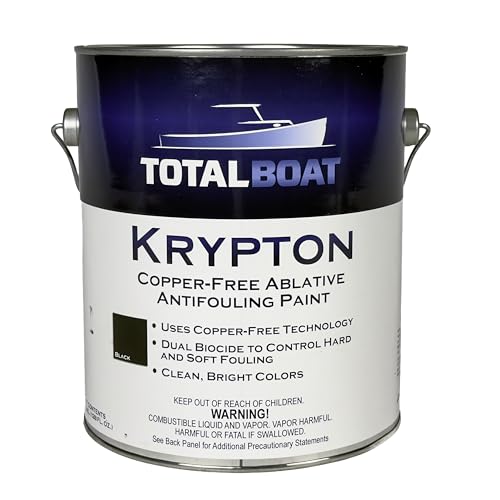
The gold standard for aluminum boats that live in saltwater, the TotalBoat Krypton uses a copper-free biocide blend specifically engineered to prevent galvanic corrosion on bare metal surfaces like hulls, outdrives, and trim tabs. Independent testing by Sailing magazine showed the least growth after two full seasons of submersion—a result that directly reflects the ablative wear mechanism that continuously exposes fresh biocide.
It applies smoothly with a natural bristle brush or a 3/16-inch nap roller, dries to a matte eggshell finish, and covers 500 square feet per gallon. The single-season protection holds well even in brackish water and warm conditions where algae and barnacles are aggressive. For surfaces previously coated, you can relaunch without a maximum dry-time window, making repeat application stress-free.
One major nuance: the paint lacks UV inhibitors, so prolonged exposure to direct sunlight while the boat is dry-docked can cause color fading, blistering, and cracking. This was flagged by a Bayliner owner who watched blue paint turn black after seven months of Arizona sun. Always keep the hull covered when stored out of water, or apply a UV-stable topcoat over the finished area.
Why it’s great
- Copper-free formula eliminates galvanic risk on aluminum
- Ablative action keeps biocide fresh all season
- Exceptional coverage at 500 sq ft per gallon
Good to know
- Requires UV protection during extended dry storage
- Needs thorough mixing and proper thinner for HVLP spray
2. TotalBoat Alumipaint AF Aluminum and Pontoon Boat Bottom Paint
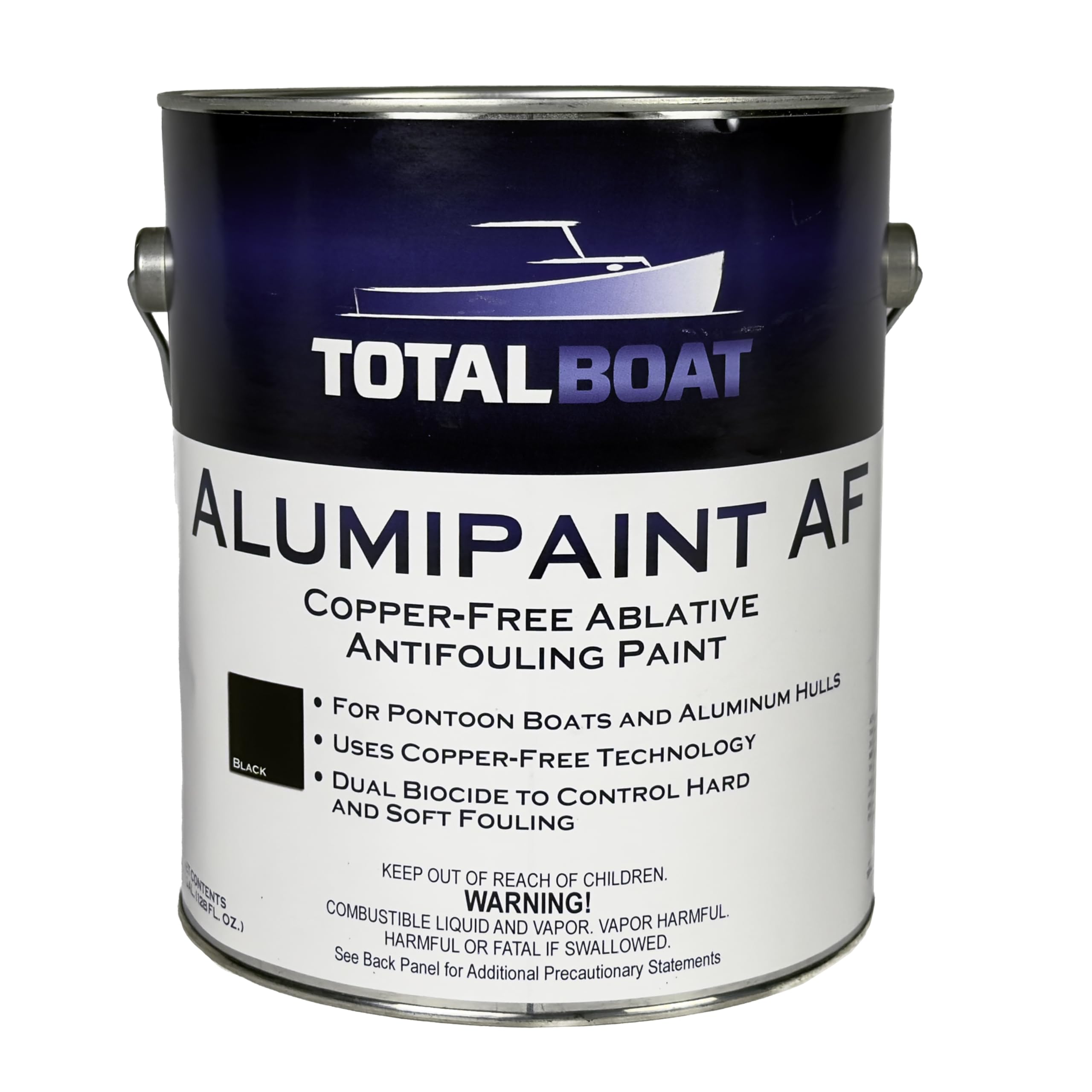
Built specifically for pontoon logs and aluminum hulls, the Alumipaint AF delivers an ablative coating that wears away at a controlled rate, releasing copper-free biocide to prevent growth from gaining a foothold. It’s a two-part system at heart: you apply a barrier primer first, then the topcoat, which helps seal the aluminum against water ingress and electrolysis.
Coverage is the same flagship 500 square feet per gallon, and the eggshell finish hides minor surface imperfections well. A Starcraft owner got two full coats on a 14-foot hull with a single quart, while a SeaRay Sundancer owner applied it to Mercury Bravo III drives with minimal fuss after a light steel-wool prep. The paint cures to a hard, durable shell that withstands trailering and pressure washing.
The biggest caution comes from moisture sensitivity. Multiple users reported that a light misty rain within 24 hours of application created a polka-dotted, uneven surface. This paint demands a completely dry environment during curing. One pontoon owner had to strip and redo the entire job after a quarter-inch rainstorm ruined the finish. Plan your application around three consecutive days of dry, mild weather.
Why it’s great
- Ablative mechanism provides season-long fouling protection
- Copper-free for direct aluminum contact
- Excellent adhesion to properly prepped outdrives and pontoons
Good to know
- Extremely sensitive to rain during the first 24 hours of cure
- Requires a separate epoxy barrier coat underneath
3. KBS Coatings 4503 Silver RustSeal
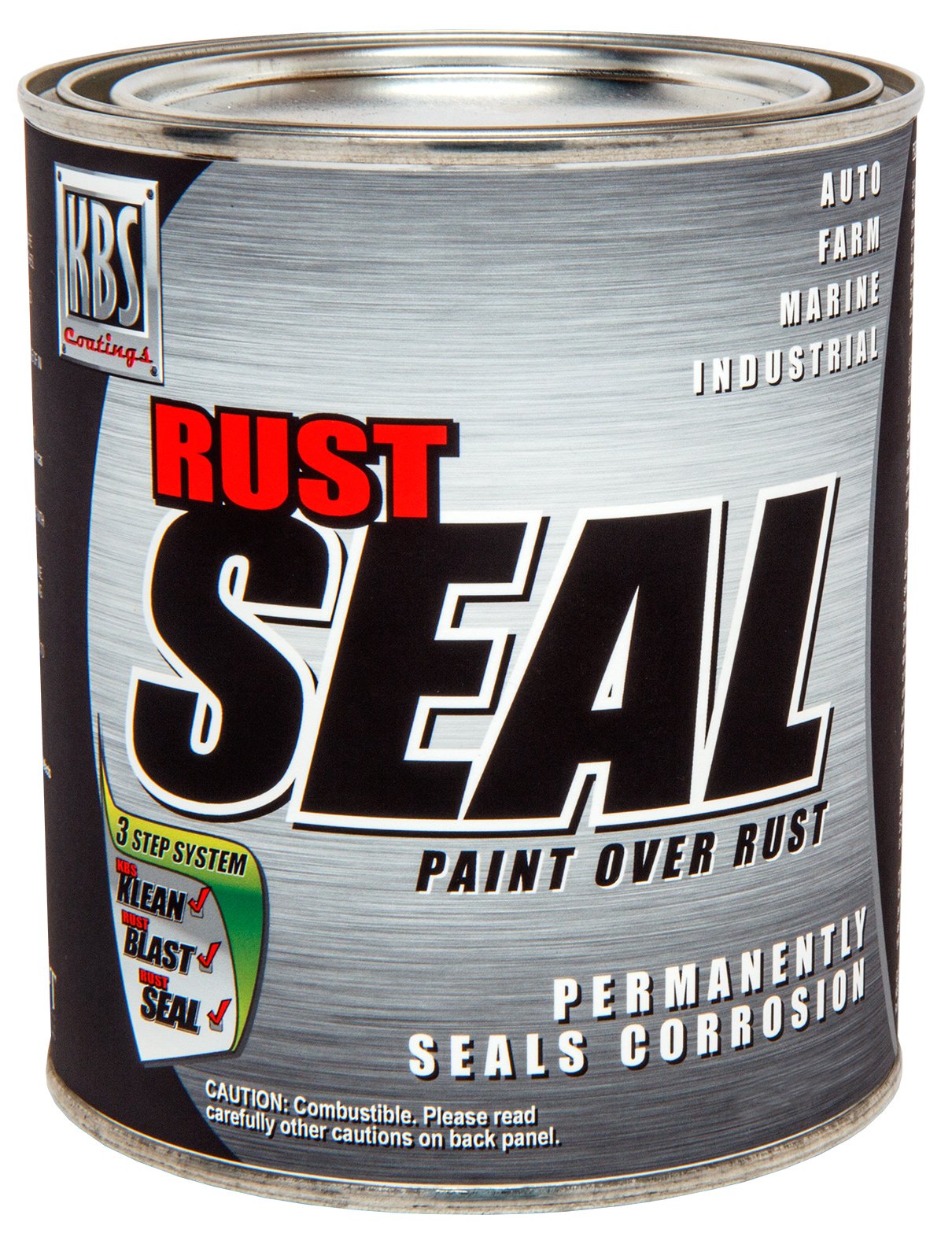
This isn’t a traditional marine paint—it’s a moisture-cure urethane that hardens into a non-porous shell more akin to powder coating than liquid paint. KBS RustSeal aggressively bonds to aluminum, steel, and fiberglass, forming a permanent barrier against fuel, oil, acids, and continuous moisture exposure. It withstands temperatures up to 600°F, making it a viable choice for engine rooms, bilges, and heat exchanger housings.
Coverage is a moderate 200 square feet with two coats, and the gloss silver finish self-levels remarkably well—brush strokes dissolve during curing. One owner used it to restore a saltwater trolling motor, cleaning off rust and sealing the aluminum completely. Another compared it directly to Por-15 and found KBS cured harder, faster, and could be sanded the next day for a second coat.
The lid design is a recurring frustration: once opened, the can is nearly impossible to reseal without the lid fusing in place if any product touches the rim. Also, the formula is not intrinsically UV-stable, so any surface exposed to direct sunlight must receive a UV-resistant topcoat to prevent degradation. Plan to use the entire gallon in one session or transfer leftover paint to a separate sealed container.
Why it’s great
- Forms a hard, waterproof shell that resists chipping and peeling
- Withstands high temperatures and chemical exposure
- Self-leveling properties deliver a near powder-coat finish
Good to know
- Lid seals permanently if any paint contacts the rim
- Must be topcoated with UV-resistant paint for exterior use
4. Interlux Fiberglass Bottomkote NT

Interlux is a household name in marine refinishing, and Bottomkote NT lives up to that reputation for fiberglass hulls that spend the season in freshwater. The copper-loaded formula provides excellent antifouling, with one owner reporting only about 5% algae coverage and minimal quagga mussel attachment after three years of submersion. The 500-square-foot gallon allows two full coats on boats up to 27 feet.
The paint is thin—almost water-like consistency—and flows out nicely with a 3/8-inch nap roller, leaving a slightly textured surface that inhibits growth. One gallon covered a 27-foot Bayliner twice with enough left over for a third pass. The included lid clips and tape sealing ensured zero spillage during shipping, which is a significant advantage over competitors whose containers often arrive damaged.
The primary catch is that this is a copper-based paint, so it is not safe for direct application to bare aluminum. You must apply a high-quality epoxy barrier primer first to isolate the metal from the copper biocide. Additionally, the strong solvent fumes demand a cartridge respirator—a simple dust mask is insufficient. Use it in a well-ventilated area or outdoors.
Why it’s great
- Proven three-year freshwater protection against algae and mussels
- Excellent coverage ratio reduces overall cost per boat
- Secure packaging prevents leaking during transit
Good to know
- Copper content requires an epoxy primer on aluminum surfaces
- Very low viscosity can lead to runs if applied too thick
5. Seahawk ALUMA Hawk 1 Quart, Aluminum Gray

Seahawk’s ALUMA Hawk is a single-part urethane formulated specifically for aluminum boats, offering a no-primer application if the surface is properly etched and cleaned. The Aluminum Gray color matches standard unpainted hull aesthetics while adding a durable barrier that resists corrosion and chipping. It’s designed primarily for above-waterline use or for boats that are trailered and stored dry.
The quart size is perfect for small jon boats, skiffs, or touch-up projects where a full gallon would be overkill. Users report good coverage on 12-to-14-foot hulls with a single coat, leaving a clean factory-like finish. The paint flows well when sprayed through a cheap HVLP gun after thinning with a reducer, though brushing requires careful technique to avoid visible strokes.
Quality control is a real concern. Several buyers received cans that were partially filled, with one reporting that the quart can was only three-quarters full upon arrival. Others noted damaged cans even when the shipping box was intact. This inconsistency undermines a product that otherwise performs well. Measure the contents immediately upon arrival and return any short-filled cans.
Why it’s great
- No separate primer needed if aluminum is etched
- Perfect quart size for small hulls and spot repairs
- Sprays well with HVLP for a smooth, even finish
Good to know
- Inconsistent fill levels in the can upon arrival
- Not designed for prolonged underwater submersion
6. Rust-Oleum 396967 Marine Flat Boat Bottom Antifouling Paint
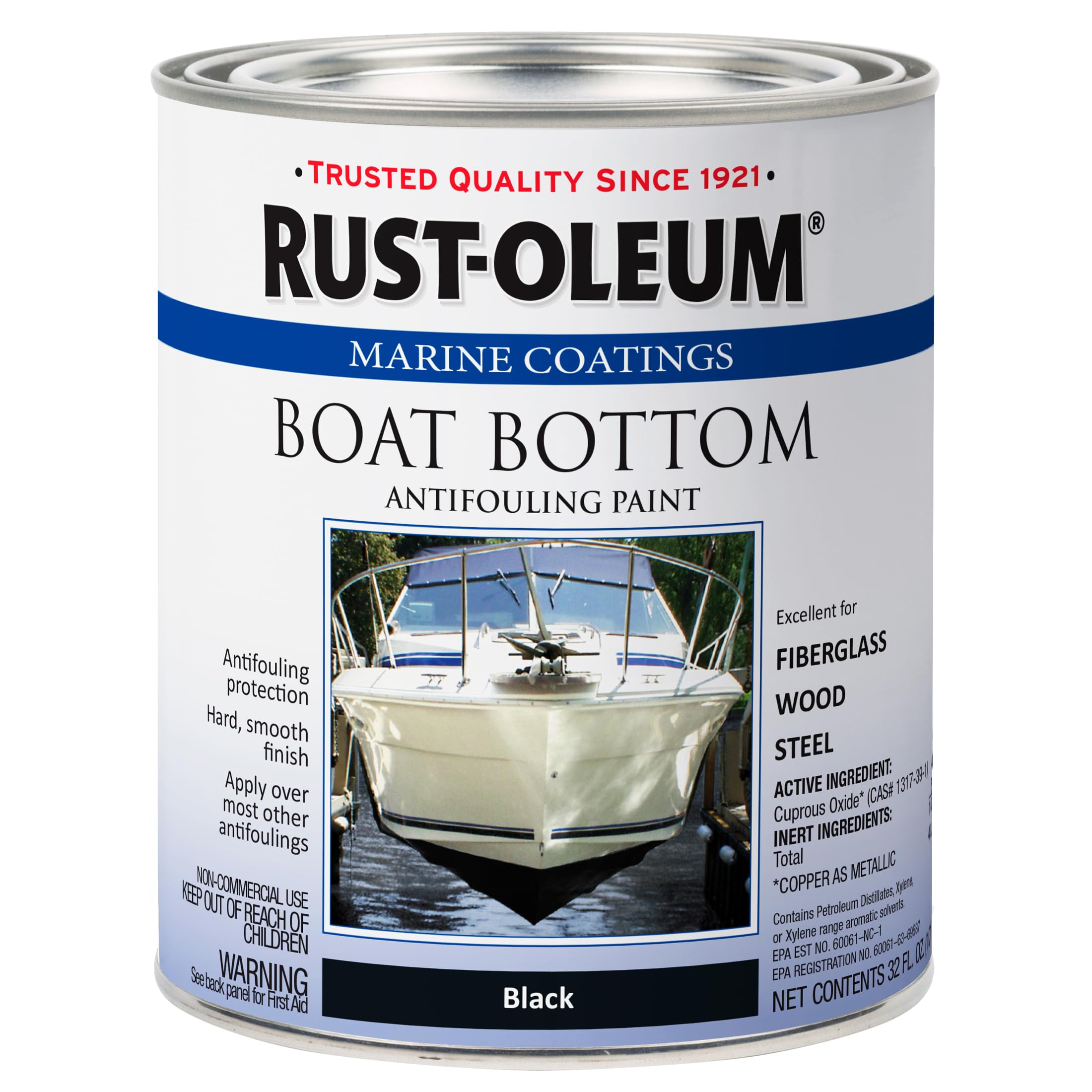
Rust-Oleum brings its formulation expertise to the marine world with this copper-based antifouling bottom paint, designed for fiberglass, wood, and steel surfaces that stay in the water for weeks at a time. The flat black finish dries hard and smooth, and the copper release mechanism effectively discourages barnacle and algae buildup. A 13-foot Boston Whaler needed just one quart for two full coats.
At 110 square feet of coverage per quart, it’s a cost-conscious option for smaller boats. The 16-hour launch time is relatively fast, and the paint cures to a hard surface that stands up to pressure washing. One South Florida owner reported minimal growth after a full year in warm saltwater with monthly diver cleaning. The included extra lid clips are a thoughtful touch that helps prevent the can from spillage during shipping.
Shipping is the Achilles’ heel here. Multiple customers received leaking cans due to inadequate packaging, and because the product is HazMat, returns are problematic—Amazon typically reships rather than processes a standard return. The copper content also makes this paint unsuitable for direct application to aluminum; a barrier primer is mandatory. On the plus side, the price per quart is hard to beat for a fast, effective bottom job.
Why it’s great
- Highly affordable entry point for antifouling bottom paint
- Hard, durable finish that withstands power washing
- Recoat in 4 hours, launch in 16 hours
Good to know
- Frequent shipping damage leads to leaking cans
- Copper formula requires a primer on aluminum hulls
7. Aluma Hawk Jon Boat Green, Quart

Claiming a 60-second dry time, this fast-drying aluminum paint is built for rapid application on jon boats, duck boats, and utility skiffs where speed matters more than cosmetic perfection. The Jon Boat Green color blends into marshy environments, and one owner reported making a 30-year-old leaking hull watertight after proper prep work. The single-part formula eliminates the need for a separate primer if you etch the surface.
Coverage is adequate for a 10-foot boat from a single quart, though application is best done with a sprayer rather than a brush. The paint is thick and needs to be reduced with a compatible thinner (MEK was recommended) to prevent nozzle clogging. Dries to a hard, durable finish that bonds well to clean, etched aluminum. A 30-year-old jon boat was restored to leak-free condition after a proper prep and paint session.
Beware of settling: the pigment can hard-bake into a sediment layer at the bottom of the can, making thorough mixing a chore. Additionally, the color is closer to a very dark green or black than the bright shade shown in marketing images. If color accuracy is critical, request a color sample before committing to a full can. The gallon-size cans pictured on the listing are misleading—verify you’re ordering the quart option.
Why it’s great
- Exceptionally fast 60-second dry time for quick turnarounds
- Bonds directly to etched aluminum without primer
- Restored a leaking 30-year-old hull to watertight condition
Good to know
- Can settle into a hard sediment layer that’s difficult to remix
- Actual color is significantly darker than product images suggest
FAQ
Do I have to use a primer before painting an aluminum boat bottom?
Can I use regular marine paint designed for fiberglass on my aluminum hull?
Final Thoughts: The Verdict
For most users, the aluminum paint for boats winner is the TotalBoat Krypton because it delivers copper-free, ablative antifouling protection that directly addresses the galvanic corrosion risk unique to aluminum hulls, all with 500 square feet of coverage per gallon. If you need a moisture-cure urethane that forms an indestructible shell for above-waterline components and bilges, grab the KBS Coatings RustSeal. And for a budget-conscious refresh on a small jon boat or skiff, nothing beats the quick-dry simplicity of the Aluma Hawk Jon Boat Green.