
Basic fitness trackers count your steps and estimate calories, but an advanced fitness tracker dives deep into your physiology — measuring heart rate variability (HRV), blood oxygen saturation (SpO2), sleep stages, training load, and recovery readiness to paint a complete picture of your health and performance.
I’m Rikta — the co-founder and writer behind Gadgets Feed. My analysis of the wearable market focuses on sensor accuracy, battery endurance, and the depth of data ecosystems that separate consumer-grade trackers from true performance partners. (And Homer 🐱 supervised wrist temps from a warm laptop.)
Whether you’re a marathon runner, a triathlete, or someone serious about sleep and recovery, the right device delivers actionable insights beyond simple metrics. This guide breaks down the top models to help you find the best advanced fitness tracker for your specific goals and lifestyle.
How To Choose The Best Advanced Fitness Tracker
Choosing an advanced fitness tracker means looking past the marketing buzzwords and focusing on the biometric sensors, battery endurance, GPS accuracy, and data ecosystem that align with your training demands. Here are the critical factors to evaluate.
Biometric Sensors: HRV, SpO2, and ECG
Advanced trackers go beyond wrist-based heart rate. Heart rate variability (HRV) measures the time between heartbeats and is a key indicator of recovery and stress. Pulse oximetry (SpO2) tracks blood oxygen levels, useful for altitude training and sleep apnea detection. Electrocardiogram (ECG) sensors can identify irregular rhythms like atrial fibrillation — a feature found on premium models like the Apple Watch SE 3 and Samsung Galaxy Watch Ultra.
Battery Life and Charging Speed
Daily charging kills the seamless tracking experience. Look for trackers that offer at least 7-10 days of battery life if you want uninterrupted sleep and activity monitoring. Devices like the Garmin Instinct 3 solar and Amazfit Active Max push into weeks per charge. Fast charging is also crucial — a 5-15 minute top-up should deliver a full day of use.
GPS Accuracy and Navigation
Serious runners, cyclists, and hikers need precise route tracking. Multi-band GPS (also called dual-frequency or SatIQ) reduces signal drift in urban canyons and dense tree cover. The Garmin Forerunner 970 and Suunto Race 2 excel here, while the Apple Watch Ultra 3 offers precision dual-frequency GPS for multisport use.
Data Ecosystem and App Integration
The tracker is only as good as the platform it feeds. Garmin Connect, Apple Health, Google Fitbit, and Zepp each offer different levels of insight. Advanced metrics like training load, recovery time, sleep coaching, and personalized AI recommendations require a mature app ecosystem. The Garmin Forerunner 970 and Google Pixel Watch 4 lead in this area with deep analytics and third-party integration.
Quick Comparison
On smaller screens, swipe sideways to see the full table.
| Model | Category | Best For | Key Spec | Amazon |
|---|---|---|---|---|
| Garmin Forerunner 970 | Premium | Triathlon & Running | 26h GPS, 15d smartwatch | Amazon |
| Suunto Race 2 | Premium | Endurance Training | 55h GPS, 16d smartwatch | Amazon |
| Apple Watch Ultra 3 | Premium | Adventure & Safety | 42h normal, 72h low-power | Amazon |
| Samsung Galaxy Watch Ultra | Premium | Durable Daily Use | 60h battery, titanium case | Amazon |
| Google Pixel Watch 4 | Mid-Range | Android Ecosystem | 30h battery, LTE option | Amazon |
| Garmin Instinct 3 50mm | Mid-Range | Rugged Outdoor | Unlimited (solar), 40d+ | Amazon |
| Apple Watch SE 3 | Value | Core Health Features | 18h battery, always-on display | Amazon |
| Amazfit Active Max | Value | Long Battery & Display | 25d battery, 3000-nit AMOLED | Amazon |
| Google Fitbit Air | Budget | Minimalist Tracking | 7d battery, 5-min fast charge | Amazon |
In‑Depth Reviews
1. Garmin Forerunner 970

The Garmin Forerunner 970 is the gold standard for serious runners and triathletes, combining a bright AMOLED touchscreen with button controls for reliable interactions in all conditions. Its 560 mAh battery delivers up to 26 hours of GPS tracking and 15 days of smartwatch use, making daily charging a thing of the past.
Beyond battery life, the 970 packs professional-grade metrics like running economy, step speed loss, and a training readiness score that integrates sleep quality, HRV status, and recovery load. The built-in LED flashlight is a subtle but appreciated safety feature for early morning or late-night runs.
The ECG app can log heart rhythms for signs of atrial fibrillation, and the multi-band GPS with SatIQ technology ensures accurate route tracking even in challenging environments. While the interface has a learning curve, the depth of data and customization options make it the most capable advanced fitness tracker for performance-oriented athletes.
Why it’s great
- Professional-grade training metrics and recovery insights
- Excellent 15-day battery life with fast charging
- Bright AMOLED display with sapphire lens for durability
Good to know
- Steeper learning curve compared to consumer smartwatches
- Premium pricing may be overkill for casual users
2. Suunto Race 2
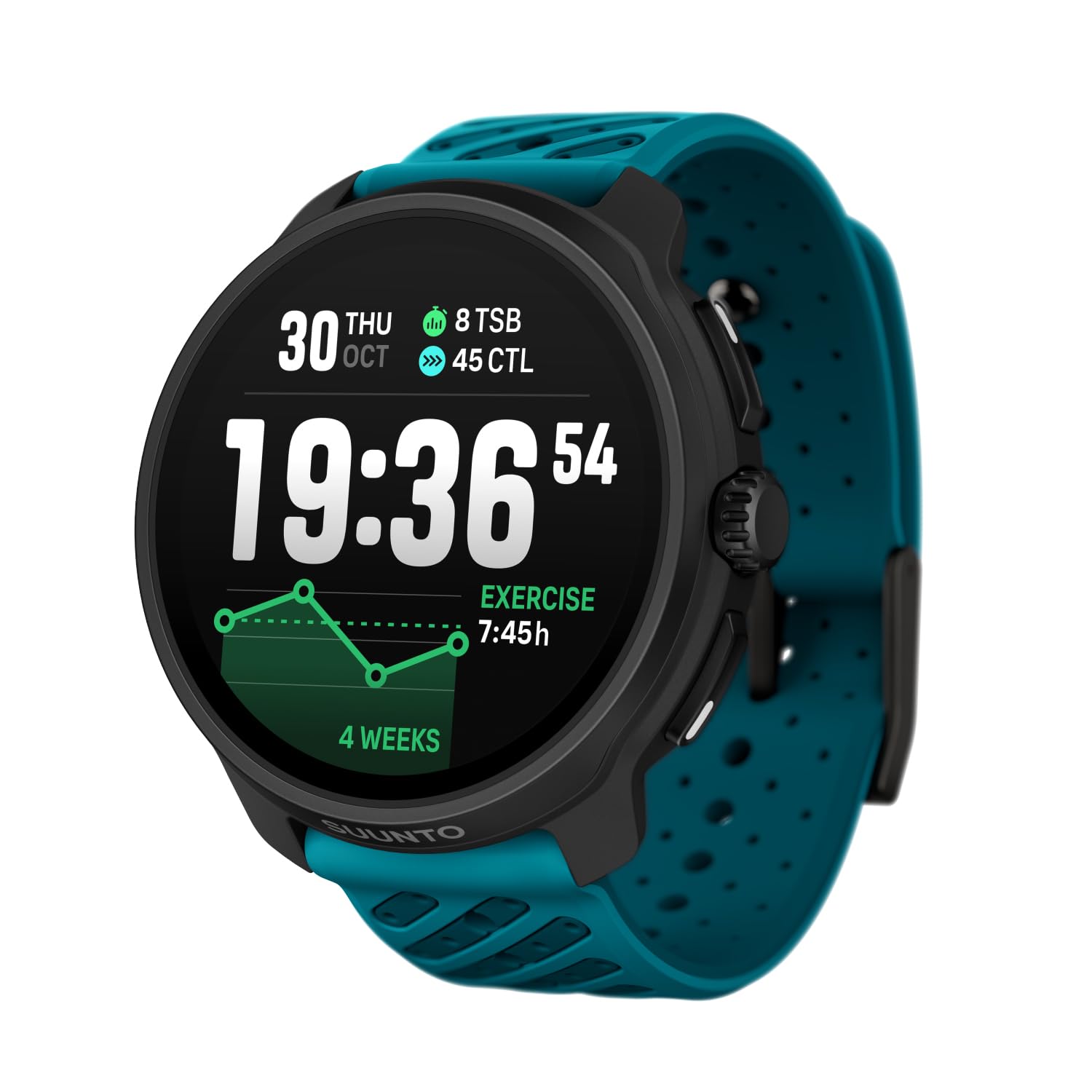
The Suunto Race 2 is purpose-built for endurance athletes who need reliable performance over long distances. Its 1.5-inch AMOLED touchscreen with a crown delivers crisp clarity, while the dual-band GPS provides accurate tracking even under dense tree cover or in urban canyons.
Battery life is a standout feature: up to 16 days in daily use and 55 hours in best GPS mode, so you can focus on your training without obsessing over the charger. The Suunto Coach feature offers smart training plans that adapt to your performance and recovery, while ClimbGuidance helps navigate technical terrain.
With over 115 sport modes and 32GB of onboard storage for offline maps, the Race 2 is a comprehensive tool for trail runners, cyclists, and swimmers. Reviewers highlight its lighter and sleeker design compared to the original, though customizing data screens requires some effort.
Why it’s great
- Exceptional GPS battery life for ultra-endurance events
- Large, bright AMOLED display with offline maps
- Simple, focused ecosystem without bloatware
Good to know
- Non-trivial customization for running data screens
- Limited smartwatch features compared to competitors
3. Apple Watch Ultra 3
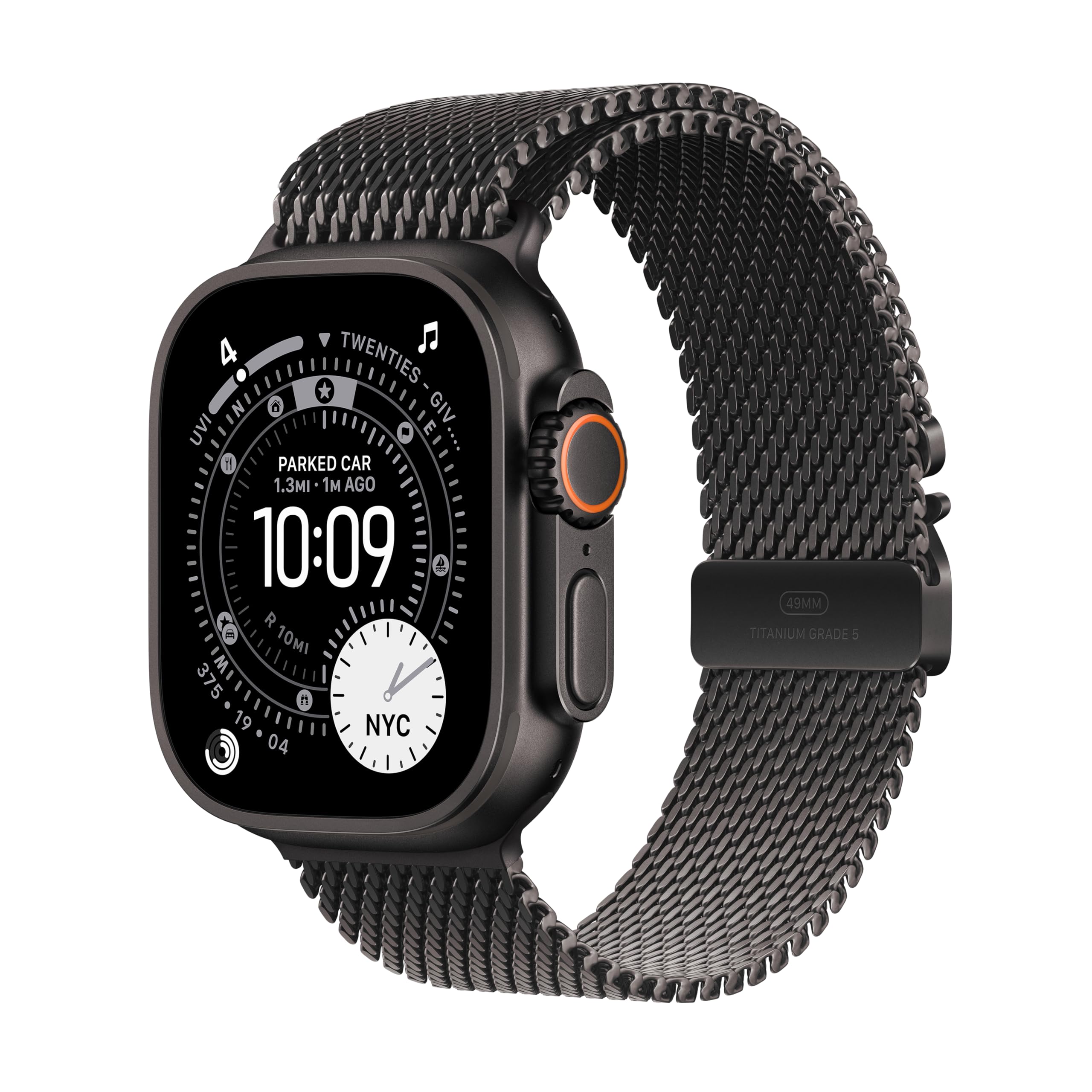
The Apple Watch Ultra 3 is the ultimate adventure smartwatch, pairing a rugged titanium case and sapphire crystal display with safety features like satellite SOS and fall detection. Its 49mm screen offers exceptional readability, emitting more light at wider angles for use under direct sun or in low-light conditions.
Battery life reaches up to 42 hours of normal use and 72 hours in Low Power Mode, a massive jump over previous models. The precision dual-frequency GPS provides accurate route tracking for runners, cyclists, and swimmers, while the custom Action Button offers instant access to workouts or the flashlight.
Health monitoring includes blood oxygen readings, sleep apnea notifications, and ECG for atrial fibrillation detection. The LTE model allows calls and streaming without your iPhone. Reviewers note the durable build and improved battery life, but caution that metal bands can scratch the screen.
Why it’s great
- Premium titanium build with satellite SOS connectivity
- Excellent battery life for a full-featured smartwatch
- Precision dual-frequency GPS for accurate outdoor tracking
Good to know
- Designed specifically for iPhone users only
- Higher price point than many dedicated fitness trackers
4. Samsung Galaxy Watch Ultra
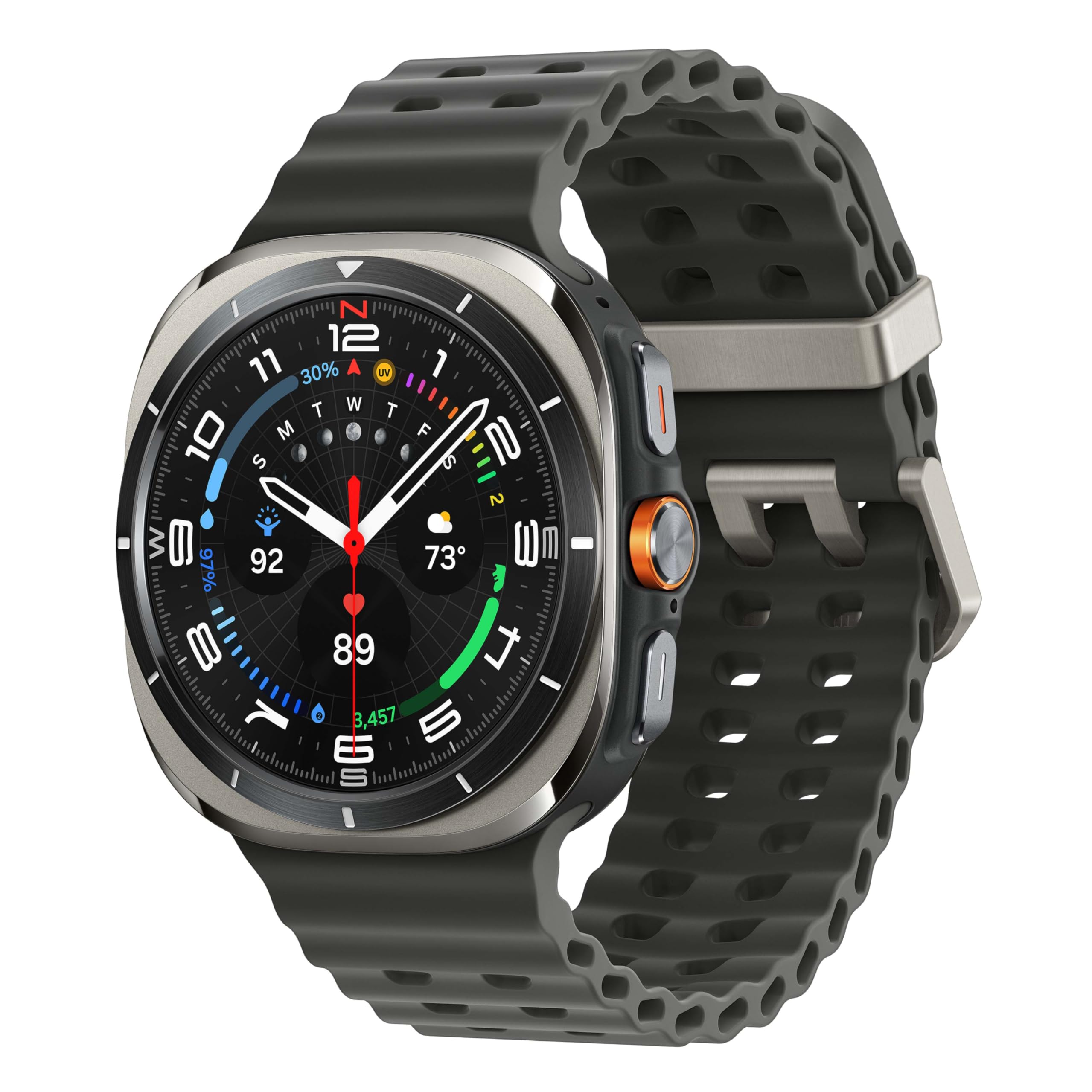
The Samsung Galaxy Watch Ultra brings a durable titanium design and a 590 mAh battery that delivers up to 60 hours of use — one of the highest capacities among premium smartwatches. It is built for tough conditions, with water resistance up to 100 meters and MIL-STD-810 certification for shock and dust.
Galaxy AI powers features like Energy Score, which calculates your readiness from sleep, heart rate, and activity data, while Heart Rate Tracking with AI filters motion artifacts for more precise readings. The LTE variant allows independent calls and texts, and the programmable buttons offer quick access to workouts or apps.
Reviewers praise the reliable battery that only needs charging every 3.5 days even with always-on display, and the loud speaker for voice-to-text in noisy environments. However, its health tracking depth is not quite on par with dedicated sports watches like Garmin, and the bulky form factor may not suit all wrists.
Why it’s great
- Long-lasting 60-hour battery with fast charging
- Rugged titanium build with LTE for phone-free use
- Galaxy AI insights for energy and recovery management
Good to know
- Bulky 47mm case may be uncomfortable for smaller wrists
- Health metrics less comprehensive than Garmin or Suunto
5. Google Pixel Watch 4

The Google Pixel Watch 4 integrates tightly with Fitbit’s health ecosystem, offering advanced sleep tracking, heart rate monitoring, and personalized coaching powered by Gemini AI. Its 30-hour battery life with fast charging (15 minutes for 15 hours) makes it practical for daily use, and the LTE model includes 2 years of data and texting.
The Actua 360 domed display is 10% larger and 50% brighter than its predecessor, with scratch-resistant Gorilla Glass. Dual-frequency GPS improves route accuracy for runs and hikes. Gemini AI provides hyper-relevant quick replies and answers to health-related queries directly on your wrist.
Reviewers love the crisp display, seamless Google integration, and 48-hour battery life in Battery Saver mode. Some find the original band less comfortable, and the watch lacks the deep sports metrics of Garmin or Suunto, but for Android users who want a polished smartwatch with solid health tracking, this is a top choice.
Why it’s great
- Deep Fitbit integration with Gemini AI coaching
- Fast charging and 30-hour battery life
- Bright domed AMOLED display with dual-frequency GPS
Good to know
- Original band may need replacing for better comfort
- Less advanced sports metrics than dedicated fitness watches
6. Garmin Instinct 3 50mm Solar

The Garmin Instinct 3 50mm Solar is built for those who need a rugged, no-compromise GPS smartwatch that thrives off-grid. Its solar charging lens delivers unlimited battery life in smartwatch mode with sufficient sun exposure, while the fiber-reinforced polymer case and metal-reinforced bezel meet MIL-STD-810 standards for thermal and shock resistance.
Health monitoring includes wrist-based heart rate, advanced sleep tracking, and Pulse Ox. The multi-band GPS with SatIQ technology optimizes battery life while ensuring accurate positioning. A built-in LED flashlight with variable intensities adds practical utility for outdoor use after dark.
Reviewers praise the crisp MIP display that is readable in bright sun, and the physical buttons work well with ski gloves. While it lacks a touchscreen, music storage, and maps, its simplicity, incredible battery life, and robust construction make it ideal for serious outdoor adventurers who want a reliable tool rather than a smartwatch.
Why it’s great
- Unlimited battery life with solar charging in smartwatch mode
- MIL-STD-810 ruggedness and 10 ATM water resistance
- Physical buttons for easy use with gloves
Good to know
- No touchscreen, music storage, or offline maps
- MIP display is not as vivid as AMOLED
7. Apple Watch SE 3
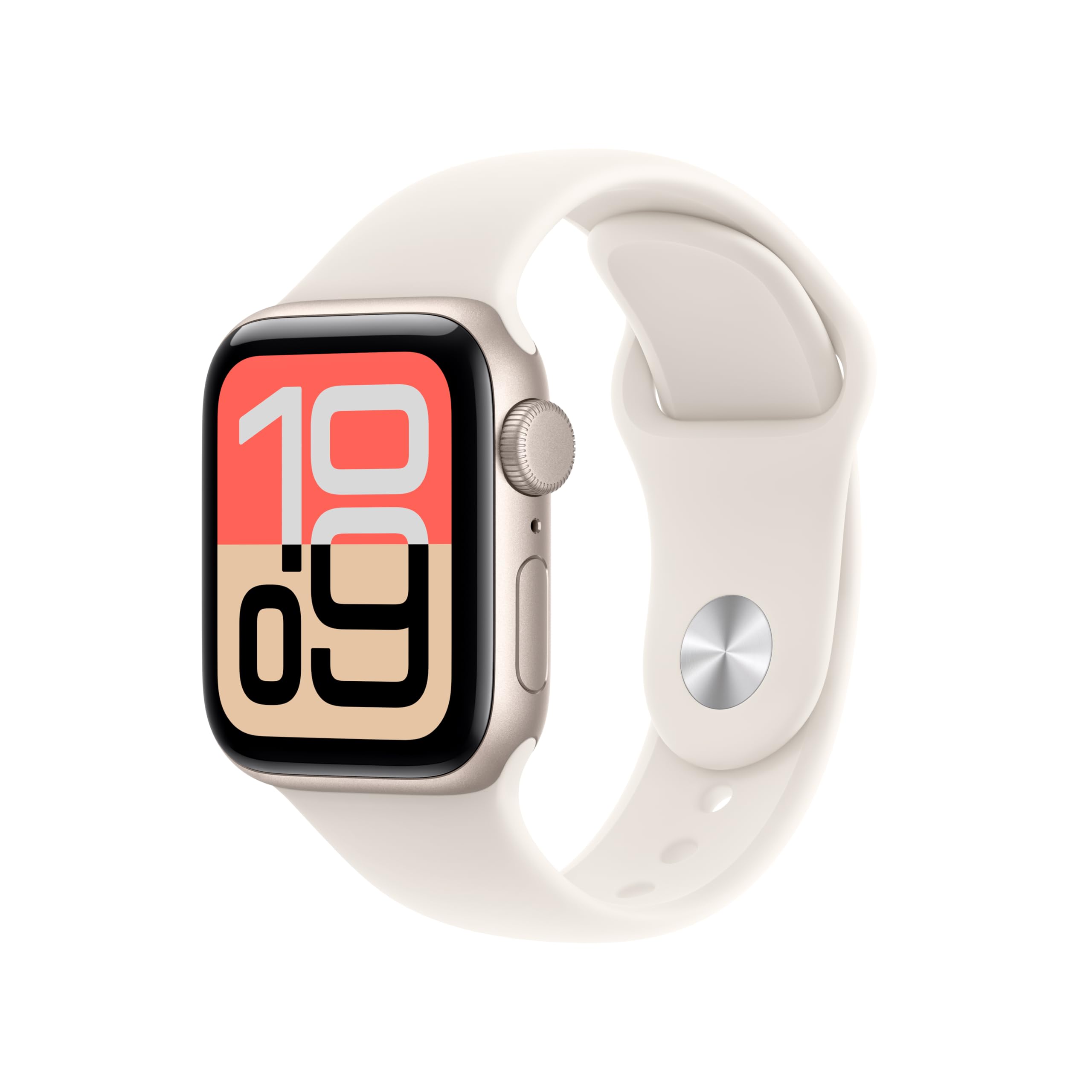
The Apple Watch SE 3 delivers essential health and fitness features at a more accessible price point. It includes temperature sensing for richer Vitals app insights, sleep apnea notifications, and high/low heart rate alerts. The always-on Retina display shows the time and watch face without raising your wrist, a premium convenience typically reserved for more expensive models.
Battery life reaches 18 hours, with fast charging that delivers 8 hours of use in just 15 minutes. Safety features include fall detection, car crash detection, and Check In for automatic location sharing. Workout Buddy powered by Apple Intelligence from your iPhone adds real-time coaching for various activities.
Reviewers appreciate the combination of core health tracking, fast performance, and lightweight design. However, the SE 3 lacks the blood oxygen sensor and always-on barometric altimeter found on higher-end models. For those who want a reliable, feature-rich advanced fitness tracker within the Apple ecosystem without the Ultra price tag, this is the clear winner.
Why it’s great
- Essential health features at a competitive price
- Always-on display and fast charging
- Advanced safety features like fall and crash detection
Good to know
- No blood oxygen sensor or ECG
- 18-hour battery requires daily charging
8. Amazfit Active Max
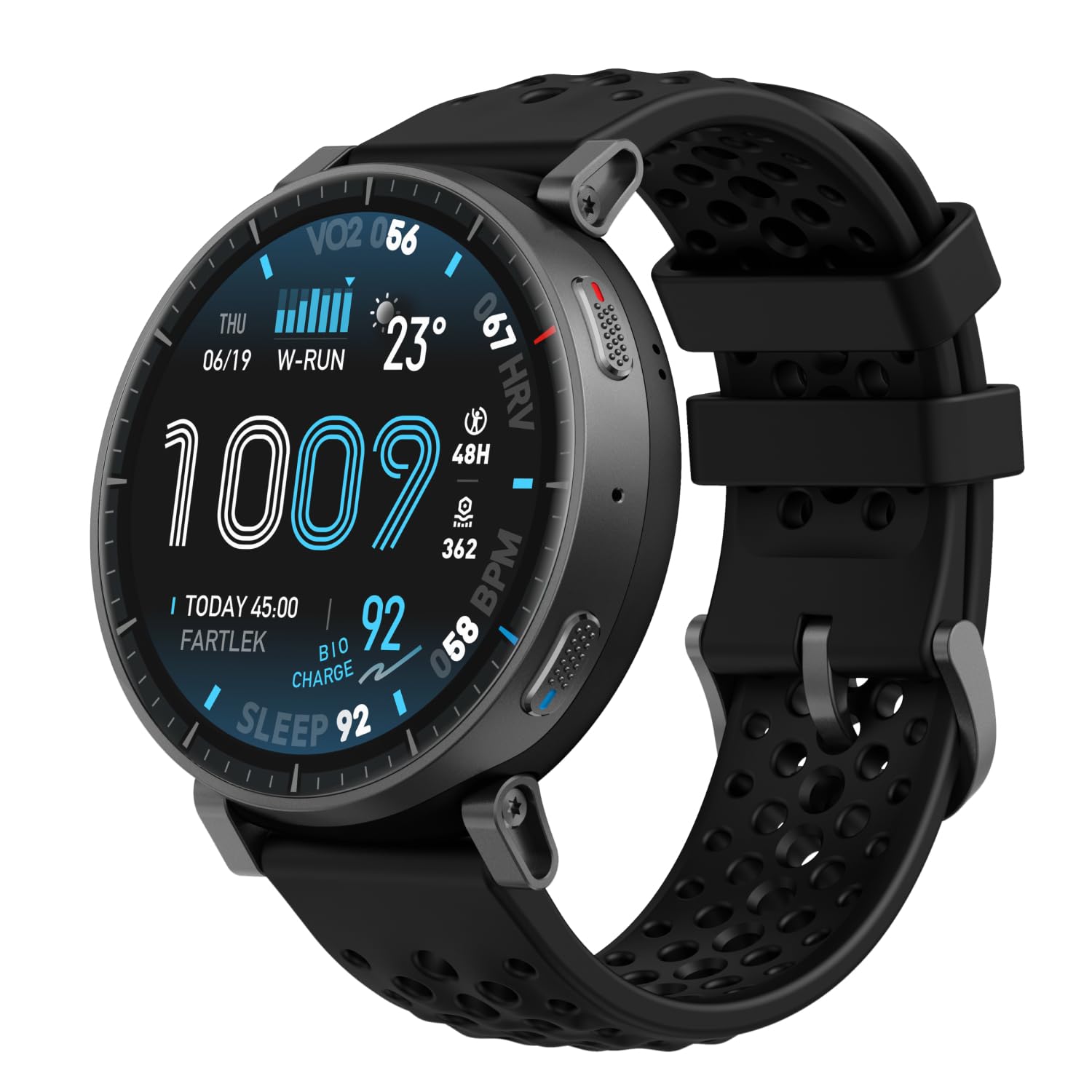
The Amazfit Active Max punches well above its price class with a 1.5-inch AMOLED display hitting 3,000 nits of peak brightness — making it one of the most readable screens under direct sunlight. Battery life is extraordinary: up to 25 days on a single charge, so you can go weeks without thinking about power.
Offline maps with turn-by-turn directions and 4GB of onboard storage for music make it surprisingly self-sufficient for outdoor adventures. The BioCharge energy monitoring system adjusts your readiness score based on workouts and stress, helping you optimize training and recovery. Zepp Coach offers personalized AI-driven running plans for distances from 3K to full marathons.
Reviewers highlight the accurate heart rate and SpO2 readings, the large bright display, and the fluid user interface. The lack of MyFitnessPal integration and the non-removable charging base are minor drawbacks, but for the price, the Active Max delivers exceptional value in the advanced fitness tracker space.
Why it’s great
- Exceptionally bright 3000-nit AMOLED display
- Up to 25 days battery life
- Offline maps and 4GB storage for music
Good to know
- No MyFitnessPal or third-party app support
- Magnetic charging base is not USB-C
9. Google Fitbit Air
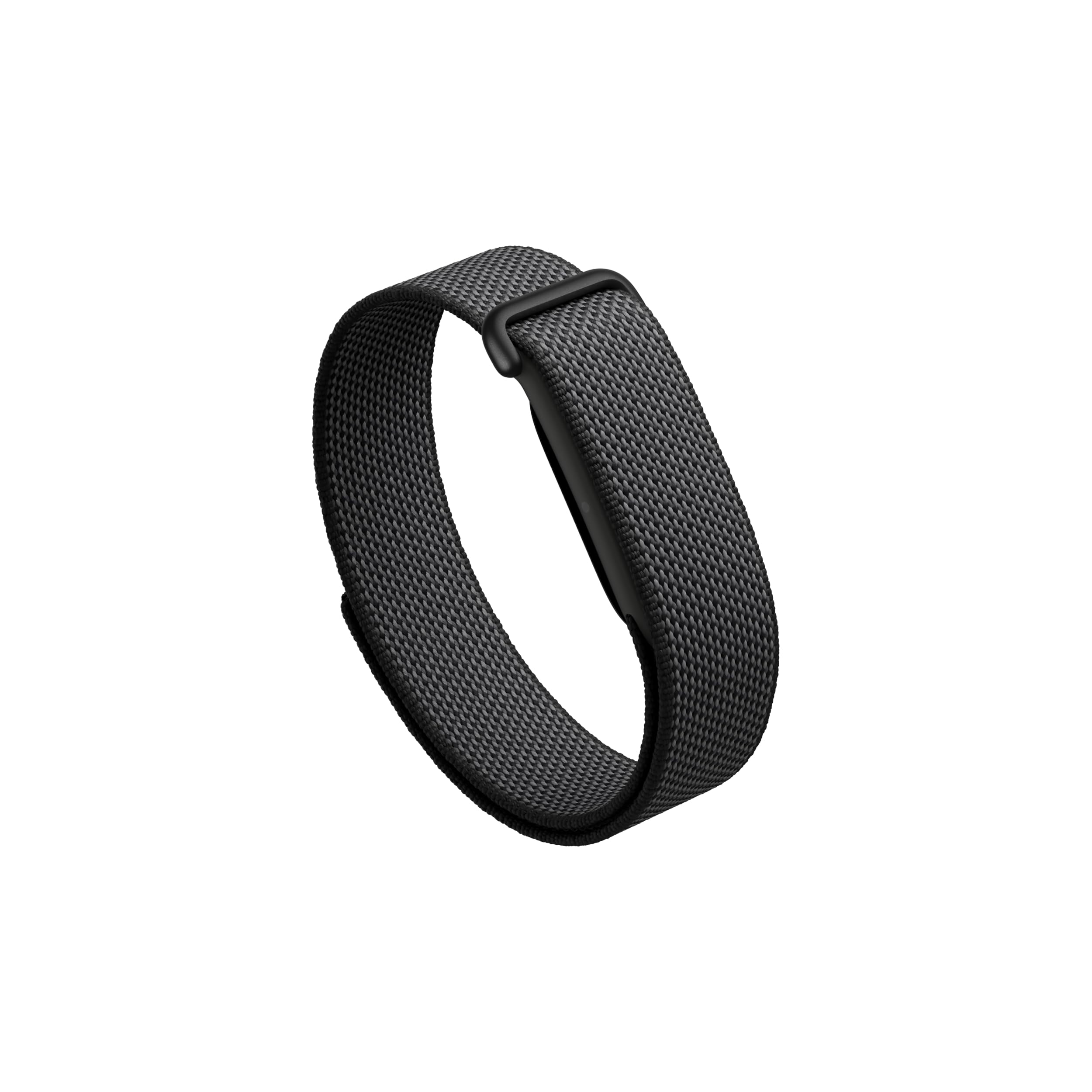
The Google Fitbit Air takes a screenless approach, using advanced sensors and algorithms to deliver accurate health tracking without the distractions of a display. Its lightweight pebble design moves from bracelet to workout band to sleep band seamlessly, and a 5-minute fast charge gives a full day of battery life.
Health monitoring includes optical heart rate, SpO2, HRV, sleep stages, and AFib detection. Google Health Coach (with premium membership) uses Gemini to personalize fitness plans, sleep guidance, and recovery advice. The tracker is water-resistant to 50 meters and offers up to 7 days of battery life on a single charge.
Reviewers praise the comfortable fit, accurate tracking, and long battery life. However, screenless tracking may not suit everyone, and the distance accuracy during runs can be inconsistent. For those who want a minimalist, distraction-free advanced fitness tracker with rich data, the Fitbit Air is a compelling entry-level option.
Why it’s great
- Distraction-free screenless design with advanced sensors
- 7-day battery with 5-minute fast charging
- Gemini AI coaching via Google Health Premium
Good to know
- Screenless format may not appeal to everyone
- Distance tracking accuracy can be inconsistent
FAQ
What is HRV and why does it matter for training?
Can advanced fitness trackers detect sleep apnea?
Final Thoughts: The Verdict
For most users, the best advanced fitness tracker winner is the Garmin Forerunner 970 because it combines professional-grade training metrics, exceptional battery life, and a bright AMOLED display in a durable package designed for multisport athletes. If you want deep endurance training and offline maps, grab the Suunto Race 2. And for the ultimate rugged smartwatch with satellite safety features, nothing beats the Apple Watch Ultra 3.