
The quiet panic of a baby who refuses the bottle after weeks of successful nursing is a specific, draining stress. Finding the right vessel for expressed milk is less about the container and more about preserving the mechanics of the breast: the latch, the swallow rhythm, the air-free seal. A poorly designed nipple or a fast-dripping vent system can undo weeks of breastfeeding progress.
I’m Rikta — the co-founder and writer behind Gadgets Feed. I’ve spent years analyzing how bottle nipple shapes, internal vent geometry, and material thermal properties affect a baby’s feeding acceptance and digestive comfort. (And Homer 🐱 supervised the unboxing from the warm spot left by a freshly sterilized bottle).
This guide breaks down how to select vessels that protect your milk supply and your baby’s latch. Whether you need a slow-flow nipple for a newborn or an anti-colic system for a gassy baby, you’ll find the best breastfeeding bottles for your specific situation right here.
How To Choose The Best Breastfeeding Bottles
Selecting the right bottle means matching the nipple design to your baby’s oral anatomy, choosing a material that balances durability with thermal handling, and deciding how much you’re willing to clean. Every decision here is a trade-off between convenience and biology.
Nipple Shape and Flow Rate
The most critical variable is the nipple. A wide, breast-shaped nipple with a slow or extra-slow flow rate mimics the natural breastfeeding rhythm where milk only releases when the baby actively sucks. A fast drip forces the baby to gulp, leading to nipple confusion or choking. Look for a nipple with a latch-on line or guide points that encourage a deep latch.
Anti-Colic Vent System
Air ingestion is the primary cause of gas and spit-up in bottle-fed babies. Internal vent tubes, bottom vents, or peripheral vents all aim to route air bubbles away from the milk. The most effective systems (like those with a separate vent tube) require more parts to wash, while simpler one-piece vents trade some efficacy for faster cleaning. Evaluate how many extra parts you’re willing to handle multiple times a day.
Material: Glass vs. PPSU vs. Plastic
Borosilicate glass offers thermal shock resistance, zero chemical leaching, and easier cleaning but adds weight and break risk. PPSU (polyphenylsulfone) is a high-heat-resistant, shatterproof plastic that resists discoloration and can be sterilized repeatedly. Standard BPA-free plastic is lightweight and affordable but may degrade faster with frequent boiling or microwaving. Your choice depends on whether drop safety or weight is your priority.
Quick Comparison
On smaller screens, swipe sideways to see the full table.
| Model | Category | Best For | Key Spec | Amazon |
|---|---|---|---|---|
| Philips Avent Natural Response | Mid-Range | Seamless breastfeeding transition | Natural Response nipple with Flow 2 | Amazon |
| Dr. Brown’s Options+ Narrow Glass | Premium | Severe colic and gas reduction | Internal vent system with 4-oz glass | Amazon |
| Pigeon PPSU Wide Neck | Premium | Deep latch and durability | PPSU body with SS slow-flow nipple | Amazon |
| Gulicola 5 oz Natural Glass | Premium | Breastfed newborns needing slow flow | Borosilicate glass with ultra-soft nipple | Amazon |
| Momcozy Natural Wide-Neck | Premium | Pump-to-storage-to-feed all-in-one | 11 oz BPA-free wide-neck plastic | Amazon |
| Evenflo Feeding Classic Glass | Budget | Economical glass with pump compatibility | 4-oz tempered glass with 3-piece design | Amazon |
| Gulicola 3 oz Preemie Glass | Budget | Premature or extra-slow flow needs | 3-oz borosilicate with SS nipple | Amazon |
In‑Depth Reviews
1. Philips Avent Natural Response Baby Bottles 4oz (2-Pack)

The Natural Response nipple design is the standout feature here: milk only flows when the baby actively drinks, stopping completely when the baby pauses to swallow or breathe. This mimics the breastfeeding let-down reflex more closely than any other bottle in this comparison. The Flow 2 nipple delivers a slow pace suitable for most newborns, and the wide, breast-shaped nipple reduces the risk of nipple confusion.
The anti-colic valve is integrated into the nipple rather than a separate tube, keeping the total part count to three pieces. Parents consistently report zero leaking from the sides or collar, which is a rare claim among vented bottles. The 4-oz size is ideal for early months, and the clear plastic body shows milk levels clearly during a night feed.
One detail that matters for pumping mothers: the wide neck fits most standard breast pump adapters, though the included collar may not thread onto every pump flange brand. If your baby is already comfortable with a wide-latch nursing pattern, this bottle offers the smoothest transition from breast to bottle and back. The 4-oz volume may require an upgrade to the 9-oz size by month four.
Why it’s great
- Nipple releases milk only during active drinking
- Three-piece design with zero leakage reported
- Wide breast-shaped nipple reduces confusion
Good to know
- 4-oz capacity may need upsizing by month four
- Collar may not fit all pump flanges
2. Dr. Brown’s Anti-Colic Options+ Narrow Glass 4oz (3-Pack)
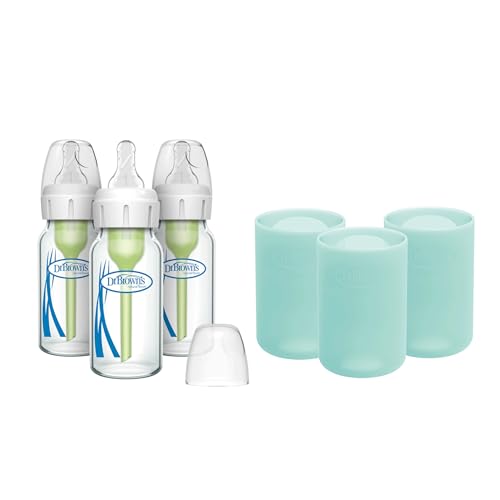
The internal vent system is the most effective passive anti-colic mechanism on this list — a green tube inside the bottle routes air along the side walls rather than mixing it with milk. This vacuum-free feeding reduces spit-up, gas, and burping frequency clinically. The narrow glass body is made of borosilicate, which handles thermal shock from cold fridge storage to hot water sterilizing without cracking.
Each bottle comes with a mint-colored silicone sleeve that improves grip and absorbs impact from drops at table height. The Level 1 slow-flow nipple provides a consistent pace that mimics breastfeeding without overwhelming the baby, and the breast-like nipple shape encourages a proper deep latch. Parents using this bottle report less colic crying in the middle of the night compared to standard vent-free bottles.
The trade-off is mandatory: the vent system adds two extra pieces (the green tube and the bottom cap), bringing the total to five pieces per bottle. This means more scrubbing with a thin brush after every feed. If you are willing to invest the cleaning time, the results — noticeably less gas and quieter feeding — justify the effort for colicky babies. The vent also helps preserve milk nutrients during warming.
Why it’s great
- Clinically proven to reduce colic and gas
- Thermal-shock-resistant borosilicate glass
- Silicone sleeve protects against drops
Good to know
- Five parts to clean per bottle
- Vent tube requires thin brush for thorough cleaning
3. Gulicola Natural Glass Baby Bottle 5 oz (2-Pack)
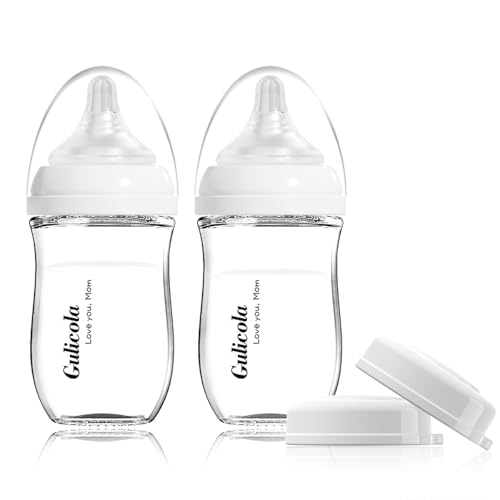
The Gulicola 5-oz set targets breastfed babies who need a slow flow that closely matches the breastfeeding experience. The ultra-soft silicone nipple is engineered with guide points that encourage a deep latch and correct suction habits — a specific design feature absent from most generic bottles. The anti-colic vents are peripheral, meaning air escapes through the rim rather than through a tube, keeping the part count at four pieces and simplifying cleaning.
The borosilicate glass construction withstands multiple passes through the dishwasher (top rack) and remains transparent without clouding or absorbing odors. At 5 oz, this bottle hits the sweet spot between the 4-oz newborn size and the larger 8-oz stage, giving you at least four months of use before needing an upsized option. The wide neck simplifies adding formula powder or pouring expressed milk.
Some users note that air bubbles can form inside the nipple during feeding due to the peripheral vent, which may require occasionally pausing to clear. The inner ledge around the neck can trap a small amount of milk if not rinsed immediately. But for a dedicated breastfeeding mother who prefers glass over plastic, the soft nipple feel and easy assembly make this a strong contender for early months of mixed feeding.
Why it’s great
- Ultra-soft nipple with latch guide points
- Borosilicate glass survives thermal shifts
- Only four parts for quick cleaning
Good to know
- Air bubbles may collect in nipple
- Inner ledge can retain milk residue
4. Pigeon PPSU Nursing Baby Bottle Wide Neck 5oz (2-Pack)
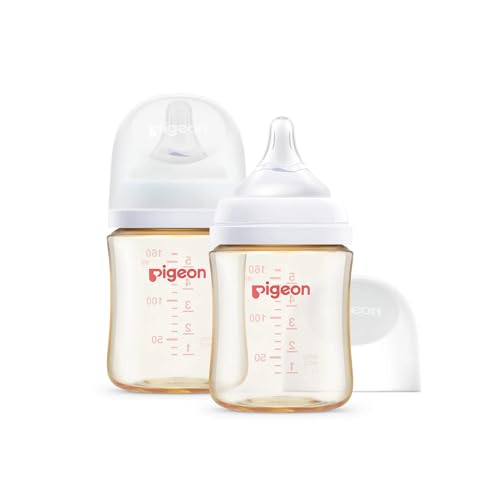
Pigeon’s PPSU (polyphenylsulfone) polymer offers the durability of glass without the weight — it has a high glass transition temperature of around 419°F, meaning it can be boiled and steam-sterilized repeatedly without warping or discoloring. The wide neck and streamlined body reduce the number of internal ridges where milk can get trapped, and the 5.4-oz (160 ml) capacity works from birth through the first six months for most babies.
The SS (super slow) nipple included in this pack is designed for newborns 0 months and older, based on Pigeon’s research into the three natural oral movements of breastfeeding: suction, swallowing, and pausing. The latch-on line provides a visual guide for correct mouth placement, reducing milk leaking from the corners of the mouth during feeds. The nipple is soft and thin, encouraging a tongue movement pattern similar to nursing.
One nuance: the included SS nipple may be too fast for some preemies or early newborns who struggle with a strong suck-swallow reflex. In that case, swapping to the SS+ or zero-flow version solves the issue. The bottle also does not have a separate anti-colic vent tube — the venting is integrated into the nipple base, which means less cleaning but slightly less aggressive air removal compared to Dr. Brown’s. It is a practical, high-quality daily bottle for a baby who already latches well.
Why it’s great
- PPSU withstands repeated boiling and sterilizing
- Nipple latch line encourages correct seal
- Wide neck with minimal ridges for easy cleaning
Good to know
- SS nipple may need downgrading for preemies
- Integrated vent less aggressive than tube systems
5. Momcozy Natural Baby Bottle Wide-Neck 11 oz (4-Pack)

The Momcozy bottle is engineered as a complete milk ecosystem from pumping to feeding. The wide-mouth opening threads directly onto most wide-neck breast pumps (though not Spectra flanges according to feedback), allowing you to express straight into the storage container. At 11 oz, it holds significantly more volume than standard 4-oz or 5-oz bottles, making it ideal for high-output pumping sessions or storing milk in the fridge without needing to combine multiple bottles.
The plastic construction is BPA-free and shatter-resistant, lightweight enough for a diaper bag or cooler commute. The leak-proof lid features a white inner seal that stays watertight even when tipped or tossed — crucial when milk is being transported from daycare or stored overnight. The flat removable lid eliminates the hard-to-reach crevices that trap milk residue, and the entire bottle is dishwasher safe (top rack) and compatible with the Momcozy Bottle Washer.
The trade-off is that this is not a dedicated nursing bottle with a breast-simulating nipple — it is designed as a feeder-storage hybrid. The included nipple (not reviewed here) may not offer the same slow-flow or latch geometry as the Philips Avent or Pigeon. If your priority is a single-container solution for pumping, storing, and feeding with minimal transfers, this set minimizes kitchen cleanup. For exclusive pumpers, the 11-oz volume reduces the number of bottle changes.
Why it’s great
- Large 11-oz capacity reduces bottle changes
- Wide neck threads onto most pumps
- Leak-proof seal for transport and storage
Good to know
- Not a dedicated breastfeeding nipple design
- Does not fit Spectra pump parts
6. Evenflo Feeding Classic Glass Twist Bottles 4 oz (6-Pack)
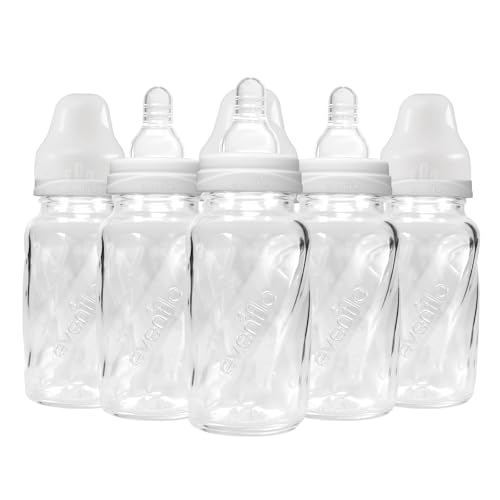
The Evenflo Classic Glass offers the lowest cost per bottle in this comparison without sacrificing material quality. The tempered glass is thicker than borosilicate options, which adds some weight but improves drop resistance from table height onto hard floors. The nostalgic twisted body isn’t just aesthetic — the ridges create turbulence when swirling powder or expressing milk, helping it mix faster without needing a stirring tool.
The three-piece system (nipple, collar, bottle) is the simplest possible design, making cleaning and reassembly the fastest of any bottle in this guide. The anti-colic valve is built into the nipple collar, venting air as the baby drinks. This integrated valve is less effective than Dr. Brown’s tube system for severe colic, but it also means no tiny parts to misplace or scrub. The bottles are BPA-free, PVC-free, and phthalate-free, and fit most standard-neck breast pumps.
The nipple flow is slow, which many breastfed babies appreciate, but some parents note the flow is slightly too slow by the second month and recommend buying faster-flow nipples separately. The new-style caps (redesigned lids) are smaller and tighter, which some users find harder to remove than the older version. For the price per bottle, however, this is the most practical entry point for a family that wants glass without spending premium dollars.
Why it’s great
- Thick tempered glass survives table-height drops
- Three-piece design is fastest to clean
- Works with standard-neck breast pumps
Good to know
- Nipple flow may be too slow after month two
- Newer caps are tighter and harder to remove
7. Gulicola Small Glass Baby Bottle 3 oz (2-Pack)

The 3-oz Gulicola bottle fills a specific gap: preemies, early newborns, or babies who struggle with even standard slow-flow nipples. The SS (extra-slow) nipple design passes the triangle test — when the nipple is squeezed, it flattens in a way that mimics the shape of a breast during latch, promoting a deep mouth seal rather than a shallow chewing motion. The small 3-oz volume is appropriate for the first weeks of life when a baby’s stomach holds only 30–60 ml per feed.
The borosilicate glass body is lightweight for a glass bottle and the wide neck allows easy filling and cleaning. The bottle includes only four pieces (nipple, collar, cap, bottle) and can be sterilized in a microwave sterilizer, electric sterilizer, boiling water, or bottle warmer. The anti-colic vents are peripheral, redirecting air away from the milk without requiring a tube — sufficient for most non-colic babies.
Some parents report air bubble accumulation in the nipple during feeding, and the inner ledge near the rim can trap milk if not rinsed promptly. The vent system is less effective than tube-based designs for babies with diagnosed colic or reflux. But for its intended purpose — a small, slow-flow glass bottle for a very young breastfed baby — it delivers the gentlest flow available in this comparison. By the time the baby reaches 5 oz feeds, you would step up to the Gulicola 5-oz sibling.
Why it’s great
- Extra-slow SS nipple ideal for preemies
- Nipple passes the triangle test for deep latch
- Compact 3-oz volume matches newborn stomach size
Good to know
- Air bubbles may collect in the nipple cavity
- Vent system less effective than tube-based designs
FAQ
How do I prevent nipple confusion when switching between breast and bottle?
What is the difference between borosilicate glass and tempered glass for baby bottles?
Which anti-colic system is most effective without excessive cleaning?
Should I buy glass or plastic bottles for a breastfed baby?
How many bottles do I need for a breastfed baby in the first three months?
Final Thoughts: The Verdict
For most breastfeeding parents, the winner is the Philips Avent Natural Response because its drop-free nipple design and low part count make it the easiest to use without sacrificing the breastfeeding rhythm. If your baby struggles with persistent gas or colic, grab the Dr. Brown’s Options+ Narrow Glass for its clinically proven air-removal system. And for exclusive pumpers who want a single container from pump to mouth, nothing beats the Momcozy Natural Wide-Neck for storage volume and leak-proof transport. The right best breastfeeding bottles align nipple design with your baby’s latch, not the other way around.