
Our readers keep the lights on and my morning glass full of iced black tea. As an Amazon Associate, I earn from qualifying purchases.
Specs are compiled from manufacturer listings and verified buyer reviews and can change over time — please confirm the key details on the product page before buying.
Choosing a video camera means deciding what kind of filmmaker you are: the run-and-gun vlogger who needs built-in stabilization, the event shooter who needs a huge zoom range, or the studio creator who needs full-frame low-light power. This guide sorts through the real trade-offs—4K frame rates, autofocus smarts, sensor size, and battery endurance—so you pick the tool that matches how you actually shoot, not just the spec sheet.
I’m Min — the founder and writer behind Gadgets Feed. This guide is built by comparing the manufacturers’ published specifications and the patterns across verified customer reviews, so you get each pick’s real strengths and trade-offs instead of marketing spin.
You want a camera for video recording that fits how you actually shoot—family clips, live streams, or short films—so start with the sensor size, stabilization, and autofocus that match your style and budget. A bigger sensor (the part that captures light) helps in low light, stabilization keeps footage steady, and autofocus keeps subjects sharp.
Our Picks at a Glance



How To Choose The Best Camera For Video Recording
Before you get lost in megapixel counts and ISO ranges, step back and think about what you film. Different video setups—vlogging, livestreams, events, or cinema—demand completely different strengths from a camera, and the best choice for one job can be a poor fit for another.
Stabilization: Gimbal vs. In-Body vs. Lens
The most common reason video looks amateur is shake. Tiny pocket cameras use a built-in 3-axis gimbal (a motorized mount that keeps the lens level as you move), which is unbeatable for walking shots. Larger mirrorless cameras instead use in-body stabilization (moving the sensor itself) or stabilized lenses—both are great, but neither makes you look as smooth as a true gimbal when you’re sprinting after a kid.
Autofocus and Subject Tracking
If you film alone, autofocus with face or eye detection is a lifesaver. An AI-assisted system that locks onto a person’s face and keeps them sharp as they move means you never have to look at the screen or adjust focus manually. For vloggers and event shooters, this single feature often matters more than raw resolution.
Quick Comparison
| Model | Best For | Sensor Size | Max Video | Stabilization | Amazon |
|---|---|---|---|---|---|
| Nikon D7500★ Best Overall | Versatile All-Rounder | APS-C (DX) | 4K UHD | Lens-based (VR) | Amazon |
| Xtra MuseBest Value Gimbal | Budget Gimbal Vlogging | 1-inch CMOS | 4K/120fps | 3-Axis Gimbal | Amazon |
| DJI Osmo Pocket 3Premium Pick | Pocket-Sized Creator | 1-inch CMOS | 4K/120fps | 3-Axis Gimbal | Amazon |
| OBSBOT Tail Air | AI-Powered PTZ Streaming | 1/1.8-inch | 4K | Digital | Amazon |
| Canon EOS R50 | Beginner Vlogging | APS-C | 4K (Oversampled) | Lens-based (IS) | Amazon |
| Panasonic VX3 | Family Event Long-Zoom | 1/2.5-inch | 4K | 5-Axis Hybrid O.I.S. | Amazon |
| Canon EOS RP | Entry Full-Frame | Full-Frame | 4K UHD | Lens-based (IS) | Amazon |
| Nikon Z50 II | Dual-Lens Versatility | APS-C (DX) | 4K UHD/60p | Lens-based (VR) | Amazon |
| Canon EOS R8 | Full-Frame 4K60 Creator | Full-Frame | 4K 60p (6K Oversampled) | Lens-based (IS) | Amazon |
| Sony Alpha a7 III | Hybrid Photo/Video Stills | Full-Frame BSI | 4K | In-Body (5-axis) | Amazon |
| Sony Alpha a7 V | Professional Hybrid | Full-Frame | 4K (High Frame Rate) | In-Body (7.5-step) | Amazon |
In‑Depth Reviews
1. Nikon D7500 DSLR with 18-140mm Lens
Our pick — over 4.5★ from 650+ verified ratings; the strongest balance of quality and price.
The durable workhorse proving old-school DSLR tech still nails modern 4K shooting.
If you want one camera that handles everything from a birthday party to a weekend landscape trip, this is the pick. The 20.9MP sensor delivers class-leading image quality, and the included AF-S DX NIKKOR 18-140mm lens covers wide to telephoto—meaning you rarely need to swap glass. While the 3.2-inch tilting LCD is touch-enabled, it’s the 51-point autofocus system with 15 cross-type sensors that makes tracking a running dog look easy. Owners consistently call out the camera quality and picture quality as the standout traits, with the ability to capture sharp, low-noise photos in dim light earning particular praise.
It shoots 4K Ultra HD and 1080p Full HD video with stereo sound and power aperture control, though the tech is admittedly from 2017. The body is larger and heavier than a compact or mirrorless, which is a trade-off for that built-in durability and weather resistance. One long-time owner called it a “2017 model, dated tech but near-perfect for needs,” which sums up the sentiment perfectly—the video is plenty good, but the real magic is the lens and the reliable, fast autofocus. As a bonus, the battery life is long enough that you’ll stop worrying about carrying spares on a day out.
Compared to the pocket DJI Osmo Pocket 3 below, this Nikon gives you a vastly larger APS-C sensor (a crop-sensor size that captures more light than a phone) and an optical zoom range for a fraction of the price, but you lose the built-in gimbal (a motorized handle that steadies footage). If you shoot mostly handheld video while walking, a gimbal camera wins; if you need a flexible stills-and-video hybrid for varied situations, the D7500 is tough to top.
Why It Stands Out
- Sharp, versatile 18-140mm lens with outstanding image quality
- Fast, accurate 51-point autofocus for action and indoor shots
- Weather-resistant body with long battery life
The Trade-Offs
- Dated 2017 tech with no built-in stabilization
- Larger and heavier than mirrorless or pocket cameras
The smart all-rounder: Choose this if you need one rugged camera for photos and 4K video across many situations.
Look elsewhere if: You’re a solo walk-and-talk vlogger—there’s no gimbal to smooth out your footsteps.
2. Xtra Muse Pocket Camera with 3-Axis Gimbal
A pocket-sized gimbal camera that brings DJI-style smoothness at a friendlier price.
Vloggers just starting out should look hard at this compact creator. The 1-inch CMOS sensor captures 4K resolution at 120fps, which means ultra-smooth slow-motion footage, and the built-in 3-axis gimbal handles the shake so you can run, dance, or hike without a rig. The 2-inch touchscreen is easy to navigate, and the face and object tracking keeps you centered in the frame even when you’re moving. Owners describe it as an intuitive, quick unbox-to-record experience, and several note the video quality is sharp in low light—quality is the single most-discussed positive.
The one durable gripe is reliability: some units overheat during video capture, with repeated SD card format errors even on high-end SanDisk Extreme PRO cards, and 4K60 is the worst offender. It’s a fit-note rather than a universal failure—most buyers report a great experience—but for critical family moments you can’t re-shoot, that uncertainty matters. Note that this is a video-first camera; if you primarily shoot high-megapixel stills, you’ll be happier with one of the mirrorless options on this list.
It offers a significant battery edge over the Sony Alpha a7 V—161 minutes versus a body that demands extra batteries—so for long shoot days, the Xtra Muse keeps rolling. The 10-bit X-Log color mode open up up to one billion colors for grading, giving you creative control in post-production that’s rare at this level.
Why It Wins
- Built-in 3-axis gimbal for shake-free handheld video
- 4K/120fps slow-motion with 1-inch CMOS sensor
- Portable design that fits in a large purse
The Catch
- Recurring reports of overheating and SD card errors
- Bluetooth connectivity is sometimes finicky
Perfect for beginners: Grab this if you want pro-looking, stabilized vlogs without the premium price tag.
Think twice if: You’re recording a one-shot wedding or event where a missed moment isn’t an option.
3. DJI Osmo Pocket 3 Creator Combo
The tiny creator camera that gives you a full studio setup in a jacket pocket.
This is the gold standard for solo vlogging, and the reason is the complete Creator Combo package. The 1-inch CMOS sensor (a light-capturing chip larger than a phone’s) shoots 4K at 120fps (frames per second, for smooth slow-motion) with the same 3-axis mechanical stabilization as the Xtra Muse, but the magic is ActiveTrack 6.0—it locks onto you, your dog, or your subject and keeps you sharp even as you jump or spin. The 2-inch rotating touchscreen flips for horizontal or vertical video, ideal for Instagram and TikTok, and owners say it replaces their phone entirely for video. What wins people over is the quality: crisp 4K even in low light, with the 3-axis gimbal delivering buttery-smooth footage that owners consistently rave about.
The Creator Combo sweetens the deal: you get the DJI Mic 2 Transmitter, a battery handle for extended runtime, an Osmo Mini Tripod, and a wide-angle lens in the box. That Mic 2 is a standout for audio, giving you broadcast-quality voice without any extra gear. The battery handle pushes total endurance well past the 166-minute average of the body alone, which helps explain why owners mention the value for money so often—it’s a full creator kit, not just a camera.
It beats the Xtra Muse on polish and software, but it costs more, and the gimbal is fragile if you’re rough with it. For the aspiring YouTuber who wants one compact camera that handles everything, this is the benchmark.
Why It’s The Benchmark
- ActiveTrack 6.0 keeps moving subjects center-frame and sharp
- Included DJI Mic 2 delivers high-quality audio
- Rotating 2-inch touchscreen for vertical or horizontal video
The Considerations
- Premium price for the full Creator Combo
- Fragile gimbal requires careful handling
A worthy splurge: Choose this if content creation is a serious hobby or side hustle and you want pro results from a pocket device.
skip it if: A tight budget is your main constraint—the Xtra Muse covers the basics for less.
4. OBSBOT Tail Air NDI Streaming Camera

A cola-can-sized PTZ camera with AI tracking that turns a solo streamer into a one-person studio.
This is the specialist pick for livestreamers, church services, and anyone producing multi-angle YouTube content. The 4K camera supports a 320° horizontal rotation and 180° vertical rotation, and its AI tracking can lock onto humans, animals, and even objects. You control it hands-free with gestures or via the Obsbot Start app, which frees you from the camera entirely while you present. It’s the smallest PTZ camera on this list, and the image quality earns the most positive feedback from owners, who call the broadcast quality crisp and professional.
The honest catch is reliability. Reliability is the most-discussed aspect, and it’s mixed—some owners mention flawless tracking, while others deal with connectivity issues. There’s also a note that the NDI license key required for network streaming is an additional purchase, so factor that into your true cost. One owner’s battery died 13 months in, and the camera needs a functioning battery to power on, which is a real concern for long-term owners.
With 4x digital zoom and a maximum aperture of f/1.8, it captures decent low-light, but this is not a run-and-gun camera—it’s a fixed-position studio tool. If your priority is walking around while filming, look at the gimbal options above instead.
Built for the studio: AI tracking plus gesture control makes it a powerful, hands-free streaming solution.
Fit note: Best for a fixed setup where you can manage occasional connectivity quirks and the extra NDI license fee.
5. Canon EOS R50 with 18-45mm Lens
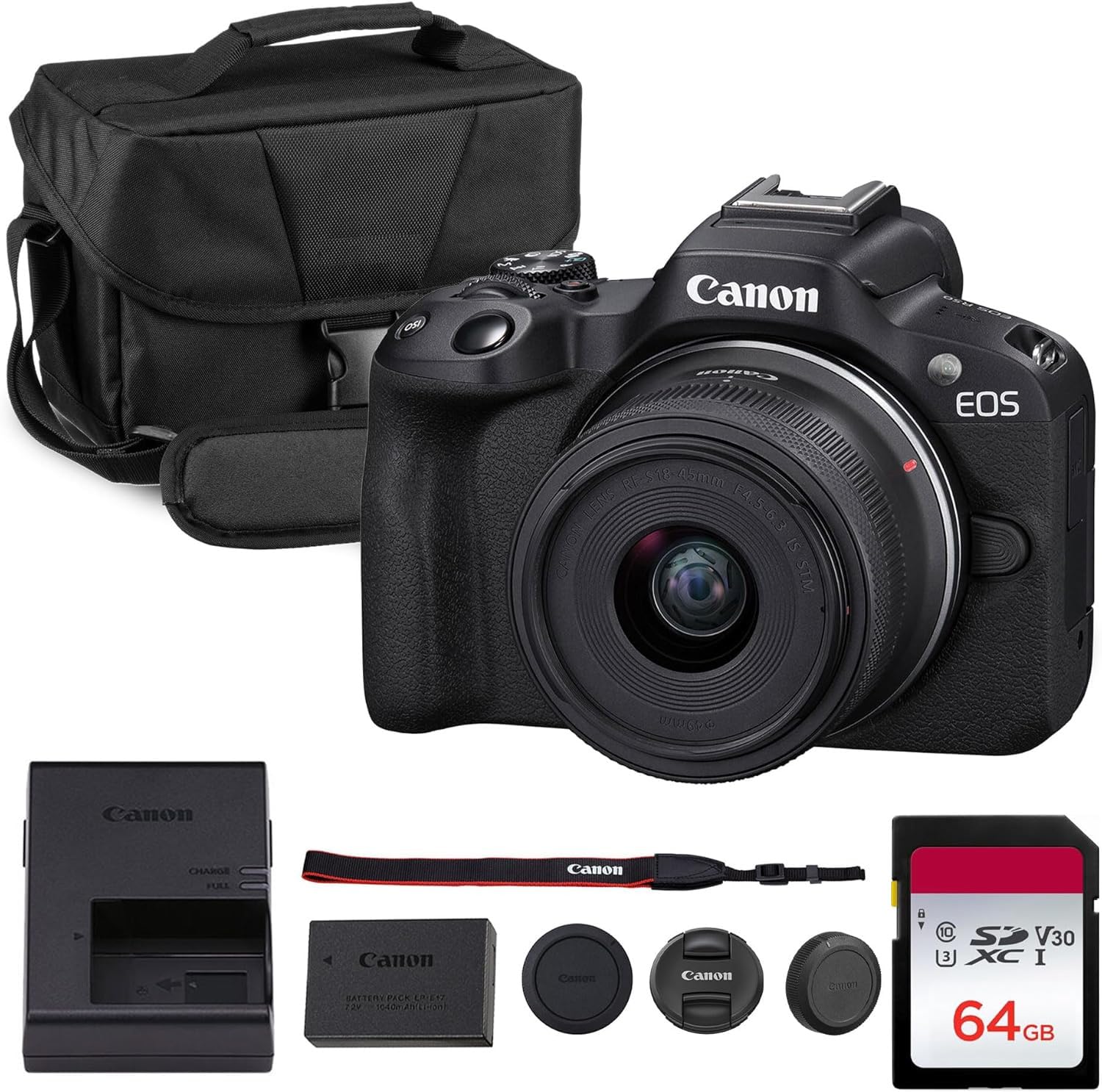
A featherlight mirrorless that grows with you from first vlog to paid gigs.
For a first camera that’s about as easy as a smartphone but with real interchangeable-lens power, this is the one. The R50 shoots oversampled 4K (which means it uses extra data to create a sharper image), has Dual Pixel AF II with reliable face and eye detection, and includes a useful 18-45mm kit lens. It’s designed to be carried everywhere—it’s lightweight, and the vari-angle touchscreen makes vlogging and vertical video a breeze. Owners love it as a starter device, praising the photo quality and how well it fits small to medium hands. One delighted owner in a hair salon uses it for portraits, noting it works great with natural window lighting.
This bundle sweetens the value: it ships with a 64GB UHS-I SDXC memory card and a camera bag, so you’re ready to shoot from the start. The honest limitations are that it lacks in-body stabilization (so you’ll want the stabilized kit lens or a gimbal), and the buffer for bursts is small. It’s a fantastic replacement for the pricier G7X in the eyes of many owners, at a more approachable price point.
If you’re choosing between this and the Nikon Z50 II below, the Canon is simpler for a pure beginner, while the Nikon gives you a second telephoto lens in the box. For most new creators, the R50’s simplicity wins.
The Starter’s Choice
- Lightweight body that’s easy to carry daily
- Oversampled 4K plus Dual Pixel AF II for sharp, reliable focus
- Complete bundle includes memory card and bag
Know Before You Buy
- No in-body stabilization—kit lens IS must do the work
- Small buffer sizes for continuous burst shooting
For the new creator: Reach for this if you want great quality 4K without overwhelming menus or a heavy bag.
Look elsewhere if: You’re filming a lot of fast movement—the limited burst buffer and lack of IBIS may frustrate.
6. Panasonic VX3 4K Camcorder

The family sideline specialist with a zoom range that keeps you close to the action.
Parents who film soccer games and dance recitals will appreciate this camcorder’s superzoom reach. The bright F1.8 lens provides a 24x zoom, from a 25mm wide-angle all the way to a 600mm telephoto (35mm equivalent)—enough to capture a goal at the far end of the pitch. The 5-Axis HYBRID O.I.S.+ image stabilization and High-Precision AF keep footage blur-free even when you’re tracking a moving child, and the ergonomic grip is comfortable for extended shooting. Owners are “super happy” with it for filming youth sports, praising the quality when mounted on a gimbal.
Where this shines is the in-camera 4K editing: you can shoot in 4K and then edit later without a computer, saving to 2K. It’s a huge convenience for parents who don’t want to sit in front of a laptop. The catch is battery life—it comes with a small battery (55 minutes average), and one owner’s only complaint was its size compared to competitors, so budget for spares on game day.
Unlike the mirrorless cameras on this list, this is a dedicated video camcorder—it’s about recording the moment, not about creative photo control. If your priority is “set it up, zoom in, and record the game,” this is the most practical choice.
Built for the bleachers: It’s the only pick here with a 24x optical zoom for far-away action.
One big caveat: The 55-minute battery means you’ll definitely want a spare or two for a full game.
7. Canon EOS RP with RF24-105mm Lens

Your most affordable path to beautiful full-frame depth and low-light purity.
If your video and photo dreams outgrow a crop sensor, this is the most accessible way to jump to full-frame. The EOS RP’s 26.2MP full-frame sensor delivers that creamy background blur and excellent low-light performance, and the included RF24-105mm F4-7.1 IS STM lens adds up to 5 stops of optical image stabilization—a big deal for steady handheld shots. Owners consistently praise the image quality, describing it as a fantastic way into full-frame without the heavy price tag of higher-end models. One owner called it “a strong balance of beautiful video and beautiful photos.”
Here’s the honest trade-off: the 4K is a bit limited—it has a crop factor and tops out at 24fps with a 30-minute record limit—so serious videographers will want to look at the R8 or Sony options below. For hybrid shooters who mostly do 1080p video and high-quality stills, it’s superb. It’s also lightweight at roughly 440g (body only) and works as a high-quality webcam via the EOS Utility Webcam Beta Software or clean HDMI output.
Battery life is a mixed bag per owners—fine for occasional shooting, but you’ll want extras for a full day out.
Why It’s A Steal
- Full-frame sensor for superior low-light and depth of field
- Lightweight body made for travel and vlogging
- Lens stabilization up to 5 stops for steady video
Its Limits
- 4K video has a crop and a 30-minute limit
- Autofocus can be slow in dark conditions
For the photo-first hybrid: Choose this if you want gorgeous stills and solid 1080p video in one light body.
Not for the 4K purist: If uncropped, high-frame-rate 4K is essential, step up to the R8 or Sony a7 III.
8. Nikon Z50 II with Two Lenses

A pair of sharp kit lenses gives this compact mirrorless a versatility its rivals can’t match.
This is the smart choice if you want to cover lots of ground without buying extra glass. The two-lens kit bundles a 16-50mm f/3.5-6.3 VR zoom for everyday shooting and a 50-250mm f/4.5-6.3 VR zoom for telephoto reach—a setup that handles landscapes, portraits, and wildlife. The 20.9-megapixel DX format (APS-C size) sensor is a big step up in quality from a smartphone, and the 231-point autofocus detects and tracks nine distinct subjects, including dogs, cats, birds, and vehicles.
For video, it records 4K UHD at 60p, along with in-camera 120p slow-motion in Full HD, and it has built-in electronic VR for steadier handheld footage. The Picture Control button is a creative treat—with 31 built-in color presets, you can find your look right in the camera, and even download bespoke presets from Nikon Imaging Cloud. Owners rate the kit lenses as sharp, and the autofocus as fast and very good, calling it a great value and easy to use.
The catch is that external flash units have caused issues for some owners, and a few report autofocus stopping after three weeks of use—so it’s worth testing your unit early. But for a photographer-videographer hybrid who loves having both wide and telephoto covered, this kit is outstanding.
The Versatility Win
- Two sharp, stabilized lenses cover ultra-wide to telephoto
- Fast autofocus tracks nine subject types
- 31 in-camera color presets for instant creative looks
Keep In Mind
- Some customers note external flash compatibility issues
- Occasional autofocus stopping issues reported after weeks of use
Best for the traveler: Grab this if you want a single compact kit that shoots everything from wide sunsets to far-away wildlife.
Be cautious if: You rely heavily on external flash units for studio work—consider a different body.
9. Canon EOS R8 Body Only

Full-frame image quality and 4K60 video in Canon’s lightest RF-mount body yet.
This is the entry point to serious full-frame video power. The 24.2MP full-frame CMOS sensor with the DIGIC X processor shoots uncropped 4K at up to 60fps, oversampled from 6K—which means exceptionally sharp, detailed footage. The Dual Pixel CMOS AF II covers a 100% x 100% area with 1,053 AF zones, using deep learning to detect people, animals, vehicles, and even aircraft, trains, and horses. Owners say its low-light performance is phenomenal, delivering “magic in your hands” quality at high ISOs with minimal noise.
For content creators, it also shoots Full HD at up to 180fps for dramatic slow motion, and supports Canon Log 3 or HDR PQ for professional color grading. The lightweight design makes it easy for travel and street shooting, and owners who upgraded from older Canon DSLRs are blown away by the image quality and color. While it packs professional features, it stays approachable for enthusiasts.
The trade-offs, per owners, are a smaller battery than its bigger siblings and a single SD card slot—so bring spares for the battery if you’re on a long shoot. There’s no in-body stabilization either, meaning you’ll rely on stabilized lenses. If you want the R6 Mark II’s internals at a lower price, this is the shortcut.
The Pro Features
- Uncropped 4K60 oversampled from 6K for edge-to-edge sharpness
- Deep-learning AF tracks people, animals, and vehicles
- Canon Log 3 and HDR PQ for pro color grading
The Sacrifices
- Smaller battery with shorter runtime
- Single SD card slot; no in-body stabilization
For the full-frame hybrid: Pick this if you want R6 II-class video and autofocus in a lighter, more affordable body.
Make sure you: Have at least one extra battery and use stabilized lenses for handheld work.
10. Sony Alpha a7 III with 28-70mm Lens

The classic hybrid that set the standard for full-frame mirrorless balance and is still a bargain.
For the photographer who also wants excellent 4K video, this is a timeless choice. The advanced 24.2MP back-illuminated full-frame sensor is renowned for its image quality, and the 5-axis in-body stabilization keeps handheld shots steady even with unstabilized lenses. The 693 phase-detection autofocus points cover 93% of the frame, with eye AF that owners call especially impressive—it locks onto eyes reliably, even in low light. Owners praise its image and video quality relentlessly, noting 4K video that’s stunning and performance that beats their Canon DSLRs.
The a7 III delivers a 15-stop dynamic range and 14-bit uncompressed RAW, giving you incredible flexibility in post. It shoots up to 10fps with silent or mechanical shutter and AF/AE tracking, making it a versatile tool for fast action. Battery life is another standout—reviewers point out it can shoot roughly 710 photos per charge, which is well above average for a mirrorless.
The menu system is famously complex compared to rivals, and some owners mention the battery dying quickly in specific modes, though the overall sentiment is stellar battery endurance. This is a hybrid legend, but newer shooters might find the Canon R8 simpler to navigate.
The All-Rounder
- Renowned full-frame image quality with eye AF
- 5-axis in-body stabilization for handheld video
- Excellent battery life for a mirrorless
The Learning Curve
- Menu system is complex for beginners
- LCD screen is fixed, not vari-angle for vlogging
For the photo-first hybrid: Choose this if you want a proven full-frame workhorse that shoots beautiful video and outstanding stills.
Consider the R8 if: You’re a pure video creator who wants 4K60 and a simpler interface.
11. Sony Alpha a7 V Body Only
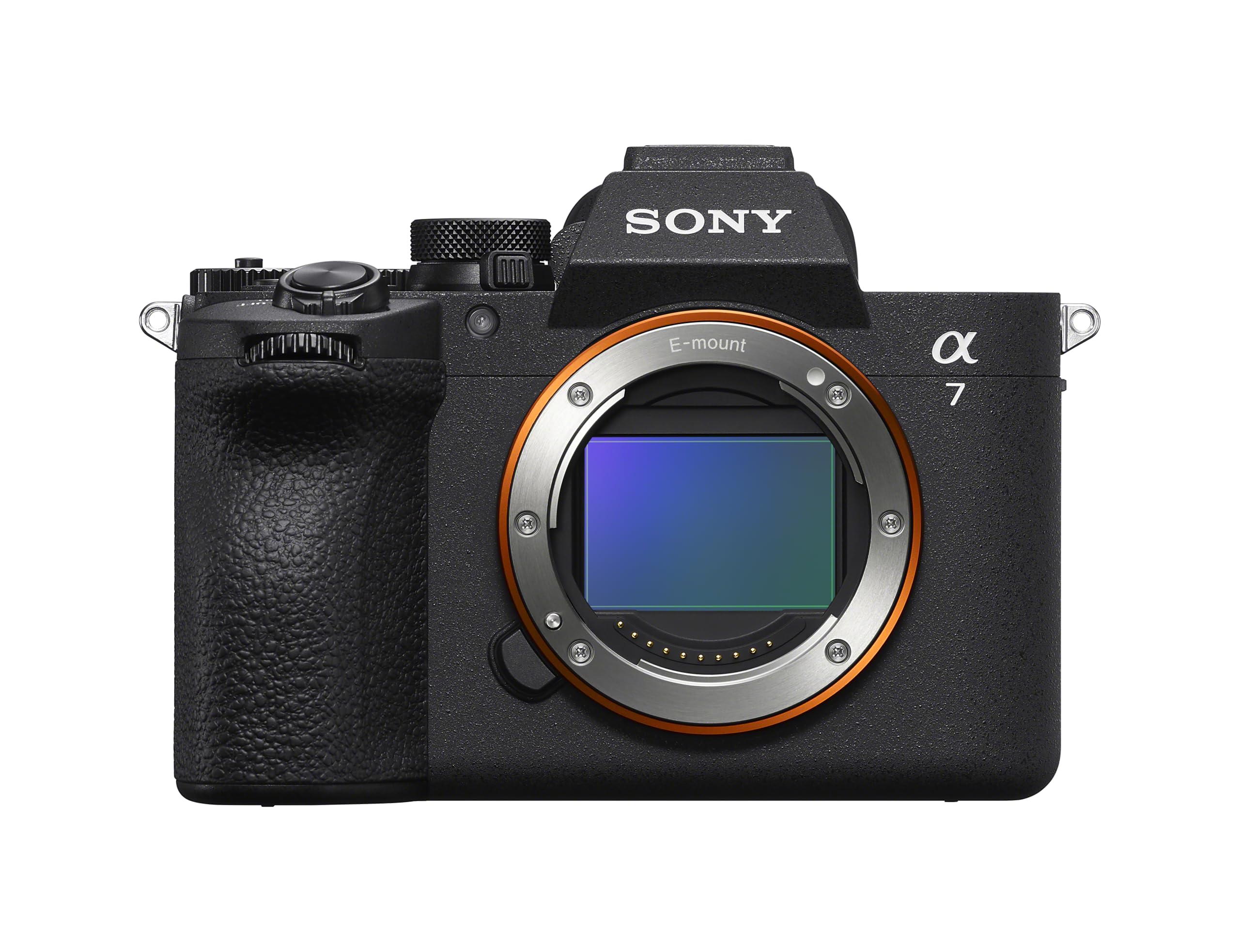
The future-proof hybrid with AI autofocus so smart it tracks insects mid-flight.
This is the most advanced camera on this list, built for pros who shoot 50% photo and 50% film. The advanced 7.5-step in-body stabilization is stunning—one of the best on the market—allowing handheld shooting at telephoto lengths that would be otherwise impossible. The AI autofocus goes beyond the usual people and pets, detecting eyes and faces for humans, animals, birds, vehicles, and even insects, with 759 autofocus points for real-time tracking. Owners call it maybe the best hybrid camera out there, praising its sharp, clean image quality, fast reliable AF even in low light, and responsive menus.
It shoots up to 30fps continuous stills with a pre-buffer capture, making it perfect for wildlife and sports where you can’t miss the moment. The video is crisp and cinematic, with strong stabilization and color profiles that owners describe as professional-grade. For 4K120 recording, it has active cooling to handle long 4K60 sessions—addressing a common overheating issue in smaller full-frame bodies.
On a video-camera list, it’s a unique beast: it’s a photography monster first, but the video is so good it’s now a filmmaker’s dream. It’s the most expensive pick here, and you’ll need to budget for lenses separately. But if you want the absolute best hybrid performance Sony offers, this is the crown jewel.
Why It’s Top Tier
- Flagship 7.5-step in-body stabilization for handheld shots
- AI autofocus tracks insects, animals, and vehicles
- Cooling system allows long 4K60 recording sessions
Reality Check
- Substantial investment with no lens included in the box
- Steep learning curve for those new to Sony’s ecosystem
The professional’s choice: Reach for this if budget is no object and you want the most capable hybrid body made.
Buy wisely: Factor in the cost of high-end glass and extra batteries to get the full experience.
Understanding the Key Specs
Sensor Size: Bigger Is Better
The sensor is the camera’s eye, and a bigger eye catches more light. A 1-inch sensor (found in gimbal cameras) is a big step up from a phone, but an APS-C or full-frame sensor (found in mirrorless and DSLR cameras) is dramatically larger, giving you better low-light performance, more background blur, and richer color. Full-frame is the premium tier for a reason: it handles dimly lit scenes with noticeably less noise (grainy speckles in dark footage).
Stabilization Systems
Shaky video is the number one amateur tell, and there are three ways to fight it. A 3-axis gimbal physically moves the camera to keep it level—the best for walking shots. In-body stabilization (IBIS) moves the sensor inside the camera to counter your hand movements. Lens-based stabilization (like Canon IS or Nikon VR) uses moving glass elements. For vlogging on the move, a gimbal wins; for general handheld shooting, IBIS or lens IS is often enough.
FAQs About Video Cameras
Is a gimbal camera or a mirrorless camera better for vlogging?
What does 4K/120fps mean for my videos?
Are more autofocus points always better for video?
Why does my camera overheat when recording 4K?
Can I use any SD card for 4K video?
What’s the difference between a full-frame and an APS-C sensor for video?
Is a mirrorless camera or a traditional camcorder better for recording kids’ sports?
Do I need a camera with a flip screen for vlogging?
Is image stabilization in the lens or the camera body more important?
How long does a video camera battery last for filming?
Final Thoughts: The Verdict
For most people, the camera for video recording winner is the Nikon D7500 because it delivers class-leading image quality, durable weather resistance, and a versatile kit lens in one package—a true all-rounder that owners rate highly. If you’re a solo creator looking for gimbal-smooth, pocket-sized shots, grab the DJI Osmo Pocket 3 and its complete Creator Combo kit. And for the professional hybrid shooter who needs the very best in both photo and video, the Sony Alpha a7 V is the one to reach for.
How We Picked
We do not accept paid placement. Every pick is matched to a real buyer and a real use-case; we do not hands-on test units.
Sources & Methodology
Specifications: manufacturer listings and product documentation. Review insights: verified customer reviews, as of August 2026. Pricing: not shown on this page (it changes often); check the current price via the retailer link.
As an Amazon Associate, Gadgets Feed earns from qualifying purchases. This does not affect which products we feature.