
Our readers keep the lights on and my morning glass full of iced black tea. As an Amazon Associate, I earn from qualifying purchases.
Specs are compiled from manufacturer listings and verified buyer reviews and can change over time — please confirm the key details on the product page before buying.
Picking a camera drone in 2026 can feel like decoding a secret language—sensor size, gimbal axes, transmission range—and one wrong choice might leave you with shaky footage or a drone you can’t legally fly. You need to know which features actually turn a flying toy into a real aerial camera, and which models deliver the best video for your skill level. We’ve combed through the technical specs and patterns in hundreds of owner reviews to give you an honest breakdown of each pick’s strengths and real-world trade-offs.
I’m Min — the founder and writer behind Gadgets Feed. This guide is built by comparing the manufacturers’ published specifications and the patterns across verified customer reviews, so you get each pick’s real strengths and trade-offs instead of marketing spin.
The perfect camera on a drone balances the sensor, gimbal, and flight time to match how you plan to shoot.
Our Picks at a Glance

How To Choose The Best Camera On A Drone
Before you fall for a flashy 4K sticker, you need to understand that the sensor and gimbal matter more than the resolution label. Each spec plays a specific role in whether your footage looks professional or wobbly and amateur.
Sensor Size, Not Just Megapixels
The sensor type determines how much light the camera captures, directly affecting image clarity and low-light performance. A large sensor like the 1/1.3-inch CMOS, which has a bigger surface area to capture light, generally produces cleaner images than a small sensor with a high megapixel count. This is why a drone with a 1-inch CMOS sensor can look noticeably better in low light than one with a tiny sensor that technically shoots the same 4K resolution.
The aperture, the lens opening that controls light reaching the sensor, works alongside sensor size to determine exposure and depth of field. A wide aperture like f/1.7 allows more light in, which helps when you shoot at dusk or in the shade. If you plan to film mostly during the day, this matters less; if you chase golden-hour sunsets, it matters a great deal.
The Gimbal’s Job: Keeping the Horizon Straight
A gimbal is a motorized mount that stabilizes the camera against drone movement, with 3-axis models correcting tilt, roll, and pan. The number of axes tells you how it counters motion: a 3-axis gimbal corrects tilt, roll, and pan, so the horizon stays level even when the drone banks hard in the wind. A 2-axis gimbal handles just tilt and roll, so you might see a little sideways drift in the footage.
Some drones try to mimic this in software instead of hardware. Electronic image stabilization (EIS) crops and shifts video digitally to smooth motion, but it performs best in bright conditions. For consistently smooth footage across lighting conditions, a physical 3-axis gimbal is the essential foundation.
Quick Comparison
| Model | Best For | Camera Spec | Max Flight Time | Max Range | Amazon |
|---|---|---|---|---|---|
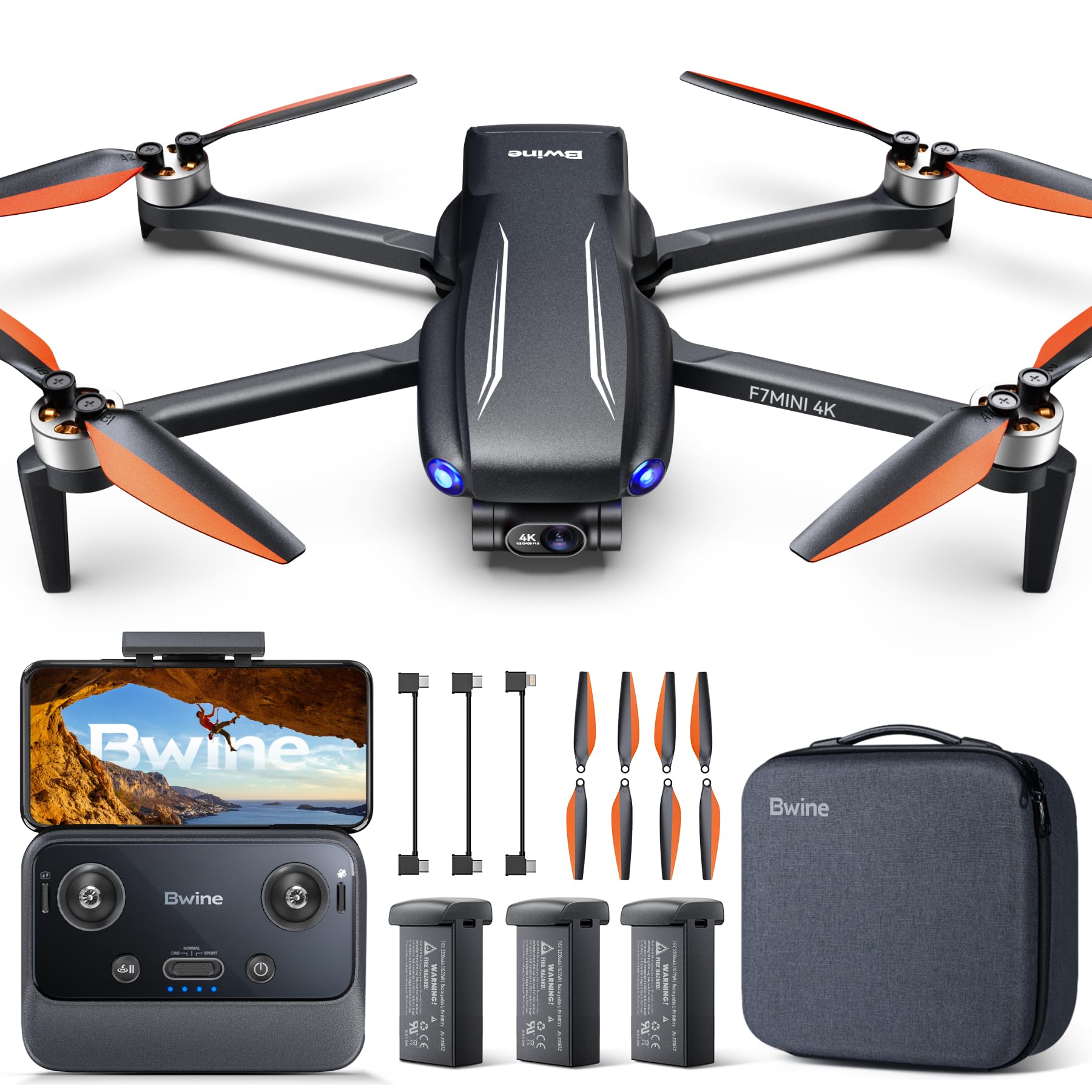
| Bwine F7MINI★ Best Overall | All-Around Winner | 48MP / 4K30 | 96 min (3 bat) | 20,000 ft | Amazon |
| Ruko F11PRO 2Crowd Favorite | Proven Crowd Favorite | 6K Photo / 4K30 | 70 min (2 bat) | 10,000 ft | Amazon |
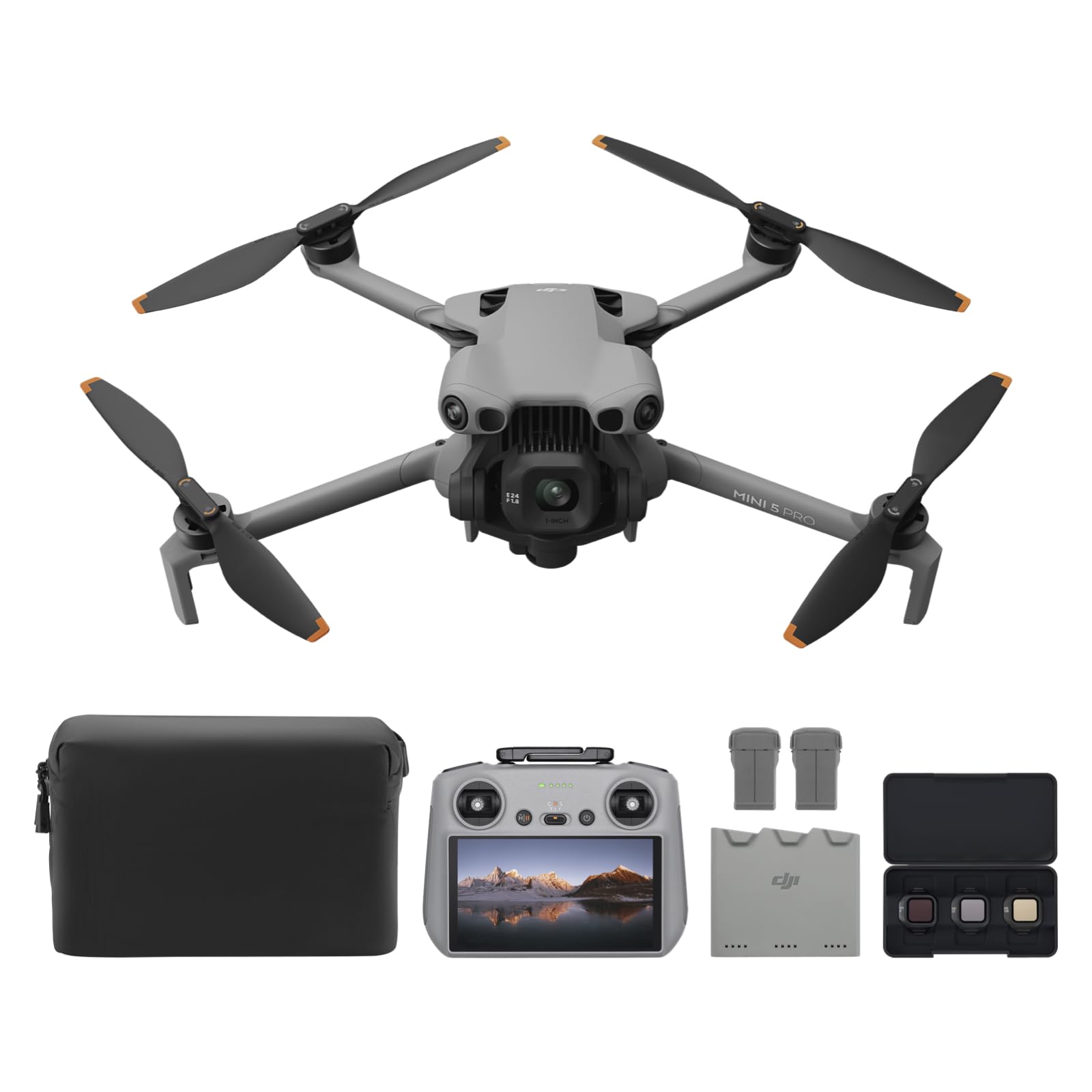
| DJI Mini 5 ProPremium Travel | Premium Travel Camera | 50MP / 4K60 | 52 min (per bat) | — | Amazon |
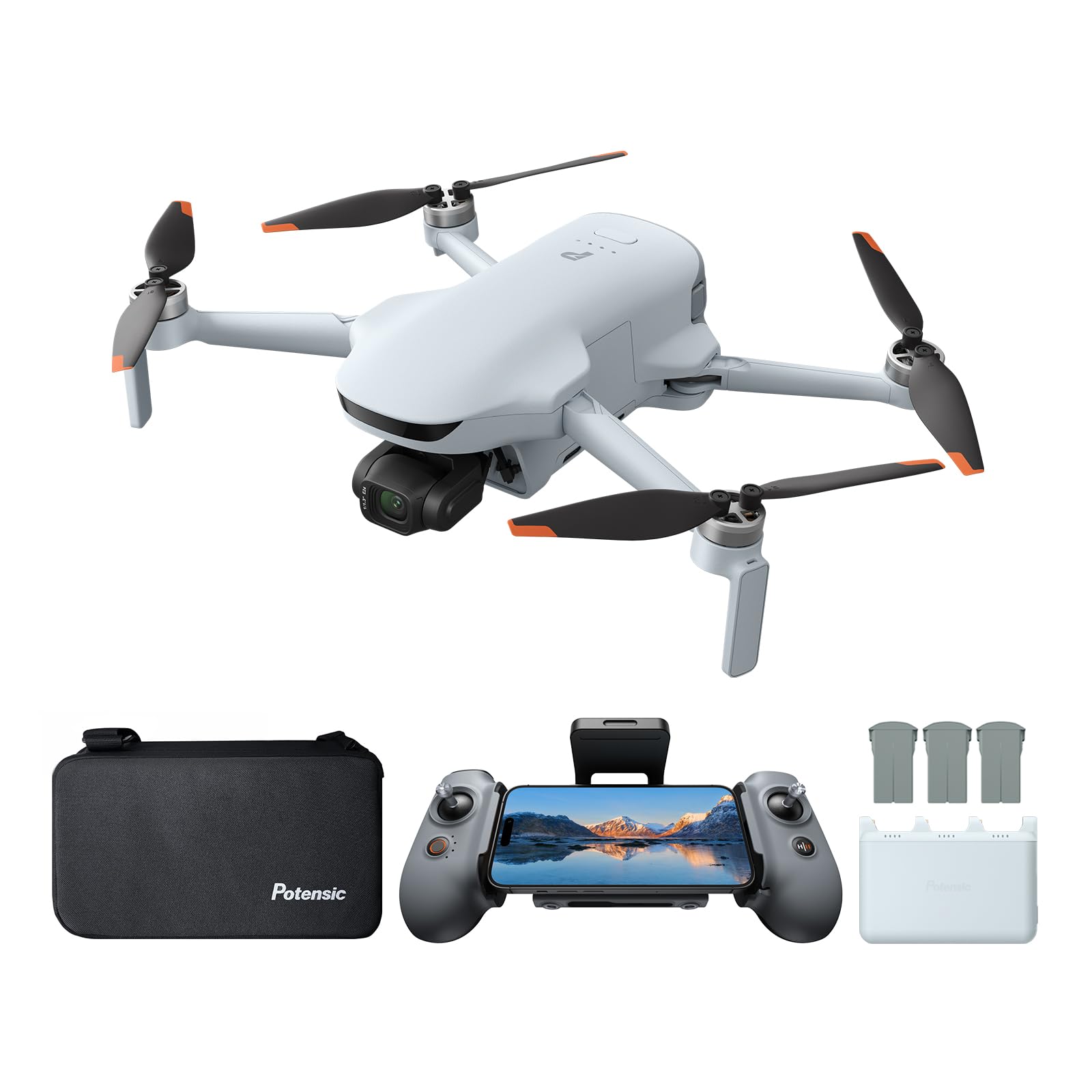
| Potensic ATOM 3 | Creator Tool | 50MP / 4K60 | 120 min (3 bat) | 16 km | Amazon |
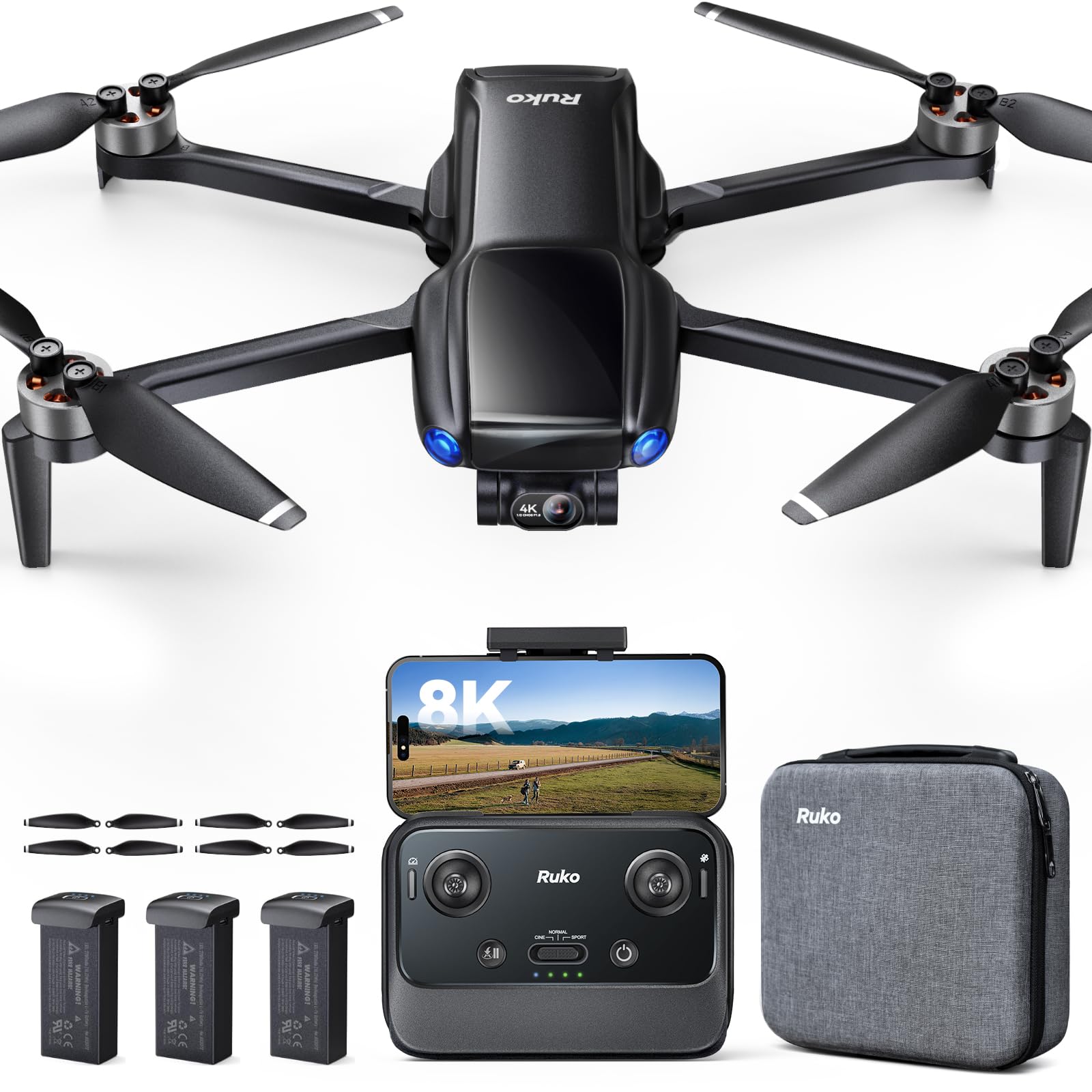
| Ruko Drone | Starter Value | 48MP / 4K30 | 96 min (3 bat) | 20,000 ft | Amazon |
| SKYROVER S1 | Social Media Shooter | 48MP / 4K60 | 120 min (3 bat) | 39,000 ft | Amazon |
| Holy Stone HS600 | Wind Resistant | 8.29MP / 4K30 | — | 10,000 ft | Amazon |
| SKYROVER X1 | Safe Flying | 48MP / 4K60 | 96 min (3 bat) | 9.32 mi | Amazon |
| DJI Mavic 4 Pro | Professional Film Set | 100MP / 6K60 | 51 min | 30 km | Amazon |
| K600PRO | Screen Convenience | 4K | 55 min | 15 km | Amazon |
In-Depth Reviews
1. Bwine F7MINI
Our pick — 4.5★ from 350+ verified ratings; the strongest balance of quality and price.
The all-around pick that pairs a pro-level camera setup with an easy beginner experience.
The standout here is the camera: a 48MP 1/2″ CMOS sensor with an F1.8 aperture shoots crisp 8K photos and 4K/30fps video. The wide aperture lets in more light, improving detail and color during golden-hour shoots compared to smaller apertures. The 3-axis stabilized gimbal uses motors and sensors to counteract drone movement in real time, keeping footage level even in windy conditions.
Flight time is another marquee feature, with three high-density batteries delivering a 96-minute total flight time (32 mins each). You can fly for an hour and a half without stopping to charge, which is ideal for road trips or farm patrols. It also weighs in at just 249 g, which keeps it in the FAA-exempt class, and the 20,000 ft maximum range gives you plenty of room to explore.
Owners consistently point to the build quality and ease of use as the biggest wins, finding it super easy to fly and control right from the start. One owner put it plainly: “This has been a really fun drone for me,” noting it sets up easily and the GPS holds it steady in place. The recurring note is that the video quality is excellent for a recreational model, though serious videographers used to 60fps may find the 30fps a bit jittery on fast pans.
Compact power
- 96-minute total flight time across 3 batteries
- 3-axis stabilized gimbal for smooth, professional-grade footage
- Under 249g, so no FAA registration required
Short flight time
- Video tops out at 4K/30fps, so motion can look less fluid than 60fps rivals
- Video quality is great for hobbyists but not on par with premium flagships
Budget flyer: you want one drone that handles photography, video, and long flying sessions without a steep learning curve.
Long hauls: you need 60fps playback for fast action shots; this model stays at 30fps.
2. Ruko F11PRO 2
A proven, sturdy choice that thousands of beginners have learned to fly on.
This is the drone with the most owner feedback in this lineup, and the sheer volume of positive experience says something about its reliability. The F11PRO 2 uses a 3-axis mechanical gimbal to eliminate shakes and vibrations, delivering smooth 4K/30fps video and 6K photos. For a beginner, that stability is what keeps the footage watchable instead of sea-sickening.
It’s built for a near-zero learning curve, with one-key takeoff and landing plus a dedicated Beginner Mode that limits speed and keeps the drone steady. The GPS Auto Return-to-Home function automatically flies the drone back when the battery is low or the signal drops, which is a massive peace-of-mind feature for nervous first-time pilots. You get two intelligent batteries for a total of 70 minutes of flight time.
The hands-on reports consistently highlight how easy it is to learn — a common refrain is that a complete novice can be flying confidently within half an hour. While the photo quality is good, a few owners note it’s not going to outshine a modern phone’s 48MP camera, and the videos look better wide-angle than they do zoomed in. The build quality earns constant praise, with stories of it surviving multiple crashes without issue.
Sturdy build: If you want a rugged, forgiving drone with a solid camera and a huge community of happy owners behind it, the F11PRO 2 is the safest bet on this list.
Heavier frame: its 10,000 ft range is half of the top-tier models, and the 70-minute flight time requires the two included batteries.
3. DJI Mini 5 Pro
A palm-sized powerhouse with the biggest sensor-to-body ratio you can pack.
The defining spec here is the camera: a 1-inch CMOS sensor that captures 4K/60fps HDR video. That 1-inch sensor is significantly larger than the 1/2-inch and 1/2.3-inch sensors common in lighter drones, and it shows in the dynamic range and low-light capability. The result is footage that holds onto highlight and shadow detail in a way smaller sensors simply can’t match.
It’s not just about the sensor. The gimbal offers a 225° roll rotation and true vertical filming, so you can rotate the camera to any angle and shoot portrait-oriented video for social media. It also has 42GB of internal storage, meaning you can fly right from the start without buying an SD card. The Fly More Combo includes three batteries with up to 52 minutes of flight time each, plus ND filters to control exposure in bright light.
The camera quality is where this drone truly separates itself from the crowd. Owners praise the images as beautiful after editing, and the obstacle sensing, which uses forward-facing LiDAR and vision sensors, adds a layer of safety that’s rare in this size class. There is a recurring note that the advertised battery life is optimistic — real-world flight is closer to 45-50 minutes — but that’s still outstanding for a drone this small.
Smart features: The travel photographer who wants flagship-level image quality without the bulk of a full-size drone.
Pricey extras: The DJI Fly app isn’t on Google Play, so you’ll need to download it from the official website, and some buyers report the NFC-based activation can fail on secure networks.
4. Potensic ATOM 3
A creator’s Swiss Army knife with a big sensor, smart tracking, and 2 hours of flight time.
The Potensic ATOM 3 steps up the photo game with a 1/1.3” CMOS sensor that captures 4K 60fps HDR video and 50MP photos. This is the same sensor class used in many premium drones, giving you a strong base for both video and high-resolution stills. It also includes P-Log mode, which preserves realistic raw footage for flexible, professional-grade color grading in post-production.
The media specs are only half the story. You get 120 minutes of total flight time across three batteries, and the 65W parallel charging hub can charge all three in about 90 minutes, so you can spend the day flying rather than waiting. The transmission system reaches up to 16km with a tri-band signal and 1080p/60fps live view, which keeps the feed clear even at distance.
For creators, the AI Tracking 2.0 (an automated follow system) is the standout feature, letting you track subjects below 4 meters (about 13 feet) and offering modes like Drift, Spin Ascend, and Dolly Zoom for cinematic one-shot footage. Owners call the camera crisp, with one long-term owner reporting four units still working after two years of near-daily use. The 48mm Med-Tele mode (a medium-telephoto lens) compresses the background for portraits, giving a more flattering perspective than a wide lens.
Quick shots: you’re a travel creator who wants a flexible camera with strong tracking and a long battery life for full shooting days.
Distance flights: you want a drone with obstacle avoidance; this model’s capabilities in that area are not explicitly detailed.
5. Ruko Drone
A feature-complete starter drone that delivers flagship range on a budget.
The Ruko Drone is anchored by a premium 1/2″ 48MP CMOS sensor that captures 8K photos and 4K/30fps video. The 3-axis brushless gimbal works with EIS technology, which is electronic image stabilization that digitally crops the frame to smooth out motion, for cinematic footage. It’s a solid pairing that delivers a strong image quality for the price tier.
On the flight side, it nearly matches our top pick: three batteries give you up to 96 minutes of total flight time (32 minutes each), and the advanced R2 digital system (a wireless video transmission tech) streams a clear feed up to 20,000 feet (6KM) away. At under 249g, it skips FAA registration or remote ID, and the foldable design with a carrying case makes it a true travel buddy.
The real-world experience has a consistent theme: beginners find it incredibly easy to learn, with a 12-year-old reportedly flying it without issue. However, the reliability thread is mixed, with a few owners reporting an occasional defective battery that stops charging or a propeller failing early. In each of those cases, the customer service response was praised for quickly arranging a replacement, which is a reassuring safety net for a first drone.
Reliable hover: For the same class and flight time as the Bwine F7MINI, this is a very close second, trading a slightly lower overall rating for a lower sticker price.
Basic camera: A minority of units arrive with a battery issue, but the support team is fast to make it right.
6. SKYROVER S1
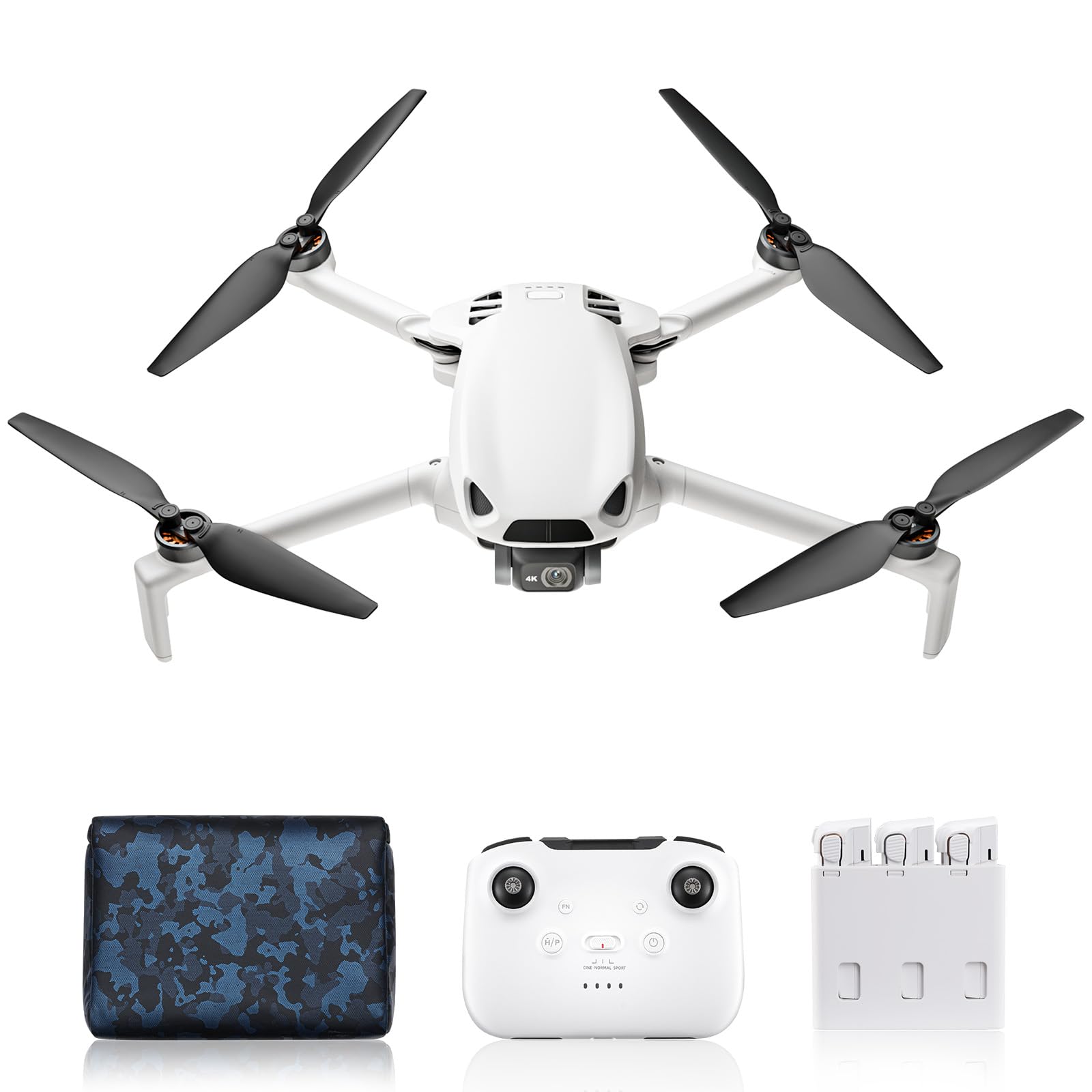
The vlogger’s pick that shoots smooth 4K/60fps and vertical video for social feeds.
The Skyrover S1 is built around a 1/2″ CMOS sensor that captures 4K/60fps smooth video and 8K/48MP high-resolution photos. The 60fps frame rate is the key advantage here — it makes motion look fluid and realistic, which is a big step up from 30fps when you’re filming action or fast-moving subjects. It also shoots 2.7K vertical videos tailored for TikTok, Instagram Reels, and YouTube Shorts.
You get a generous 120 minutes of total flight time across three batteries (40 minutes each), and the transmission range stretches to 7.45mi/12KM with a crisp 1080p/60fps (high-definition, 60 frames per second) live view. It’s under 249g, so it’s FAA-friendly for recreational flying, and it folds small enough to fit in a backpack. Forward obstacle avoidance (sensors that detect and dodge objects ahead) plus one-tap takeoff and landing help beginners fly with confidence.
Owners describe it as a DJI Mini alternative, praising the crisp 4K60 footage, the 3-axis gimbal, and the reliable return-to-home function that reliably lands it near the launch point, missing by just a few feet. The AI Auto Track keeps you framed as you move, which is ideal for solo creators. A practical note from the community is that you’ll want a fast SD card (32GB or higher) to handle the data rate of 4K60 video.
First drone: solo content creators who need smooth slow-motion-ready footage and native vertical video.
Pro use: obstacle detection is only forward and downward, not 360°, and the drone is described as somewhat fragile, so treat landings gently.
7. Holy Stone HS600

The heavy-lifter that shrugs off wind with integrated laws compliance built in.
The Holy Stone HS600 is a GPS drone that emphasizes durability and stability in the air. It weighs 541g, which is more than double the 249g mini category, and that extra mass — backed by brushless motors — gives it impressive wind resistance up to 6 levels. If you routinely fly near the coast or in open fields where the breeze kicks up, this is a stabilizing advantage.
It features a 2-axis gimbal with EIS stabilization and a Sony sensor-enhanced camera capturing 4K/30FPS video. The camera quality earns solid praise for clarity, though the 2-axis gimbal means you won’t get the same pan-smoothing as a 3-axis system, so you may see some drift in footage during fast yaw turns. Photos are rated at 8.29MP effective resolution, which is lower than the 48MP mainstream, so this is a drone for video over high-res stills.
One unique compliance feature: it comes with Integrated Remote ID built in, so you don’t need to attach a separate module to satisfy FAA requirements. Owners confirm the GPS return-to-home is accurate and that it handles wind remarkably well, with reports of stable flights in gusts that would push smaller drones around. The main trade-off for that stability is a single included battery, so you’ll want to consider a spare for longer sessions.
Long battery: you fly in windy zones and prioritize a rock-steady platform over portability.
Bulky design: a 2-axis gimbal and 8.29MP photos trail the 3-axis 48MP models on this list, and it comes with just one battery.
8. SKYROVER X1

A confident flyer with 360° sensors and a low-light camera for dusk shoots.
The SKYROVER X1’s party piece is its 360° obstacle sensing, which scans in all directions to support safer, more controlled flights. This is a meaningful safety upgrade over forward-only systems, giving you more confidence when flying in parks, trails, or tight spaces. The Smart Return to Home function works alongside it to bring the drone back when signal is lost or battery runs low.
For the camera, it steps up to a 1/1.32″ CMOS sensor with an f/1.7 aperture, capturing 4K/60fps HDR video and 48MP photos. The large sensor and wide aperture work together for a feature called AI Night Mode, which improves nighttime and dusk shooting — a rarity in drones at this weight. You also get 96 minutes of flight time across three batteries (32 minutes each) and a 9.32-mile transmission range.
Owners who fly the X1 describe it as a solid DJI Mini 4 Pro alternative, praising the sharp video, the stable flight, and the flawless gimbal performance. The 360° obstacle avoidance is a standout, with the drone stopping and reporting distance to objects before you hit them. A few owners note the controller’s gimbal can loosen after a couple of weeks, and that while the avoidance is smart, it can still miss a very tiny branch — so keep an eye out in dense woods.
Indoor play: beginners who want the safety net of 360° sensing and the flexibility of a night-capable camera.
Outdoor gusts: those who need a deep manual; the manual lacks depth and owners suggest learning from online tutorials.
9. DJI Mavic 4 Pro

A triple-lens flagship that brings a full professional camera rig to the sky.
The DJI Mavic 4 Pro features a 100MP 4/3 CMOS Hasselblad main camera plus dual tele cameras, giving you the ability to capture a wide cinematic shot and then zoom in for crisp, detailed close-ups without losing quality. Video reaches up to 6K/60fps HDR, which is a step above the 4K standard found on consumer drones.
The gimbal is a 360° Infinity Gimbal that offers dynamic camera movement for cinematic shots, and the 0.1-Lux Nightscape Omnidirectional Obstacle Sensing can detect obstacles in very low light for safe night shoots. Transmission is handled by the O4+ system, delivering 30km/18.6mi of 10-bit HDR video transmission for a smooth feed when you’re working miles away. Max flight time is 51 minutes, and it comes with a 100W USB-C Power Adapter for fast top-ups.
The image quality is the defining characteristic; owners describe it as the best DJI drone yet, with cameras that are “insane” and a crash-avoidance system that inspires confidence. The tri-camera setup allows you to photograph with different focal lengths, something no other drone on this list can do. However, it’s a professional investment, and one owner wisely notes that if you crash it, you’re looking at a hassle to repair — so it’s not a starter’s toy.
Pro grade optics: for commercial work or serious filmmaking, the Mavic 4 Pro is in a class of its own with its 100MP stills and triple lenses.
Steep cost: the price and repair costs are steep, and the DJI Fly app requires a manual download from the official site.
10. K600PRO
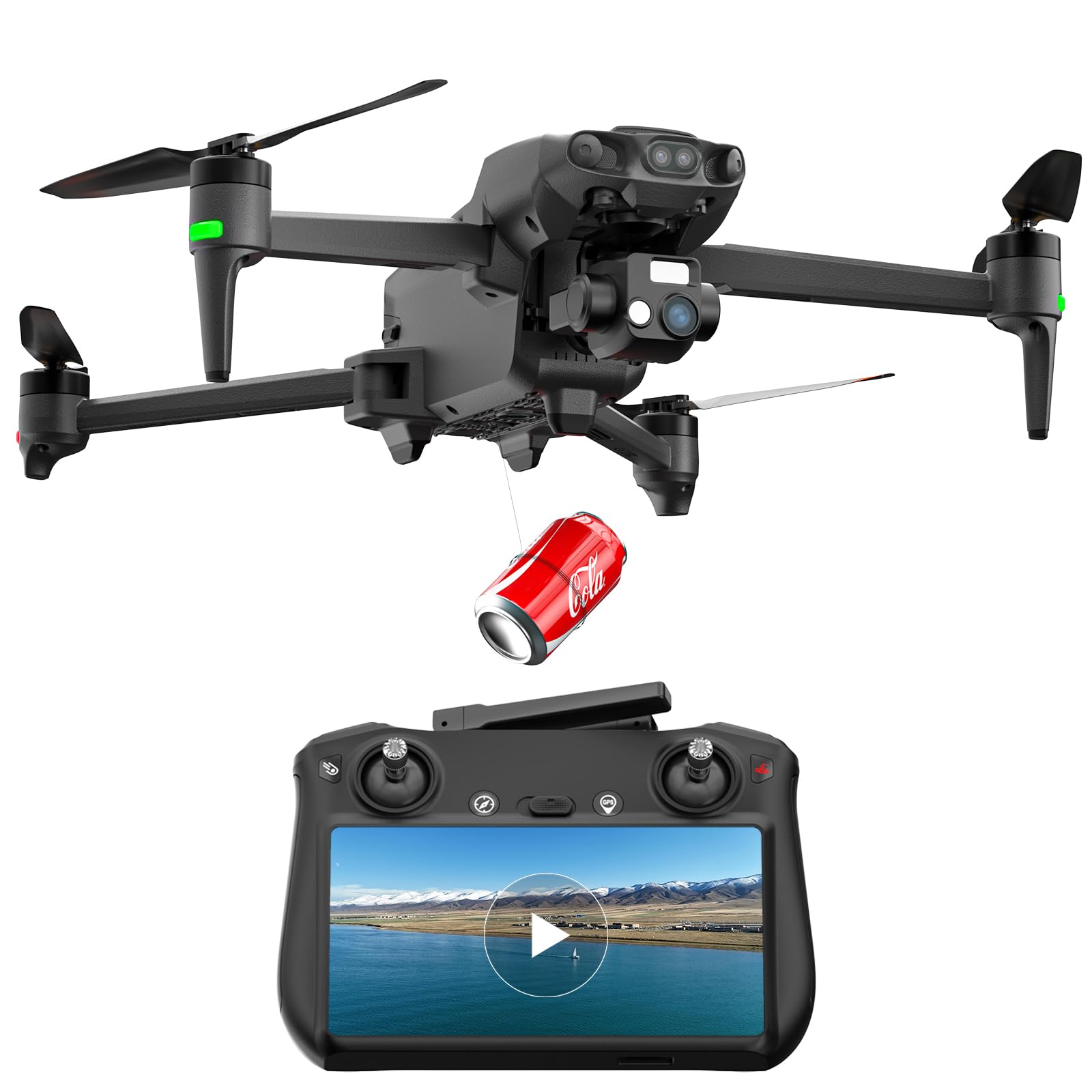
A unique all-in-one that puts the live view on a dedicated 5.5-inch touchscreen.
The K600PRO stands out for a very practical reason: it has a 5.5-inch touchscreen built into the controller. This means you don’t need to clamp a phone in to see the live FPV feed; you just power on and get a clear, instant view right in front of you. For beginners who find phone setups finicky, this is a far more direct experience that gets you in the air faster.
Under the hood, it’s a solid 4K camera with a 3-axis gimbal (a stabilizer that keeps the lens level) and EIS (electronic image stabilization), plus a 50x zoom for pulling in distant details. The flight system is beginner-friendly with one-key takeoff, auto return, and a dedicated beginner mode. A sturdy brushless motor paired with an 11.1V 3500mAh battery delivers an impressive 55-minute runtime, and the 15km HD transmission range gives you plenty of room to explore.
The camera quality is what owners mention first, praising the clear photos and steady flight provided by the brushless motors. The built-in screen is repeatedly called out as easy to see and convenient. Note that some owners describe the camera as good with EIS, not a mechanical gimbal, so understand the stabilization is digital — it will be smooth but relies on good lighting for best results.
Kids learning: the beginner who wants the simplest possible setup — no phone required — with a long 55-minute flight time.
Serious pilots: the camera’s “3-axis gimbal” is described more as EIS in practice, so expect slight differences from a true mechanical 3-axis system.
Understanding the Specs
CMOS Sensor Size and Aperture
The sensor is the digital “film” in your camera, and its size directly affects image quality. A larger sensor like a 1-inch CMOS (a type of image sensor; the measurement is in fractions of an inch, so a smaller denominator means a bigger physical sensor) has larger pixels that capture more light, giving you cleaner video in low light and better color depth. The aperture, noted as f/1.7 or f/1.8, is the size of the lens opening. A wider aperture (a smaller f-number) lets in more light for brighter images—crucial for shooting at dusk or in shaded areas without raising the ISO (the camera’s light sensitivity, which gets grainy when pushed high).
Transmission Range and Gimbal
Transmission range is how far the drone can fly from the remote before losing the video feed. It’s listed in feet or kilometers (e.g., 20,000 ft or 16 km) and depends on the transmission system’s power and frequency band. A longer range is great for exploring large estates or coastline, but remember the drone must still have enough battery to fly back, so range and flight time work together. A 3-axis mechanical gimbal actively counters tilt, roll, and pan, keeping footage level even when the drone banks in wind.
FAQ
What does under 249g mean for FAA rules?
Is a 3-axis gimbal worth paying extra for?
How long does a drone battery usually last?
Can I fly a camera drone at night?
What is the difference between EIS and a mechanical gimbal?
Do these drones require a smartphone to fly?
What is Remote ID and do I need it?
Which drone has the best camera for photography?
Is a more expensive drone easier to fly?
How important is obstacle avoidance for a beginner?
Final Thoughts: The Verdict
The camera on a drone balance for most people is the Bwine F7MINI, because it packs a 48MP sensor, a 3-axis gimbal, and a 96-minute flight time into a bundle that’s easy to fly without needing FAA registration. If you want a proven crowd-pleaser with a huge community of happy owners, grab the Ruko F11PRO 2. And for the professional who demands a serious tool, the DJI Mavic 4 Pro with its 100MP Hasselblad camera and tri-camera setup is the definitive choice.
How We Picked
We do not accept paid placement. Every pick is matched to a real buyer and a real use-case; we do not hands-on test units.
Sources & Methodology
Specifications: manufacturer listings and product documentation. Review insights: verified customer reviews, as of August 2026. Pricing: not shown on this page (it changes often); check the current price via the retailer link.
As an Amazon Associate, Gadgets Feed earns from qualifying purchases. This does not affect which products we feature.