
Our readers keep the lights on and my morning glass full of iced black tea. As an Amazon Associate, I earn from qualifying purchases.
Specs are compiled from manufacturer listings and verified buyer reviews and can change over time — please confirm the key details on the product page before buying.
You’re past the tiny practice box phase and ready for a sound that can actually sit in a room with a drummer — without blowing your eardrums at home. Your use case—bedroom practice, band rehearsal, or recording—determines which 50-watt combo fits. This guide ranks each amp by its real-world strengths, from deep 12-inch tone to XLR direct outs, so you match the combo to your playing style.
I’m Min — the founder and writer behind Gadgets Feed. This guide is built by comparing the manufacturers’ published specifications and the patterns across verified customer reviews, so you get each pick’s real strengths and trade-offs instead of marketing spin.
One honest note before we dive in: the amps below span 25 to 60 watts, because that range is where the same-size combos genuinely compete for your money. The speaker size and EQ controls decide how that wattage translates into usable bass tone. Here is my breakdown of the 50 watt bass amp market, built around the features and real-world behavior that actually shape your sound.
Our Picks at a Glance

How To Choose The Best 50 Watt Bass Amp
Choosing a bass amp hinges on three factors: required volume, speaker-driven tone, and the connections you’ll actually use. A 50-watt combo (an amp with the speaker built in) is the classic middle ground — loud enough for a band rehearsal, quiet enough to live in a bedroom — but the speaker and the controls decide whether it sounds like a real bass rig or a boxy compromise.
Match the power to the room
Fifty watts through one speaker handles practice and small gigs, but lacks the headroom for large venues. If you are playing alongside a hard-hitting drummer in a loud band, look for headroom. For solo practice or jamming with one guitarist, 50 watts offers ample clean headroom for tone shaping.
Speaker size shapes the sound
An 8-inch speaker is compact and clear but cannot move as much air as a 12-inch. A 10-inch sits in the middle — the most common choice for 50-watt combos — and balances portability with a solid low end. A 12-inch pushes the deepest thump, which is why the biggest-sounding combo amps here use one.
Know which extra features you will actually use
A built-in tuner, XLR direct out for recording or PA, and a headphone jack for silent practice are the long-term essentials. Effects loops and Bluetooth are optional extras for pedalboard expansion or streaming backing tracks.
Quick Comparison
| Model | Best For | Wattage | Speaker | Weight | Amazon |
|---|---|---|---|---|---|
| Orange Crush50 Bass Combo★ Best Overall | Best Overall Tone | 50W | 1×12″ | 18.69 kg | Amazon |
| Hartke HD50 Bass ComboPowerhouse Output | Premium Output | 50W | 1×10″ | 30.6 lbs | Amazon |
| Ampeg Rocket Bass RB110 | Classic Tone & DI Out | 50W | 1×10″ | 24 lbs | Amazon |
| BOSS Katana-110 | Most Versatile | 60W | 1×10″ | 42.5 lbs | Amazon |
| Orange Glenn Hughes Crush Bass 50 | Signature Drive | 50W | 1×12″ | — | Amazon |
| Fender Rumble Studio 40 | Modeling & Bluetooth | 40W | 1×10″ | 23.5 lbs | Amazon |
| Hartke HD25 Bass Combo | Compact Practice | 25W | 1×8″ | 24.9 lbs | Amazon |
In-Depth Reviews
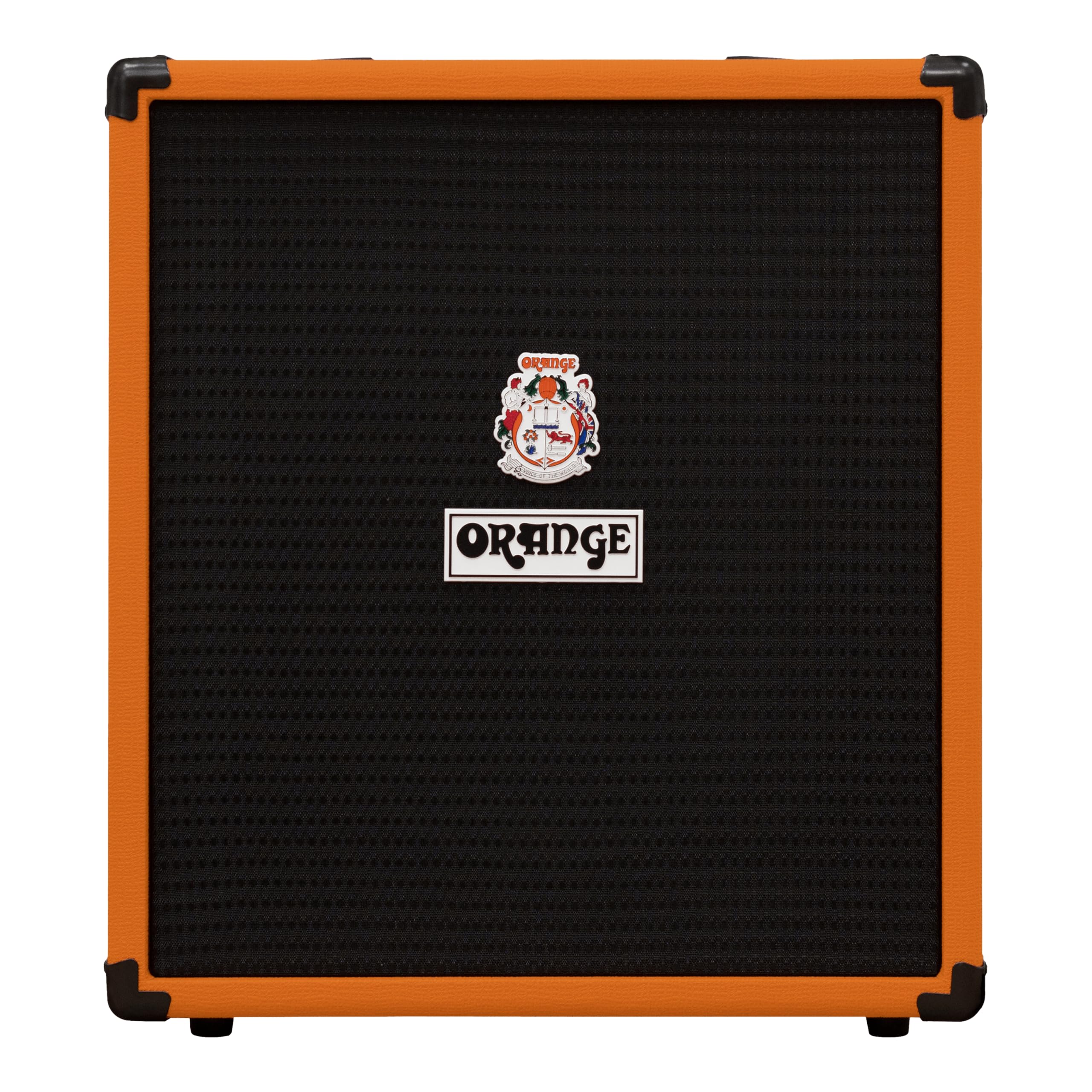
1. Orange Crush50 Bass Combo
Our pick — over 4.5★ from 350+ verified ratings; the strongest balance of quality and price.
The 12-inch speaker combo that makes 50 watts feel like a wall of sound, with a built-in tuner.
The first thing you notice is the deep, distortion-free low end that a 12-inch driver delivers — the thing everyone raves about is the sound quality, and it shows in how cleanly it handles deep notes. A punchy, expressive tone with crisp mids means your bass cuts through a mix instead of getting lost in it. The built-in LED tuner helps you check your tuning mid-practice, which is a feature beginners genuinely use.
It is a lightweight combo for its size, yet it beats smaller practice amps like the Fender Rumble 25 on sheer presence, as buyers report. The design is a hybrid of metal and plastic, and the 14-inch depth means it takes up a reasonable footprint in a bedroom or rehearsal space. The active 3-band EQ with a parametric mid control lets you sweep the midrange to find your voice, which is rare at this level. A buffered effects loop keeps your pedals sounding transparent, and the chromatic tuner is always ready.
The trade-off: it is loud for the bedroom, not a band-stage monster — the review pages sum it up as “sturdy practice combo.” Aux and headphone outputs with cabsim (a circuit that mimics a miked speaker cabinet) make silent practice practical, and owners suggest the headphone cabsim is great for recording a quick idea. It has no balanced XLR output (the three-pin connector used for professional audio), so if you need a direct line to a PA, consider a model with one.
What wins players over
- 12-inch speaker delivers deep, punchy low end
- Built-in LED tuner simplifies practice
- Parametric mid control shapes tone precisely
Where it has limits
- No balanced XLR output for direct recording
- Not designed to replace a large stage rig
The crowd favorite: reaches for this if you want that classic Orange punch in a compact combo that sounds bigger than its 50 watts.
Think twice if: you need a direct XLR out to a sound board for gigs — the aux and headphone jacks cover practice, not pro recording.
2. Hartke HD50 Bass Combo
A 10-inch hybrid combo that keeps up with a drummer — the leader once asked it to turn down from 20 feet away.
This is the 50-watt upgrade over its compact sibling, and the difference is immediately audible. The 10-inch hybrid cone driver with a ceramic magnet delivers a full, warm tone that fills a big room, as owners describe it — and it keeps its punch and clarity even on a 5-string B string at high volume. For indoor use, the size is praised most: it is small enough to move around easily yet packs a serious wallop.
The top-mounted amplifier puts Volume, Bass, Mid, and Treble controls right at your fingertips, and the 1/4-inch input works for both active and passive basses. A 1/8-inch stereo aux input lets you play along with tracks, and the 1/4-inch mono headphone output makes silent practice simple. At 30.6 pounds, it is portable but not light — you will notice it on the stairs, but it beats hauling a 4×10 cab.
Its power output is 50 watts against the HD25’s 25 watts, giving you real rehearsal headroom. Owners do note the build feels slightly cheap in places, and there is no graphic EQ or compressor on board. An occasional unit arrives with reliability trouble, so treat the speaker gently; one report of a blown speaker at low volume is a caution, not a pattern.
House-filling punch: 50 watts on a 10-inch hybrid cone that handles a live band setting without breaking a sweat.
Just keep in mind: it is heavier than the HD25 and the cabinet build is not premium-grade.
3. Ampeg Rocket Bass RB110 Combo
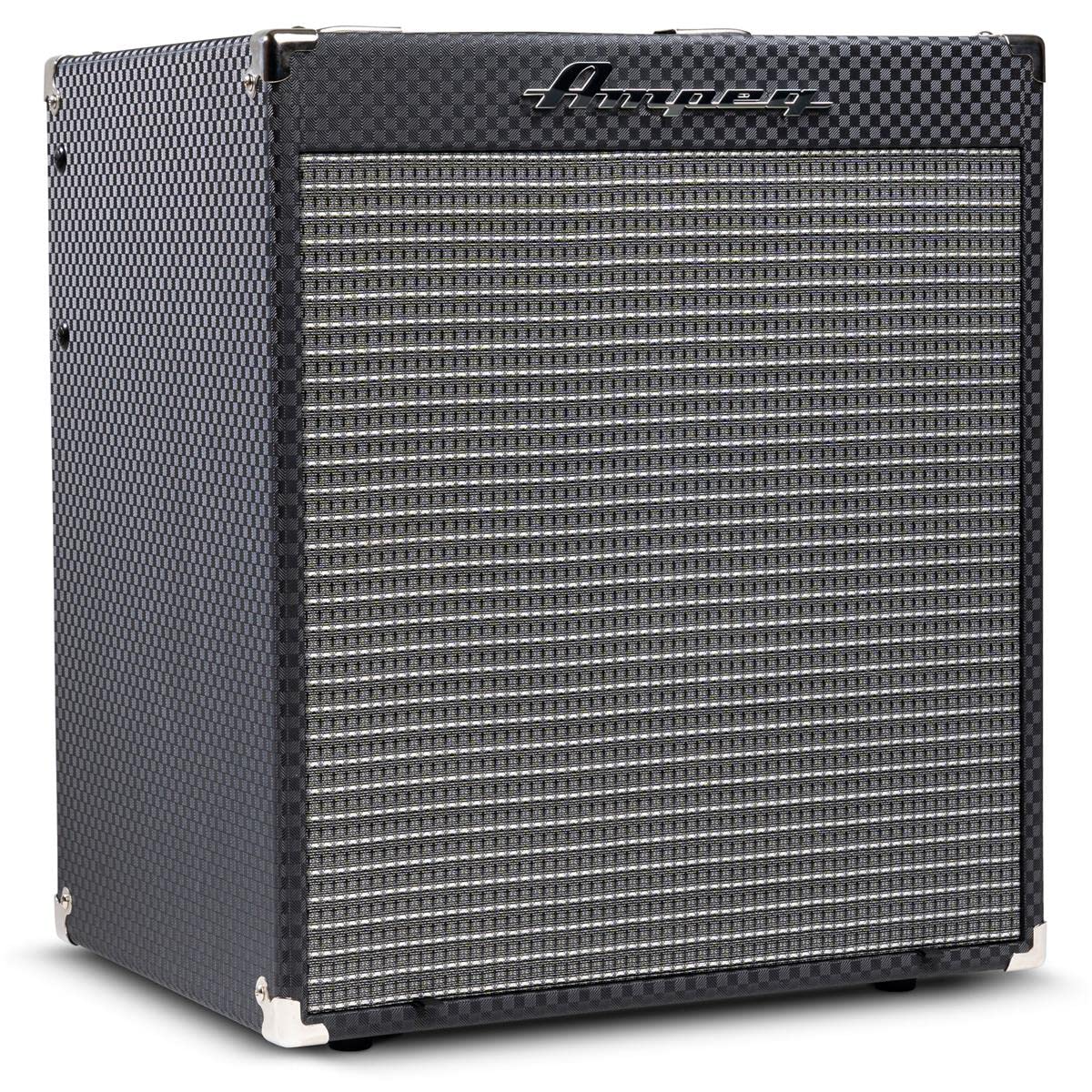
The vintage-styled 50-watt combo with an XLR out that moves from rehearsal to recording without a mic.
The classic Ampeg tone is the headline here — owners mention that 50W is sufficient for realistic rehearsals, and the XLR direct output lets you plug straight into a recorder or PA. That direct line works double duty: it feeds the sound board at a gig and captures a clean take at home, which is why it pulls double duty as a stage monitor. The vintage styling hides thoroughly modern internals.
The Super Grit Technology Overdrive gives you a usable dirt channel without an external pedal, and the 0dB and -15dB inputs mean you can run hot active basses or passive pickups without clipping. It is genuinely light for a 50-watt combo at 24 pounds versus the Hartke HD25 at 24.9 pounds, so it moves from car to stage easily. The wide 3-band EQ with 10 inches of speaker delivers ample low end for mid-size gigs.
Customers note that with a loud band you will be running 80-90% volume, so this is not a stadium amp — think bar and club gigs with balanced dynamics. The audience hears the classic Ampeg voice, and the XLR means the PA does the heavy lifting if you need more. An excellent value play for a working player.
Stage-ready features
- XLR direct output for recording and PA
- 24 lbs makes it easy to haul
- Super Grit overdrive adds grit without a pedal
Know the ceiling
- Needs higher wattage for headroom with a loud band
- Best in smaller venues, not arenas
For the working player: pick this if you want classic Ampeg tone for rehearsals and a direct line to the PA.
Reach elsewhere if: you are mixing a hard-hitting drummer with no PA support — the 50W runs out of headroom.
4. BOSS Katana-110 Bass Amplifier

A 60-watt Swiss Army knife with six memories, four effects sections, and a USB studio connection.
If you want one amp that does everything, the Katana-110 is the standout for its effects and flexibility — the reviews sum it up: it is plenty loud for home, decent for practice, and the built-in DI (direct injection, a balanced output for plugging straight into a mixer) works on stage without blowing everyone else away. The 60-watt class AB power amp delivers a big, punchy tone, and the Shape switch gives you three tone characters: mid scoop, bright, and extended range. That is three different personalities in one box.
It goes deeper than any other combo here. Four independent effect sections — compressor, drive, and FX1/FX2 — open up a vast range of selectable effects, and the four-band EQ lets you pick low and high-mid frequencies. Six memories store your favorite setups, so you can switch between a clean jazz tone and a distorted rock voice mid-set. The Power Control lets you get that cranked-amp sound at bedroom volume, which is a huge win for home players.
The dedicated BOSS Tone Studio editor for macOS and Windows lets you tweak preamp and effects settings on your computer, and the USB and phones/recording outputs include mic’d cabinet emulation (a digital model of a miked speaker). At 42.5 pounds, it is the heaviest amp here — but owners note it is still portable compared to an 8×10 stack, and one worship player reports it sounds better than the more powerful Fender their band was using. The trade-off is weight and complexity; if you want plug-and-play simplicity, this is more amp than you need.
Effects playground: six memories, four effect sections, and a USB editor make this the most flexible bass combo going.
Heavy commitment: 42.5 lbs is a workout, and the deep feature set takes time to master.
5. Orange Glenn Hughes Crush Bass 50

The Deep Purple signature combo that layers guitar-amp grit into your bass tone via a bi-amped blend.
This is a 50-watt combo with serious attitude, dressed in a striking purple covering that is unmistakably Glenn Hughes. The defining feature is the bi-amped setup — it blends layers of harmonics and distortion from the guitar amp with your core bass tone, creating a full-range live sound you would normally need two amps to get. In one package, the Gain and Blend controls add bite and crispness at lower gain, right up to “all-out filth” with the dials cranked, as the maker puts it.
The active circuitry is generous: up to 15dB of boost or cut on the bass and middle frequencies, and up to 20dB on the treble side. That is real tone-shaping power, letting you dial in everything from a clean, smooth jazz voice to a grinding rock tone. The buffered effects loop is engineered for maximum transparency, so your pedalboard sounds exactly as intended. The headphone output features Cabsim circuitry, which emulates Orange’s stage-ready OBC speaker cabinets for silent practice that still sounds alive.
The 12-inch speaker moves plenty of air, and experienced players note the clean, predictable tone with powerful punch when needed and warmth at low volumes. A built-in tuner and 16.93-inch width keep it practical. Owners mention it is heavy and the tuner design is not everyone’s cup of tea, but the outstanding distorted gain and versatile tone earn top marks. This one costs more for the signature name, and players who love it say it justifies the premium.
Signature voice: the bi-amped blend and 20dB treble control create a distorted bass tone no other combo here matches.
Premium price, premium weight: it is heavy and the tuner design draws mixed feelings, but the tone is a cut above.
6. Fender Rumble Studio 40
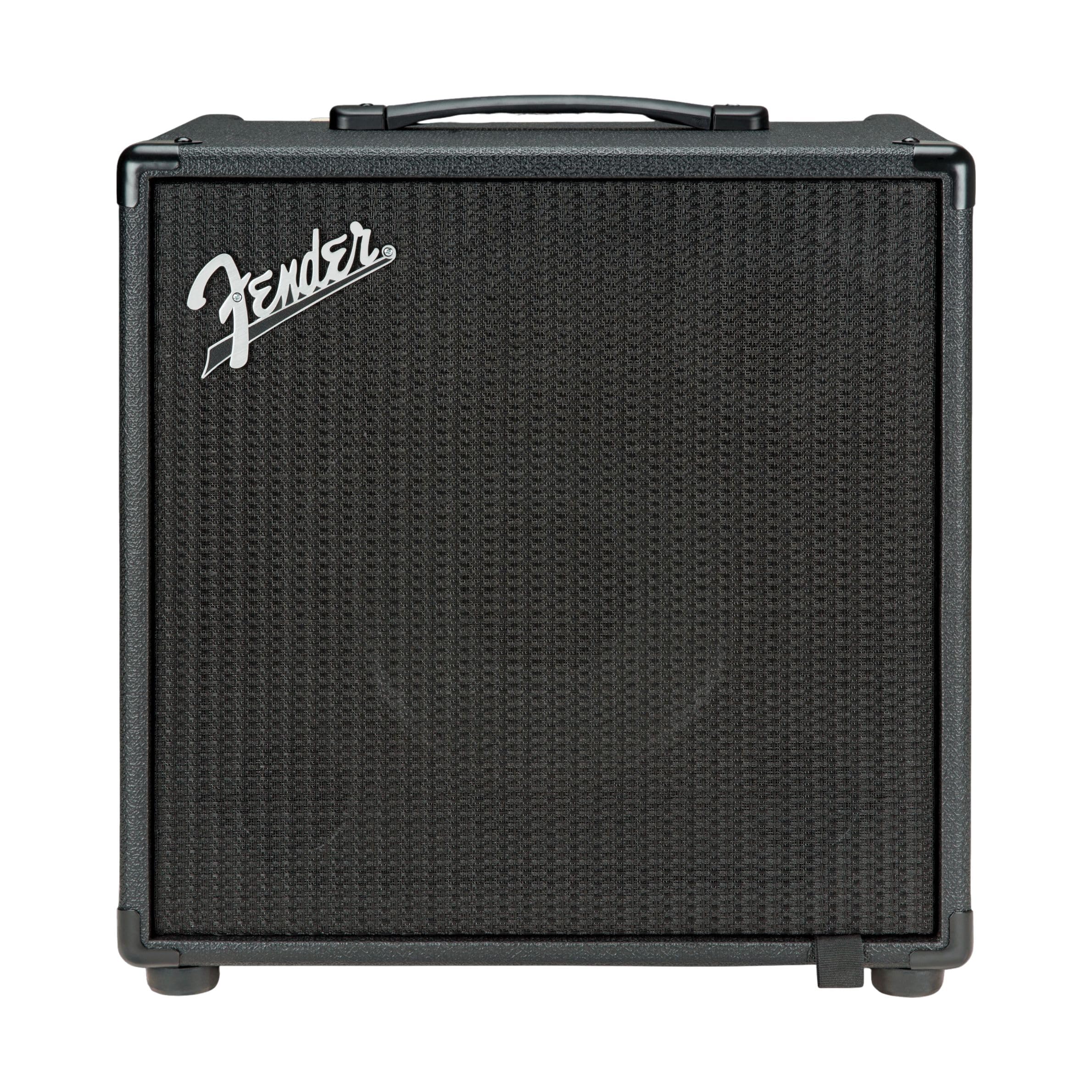
The Wi-Fi-equipped digital modeler that streams Bluetooth audio and packs dozens of presets into 23.5 pounds.
This is a different animal: a 40-watt digital modeling amp, not a traditional solid-state combo. The headline feature is the free Fender Tone app, which gives you one-touch access to a huge library of presets, plus management and editing right from your phone. The built-in Wi-Fi means updates and new tones arrive without plugging in a cable. Reviewers point out punchy performance for a 40-watt 1×10 model, and the built-in amp sounds can make an entry-level bass sound far more professional.
It is the most connected amp here. Bluetooth audio streaming lets you play along with tracks from your phone, and the control app runs over the same wireless link. The connections read like a studio interface: stereo send and return, aux input, XLR line outputs, USB output, and a headphone output. A 10-inch Fender special design speaker plus a compression tweeter covers the full frequency range, and the digital tuner is a bonus for drop tunings.
The sound is praised most, but there is an honest caveat: some shoppers say the screen freezing and the unit failing to power on, and the UI can feel a little unpolished. It is built for practice — one owner notes the sound can feel a bit flat depending on the room, and at 40W it is the quietest pick here. If you want endless tones in a light 23.5-pound package and do not mind a learning curve, this is a joy for solo practice.
Connected and light
- Bluetooth streaming and app-based preset control
- 23.5 lbs with XLR and USB outputs
- Huge preset library via Fender Tone app
Watch for
- Occasional screen freeze or power-on issues
- 40W is the quietest option for band use
For the tone explorer: pick this if you love tweaking sounds and want a light amp that streams music from your phone.
Pass if you are analog: the digital UI and occasional screen glitches will frustrate a pure plug-and-play player.
7. Hartke HD25 Bass Combo

The compact 25-watt practice combo with an 8-inch hybrid cone that owners call their last bass amp.
Yes, this is 25 watts, not 50 — but it earns its place as the budget-friendly practice pick for players who want a great small-room amp. The 8-inch hybrid cone driver with a ceramic magnet produces a surprising amount of bass, and owners describe the tone as heavy low-end crunch for rock with tight highs for jazz and funk. It pairs beautifully with active basses, and one player reports it works great with baritone and electric guitars too.
The sound quality is what wins people over — it delivers beautifully even at bedroom volume, and players note it outperforms modeling amps for solo practice. The top-mounted amplifier puts Volume, Bass, Mid, and Treble controls right at hand, and the 1/4-inch input handles active or passive guitars. A 1/8-inch stereo aux input plays along with backing tracks, and the 1/4-inch mono headphone output keeps practice silent for the family. At just 10 inches deep and 24.9 pounds, it fits in a small apartment corner.
The honest limit: at full volume it gets a bit fuzzy, and its output is 25 watts versus the HD50’s 50 watts. As buyers report: “It’s great at low/medium volume,” so this is strictly for personal practice, not keeping up with a drummer. If you want a bigger sound for a similar footprint, the HD50 is the louder sibling. For a first and friendly practice partner, this is a genuine value.
Small-room superstar: 8-inch hybrid cone and 25 watts that sound far bigger than the size suggests.
Not for the band: it gets fuzzy at high volume, so this is a practice amp, not a rehearsal one.
Understanding the Specs
Wattage and headroom
Wattage tells you how much clean volume an amp can produce before the sound starts to break up or distort. A 50-watt combo gives you enough headroom for practice and small gigs, while a 40-watt model trades a little output for lighter weight and quieter home use. If you plan to play with a loud drummer, aim for the top of this range — 50 to 60 watts — so you have reserves before the tone turns mushy.
Speaker size and tone
The speaker is where your tone is physically created, and bigger drivers move more air. An 8-inch speaker stays clear and focused but lacks deep low-end grunt; a 10-inch balances portability with a solid bass response; a 12-inch pushes the deepest thump and the most “amp in the room” feel. Match the speaker to the music you play — rock and funk players often want the bigger 12-inch, while jazz and practice players can live happily with a 10-inch.
FAQ
What is the difference between a 50-watt and a 25-watt bass amp?
Can a 50-watt bass amp keep up with a drummer?
What does an XLR direct output do on a bass amp?
Is a 10-inch speaker better than a 12-inch for a bass amp?
What is a hybrid cone driver in a bass amp?
Can I use a bass amp for an electric guitar?
What does a built-in tuner do for me as a beginner?
Why would I want an effects loop on a bass amp?
Final Thoughts: The Verdict
If you want the best overall 50-watt amp with the deepest tone, the 50 watt bass amp winner is the Orange Crush50 — its 12-inch speaker and parametric mid control deliver the most satisfying sound for the price, backed by the strongest owner satisfaction of any pick here. If you need a direct line to a PA and classic tone, grab the Ampeg RB110. And for effects-heavy players who want one amp that does everything, the BOSS Katana-110 is the versatile one to reach for.
How We Picked
We do not accept paid placement. Every pick is matched to a real buyer and a real use-case; we do not hands-on test units.
Sources & Methodology
Specifications: manufacturer listings and product documentation. Review insights: verified customer reviews, as of August 2026. Pricing: not shown on this page (it changes often); check the current price via the retailer link.
As an Amazon Associate, Gadgets Feed earns from qualifying purchases. This does not affect which products we feature.