
Our readers keep the lights on and my morning glass full of iced black tea. As an Amazon Associate, I earn from qualifying purchases.
Specs are compiled from manufacturer listings and verified buyer reviews and can change over time — please confirm the key details on the product page before buying.
The right first layer separates a comfortable winter run from a miserable, chafed one. A good base layer traps heat while wicking sweat, so you stay warm without overheating as your pace climbs. This guide ranks the best cold-weather running base layers by warmth, fabric, and fit to match your needs and budget.
I’m Min — the founder and writer behind Gadgets Feed. This guide is built by comparing the manufacturers’ published specifications and the patterns across verified customer reviews, so you get each pick’s real strengths and trade-offs instead of marketing spin.
We’ve reviewed nine top cold-weather running base layers, from budget synthetics to premium merino, to help you choose. base layer for cold weather running picks that keep you comfortable mile after mile are here.
Our Picks at a Glance

How To Choose The Best Base Layer For Cold Weather Running
Before buying, consider the temperatures you’ll run in and your sweat level. A layer that’s too warm becomes a sauna mid-tempo, while one too thin leaves you chilled at the start.
Fabric: Merino Wool vs. Synthetic
Merino wool is the premium choice because it regulates temperature naturally, resists odor for days, and still insulates when damp. It’s also softer than standard wool, so it doesn’t itch against your skin. Synthetic fabrics like polyester are cheaper and dry faster, but they tend to hold onto smells after heavy use.
Weight and Fit Matter More Than You Think
Fabric weight is measured in grams per square meter (g/m²) — the higher the number, the warmer and bulkier the fabric. Lightweight (around 150 g/m²) suits spring and fall, midweight (around 200-250 g/m²) handles most winter running, and heavyweight (300 g/m²+) is for deep-freeze or low-activity days. A snug fit traps heat and wicks moisture better than a loose one, so choose a fitted cut that moves with you.
Quick Comparison
| Model | Best For | Fabric | Weight | Key Feature | Amazon |
|---|---|---|---|---|---|
| Under Armour ColdGear Crew★ Best Overall | Versatile winter running | Synthetic Blend | Lightweight | 4-Way Stretch | Amazon |
| Winvote 3-Pack Thermal SetBest Value | Budget multi-pack warmth | Polyester Fleece | Midweight | Fleece-Lined | Amazon |
| 100% Merino Quarter Zip (Women)Lightweight Merino | Active winter runs | 100% Merino Wool | Lightweight | Odor-Resistant | Amazon |
| DANISH ENDURANCE Extreme Warm Set | Extreme cold sports | Merino Wool Blend | 250 g/m² Heavyweight | Temperature Control | Amazon |
| Minus33 Midweight Quarter Zip | Versatile midweight wool | 100% Merino Wool | 235 g/m² Midweight | UPF 50+ | Amazon |
| SmartWool Men’s 250 Baselayer | High-end performance | 100% Merino Wool | 250 g/m² | Quarter Zip Venting | Amazon |
| Helly Hansen LIFA Merino | Professional-grade warmth | Merino + LIFA Synthetic | Midweight | LIFA Moisture-Wicking | Amazon |
| Icebreaker Oasis Long Sleeve | Itch-sensitive runners | 100% Merino Wool | Midweight | Thin & Non-Itch | Amazon |
| Smartwool Women’s Classic Crew | All-around women’s fit | 100% Wool | Lightweight | Made in USA | Amazon |
In‑Depth Reviews
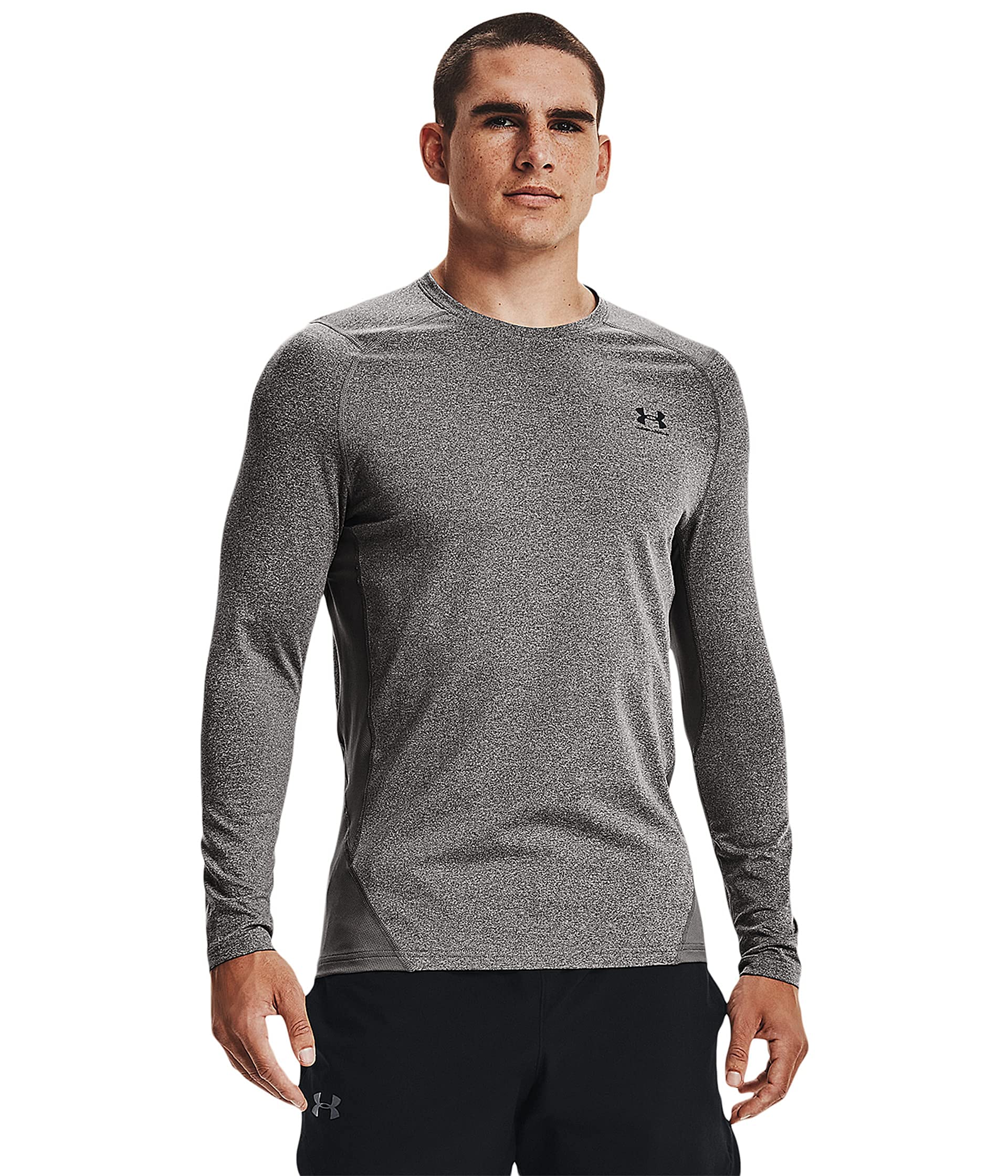
1. Under Armour ColdGear Armour Fitted Crew
Our pick — over 4.5★ from 500+ verified ratings; the strongest balance of quality and price.
The synthetic all-rounder that balances warmth and breathability for everyday winter miles.
You get a dual-layer fabric here — a super-warm brushed interior against your skin and a smooth, fast-drying exterior that sheds wind and sweat. That combo is why this crew keeps runners warm on chilly mornings without feeling bulky, and the stretch-mesh panels under the arms and across the back let heat escape right where you need it.
Owners lean on it for everything from 12-hour shifts in 25°F weather to hard outdoor runs, and the through-line in the reviews is consistent: it’s light, breathable, and extremely warm all at once. The 4-way stretch construction means it moves in every direction with you, so you never feel restricted mid-stride. The crowd favorite holds a 4.7-star score across 500+ owners.
The main caveat is sizing — Under Armour runs big for some, and several buyers suggest going a size down for a snug base-layer fit. One 6’1″ owner at 200 lbs found the XL fits nicely, while a 5’11” runner at 210 lbs wished he’d ordered a size smaller for a tighter feel.
What Wins Runners Over
- Warmth is the standout — the most-praised trait in the reviews
- Brushed interior feels soft and non-bulky against the skin
- Fast-drying exterior handles sweat during tempo runs
Watch For
- Runs big for some — size down for a true base-layer fit
- Neck and arms can feel loose if you’re between sizes
Reach for this if: you want one dependable synthetic layer that works for everything from easy jogs to all-day cold exposure.
Look elsewhere if: you prefer natural merino wool’s odor resistance and don’t mind paying more for it.
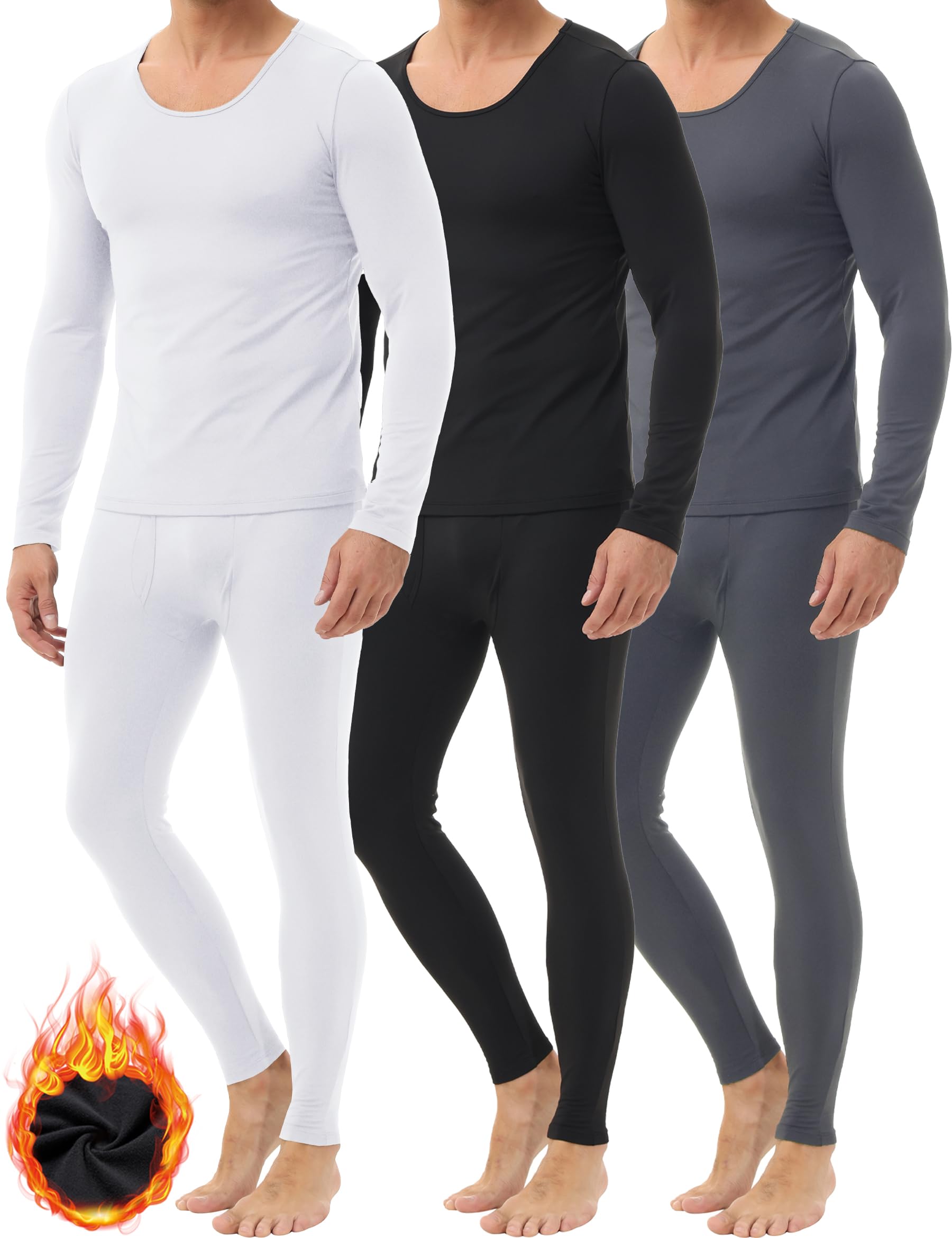
2. Winvote 3 Pack Thermal Underwear for Men
A three-pack fleece-lined set that delivers serious warmth for a fraction of the single-layer price.
If you want to stretch your winter gear budget, this three-pack of fleece-lined long johns is the smart play. The polyester fabric is lined warmly and feels soft and cozy against the skin, and buyers report it fits smoothly under regular clothes without bunching. It’s true to size and holds up well to washing, keeping its shape and softness after multiple cycles.
The warmth credentials are hard to argue with — reviewers have worn these in Alaska with the wind blowing and stayed warm. They’re a favorite for skiing in very cold conditions, though one owner notes they’re warm enough that they’re overkill for spring skiing. Durability and value are the recurring themes in the feedback, with the material earning mixed notes from a few buyers who expected more lining than arrived.
What you trade for the price is the natural performance of wool — this set won’t resist odor across multiple wears the way merino does, and it’s a warmer, heavier layer better suited to standing around or low-output winter work than fast running.
Warmth First: the fleece lining is what buyers praise most, and it’s the obvious budget pick.
The Trade-Off: expect a warmer, less breathable feel than a dedicated running layer — ideal for cold-weather work or skiing, less ideal for tempo miles.
Pick it if: you need maximum warmth per dollar and want spares for the whole week.
Pass if: you’re chasing breathability and moisture-wicking for high-output running — go synthetic performance or merino instead.
3. 100% Merino Wool Quarter Zip Sweater Women
Superfine merino that feels like a heavy tee yet keeps you toasty during active winter miles.
This women’s half-zip uses 17.5-micron superfine merino fibers — finer than human hair — so it won’t itch even on sensitive skin. It’s genuinely lightweight at roughly heavy-tee thickness, making it a true base layer rather than a midlayer, and buyers use it for running in chilly 30s°F weather and staying warm while active. The quarter zip lets you dump heat on the fly without stopping to peel off layers.
The merino is OEKO-TEX certified, meaning it’s been tested against 100+ harmful substances, and it resists odor naturally — one traveler wore it on a 10-day trip and stayed fresh. The knit is on the delicate side, though: pilling starts after about six wears and the fabric snags easily, so it needs a gentle wash in a lingerie bag.
Fit feedback is positive across the board, with buyers noting it’s true to size and soft as a second skin — though one petite owner at 5’9″ and 120 lbs found the sleeves ran short in a size small. The included merino socks are a nice bonus that several reviewers singled out as “the best.”
Active Warmth: this is the pick for cold-weather runners who run warm and want a breathable, non-itchy merino layer that vents well.
Handle With Care: the delicate knit demands gentle washing and careful storage to avoid snags and pilling.
Best for: runners who want featherweight merino warmth without the scratchy feel of standard wool.
skip it if: you run in heavy, abrasive layers or need a rugged fabric that shrugs off snags.
4. DANISH ENDURANCE Merino Wool Base Layer Set
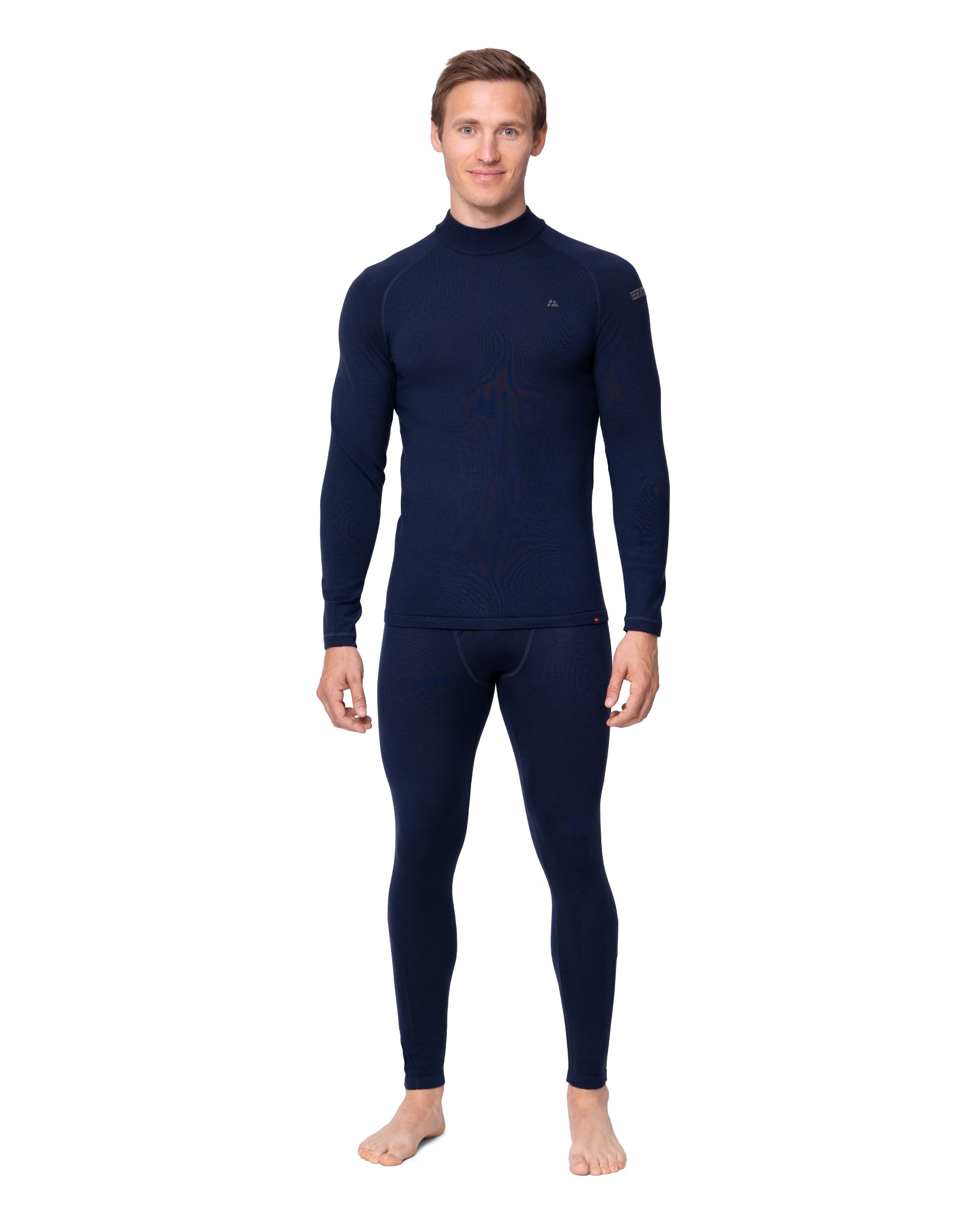
A heavyweight merino set with the polar pedigree to survive the planet’s coldest corners.
This is serious cold-weather gear — a heavyweight 250 g/m² merino wool base layer set that endurance athlete Rasmus Kragh wore on a 1,130 km solo trek to the South Pole. Designed in Copenhagen and OEKO-TEX Standard 100 certified, it blends premium mulesing-free merino with polyamide, which helps the fabric hold its shape far better than 100% merino wool.
Buyers confirm the warmth: it keeps them comfortable at temperatures down to -10°F, and the fit is snug without being restrictive. The polyamide content is the standout engineering choice here — it prevents the sagging and shape loss that plagues pure merino after heavy use, which is why one repeat owner says cheap alternatives “simply don’t compare” once you’ve felt this quality.
One honest warning from the reviews: the men’s bottom in this set has no fly opening, which isn’t made clear in the listing description. That’s a real annoyance if you need a functional fly, so check before you commit if that matters to you.
Polar-Grade Strengths
- Heavyweight 250 g/m² merino for extreme cold
- Polyamide blend resists stretching and shape loss
- Soft, non-itchy, and snug-fitting against the skin
The Fine Print
- Men’s bottom lacks a fly opening — not described in the listing
- Some owners mention a slight itch that washes out
Choose this for: deep-winter adventures like skiing, camping, or extreme cold running where 250 g/m² warmth is non-negotiable.
Think twice if: you need a functional fly on your bottoms, or you run hot and want a lighter layer.
5. Minus33 100% Merino Wool Midweight Quarter Zip
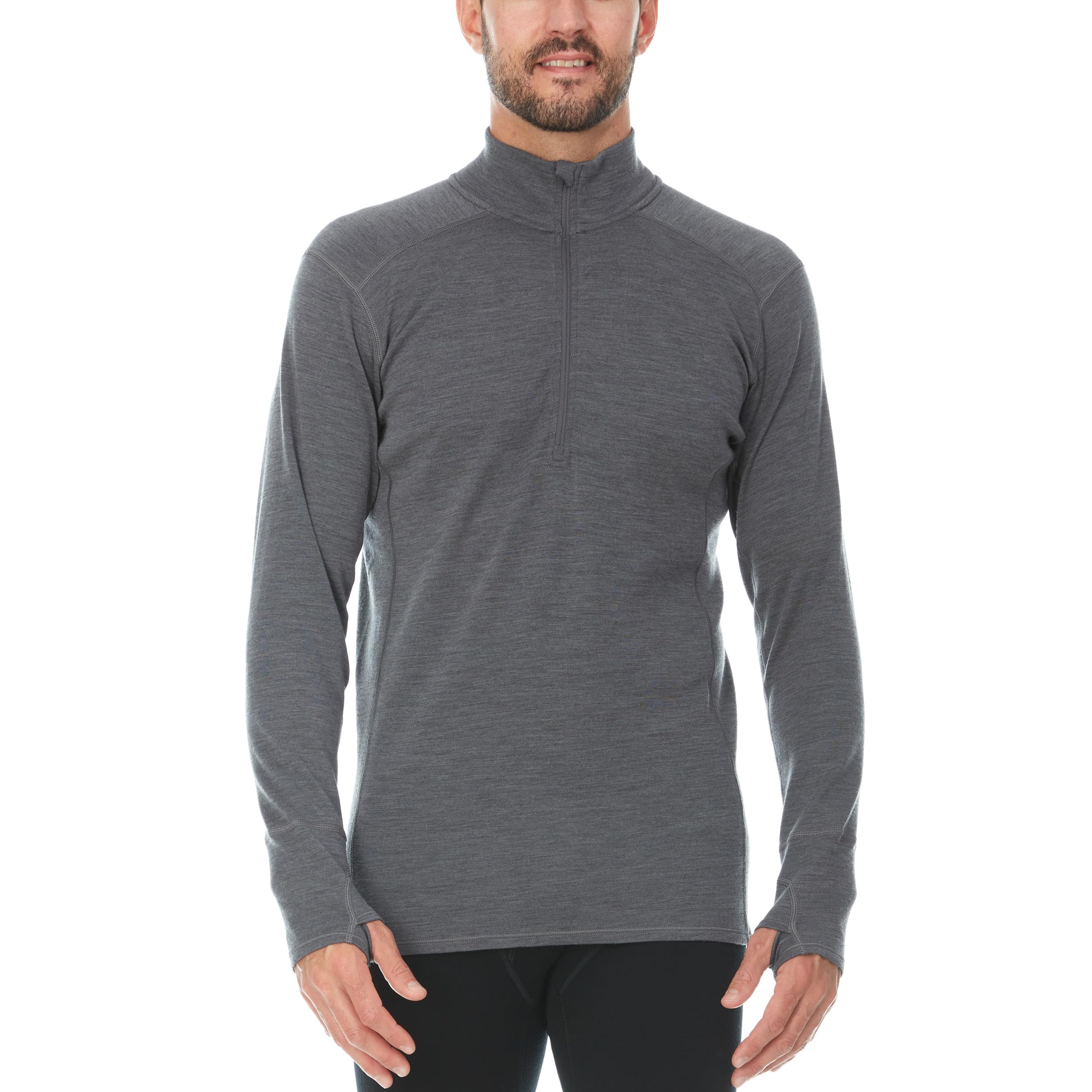
A 235 g/m² merino pullover that earned its keep from Alpine peaks to Alaskan cruises.
Minus33 comes from a family textile business with roots in wool going back to 1916, and it shows in the fabric. This midweight quarter zip uses 235 g/m² interlock knit and 18.5-micron 100% merino wool, giving you real insulation without the bulk — buyers describe it as “soft as cotton but warmer.” It’s rated for high-activity temperatures from 0°F to 30°F, making it a versatile winter running partner.
Owners rave about the odor resistance — one wore it for heavy woodcutting and it stayed fresh despite heavy sweat, and another found it odor-free for days on a Patagonia trip. The quarter zip is the key feature for running: zip it up for a mock neck in the cold, or unzip to vent heat as your pace climbs. It packs light and dries quickly after hand washing.
Fair warning from the reviews: sizing runs a touch large for some (one 5’10” runner at 155 lbs sized down), and the thumb holes divide opinion — some love them for layering, others never use them. The heaviness is a plus for extreme cold but a downside if you’re looking for a featherweight running shell.
The Versatile One: this is the merino layer that disappears under a shell for running yet stands alone as a stylish pullover for daily wear.
Value Call: the 100% merino quality at this weight justifies the price for most buyers — it’s a layer that lasts for years.
Grab this if: you want one quality merino pullover that works for running, hiking, and travel — check the thumb holes first.
Pass if: you want a lighter, more packable layer for high-output running only.
6. SmartWool Men’s Merino 250 Baselayer 1/4 Zip
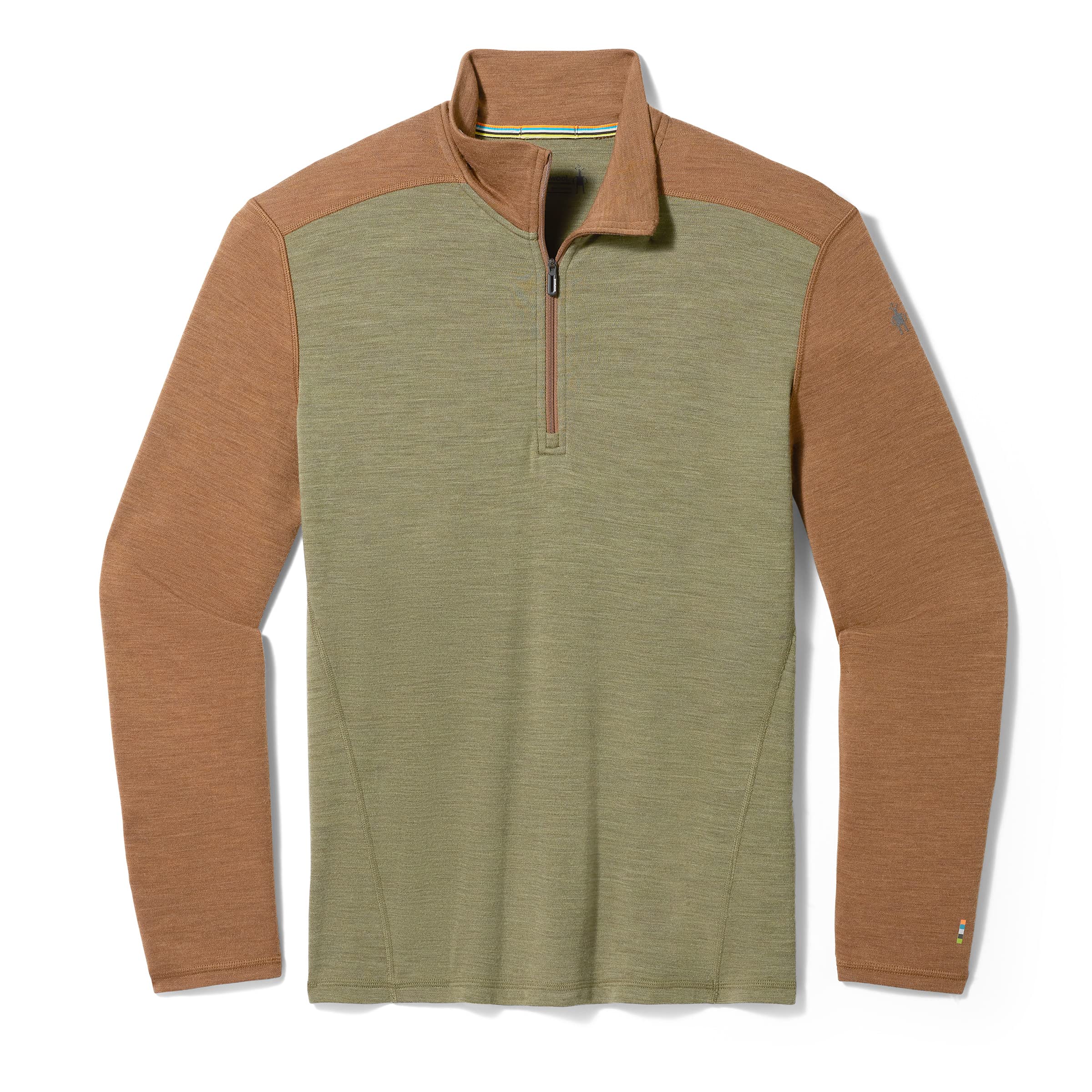
The 250 g/m² workhorse that one ultrarunner wore through the final 30 miles of a 100-mile race.
Smartwool’s 250 baselayer is the definition of proven performance. One buyer wore it for the final 30 miles of a 100-mile race and stayed dry and comfortable despite heavy sweat — no chafing, no clammy feeling. The quarter zip and stretchy sleeves help with temperature control mid-run, and the merino keeps you warm even when it’s wet, which is the big advantage over synthetic layers.
Reviewers praise the build quality and stitching, and it holds up under near-daily brutal use. It works as a second or third layer on colder days or solo as a comfortable outer layer, making it a versatile addition to a winter wardrobe. One owner found it kept him very warm at 19°F with a three-season sleeping bag while backpacking.
The honest caveats: it’s heavier than ideal for packing, and one careful buyer noted the listing claims “Made in USA” while the item arrived made in Vietnam — worth knowing if that matters to you. The zipper quality drew mixed feedback from a few owners, so use it gently.
Race-Proven: this is the layer endurance athletes trust for high-output cold-weather efforts, backed by strong owner reports of durability.
Weight Trade-Off: it’s warmer and sturdier than lighter merino — but you’ll feel it in your pack.
Best for: serious runners and outdoor enthusiasts who want a 250 g/m² merino layer that won’t quit.
pass on it if: you’re a minimalist packer or — check the origin label if “Made in USA” is a dealbreaker.
7. Helly Hansen LIFA Merino Midweight 1/2 Zip

Norwegian pro-grade layering that pairs merino warmth with Helly Hansen’s signature LIFA moisture-wicking tech.
This thermal top builds a 100% merino wool exterior over Helly Hansen’s proprietary LIFA synthetic lining — a two-layer construction aimed at keeping you dry no matter how hard you push. The flat lock seams lie smooth against the skin to prevent chafing, which matters on long runs when every seam becomes a friction point. It’s designed for skiing and sailing, but the same temperature regulation works on the pavement.
Customers note a good, true fit — a 6’1″ runner at 175 lbs found the large ideal, and a 6’2″ owner at 245 lbs said the XL was perfect. One skier noted it offers better temperature control than a synthetic mid-layer and that it layers well under a non-insulated jacket. The fabric is on the thinner side at roughly 225 g/m², so it’s a midweight rather than a heavy winter shell.
Two fair warnings: the synthetic liner reduces the merino’s natural odor-fighting power, and some longtime Helly Hansen fans feel the newer wool blend isn’t as effective as older versions. That “cheaper blend” complaint is worth weighing if you’re a repeat brand loyalist.
Two-Layer Tech: the LIFA liner gives this an edge for wet, high-sweat activities where staying dry is the top priority.
The Catch: you trade some of pure merino’s odor resistance for that moisture-wicking liner.
Reach for this: skiers, sailors, and runners who value moisture management and chafe-free flat seams above all.
Look elsewhere: if you want pure merino’s natural odor control or a heavier, warmer fabric.
8. Icebreaker Oasis Mid-Weight Merino Long Sleeve Crewe

The thin merino crew that delivers “surprisingly warm” performance for runners with sensitive skin.
Icebreaker’s Oasis is the base layer for people who normally can’t wear wool at all. One Montana owner who lived through winters “far below 0” calls these the very best merino wool products they’ve ever worn — thin enough to layer comfortably over a t-shirt and under a sweater for toasty warmth without the itch or bulk. This is the 200-weight (200 g/m²) version, a true midweight that runs warm without overheating.
Buyers consistently note the fabric is soft, form-fitting, and packs beautifully for travel with zero bulk. It works as a base layer or stands alone with a clean, basic look. The warmth punches well above its thin profile — one owner was “worried about how thin these are, but they are incredibly warm.” It’s been used for hiking, skiing, and even Arctic Finland at 5°F.
The honest trade-off is price — it’s a premium piece, though owners say it goes on sale and is worth it. A few have flagged itchy stitches in the shoulders that show up when walking, so it’s not perfect for every body. It washes well and holds shape over years of use.
Sensitive-Skin Hero: this is the wool for runners who’ve given up on wool — soft, non-itchy, and surprisingly warm for its weight.
Price Point: bring a budget or wait for a sale; the premium cost is the main knock against it.
Choose this if: you want a thin, packable merino layer that layers easily and never itches.
Pass if: you need heavyweight warmth for deep-freeze running or you’re on a tight budget.
9. Smartwool Women’s Classic Thermal Merino Base Layer Crew

An American-made 100% wool crew that softens with age and refuses to pill or snag.
This is the base layer built to outlive every other piece in your drawer. Reviewers point out Smartwool thermals over a decade old still looking like new, soft enough to wear for three days of hiking in cold rain and sleet without a single complaint. The 100% wool fabric regulates temperature naturally — keeping you cool when your pace climbs and warm when you ease off — and the slim fit minimizes chafing on long runs.
The women’s-specific cut earns consistent praise: a 5’3″ owner at 140 lbs found the medium perfect, and a 5’7″ runner appreciated the contoured, non-tight fit. The fabric grips to stay in place, so it doesn’t ride up mid-run, and the raglan sleeves improve mobility. It’s odor-resistant and gets softer with every wash, which is a rare quality in any garment.
The listing notes it’s a lightweight, non-stretchable fabric, so don’t expect much give. It also runs short on taller torsos — one owner noted it hits at the hips and may be short for someone tall. Air drying is recommended to prevent shrinkage.
The Durable Classic: this is the wool crew that keeps performing for years — the rare base layer that softens instead of wearing out.
Fit Note: it’s a slim, non-stretch fit that runs short on the torso for taller runners.
Pick this for: women who want a durable, made-in-USA merino layer that handles anything from running to rain-soaked hikes.
it’s not for you if: you’re tall with a long torso, or you need stretch fabric for a very active fit.
Understanding the Specs
Fabric Weight (g/m²)
This is the number that tells you how warm a base layer actually is. Lighter weights around 150 g/m² are for cool fall or spring days. Midweight fabrics around 200-250 g/m² handle most winter running, and heavyweight options over 300 g/m² are for deep-freeze days or low-activity use. Remember the runner’s rule of thumb: the higher your activity level, the lighter the fabric you need — because you generate your own heat.
Merino Micron Rating
Microns measure the thickness of the wool fibers — and thinner means softer. Standard wool at 25+ microns feels itchy and scratchy. Superfine merino at 17.5 microns is finer than a human hair, so it sits comfortably against sensitive skin. If you’ve hated wool in the past, look for “superfine” or a micron rating under 20, and you’ll likely find it bearable.
FAQ
Is merino wool or synthetic better for cold weather running?
What does g/m² mean and how thick should my base layer be?
Will merino wool itch against my skin?
Should I size down for a base layer?
How do I wash merino wool without ruining it?
Can I wear a base layer for running and other winter sports?
Why does my base layer smell even after washing?
Is a quarter zip worth it for running?
Final Thoughts: The Verdict
For most runners, the base layer for cold weather running winner is the Under Armour ColdGear Crew because it nails the balance of warmth, breathability, and value — with 4-way stretch that moves with you. If you want natural merino performance and odor resistance for multi-day trips, grab the Minus33 Midweight. And for extreme-cold adventure or a budget multi-pack, the DANISH ENDURANCE Set or Winvote 3-Pack covers you. Most top picks favor merino for comfort and odor control, but the synthetic ColdGear shows you don’t need premium prices for warmth and dryness.
How We Picked
We do not accept paid placement. Every pick is matched to a real buyer and a real use-case; we do not hands-on test units.
Sources & Methodology
Specifications: manufacturer listings and product documentation. Review insights: verified customer reviews. Pricing: not shown on this page (it changes often); check the current price via the retailer link.
As an Amazon Associate, Gadgets Feed earns from qualifying purchases. This does not affect which products we feature.